
Covering 311 square miles in northwest Georgia, Polk County is the state’s ninety-sixth county, created in 1851 from Floyd and Paulding counties. It was named for U.S. president James K. Polk. Originally held by Muscogee (Creek) Indians, the land was lost to the Cherokee Nation before white settlers arrived there in the nineteenth century.
Many of the first white settlers migrated from other parts of Georgia and from other states soon after gold was discovered in northwest Georgia in 1829. Upon this discovery the state broke all its treaties with the Cherokees and divided the land into forty-acre “Gold Lots,” which it distributed by lottery in 1832. For those who came during the gold rush but did not succeed at prospecting, the free land was alluring, and many stayed to farm. Other early settlers included men who established a trading post on a spot along Cedar Creek and Welsh miners who came to work as quarriers.
Big Spring, an important regional water source that once provided a flow of 3-4.5 million gallons per day, is near a Cherokee village called Beaver Dam. During the Cherokee removal, from 1838 to 1839, the stockade Fort Cedar Town was built near Cedartown as an internment camp for Indians on the Trail of Tears.
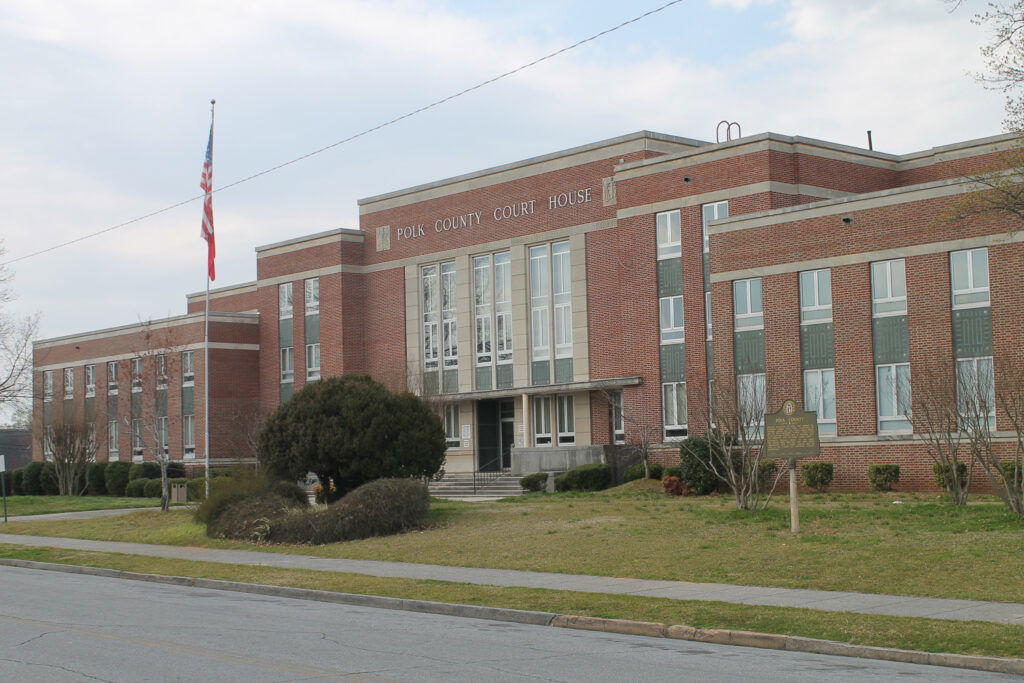
Several well-to-do planters established homes in Cedartown during the next twenty years. One of them, Asa Prior, acquired the springs and deeded it and ten acres of land around it to Cedartown just before the town was incorporated in 1854. Cedartown is the current county seat. The first courthouse was built there in 1852 and reportedly burned down in 1856. During the Civil War (1861-65), Union troops led by Judson Kilpatrick (often erroneously referred to as James Kirkpatrick) set fire to all of Cedartown, and the county did not rebuild its courthouse until 1867. The postwar structure was replaced in 1951 by the current courthouse.
The burning of Cedartown was the most serious involvement of Polk County residents with the Civil War. Another war-related event took place in the county following the Battle of Atlanta in 1864, when Union general James McPherson and his men camped at Peak Springs, near the town of Aragon, and marched through Van Wert the next day.
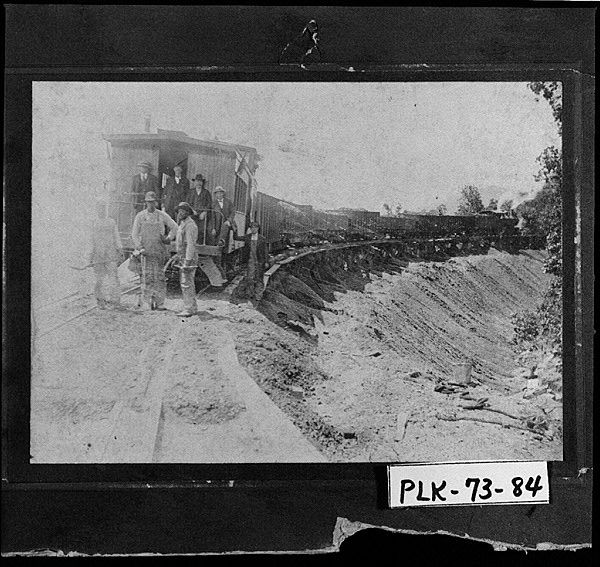
During Reconstruction, railroads began building lines through the region, leading to the early industrialization of the area. The Cherokee Railroad built a line from Bartow County into Polk County in the 1870s, and the town of Rockmart developed around its depot about one mile north of the town of Van Wert. Incorporated in 1872, Rockmart was originally called Rock Market, indicating the importance of nearby slate deposits to its economy. Many of its buildings are built of slate and brick from local mines and brickyards.
There are several other communities in the county. Aragon (named after the mineral aragonite) was incorporated in 1914. Unincorporated towns include Esom Hill, Lake, Prior, and Seney. Esom Hill grew up around the Shiloh Baptist Church, which was founded in 1848.
Railroad transportation, the availability of rich natural resources (clay, iron shale, limestone, slate, and timber), and ample water power allowed Polk County to become an industrial powerhouse in the late nineteenth and twentieth centuries. But in recent years the county’s economy has suffered from the effects of globalization.
Notable persons from Polk County include actor Sterling Holloway, blues singer Ida Cox, and Lula Hurst, the first Georgia Wonder.
The Polk County Historical Society operates a museum in Cedartown in the former Hawkes Children’s Library, which was built in 1921 and added to the National Register of Historic Places in 1980. In 1992 the entire Cedartown Commercial Historic District, with sixty-four buildings, was added to the National Register of Historic Places.
Big Spring Park, a public park since 1852, is the location of the city’s waterworks, built in 1892, and its electric light plant. Today the springs are housed inside a concrete enclosure. The park and its Cedartown Waterworks and the Woman’s Building were listed in the National Register of Historic Places in 2000.
The Silver Comet Trail for bicyclists and hikers runs for 61.5 miles from Smyrna (about ten miles northeast of Atlanta) through Polk County, where it joins Alabama’s Chief Ladiga Trail at the Georgia–Alabama state line. Covering a total of 95.5 miles from Smyrna to its terminus in Anniston, Alabama, the trail is the longest continuous bicycle path in the country. In the early twentieth century Cedartown had active minor league baseball teams, in the Georgia-Alabama League, Georgia State League, and Southeastern League.
According to the 2020 U.S. census, the population of Polk County was 42,853.


