
Established on March 28, 1823, twenty miles south of Atlanta, Fayetteville is the seat of Fayette County, which was created in 1821 from land ceded to the state by the Muscogee (Creek) Indians. Both town and county are named for the Marquis de Lafayette, the Frenchman who joined forces with George Washington during the American Revolution (1775-83), helped bring France into the war on the side of the Americans, and revisited Georgia in 1825.
Nineteenth Century
Surrounded by branches of the Flint River, whose water powered early gristmills, the land for the town of Fayetteville proved fertile for cotton crops. The jail was built in 1824, a year before the courthouse, which is listed on the National Register of Historic Places as Georgia’s oldest courthouse. The building faces south in the direction of Milledgeville, which was the state’s capital at the time of the courthouse’s construction. A clock tower was added to the courthouse in 1888.
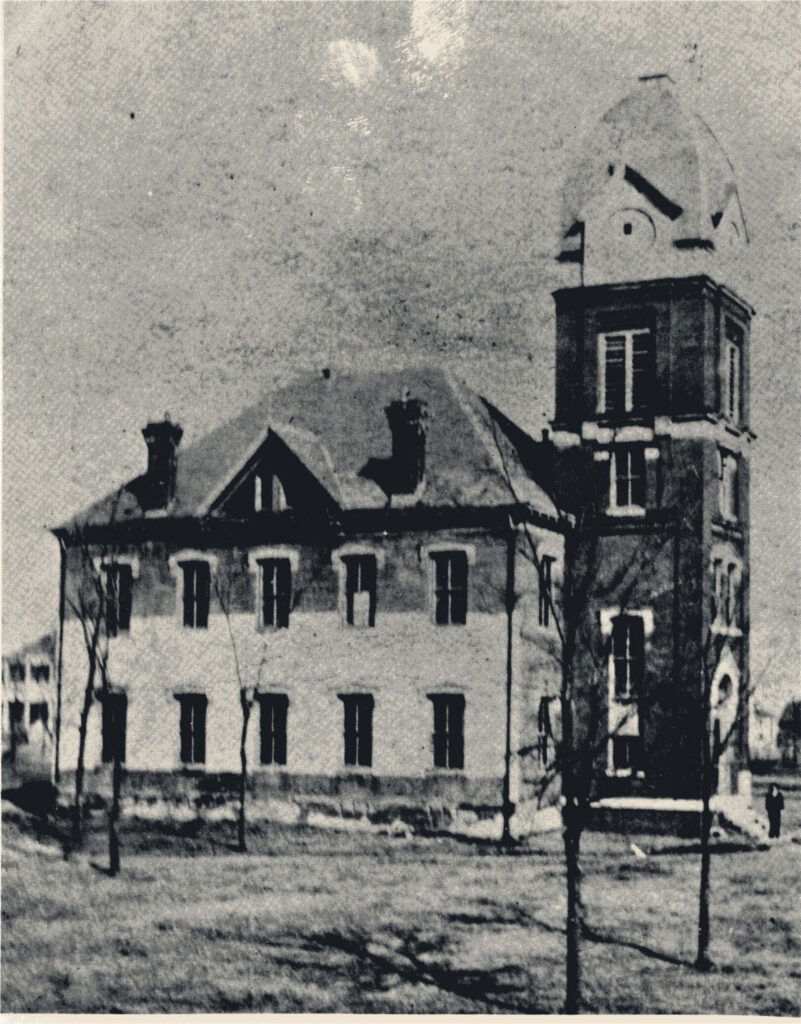
Businesses and homes lined the original town square. Shiloh Baptist Church, founded in 1828, sat five miles southwest of the town and eventually moved into Fayetteville as the current First Baptist Church. A rail fence and watering troughs in town serviced horses and horse-drawn buggies and wagons. One block away from the courthouse stood the muster grounds for the local militia. By 1830 five major routes had made Fayetteville an important crossroads.
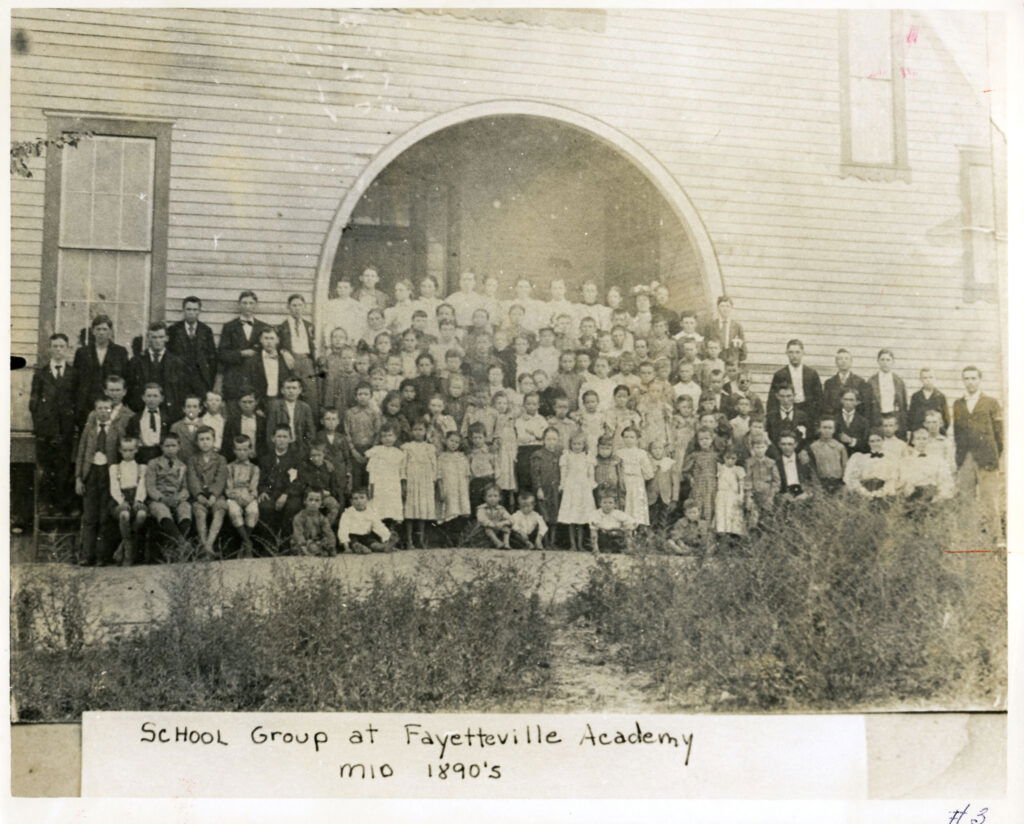
In the 1840s S. R. Minor launched the Fayetteville Advertiser, and two schools, three stores, five barrooms, several mechanics, and a printing shop dotted the town. The Holliday-Dorsey-Fife House, a two-story Greek-revival home that today houses a museum, was erected in 1855 by the uncle of Old West icon John Henry ” Doc” Holliday. Two years later the home became the site of Fayetteville Academy.
Led by Morgan Harbin Looney, the academy became known as Fayetteville Seminary. Margaret Mitchell’s grandmother was one of its early pupils. In the 1930s, as Mitchell was researching her novel Gone With the Wind (1936), she came to Fayetteville and visited the graves of her great-grandfather’s family, many of whom were buried in the city’s cemetery. These ancestors formed the basis for Mitchell’s O’Hara clan. Scarlett O’Hara herself attended the fictional Fayetteville Female Academy in Gone With the Wind, and her character was based on stories that Mitchell’s grandmother told.
On July 29, 1864, Union general Edward M. McCook led 3,600 cavalry against a Confederate supply train in Fayetteville. The Union troops captured close to 400 Confederates, who were working the 500 wagons and guarding the supplies. McCook’s men burned the wagons and slaughtered 800 mules. Confederate general Joseph Wheeler led his own cavalry to free the prisoners at the Battle of Brown’s Mill, on July 30-31, near Newnan. A Confederate monument, erected on April 26, 1934, stands at the courthouse today.
After the Civil War ended in 1865, the Ku Klux Klan, a white supremacist group, became prominent in Fayetteville. The group’s presence diminished once African Americans returned to farm the land as sharecroppers, but a revived Klan reappeared in the 1920s, and a number of Black farmers disappeared during a brief spurt of white violence.
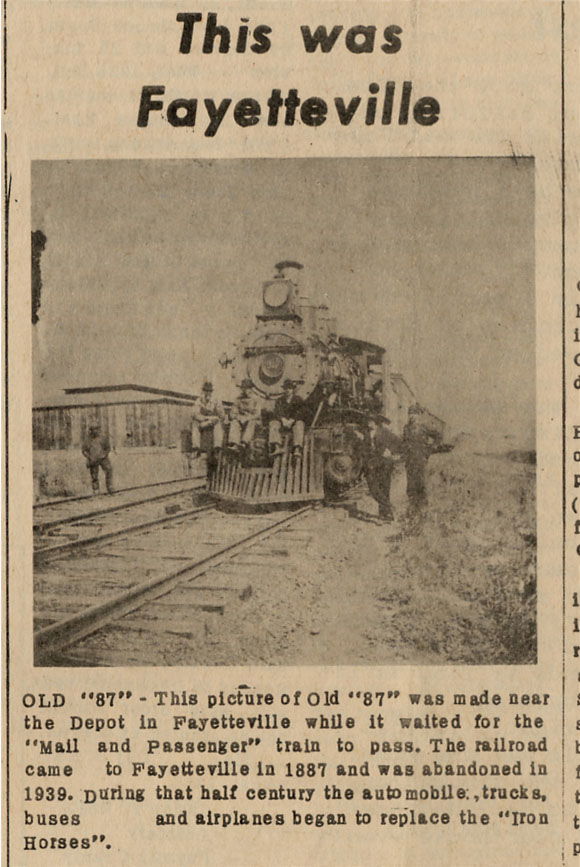
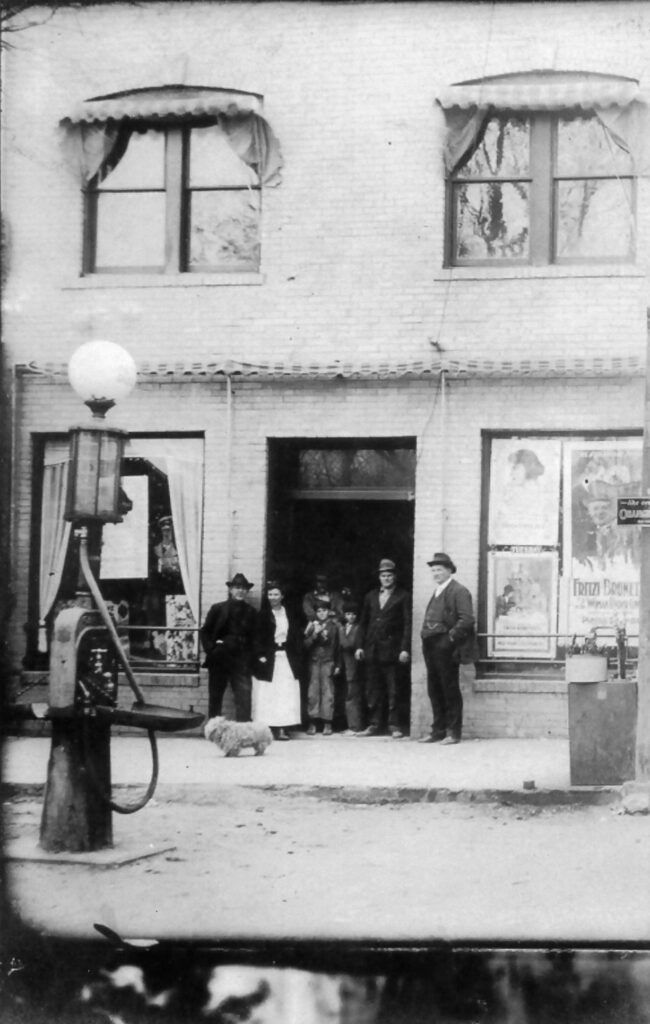
The arrival of the railroad, later known as the Atlanta and Florida line, in 1888 spurred recovery in the aftermath of the Civil War. The Fayette County News opened its doors in 1886 and has served the area ever since. Around the same time, the first gas lamps appeared, followed by electricity and the first public water system in the 1920s.
Twentieth Century
At the turn of the twentieth century, A. O. Blalock opened the first bank in the county, the Bank of Fayetteville, and the area’s first phone was in his house.
Fayetteville experienced economic depression as a consequence of the drought of 1925, a few years before the 1929 U.S. stock market crash heralded the beginning of the Great Depression. The Bank of Fayetteville went bankrupt, and corn became the only profitable commodity, due to the bootlegging commerce in Atlanta. The biggest blow to the city came with the removal of the railroad line in 1939. In 1920 the population had reached a high of 2,976 but fell throughout the rest of the century until the 1980s.
Retail trade, manufacturing, and wholesale trade are the top industries. Although there are few full-time farmers left, various agricultural crops are still produced. Efforts have been launched to revitalize the downtown Main Street area, and the city hosts multiple festivals each year, including the Fayetteville Bluegrass Blast, the Old Courthouse Art Show, the Main Street Festival, and the Christmas in Fayetteville festival.
According to the 2020 U.S. census, the city’s population was 18,957, an increase from the 2010 population of 15,945. Proximity to Atlanta is responsible for much of its recent growth.


