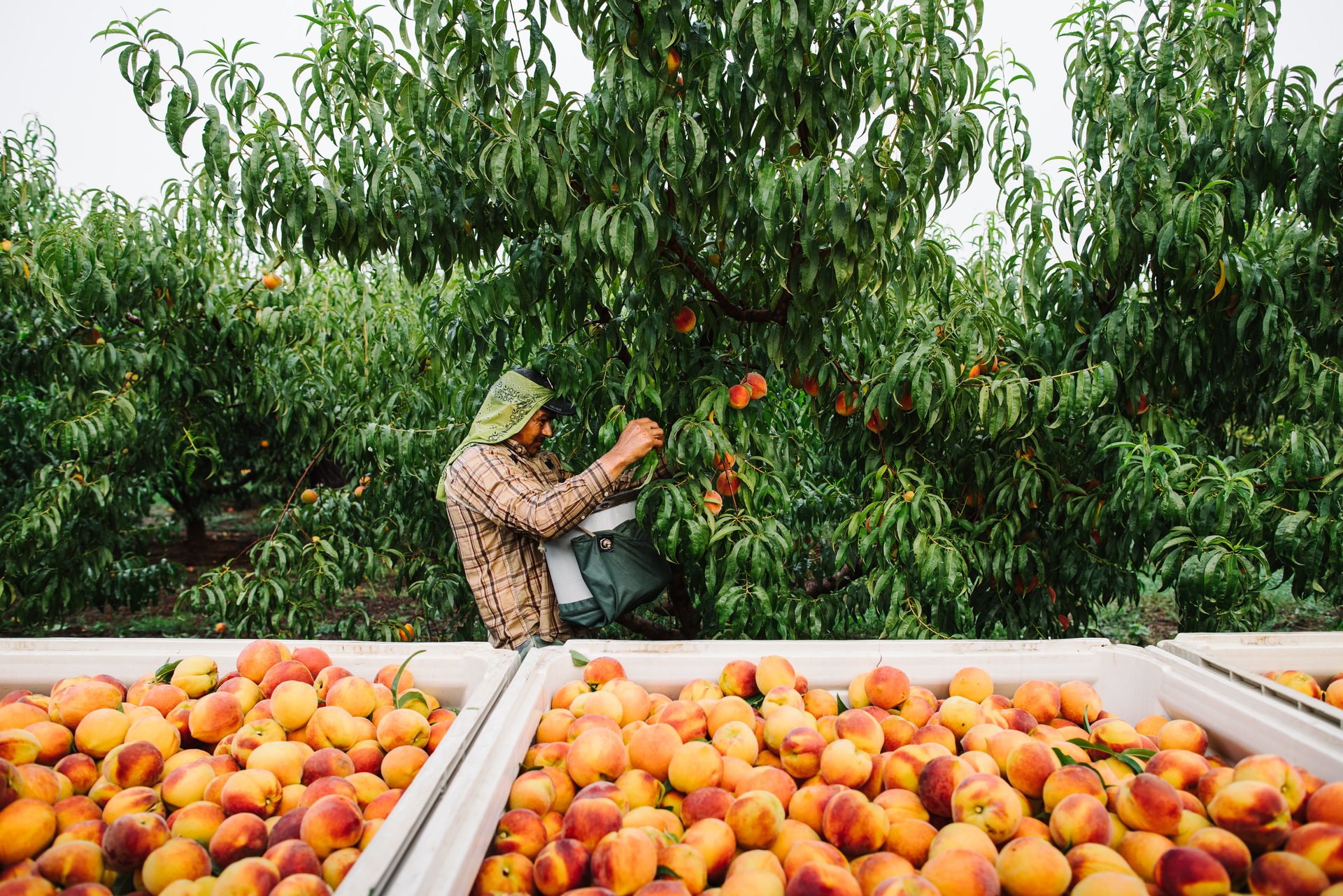
Georgia’s peach industry has a long tradition. The first peaches were planted in the state in the eighteenth century, and the first commercial production occurred in the mid-nineteenth century. In 2014 Georgia ranked third nationally in peach production, behind California and South Carolina. That year, Georgia produced 35,500 tons of peaches.
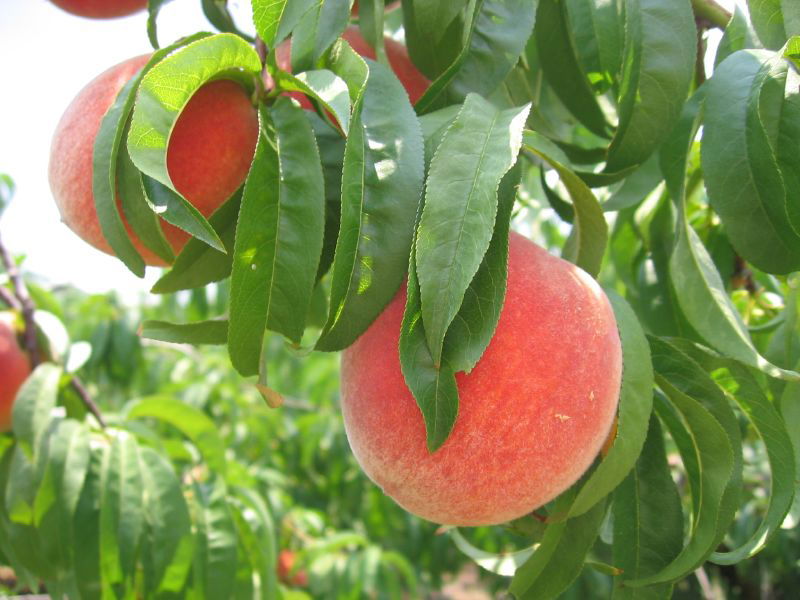
Photo by AbbydonKrafts
Franciscan monks introduced peaches to St. Simons and Cumberland islands along Georgia’s coast in 1571. By the mid-1700s peaches and plums were cultivated by the Cherokee Indians. Before the Civil War (1861-65) increasing numbers of home orchards also were planted. Raphael Moses, a planter and Confederate officer from Columbus, was among the first to market peaches within Georgia in 1851 and is credited with being the first to ship and sell peaches successfully outside of the South. His method of shipping peaches in champagne baskets, rather than in pulverized charcoal, helped to preserve the flavor of the fruit and contributed to his success. Peach acreage expanded considerably in the late nineteenth and early twentieth centuries, resulting in an all-time high production of almost 8 million bushels by 1928. Since then production has decreased to about 2.6 million bushels annually.
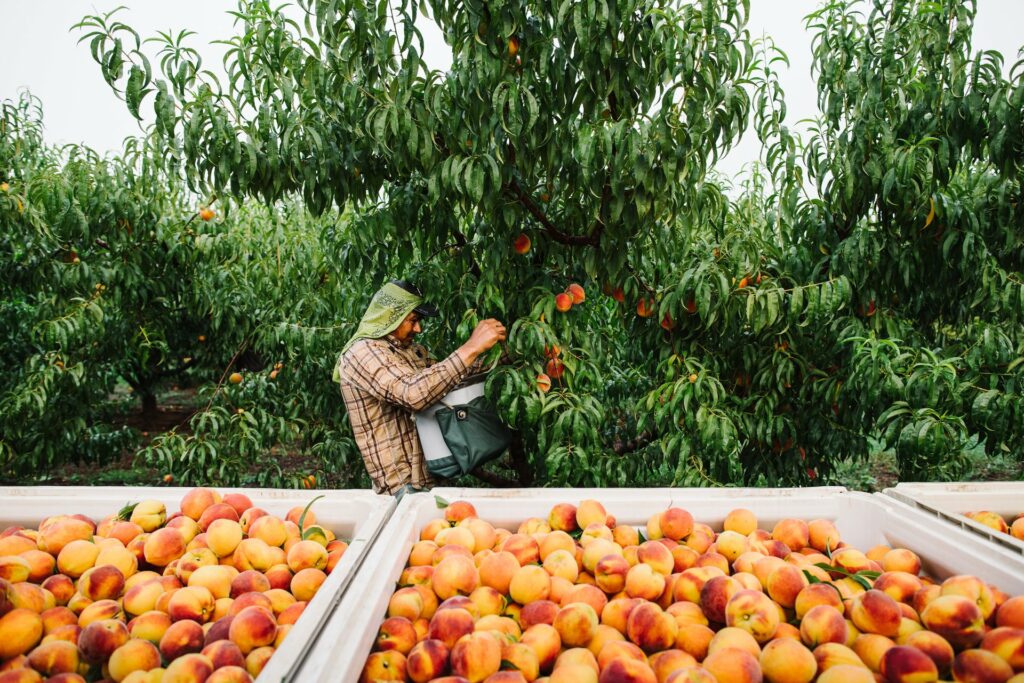
Courtesy of Explore Georgia.
Georgia enjoys important production and marketing advantages, primarily its proximity to eastern markets and favorable prices because of early harvests and high-quality fruit production. Nearly all peaches grown in Georgia are sold in the wholesale fresh market, with a small percentage sold at roadside markets. There is no significant peach processing in Georgia.
The first Georgia peaches were shipped to the New York market between 1858 and 1860. They were transported by wagon to Augusta, then by shallow-draft boat to Savannah, and finally by steamship to New York. Georgia earned its “Peach State” designation during the three decades following the Civil War.
Peach expansion in acreage and production was fueled by several factors. The abolition of slavery forced farmers to search for alternatives to the traditional labor-intensive cotton crop. Peaches in particular benefited from this transition. In 1870 Samuel H. Rumph, a Marshallville peach grower, discovered a new peach variety, which he named Elberta for his wife. This yellow-fleshed peach was of superior quality and shipped better than previous varieties. Elberta remained the leading peach in Georgia until 1960, but newer varieties, for example J. H. Hale and Belle, have since replaced the Elberta in commercial use. (Georgia now produces more than forty commercial varieties.)
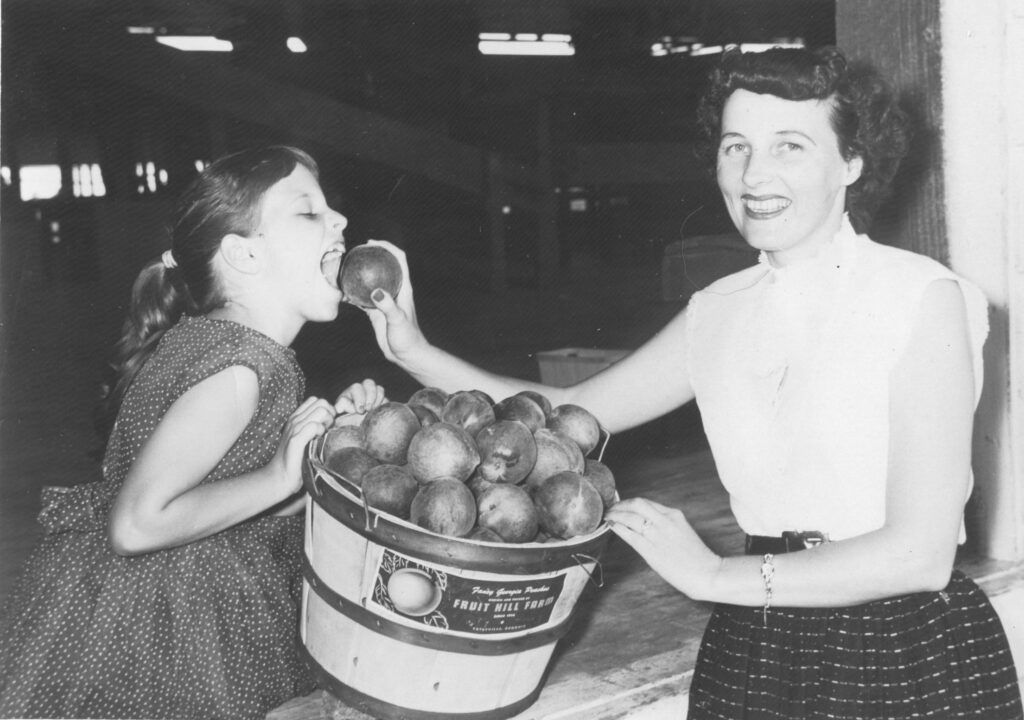
Courtesy of Thomaston-Upson Archives
Improvements in rail transportation and the development of the refrigerated rail car by Rumph allowed rapid shipments to northern markets on a large scale. Also the Georgia State Horticultural Society, founded near Augusta in 1876, promoted the introduction and testing of many fruit varieties and their distribution throughout the state while under the leadership of Prosper J. A. Berckmans, a nurseryman and pomologist. The old Berckmans Nursery is now the site of the Augusta National Golf Club, home to the annual Masters Tournament.
Georgia’s peach industry is concentrated in Crawford, Peach, Taylor, and Macon counties along the fall line, the transition zone between Georgia’s Piedmont and Coastal Plain. This area is far enough north to receive sufficient winter chilling, but far enough south to avoid late frosts and guarantee early harvest dates. The early harvest allows premium prices for the crop. Additionally, the sandy loam soils of the fall line are more favorable to peach production than the Piedmont’s heavy clays or the Coastal Plain’s sands.
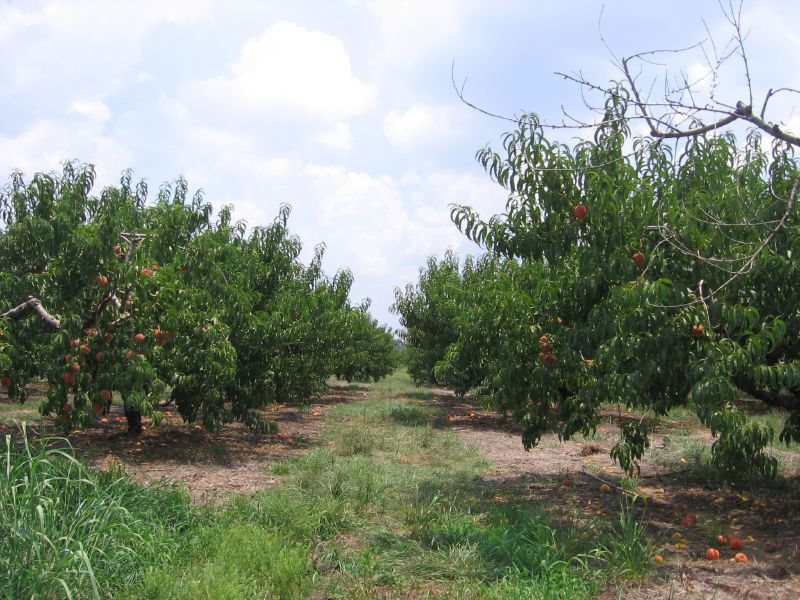
Photograph by Chris Fannin
There is a small commercial presence in Brooks and Pierce counties in south Georgia, where new varieties suitable for those areas are improving fruit quality. The new varieties seem to be responsible for a surge in the planting of peaches in this region of the state. Historically, considerable peach production occurred in north Georgia also, but during the 1980s and 1990s acreage declined because of frequent freeze damage and relatively late harvest dates.