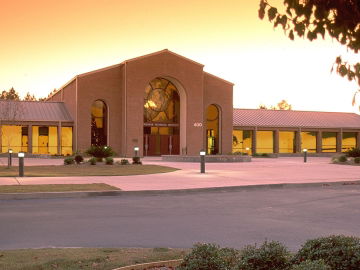
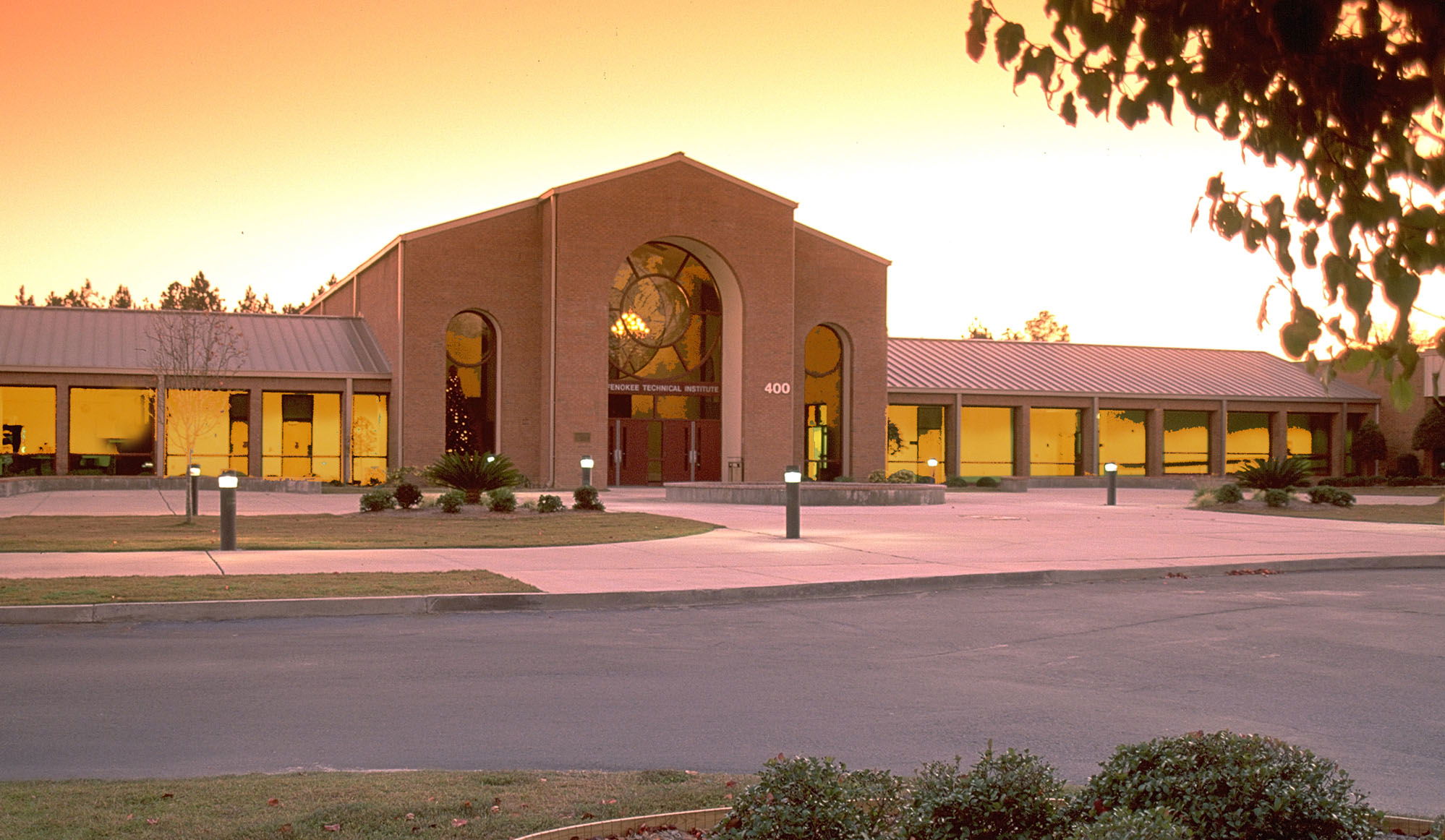
In July 2014 Altamaha Technical College and Okefenokee Technical College merged to form a new institution called Coastal Plains Technical College (CPTC). The merger was one of many designed to reduce administrative costs and broaden student access within the Technical College System of Georgia (TCSG). All campuses for both schools remained open, and the former Okefenokee Tech campus in Waycross became the main administrative campus for CPTC.
With over a dozen counties in CPTC’s service area, it has one of the largest service areas of any technical college in the state. As a unit of the TCSG, it supports the continuing education and workforce development of southeast Georgia. Along with traditional associate degree programs, CPTC offers technical certificate programs; apprenticeship programs with local industry partners; programs for adults seeking their high school equivalency diplomas; and dual enrollment for local high school students. CPTC’s programs in industrial technologies and health technologies are some of the school’s most popular and are major contributors to the economic development of the region.
The TCSG, in overseeing the state’s system of technical colleges, its economic and workforce development programs, and its adult literacy program, has as its primary objective to create a well-educated, technically trained, and highly competitive workforce to ensure the economic success of the state and its citizens.
History of Okefenokee Technical College
The first students enrolled in the Waycross–Ware County Area Vocational-Technical School in 1965. The original campus comprised two buildings totaling 38,678 square feet. In 1977 a third facility was built, adding 21,000 square feet and space for three health services programs. Waycross-Ware Tech converted from local to state governance in 1989, coming under the direction of the newly formed Department of Technical and Adult Education (DTAE). At that time the school became known as Okefenokee Technical Institute.
Expansion continued in the 1990s with the addition of an adult literacy center, a forest technology classroom, and a 6,000-square-foot child care and education center. Other expansions and renovations increased the size of the Waycross campus by one third. In 1998 Okefenokee Tech opened a satellite campus in Alma and in 2000 acquired a short rail line, a modular building to house the environmental horticulture and commercial truck driving programs, a greenhouse, and another modular building for the freight conductor program.

Also in 2000, due to legislation (Georgia House Bill 1187) that allowed technical institutes offering associate degrees to become colleges, the school acquired its current name, Okefenokee Technical College. The main campus in Waycross as well as the satellite campus in Alma continued to expand between 2000 and 2007, when the state approved a budget request for a new allied health building on the main campus and renovation costs for a new campus facility at Alma.
According to the DTAE’s 2005 annual report, 3,403 students were enrolled in certificate, diploma, or degree programs at Okefenokee Tech. An additional 895 students were enrolled in noncredit courses, and 984 students were enrolled in adult literacy programs, which are offered in each of the college’s service delivery counties.
In addition to industrial mechanics and maintenance technology, popular programs at Okefenokee Tech included data entry and nursing. The college held graduation ceremonies for its freight conductor program, which was only offered when jobs for conductors are available. Okefenokee Tech exhibited its locomotive electrical systems technical certificate in Atlanta at the 2007 “Taste of the Technical Colleges,” an event that showcased valued programs in technical education. In April of that year, the college began its electrical lineworker apprenticeship program, thanks in part to a monetary donation from Georgia Power Company.
Okefenokee Tech’s economic development programs included continuing education classes and customized employee training. The college also partnered with Quick Start, a nationally recognized program that developed training for new and existing industries in Georgia, to provide training for such area businesses as Simmons Company, the country’s second-largest mattress manufacturer.
History of Altamaha Technical College
In December 1988, after the state legislature appropriated $5.4 million for a new postsecondary vocational-technical school in the Appling–Wayne County area, C. Paul Scott began serving as Altamaha Tech’s first president, in Jesup. Under the direction of the Department of Technical and Adult Education (DTAE), the school opened as Altamaha Technical Institute in the summer of 1989, after Jesup’s licensed practical nursing program was transferred to Altamaha Tech from Waycross-Ware Technical School (later Okefenokee Technical College). More programs were offered that fall, and in 1992 the school received accreditation from the Council on Occupational Education. Additional facilities and services gradually grew in Appling, Jeff Davis, and Long counties, which, together with Wayne County, make up Altamaha Tech’s service delivery area.
In 2000 Altamaha Tech became Altamaha Technical College due to legislation (Georgia House Bill 1187) that allowed technical institutes offering associate degrees to be called colleges. According to the DTAE’s 2005 annual report, 1,894 students were enrolled in certificate, diploma, or degree programs, and 1,437 additional students were enrolled in noncredit courses. More than 1,000 students were enrolled in adult literacy programs offered through the college. In 2006 Cathryn T. Meehan (later Cathryn T. Mitchell), longtime president of Southeastern Technical College, was appointed interim president of Altamaha Tech after Scott retired from seventeen years of service as president of the college.
In 2007 the DTAE created the Technical College System of Georgia, an entity comprising the thirty-four colleges under its administration, and in 2008 the DTAE’s name officially changed to TCSG.
Altamaha Tech’s associate degree, diploma, and technical certificate of credit programs include computer information systems, criminal justice technology, early childhood education, nursing, process manufacturing technology, and technical studies. The school’s facilities are tailored to meet the needs of each individual program and offer hands-on instruction. A mock-up house with wooden siding, a shingled roof, and interior sheetrock walls built by construction students now supports the heating, ventilation, and air-conditioning program, which used the space for simulated on-the-job training. The program yielded 88 graduates in 2005. The commercial truck driving program sports a fully interactive system that simulates a tractor-trailer and cab with functioning controls, and 149 students graduated from that program in 2005.
Business partnerships created through Altamaha Tech’s economic development services enhance Altamaha Tech’s education program. With the help of Quick Start, a nationally recognized program that develops training for new and existing industries in Georgia, the college forged a partnership with BP Fabrics and Fibers in 2003. Producers of erosion cloth and carpet backing, BP designed a curriculum of training provided free of charge to the company by Altamaha Tech and four other Georgia schools (Bainbridge State College, North Georgia Technical College in Clarkesville, Valdosta Technical College (later Wiregrass Georgia Technical College), and West Georgia Technical College in LaGrange).
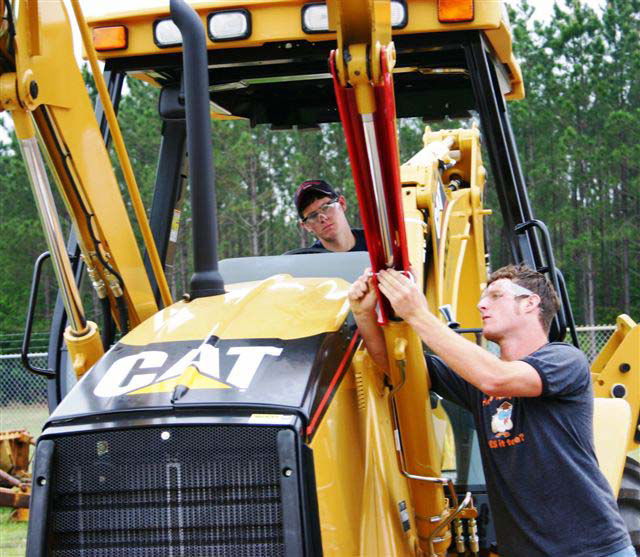
New programs inaugurated by the college include a heavy-equipment service-technician program, begun in 2005, in partnership with Yancey Bros. Company, the nation’s oldest Caterpillar dealer. In 2006 Altamaha Tech began offering a certificate in computer forensics and investigation. Already equipped with computer information systems and criminal justice programs, the college was poised to offer career training for what the U.S. Bureau of Labor Statistics predicted would be one of the fastest-growing occupations between 2004 and 2014.