
Murray County, Georgia’s eighty-sixth county, was created in 1832 by land lottery. Since then, the creation of new counties has reduced the area of Murray County from the entire northwest corner of the state (more than 1,400 square miles) to its current size of 344 square miles.
Named for Thomas W. Murray, former Speaker of the Georgia House of Representatives, this northwestern county is bounded by the Georgia-Tennessee state line and Fannin, Gilmer, Gordon, and Whitfield counties.
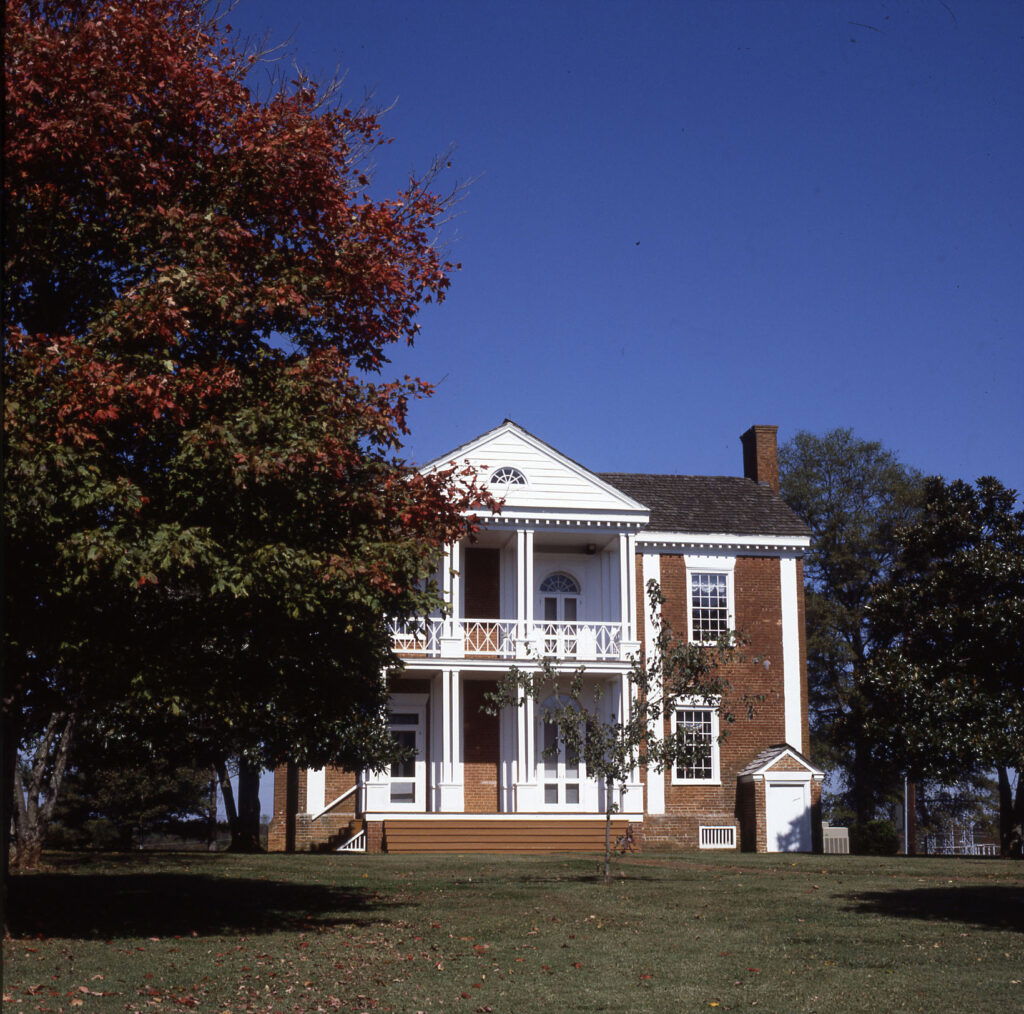
Before the creation of Murray County, the territory was part of the Cherokee Nation. The Cherokee people had governance over the area but accepted white merchants and traders into their communities. Among the most influential Cherokee families to inhabit what would become Murray County were the Vanns. James Vann, a prominent Cherokee chief, built a veritable empire at Spring Place; the Vann mill and trading post on the Federal Road generated enough wealth to enable him to construct a large brick home on Diamond Hill, now known as the Chief Vann House Historic Site. His son, Joseph Vann, was born in the county in 1798.
Vann also encouraged the formation of a Moravian mission at Spring Place in 1801. The mission organized schools and religious services that were attended by many local inhabitants. The Moravian mission thrived in Murray County until the 1830s, when political upheaval and the arrival of competing religious missions forced the small group out of Georgia.
After the official creation of Murray County, the area was infamous for its rampant disorder; political infighting, disputed elections, street brawls, and murders were common events. The lawlessness of Murray was compounded by Georgia’s determination to have all land in the hands of white residents. This resulted in an 1834 law stating that any land held by people of Cherokee heritage would be forfeited if they broke any state law. The law spurred the creation of legislation designed to limit the rights of the Cherokee people. The disenfranchisement of the Cherokee culminated in the forcible removal of the people from Georgia in 1838-39, an act remembered as the Trail of Tears.
Murray County continued to grow steadily in population after the Cherokee removal. Spring Place, the first county seat, bustled with activity as people ventured into the Georgia frontier. By the middle of the nineteenth century, many improvements had been made. Twenty schools were operating in the county, catering to the education of all children, regardless of their financial situation or gender. Spring Place also hosted many businesses and several churches. The arrival of the Western and Atlantic Railroad brought prospects for continued growth in the county, but that area became Whitfield County in 1851.
Murray County on the eve of the Civil War (1861-65) had a very small population of slaveholding plantation owners. Consequently, when the question of Georgia’s secession from the Union was raised, representatives from Murray County were sent to vote against it. When Georgia became a member of the Confederacy, however, the people of Murray County rallied to the call. Although no major battles were fought in Murray, many of the local soldiers did not survive the war, and the loss of lives was felt throughout the county.
During Reconstruction and beyond, the citizens of Murray County faced both prosperous and difficult times. Improvements trickled slowly into the area, but the early establishment of two very important boards aided in Murray’s recovery and rebuilding. The Board of Revenue, Roads, Bridges, and Paupers was created in 1873 to assume responsibility for Murray County’s revenue, roads, bridges, and ferries, as well as decisions dealing with poor residents of the county. The board was also given the power to levy taxes for county improvements, to change or establish militia districts, and to abolish or establish roads, bridges, and ferries. The establishment of the Murray County Board of Education provided a means of cohesion for the county’s educational institutions, which numbered in the thirties by 1880. As the supervisory force behind the county’s schools, the board made decisions ranging from textbook selection to teachers’ contracts.
Like most of America, Murray County suffered during the Great Depression. U.S. president Franklin D. Roosevelt’s New Deal agencies found a strong foothold in Murray County. The Civilian Conservation Corps (CCC) operated a camp out of the Eton district while they worked on the infrastructural development of Fort Mountain State Park. The CCC contributed to the creation of walking trails, cabins, and picnic facilities in the park. Another New Deal program, the Works Progress Administration, erected a stone building on the grounds of Murray County High School, which consolidated the students and teachers from several smaller county high schools. The Tennessee Valley Authority (TVA) provided affordable power to the entire region during the depression and beyond. Murray County is still connected to TVA electricity.
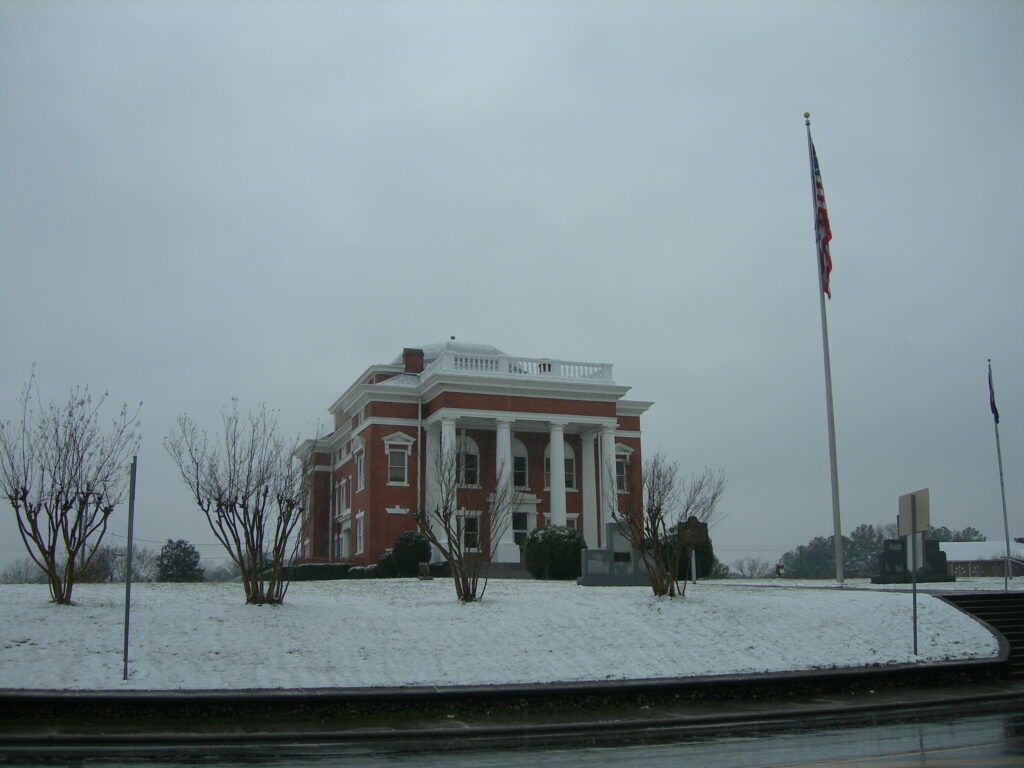
The Louisville and Nashville Railroad arrived in Murray after the turn of the century, bringing with it employment and industry and changing the structure of the county. The importance of the L&N’s Chatsworth Station was underlined in 1913 when the county seat was relocated from Spring Place to Chatsworth. The L&N operated several stations in Murray County and provided transportation between Etowah, Tennessee, and Cartersville, Georgia. By the 1960s, however, rail travel had declined, and the Chatsworth station was the only one that remained open. That depot has since been renovated and houses a museum dedicated to Murray County’s talc industry.
By 2020 the population had increased to 39,973. The growth of industry, especially the manufacture of carpet and textiles, benefited workers; manufacturing accounted for more than half of the county’s jobs in 2002. Carpet manufacturer Shaw Industries still ranks among the county’s largest employers, but textiles are not the only driving force in Murray’s economy. Tourism is also an important industry. Such annual events as the Murray County Spring Festival and the Appalachian Wagon Train, as well as recreational facilities like Fort Mountain State Park, the Cohutta Wilderness Area, the Coosawattee Wildlife Management Area, and Carters Lake, bring visitors into the area.


