
A secret society dedicated to white supremacy in the United States, the Ku Klux Klan (KKK) has existed in various forms since it was first organized in Tennessee shortly after the end of the Civil War (1861-65). The original Klan of Reconstruction was suppressed by the federal government in the early 1870s, but in following decades its violent activities were increasingly rationalized and even romanticized, most notably in Thomas Dixon’s popular novels, The Leopard’s Spots (1902) and The Clansman (1905).
The filmmaker D. W. Griffith, a Kentucky native whose father had fought for the Confederacy, adapted Dixon’s novels for his 1915 silent screen epic, The Birth of a Nation, which solidified the emerging image of the Klan as a noble organization that had saved the post–Civil War South from the tyranny and corruption of southern Blacks and northern Republicans.
Revival of the Klan
The popularity of The Birth of a Nation, and specifically its appearance in Atlanta in December 1915, proved the major impetus for the reemergence of the Klan. Equally significant was the Leo Frank case, which culminated in his August 1915 lynching in Marietta by a group of armed men who had organized themselves as the Knights of Mary Phagan, named for the young murder victim in the case. The anti-Semitic sentiments aroused by that case (Frank was Jewish), along with the ongoing racism fueled by Griffith’s film, led a local recruiter for men’s fraternal societies named Wiliam J. Simmons to establish a new KKK.
Restricting the group’s membership to white American-born Protestant men, Simmons designed the notorious hooded uniform, composed an elaborate ritual for the secret order, and secured an official charter from the state of Georgia. On Thanksgiving evening in 1915, Simmons and sixteen other members of the new order, several of whom also belonged to the Knights of Mary Phagan, ascended Stone Mountain, ignited a flaming cross, and proclaimed the rebirth of the Knights of the Ku Klux Klan.
The revived Klan grew slowly during the years of World War I (1917-18), but in 1920 the secret order changed its solicitation procedures and began to attract hundreds of thousands of recruits from across the nation. Much of the second Klan’s appeal can be credited to its militant advocacy of white supremacy, anti-Catholicism, anti-Semitism, and immigration restriction, but the organization also attracted the support of many middle-class Americans by advocating improved law enforcement, honest government, better public schools, and traditional family life.

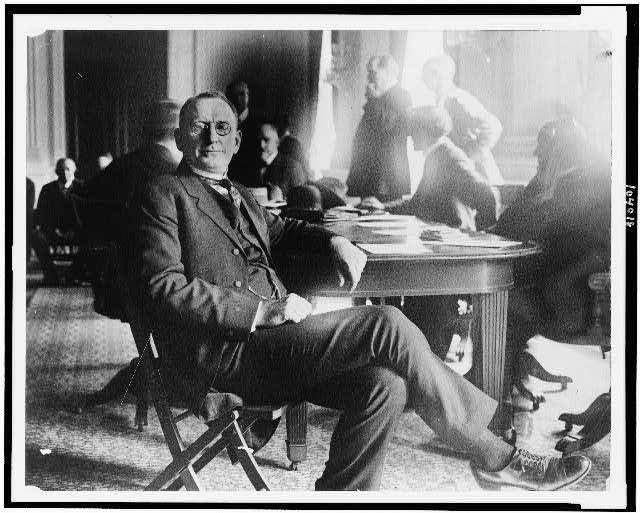
In 1922 Hiram W. Evans, a dentist from Dallas, Texas, displaced William Simmons as the leader of the Klan and attempted to turn the organization into a powerful political machine. The state governments of Alabama, Colorado, Georgia, Indiana, Louisiana, Oklahoma, Oregon, and Texas included officials who were Klan members, and those governments were profoundly influenced by the Klan during the 1920s. In many other parts of the country, the organization scored major victories in municipal elections. By 1924 the perceived power of the Klan was such that neither major political party was willing to denounce it formally.
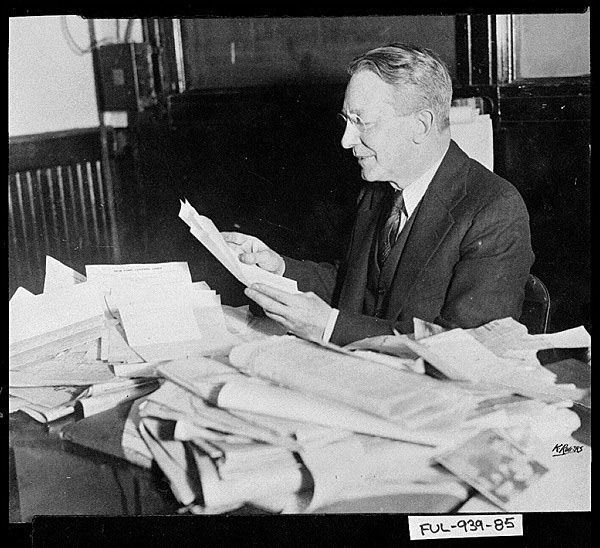
Georgia governor Thomas Hardwick spoke out against the Klan in his reelection campaign of 1922 but was defeated by Clifford Walker. Walker, who served two terms as governor, from 1923 to 1927, was closely associated with the Klan, as were several members of his administration and a number of state legislators. Walker even spoke before a national convention of the Klan in Kansas City, Missouri, in 1924. Julian Harris, editor of the Columbus Enquirer-Sun and the son of writer Joel Chandler Harris, finally aroused public indignation over KKK activity within the state. Long before any other Georgia journalist did so, Harris reported regularly on Klan violence and exposed the public officials who were Klan members, winning a 1926 Pulitzer Prize for his efforts.
At the very height of its political influence, however, the second Klan entered a period of steep decline caused by internal feuding, scandals, increased activism by opponents, and the fading of the group’s romantic image. By 1930 the KKK, which had attracted an estimated 5 million members during the early 1920s, was reduced to about 30,000 supporters. Georgia’s KKK membership declined from approximately 156,000 members in 1925 to 1,400 in 1930. The organization limped along for fourteen more years before formally disbanding in 1944, after being successfully prosecuted for failure to pay federal taxes.
Post–World War II Klan
In 1944 Samuel Green, an Atlanta physician, attempted to revive the KKK in the form of the Association of Georgia Klans, which emphasized white supremacy and anticommunism. After Green’s death in 1949, however, several other Klan groups organized, leaving the movement hopelessly fragmented. In contrast to the powerful Klan of the 1920s, which had drawn much of its membership from the social mainstream, these groups were typically small, fanatical, and on the fringes of respectable society.
The U.S. Supreme Court’s Brown v. Board of Education decision in 1954 mobilized southern whites in a movement of “massive resistance” to federal mandates for desegregation, and the Klan emerged as a major player in that movement. In 1955 the Knights of the Ku Klux Klan formally organized in Atlanta, and the following year the group staged another rally atop Stone Mountain, with an estimated attendance of 3,500.
The group was extremely violent, as demonstrated throughout the 1950s and 1960s by hundreds of attacks against African Americans and white supporters of the civil rights movement. Targets in Georgia included Koinonia Farm, a biracial community in Sumter County; African Americans demonstrating against segregated businesses in downtown Atlanta; and Lemuel Penn, an African American military officer from Washington, D.C., who was murdered while driving through Madison County.
Eventually this violence forced federal authorities to act against the KKK. The Federal Bureau of Investigation (FBI) used an extensive network of informers to disrupt Klan activities in Georgia and other southern states. These efforts proved effective, and by the early 1970s the FBI estimated that there were fewer than 2,000 active Klansmen in the nation.
The Klan, however, has persisted. In the mid-1970s an independent faction in Louisiana, under the leadership of David Duke, a recent Louisiana State University graduate, attracted new recruits from across the nation, and sizeable pockets of Klansmen affiliated with other groups persisted elsewhere. In the 1980s and 1990s the militant racism and anti-Semitism of these Klansmen led them into a close relationship with such organizations as the Aryan Nations and other neo-Nazi factions. In 1987 a parade celebrating Martin Luther King Jr. Day and led by Hosea Williams in majority-white Forsyth County inspired violent counteraction by two Klan organizations, which eventually led to a 1993 court order forcing one of the groups to disband.


