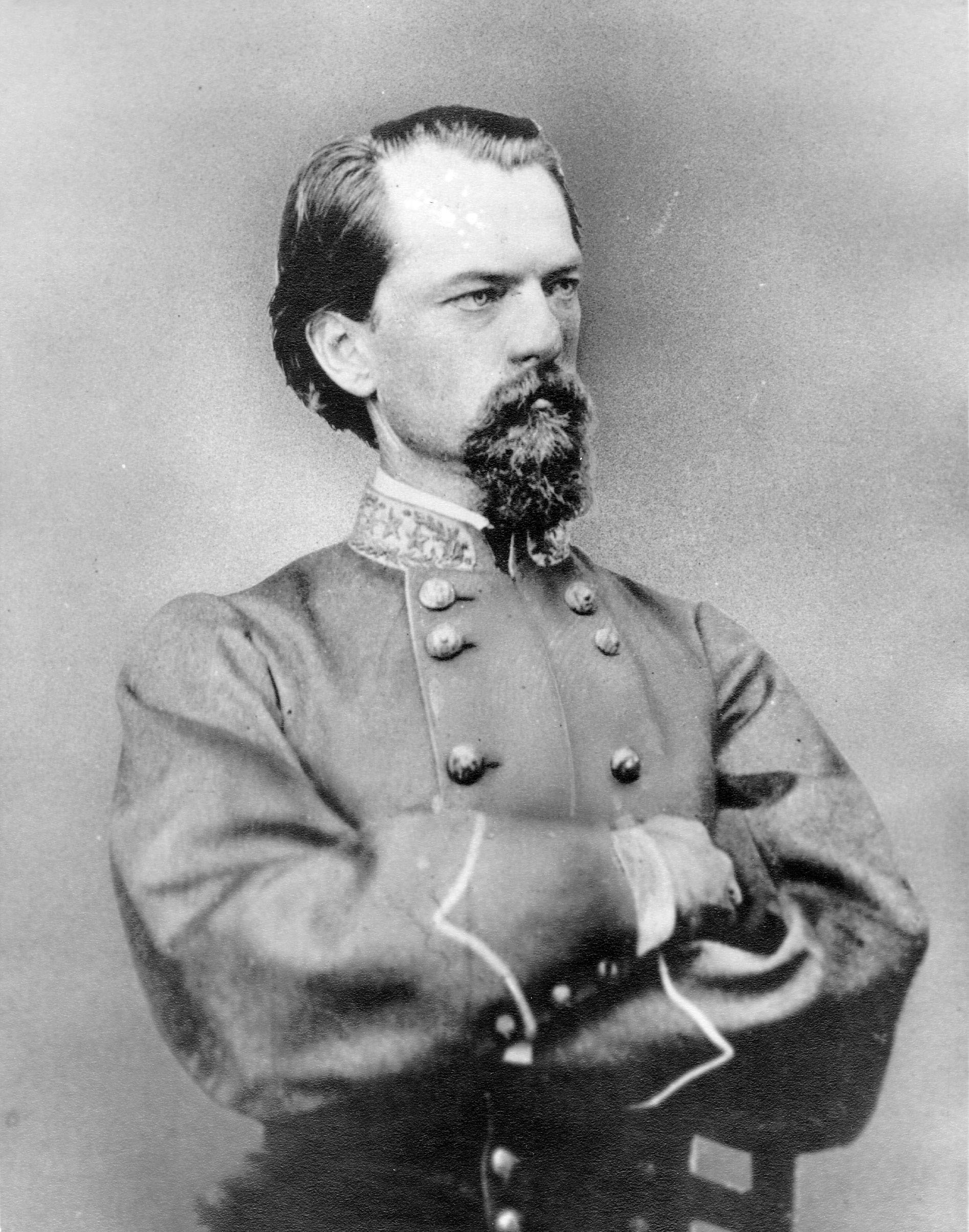
One of Georgia’s most renowned political and military figures of the nineteenth century, John Brown Gordon was born on a plantation situated along the banks of the Flint River in Upson County on February 6, 1832. As a child he moved with his family to Walker County, in the northwestern corner of the state, where his father operated a coal mine. Gordon attended the University of Georgia, achieving senior status in only two years (1851-52). He held the highest grade point average of his class but inexplicably dropped out before graduation. Moving to Atlanta in 1854, Gordon married and read law but attracted few clients, forcing him to return to his father’s mine, which he was managing when the Civil War (1861-65) erupted.
Confederate Service
Although Gordon possessed no formal training as a soldier, he emerged as one of the most successful military leaders produced by the conflict. He began his Confederate service as a totally untrained captain of the “Raccoon Roughs,” a company of mountain men from Georgia and Alabama, and ended it four years later as a major general in command of one half of Confederate general Robert E. Lee’s army. His spectacular rise and career were unmatched in the history of the Army of Northern Virginia and are even more remarkable considering his relative youth; he was only thirty-three years old when he led the army in its formal surrender at Appomattox, Virginia.
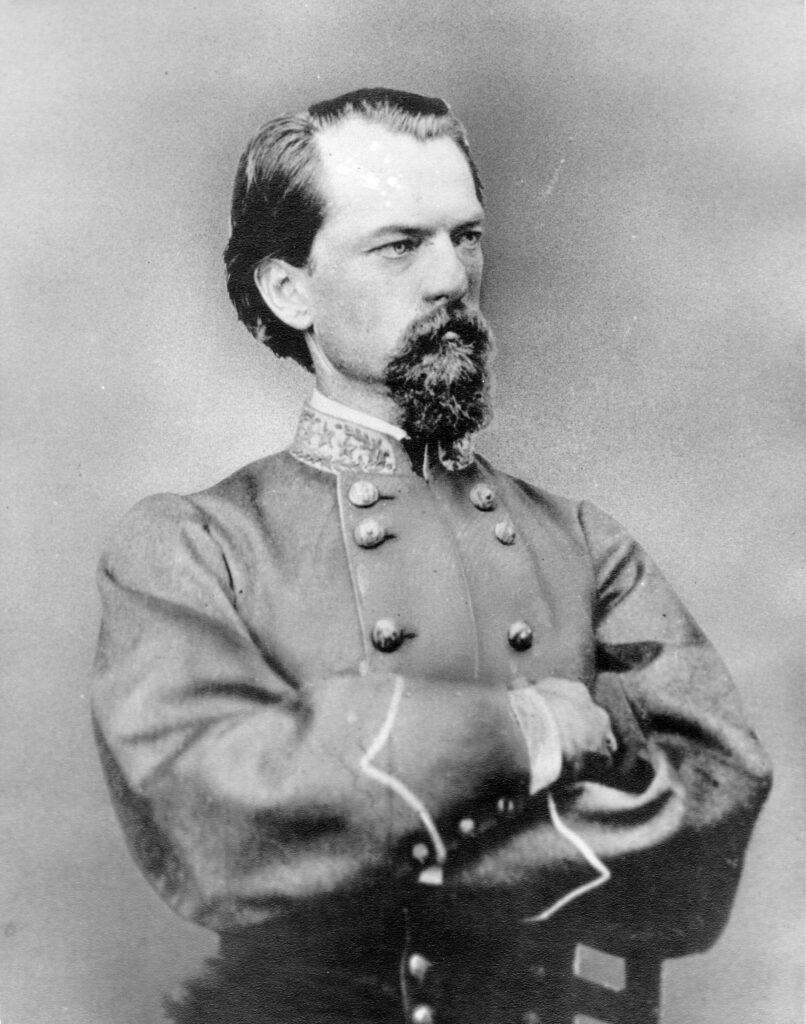
Gordon owed his success as a combat leader to his boldness and his uncanny ability to inspire his troops to amazing feats of bravery and sacrifice. Tall, lanky, and straight as a ramrod, he possessed an audacity and martial bearing that united with his voice to produce what one observer described as “an almost unparalleled effect.” Although he was less adroit as an administrator and disciplinarian than as a fighter, his performance at Sharpsburg (or Antietam), where he was wounded five times; Gettysburg, Pennsylvania; the Wilderness Campaign and Spotsylvania Courthouse in Virginia, where he ordered Lee to retire to the rear; Monocacy, Maryland; and Fort Stedman in Virginia demonstrated his exceptional tactical skill and a penchant for the offensive that overcame his weaknesses in camp and on the march.
Postwar Career
After the war’s end in 1865 Gordon returned to Atlanta, where he worked assiduously to undermine Reconstruction and became one of the leading proponents of both the New South creed and the cult of the Lost Cause. Generally acknowledged as the head of the Ku Klux Klan in Georgia, he was elected to the U.S. Senate in 1872 and was one of the architects of the Compromise of 1877, which gave Republican Rutherford B. Hayes the presidency in exchange for the removal of Federal troops from the South. Having shed his soldier’s uniform for a businessman’s suit, Gordon, aided by his ally Henry W. Grady, espoused a vision that called for a new economic future free of the shackles of slavery but that also paid homage to the Confederate past. His unification of these themes, along with his personal magnetism and the backing of Grady’s Atlanta Constitution, made him nearly impossible to defeat. He won election as governor of Georgia (1886-90) and again as a U.S. senator (1891-97). Along with former Confederate leaders Alfred H. Colquitt and Joseph E. Brown, Gordon formed the so-called Bourbon Triumvirate, which dominated Georgia politics for nearly a quarter of a century.
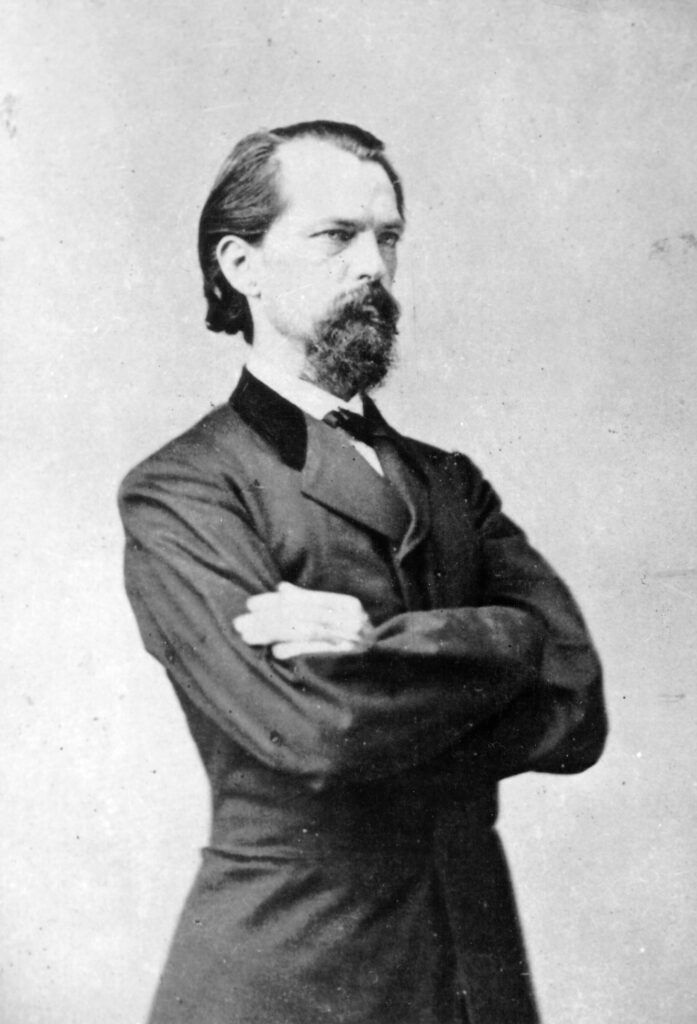
Gordon’s career was tainted by scandal in 1880 when, having been reelected to the U.S. Senate, he suddenly resigned to become general counsel of the state-controlled Western and Atlantic Railroad. When Governor Alfred Colquitt promptly appointed the railroad’s former president Joseph E. Brown to fill Gordon’s unexpired term as senator, a cry went up from revolters within his own Democratic Party that a corrupt bargain had been struck. Although Gordon claimed that he was acting in the best interest of the party and his constituency by retiring from public life, he was never able to fully counter the charges by his critics (chief of whom was Rebecca Latimer Felton) that he was motivated strictly by personal gain.
None of this, however, detracted from his popularity. Gordon enhanced his own reputation as a soldier by publishing his highly successful memoir, Reminiscences of the Civil War, in 1903. In it he tended to exaggerate his role in the war and to embellish certain events to foster unification between the states. He was active in historical and veterans affairs, delivering the keynote address at the dedication of the Confederate monument in Montgomery, Alabama, and lecturing widely on the need for national reconciliation. His political and military prominence made it only natural that he was selected the first commander of the United Confederate Veterans. By the time of his death in 1904, Gordon had capitalized on his war record to such an extent that he had become for many Georgians, and southerners in general, the living embodiment of the Confederacy.