
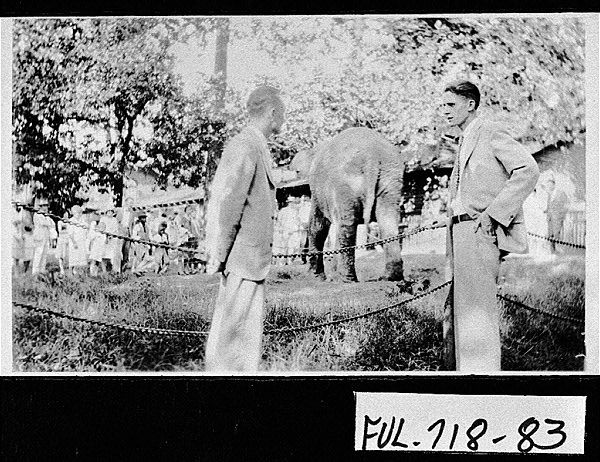
Zoo Atlanta, in Atlanta’s historic Grant Park, began in 1886, when the city was given a spotted fawn to start an animal collection. In 1889 the zoo received its first donation of exotic animals when local businessman George V. Gress purchased a defunct circus and gave the animals to the city’s small collection. Gress’s generosity set a tone for the future of Zoo Atlanta, as prominent Atlantans would come forward periodically to add to its collection, rescue it from dire financial straits, and modernize it. Their efforts helped to establish the zoo as one of the top ten in the world.
The animals from the circus included four lions, a hyena, and several monkeys, among other animals. During the 1890s, Gress continued to tour other zoos across America looking for new animals and new ideas. In its early years, the zoo was a menagerie designed to provide entertaining curiosities in cages. With its lake, boathouse, trails, historic fort, and zoo, Grant Park was called the “most ambitious city play-ground in the South” in 1895 by Harper’s New Monthly Magazine. Still, despite the popularity of the zoo, some city councilmen wondered whether it was worth the expense, and if not for persuasive arguments on the part of Gress and his allies, the zoo might have closed as the twentieth century began.
Atlanta’s newspapers often sponsored fund-raising drives to bring new animals to the collection. In 1935 they worked to raise money for zoo expansion and improvement in order to accommodate animals from the private zoo of Asa Candler Jr., the son of Coca-Cola founder Asa Candler. Candler’s zoo was located at his home on the corner of Briarcliff and University roads in Atlanta’s Druid Hills neighborhood. While the drive did not raise enough money to transfer all of his animals to the city zoo, improvements to the original animal buildings and lots were made to house the new arrivals, which included leopards, a tiger, llamas, bears, a baboon, and a number of monkeys.
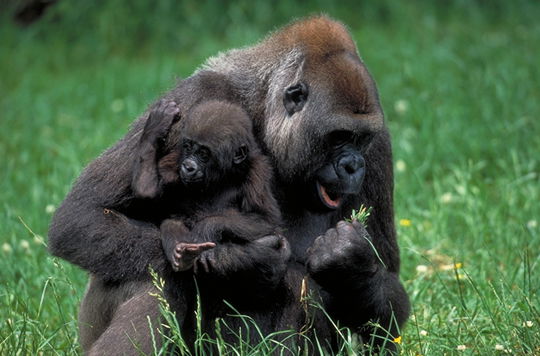
The zoo’s most famous resident, lowland gorilla Willie B., arrived in 1959. Named after Atlanta mayor William B. Hartsfield, the gorilla was quite popular among zoo visitors until an illness cut his life short. The second Willie B. continued to draw crowds, and the primate house became the site for a science room in which children could learn about the scientific study of zoo animals.
Science, research, and conservation were incorporated into the new direction of the zoo during the 1960s. The city parks directors started hiring animal professionals who both conducted research and cared for the animals. In 1967 the zoo hired its first professional zoo director, John Roth, a trained zoologist who was educated in Switzerland and influenced by zoologist and zoo director Heini Hediger . While previous directors Matt Leonard and Johnny Dilbeck were committed zookeepers who loved the animals and worked well with the public, Roth was committed to bringing new trends in zoology to Atlanta’s zoo. His plans included bringing pairs of rare and endangered animals to the zoo for protection and survival. In 1968 Roth also established a connection with Emory University’s Yerkes Regional Primate Research Center, now the Emory National Primate Research Center, by arranging for a group of Sumatran orangutans to come to the zoo for continued study.
While Roth continued to make improvements, the zoo continued to face financial challenges . Following Roth’s resignation in 1970, his successor, J. S. “Steve” Dobbs became the director and faced the challenge of managing an aging zoo. Dobbs’s tenure was marked by controversy, including public concern over the deaths of several animals and deteriorating conditions at the zoo. In 1984 Parade magazine named the Atlanta Zoo one of the ten worst zoos in the nation.
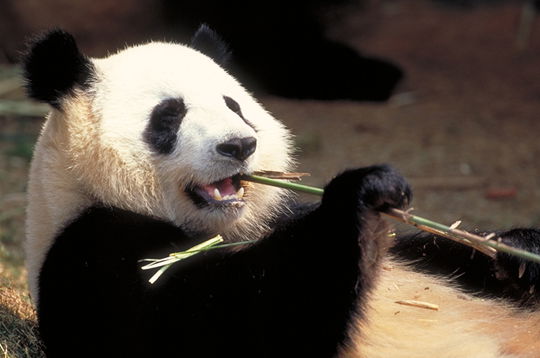
The controversy mobilized both the zoo’s support base and Atlanta city leaders to create a crisis team that would implement changes. Terry Maple, a research scientist at the Georgia Institute of Technology and former board member of the Atlanta Zoological Society, was appointed interim director. Atlanta–Fulton County Zoo Inc., a new public-private partnership, was formed to generate funding and run the zoo, which in 1985 officially became known as Zoo Atlanta. Within a few years, the zoo had raised money, increased visitors and memberships, and found corporate donors. Most importantly, the zoo opened new outdoor habitats for the animals, allowing Willie B. to step outside for the first time since 1961. Under Maple’s leadership, the zoo continued to improve and became arguably one of the best small zoos in the country. The arrival of pandas in 1999 cemented Zoo Atlanta’s reputation as a premier zoological collection focused on education, research, and conservation. Dennis W. Kelly became Zoo Atlanta’s president and chief executive officer in 2003.
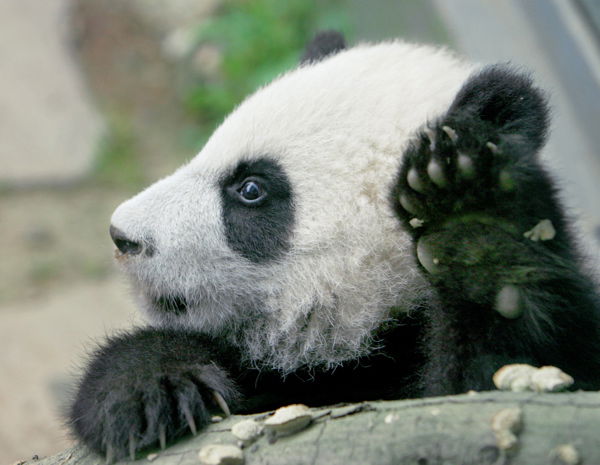
In September 2006 two giant pandas, female Lun Lun and male Yang Yang, on loan to Zoo Atlanta from China, produced a male cub. At the time, giant pandas were classified as endangered , and the birth, resulting from artificial insemination, garnered significant local and international attention. During a traditional Chinese ceremony held 100 days after his birth, the cub was named Mei Lan, meaning “Atlanta Beauty.”
Zoo Atlanta welcomes hundreds of thousands of visitors annually and maintains a large membership base. Corporate partnerships and sponsorships support the zoo’s animal, care, conservation, education, and public programs. Zoo Atlanta supports learning both on-site and beyond its grounds through field trips, guided and overnight experiences, virtual programming, and ZooMobile Outreach, which brings wildlife and conservation education directly into classrooms.


