Skip to content
New Georgia Encyclopedia
  • Home
  • Articles & Media
  • Browse by Topic
  • Browse Collections
  • Browse Georgia Standards
  • A-Z Index
  • Exhibitions
  • Educators
  • Browse    Chevron down
  • Exhibitions
  • Educators
By Topic Content Collections Georgia Standards A-Z Index Arrow right
  • Arts & Culture

    Arts & Culture

  • Business & Economy

    Business & Economy

  • Counties, Cities & Neighborhoods

    Counties, Cities & Neighborhoods

  • Education

    Education

  • Geography & Environment

    Geography & Environment

  • Government & Politics

    Government & Politics

  • History & Archaeology

    History & Archaeology

  • People

    People

  • Science & Medicine

    Science & Medicine

  • Sports & Outdoor Recreation

    Sports & Outdoor Recreation

Stamp Collection
Featured

Stamp Collection

Stamps honoring the political figures, artists, and culture of Georgia.

Frankie Welch’s Americana
Featured

Frankie Welch’s Americana

Fashion and politics from Georgia-born designer Frankie Welch

Recently Added
View All Arrow right
City Page: Atlanta

City Page: Atlanta

Stamp Collection

Stamp Collection

Frankie Welch’s Americana

Frankie Welch’s Americana

  • Georgia Studies

    Georgia Studies

    Eighth Grade
  • Georgia, My State

    Georgia, My State

    Second Grade
All Topics Arrow right Government & Politics Arrow right Governors of Georgia Arrow right Statehood Arrow right

Nineteenth Century

William Y. Atkinson

William Y. Atkinson

1854-1899
Joseph E. Brown

Joseph E. Brown

1821-1894
Rufus Bullock

Rufus Bullock

1834-1907
Allen D. Candler

Allen D. Candler

1834-1910
John Clark

John Clark

1766-1832
Howell Cobb

Howell Cobb

1815-1868
Alfred H. Colquitt

Alfred H. Colquitt

1824-1894
George W. Crawford

George W. Crawford

1798-1872
Peter Early

Peter Early

1773-1817
David Emanuel

David Emanuel

ca. 1744-1808
John Forsyth

John Forsyth

1780-1841
George R. Gilmer

George R. Gilmer

1790-1859
John B. Gordon

John B. Gordon

1832-1904
Charles Jones Jenkins

Charles Jones Jenkins

1805-1883
Herschel Johnson

Herschel Johnson

1812-1880
James Johnson

James Johnson

1811-1891
Wilson Lumpkin

Wilson Lumpkin

1783-1870
Henry McDaniel

Henry McDaniel

1836-1926
Charles McDonald

Charles McDonald

1793-1860
John Milledge

John Milledge

1757-1818
David B. Mitchell

David B. Mitchell

1766-1837
William J. Northen

William J. Northen

1835-1913
William Rabun

William Rabun

1771-1819
Thomas Ruger

Thomas Ruger

1833-1907
William Schley

William Schley

1786-1858
James M. Smith

James M. Smith

1823-1890
Alexander Stephens

Alexander Stephens

1812-1883
Josiah Tattnall

Josiah Tattnall

ca. 1764-1803
George W. Towns

George W. Towns

1801-1854
George Troup

George Troup

1780-1856
Loading
Star

Featured Content

Harriet Powers

Harriet Powers

People
Civil Rights Movement

Civil Rights Movement

Mid- to Late 20th Century Topics
Trending

Trending

Ted Turner

Ted Turner

People
Georgia Guidestones

Georgia Guidestones

Sites & Museums
Elias Boudinot

Elias Boudinot

People
Augusta Jane Evans Wilson

Augusta Jane Evans Wilson

People
Clock

Updated Recently

Ted Turner

Ted Turner

2 days ago
Ku Klux Klan in the Reconstruction Era

Ku Klux Klan in the Reconstruction Era

4 days ago
Valdosta State University

Valdosta State University

1 week ago
Charlie Smith

Charlie Smith

1 week ago

A More Perfect Union

The New Georgia Encyclopedia is supported by funding from A More Perfect Union, a special initiative of the National Endowment for the Humanities.

Learn More
New Georgia Encyclopedia
ISSN 2765-8732
Project Partners
logo-press UGA Press logo-galileo GALILEO logo-humanities Georgia Humanities logo-seal Office of the Governor logo-libraries UGA Libraries
Articles & Media
  • Browse by Topic
  • Content Collections
  • Georgia Standards
Special Content
  • Quizzes
  • Exhibitions
  • Spotify Playlists
  • Georgia Exhibits
  • Educator Resources
About
  • The Project
  • The People
  • Sponsors & Partners
Editorial
  • Our Process
  • Contributor Info
  • Permissions & Use
Stay in Touch
Facebook Instagram Twitter Contact Us
Donate to the NGE

Your support helps us commission new entries and update existing content.

Donate

© 2004–2026 Georgia Humanities, University of Georgia Press

  • Terms of Use
  • Privacy Policy

Media gallery

Sixtieth Regiment of Foot

Sixtieth Regiment of Foot

  • Info Details
  • Citation Terms of Use

Three companies of the British Sixtieth Regiment of Foot were sent to the Georgia colony in 1763 by King George III to strengthen the defense of colonial garrisons against attack by the French and Spanish.

Courtesy of The Company of Military Historians

The New Georgia Encyclopedia does not hold the copyright for this media resource and can neither grant nor deny permission to republish or reproduce the image online or in print. All requests for permission to publish or reproduce the resource must be submitted to the rights holder.

Henry McDaniel

Henry McDaniel

  • Info Details
  • Citation Terms of Use

Henry McDaniel was elected governor in 1883 to replace Alexander Stephens, who died while in office. McDaniel was subsequently reelected to a full term in 1884. During his tenure, he oversaw a substantial reduction of the state's debt, the construction of the state capitol, and the establishment of the Georgia Institute of Technology.

Courtesy of Georgia Capitol Museum, University of Georgia Libraries

The New Georgia Encyclopedia does not hold the copyright for this media resource and can neither grant nor deny permission to republish or reproduce the image online or in print. All requests for permission to publish or reproduce the resource must be submitted to the rights holder.

  • Info Details
  • Citation Terms of Use

The New Georgia Encyclopedia does not hold the copyright for this media resource and can neither grant nor deny permission to republish or reproduce the image online or in print. All requests for permission to publish or reproduce the resource must be submitted to the rights holder.

David B. Mitchell

David B. Mitchell

  • Info Details
  • Citation Terms of Use

David B. Mitchell served three terms as governor of Georgia early in the nineteenth century. Before his election to the governor's office, he served as mayor as Savannah. Mitchell resigned in 1817 from his third gubernatorial term to accept the post of U.S. Agent to the Creek Indians.

Courtesy of Georgia Capitol Museum, University of Georgia Libraries

The New Georgia Encyclopedia does not hold the copyright for this media resource and can neither grant nor deny permission to republish or reproduce the image online or in print. All requests for permission to publish or reproduce the resource must be submitted to the rights holder.

James Johnson

James Johnson

  • Info Details
  • Citation Terms of Use

James Johnson served as the provisional governor of Georgia, appointed by U.S. president Andrew Johnson, for most of 1865. A native of North Carolina, Johnson lived much of his life in Columbus, Georgia, where he established a law practice.

Courtesy of Georgia Capitol Museum, University of Georgia Libraries

The New Georgia Encyclopedia does not hold the copyright for this media resource and can neither grant nor deny permission to republish or reproduce the image online or in print. All requests for permission to publish or reproduce the resource must be submitted to the rights holder.

George R. Gilmer

George R. Gilmer

  • Info Details
  • Citation Terms of Use

George R. Gilmer served two terms as the governor of Georgia, first from 1829 to 1831, and again from 1837 to 1839. Relations with the Cherokees following the discovery of gold in north Georgia dominated his first term, while skirmishes with Seminoles in south Georgia occupied much of his second. Gilmer County, in the north Georgia mountains, is named in his honor.

Courtesy of Georgia Capitol Museum, University of Georgia Libraries

The New Georgia Encyclopedia does not hold the copyright for this media resource and can neither grant nor deny permission to republish or reproduce the image online or in print. All requests for permission to publish or reproduce the resource must be submitted to the rights holder.

Gilmer Childhood Home

Gilmer Childhood Home

  • Info Details
  • Citation Terms of Use

Georgia governor George R. Gilmer's childhood home originally stood in the Goose Pond community of Oglethorpe County. The house is now located at the Calloway Plantation in Wilkes County.

Photograph by Carol Ebel

The New Georgia Encyclopedia does not hold the copyright for this media resource and can neither grant nor deny permission to republish or reproduce the image online or in print. All requests for permission to publish or reproduce the resource must be submitted to the rights holder.

Thomas Ruger

Thomas Ruger

  • Info Details
  • Citation Terms of Use

Thomas Ruger, a Union officer, was appointed military provisional governor of Georgia in 1868, during Reconstruction. During his six-month tenure, Ruger instituted the state's convict lease system.

Courtesy of Georgia Capitol Museum, University of Georgia Libraries

The New Georgia Encyclopedia does not hold the copyright for this media resource and can neither grant nor deny permission to republish or reproduce the image online or in print. All requests for permission to publish or reproduce the resource must be submitted to the rights holder.

Charles McDonald

Charles McDonald

  • Info Details
  • Citation Terms of Use

Charles McDonald, a lawyer and businessman, was elected governor of Georgia in 1839 and served until 1843. As governor, McDonald worked to improve the state's precarious financial situation, brought about by the panic of 1837.

From The History of the State of Georgia, by I. W. Avery

The New Georgia Encyclopedia does not hold the copyright for this media resource and can neither grant nor deny permission to republish or reproduce the image online or in print. All requests for permission to publish or reproduce the resource must be submitted to the rights holder.

James M. Smith

James M. Smith

  • Info Details
  • Citation Terms of Use

James M. Smith, a Confederate veteran and native of Twiggs County, served as the governor of Georgia from 1872 to 1877. Smith's election marked the end of Reconstruction in the state.

Courtesy of Georgia Capitol Museum, University of Georgia Libraries

The New Georgia Encyclopedia does not hold the copyright for this media resource and can neither grant nor deny permission to republish or reproduce the image online or in print. All requests for permission to publish or reproduce the resource must be submitted to the rights holder.

James Jackson and the Yazoo Land Fraud

James Jackson and the Yazoo Land Fraud

  • Info Details
  • Citation Terms of Use

James Jackson, a U.S. senator from Georgia, destroys records connected with the Yazoo land fraud in 1796, after the passage of the Yazoo Rescinding Act. Josiah Tattnall Sr., a state representative, helped Jackson secure the votes necessary in the legislature to pass the act.

From A History of Georgia for Use in Schools, by L. B. Evans

The New Georgia Encyclopedia does not hold the copyright for this media resource and can neither grant nor deny permission to republish or reproduce the image online or in print. All requests for permission to publish or reproduce the resource must be submitted to the rights holder.

William Schley

William Schley

  • Info Details
  • Citation Terms of Use

William Schley served as the governor of Georgia from 1835 to 1837. Before his gubernatorial term, Schley was elected judge of the Superior Court of the Middle District in Georgia and U.S. representative from the state.

From A History of Georgia for Use in Schools, by L. B. Evans

The New Georgia Encyclopedia does not hold the copyright for this media resource and can neither grant nor deny permission to republish or reproduce the image online or in print. All requests for permission to publish or reproduce the resource must be submitted to the rights holder.

Peter Early

Peter Early

  • Info Details
  • Citation Terms of Use

Peter Early, governor of Georgia from 1813 to 1815, also served as a U.S. congressman, state superior court judge, and state senator during his political career. A trustee of the University of Georgia, Early served as the school's interim president in 1817.

From A History of Georgia for Use in Schools, by L. B. Evans

The New Georgia Encyclopedia does not hold the copyright for this media resource and can neither grant nor deny permission to republish or reproduce the image online or in print. All requests for permission to publish or reproduce the resource must be submitted to the rights holder.

George W. Towns

George W. Towns

  • Info Details
  • Citation Terms of Use

George W. Towns served as the governor of Georgia from 1847 to 1851. Earlier in his career, Towns served as both a state legislator and a U.S. congressman. Although he entered politics as a Unionist, Towns was known as an ardent states' rights secessionist during his governorship.

The New Georgia Encyclopedia does not hold the copyright for this media resource and can neither grant nor deny permission to republish or reproduce the image online or in print. All requests for permission to publish or reproduce the resource must be submitted to the rights holder.

William Y. Atkinson

William Y. Atkinson

  • Info Details
  • Citation Terms of Use

As the governor of Georgia from 1894 to 1898, Democrat William Y. Atkinson condemned lynching, reformed the convict lease system, and decreased the state's debt. The portrait of Atkinson, painted by James Pope Field, hangs in the state capitol in Atlanta.

Courtesy of Georgia Capitol Museum, University of Georgia Libraries
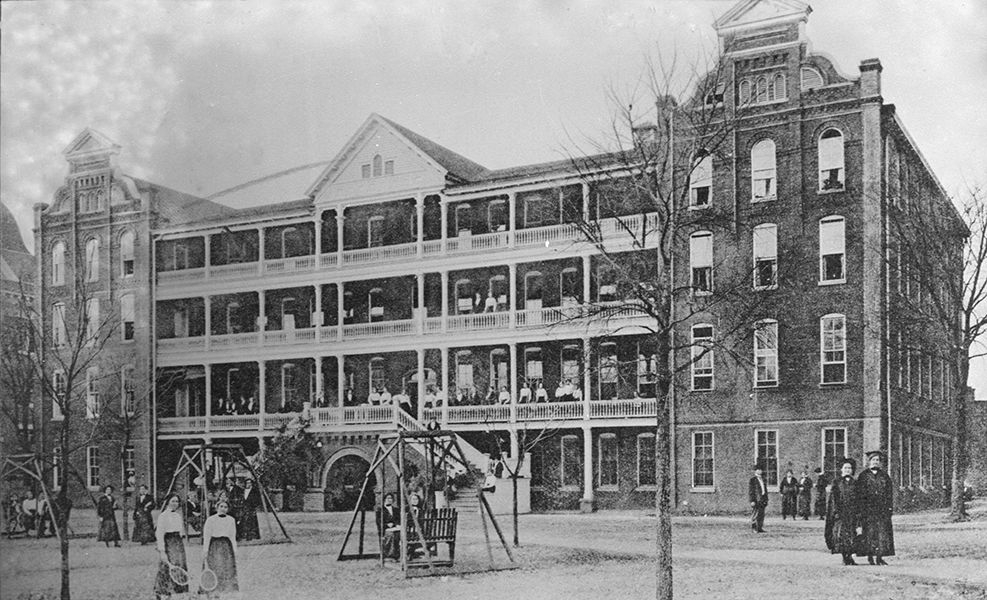
The New Georgia Encyclopedia does not hold the copyright for this media resource and can neither grant nor deny permission to republish or reproduce the image online or in print. All requests for permission to publish or reproduce the resource must be submitted to the rights holder.

Atkinson Hall

Atkinson Hall

  • Info Details
  • Citation Terms of Use

Students on the campus of Georgia Normal and Industrial College (later Georgia College and State University) in Milledgeville walk past Atkinson Hall, circa 1900. The first college for women in the state, the school was named for Georgia governor William Y. Atkinson, who was instrumental in its founding.

Courtesy of Georgia Archives, Vanishing Georgia, # bal098.

View on partner site

The New Georgia Encyclopedia does not hold the copyright for this media resource and can neither grant nor deny permission to republish or reproduce the image online or in print. Requests for permission to publish or reproduce the resource should be submitted to the Georgia Archives.

Tallulah Falls

Tallulah Falls

  • Info Details
  • Citation Terms of Use

George Cooke's Tallulah Falls (1841) features elements typical of the Hudson River School of landscape painting, particularly in its depiction of the picturesque and sublime. Tallulah Falls, located in the northeast Georgia mountains, comprises four waterfalls, three of which Cooke captures in his painting. Oil on canvas (35 3/4" x 28 3/4").

Courtesy of Georgia Museum of Art, University of Georgia; gift of Mrs. William Lorenzo Moss. GMOA 1959.646

The New Georgia Encyclopedia does not hold the copyright for this media resource and can neither grant nor deny permission to republish or reproduce the image online or in print. All requests for permission to publish or reproduce the resource must be submitted to the rights holder.

books

books

  • Info Details
  • Citation Terms of Use

The New Georgia Encyclopedia does not hold the copyright for this media resource and can neither grant nor deny permission to republish or reproduce the image online or in print. All requests for permission to publish or reproduce the resource must be submitted to the rights holder.

Allen D. Candler

Allen D. Candler

  • Info Details
  • Citation Terms of Use

Allen D. Candler served as governor of Georgia from 1898 to 1902 and was a resident of Banks County. Candler County, created in southeast Georgia in 1914, was named for him.

Courtesy of Hargrett Rare Book and Manuscript Library, University of Georgia Libraries, Georgia Photo File.

The New Georgia Encyclopedia does not hold the copyright for this media resource and can neither grant nor deny permission to republish or reproduce the image online or in print. Requests for permission to publish or reproduce the resource should be submitted to the Hargrett Manuscript and Rare Book Library at the University of Georgia.

John Forsyth

John Forsyth

  • Info Details
  • Citation Terms of Use

John Forsyth served as a U.S. congressman and senator and as the minister to Spain before becoming the governor of Georgia in 1827. In 1833 U.S. president Andrew Jackson named Forsyth secretary of state, making him the only Georgian to hold the office until Dean Rusk in 1961.

Courtesy of Library of Congress, Prints and Photographs Division

The New Georgia Encyclopedia does not hold the copyright for this media resource and can neither grant nor deny permission to republish or reproduce the image online or in print. All requests for permission to publish or reproduce the resource must be submitted to the rights holder.

John Milledge

John Milledge

  • Info Details
  • Citation Terms of Use

John Milledge, a veteran of the Revolutionary War, served as the state attorney general and in the state legislature before being elected governor of Georgia in 1802. Milledgeville, which served as the state capital for much of the nineteenth century, was named in his honor.

Courtesy of Georgia Capitol Museum, University of Georgia Libraries

The New Georgia Encyclopedia does not hold the copyright for this media resource and can neither grant nor deny permission to republish or reproduce the image online or in print. All requests for permission to publish or reproduce the resource must be submitted to the rights holder.

Alfred H. Colquitt

Alfred H. Colquitt

  • Info Details
  • Citation Terms of Use

Alfred H. Colquitt joined the Confederate army as a captain in 1861 and rose to the rank of major general by the end of the Civil War. Although his service during the 1863 battle at Chancellorsville, Virginia, was considered questionable, Colquitt redeemed himself the following year at the Battle of Olustee in Florida.

Reprinted by permission of Alabama Department of Archives and History

The New Georgia Encyclopedia does not hold the copyright for this media resource and can neither grant nor deny permission to republish or reproduce the image online or in print. All requests for permission to publish or reproduce the resource must be submitted to the rights holder.

Alfred H. Colquitt

Alfred H. Colquitt

  • Info Details
  • Citation Terms of Use

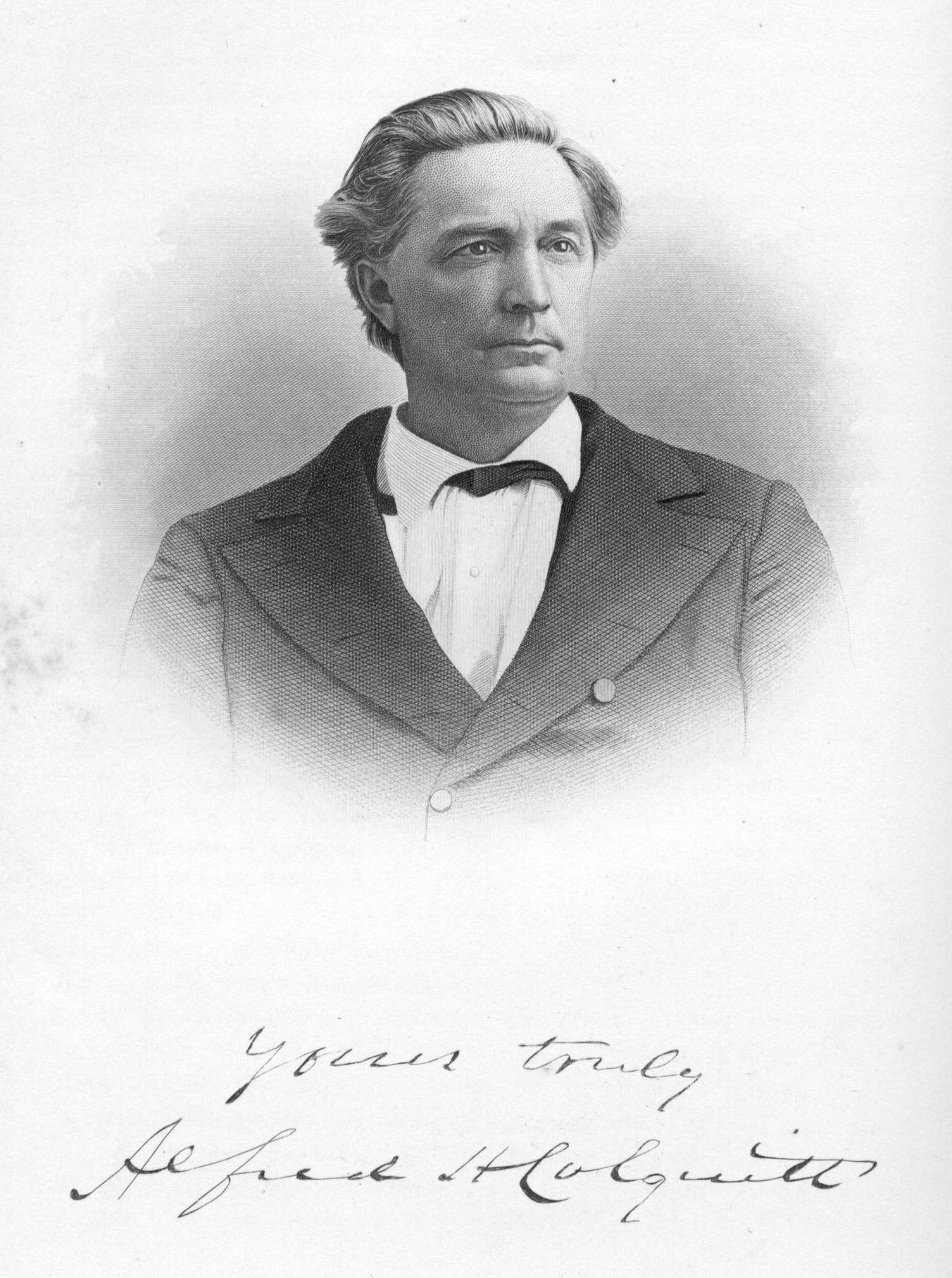
Alfred H. Colquitt, a veteran officer of the Civil War, was a native of Walton County. Before the war, Colquitt served in the U.S. Congress, and in 1876 he was elected governor of Georgia. In 1883 he returned to Congress as a senator.

Portrait of Brigadier-General Alfred Holt Colquitt, Southern Illustrated News, 1863. Image from Wikimedia.
View on source site

The New Georgia Encyclopedia does not hold the copyright for this media resource and can neither grant nor deny permission to republish or reproduce the image online or in print. All requests for permission to publish or reproduce the resource must be submitted to the rights holder.

Alfred H. Colquitt

Alfred H. Colquitt

  • Info Details
  • Citation Terms of Use

Alfred H. Colquitt, a member of the Bourbon Triumvirate, was elected governor of Georgia in 1876. Although his tenure was marked by controversial finances and other scandals, Colquitt is credited with advocating industrialization in the state as a means of recovering from the economic hardships of the Civil War.

From The History of the State of Georgia, by I. W. Avery

The New Georgia Encyclopedia does not hold the copyright for this media resource and can neither grant nor deny permission to republish or reproduce the image online or in print. All requests for permission to publish or reproduce the resource must be submitted to the rights holder.

Charles Jones Jenkins

Charles Jones Jenkins

  • Info Details
  • Citation Terms of Use

Charles Jones Jenkins accepts a scroll bearing the governor's seal and the motto In Arduis Fidelis (Steadfast in Adversity) in this portrait by Poindexter Page Carter. In 1872 the state presented the seal and motto to the former governor in appreciation for his resistance to the dictates of the federal government during Reconstruction.

Courtesy of Georgia Capitol Museum, University of Georgia Libraries

The New Georgia Encyclopedia does not hold the copyright for this media resource and can neither grant nor deny permission to republish or reproduce the image online or in print. All requests for permission to publish or reproduce the resource must be submitted to the rights holder.

Charles Jones Jenkins

Charles Jones Jenkins

  • Info Details
  • Citation Terms of Use

The Georgia Platform established Georgia's conditional acceptance of the Compromise of 1850. Much of the document followed a draft written by Charles Jones Jenkins, who later served as Georgia's governor from 1865 to 1868.

Courtesy of Hargrett Rare Book and Manuscript Library, University of Georgia Libraries.

The New Georgia Encyclopedia does not hold the copyright for this media resource and can neither grant nor deny permission to republish or reproduce the image online or in print. Requests for permission to publish or reproduce the resource should be submitted to the Hargrett Manuscript and Rare Book Library at the University of Georgia.

[Engraving of] Geo[rge] M. Troup / J.C. Buttre

George Troup

  • Info Details
  • Citation Terms of Use

George Troup served as a state representative, U.S. congressman, U.S. senator, and Georgia governor during the course of a lifelong political career. In the early nineteenth century he and John Clark were rivals, and factional parties and newspapers in Georgia formed around the beliefs of their followers.

Courtesy of Hargrett Rare Book and Manuscript Library, University of Georgia Libraries, Keith Read Collection.

View on partner site

The New Georgia Encyclopedia does not hold the copyright for this media resource and can neither grant nor deny permission to republish or reproduce the image online or in print. Requests for permission to publish or reproduce the resource should be submitted to the Hargrett Manuscript and Rare Book Library at the University of Georgia.

George Troup

George Troup

  • Info Details
  • Citation Terms of Use

George Troup served two terms, from 1823 to 1827, as the governor of Georgia. During his tenure, Troup removed the majority of Creek Indians from the state and opened their lands to white settlement.

Courtesy of Hargrett Rare Book and Manuscript Library, University of Georgia Libraries, Georgia Photo File.

The New Georgia Encyclopedia does not hold the copyright for this media resource and can neither grant nor deny permission to republish or reproduce the image online or in print. Requests for permission to publish or reproduce the resource should be submitted to the Hargrett Manuscript and Rare Book Library at the University of Georgia.

John Clark

John Clark

  • Info Details
  • Citation Terms of Use

John Clark, a Revolutionary War veteran, was the governor of Georgia from 1819 to 1823. During the war, Clark served under the command of his father, Elijah Clarke, at the battles of Kettle Creek and Musgrove Mill.

Courtesy of Georgia Capitol Museum, University of Georgia Libraries
The New Georgia Encyclopedia does not hold the copyright for this media resource and can neither grant nor deny permission to republish or reproduce the image online or in print. All requests for permission to publish or reproduce the resource must be submitted to the rights holder.

  • Info Details
  • Citation Terms of Use

The New Georgia Encyclopedia does not hold the copyright for this media resource and can neither grant nor deny permission to republish or reproduce the image online or in print. All requests for permission to publish or reproduce the resource must be submitted to the rights holder.

Herschel Johnson

Herschel Johnson

  • Info Details
  • Citation Terms of Use

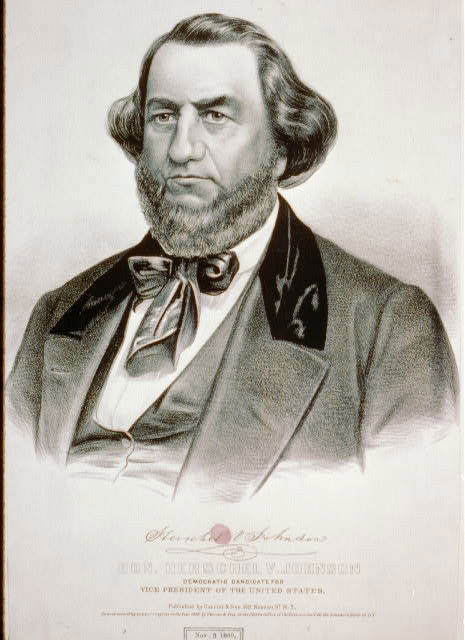
Herschel Johnson, a nineteenth-century Georgia politician, is pictured in an 1860 Currier and Ives portrait. That same year, Johnson was the vice-presidential running mate for Democratic candidate Stephen Douglas, who lost the election to Abraham Lincoln.

Courtesy of Library of Congress, Prints and Photographs Division
The New Georgia Encyclopedia does not hold the copyright for this media resource and can neither grant nor deny permission to republish or reproduce the image online or in print. All requests for permission to publish or reproduce the resource must be submitted to the rights holder.

1860 Presidential Election

1860 Presidential Election

  • Info Details
  • Citation Terms of Use

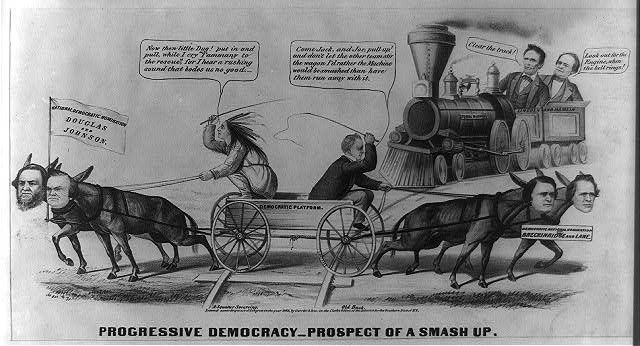
Republican candidate Abraham Lincoln, with running mate Hannibal Hamlin, steams toward a wagon named "Democratic Platform" that is trapped on the tracks between two teams of candidates. Stephen Douglas and Hershel Johnson pull toward the left, while John Breckinridge and Joseph Lane pull toward the right.

Courtesy of Library of Congress, Prints and Photographs Division

The New Georgia Encyclopedia does not hold the copyright for this media resource and can neither grant nor deny permission to republish or reproduce the image online or in print. All requests for permission to publish or reproduce the resource must be submitted to the rights holder.

George W. Crawford

George W. Crawford

  • Info Details
  • Citation Terms of Use

George W. Crawford was the first and only Whig to be elected governor of Georgia. He served two terms, from 1843 to 1847. A native of Columbia County, Crawford also served as a state representative and as Georgia's attorney general.

From The History of the State of Georgia, by I. W. Avery
The New Georgia Encyclopedia does not hold the copyright for this media resource and can neither grant nor deny permission to republish or reproduce the image online or in print. All requests for permission to publish or reproduce the resource must be submitted to the rights holder.

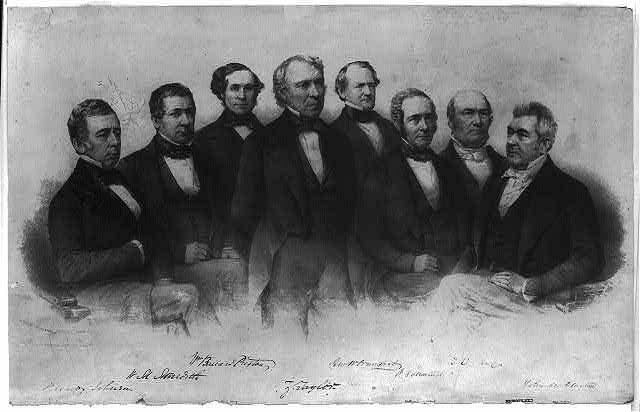
Zachary Taylor’s Cabinet

Zachary Taylor’s Cabinet

  • Info Details
  • Citation Terms of Use

In 1849 George W. Crawford, a former governor of Georgia, joined U.S. president Zachary Taylor's cabinet as secretary of war. From left, Reverdy Johnson, William M. Meredith, William B. Preston, Zachary Taylor, Crawford, Jacob Collamer, Thomas Ewing, and John M. Clayton.

Courtesy of Library of Congress, Prints and Photographs Division

The New Georgia Encyclopedia does not hold the copyright for this media resource and can neither grant nor deny permission to republish or reproduce the image online or in print. All requests for permission to publish or reproduce the resource must be submitted to the rights holder.

William J. Northen

William J. Northen

  • Info Details
  • Citation Terms of Use

During his tenure as governor, from 1890 to 1894, William J. Northen limited the workday for railroad employees to thirteen hours and granted the Georgia Railroad Commission power to regulate telegraph companies. He also advanced agricultural inspection and education.

Image from Wikimedia Commons

View on source site

The New Georgia Encyclopedia does not hold the copyright for this media resource and can neither grant nor deny permission to republish or reproduce the image online or in print. All requests for permission to publish or reproduce the resource must be submitted to the rights holder.

Mount Zion Academy

Mount Zion Academy

  • Info Details
  • Citation Terms of Use

William J. Northen began teaching at Mount Zion Academy in Hancock County soon after his graduation from Mercer University in about 1853. Over time, he rose to assistant principal and finally became headmaster of the school, a post he held until his health forced him into retirement in 1874.

Courtesy of Hargrett Rare Book and Manuscript Library, University of Georgia Libraries, Georgia Photo File.
The New Georgia Encyclopedia does not hold the copyright for this media resource and can neither grant nor deny permission to republish or reproduce the image online or in print. Requests for permission to publish or reproduce the resource should be submitted to the Hargrett Manuscript and Rare Book Library at the University of Georgia.

John B. Gordon

John B. Gordon

  • Info Details
  • Citation Terms of Use

John B. Gordon rose to prominence during the Civil War, entering as a captain and emerging as a major general. He later served as a U.S. senator and as the governor of Georgia.

Photograph by Wikimedia

The New Georgia Encyclopedia does not hold the copyright for this media resource and can neither grant nor deny permission to republish or reproduce the image online or in print. All requests for permission to publish or reproduce the resource must be submitted to the rights holder.

John B. Gordon

John B. Gordon

  • Info Details
  • Citation Terms of Use

John B. Gordon, a renowned Confederate officer and political leader, was a member of the Farmers' Alliance in Georgia until the organization's split with the Democratic Party in 1892. A member of the Bourbon Triumvirate, Gordon served multiple terms in the U.S. Senate and, from 1886 to 1890, as governor of the state.

Courtesy of Library of Congress, Prints and Photographs Division, Brady-Handy Photograph Collection.

View on source site

The New Georgia Encyclopedia does not hold the copyright for this media resource and can neither grant nor deny permission to republish or reproduce the image online or in print. All requests for permission to publish or reproduce the resource must be submitted to the rights holder.

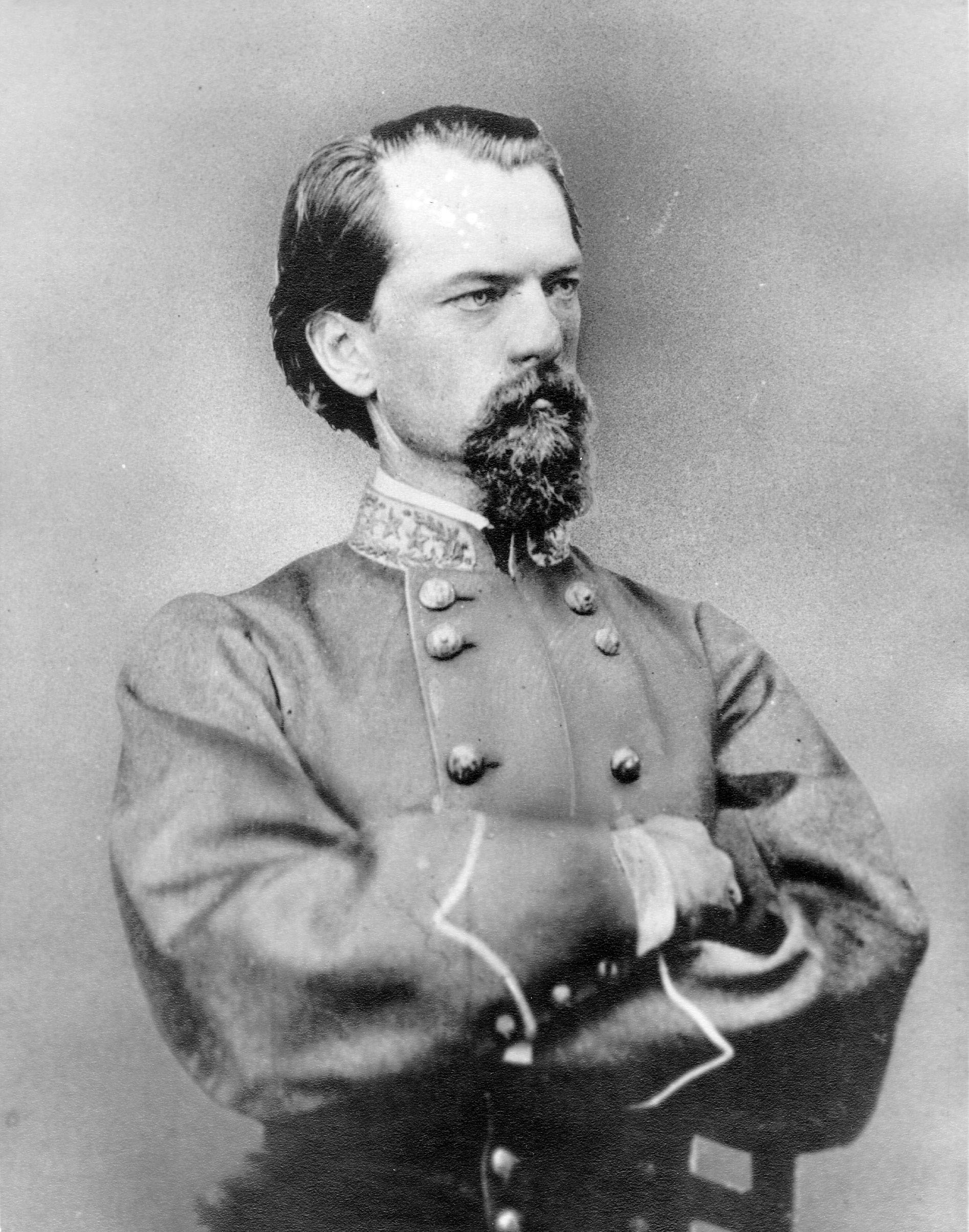
John B. Gordon

John B. Gordon

  • Info Details
  • Citation Terms of Use

General John B. Gordon, for whom Gordon State College is named, was a Confederate officer during the Civil War and later served as governor of Georgia and as a U.S. senator.

Courtesy of Georgia Historical Society, Georgia Historical Society collection of photographs, #GHS 1361PH-24-09-4694.
View on partner site

The New Georgia Encyclopedia does not hold the copyright for this media resource and can neither grant nor deny permission to republish or reproduce the image online or in print. All requests for permission to publish or reproduce the resource must be submitted to Georgia Historical Society.

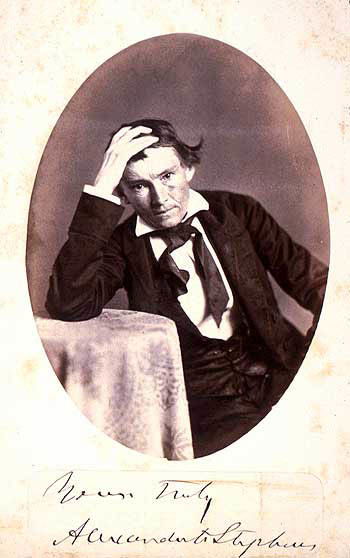
Alexander Stephens

Alexander Stephens

  • Info Details
  • Citation Terms of Use

A lifelong politician, Alexander Stephens is perhaps best remembered as the vice president of the Confederacy during the Civil War.

Courtesy of National Portrait Gallery, Smithsonian Institute
The New Georgia Encyclopedia does not hold the copyright for this media resource and can neither grant nor deny permission to republish or reproduce the image online or in print. All requests for permission to publish or reproduce the resource must be submitted to the rights holder.

Alexander Stephens

Alexander Stephens

  • Info Details
  • Citation Terms of Use

Alexander Stephens was selected in 1866 by the Georgia legislature to represent the state, along with Herschel Johnson, in the U.S. Senate. Because he had served as vice president of the Confederacy, however, the Senate did not allow Stephens to take his seat.

The New Georgia Encyclopedia does not hold the copyright for this media resource and can neither grant nor deny permission to republish or reproduce the image online or in print. All requests for permission to publish or reproduce the resource must be submitted to the rights holder.

Alexander Stephens

Alexander Stephens

  • Info Details
  • Citation Terms of Use

Alexander Stephens, a native of Taliaferro County, was a prominent member of the Whig Party during the sectional crisis that arose in the wake of the Mexican War (1846-48). He later joined the ranks of the Democratic party and served as vice president of the Confederacy during the Civil War (1861-65).

The New Georgia Encyclopedia does not hold the copyright for this media resource and can neither grant nor deny permission to republish or reproduce the image online or in print. All requests for permission to publish or reproduce the resource must be submitted to the rights holder.

Alexander Stephens

Alexander Stephens

  • Info Details
  • Citation Terms of Use

Alexander Stephens, the Confederate vice president and a Georgia native, was a master at managing relations with journalists, and he used his stable of press supporters, including the Augusta Chronicle and Sentinel and the Southern Confederacy of Atlanta, to spread his peace doctrine.

Courtesy of Hargrett Rare Book and Manuscript Library, University of Georgia Libraries, Georgia Photo File.

The New Georgia Encyclopedia does not hold the copyright for this media resource and can neither grant nor deny permission to republish or reproduce the image online or in print. Requests for permission to publish or reproduce the resource should be submitted to the Hargrett Manuscript and Rare Book Library at the University of Georgia.

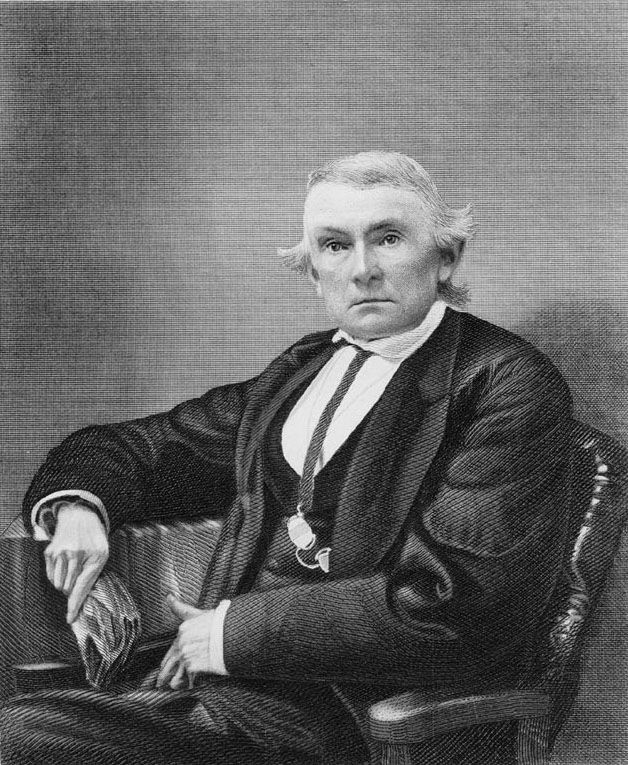
Alexander Stephens

Alexander Stephens

  • Info Details
  • Citation Terms of Use

Alexander Stephens. After the Civil War Stephens was elected to the U.S. Senate, but that body refused to seat the former vice president of the Confederacy. He then was elected to the Georgia House of Representatives and finally as governor, an office he held for only a few months before he died.

Image from Clement Anselm Evans

The New Georgia Encyclopedia does not hold the copyright for this media resource and can neither grant nor deny permission to republish or reproduce the image online or in print. All requests for permission to publish or reproduce the resource must be submitted to the rights holder.

Liberty Hall

Liberty Hall

  • Info Details
  • Citation Terms of Use

Liberty Hall in Taliaferro County, home of Alexander H. Stephens, is pictured in 1936.

Courtesy of Library of Congress, Prints and Photographs Division, Historic American Buildings Survey, #HABS GA,133-CRAWV,1--2.
View on source site

The New Georgia Encyclopedia does not hold the copyright for this media resource and can neither grant nor deny permission to republish or reproduce the image online or in print. All requests for permission to publish or reproduce the resource must be submitted to the rights holder.

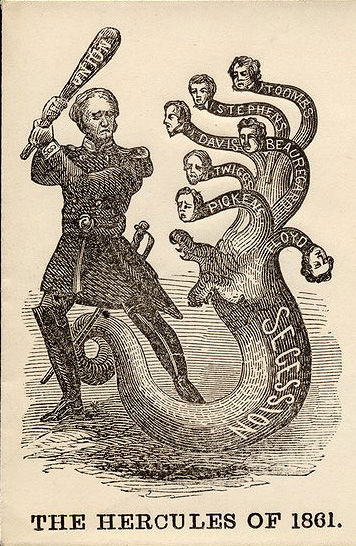
The Hercules of 1861

The Hercules of 1861

  • Info Details
  • Citation Terms of Use

In this political cartoon, a Union officer (unidentified) swings a club labeled "Union" in defense against a many-headed serpent labeled "Secession." The serpent's heads are: Floyd, Pickens, Beauregard, Twiggs, Davis, Stephens, and Toombs, all leaders of the Southern secession movement and the resulting Confederacy.

Courtesy of Civil War Treasures, New York Historical Society
The New Georgia Encyclopedia does not hold the copyright for this media resource and can neither grant nor deny permission to republish or reproduce the image online or in print. All requests for permission to publish or reproduce the resource must be submitted to the rights holder.

A. H. Stephens Historic Park

A. H. Stephens Historic Park

  • Info Details
  • Citation Terms of Use

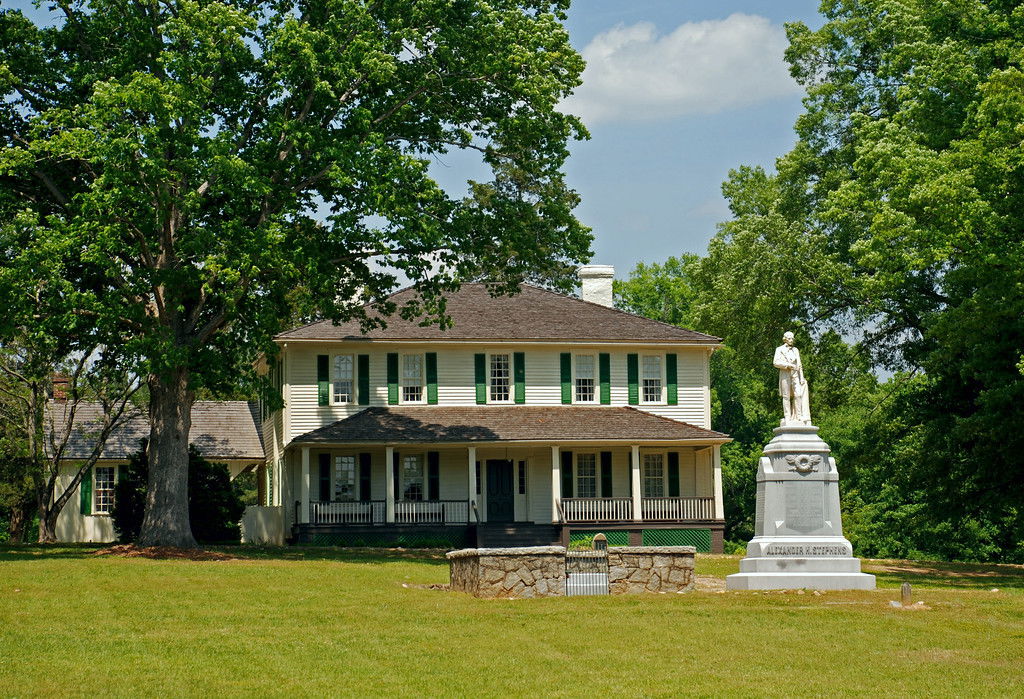
The A. H. Stephens Historic Park, in Crawfordville, is part of the Georgia state park system. The park includes Alexander Stephens's restored home, Liberty Hall, as well a museum containing Civil War artifacts.

Courtesy of Georgia Department of Natural Resources, Photograph from Georgia State Parks.

The New Georgia Encyclopedia does not hold the copyright for this media resource and can neither grant nor deny permission to republish or reproduce the image online or in print. Requests for permission to publish or reproduce the resource may need to be submitted to the Georgia Department of Natural Resources.

Wilson Lumpkin

Wilson Lumpkin

  • Info Details
  • Citation Terms of Use

Wilson Lumpkin served as governor of Georgia from 1831 to 1835. During his long political career, Lumpkin was also elected to office in the U.S. House and Senate and held the position of U.S. commissioner to the Cherokee Indians. Painting by J. T. Moore.

Courtesy of Georgia Capitol Tours

The New Georgia Encyclopedia does not hold the copyright for this media resource and can neither grant nor deny permission to republish or reproduce the image online or in print. All requests for permission to publish or reproduce the resource must be submitted to the rights holder.

Wilson Lumpkin

Wilson Lumpkin

  • Info Details
  • Citation Terms of Use

Before embarking on his political career, Wilson Lumpkin also worked as a farmer and as a teacher. Upon his death in 1870, Lumpkin's daughter deeded his farm in Athens to the University of Georgia.

From The Removal of the Cherokee Indians from Georgia, by Wilson Lumpkin

The New Georgia Encyclopedia does not hold the copyright for this media resource and can neither grant nor deny permission to republish or reproduce the image online or in print. All requests for permission to publish or reproduce the resource must be submitted to the rights holder.

Rufus Bullock

Rufus Bullock

  • Info Details
  • Citation Terms of Use

Rufus Bullock was Georgia's first Republican governor (1868-71) and a staunch supporter of African American equality.

Courtesy of Hargrett Rare Book and Manuscript Library, University of Georgia Libraries, Georgia Photo File.

The New Georgia Encyclopedia does not hold the copyright for this media resource and can neither grant nor deny permission to republish or reproduce the image online or in print. Requests for permission to publish or reproduce the resource should be submitted to the Hargrett Manuscript and Rare Book Library at the University of Georgia.

Joseph E. Brown

Joseph E. Brown

  • Info Details
  • Citation Terms of Use

The Civil War governor of Georgia, Joseph E. Brown was one of the most successful politicians in the state's history. A member of the Bourbon Triumvirate, Brown served as a U.S. senator from 1880 to 1890.

Courtesy of Hargrett Rare Book and Manuscript Library, University of Georgia Libraries.

The New Georgia Encyclopedia does not hold the copyright for this media resource and can neither grant nor deny permission to republish or reproduce the image online or in print. Requests for permission to publish or reproduce the resource should be submitted to the Hargrett Manuscript and Rare Book Library at the University of Georgia.

Joseph E. Brown

Joseph E. Brown

  • Info Details
  • Citation Terms of Use

In 1857 Joseph E. Brown edged aside better-known politicians to become the Democrats' gubernatorial candidate. He won decisively, and from then on he was unbeatable in statewide elections.

Courtesy of Hargrett Rare Book and Manuscript Library, University of Georgia Libraries.

The New Georgia Encyclopedia does not hold the copyright for this media resource and can neither grant nor deny permission to republish or reproduce the image online or in print. Requests for permission to publish or reproduce the resource should be submitted to the Hargrett Manuscript and Rare Book Library at the University of Georgia.

Howell Cobb

Howell Cobb

  • Info Details
  • Citation Terms of Use

Georgia native Howell Cobb served as congressman (1843-51; 1855-57), Speaker of the U.S. House of Representatives (1849-51), governor of Georgia (1851-53), and secretary of the treasury (1857-60).

Courtesy of Hargrett Rare Book and Manuscript Library, University of Georgia Libraries, Georgia Photo File.

The New Georgia Encyclopedia does not hold the copyright for this media resource and can neither grant nor deny permission to republish or reproduce the image online or in print. Requests for permission to publish or reproduce the resource should be submitted to the Hargrett Manuscript and Rare Book Library at the University of Georgia.

Howell Cobb

Howell Cobb

  • Info Details
  • Citation Terms of Use

Following Georgia's secession from the Union in 1861, Howell Cobb served as president of the Confederate Provisional Congress (1861-62) and a major general of the Confederate army.

Courtesy of Hargrett Rare Book and Manuscript Library, University of Georgia Libraries, Georgia Photo File.

The New Georgia Encyclopedia does not hold the copyright for this media resource and can neither grant nor deny permission to republish or reproduce the image online or in print. Requests for permission to publish or reproduce the resource should be submitted to the Hargrett Manuscript and Rare Book Library at the University of Georgia.

Sixtieth Regiment of Foot Henry McDaniel
David B. Mitchell James Johnson George R. Gilmer Gilmer Childhood Home Thomas Ruger Charles McDonald James M. Smith James Jackson and the Yazoo Land Fraud William Schley Peter Early George W. Towns William Y. Atkinson Atkinson Hall Tallulah Falls books Allen D. Candler John Forsyth John Milledge Alfred H. Colquitt Alfred H. Colquitt Alfred H. Colquitt Charles Jones Jenkins Charles Jones Jenkins [Engraving of] Geo[rge] M. Troup / J.C. Buttre George Troup John Clark
Herschel Johnson 1860 Presidential Election George W. Crawford Zachary Taylor’s Cabinet William J. Northen Mount Zion Academy John B. Gordon John B. Gordon John B. Gordon Alexander Stephens Alexander Stephens Alexander Stephens Alexander Stephens Alexander Stephens Liberty Hall The Hercules of 1861 A. H. Stephens Historic Park Wilson Lumpkin Wilson Lumpkin Rufus Bullock Joseph E. Brown Joseph E. Brown Howell Cobb Howell Cobb