
Destined to defend the southern frontier from the continued presence of Spanish colonials in the American Southeast, Fort Frederica on St. Simons Island served as the British military headquarters in colonial America. During its heyday, from 1736 to 1758, General James Oglethorpe’s town and fort played a pivotal role in the struggle for empire between the competing interests of England and Spain. This clash of cultures pitted British redcoats, the Highland Independent Company of Foot, and coastal rangers and sympathetic Southeastern Indians against the Spanish forces. They were concentrated beyond “the debatable land” southward to St. Augustine, Florida.
A Planned Community
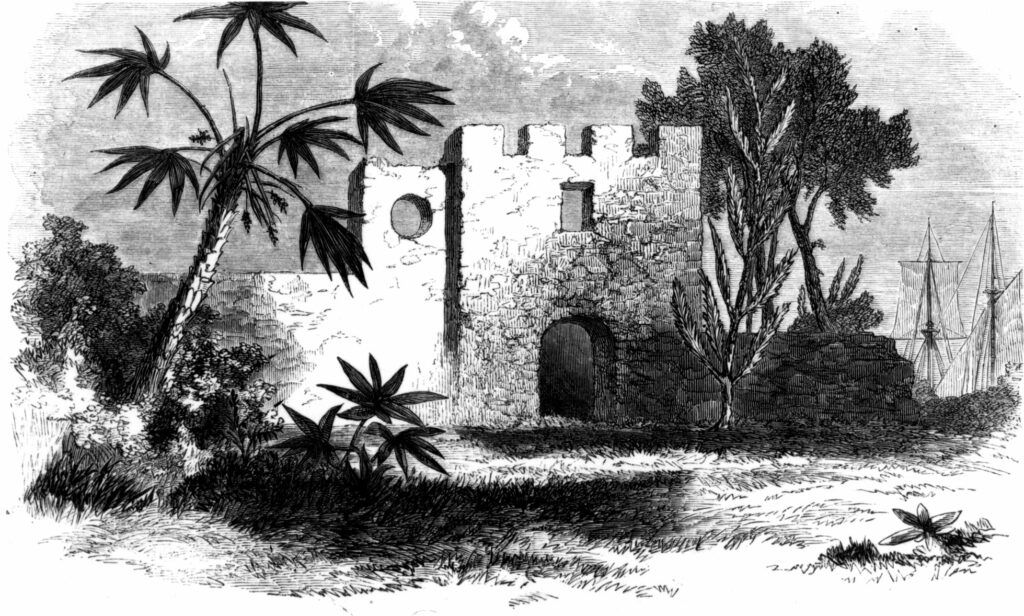
To honor Frederick Louis, prince of Wales, Georgia’s Board of Trustees determined upon a name for the new town in the fledgling province on September 26, 1735. Because there was already a Fort Frederick on Port Royal, South Carolina, the name was feminized. The old town at Frederica was laid out in an orderly fashion. It featured two wards divided by a 75-foot-wide main corridor (“Broad Street”) and eighty-four regularly spaced lots. A cross street, called Barracks Street, leading to the regimental quarters in the North Ward bisected Broad, creating the two wards. Each was considered a political subdivision or tithing ward.
Courtesy of Ed Mathews, Amelia Island Images
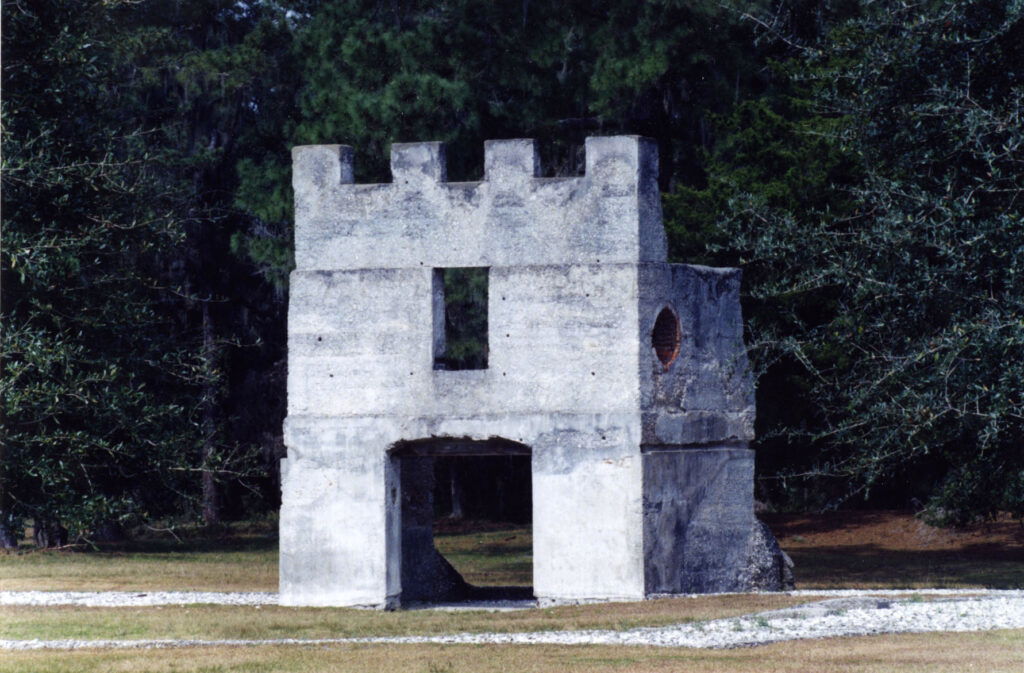
The military support town, which covered forty acres, complemented the impressive star-shaped design of the fortress and spur battery of cannon. Attributed to the fortification plans of French military strategist Sebastien Le Prestre de Vauban, the citadel was built of tabby, a type of “coastal concrete.” In today’s archaeological ruins at Frederica—including the King’s magazine, house foundations and walls, and the soldiers’ barracks—this limey mortar lends a sense of beauty and great antiquity to the site.
A Strategic Location
Despite the smaller forts and batteries located to the south and west, the town’s citadel and the heart of the frontier defense system was Fort Frederica. In his Journal, John Percival (the earl of Egmont) remarked that the “bay within was very secure for shipping” and the southern mouth of the Altamaha River “land lock’d from the Winds.” Oglethorpe had observed a high bluff in January 1734 while reconnoitering Georgia’s coastal Sea Islands in search of a suitable fort site. The bluff’s elevation and location provided a commanding view of inland waterways and the salty sea marshes as well as protection from invasion. The fact that the land had previously been cleared for an “Indian old field” made this strategically important location even more attractive.
Fort and First Residents
Accompanied by thirty men, Oglethorpe returned to this setting by February 18, 1736. He traced out a fort with four bastions and “dug enough of the ditch and raised enough of the Rampart for a sample for the Men to work upon.” Grass was cut into turf from the Indian old field and used in sodding the fort. By September 1738 Oglethorpe’s regiment consisted of six companies, each with about 125 men. An imposing barracks was constructed to house them.
Forty-four men and seventy-two women and children had settled at Fort Frederica by mid-March 1736. Less than ten years later, the number had grown to 1,000. Most of the early residents were tradesmen and their families who had braved a two-month voyage across the Atlantic. They prospered, supplying the needs of the regiment.
Spanish Threat
After an unsuccessful siege of St. Augustine by Georgia soldiers in 1740 during the War of Jenkins’ Ear, Spanish forces launched a retaliatory invasion of Fort Frederica in midsummer 1742. Oglethorpe was outgunned and outmanned but not outmaneuvered. Over a two-week period he and his men engaged the invading Spanish forces in a skirmish at Gulley Hole Creek and on July 7, 1742, at Bloody Marsh, ambushed them in a drizzling rain. As a result, the Spanish retreated, never again to present a threat to English designs in the Southeast.
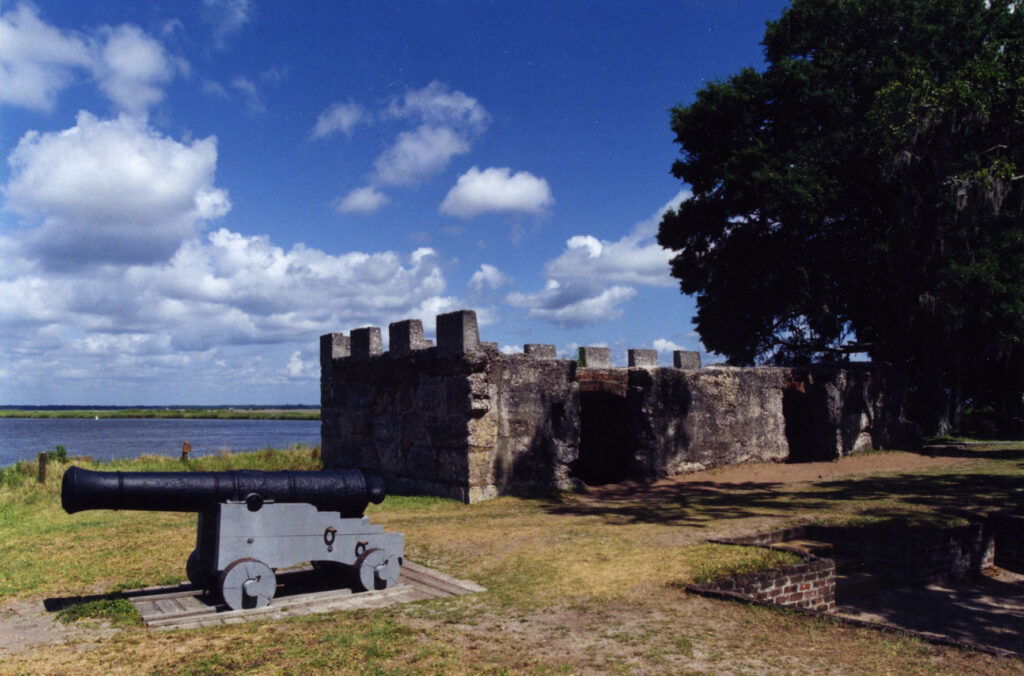
The British regiment disbanded in May 1749. With its departure, many of Frederica’s townspeople relocated. Nine years later, in April 1758, a great fire swept Frederica, reducing much of it to ashes. Today the Fort Frederica National Monument ruins stand as a silent reminder of colonial military struggles.


