The New Georgia Encyclopedia is supported by funding from A More Perfect Union, a special initiative of the National Endowment for the Humanities.
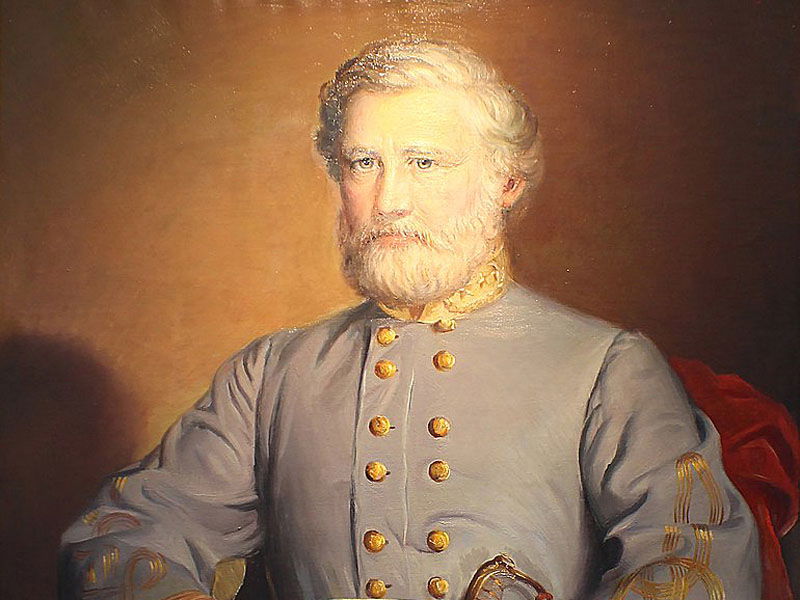
Henry L. Benning was an influential advocate for secession and helped to draft Georgia's Ordinance of Secession.
Courtesy of Georgia Info, Digital Library of Georgia.
The New Georgia Encyclopedia does not hold the copyright for this media resource and can neither grant nor deny permission to republish or reproduce the image online or in print. Requests for permission to publish or reproduce the resource may need to be submitted to the Digital Library of Georgia.
The New Georgia Encyclopedia does not hold the copyright for this media resource and can neither grant nor deny permission to republish or reproduce the image online or in print. All requests for permission to publish or reproduce the resource must be submitted to the rights holder.
Fort Benning, home of the U.S. Army Infantry, comprises nearly 120,000 acres in Chattahoochee County.
Courtesy of Fort Benning
The New Georgia Encyclopedia does not hold the copyright for this media resource and can neither grant nor deny permission to republish or reproduce the image online or in print. All requests for permission to publish or reproduce the resource must be submitted to the rights holder.
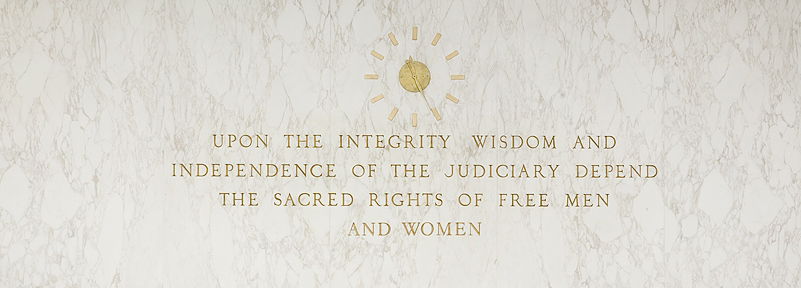
The motto of the Court of Appeals of Georgia was engraved into the wall of its former courtroom in the State Judicial Building in Atlanta. Fifteen judges serve on the Court of Appeals, which was established in 1906 to ease the caseload of the Supreme Court of Georgia.
Photograph by S. Sean Barrett
The New Georgia Encyclopedia does not hold the copyright for this media resource and can neither grant nor deny permission to republish or reproduce the image online or in print. All requests for permission to publish or reproduce the resource must be submitted to the rights holder.
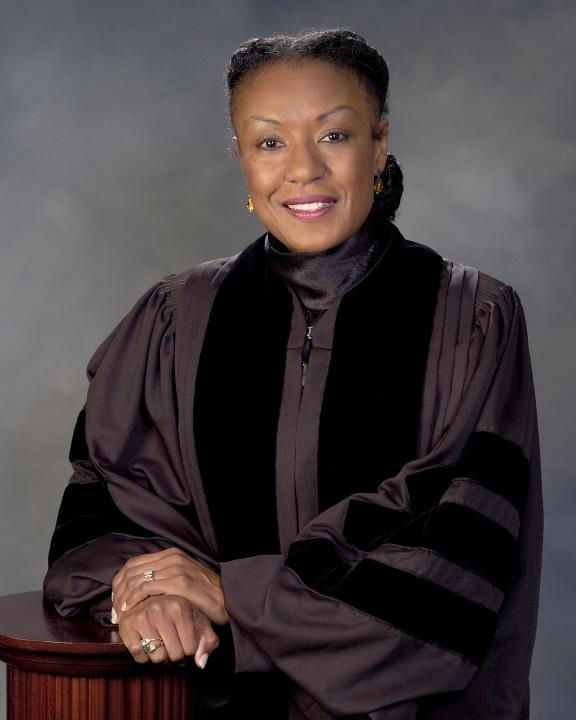
Leah Ward Sears, the first woman and youngest justice to sit on the Supreme Court of Georgia, served as chief justice from 2005 to 2009.
The New Georgia Encyclopedia does not hold the copyright for this media resource and can neither grant nor deny permission to republish or reproduce the image online or in print. All requests for permission to publish or reproduce the resource must be submitted to the rights holder.
Robert Benham, the first African American chief justice of the Supreme Court of Georgia, delivers the keynote address at the 2004 Georgia Excellence in Public Service Awards.
Courtesy of Georgia Info, Digital Library of Georgia.
The New Georgia Encyclopedia does not hold the copyright for this media resource and can neither grant nor deny permission to republish or reproduce the image online or in print. Requests for permission to publish or reproduce the resource may need to be submitted to the Digital Library of Georgia.
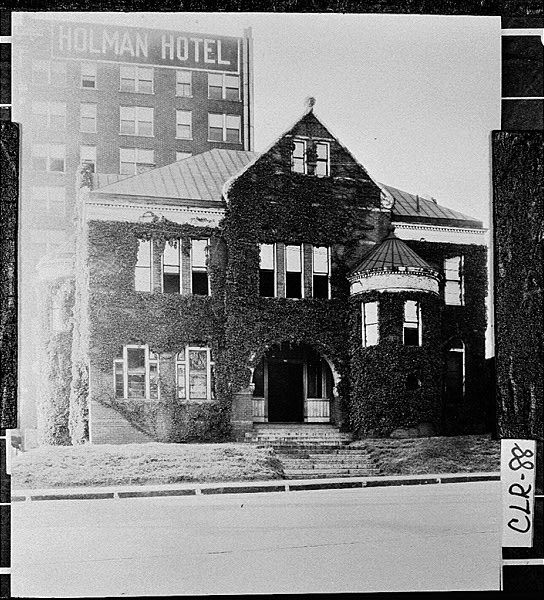
Lumpkin Law School in Athens, pictured circa 1920, was located at the corner of Broad and Lumpkin streets. Known today as the University of Georgia School of Law, the school was founded in 1859. The building, no longer standing, was also known as the Elks Home and the Athenian Club.
Courtesy of Georgia Archives, Vanishing Georgia, #
clr088.
The New Georgia Encyclopedia does not hold the copyright for this media resource and can neither grant nor deny permission to republish or reproduce the image online or in print. Requests for permission to publish or reproduce the resource should be submitted to the Georgia Archives.
The Judicial Building in Atlanta houses the Supreme Court of Georgia, as well as the Court of Appeals and the Attorney General's office.
Courtesy of the Supreme Court of Georgia
The New Georgia Encyclopedia does not hold the copyright for this media resource and can neither grant nor deny permission to republish or reproduce the image online or in print. All requests for permission to publish or reproduce the resource must be submitted to the rights holder.
William Bootle served as a U.S. District Court judge in Georgia from 1954 to 1981. His rulings upheld decisions made by the U.S. Supreme Court in matters of school desegregation, including the desegregation of the University of Georgia in 1961.
Courtesy of Macon District Court
The New Georgia Encyclopedia does not hold the copyright for this media resource and can neither grant nor deny permission to republish or reproduce the image online or in print. All requests for permission to publish or reproduce the resource must be submitted to the rights holder.