Skip to content
New Georgia Encyclopedia
  • Home
  • Articles & Media
  • Browse by Topic
  • Browse Collections
  • Browse Georgia Standards
  • A-Z Index
  • Exhibitions
  • Educators
  • Browse    Chevron down
  • Exhibitions
  • Educators
By Topic Content Collections Georgia Standards A-Z Index Arrow right
  • Arts & Culture

    Arts & Culture

  • Business & Economy

    Business & Economy

  • Counties, Cities & Neighborhoods

    Counties, Cities & Neighborhoods

  • Education

    Education

  • Geography & Environment

    Geography & Environment

  • Government & Politics

    Government & Politics

  • History & Archaeology

    History & Archaeology

  • People

    People

  • Science & Medicine

    Science & Medicine

  • Sports & Outdoor Recreation

    Sports & Outdoor Recreation

Frankie Welch’s Americana
Featured

Frankie Welch’s Americana

Fashion and politics from Georgia-born designer Frankie Welch

Stamp Collection
Featured

Stamp Collection

Stamps honoring the political figures, artists, and culture of Georgia.

Recently Added
View All Arrow right
City Page: Atlanta

City Page: Atlanta

Stamp Collection

Stamp Collection

Frankie Welch’s Americana

Frankie Welch’s Americana

  • Georgia Studies

    Georgia Studies

    Eighth Grade
  • Georgia, My State

    Georgia, My State

    Second Grade
All Topics Arrow right History & Archaeology Arrow right Revolution & Early Republic, 1775-1800 Arrow right

Revolution & Early Republic Topics

Boundaries of Georgia

Boundaries of Georgia

Slavery in Revolutionary Georgia

Slavery in Revolutionary Georgia

Loading
Star

Featured Content

Civil Rights Movement

Civil Rights Movement

Mid- to Late 20th Century Topics
Harriet Powers

Harriet Powers

People
Trending

Trending

Georgia Guidestones

Georgia Guidestones

Sites & Museums
James D. Bulloch

James D. Bulloch

People
Bobby Cox

Bobby Cox

People
Dixiecrats

Dixiecrats

Political Parties, Interest Groups & Movements
Clock

Updated Recently

Morris Brown College

Morris Brown College

5 days ago
Burke County

Burke County

5 days ago
CNN

CNN

5 days ago
Ted Turner

Ted Turner

1 week ago

A More Perfect Union

The New Georgia Encyclopedia is supported by funding from A More Perfect Union, a special initiative of the National Endowment for the Humanities.

Learn More
New Georgia Encyclopedia
ISSN 2765-8732
Project Partners
logo-press UGA Press logo-galileo GALILEO logo-humanities Georgia Humanities logo-seal Office of the Governor logo-libraries UGA Libraries
Articles & Media
  • Browse by Topic
  • Content Collections
  • Georgia Standards
Special Content
  • Quizzes
  • Exhibitions
  • Spotify Playlists
  • Georgia Exhibits
  • Educator Resources
About
  • The Project
  • The People
  • Sponsors & Partners
Editorial
  • Our Process
  • Contributor Info
  • Permissions & Use
Stay in Touch
Facebook Instagram Twitter Contact Us
Donate to the NGE

Your support helps us commission new entries and update existing content.

Donate

© 2004–2026 Georgia Humanities, University of Georgia Press

  • Terms of Use
  • Privacy Policy

Media gallery

Trustees’ Charter Boundaries, 1732

Trustees’ Charter Boundaries, 1732

  • Info Details
  • Citation Terms of Use

King George II granted James Oglethorpe and the Trustees a charter in 1732 to establish the colony of Georgia. This charter provided, among other things, that the new colony would consist of all the land between the headwaters of the Savannah and the Altamaha rivers, with its eastern boundary formed by the Atlantic Ocean and its western boundary by the "south seas," a reference to the Pacific Ocean.

Map by John Nelson. Reprinted by permission of William J. Morton

The New Georgia Encyclopedia does not hold the copyright for this media resource and can neither grant nor deny permission to republish or reproduce the image online or in print. All requests for permission to publish or reproduce the resource must be submitted to the rights holder.

Colony of East Florida, 1763

Colony of East Florida, 1763

  • Info Details
  • Citation Terms of Use

In 1763 the British divided what had been Spanish Florida into the two new colonies of West Florida and East Florida, with the Apalachicola River serving as the dividing line between them. East Florida was all the land east of the Apalachicola River, with St. Augustine as its capital.

Map by John Nelson. Reprinted by permission of William J. Morton

The New Georgia Encyclopedia does not hold the copyright for this media resource and can neither grant nor deny permission to republish or reproduce the image online or in print. All requests for permission to publish or reproduce the resource must be submitted to the rights holder.

Colony of West Florida, 1763

Colony of West Florida, 1763

  • Info Details
  • Citation Terms of Use

In 1763 the British divided what had been Spanish Florida into the two new colonies of West Florida and East Florida, with the Apalachicola River serving as the dividing line between them. West Florida, with Pensacola as its capital, extended west to the Mississippi River.

Map by John Nelson. Reprinted by permission of William J. Morton

The New Georgia Encyclopedia does not hold the copyright for this media resource and can neither grant nor deny permission to republish or reproduce the image online or in print. All requests for permission to publish or reproduce the resource must be submitted to the rights holder.

Georgia Colony Boundaries, 1764

Georgia Colony Boundaries, 1764

  • Info Details
  • Citation Terms of Use

The appointment of James Wright in 1760 as governor of Georgia coincided with a period of expansion. By 1764 the boundaries of the colony had expanded to include those territories between the Mississippi and Chattahoochee rivers that had not been granted to the Florida colonies.

Map by John Nelson. Reprinted by permission of William J. Morton

The New Georgia Encyclopedia does not hold the copyright for this media resource and can neither grant nor deny permission to republish or reproduce the image online or in print. All requests for permission to publish or reproduce the resource must be submitted to the rights holder.

Georgia Colony Boundaries, 1767

Georgia Colony Boundaries, 1767

  • Info Details
  • Citation Terms of Use

In 1767 the governor of West Florida received permission from the king of England to advance the colony's northern border along the Mississippi and Chattahoochee rivers, where royal trading posts were located. Georgia's land holdings significantly decreased as a result.

Map by John Nelson. Reprinted by permission of William J. Morton

The New Georgia Encyclopedia does not hold the copyright for this media resource and can neither grant nor deny permission to republish or reproduce the image online or in print. All requests for permission to publish or reproduce the resource must be submitted to the rights holder.

Georgia State Boundaries, 1783

Georgia State Boundaries, 1783

  • Info Details
  • Citation Terms of Use

The 1783 Treaty of Paris, which ended the Revolutionary War (1775-83), fixed the 31st latitude north as the southern boundary of the new United States. The line extended from the Mississippi River eastward to the Chattahoochee River, moved down that river to its junction with the Flint River, and then followed a direct line east to the headwaters of the St. Marys River. 

Map by John Nelson. Reprinted by permission of William J. Morton

The New Georgia Encyclopedia does not hold the copyright for this media resource and can neither grant nor deny permission to republish or reproduce the image online or in print. All requests for permission to publish or reproduce the resource must be submitted to the rights holder.

Orr-Whitner Line, 1861

Orr-Whitner Line, 1861

  • Info Details
  • Citation Terms of Use

The Orr-Whitner line was accepted by Florida in 1861 and Georgia in 1866 as their official boundary, although the outbreak of the Civil War (1861-65) delayed the line's approval by the U.S. Congress until 1872.

Map by John Nelson. Reprinted by permission of William J. Morton

The New Georgia Encyclopedia does not hold the copyright for this media resource and can neither grant nor deny permission to republish or reproduce the image online or in print. All requests for permission to publish or reproduce the resource must be submitted to the rights holder.

Placement of Ellicott’s Rock, 1811

Placement of Ellicott’s Rock, 1811

  • Info Details
  • Citation Terms of Use

In 1811 Georgia hired Andrew Ellicott to survey and mark the location of the 35th latitude north, which formed the boundary between Georgia and North Carolina. In an 1812 letter to North Carolina governor William Hawkins, Ellicott states: "In the parallel of 35 degree N. latitude, on the west side of the Chatoga river, a stone is set up marked on the South side (G. lat 35 N.) and on the north side, (N.C.) for North Carolina." This map locates what is currently and erroneously called Ellicott's Rock on the east side of the Chattooga River.

Map by John Nelson. Reprinted by permission of William J. Morton

The New Georgia Encyclopedia does not hold the copyright for this media resource and can neither grant nor deny permission to republish or reproduce the image online or in print. All requests for permission to publish or reproduce the resource must be submitted to the rights holder.

Georgia’s Northern and Western Boundaries, 1826

Georgia’s Northern and Western Boundaries, 1826

  • Info Details
  • Citation Terms of Use

This map shows the surveyed line as marked by James Camak, which set Georgia's northern boundary line south of the 35th latitude north, including the offset known as Montgomery's Corner.

Map by John Nelson. Reprinted by permission of William J. Morton

The New Georgia Encyclopedia does not hold the copyright for this media resource and can neither grant nor deny permission to republish or reproduce the image online or in print. All requests for permission to publish or reproduce the resource must be submitted to the rights holder.

Georgia’s Northern and Western Boundaries, 1802

Georgia’s Northern and Western Boundaries, 1802

  • Info Details
  • Citation Terms of Use

Following the 1802 Article of Agreement and Cession, Georgia's new western boundary began with the juncture of the Chattahoochee and Flint rivers in southwest Georgia and proceeded north to the great bend of the river (at present-day West Point, Georgia). From there it stretched for 160 miles to the Indian village of Nickajack on the Tennessee River and continued from there up to the 35th latitude north.

Map by John Nelson. Reprinted by permission of William J. Morton
The New Georgia Encyclopedia does not hold the copyright for this media resource and can neither grant nor deny permission to republish or reproduce the image online or in print. All requests for permission to publish or reproduce the resource must be submitted to the rights holder.

Land Grant to Austin Dabney

Land Grant to Austin Dabney

  • Info Details
  • Citation Terms of Use

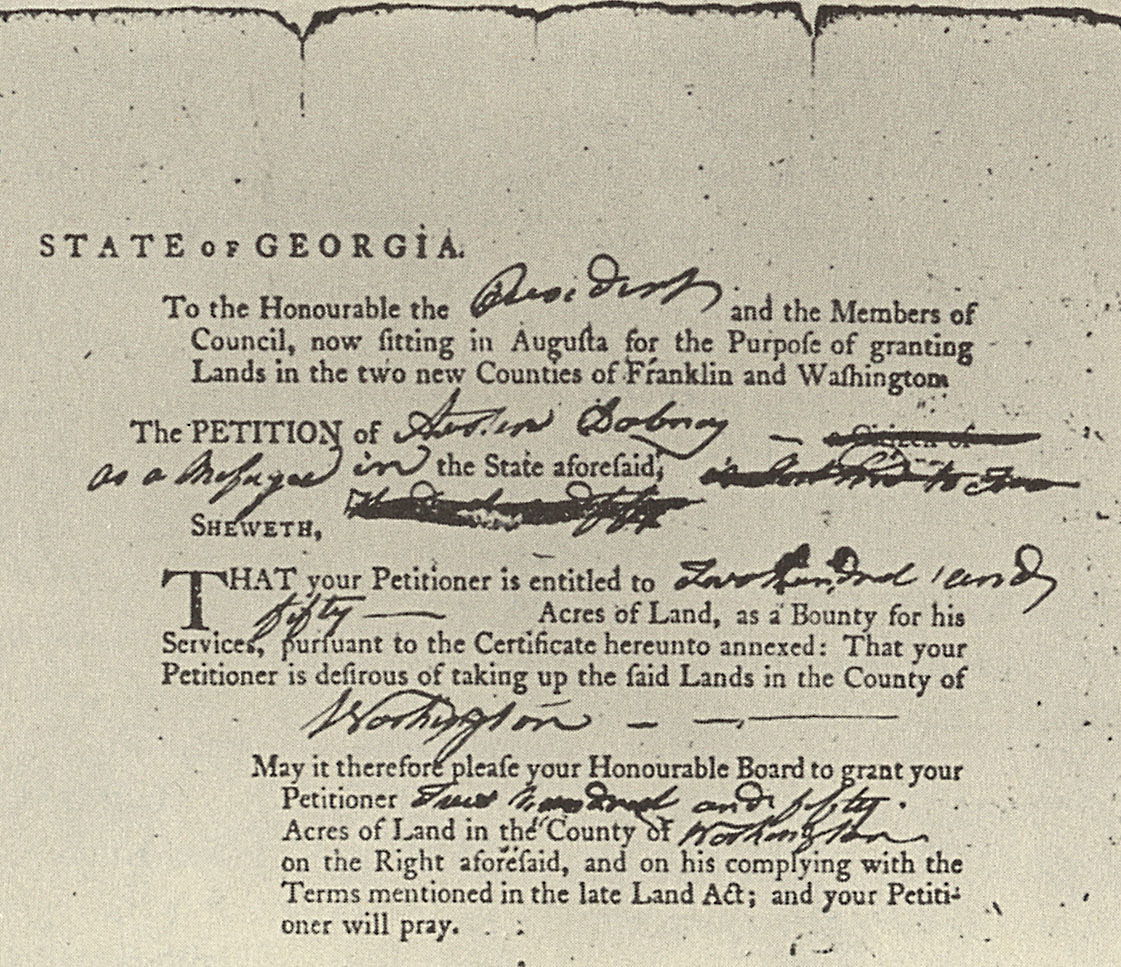
Austin Dabney, an enslaved Georgian, earned freedom in exchange for his service in the patriot army. Dabney was banned from participating in the land lottery open to Revolutionary War veterans in 1819, but the legislature granted him acreage in Washington County in 1821.

From The Black Presence in the Era of the American Revolution, by S. Kaplan and E. N. Kaplan

The New Georgia Encyclopedia does not hold the copyright for this media resource and can neither grant nor deny permission to republish or reproduce the image online or in print. All requests for permission to publish or reproduce the resource must be submitted to the rights holder.

Lachlan McIntosh

Lachlan McIntosh

  • Info Details
  • Citation Terms of Use

Colonel Lachlan McIntosh, a Scottish immigrant, served as a military and political leader in revolutionary Georgia. He defended Savannah from the British during the Battle of the Rice Boats on March 2-3, 1776, and later served with General George Washington at Valley Forge, Pennsylvania, in 1778.

Image from the New York Public Library Digital Collections, The Miriam and Ira D. Wallach Division of Art, Prints and Photographs: Print Collection.

View on source site

The New Georgia Encyclopedia does not hold the copyright for this media resource and can neither grant nor deny permission to republish or reproduce the image online or in print. All requests for permission to publish or reproduce the resource must be submitted to the rights holder.

Hessian Third Guard Regiment

Hessian Third Guard Regiment

  • Info Details
  • Citation Terms of Use

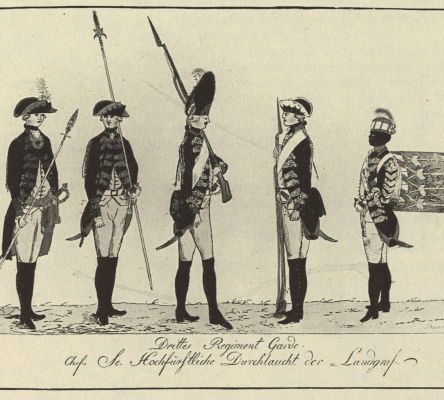
This depiction of the Hessian Third Guard Regiment was engraved by J. C. Muller after a drawing by J. H. Carl, circa 1784. American soldiers during the Revolutionary War occasionally fought against Black Georgians, recruited by the British and their allies in exchange for freedom. The active participation of these Black residents contributed to the British success during the Siege of Savannah.

From The Black Presence in the Era of the American Revolution, by S. K. and E. N. Kaplan
The New Georgia Encyclopedia does not hold the copyright for this media resource and can neither grant nor deny permission to republish or reproduce the image online or in print. All requests for permission to publish or reproduce the resource must be submitted to the rights holder.

Andrew Bryan

Andrew Bryan

  • Info Details
  • Citation Terms of Use

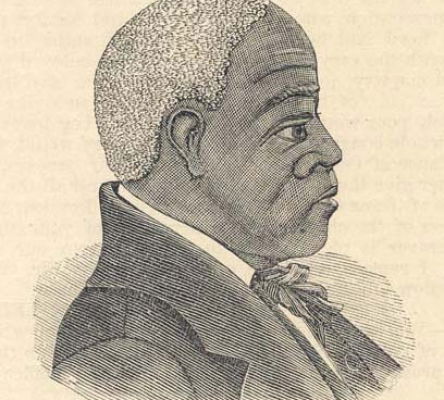
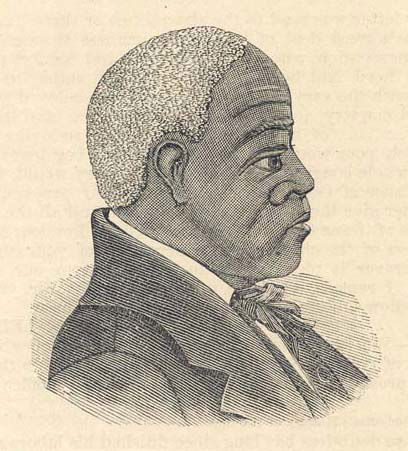
Andrew Bryan, born enslaved in 1737, was a founder and leader of First African Baptist Church in Savannah along with his brother Sampson. The congregation grew and established two satellite churches after 1800, despite opposition and threats of violence from the white community. This sketch of Bryan appeared in Savannah's Morning News Print in 1888.

Reprinted by permission of the University Library, University of North Carolina

The New Georgia Encyclopedia does not hold the copyright for this media resource and can neither grant nor deny permission to republish or reproduce the image online or in print. All requests for permission to publish or reproduce the resource must be submitted to the rights holder.

Trustees’ Charter Boundaries, 1732 Colony of East Florida, 1763 Colony of West Florida, 1763 Georgia Colony Boundaries, 1764 Georgia Colony Boundaries, 1767 Georgia State Boundaries, 1783 Orr-Whitner Line, 1861 Placement of Ellicott’s Rock, 1811 Georgia’s Northern and Western Boundaries, 1826 Georgia’s Northern and Western Boundaries, 1802 Land Grant to Austin Dabney Lachlan McIntosh Hessian Third Guard Regiment Andrew Bryan