
DeKalb County, a large urban county and a center for education in the Atlanta metropolitan area, was the home county for Atlanta until 1853, when Fulton County was established.
DeKalb was created in 1822 from portions of Henry, Gwinnett, and Fayette counties. These lands were opened for settlement after the Indian Springs Treaty of 1821 removed the Muscogee (Creek) and Cherokee Indians from the area. Named for Baron Johann DeKalb, a hero of the Revolutionary War (1775-83), DeKalb County was settled by new arrivals from Virginia, North Carolina, and South Carolina on land allotments of 202.5 acres each. A steady pioneer stock, their descendants continued to keep DeKalb a farming community until the 1960s.
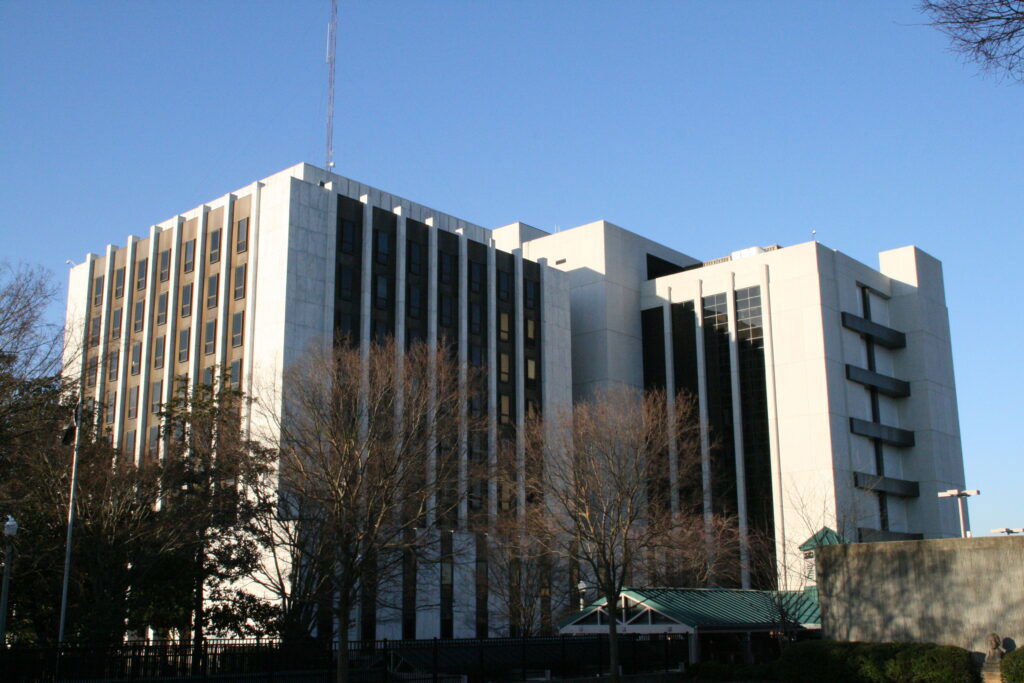
In 1823 the state legislature chose a land lot for the county seat, which was named Decatur for Commodore Stephen Decatur, a naval hero from the War of 1812 (1812-15). Situated on a knoll, a natural watershed where two Indian trails crossed, Decatur quickly established itself with a log cabin courthouse on the square. It remains the location of the county government, having held off a challenge from the city of Stone Mountain in 1896.
During the Civil War (1861-65) much of the Battle of Atlanta took place in DeKalb County, particularly along the railroad heading west toward Atlanta. Troops were entrenched around Decatur’s square, and supply wagons were parked in the Decatur cemetery. General William T. Sherman spent a night in Lithonia, DeKalb’s granite city, and his troops were in Stone Mountain. Mary Harris Gay, a Decatur native, wrote Life in Dixie during the War (1892), recounting her memories of watching the Battle of Decatur. She was one of a number of women who wrote about their personal experiences during the Civil War.

During the first half of the twentieth century, DeKalb’s economy was chiefly agrarian. The county was once known for its granite quarries and dairy farms; in the 1940s and 1950s it was the leading producer of dairy products in the Southeast. DeKalb’s lush farmland disappeared in the 1960s, as it became an urban county with more miles of interstate than any other county in Georgia.
DeKalb County’s population grew rapidly during the last half of the twentieth century. According to the 2020 U.S. census, the county’s population is 764,382, an increase from the 2010 population of 691,893. Originally mostly whites of Anglo-Saxon descent, its population has become racially and ethnically diverse. The county is home to a large number of middle-class African Americans and to several distinct African American communities, such as Shermantown and Scottdale. The city of Chamblee contains the “International Village” district, one of the most diverse neighborhoods in the country, with more than thirty different nationalities represented by its residents. The city of Clarkston is a site for refugee relocation, adding to the county’s already established international flavor. Your DeKalb Farmers Market, which opened as a produce stand in 1977, covers 140,000 square feet and sells a variety of international foods and produce.
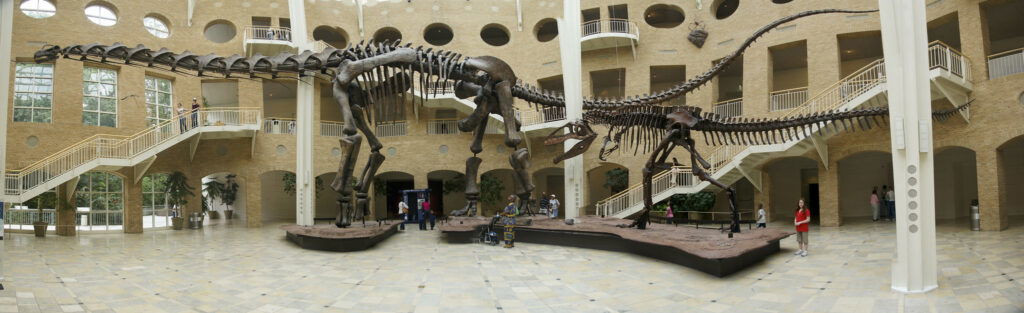
The county is home to the Georgia Center for the Book, Fernbank Science Center, Fernbank Museum of Natural History, Michael C. Carlos Museum of Art, Arabia Mountain Nature Preserve, Stone Mountain Park, and DeKalb Peachtree Airport, the second-busiest airport in Georgia and the site of the former Naval Air Station Atlanta. Both the Waffle House and Huddle House restaurant chains were established in DeKalb.
DeKalb is also home to nine colleges and other postsecondary institutions: Agnes Scott College, Columbia Theological Seminary, DeVry University, Emory University, Georgia Piedmont Technical College, Georgia State University Perimeter College, Luther Rice Seminary, the Atlanta campus of Mercer University, and Oglethorpe University.

The DeKalb History Center (DHC) holds extensive historical archives as well as operating a museum and maintaining three antebellum structures. In 1968 the DHC moved into the historic DeKalb courthouse. Originally designed by J.W. Golucke and G.W. Steward in 1898, the interior of the courthouse was destroyed in a fire in 1916. The Lithonia granite walls survived, however, and the courthouse was rebuilt with the same walls. When a new courthouse was built in 1968, there was some discussion about demolishing the historic courthouse, but DeKalb County granted the space to the DHC. The DHC engages in continual preservation of the courthouse to this day.


