Skip to content
New Georgia Encyclopedia
  • Home
  • Articles & Media
  • Browse by Topic
  • Browse Collections
  • Browse Georgia Standards
  • A-Z Index
  • Exhibitions
  • Educators
  • Browse    Chevron down
  • Exhibitions
  • Educators
By Topic Content Collections Georgia Standards A-Z Index Arrow right
  • Arts & Culture

    Arts & Culture

  • Business & Economy

    Business & Economy

  • Counties, Cities & Neighborhoods

    Counties, Cities & Neighborhoods

  • Education

    Education

  • Geography & Environment

    Geography & Environment

  • Government & Politics

    Government & Politics

  • History & Archaeology

    History & Archaeology

  • People

    People

  • Science & Medicine

    Science & Medicine

  • Sports & Outdoor Recreation

    Sports & Outdoor Recreation

Frankie Welch’s Americana
Featured

Frankie Welch’s Americana

Fashion and politics from Georgia-born designer Frankie Welch

Stamp Collection
Featured

Stamp Collection

Stamps honoring the political figures, artists, and culture of Georgia.

Recently Added
View All Arrow right
City Page: Atlanta

City Page: Atlanta

Stamp Collection

Stamp Collection

Frankie Welch’s Americana

Frankie Welch’s Americana

  • Georgia Studies

    Georgia Studies

    Eighth Grade
  • Georgia, My State

    Georgia, My State

    Second Grade
All Exhibitions Arrow right

“Covers Dixie Like the Dew:” A History of Newspaper Journalism in Georgia

Print journalism in Georgia began in 1763 when James Johnston established the state’s first newspaper, the Georgia Gazette, in Savannah. More than 250 years later, newspapers continue to play an essential role in the state's public life.
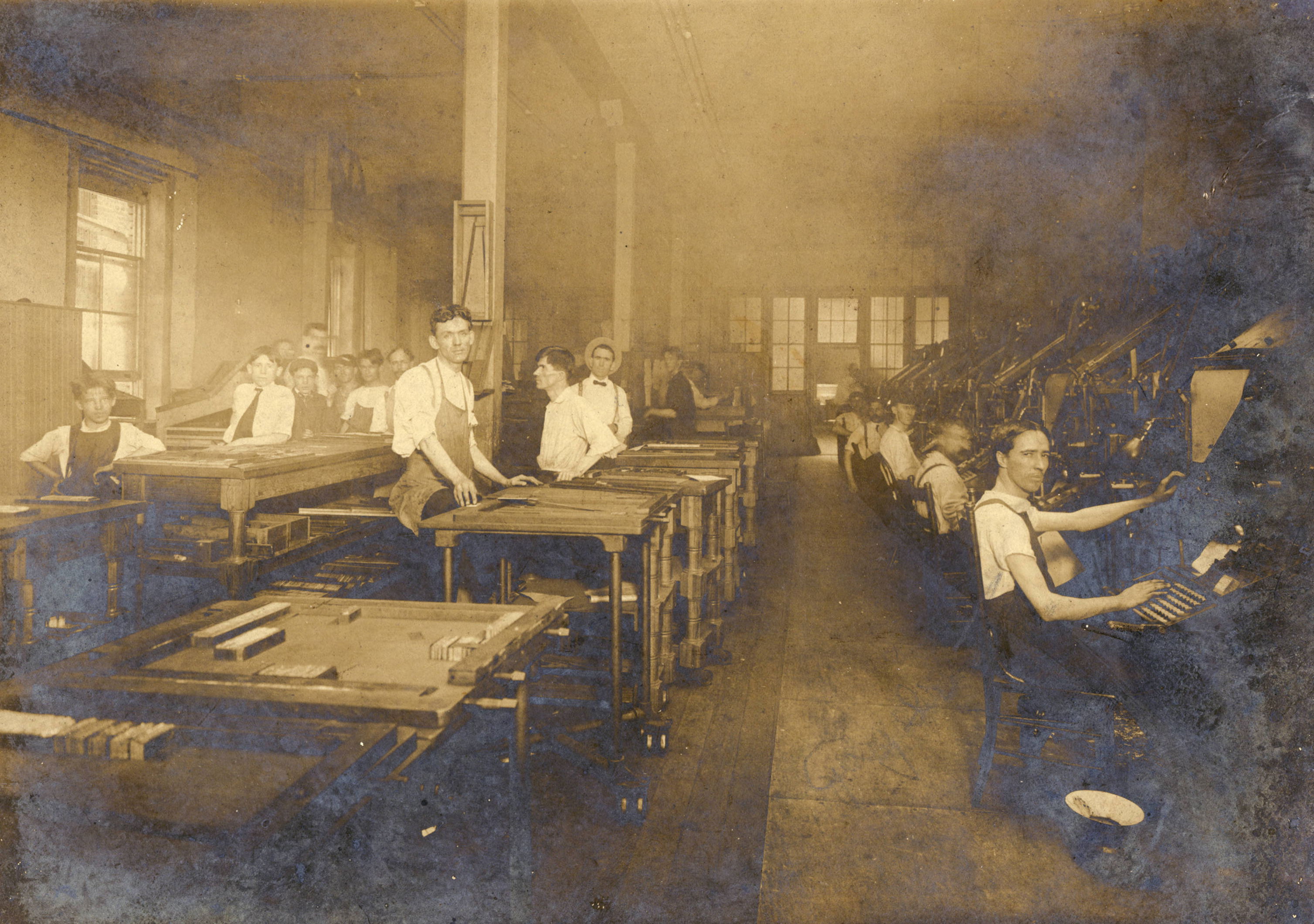
1906 composing room of the Atlanta Georgian depicting over a dozen men at various work stations
Authored by Donnie Summerlin, University of Georgia Libraries

Courtesy of Special Collections & Archives, Georgia State University Library

Introduction

Since their inception in 1763, newspapers in Georgia have printed a first draft of the history of the state and its people. These publications not only recorded events, but also reported the beliefs and attitudes of Georgians, documenting their successes and shortcomings. More than just a mirror of society, newspaper journalism has also been an influential voice in the affairs of the state and helped shape Georgia’s view of itself and the world. Such disparate journalists as Henry W. Grady and John H. Deveaux used their papers to paint an aspirational picture of what Georgia and the rest of the South might become. Through turmoil, division, and change, Georgia’s newspaper industry survived and thrived in its mission to deliver the news to readers across the state. Over time, Georgia’s newspapers diversified and increasingly came to reflect the different identities, viewpoints, and beliefs of its people.

1

Early Georgia Newspapers

Print journalism in Georgia began in 1763 when James Johnston established the state’s first newspaper, the Georgia Gazette, in Savannah. Georgia’s colonial legislature designated Johnston, an immigrant from Scotland, the Royal Printer for the colony. In addition to printing the government’s laws, he used the opportunity to establish Georgia’s first newspaper. The inaugural issue of the Georgia Gazette ran on April 7, 1763, containing local and international news items, an inventory of goods shipped into Savannah, and advertisements for both fugitives from slavery and the sale of an island.

Johnston took a neutral stance on the politics of the day and printed both the laws of the colonial government and news of discord among the colonists. This neutrality put him at odds with the Patriots in Georgia, and he fled the state in 1776. When the British recaptured Savannah in December 1778, Johnston returned to the city to print the Royal Georgia Gazette. On January 30, 1783, after the British abandoned their positions in Savannah, the state government allowed Johnston to continue publishing under a new title, Gazette of the State of Georgia.

Johnston and his son would continue to print newspapers until 1802, by which time they faced competition as newspaper journalism began to proliferate across the state. In 1785 the state officially moved the seat of government from Savannah to Augusta. During this period, several newspapers appeared in the new capital. The first of these was the Augusta Gazette, which began circulation in August of that same year. The modern-day Augusta Chronicle traces its roots to the publication, making it the oldest newspaper in Georgia still in print. A second newspaper, the Southern Centinel, and Universal Gazette, began publication in 1793, making Augusta the first city in Georgia with multiple newspapers in print. Two more newspapers appeared in Savannah that same decade, while the State Gazette and Louisville Journal began publication in the state’s newly appointed capital, Louisville, in 1798. By the turn of the eighteenth century, there were five newspapers in print in Georgia, and by 1812, there were at least twenty. Much of that growth came in smaller cities and towns, including Athens, Milledgeville, Washington, and Sparta.

Map of Georgia, 1814
Georgia Gazette
Georgia Gazette
2

Diversity in Media

Newer publications took on a more partisan tone than their predecessors, reflecting the rise of political parties in the United States in the late eighteenth century. But even as they reflected an increasing variety of public opinion, the state’s early newspapers shared one thing in common: they were largely produced and published by white men.

Women were discouraged and often outlawed from operating businesses in the late eighteenth and early nineteenth centuries. However, an exception was sometimes made for women who were widowed without a male heir to run their deceased husband’s affairs. It was under this set of circumstances that, at the turn of the nineteenth century, Sarah Porter Hillhouse broke Georgia’s print journalism gender barrier.

In 1801, Sarah’s husband David purchased Washington’s first newspaper, the Washington Gazette, retitling it the Monitor. After David’s death in 1803, Sarah continued publishing the paper, becoming the first woman to serve as a publisher and editor of a newspaper in the state’s history. Her four-page, four-column weekly was characteristic of the time, with reprinted national and international news, state laws, and local ads. During her tenure, she built a professional reputation that earned her government contracts to print legislative documents. By 1813, after nearly a decade of publishing the Monitor, Hillhouse had passed publishing responsibilities of the paper to her son, David.

Hillhouse’s extended editorship of the Monitor made her one of a small number of early American women to oversee a paper’s publication for a period of multiple years. But despite the rarity of her role, there’s little evidence that she advocated for an expansion of women’s rights more generally. But newspapers could—and did—support community development and social justice, as evidenced by the Georgia’s most distinctive paper of the era, the Cherokee Phoenix.

Since the sixteenth century, Native Americans in Georgia had been contending with European colonization. Among those native groups were the Cherokees, who by the early 1800s had developed a written language and established a capital in New Echota, in what is today Gordon County. In February 1828, the Cherokees began publishing the Cherokee Phoenix, the first Native American newspaper published in the United States.

The paper circulated nationally from their capital and included columns in both English and Cherokee languages. Editor Elias Boudinot employed a strong editorial style that advocated for the rights of Cherokee people over the impositions of the American government. The publication’s title changed to the Cherokee Phoenix and Indians’ Advocate in 1829 to reflect its coverage of news and issues related to native groups outside of the Cherokee Nation. After the American government ceased making promised payments to the Cherokee Nation for the use of their land, the Cherokee Phoenix and Indians’ Advocate lost its funding and stopped printing in May 1834. The American government expelled the Cherokee people from their homes in 1838, relocating them to the Indian Territory in modern-day Oklahoma, along what is commonly referred to as the Trail of Tears.

Elias Boudinot
Print Shop, New Echota Historic Site
Cherokee Phoenix
3

Newspapers in Antebellum Georgia

As the state grew in both territory and population in the nineteenth century, its papers became increasingly partisan, reflecting the bitter divides in Georgia’s antebellum politics. In early nineteenth-century Georgia, political factions were split behind two feuding politicians, George Troup and John Clark.

The Troupite faction consisted largely of planters and aristocrats, while the Clarkite faction had support from small farmers and frontier settlers. Along this divide, rival newspapers formed in Georgia’s larger cities.

At the state capital in Milledgeville, the Troup-affiliated Southern Recorder opposed the Clark leanings of the Federal Union. In Macon, the Georgia Messenger was the Troupite paper and the Macon Telegraph aligned with the Clarkites; similar journalistic divisions existed in Columbus, Savannah, and Augusta. These politically aligned papers publicized the bitter and sometimes violent confrontations between the factions, which, by the 1840s, had aligned with national parties: the Clark faction aligning with the Democratic Party and the Troup faction aligning with the Whig Party.

Despite their sometimes bitter feuds, Georgia’s antebellum papers shared an ironclad commitment to the preservation of slavery. African American papers would proliferate in the postbellum era, as freedmen sought to organize politically and advocate for community need. But African Americans received very little coverage in Georgia’s antebellum newspapers, save for one notable exception: advertisements that offered rewards for the return of self-liberated African Americans.

These “fugitive slave ads” were a major source of income for newspaper publishers in Georgia and can be traced back to the first issue of the Georgia Gazette in 1763, which included several notices offering rewards for the return of fugitives from slavery. The purpose of the ads was to provide a description suitable for the identification and recapture of enslaved people. As a result, they often included detailed descriptions, including names, ages, physical descriptions, family members, methods of escape, skills, life experiences, and even places of birth—information that provides a valuable record of enslavement and its grisly toll. The ubiquity of these ads in Georgia newspapers demonstrates both the economic impact of slavery in the antebellum South and the widespread determination among the enslaved to experience a life free from bondage.

George Troup
John Clark
Woodcut from 1839 Anti-Slavery Almanac
4

Civil War Newspapers

The onset of the Civil War (1861-65) in 1861 brought disruption to both Georgia and its newspaper industry, but despite the turmoil of war, print journalism continued throughout the state and provided citizens with coverage of the conflict, often in unorthodox ways.

Southern papers depended on supplies from Northern states for printing, and without those supplies, many papers ceased printing during the first year of the war. Publications that were able to survive reduced their number of pages and columns to remain in circulation. Obtaining news to print was also a challenge for publishers in Georgia and across the South, as telegraph news reports from the North were curtailed. Publishers and editors in Georgia remained committed, however, and often relied on correspondence from participants, and some reporters even visited the war front themselves.

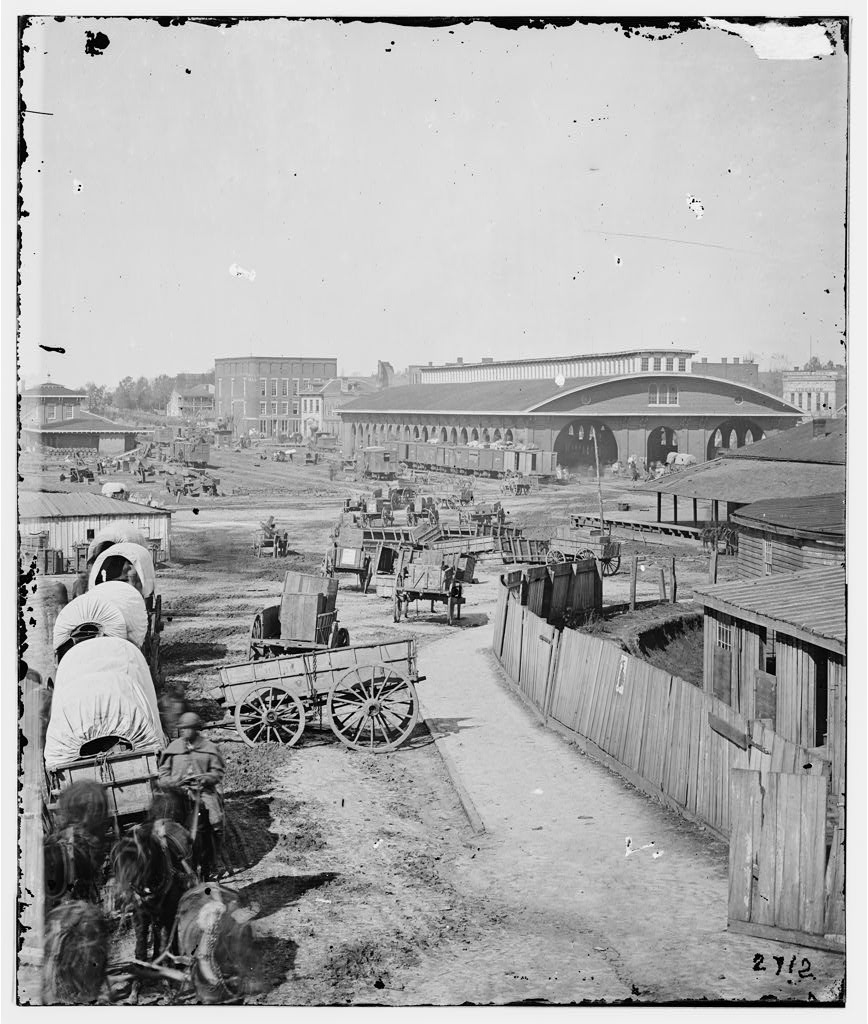
Their coverage quickly abandoned the unity that had existed behind secession, as many editors began to question the wisdom of continuing the war. In the later years of the conflict, newspaper publishing became increasingly difficult as supplies continued to dwindle, employees enlisted to fight, and mail services became expensive and unreliable. As the war front moved further south, refugee newspapers from other Southern states, including the Daily Chattanooga Rebel and the Memphis Daily Appeal, temporarily set up shop in Atlanta, which had become a commercial center during the war. In 1864, publishers in the path of Sherman’s march were forced to flee and often hid their printing equipment to avoid its destruction. The newspapers that managed to survive the end of the war and resume publication would have to adapt to a “New South” in the postwar years.

William T. Sherman
Sherman’s Campaign
Atlanta’s Railroads
5

Newspapers in “New South” Georgia

At war’s end, Georgia faced physical destruction, financial turmoil, and federal occupation. Publishers that managed to resume printing in the late 1860s faced censorship and sometimes closure for their opposition to Reconstruction. Newspapers aligned with the Republican Party, however, thrived in this environment. With support from the government, pro-Reconstruction publishers established newspapers in most of Georgia’s major cities, including the Daily Press in Augusta and the Daily New Era in Atlanta.

When the Democratic Party regained control of the state government in the 1870s, Georgia’s newspaper publishers were once again free to exert editorial reign over their publications, and many of the Republican-aligned papers ceased operations. In the mid-1870s, Atlanta newspaperman Henry Grady emerged as the “spokesman of the New South,” an invigorated region that sought to lure northern investment and industry to an economy that had long been dominated by agrarian interests. As managing editor of the Atlanta Constitution, Grady advanced a pro-industrial agenda and promoted Atlanta as an ideal city for industrial growth. His advocacy resulted in the establishment of the Georgia Institute of Technology in the late 1880s, and the city hosted several expositions to promote industrial investment in the decades that followed, including the 1895 Cotton States and International Exposition where Booker T. Washington delivered his “Atlanta Compromise” speech.

Grady’s “New South” was also a vision of white supremacy, however, and if African Americans wanted a voice in the burgeoning state, they would have to challenge the establishment, including the white-owned print journalism industry. While papers like Frederick Douglass’ North Star were published in northern states during the antebellum period, there is no evidence of an African American press before the Civil War in Georgia. The end of the war and the implementation of Reconstruction policies in southern states, however, led to new freedoms for the formerly enslaved, including the ability to vote and serve in elected offices.

It was in this environment that African Americans began establishing newspapers in Georgia. Among the earliest were the Colored American and the Loyal Georgian in Augusta and the Freemen’s Standard in Savannah. In 1875 John H. Deveaux established the most successful African American newspaper in nineteenth-century Georgia, the Colored Tribune. The paper, which became the Savannah Tribune in 1876, was established to promote “the rights of the colored people, and their elevation to the highest plane of citizenship…. [A]ll other considerations shall be secondary.” Nevertheless, the end of Reconstruction in 1877 allowed for increasing restrictions on African American rights, and the following year, the Tribune ceased publication after white printers in Savannah refused to produce it. Deveaux resumed publication in 1886, and the Savannah Tribune remained in publication into the twentieth century, when other African American newspapers began circulation in Atlanta, Columbus, Macon, and throughout Georgia.

Henry W. Grady
Colored Tribune
Freemen’s Standard
6

Expansion, Consumption & Modernization

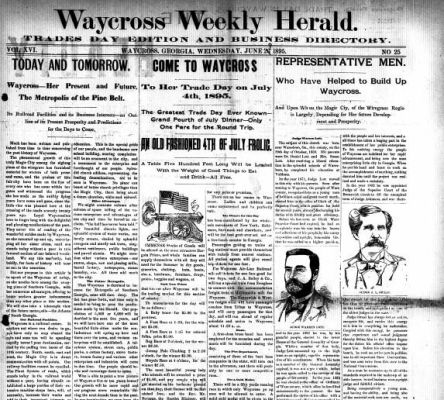
The Black-owned papers that emerged at the end of the nineteenth century were but one segment of a growing and diversifying industry. The state also saw a dramatic increase of weekly newspapers in the decades following the Civil War. In 1869, there were 59 weekly papers circulating in Georgia. By 1890 that number had ballooned to 225. Much of that growth occurred in south Georgia, where small-town papers began circulating in Valdosta, Waycross, Blackshear, Douglas, and elsewhere.

Due to the absence of intra-city rival publications, many of these smaller weekly papers were less politically aligned than their larger city counterparts and devoted more space to local news. Content in these newspapers usually reported local personal items, including illnesses, vacations, club meetings, church events, and humorous incidents, similar to social media posts in the twenty-first century. Their subscribers were often farmers by trade, and the average reader could also find an abundance of agricultural stories in the pages of their rural weekly papers. Many of the weeklies established during this period became the legal organs for their counties and are still in print today, including the Henry Herald, Calhoun Times, and the Jackson Progress-Argus.

Growth only continued in the twentieth century and by 1917, Georgia could boast 35 daily newspapers and 275 weekly newspapers—more than any other southern state. This expansion also included specialized newspapers intended to serve more targeted audiences, including student papers that covered events on campuses statewide. Publishers also established newspapers like the Southern Israelite, which served the Jewish population in Atlanta, to report on the affairs of religious minorities in the state. African American newspapers also expanded their presence in Georgia, among them the Atlanta World (later Atlanta Daily World), established in 1928.

Expanding technologies further contributed to a diversified readership, as publishers were increasingly able to afford a variety of new features, including illustrations, photography, and cartoons. But the biggest change during this period may have been the increasing prominence and sophistication of advertisements.

After the Civil War, the effects of the Second Industrial Revolution resulted in the increasing presence of advertisements for manufactured goods in the state’s newspapers. At the same time, the development of national newspaper advertising agencies increased the availability and importance of advertising dollars to newspaper publishers. By the 1920s, the country was experiencing unprecedented prosperity. Increasing levels of disposable income coupled with cheaper manufactured products resulted in a consumer culture that fueled changes in the content of newspaper ads. A newspaper subscriber in Georgia could find ads for cars, soft drinks, phonographs, and vacations nestled alongside their local news. With expanding page counts, there was space for increasingly larger ads to catch the reader’s attention. As the United States progressed through the Great Depression and World War II (1941-45), the purchasing behaviors of Americans changed, but advertisements in Georgia’s newspapers maintained the conspicuous style that rose to prominence in the early twentieth century.

Waycross Weekly Herald
Southern Israelite
Colonnade
7

Yellow Journalism

One of Georgia’s most notorious newspapers, the Atlanta Georgian, began publication in the early twentieth century. Along with editor John Temple Graves, Fred Loring Seely established the daily publication in 1906 to compete with the city’s two leading papers, the Atlanta Constitution and Atlanta Journal. During its first months of publication, the paper prominently featured unsubstantiated stories of Black men attacking white women. The coverage inflamed racial resentment among the city’s white population and resulted in the Atlanta Race Massacre in September 1906. Over a three-day period, mobs of white men assaulted hundreds of Black men, murdered dozens, and vandalized Black-owned businesses and homes.

Newspaper magnate William Randolph Hearst purchased the paper in 1912. Under his son’s leadership, the paper adopted the practices of “yellow journalism,” including large headlines, extensive use of photography, and loose journalistic standards. The purpose of these sensationalist practices was to attract reader attention and increase sales. The Georgian employed these tactics in an attempt to commercialize the 1913 Leo Frank murder trial, sometimes publishing as many as eight editions in a single day. In 1924, the paper employed trailblazing journalist Mildred Seydell, who covered the Scopes Trial and wrote for the Georgian’s society page. James M. Cox purchased both the Georgian and the Journal in 1939 and dissolved the Georgian shortly thereafter.

Atlanta Georgian Composing Room
Hand Reading
Atlanta Georgian
8

Civil Rights

With its blatant fearmongering and reckless reporting, the Georgian highlights the dangers posed by an unscrupulous press. But newspapers could be a force for social justice, too, as the state’s civil rights era publications showed. In the 1950s and 1960s, Georgia was home to some of the most prominent movement leaders at the time, including Martin Luther King Jr., Coretta Scott King, Hosea Williams, and Julian Bond. Organized protests in Atlanta, Albany, Americus, and countless other cities brought attention to the cause and were covered by newspapers throughout the state.

While not all papers were supportive of the movement, Georgia’s press corps included prominent reform-minded columnists such as the Atlanta Constitution’s Ralph McGill and Gene Patterson, who won Pulitzer Prizes for their editorials in 1959 and 1967, respectively. The African American press and school newspapers also reported on civil rights activities, providing readers with more personal and distinctive coverage of the events in Georgia’s cities and college campuses. Black activists and entrepreneurs meanwhile established newspapers in many of Georgia’s larger cities. One of the earliest and most prominent of these publications was the Atlanta Inquirer. Participants in the Atlanta Student Movement founded the Inquirer in 1960 in response to the conservatism of the city’s other Black-owned newspaper, the Atlanta Daily World. The pages of the Inquirer covered the events of the movement and supported the fight for racial equality in Atlanta and throughout the South. Early reporters for the paper included future state Senator Leroy Johnson and Charlayne Hunter-Gault, who integrated the University of Georgia with fellow student Hamilton Holmes.

The fight for rights and freedoms was also taken up by other historically oppressed groups in the second half of the century, resulting in the Women’s Liberation Movement, the Chicano Movement, the Gay Rights Movement, and the American Indian Movement. Their voices were often heard in the pages of Georgia’s alternative press, which allowed activists to communicate and connect through the time-honored tradition of print journalism.

Spelman Spotlight
Red and Black
Southern Voice
9

Georgia Newspaper in the Information Age

Beginning in the second half of the twentieth century, newspapers began the most dramatic transformation in the history of the industry. Georgia newspapers started a long process of consolidation in the 1950s, as national corporations purchased daily newspapers in cities across the state and merged intracity papers.

Even more substantial change came with the emergence of computer-based technologies. These innovations changed both how newspapers produced their content and how readers consumed it. By the century’s end, Georgia newspaper publishers large and small began to abandon long-standing technologies in favor of a more computerized process for producing newspaper content.

The growth of information technology also changed the manner in which people consumed news. The advent of the World Wide Web in the 1990s generated a new demand for online news content and newspaper publishers responded by hosting their own websites to accompany their print editions. A decrease in print newspaper subscriptions in the decades that followed, combined with the increased popularity of online news sources, led many Georgia newspapers and newspapers across the country to monetize their online content by offering online subscriptions and digital editions of print issues. As technologies and behaviors continue to change in the twenty-first century, so too will the approach of delivering news in Georgia and around the world.

Ted Turner
Vanguard

Cite this Article

Summerlin, Donnie. "“Covers Dixie Like the Dew:” A History of Newspaper Journalism in Georgia." New Georgia Encyclopedia, last modified December 5, 2025. https://www.georgiaencyclopedia.org/exhibition/covers-dixie-like-the-dew/

Summerlin, D. (2025). “Covers Dixie Like the Dew:” A History of Newspaper Journalism in Georgia. In New Georgia Encyclopedia. Retrieved December 5, 2025, from https://www.georgiaencyclopedia.org/exhibition/covers-dixie-like-the-dew/

Summerlin, Donnie. "“Covers Dixie Like the Dew:” A History of Newspaper Journalism in Georgia." New Georgia Encyclopedia, 10 November 2025, https://www.georgiaencyclopedia.org/exhibition/covers-dixie-like-the-dew/.

Further Reading

  • Literature Literature
  • Autrey, William Robert. “The Negro Press—Southern Style Militancy: The Atlanta Independent and Savannah Tribune, 1904-1928.” M.A. thesis. Atlanta University, 1963.

  • Brantley, Rayburn Lee. Georgia Journalism of the Civil War Period. Nashville: George Peabody College for Teachers, 1929.

  • Clark, Thomas D. The Southern Country Editor. Columbia: University of South Carolina Press, 1991.

  • Griffith, Louis Turner and John Erwin Talmadge. Georgia Journalism, 1736-1950. Athens: University of Georgia Press, 1951.

  • Grimes, Millard B. The Last Linotype: The Story of Georgia and Its Newspapers Since World War II. Macon: Mercer University Press, 1985.

  • Holland, C. Joe. Cherokee Newspapers, 1828-1906: Tribal Voice of a People in Transition. Cherokee Heritage Press, 2014.

  • Landini, Ann L. “The Cherokee Phoenix : The Voice of the Cherokee Nation, 1828-1834.” PhD diss. University of Tennessee, 1990.

  • Suggs, Henry Lewis. The Black Press in the South, 1865-1979. Westport. Conn. : Greenwood Press, 1983.

Star

Featured Content

James Oglethorpe

James Oglethorpe

Colonial Figures
Civil Rights Movement

Civil Rights Movement

Mid- to Late 20th Century Topics
Trending

Trending

Georgia Guidestones

Georgia Guidestones

Sites & Museums
Lynching

Lynching

Late 19th-Century Topics
“God Is Dead” Controversy

“God Is Dead” Controversy

Events & Movements
Slavery in Colonial Georgia

Slavery in Colonial Georgia

Colonial Topics
Clock

Updated Recently

Morris Brown College

Morris Brown College

1 week ago
Burke County

Burke County

1 week ago
CNN

CNN

1 week ago
Ted Turner

Ted Turner

2 weeks ago

A More Perfect Union

The New Georgia Encyclopedia is supported by funding from A More Perfect Union, a special initiative of the National Endowment for the Humanities.

Learn More
New Georgia Encyclopedia
ISSN 2765-8732
Project Partners
logo-press UGA Press logo-galileo GALILEO logo-humanities Georgia Humanities logo-seal Office of the Governor logo-libraries UGA Libraries
Articles & Media
  • Browse by Topic
  • Content Collections
  • Georgia Standards
Special Content
  • Quizzes
  • Exhibitions
  • Spotify Playlists
  • Georgia Exhibits
  • Educator Resources
About
  • The Project
  • The People
  • Sponsors & Partners
Editorial
  • Our Process
  • Contributor Info
  • Permissions & Use
Stay in Touch
Facebook Instagram Twitter Contact Us
Donate to the NGE

Your support helps us commission new entries and update existing content.

Donate

© 2004–2026 Georgia Humanities, University of Georgia Press

  • Terms of Use
  • Privacy Policy
Loading
Image

Media gallery

Map of Georgia, 1814

Map of Georgia, 1814

  • Info Details
  • Citation Terms of Use

In 1814, when this map was produced, most Georgia counties were organized along the Savannah River and Atlantic Coast. Georgia's early newspapers were published in the eastern portion of the state, but as settlers moved west, so too did entrepreneurial newspaper publishers.

Courtesy of Columbus State University, J. Kyle Spencer Map Collection (MC 136).

View on source site

The New Georgia Encyclopedia does not hold the copyright for this media resource and can neither grant nor deny permission to republish or reproduce the image online or in print. All requests for permission to publish or reproduce the resource must be submitted to the rights holder.

The Georgia gazette, 1763 April 7

Georgia Gazette

  • Info Details
  • Citation Terms of Use

James Johnston began publishing the Georgia Gazette, on April 7, 1763. The front page of that first issue featured news from Europe and colonial Boston.

Courtesy of Georgia Newspaper Project, Georgia Historic Newspapers.

View on source site

The New Georgia Encyclopedia does not hold the copyright for this media resource and can neither grant nor deny permission to republish or reproduce the image online or in print. All requests for permission to publish or reproduce the resource must be submitted to the rights holder.

The Georgia gazette, 1765 May 2

Georgia Gazette

  • Info Details
  • Citation Terms of Use

On May 2, 1765, the Georgia Gazette reprinted the Stamp Act. Publisher James Johnston remained neutral in conflicts between colonists and the crown and was forced to flee the state in 1776. When the British recaptured Savannah in December 1778, Johnston returned to the city to print the Royal Georgia Gazette.

Courtesy of Georgia Newspaper Project, Georgia Historic Newspapers.

View on source site

The New Georgia Encyclopedia does not hold the copyright for this media resource and can neither grant nor deny permission to republish or reproduce the image online or in print. All requests for permission to publish or reproduce the resource must be submitted to the rights holder.

Elias Boudinot

Elias Boudinot

  • Info Details
  • Citation Terms of Use

A formally educated Cherokee who became the editor of the first Native American newspaper in the United States, Elias Boudinot ultimately signed the New Echota Treaty (1835), which required the Cherokees to relinquish all remaining land east of the Mississippi River.

Image from Oklahoma Historical Society, Muriel Wright Collection.

The New Georgia Encyclopedia does not hold the copyright for this media resource and can neither grant nor deny permission to republish or reproduce the image online or in print. All requests for permission to publish or reproduce the resource must be submitted to the rights holder.

Print Shop, New Echota Historic Site

Print Shop, New Echota Historic Site

  • Info Details
  • Citation Terms of Use

The reconstructed print shop at the New Echota Historic Site is where the Cherokee Phoenix, the first Native American newspaper in the United States, was published. The New Echota Historic Site, located in Calhoun, commemorates the former capital of the Cherokee Nation.

Image from George Puvvada

The New Georgia Encyclopedia does not hold the copyright for this media resource and can neither grant nor deny permission to republish or reproduce the image online or in print. All requests for permission to publish or reproduce the resource must be submitted to the rights holder.

Cherokee Phoenix

Cherokee Phoenix

  • Info Details
  • Citation Terms of Use

The Cherokee Phoenix, the first Native American newspaper in the United States, was first printed in 1828 in New Echota, Georgia, the capital of the Cherokee Nation. The paper was published weekly until May 1834, when the Cherokee annuity was not paid and the presses came to a stop. This issue is dated January 28, 1829.

Courtesy of Hargrett Rare Book and Manuscript Library, University of Georgia Libraries.

The New Georgia Encyclopedia does not hold the copyright for this media resource and can neither grant nor deny permission to republish or reproduce the image online or in print. Requests for permission to publish or reproduce the resource should be submitted to the Hargrett Manuscript and Rare Book Library at the University of Georgia.

[Engraving of] Geo[rge] M. Troup / J.C. Buttre

George Troup

  • Info Details
  • Citation Terms of Use

George Troup served as a state representative, U.S. congressman, U.S. senator, and Georgia governor during the course of a lifelong political career. In the early nineteenth century he and John Clark were rivals, and factional parties and newspapers in Georgia formed around the beliefs of their followers.

Courtesy of Hargrett Rare Book and Manuscript Library, University of Georgia Libraries, Keith Read Collection.

View on partner site

The New Georgia Encyclopedia does not hold the copyright for this media resource and can neither grant nor deny permission to republish or reproduce the image online or in print. Requests for permission to publish or reproduce the resource should be submitted to the Hargrett Manuscript and Rare Book Library at the University of Georgia.

John Clark

John Clark

  • Info Details
  • Citation Terms of Use

John Clark, a Revolutionary War veteran, was the governor of Georgia from 1819 to 1823. During the war, Clark served under the command of his father, Elijah Clarke, at the battles of Kettle Creek and Musgrove Mill.

Courtesy of Georgia Capitol Museum, University of Georgia Libraries

The New Georgia Encyclopedia does not hold the copyright for this media resource and can neither grant nor deny permission to republish or reproduce the image online or in print. All requests for permission to publish or reproduce the resource must be submitted to the rights holder.

Woodcut from 1839 Anti-Slavery Almanac

Woodcut from 1839 Anti-Slavery Almanac

  • Info Details
  • Citation Terms of Use

A woodcut depicts the capture of a fugitive from slavery by a slave patrol. Slave patrols were common in Georgia from 1757 until the end of the Civil War in 1865.

From The American Anti-Slavery Almanac for 1839

The New Georgia Encyclopedia does not hold the copyright for this media resource and can neither grant nor deny permission to republish or reproduce the image online or in print. All requests for permission to publish or reproduce the resource must be submitted to the rights holder.

William T. Sherman

William T. Sherman

  • Info Details
  • Citation Terms of Use

Ohio native and Union general William T. Sherman lost the Battle of Kennesaw Mountain in June 1864. In September of that same year his army captured Atlanta before embarking on its March to the Sea, from Atlanta to Savannah, in November. Sherman later chronicled his wartime experiences in a memoir, published in 1875.

Courtesy of National Archives and Records Administration.

Most government records are in the public domain. Please consult the National Archives and Records Administration for more information.

Barnard's photographic views of the Sherman Campaign, ca. 1866

Sherman’s Campaign

  • Info Details
  • Citation Terms of Use

A circa 1866 photograph of Atlanta taken after Sherman's campaign destroyed much of the city. Within three years, Atlanta became the capital of the state and the Atlanta Constitution began publication in the city.

Courtesy of Hargrett Rare Book and Manuscript Library, University of Georgia Libraries, Barnard's photographic views of the Sherman Campaign.

View on partner site

The New Georgia Encyclopedia does not hold the copyright for this media resource and can neither grant nor deny permission to republish or reproduce the image online or in print. Requests for permission to publish or reproduce the resource should be submitted to the Hargrett Manuscript and Rare Book Library at the University of Georgia.

Atlanta’s Railroads

Atlanta’s Railroads

  • Info Details
  • Citation Terms of Use

The railroads leading into and out of Atlanta made the city an important military supply center. The Union employed several key strategies against Atlanta's railroads during the Civil War.

Courtesy of Library of Congress, Prints and Photographs division

View on source site

The New Georgia Encyclopedia does not hold the copyright for this media resource and can neither grant nor deny permission to republish or reproduce the image online or in print. All requests for permission to publish or reproduce the resource must be submitted to the rights holder.

Henry W. Grady

Henry W. Grady

  • Info Details
  • Citation Terms of Use

Atlantan Henry Grady, a prominent orator and editor of the Atlanta Constitution, heralded the coming of the New South after the end of the Civil War.

Courtesy of Special Collections & Archives, Georgia State University Library, Lane Brothers Commercial Photographers Photographic Collection.

The New Georgia Encyclopedia does not hold the copyright for this media resource and can neither grant nor deny permission to republish or reproduce the image online or in print. Requests for permission to publish or reproduce the resource should be submitted to Special Collections and Archives at Georgia State University.

The Colored Tribune

Colored Tribune

  • Info Details
  • Citation Terms of Use

The masthead from the April 8, 1876, issue of the Colored Tribune. The paper changed its name to the Savannah Tribune later that year and became the most influential African American newspaper in nineteenth century Georgia.

Courtesy of Georgia Newspaper Project, Georgia Historic Newspapers.

View on source site

The New Georgia Encyclopedia does not hold the copyright for this media resource and can neither grant nor deny permission to republish or reproduce the image online or in print. All requests for permission to publish or reproduce the resource must be submitted to the rights holder.

Freemen's standard, 1868 June 13

Freemen’s Standard

  • Info Details
  • Citation Terms of Use

The front page of the June 13, 1868, issue of the Freemen's Standard, one of the first African American newspapers established during Reconstruction.

Courtesy of Georgia Newspaper Project, Georgia Historic Newspapers.

View on source site

The New Georgia Encyclopedia does not hold the copyright for this media resource and can neither grant nor deny permission to republish or reproduce the image online or in print. All requests for permission to publish or reproduce the resource must be submitted to the rights holder.

Waycross weekly herald (Waycross, Ga. : 1893), Jun. 29, 1895

Waycross Weekly Herald

  • Info Details
  • Citation Terms of Use

Front page of the June 29, 1895, issue of the Waycross Weekly Herald. The Herald was among the dozens of country weeklies established in south Georgia in the decades after the Civil War.

Courtesy of Georgia Newspaper Project, Georgia Historic Newspapers.

View on source site

The New Georgia Encyclopedia does not hold the copyright for this media resource and can neither grant nor deny permission to republish or reproduce the image online or in print. All requests for permission to publish or reproduce the resource must be submitted to the rights holder.

Southern Israelite, Jun. 14, 1935

Southern Israelite

  • Info Details
  • Citation Terms of Use

Masthead from the June 14, 1935, issue of the Southern Israelite. The paper served as a voice for the Jewish community in Atlanta through most of the twentieth century and continues publication today as the Atlanta Jewish Times.

Courtesy of Walter J. Brown Media Archives and Peabody Awards Collection, University of Georgia Libraries, Georgia Historic Newspapers.

View on partner site

The New Georgia Encyclopedia does not hold the copyright for this media resource and can neither grant nor deny permission to republish or reproduce the image online or in print. All requests for permission to publish or reproduce the resource must be submitted to the Walter J. Brown Media Archives and Peabody Awards Collection.

Colonnade May 20, 1935

Colonnade

  • Info Details
  • Citation Terms of Use

Students established school newspapers across Georgia in the early twentieth century, including the Colonnade at the Georgia State College for Women in Milledgeville. Famed writer Flannery O'Connor served as a cartoonist for the paper in the 1940s while attending the college.

Courtesy of Richard B. Russell Library for Political Research and Studies, University of Georgia Libraries, Colonade.

View on partner site

The New Georgia Encyclopedia does not hold the copyright for this media resource and can neither grant nor deny permission to republish or reproduce the image online or in print. Requests for permission to publish or reproduce the resource may need to be submitted to the Richard B. Russell Library for Political Research and Studies at the University of Georgia.

1906 composing room of the Atlanta Georgian depicting over a dozen men at various work stations

Atlanta Georgian Composing Room

  • Info Details
  • Citation Terms of Use

Famed newspaper magnate William Randolph Hearst purchased the Atlanta Georgian in 1912, expanding his media empire into the South for the first time. Hearst brought in staff from his other newspaper holdings across the country to populate the Atlanta newsroom and, by 1914, it had surpassed the Atlanta Constitution in circulation, making it the second most popular newspaper in Atlanta for a brief period.

Courtesy of Special Collections & Archives, Georgia State University Library, Edmond Torbush Papers, Southern Labor Archives.

View on partner site

The New Georgia Encyclopedia does not hold the copyright for this media resource and can neither grant nor deny permission to republish or reproduce the image online or in print. Requests for permission to publish or reproduce the resource should be submitted to Special Collections and Archives at Georgia State University.

Hand Reading

Hand Reading

  • Info Details
  • Citation Terms of Use

Journalist Mildred Seydell looks at the hand of Harold E. "Red" Grange, a well-known football player, during the 1925 Scopes trial, her first major news story for the Atlanta Georgian. Seydell performed celebrity hand readings as a gimmick for the paper during the early years of her career. Photograph by Lane Brothers Studio, Atlanta.

Courtesy of Stuart A. Rose Manuscript, Archives, and Rare Book Library, Emory University, Mildred Seydell Papers.

The New Georgia Encyclopedia does not hold the copyright for this media resource and can neither grant nor deny permission to republish or reproduce the image online or in print. For more information about this resource, contact the Stuart A. Rose Manuscript, Archives, and Rare Book Library at Emory University.

Atlanta Georgian (Atlanta, Ga. : 1906), Sep. 24, 1906

Atlanta Georgian

  • Info Details
  • Citation Terms of Use

Established in 1906 to compete with the city's established dailies, the Atlanta Georgian regularly published unsubstantiated stories of Black men attacking white women. The coverage inflamed racial resentments and resulted in the Atlanta Race Massacre in September of 1906.

Courtesy of Georgia Newspaper Project, Georgia Historic Newspapers.

View on source site

The New Georgia Encyclopedia does not hold the copyright for this media resource and can neither grant nor deny permission to republish or reproduce the image online or in print. All requests for permission to publish or reproduce the resource must be submitted to the rights holder.

The Spelman spotlight, 1968 March 1

Spelman Spotlight

  • Info Details
  • Citation Terms of Use

African American-run newspapers provided particularly personal perspectives on civil rights activities in Georgia. The March 1, 1968, issue of the Spelman Spotlight included an editorial in response to the Orangeburg Massacre, a photograph from a memorial service attended by Atlanta University Center students, and a book review of Stokley Carmichael and Charles Hamilton's Black Power.

Courtesy of Atlanta University Center, Robert W. Woodruff Library Archives, Spelman Spotlight.

View on partner site

The New Georgia Encyclopedia does not hold the copyright for this media resource and can neither grant nor deny permission to republish or reproduce the image online or in print. All requests for permission to publish or reproduce the resource must be submitted to the Atlanta University Center Robert W. Woodruff Library and Archives Research Center.

The Red and Black, 1961 January 10

Red and Black

  • Info Details
  • Citation Terms of Use

The Red and Black, the University of Georgia's school newspaper, covered the events around Charlayne Hunter and Hamilton Holmes' integration of the university in 1961. This extra edition from January 10, 1961 reported on the students' attempt to register for classes.

Courtesy of Georgia Newspaper Project, Georgia Historic Newspapers.

View on source site

The New Georgia Encyclopedia does not hold the copyright for this media resource and can neither grant nor deny permission to republish or reproduce the image online or in print. All requests for permission to publish or reproduce the resource must be submitted to the rights holder.

Southern voice, June 9, 1988

Southern Voice

  • Info Details
  • Citation Terms of Use

Front page of the June 9, 1988, issue of the Southern Voice. The Atlanta-based publication was an alternative news source for the southeastern LGBTQ+ community in the late twentieth century.

Courtesy of Kennesaw State University Archives, Southern Voice newspaper collection, 1988-2010.

View on source site

The New Georgia Encyclopedia does not hold the copyright for this media resource and can neither grant nor deny permission to republish or reproduce the image online or in print. All requests for permission to publish or reproduce the resource must be submitted to the rights holder.

Ted Turner

Ted Turner

  • Info Details
  • Citation Terms of Use

Turner's CNN began to gain respectability throughout the 1980s. Its all-news format allowed the time for specialty shows focusing on medical news, sports, and other topics. Its focus on live coverage, much of it from cameras on the scene, gave CNN's broadcasts a special sense of urgency.

Courtesy of Atlanta Journal-Constitution.

The New Georgia Encyclopedia does not hold the copyright for this media resource and can neither grant nor deny permission to republish or reproduce the image online or in print. All requests for permission to publish or reproduce the resource must be submitted to the Atlanta Journal-Constitution.

Vanguard, Vol. 2, issue 1

Vanguard

  • Info Details
  • Citation Terms of Use

By the second decade of the twenty-first century, most newspapers were drafted digitally like this August 18, 2014, issue of the Vanguard, the student newspaper at the University of North Georgia.

Courtesy of University of North Georgia, UNG Vanguard Student Newspaper.

View on source site

The New Georgia Encyclopedia does not hold the copyright for this media resource and can neither grant nor deny permission to republish or reproduce the image online or in print. All requests for permission to publish or reproduce the resource must be submitted to the rights holder.

Map of Georgia, 1814 The Georgia gazette, 1763 April 7 The Georgia gazette, 1765 May 2 Elias Boudinot Print Shop, New Echota Historic Site Cherokee Phoenix [Engraving of] Geo[rge] M. Troup / J.C. Buttre John Clark Woodcut from 1839 Anti-Slavery Almanac William T. Sherman Barnard's photographic views of the Sherman Campaign, ca. 1866 Atlanta’s Railroads Henry W. Grady The Colored Tribune Freemen's standard, 1868 June 13 Waycross weekly herald (Waycross, Ga. : 1893), Jun. 29, 1895 Southern Israelite, Jun. 14, 1935 Colonnade May 20, 1935 1906 composing room of the Atlanta Georgian depicting over a dozen men at various work stations Hand Reading Atlanta Georgian (Atlanta, Ga. : 1906), Sep. 24, 1906 The Spelman spotlight, 1968 March 1 The Red and Black, 1961 January 10 Southern voice, June 9, 1988 Ted Turner Vanguard, Vol. 2, issue 1