Skip to content
New Georgia Encyclopedia
  • Home
  • Articles & Media
  • Browse by Topic
  • Browse Collections
  • Browse Georgia Standards
  • A-Z Index
  • Exhibitions
  • Educators
  • Browse    Chevron down
  • Exhibitions
  • Educators
By Topic Content Collections Georgia Standards A-Z Index Arrow right
  • Arts & Culture

    Arts & Culture

  • Business & Economy

    Business & Economy

  • Counties, Cities & Neighborhoods

    Counties, Cities & Neighborhoods

  • Education

    Education

  • Geography & Environment

    Geography & Environment

  • Government & Politics

    Government & Politics

  • History & Archaeology

    History & Archaeology

  • People

    People

  • Science & Medicine

    Science & Medicine

  • Sports & Outdoor Recreation

    Sports & Outdoor Recreation

Stamp Collection
Featured

Stamp Collection

Stamps honoring the political figures, artists, and culture of Georgia.

Frankie Welch’s Americana
Featured

Frankie Welch’s Americana

Fashion and politics from Georgia-born designer Frankie Welch

Recently Added
View All Arrow right
City Page: Atlanta

City Page: Atlanta

Stamp Collection

Stamp Collection

Frankie Welch’s Americana

Frankie Welch’s Americana

  • Georgia Studies

    Georgia Studies

    Eighth Grade
  • Georgia, My State

    Georgia, My State

    Second Grade
All Exhibitions Arrow right

Seven Natural Wonders

The most physically spectacular or unusual sites in the state. These landscape formations resulted from powerful forces of nature and, with the exception of Providence Canyon, predate human activity in Georgia.

Amicalola Falls
Authored by Paul Stephen Hudson, Georgia State University Perimeter College

Photograph by Ryan McKee

Introduction

The Seven Natural Wonders of Georgia are the most physically spectacular or unusual sites in the state. These landscape formations resulted from powerful forces of nature during geologic time—probably more than 60,000,000 years ago—and, with the exception of Providence Canyon, predate human activity in Georgia.

The first list of natural wonders was compiled by the state librarian, Ella May Thornton, in response to an inquiry by a journalist. Her list, which appeared in the Atlanta Georgian magazine on December 26, 1926, included Stone Mountain, Okefenokee Swamp, Amicalola Falls, Tallulah Gorge, Warm Springs, Jekyll Island Forest on Jekyll Island, and the marble vein in Longswamp Valley in Pickens County. Thornton acknowledged that some items on her list were arguable and “there are a number of others of equal rank.” Two that she selected and that the Atlanta Georgian described—Jekyll Island Forest (“wild life flourishes there almost as it did before the white men came”) and marble deposits in Pickens County (“the largest single vein of marble known to the world”)—have not made recent lists.

Two later lists of Georgia’s natural wonders appeared in Georgia Voyager magazine in 1997 and in the Atlanta Journal-Constitution in 2001. This collection describes the generally recognized Seven Natural Wonders of the state.

Tallulah Falls Lithograph
1

Amicalola Falls

Amicalola Falls near Dawsonville is the highest waterfall in Georgia and among the highest in the southeast. The state park has long recorded the falls at a staggering 729 feet, which reflects an approximate elevation change from the top of the falls to the visitor center at the base of the park downstream. But topographic measurements put the falls’ cumulative vertical drop from its highest point to its plunge pool (called a “reflection pool” by the park) closer to around 580 feet, while remote sensing data put the falls at around 450 feet.

Named by Cherokee Indians for “tumbling waters,” the falls are now the site of one of Georgia’s most popular state parks, which includes an overlook at the top of the falls. An eight-mile “approach trail” links the falls to the southern terminus of the Appalachian Trail.

Amicalola Falls
Amicalola Falls
2

Okefenokee Swamp

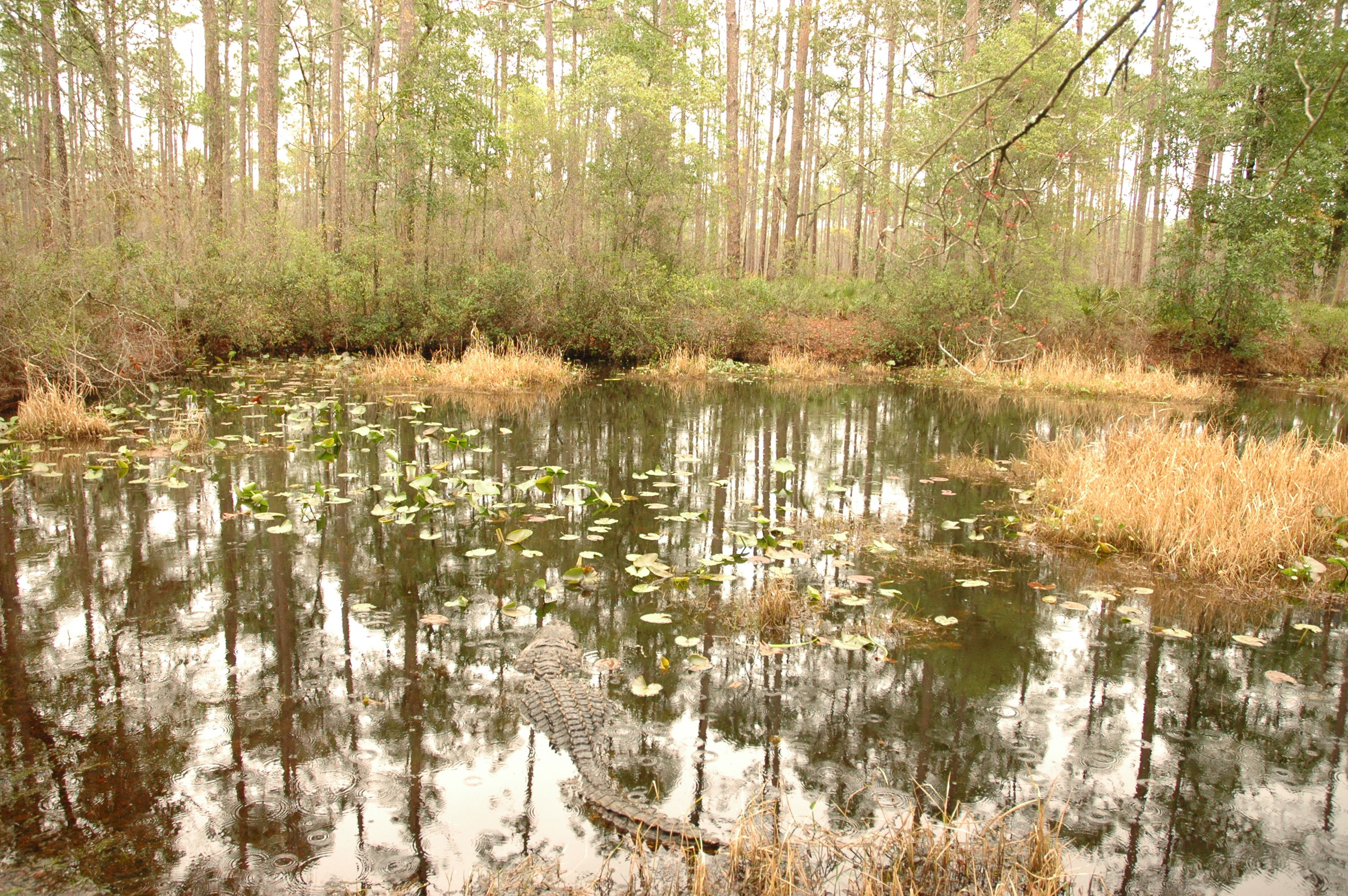
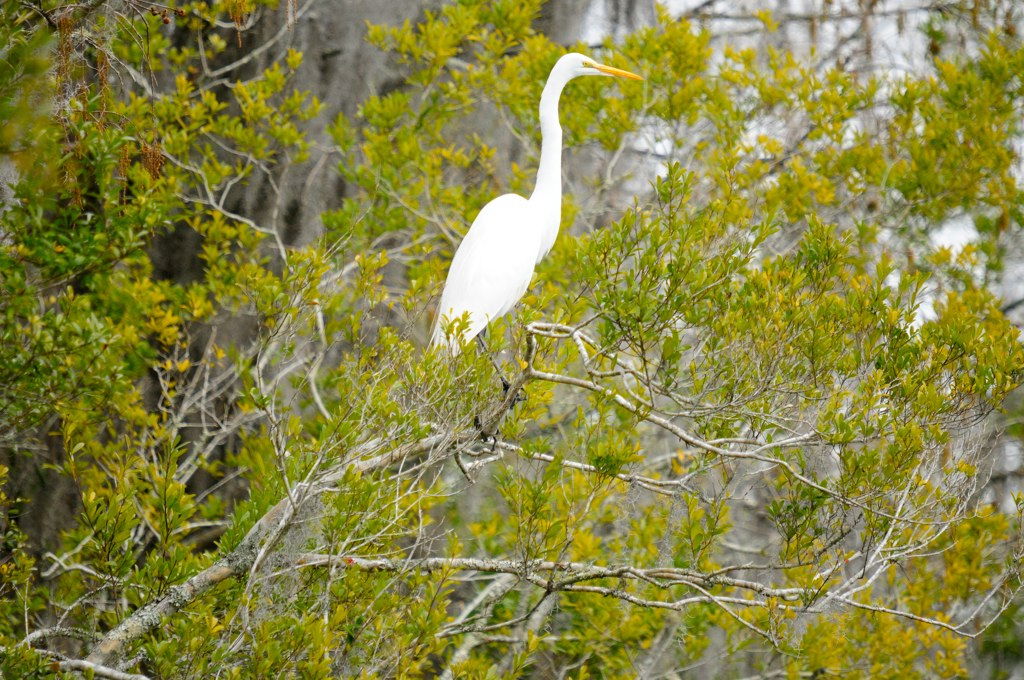
The Okefenokee Swamp is the most extensive of Georgia’s natural wonders in terms of area. This wildlife refuge in southeastern Georgia covers about 700 square miles and makes up part of four counties. The Okefenokee (from the Seminole, meaning “land of trembling earth”) includes a wide variety of ecological features, ranging from sandy ridges to wet, grassy savannahs and marshes to narrow water channels and small islands, all of which support a vast range of flora and fauna.

Okefenokee Swamp
Great Egret
3

Providence Canyon

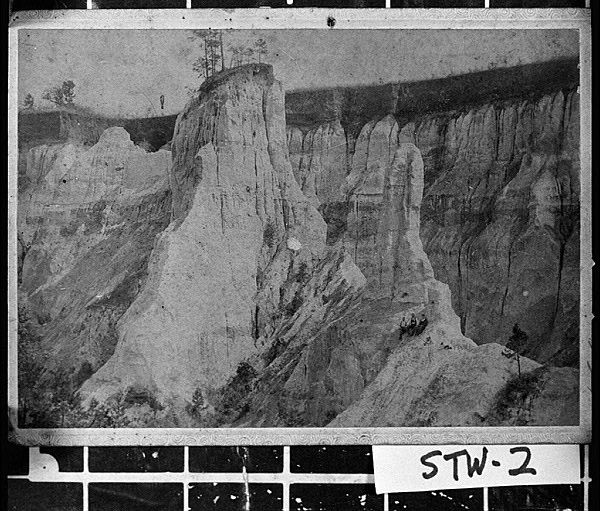
Providence Canyon, sometimes called “Georgia’s Little Grand Canyon,” is located near Lumpkin in the west central part of the state. The multicolored 1,109-acre network of gorges is more than 100 feet deep. Providence Canyon is unique as a natural wonder of Georgia in that it was caused by relatively recent erosion (from human activity) over the past 150 years.

Providence Canyon
Providence Canyon
4

Radium Springs

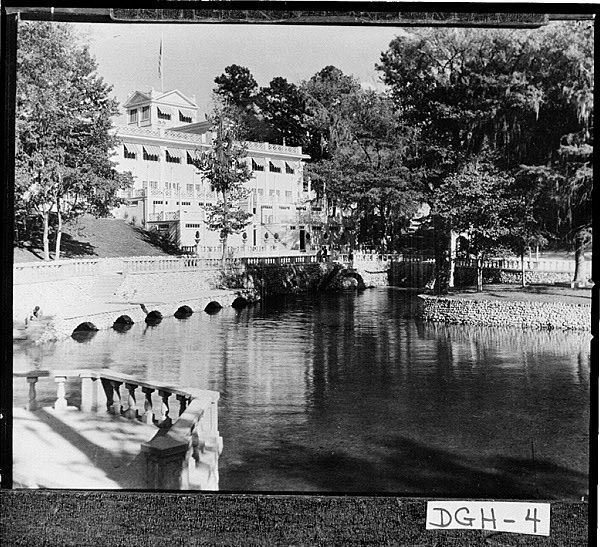
Radium Springs, on the southern outskirts of Albany, has waters that are consistently 68 degrees, rushing from the earth at 70,000 gallons per minute. These waters, which contain traces of radium, are the largest natural springs in Georgia. Overlooking Radium Springs is a park, featuring nature trails and an observation deck. The park is located on the site of a casino that had its heyday in the 1920s. The casino was demolished in 2003 after sustaining serious damage when the Flint River flooded in 1994 and 1998.

Radium Springs
5

Stone Mountain

Stone Mountain in metropolitan Atlanta is perhaps the best known of Georgia’s natural wonders. A granite dome rising 650 feet above the Piedmont plateau, Stone Mountain is about 2 miles long and 7 miles in circumference at its base. On the northeastern wall is a Confederate memorial conceived in 1914 and completed in 1970. As early as 1927, the DeKalb County Chamber of Commerce proclaimed Stone Mountain to be the “Eighth Wonder of the World,” in reference to the original second-century B.C. list of “Seven Wonders of the World,” comprising ancient architectural masterpieces.

Memorial Lawn at Stone Mountain
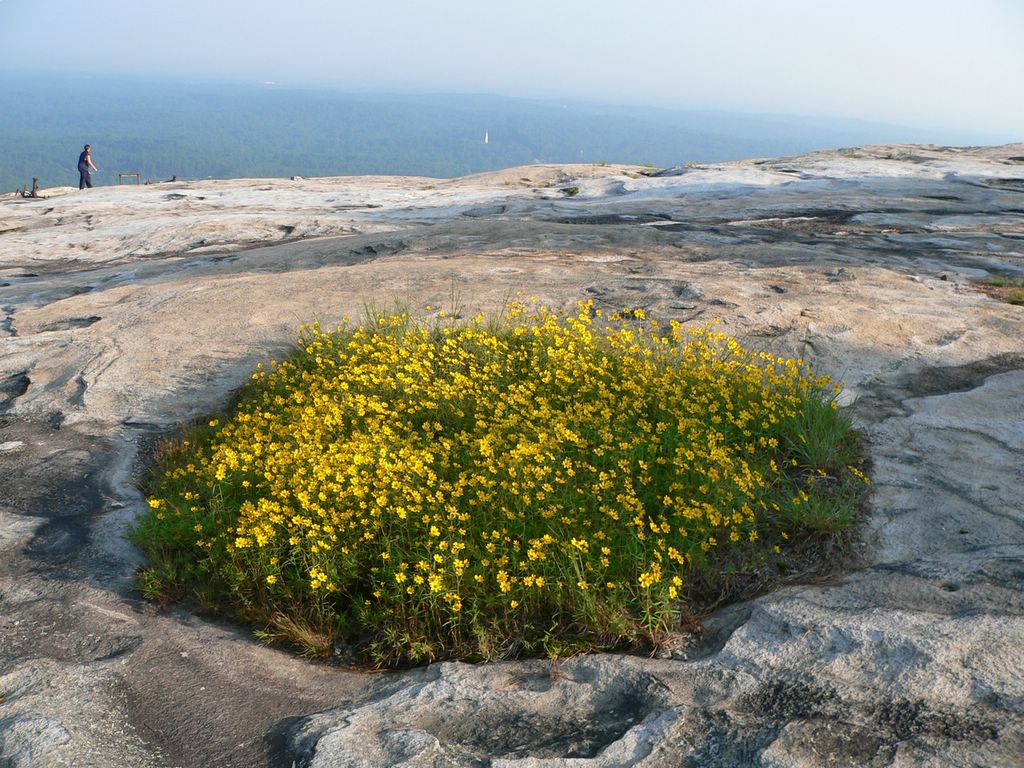
Stone Mountain Yellow Daisies
Stone Mountain Carving
6

Tallulah Gorge

The Tallulah Gorge in northeast Georgia is a canyon formation 3 miles long and 1,200 feet deep. It was created by a series of waterfalls that were dammed by the Georgia Power Company in 1912. Named after a Native American word for “terrible,” Tallulah Gorge was traditionally feared as a home for evil spirits. It was among the most visited tourist destinations in the state in the late nineteenth and early twentieth centuries.

Tallulah Falls
Tallulah Falls Hiking Party
7

Warm Springs

Located on the lower slopes of Pine Mountain in Meriwether County, Warm Springs has long been known for its healing waters. Native Americans used to bring their wounded warriors to the springs, which have a year-round temperature of 88 degrees. A natural trap, about 2,800 feet underground, heats the water. In the antebellum period a minor resort developed at the springs, later made world-famous by U.S. president Franklin D. Roosevelt. Roosevelt found relief there for his polio from the mid-1920s until his death at the Little White House, his home at Warm Springs, in 1945.

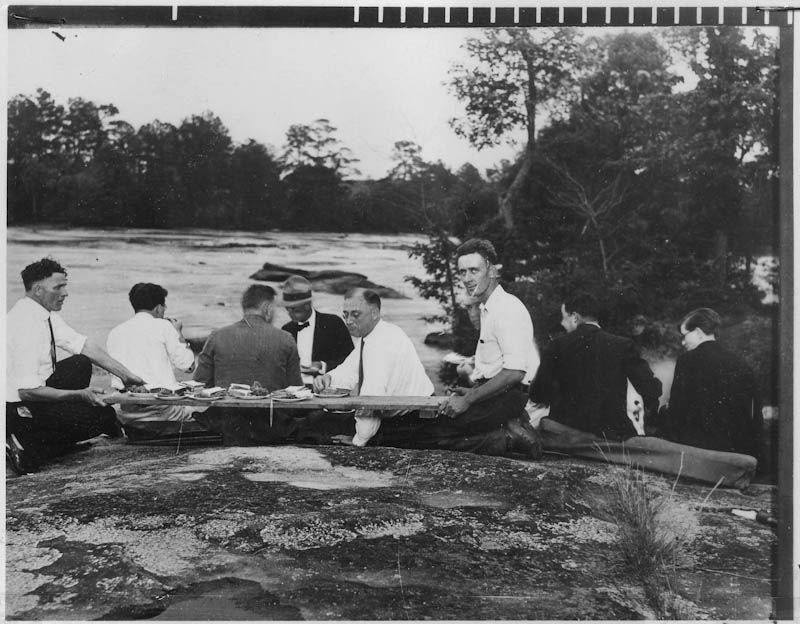
FDR near Warm Springs
Warm Springs Institute

Cite this Article

Hudson, Paul. "Seven Natural Wonders." New Georgia Encyclopedia, last modified June 9, 2025. https://www.georgiaencyclopedia.org/exhibition/seven-natural-wonders/

Hudson, P. S. (2019). Seven Natural Wonders. In New Georgia Encyclopedia. Retrieved June 9, 2025, from https://www.georgiaencyclopedia.org/exhibition/seven-natural-wonders/

Hudson, Paul. "Seven Natural Wonders." New Georgia Encyclopedia, 21 March 2019, https://www.georgiaencyclopedia.org/exhibition/seven-natural-wonders/.

Star

Featured Content

James Oglethorpe

James Oglethorpe

Colonial Figures
Civil Rights Movement

Civil Rights Movement

Mid- to Late 20th Century Topics
Trending

Trending

Ted Turner

Ted Turner

People
Georgia Guidestones

Georgia Guidestones

Sites & Museums
CNN

CNN

Television
James D. Bulloch

James D. Bulloch

People
Clock

Updated Recently

Morris Brown College

Morris Brown College

2 days ago
Burke County

Burke County

2 days ago
CNN

CNN

2 days ago
Ted Turner

Ted Turner

1 week ago

A More Perfect Union

The New Georgia Encyclopedia is supported by funding from A More Perfect Union, a special initiative of the National Endowment for the Humanities.

Learn More
New Georgia Encyclopedia
ISSN 2765-8732
Project Partners
logo-press UGA Press logo-galileo GALILEO logo-humanities Georgia Humanities logo-seal Office of the Governor logo-libraries UGA Libraries
Articles & Media
  • Browse by Topic
  • Content Collections
  • Georgia Standards
Special Content
  • Quizzes
  • Exhibitions
  • Spotify Playlists
  • Georgia Exhibits
  • Educator Resources
About
  • The Project
  • The People
  • Sponsors & Partners
Editorial
  • Our Process
  • Contributor Info
  • Permissions & Use
Stay in Touch
Facebook Instagram Twitter Contact Us
Donate to the NGE

Your support helps us commission new entries and update existing content.

Donate

© 2004–2026 Georgia Humanities, University of Georgia Press

  • Terms of Use
  • Privacy Policy
Loading
Image

Media gallery

Tallulah Falls Lithograph

Tallulah Falls Lithograph

  • Info Details
  • Citation Terms of Use

In the early 1800s many American sought out "the sublime"—those natural attractions that provoked feelings of terror, awe, and beauty. Environmental tourism reemerged as an important industry in Georgia during the late nineteenth century. In 1926 state librarian Ella May Thornton first published in Atlanta Georgian magazine a list of Georgia's natural wonders, among them the Okefenokee Swamp, Providence Canyon, Warm Springs, and Tallulah Gorge.

Courtesy of Edwin L. Jackson

The New Georgia Encyclopedia does not hold the copyright for this media resource and can neither grant nor deny permission to republish or reproduce the image online or in print. All requests for permission to publish or reproduce the resource must be submitted to the rights holder.

Amicalola Falls

Amicalola Falls

  • Info Details
  • Citation Terms of Use

Located in Dawson County, Amicalola Falls derives its name from a Native American word meaning "tumbling waters." Amicalola Falls is the highest waterfall in Georgia and among the highest in the southeast.

Photograph by Ryan McKee

The New Georgia Encyclopedia does not hold the copyright for this media resource and can neither grant nor deny permission to republish or reproduce the image online or in print. All requests for permission to publish or reproduce the resource must be submitted to the rights holder.

Amicalola Falls

Amicalola Falls

  • Info Details
  • Citation Terms of Use

Amicalola Falls in Dawson County is one of Georgia's most popular attractions.

Photograph by Darren Duke

The New Georgia Encyclopedia does not hold the copyright for this media resource and can neither grant nor deny permission to republish or reproduce the image online or in print. All requests for permission to publish or reproduce the resource must be submitted to the rights holder.

Okefenokee Swamp

Okefenokee Swamp

  • Info Details
  • Citation Terms of Use

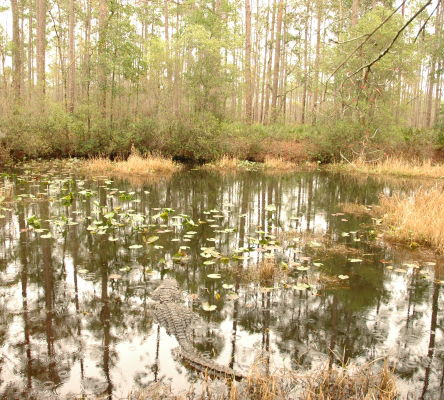
Alligators, which are native to Georgia, are among the hundreds of animal species to make their home in the Okefenokee Swamp.

Courtesy of Georgia Department of Economic Development.

The New Georgia Encyclopedia does not hold the copyright for this media resource and can neither grant nor deny permission to republish or reproduce the image online or in print. Requests for permission to publish or reproduce the resource may need to be submitted to the Georgia Department of Economic Development.

Great Egret

Great Egret

  • Info Details
  • Citation Terms of Use

A great egret perches on a branch in the Okefenokee Swamp.

Photograph by Siddharth Sharma

The New Georgia Encyclopedia does not hold the copyright for this media resource and can neither grant nor deny permission to republish or reproduce the image online or in print. All requests for permission to publish or reproduce the resource must be submitted to the rights holder.

Providence Canyon

Providence Canyon

  • Info Details
  • Citation Terms of Use

The unconsolidated sandstone bluffs of Providence Canyon in Stewart County were formed during the Cretaceous Period and are among the oldest exposed Coastal Plains rock formations in the state.

Courtesy of Matthew M. Moye

The New Georgia Encyclopedia does not hold the copyright for this media resource and can neither grant nor deny permission to republish or reproduce the image online or in print. All requests for permission to publish or reproduce the resource must be submitted to the rights holder.

Providence Canyon

Providence Canyon

  • Info Details
  • Citation Terms of Use

Providence Canyon, pictured in 1893, is a network of gorges created by soil erosion in Stewart County. Historical accounts indicate that the canyon began to form in the early 1800s as a result of poor farming practices.

Courtesy of Georgia Archives, Vanishing Georgia, #
stw002.

View on partner site

The New Georgia Encyclopedia does not hold the copyright for this media resource and can neither grant nor deny permission to republish or reproduce the image online or in print. Requests for permission to publish or reproduce the resource should be submitted to the Georgia Archives.

Radium Springs

Radium Springs

  • Info Details
  • Citation Terms of Use

Radium Springs, one of Georgia's Seven Natural Wonders, was the site of a casino that had its heyday during the 1920s. The casino was demolished in 2003.

Courtesy of Georgia Archives, Vanishing Georgia, #
dgh004.

View on partner site

The New Georgia Encyclopedia does not hold the copyright for this media resource and can neither grant nor deny permission to republish or reproduce the image online or in print. Requests for permission to publish or reproduce the resource should be submitted to the Georgia Archives.

Memorial Lawn at Stone Mountain

Memorial Lawn at Stone Mountain

  • Info Details
  • Citation Terms of Use

The Memorial Lawn at Stone Mountain is used as a viewing area for the park's summer laser show. During the winter the park provides snow tubing for visitors on the lawn.

Photograph by Chris Yunker, Wikimedia

The New Georgia Encyclopedia does not hold the copyright for this media resource and can neither grant nor deny permission to republish or reproduce the image online or in print. All requests for permission to publish or reproduce the resource must be submitted to the rights holder.

Stone Mountain Yellow Daisies

Stone Mountain Yellow Daisies

  • Info Details
  • Citation Terms of Use

The "Confederate Daisy," or "Stone Mountain Yellow Daisy," grows in the shallow soil on the granite outcrops of Stone Mountain. The flower is so named because it is found only within a sixty-mile radius of the mountain. The species was discovered in 1846.

Photograph by Lee Coursey

The New Georgia Encyclopedia does not hold the copyright for this media resource and can neither grant nor deny permission to republish or reproduce the image online or in print. All requests for permission to publish or reproduce the resource must be submitted to the rights holder.

Stone Mountain Carving

Stone Mountain Carving

  • Info Details
  • Citation Terms of Use

The carving of Confederate general Robert E. Lee's head is unveiled at Stone Mountain on January 19, 1924. Some of Georgia's earliest tourist attractions were Civil War battle sites and memorials. Most sites dedicated to the conflict favored narratives of battlefield glory and commemoration of fallen soldiers, and downplayed the history of slavery and emancipation.

Courtesy of Gary Doster

The New Georgia Encyclopedia does not hold the copyright for this media resource and can neither grant nor deny permission to republish or reproduce the image online or in print. All requests for permission to publish or reproduce the resource must be submitted to the rights holder.

Tallulah Falls

Tallulah Falls

  • Info Details
  • Citation Terms of Use

In 1992 the state, in partnership with Georgia Power, created Tallulah Gorge State Park, one of the most popular in Georgia's park system. Controlled releases from the dam allow visitors to hear the roar of the falls on selected weekends in the spring and autumn.

Photograph by Jeno

The New Georgia Encyclopedia does not hold the copyright for this media resource and can neither grant nor deny permission to republish or reproduce the image online or in print. All requests for permission to publish or reproduce the resource must be submitted to the rights holder.

Tallulah Falls Hiking Party

Tallulah Falls Hiking Party

  • Info Details
  • Citation Terms of Use

Tallulah touted attractions that vacationers seeking a place for healthful respite desired—clean, cool air and water, a plethora of outdoor activities, and remarkable vistas. Tourists not only hiked to the falls, but swam in the river, lounged on rocks, and enjoyed horseback riding.

Courtesy of Richard B. Russell Library for Political Research and Studies, University of Georgia Libraries, Dudley Mays Hughs Collection.

The New Georgia Encyclopedia does not hold the copyright for this media resource and can neither grant nor deny permission to republish or reproduce the image online or in print. Requests for permission to publish or reproduce the resource may need to be submitted to the Richard B. Russell Library for Political Research and Studies at the University of Georgia.

FDR and seven other men dressed in button up shirts have a picnic on a rock outcrop by a river.

FDR near Warm Springs

  • Info Details
  • Citation Terms of Use

Franklin D. Roosevelt eats a meal with seven other men beside the Flint River near Warm Springs in Meriwether County.

Courtesy of Franklin D. Roosevelt Presidential Library and Museum

The New Georgia Encyclopedia does not hold the copyright for this media resource and can neither grant nor deny permission to republish or reproduce the image online or in print. All requests for permission to publish or reproduce the resource must be submitted to the rights holder.

Warm Springs Institute

Warm Springs Institute

  • Info Details
  • Citation Terms of Use

In the 1930s polio sufferers flocked to Warm Springs, the site of U.S. president Franklin D. Roosevelt's treatment center. Georgia Hall is pictured.

The New Georgia Encyclopedia does not hold the copyright for this media resource and can neither grant nor deny permission to republish or reproduce the image online or in print. All requests for permission to publish or reproduce the resource must be submitted to the rights holder.

Tallulah Falls Lithograph Amicalola Falls Amicalola Falls Okefenokee Swamp Great Egret Providence Canyon Providence Canyon Radium Springs Memorial Lawn at Stone Mountain Stone Mountain Yellow Daisies Stone Mountain Carving Tallulah Falls Tallulah Falls Hiking Party FDR and seven other men dressed in button up shirts have a picnic on a rock outcrop by a river. Warm Springs Institute