Skip to content
New Georgia Encyclopedia
  • Home
  • Articles & Media
  • Browse by Topic
  • Browse Collections
  • Browse Georgia Standards
  • A-Z Index
  • Exhibitions
  • Educators
  • Browse    Chevron down
  • Exhibitions
  • Educators
By Topic Content Collections Georgia Standards A-Z Index Arrow right
  • Arts & Culture

    Arts & Culture

  • Business & Economy

    Business & Economy

  • Counties, Cities & Neighborhoods

    Counties, Cities & Neighborhoods

  • Education

    Education

  • Geography & Environment

    Geography & Environment

  • Government & Politics

    Government & Politics

  • History & Archaeology

    History & Archaeology

  • People

    People

  • Science & Medicine

    Science & Medicine

  • Sports & Outdoor Recreation

    Sports & Outdoor Recreation

Stamp Collection
Featured

Stamp Collection

Stamps honoring the political figures, artists, and culture of Georgia.

Frankie Welch’s Americana
Featured

Frankie Welch’s Americana

Fashion and politics from Georgia-born designer Frankie Welch

Recently Added
View All Arrow right
City Page: Atlanta

City Page: Atlanta

Stamp Collection

Stamp Collection

Frankie Welch’s Americana

Frankie Welch’s Americana

  • Georgia Studies

    Georgia Studies

    Eighth Grade
  • Georgia, My State

    Georgia, My State

    Second Grade
All Topics Arrow right History & Archaeology Arrow right Colonial Era, 1733-1775 Arrow right

Colonial Figures

Johann Martin Boltzius

Johann Martin Boltzius

1703-1765
Brims

Brims

d. 1733
Archibald Bulloch

Archibald Bulloch

1730-1777
Butler Family

Butler Family

Elijah Clarke

Elijah Clarke

1742-1799
Samuel Elbert

Samuel Elbert

1740-1788
Henry Ellis

Henry Ellis

1721-1806
Olaudah Equiano in Georgia

Olaudah Equiano in Georgia

George Galphin

George Galphin

ca. 1700-1780
Button Gwinnett

Button Gwinnett

1735-1777
Habersham Family

Habersham Family

Benjamin Hawkins

Benjamin Hawkins

1754-1816
Elizabeth Lichtenstein Johnston

Elizabeth Lichtenstein Johnston

1764-1848
Malatchi

Malatchi

ca. 1720-1756
Alexander McGillivray

Alexander McGillivray

ca. 1750-1793
Lachlan McGillivray

Lachlan McGillivray

1719-1799
Lachlan McIntosh

Lachlan McIntosh

1727-1806
William McIntosh

William McIntosh

ca. 1778-1825
Mary Musgrove

Mary Musgrove

ca. 1700-ca. 1763
Samuel Nunes

Samuel Nunes

ca. 1667-ca. 1741
Star Featured James Oglethorpe

James Oglethorpe

1696-1785
John Reynolds

John Reynolds

ca. 1713-1788
Mordecai Sheftall

Mordecai Sheftall

1735-1797
William Stephens

William Stephens

1671-1753
Tomochichi

Tomochichi

ca. 1644-1739
Peter Tondee

Peter Tondee

ca. 1723-1775
James Wright

James Wright

1716-1785
John J. Zubly

John J. Zubly

1724-1781
Loading
Star

Featured Content

Civil Rights Movement

Civil Rights Movement

Mid- to Late 20th Century Topics
James Oglethorpe

James Oglethorpe

Colonial Figures
Trending

Trending

Georgia Guidestones

Georgia Guidestones

Sites & Museums
Lynching

Lynching

Late 19th-Century Topics
Slavery in Colonial Georgia

Slavery in Colonial Georgia

Colonial Topics
Carl Sanders

Carl Sanders

Politicians
Clock

Updated Recently

Morris Brown College

Morris Brown College

1 week ago
Burke County

Burke County

1 week ago
CNN

CNN

1 week ago
Ted Turner

Ted Turner

2 weeks ago

A More Perfect Union

The New Georgia Encyclopedia is supported by funding from A More Perfect Union, a special initiative of the National Endowment for the Humanities.

Learn More
New Georgia Encyclopedia
ISSN 2765-8732
Project Partners
logo-press UGA Press logo-galileo GALILEO logo-humanities Georgia Humanities logo-seal Office of the Governor logo-libraries UGA Libraries
Articles & Media
  • Browse by Topic
  • Content Collections
  • Georgia Standards
Special Content
  • Quizzes
  • Exhibitions
  • Spotify Playlists
  • Georgia Exhibits
  • Educator Resources
About
  • The Project
  • The People
  • Sponsors & Partners
Editorial
  • Our Process
  • Contributor Info
  • Permissions & Use
Stay in Touch
Facebook Instagram Twitter Contact Us
Donate to the NGE

Your support helps us commission new entries and update existing content.

Donate

© 2004–2026 Georgia Humanities, University of Georgia Press

  • Terms of Use
  • Privacy Policy

Media gallery

Sheftall Sheftall

Sheftall Sheftall

  • Info Details
  • Citation Terms of Use

Sheftall Sheftall was the eldest son of Mordecai Sheftall, a successful Savannah merchant, shipper, and statesman. In 1777, during the Revolutionary War, Mordecai became a colonel, and he named Sheftall as his assistant. The following year both men were taken as prisoners by the British and held in the Caribbean for two years before being released.

Courtesy of Hargrett Rare Book and Manuscript Library, University of Georgia Libraries, Georgia Photo File.

The New Georgia Encyclopedia does not hold the copyright for this media resource and can neither grant nor deny permission to republish or reproduce the image online or in print. Requests for permission to publish or reproduce the resource should be submitted to the Hargrett Manuscript and Rare Book Library at the University of Georgia.

Congregation Mickve Israel

Congregation Mickve Israel

  • Info Details
  • Citation Terms of Use

Congregation Mickve Israel in Savannah is the oldest Jewish congregation in the South and the third oldest in the United States. The congregation was founded during the establishment of the colony in 1733, and the current temple building was completed in 1878.

Photograph by Mark Kortum 

The New Georgia Encyclopedia does not hold the copyright for this media resource and can neither grant nor deny permission to republish or reproduce the image online or in print. All requests for permission to publish or reproduce the resource must be submitted to the rights holder.

William McIntosh

William McIntosh

  • Info Details
  • Citation Terms of Use

Charles Bird King's portrait of William McIntosh (ca. 1825). In 1825 McIntosh negotiated and signed the Treaty of Indian Springs, signing away all Muscogee (Creek) lands in Georgia and thereby defying most of the reforms that he had encouraged and the laws that he had helped write.

Image from Archives and Rare Books Library, University of Cincinnati Libraries, McKenney and Hall: History of the Indian Tribes Collection.

The New Georgia Encyclopedia does not hold the copyright for this media resource and can neither grant nor deny permission to republish or reproduce the image online or in print. All requests for permission to publish or reproduce the resource must be submitted to the rights holder.

William McIntosh

William McIntosh

  • Info Details
  • Citation Terms of Use

A Lower Muscogee (Creek) Indian chief, William McIntosh was born to a Scottish father and Muscogee mother and was fluent in the culture and language of both Muscogee and white societies. He supported the United States in its efforts to obtain Muscogee land, and his role in the 1825 Treaty of Indian Springs was considered a betrayal by the Muscogee.

Image from Alabama Department of Archives and History

The New Georgia Encyclopedia does not hold the copyright for this media resource and can neither grant nor deny permission to republish or reproduce the image online or in print. All requests for permission to publish or reproduce the resource must be submitted to the rights holder.

McIntosh Inn

McIntosh Inn

  • Info Details
  • Citation Terms of Use

The McIntosh Inn, built in 1823 at Indian Springs in Butts County by Muscogee (Creek) leader William McIntosh, thrived as a popular resort until the 1930s. In 1825 McIntosh signed the Treaty of Indian Springs with the U.S. government at the hotel; he was murdered three months later by angry Muscogee who considered the agreement a betrayal.

Photograph by Melinda Smith Mullikin, New Georgia Encyclopedia

The New Georgia Encyclopedia does not hold the copyright for this media resource and can neither grant nor deny permission to republish or reproduce the image online or in print. All requests for permission to publish or reproduce the resource must be submitted to the rights holder.

Historical Marker, McIntosh Inn

Historical Marker, McIntosh Inn

  • Info Details
  • Citation Terms of Use

The marker reads: "Here on February 12, 1825, William McIntosh, a friendly chief of the Creek Indians, signed the Treaty by which all lands west of the Flint River were ceded to the State of Georgia. For this, he was murdered by a band of Creeks who were opposed to the treaty. This tablet is placed by The Piedmont Continental Chapter Daughters of the American Revolution A.D. 1911."

Photograph by Melinda Smith Mullikin, New Georgia Encyclopedia

The New Georgia Encyclopedia does not hold the copyright for this media resource and can neither grant nor deny permission to republish or reproduce the image online or in print. All requests for permission to publish or reproduce the resource must be submitted to the rights holder.

Beaulieu Plantation

Beaulieu Plantation

  • Info Details
  • Citation Terms of Use

This tree-lined drive marks the entrance to Beaulieu Plantation, the estate of William Stephens, who came to Savannah in 1737 to serve as secretary of Trustee Georgia. Beaulieu was one of the leading river plantations, and Stephens experimented with grape and cotton cultivation.

Photograph by Carol Ebel

The New Georgia Encyclopedia does not hold the copyright for this media resource and can neither grant nor deny permission to republish or reproduce the image online or in print. All requests for permission to publish or reproduce the resource must be submitted to the rights holder.

Seal of the Trustees

Seal of the Trustees

  • Info Details
  • Citation Terms of Use

One face of the 1733 seal of the Georgia Trustees features two figures resting upon urns. They represent the Savannah and Altamaha rivers, which formed the northwestern and southeastern boundaries of the province. The genius of the colony is seated beside a cornucopia, with a cap of liberty on her head and a spear in one hand. The abbreviated Latin phrase Colonia Georgia Aug means "May the colony of Georgia prosper."

Courtesy of Georgia Historical Society.

The New Georgia Encyclopedia does not hold the copyright for this media resource and can neither grant nor deny permission to republish or reproduce the image online or in print. All requests for permission to publish or reproduce the resource must be submitted to Georgia Historical Society.

Johann Martin Boltzius

Johann Martin Boltzius

  • Info Details
  • Citation Terms of Use

Lutheran minister Johann Martin Boltzius, along with religious refugees from Salzburger, founded the settlement of Ebenezer near Savannah in the early 1730s as a religious utopia. Boltzius hoped to create a successful economic system that was not dependent upon slavery.

Courtesy of Hargrett Rare Book and Manuscript Library, University of Georgia Libraries.

The New Georgia Encyclopedia does not hold the copyright for this media resource and can neither grant nor deny permission to republish or reproduce the image online or in print. Requests for permission to publish or reproduce the resource should be submitted to the Hargrett Manuscript and Rare Book Library at the University of Georgia.

Early Ebenezer

Early Ebenezer

  • Info Details
  • Citation Terms of Use

This sketch of the early Ebenezer settlement was drawn in 1736 by Philip Georg Friedrich von Reck. That same year the Salzburger settlement moved to a location closer to the Savannah River, where conditions were better for farming.

Print from Von Reck Archive, Royal Library of Denmark, Copenhagen
The New Georgia Encyclopedia does not hold the copyright for this media resource and can neither grant nor deny permission to republish or reproduce the image online or in print. All requests for permission to publish or reproduce the resource must be submitted to the rights holder.

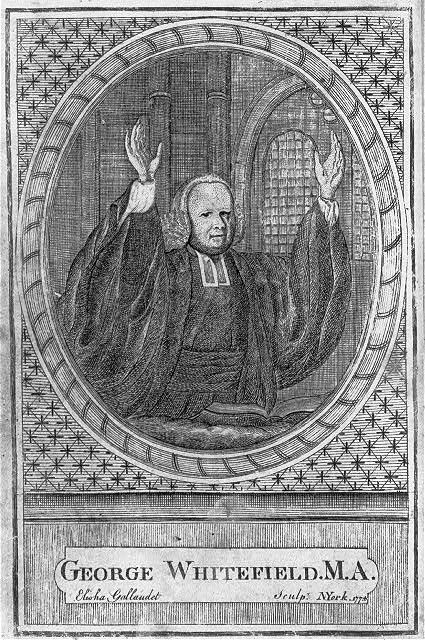
George Whitefield

George Whitefield

  • Info Details
  • Citation Terms of Use

An engraving of Anglican minister George Whitefield, created in 1774, depicts him preaching at a church in New York. A popular figure of the eighteenth-century Great Awakening in America, Whitefield founded the Bethesda orphanage near Savannah in 1740.

Courtesy of Library of Congress, Prints and Photographs Division

The New Georgia Encyclopedia does not hold the copyright for this media resource and can neither grant nor deny permission to republish or reproduce the image online or in print. All requests for permission to publish or reproduce the resource must be submitted to the rights holder.

Benjamin Hawkins

Benjamin Hawkins

  • Info Details
  • Citation Terms of Use

Benjamin Hawkins, a North Carolina native, served as the "Principal Temporary Agent for Indian Affairs South of the Ohio River" from 1796 until his death in 1816. Hawkins established the Creek Agency Reserve along the Flint River in present-day Crawford County, Georgia, where he lived with his wife and children. A skilled and fair diplomat, Hawkins encouraged Indians in his jurisdiction to adopt the U.S. government's "plan for civilization" as their best option for survival.

The New Georgia Encyclopedia does not hold the copyright for this media resource and can neither grant nor deny permission to republish or reproduce the image online or in print. All requests for permission to publish or reproduce the resource must be submitted to the rights holder.

Fort Benjamin Hawkins

Fort Benjamin Hawkins

  • Info Details
  • Citation Terms of Use

Indian Superintendent Benjamin Hawkins personally selected the location of Fort Benjamin Hawkins, which was built to protect settlers from the Muscogee (Creeks). Despite Hawkins's fear that the Muscogee would attack the settlement, no problems arose during the fifteen years that the fort was used as an outpost. Fort Hawkins was later used as a supply hub during the War of 1812.

Courtesy of Middle Georgia Archives, Washington Memorial Library.
The New Georgia Encyclopedia does not hold the copyright for this media resource and can neither grant nor deny permission to republish or reproduce the image online or in print. Requests for permission to publish or reproduce the resource may need to be submitted to the Middle Georgia Archives at Washington Memorial Library. 

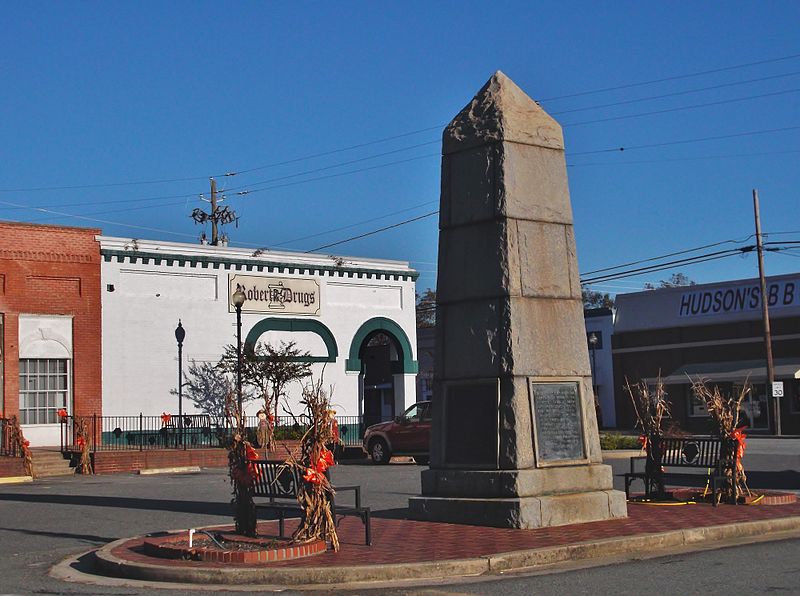
Hawkins Monument

Hawkins Monument

  • Info Details
  • Citation Terms of Use

A monument commemorating Muscogee (Creek) Indian agent Benjamin Hawkins stands in front of the Old Roberta Train Depot in Crawford County. Hawkins established the Creek Agency Reserve on the Flint River in Crawford County in 1803.

Photograph by Wikimedia

The New Georgia Encyclopedia does not hold the copyright for this media resource and can neither grant nor deny permission to republish or reproduce the image online or in print. All requests for permission to publish or reproduce the resource must be submitted to the rights holder.

Olaudah Equiano

Olaudah Equiano

  • Info Details
  • Citation Terms of Use

Olaudah Equiano published one of the earliest known slave narratives, The Interesting Narrative, in London in 1789. The work chronicles his years of enslavement, which he spent sailing trade ships both at sea and along the Savannah River. Equiano purchased his freedom in 1766 and traveled widely thereafter.

From The Life of Olaudah Equiano, or Gustavus Vassa, the African, by O. Equiano

The New Georgia Encyclopedia does not hold the copyright for this media resource and can neither grant nor deny permission to republish or reproduce the image online or in print. All requests for permission to publish or reproduce the resource must be submitted to the rights holder.

  • Info Details
  • Citation Terms of Use

The New Georgia Encyclopedia does not hold the copyright for this media resource and can neither grant nor deny permission to republish or reproduce the image online or in print. All requests for permission to publish or reproduce the resource must be submitted to the rights holder.

Water Tower

Water Tower

  • Info Details
  • Citation Terms of Use

The water tower at Old Town Plantation is located approximately eight miles southeast of Louisville in Jefferson County. The plantation was established as a trading post around 1770 by Georgia Galphin, an Indian commissioner, on the site of an ancient Creek town.

Courtesy of Forrest Shropshire

The New Georgia Encyclopedia does not hold the copyright for this media resource and can neither grant nor deny permission to republish or reproduce the image online or in print. All requests for permission to publish or reproduce the resource must be submitted to the rights holder.

Elizabeth Lichtenstein Johnston

Elizabeth Lichtenstein Johnston

  • Info Details
  • Citation Terms of Use

As a young girl, Elizabeth Lichtenstein Johnston first lived with her parents along the Little Ogeechee River in Georgia. In 1774, after the death of her mother, she was sent to Savannah, where she lived through the Revolutionary War. Johnston later wrote about her experiences during the war, including the 1779 siege on Savannah, in her memoir Recollections of a Georgia Loyalist.

Courtesy of Hargrett Rare Book and Manuscript Library, University of Georgia Libraries.

The New Georgia Encyclopedia does not hold the copyright for this media resource and can neither grant nor deny permission to republish or reproduce the image online or in print. Requests for permission to publish or reproduce the resource should be submitted to the Hargrett Manuscript and Rare Book Library at the University of Georgia.

Elizabeth Lichtenstein Johnston

Elizabeth Lichtenstein Johnston

  • Info Details
  • Citation Terms of Use

Elizabeth Lichtenstein Johnston's memoir of the American Revolution, which she experienced as a young girl in Savannah, was published in 1901. The book, entitled Recollections of a Georgia Loyalist, provides one of the most detailed accounts available of a southern woman's experience during the war.
Courtesy of Hargrett Rare Book and Manuscript Library, University of Georgia Libraries.

The New Georgia Encyclopedia does not hold the copyright for this media resource and can neither grant nor deny permission to republish or reproduce the image online or in print. Requests for permission to publish or reproduce the resource should be submitted to the Hargrett Manuscript and Rare Book Library at the University of Georgia.

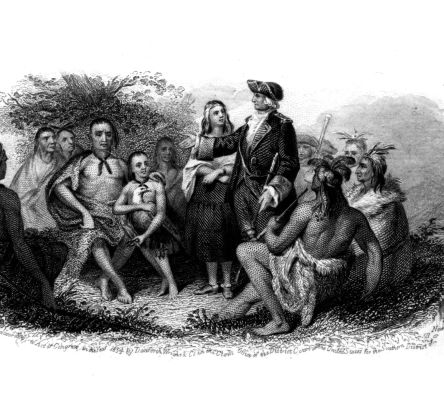
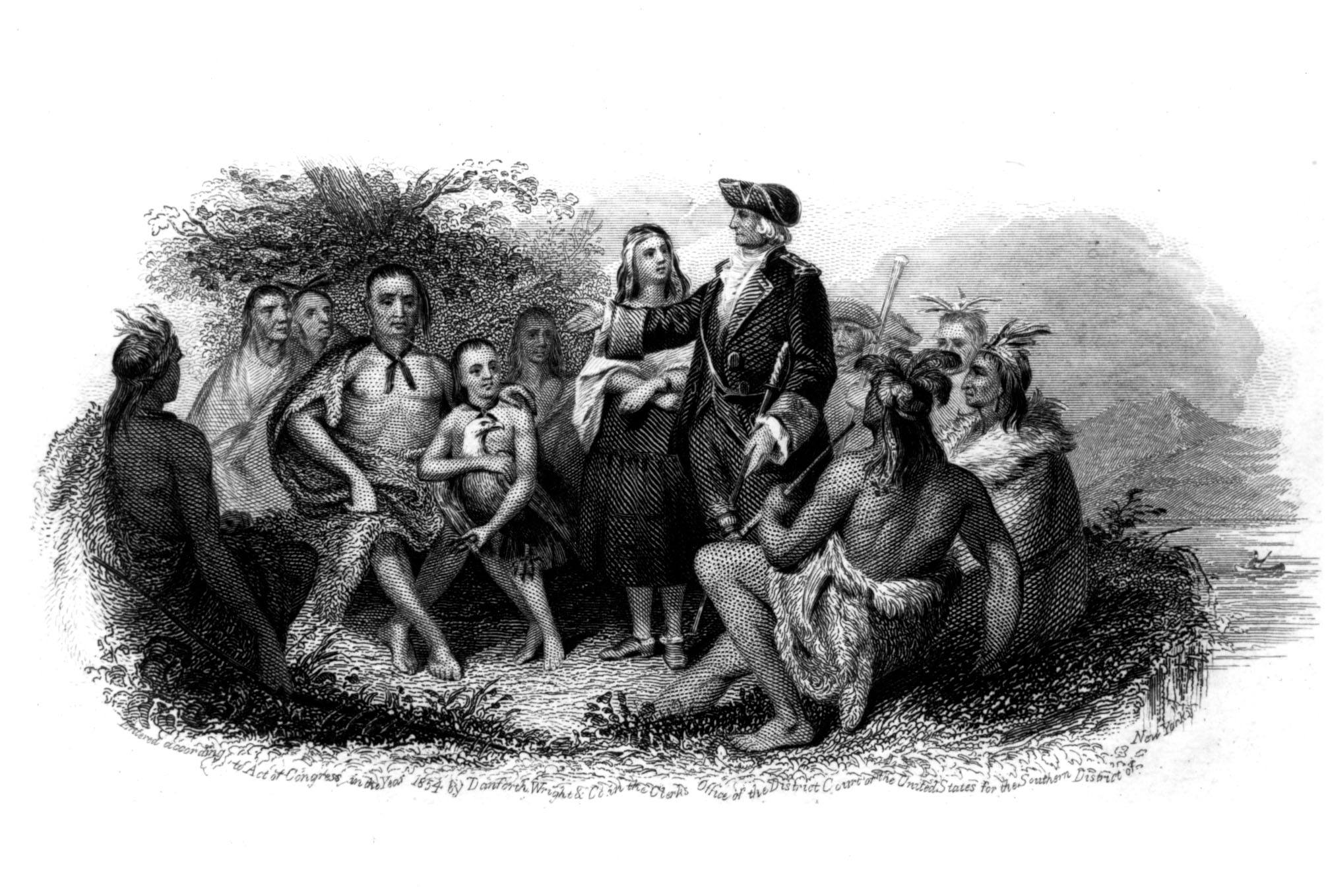
Oglethorpe with Creek Indians

Oglethorpe with Creek Indians

  • Info Details
  • Citation Terms of Use

The Muscogee (Creek) Indians meet with James Oglethorpe. By the time Oglethorpe and his Georgia colonists arrived in 1733, relations between the Muscogee and the English were already well established and centered mainly on trade.

Courtesy of Hargrett Rare Book and Manuscript Library, University of Georgia Libraries.

The New Georgia Encyclopedia does not hold the copyright for this media resource and can neither grant nor deny permission to republish or reproduce the image online or in print. Requests for permission to publish or reproduce the resource should be submitted to the Hargrett Manuscript and Rare Book Library at the University of Georgia.

Yamacraw Territory

Yamacraw Territory

  • Info Details
  • Citation Terms of Use

A map of Georgia, circa 1745, shows the territory inhabited by the Yamacraw Indians, a group formed in 1728 by disaffected Muscogee (Creek) and Yamasee Indians. The Yamacraws, led by Tomochichi, established their first community on the bluffs of the Savannah River. After the arrival of James Oglethorpe in 1733, the group agreed to move north to accomodate Oglethorpe's plans to build an outpost, which later became the city of Savannah.

From History of Georgia, by C. Howell
The New Georgia Encyclopedia does not hold the copyright for this media resource and can neither grant nor deny permission to republish or reproduce the image online or in print. All requests for permission to publish or reproduce the resource must be submitted to the rights holder.

Button Gwinnett

Button Gwinnett

  • Info Details
  • Citation Terms of Use

Button Gwinnett served in Georgia's colonial legislature, in the Second Continental Congress, and as president of Georgia's Revolutionary Council of Safety. He was one of three Georgia signers of the Declaration of Independence.

Courtesy of Hargrett Rare Book and Manuscript Library, University of Georgia Libraries.

The New Georgia Encyclopedia does not hold the copyright for this media resource and can neither grant nor deny permission to republish or reproduce the image online or in print. Requests for permission to publish or reproduce the resource should be submitted to the Hargrett Manuscript and Rare Book Library at the University of Georgia.

Button Gwinnett’s Signature

Button Gwinnett’s Signature

  • Info Details
  • Citation Terms of Use

Button Gwinnett's signature is said to be one of the rarest and most valuable of the signers of the Declaration of Independence. The signature is housed at the Georgia Archives in Morrow.

Image from Wikimedia
View on source site

The New Georgia Encyclopedia does not hold the copyright for this media resource and can neither grant nor deny permission to republish or reproduce the image online or in print. All requests for permission to publish or reproduce the resource must be submitted to the rights holder.

  • Info Details
  • Citation Terms of Use

The New Georgia Encyclopedia does not hold the copyright for this media resource and can neither grant nor deny permission to republish or reproduce the image online or in print. All requests for permission to publish or reproduce the resource must be submitted to the rights holder.

James Oglethorpe

James Oglethorpe

  • Info Details
  • Citation Terms of Use

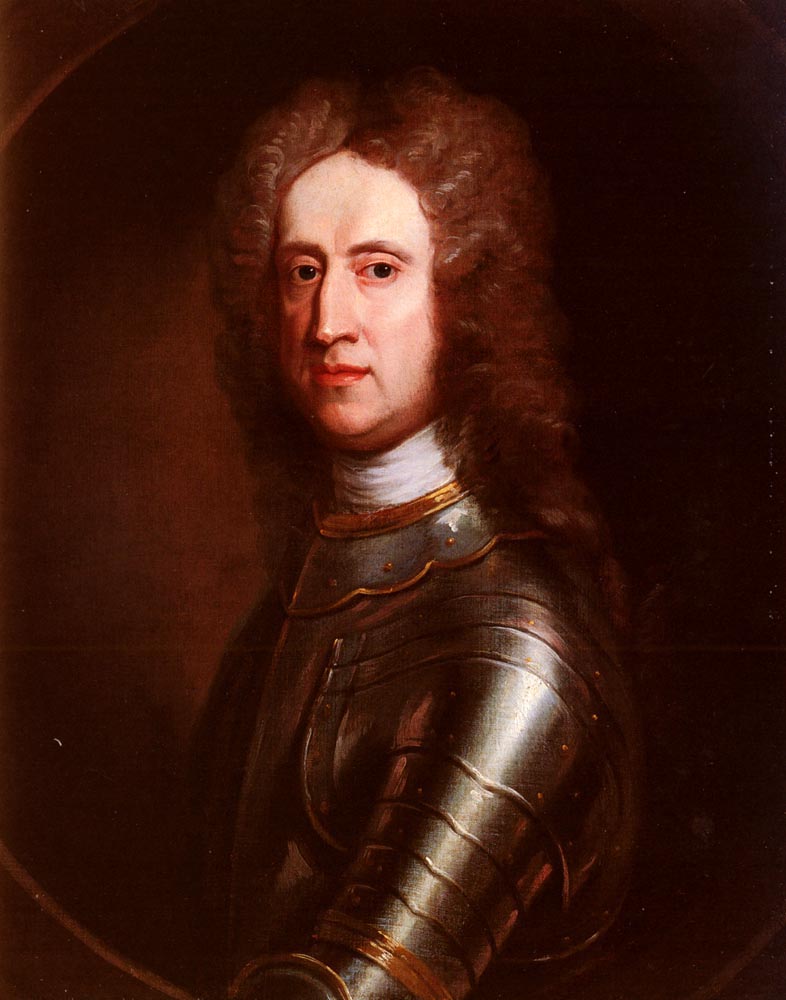
James Oglethorpe, the founder of Georgia, was a forward-thinking visionary who demonstrated great skill as a social reformer and military leader. This portrait is a copy of Oglethorpe University's oval portrait of Oglethorpe, which was painted in 1744. The portrait was discovered in England by Thornwell Jacobs and brought back to Atlanta to hang in the president's office at Oglethorpe University.

Courtesy of Georgia Info, Digital Library of Georgia.

The New Georgia Encyclopedia does not hold the copyright for this media resource and can neither grant nor deny permission to republish or reproduce the image online or in print. Requests for permission to publish or reproduce the resource may need to be submitted to the Digital Library of Georgia.

James Oglethorpe

James Oglethorpe

  • Info Details
  • Citation Terms of Use

James Oglethorpe, a leader in the British movement to found a new colony in America, set sail for the new world on November 17, 1732, accompanied by Georgia's first settlers.

Courtesy of Hargrett Rare Book and Manuscript Library, University of Georgia Libraries.

The New Georgia Encyclopedia does not hold the copyright for this media resource and can neither grant nor deny permission to republish or reproduce the image online or in print. Requests for permission to publish or reproduce the resource should be submitted to the Hargrett Manuscript and Rare Book Library at the University of Georgia.

James Oglethorpe

James Oglethorpe

  • Info Details
  • Citation Terms of Use

James Oglethorpe, along with a twenty-one-member Board of Trustees, founded the colony of Georgia in 1733 and directed its development for nearly a decade. Although the board appointed Anglican clergy to the new colony, Oglethorpe welcomed settlers of a variety of religious persuasions.

Courtesy of Oglethorpe University

The New Georgia Encyclopedia does not hold the copyright for this media resource and can neither grant nor deny permission to republish or reproduce the image online or in print. All requests for permission to publish or reproduce the resource must be submitted to the rights holder.

James Oglethorpe

James Oglethorpe

  • Info Details
  • Citation Terms of Use

James Oglethorpe defended the new colony of Georgia militarily, holding the titles of general and commander in chief.

Courtesy of Georgia Info, Digital Library of Georgia.

The New Georgia Encyclopedia does not hold the copyright for this media resource and can neither grant nor deny permission to republish or reproduce the image online or in print. Requests for permission to publish or reproduce the resource may need to be submitted to the Digital Library of Georgia.

James Oglethorpe

James Oglethorpe

  • Info Details
  • Citation Terms of Use

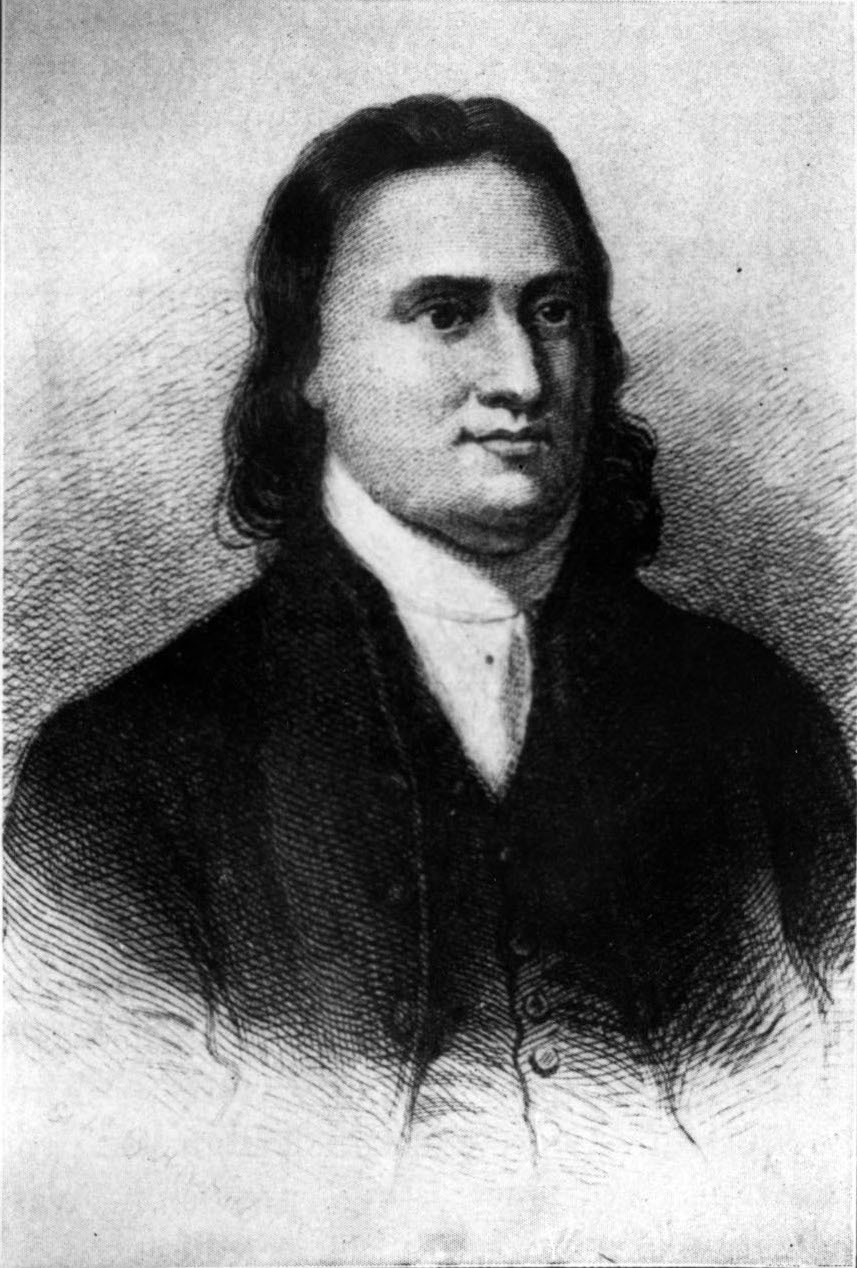
Georgians have honored founder James Oglethorpe by naming a county, two cities, a university, and numerous schools, streets, parks, and businesses for him.

Courtesy of Georgia Historical Society, Georgia Historical Society collection of portraits, #GHS 1361-AF-327.
View on partner site

The New Georgia Encyclopedia does not hold the copyright for this media resource and can neither grant nor deny permission to republish or reproduce the image online or in print. All requests for permission to publish or reproduce the resource must be submitted to Georgia Historical Society.

James Oglethorpe Stamp

James Oglethorpe

  • Info Details
  • Citation Terms of Use

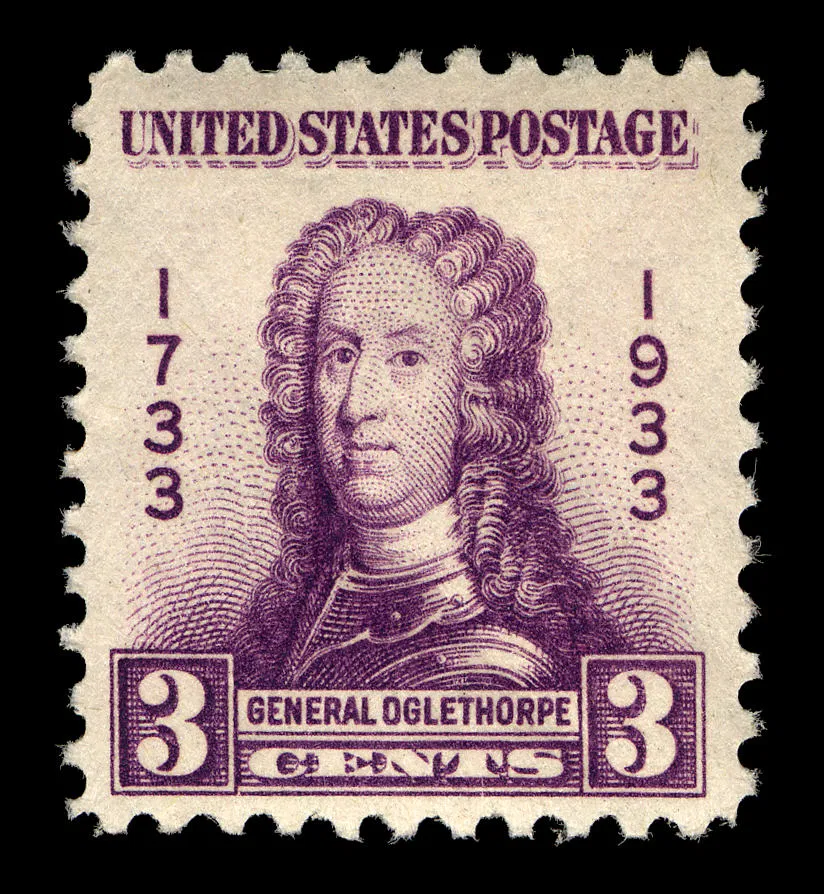
The U.S. Postal Service issued a stamp featuring Georgia founder James Oglethorpe for the state's bicentennial anniversary in 1933.

Courtesy of Smithsonian National Postal Museum
The New Georgia Encyclopedia does not hold the copyright for this media resource and can neither grant nor deny permission to republish or reproduce the image online or in print. All requests for permission to publish or reproduce the resource must be submitted to the rights holder.

Savannah City Plan, 1734

Savannah City Plan, 1734

  • Info Details
  • Citation Terms of Use

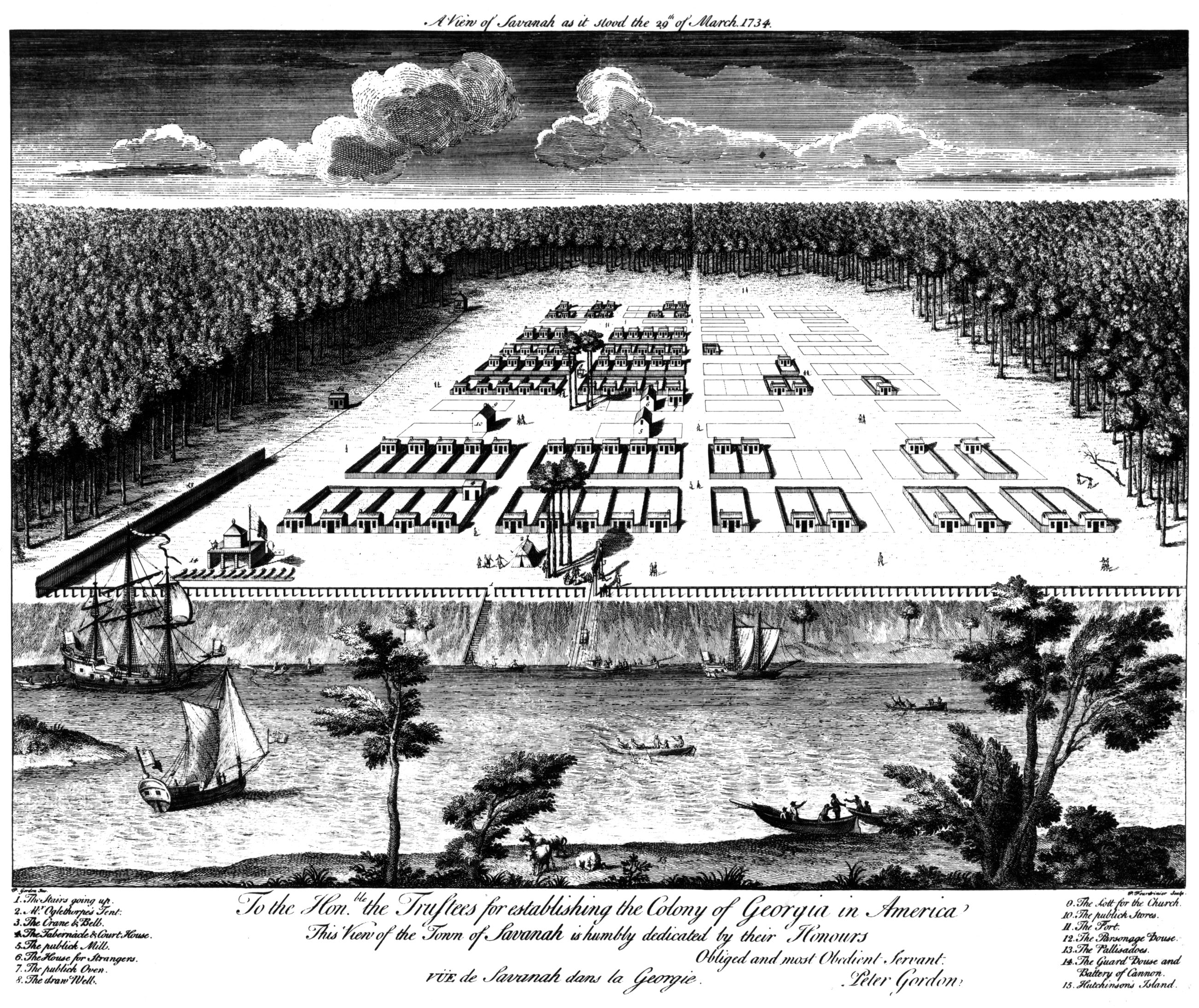
The original caption of this print by Paul Fourdrinier reads: "A View of Savannah as it stood on the 29th of March 1734. To the Hon[orable] Trustees for establishing the Colony of Georgia in America. This View of the Town of Savannah is humbly dedicated by their Honours Obliged and most Obedient Servant, Peter Gordon."

Courtesy of Hargrett Rare Book and Manuscript Library, University of Georgia Libraries.

The New Georgia Encyclopedia does not hold the copyright for this media resource and can neither grant nor deny permission to republish or reproduce the image online or in print. Requests for permission to publish or reproduce the resource should be submitted to the Hargrett Manuscript and Rare Book Library at the University of Georgia.

Yuchi Hunters

Yuchi Hunters

  • Info Details
  • Citation Terms of Use

Yuchi Indians, depicted in traditional hunting clothing, also carry items acquired through trade with the English, notably the central figure's blanket and rifle.

Illustration by Philip Georg Friedrich von Reck
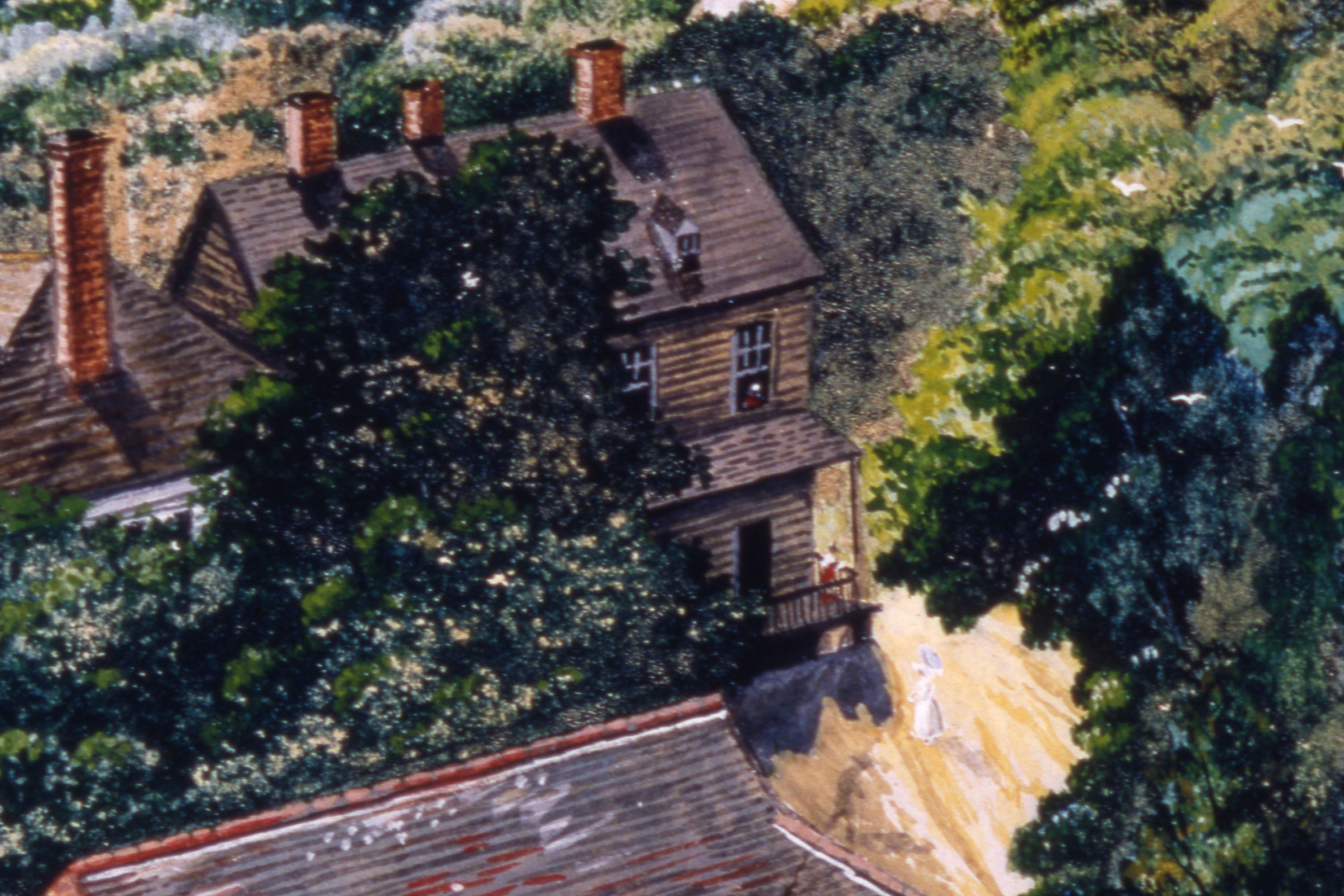
The New Georgia Encyclopedia does not hold the copyright for this media resource and can neither grant nor deny permission to republish or reproduce the image online or in print. All requests for permission to publish or reproduce the resource must be submitted to the rights holder.

Silk Filature

Silk Filature

  • Info Details
  • Citation Terms of Use

Peter Tondee and his business partner built a silk filature on Reynolds Square in 1759. The building served multiple public functions before it was destroyed by fire in 1839.

Courtesy of Carl Solana Weeks

The New Georgia Encyclopedia does not hold the copyright for this media resource and can neither grant nor deny permission to republish or reproduce the image online or in print. All requests for permission to publish or reproduce the resource must be submitted to the rights holder.

Peter Tondee

Peter Tondee

  • Info Details
  • Citation Terms of Use

Peter Tondee's Long Room, which stood at the northwest corner of Broughton and Whitaker streets in Savannah, became center stage for the political drama that brought a fledgling province into the ranks of the war for American liberty, and it served for several years during and after the Revolution as the seat of government for the new state.

Courtesy of Walter Wright and David A. Hammond

The New Georgia Encyclopedia does not hold the copyright for this media resource and can neither grant nor deny permission to republish or reproduce the image online or in print. All requests for permission to publish or reproduce the resource must be submitted to the rights holder.

Tomochichi

Tomochichi

  • Info Details
  • Citation Terms of Use

As a principal mediator between the native Muscogee (Creek) and English settlers during the first years of Georgia's settlement, Tomochichi (left) contributed to the establishment of peaceful relations between the two groups. His nephew, Toonahowi, is seated on the right in this engraving, circa 1734-35, by John Faber Jr.

Courtesy of Hargrett Rare Book and Manuscript Library, University of Georgia Libraries.

The New Georgia Encyclopedia does not hold the copyright for this media resource and can neither grant nor deny permission to republish or reproduce the image online or in print. Requests for permission to publish or reproduce the resource should be submitted to the Hargrett Manuscript and Rare Book Library at the University of Georgia.

Tomochichi’s Grave Marker

Tomochichi’s Grave Marker

  • Info Details
  • Citation Terms of Use

A large granite boulder with a decorative copper plate was installed in Savannah's Wright Square, southeast of the original grave marker, on April 21, 1899. The plate is inscribed to "the mico of the Yamacraws, the companion of Oglethorpe, and the ally of the colony of Georgia."

Image from Brent Moore

View on source site

The New Georgia Encyclopedia does not hold the copyright for this media resource and can neither grant nor deny permission to republish or reproduce the image online or in print. All requests for permission to publish or reproduce the resource must be submitted to the rights holder.

Mary Musgrove

Mary Musgrove

  • Info Details
  • Citation Terms of Use

Mary Musgrove (pictured with her third husband, the Reverend Thomas Bosomworth) served as a cultural liaison between colonial Georgia and her Native American community in the mid-eighteenth century. She took advantage of her biculturalism to protect Muscogee (Creek) interests, maintain peace on the frontier, and expand her business as a trader.

Courtesy of Hargrett Rare Book and Manuscript Library, University of Georgia Libraries.

The New Georgia Encyclopedia does not hold the copyright for this media resource and can neither grant nor deny permission to republish or reproduce the image online or in print. Requests for permission to publish or reproduce the resource should be submitted to the Hargrett Manuscript and Rare Book Library at the University of Georgia.

Muscogee Creek Indian Painting depicting figures rowing and firing guns.

Muscogee (Creek) Indian Painting

  • Info Details
  • Citation Terms of Use

This copy of a Muscogee (Creek) "hieroglyphick painting" was made in the 1770s by Bernard Romans. Romans was a British surveyor and engineer who worked in Florida during the 1770s. He made many notes on the Muscogee.

Courtesy of Hargrett Rare Book and Manuscript Library, University of Georgia Libraries.

The New Georgia Encyclopedia does not hold the copyright for this media resource and can neither grant nor deny permission to republish or reproduce the image online or in print. Requests for permission to publish or reproduce the resource should be submitted to the Hargrett Manuscript and Rare Book Library at the University of Georgia.

Archibald Bulloch

Archibald Bulloch

  • Info Details
  • Citation Terms of Use

Archibald Bulloch was a Revolutionary soldier, a leader of Georgia's Liberty Party, and the state's first chief executive and commander in chief. Bulloch County in southeast Georgia was named for him upon its creation in 1796.

Courtesy of Hargrett Rare Book and Manuscript Library, University of Georgia Libraries, Georgia Photo File.

The New Georgia Encyclopedia does not hold the copyright for this media resource and can neither grant nor deny permission to republish or reproduce the image online or in print. Requests for permission to publish or reproduce the resource should be submitted to the Hargrett Manuscript and Rare Book Library at the University of Georgia.

Archibald Bulloch House, Savannah

Archibald Bulloch House, Savannah

  • Info Details
  • Citation Terms of Use

Architect William Jay built this villa on Orleans Square in Savannah in 1819 for Archibald Bulloch. The house was razed in 1916, and the Savannah Municipal Auditorium was constructed on the site. In turn, the Savannah Civic Center was built on the site, replacing the auditorium, in the 1970s.

Courtesy of Georgia Historical Society, Foltz Photography Studio (Savannah, Ga.), photographs, 1899-1960, #GHS 1360-08-08-01.
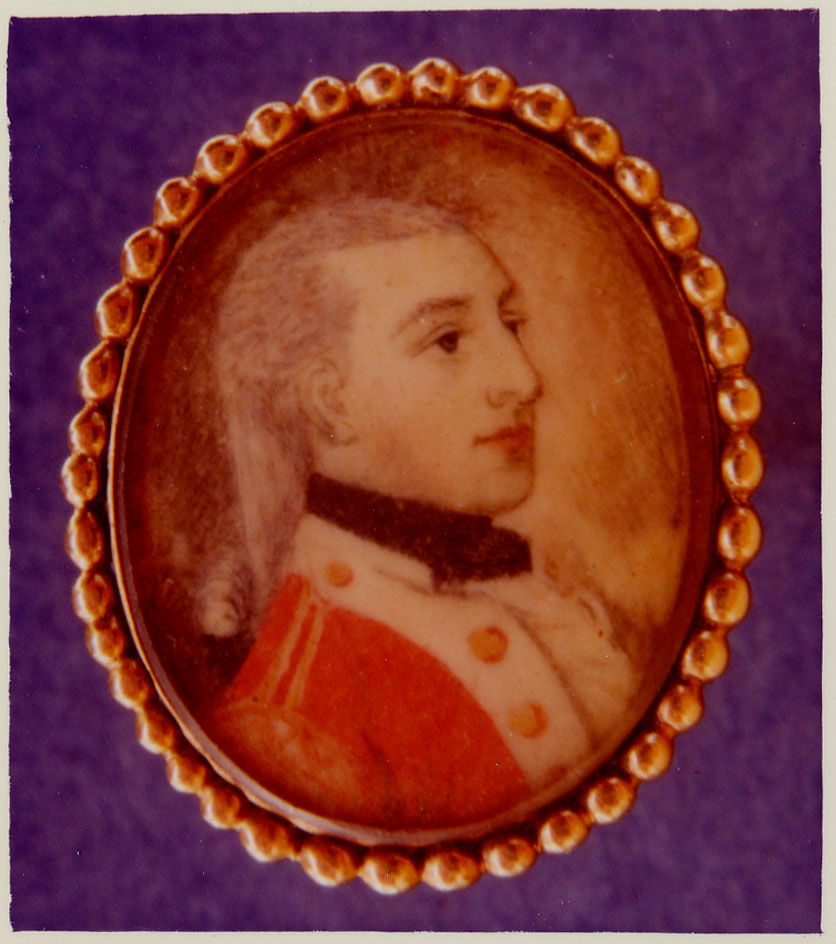
View on partner site

The New Georgia Encyclopedia does not hold the copyright for this media resource and can neither grant nor deny permission to republish or reproduce the image online or in print. All requests for permission to publish or reproduce the resource must be submitted to Georgia Historical Society.

Samuel Elbert

Samuel Elbert

  • Info Details
  • Citation Terms of Use

Before his governorship of Georgia in 1785, Savannahian Samuel Elbert served as commander of both Georgia's militia and Continental Line during the Revolutionary War.

Courtesy of Hargrett Rare Book and Manuscript Library, University of Georgia Libraries, Georgia Photo File.

The New Georgia Encyclopedia does not hold the copyright for this media resource and can neither grant nor deny permission to republish or reproduce the image online or in print. Requests for permission to publish or reproduce the resource should be submitted to the Hargrett Manuscript and Rare Book Library at the University of Georgia.

Lachlan McIntosh

Lachlan McIntosh

  • Info Details
  • Citation Terms of Use

Lachlan McIntosh distinguished himself in a career that evolved over three critical eras in the state's early history, from the colonial period to the Revolutionary War to statehood.
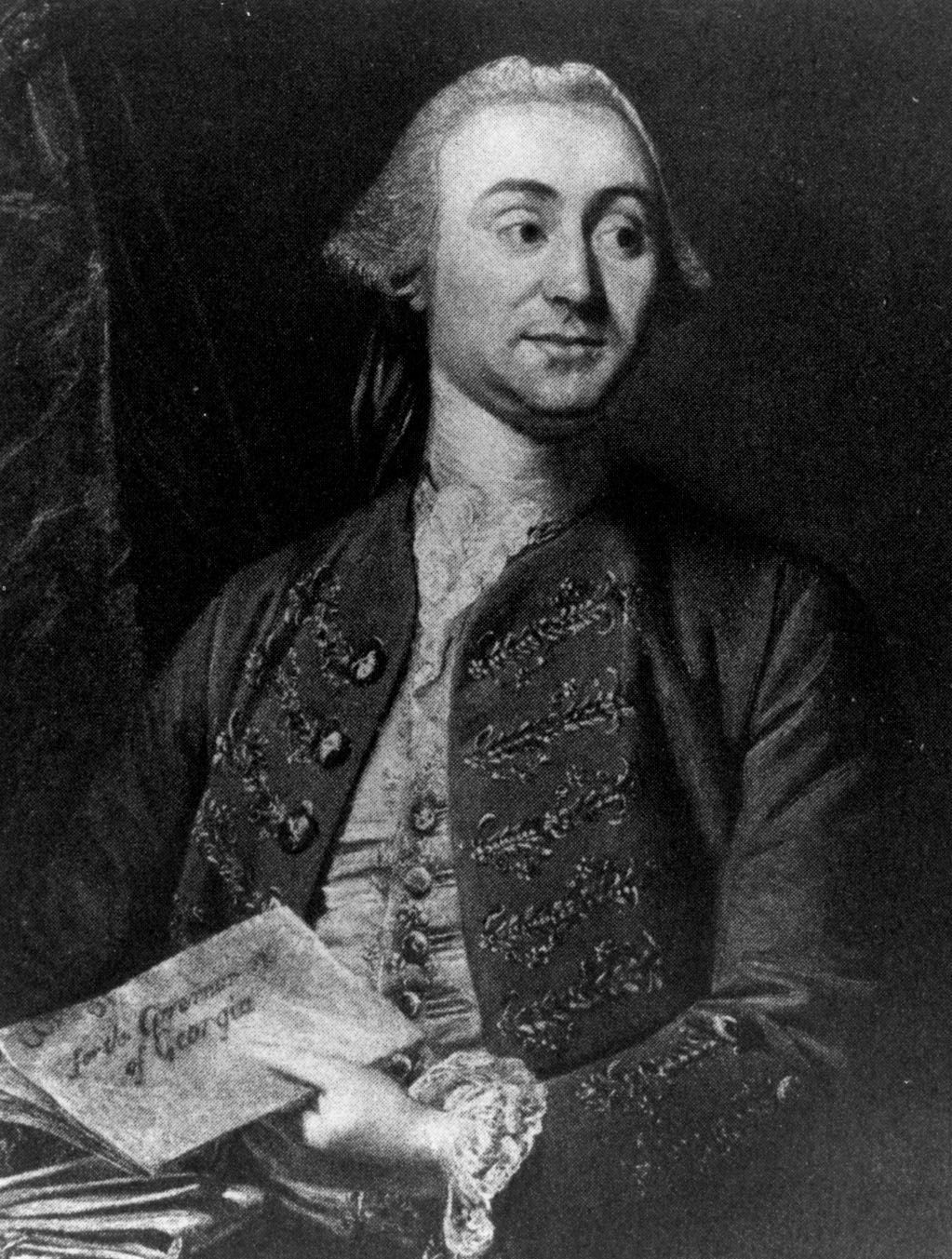
The New Georgia Encyclopedia does not hold the copyright for this media resource and can neither grant nor deny permission to republish or reproduce the image online or in print. All requests for permission to publish or reproduce the resource must be submitted to the rights holder.

James Wright

James Wright

  • Info Details
  • Citation Terms of Use

James Wright replaced Henry Ellis as royal governor of Georgia in 1760 and proved to be an efficient and popular administrator. During his tenure in office (1760-76) Georgia enjoyed a period of remarkable growth.

Courtesy of Hargrett Rare Book and Manuscript Library, University of Georgia Libraries, Georgia Photo File.
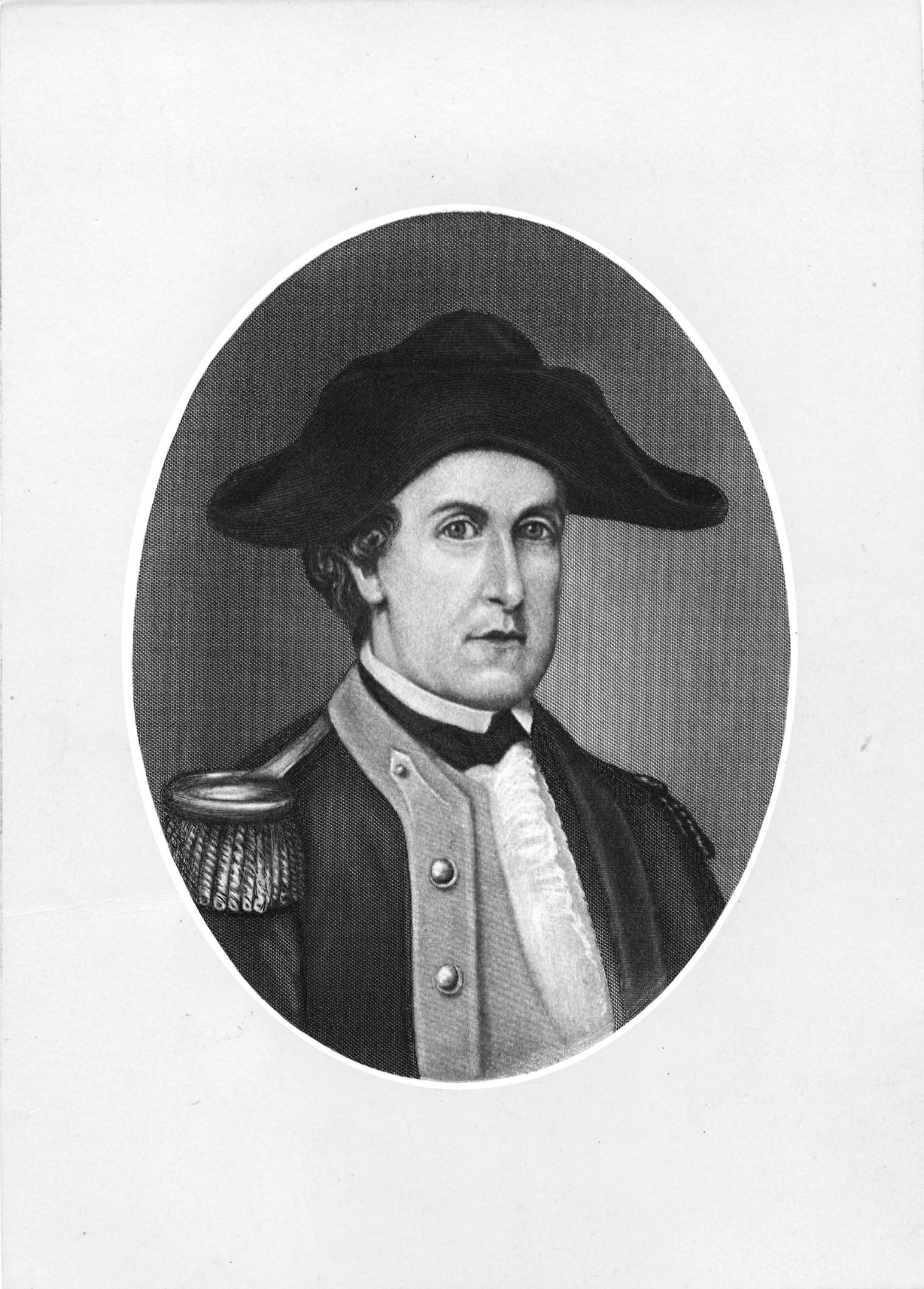
The New Georgia Encyclopedia does not hold the copyright for this media resource and can neither grant nor deny permission to republish or reproduce the image online or in print. Requests for permission to publish or reproduce the resource should be submitted to the Hargrett Manuscript and Rare Book Library at the University of Georgia.

Elijah Clarke

Elijah Clarke

  • Info Details
  • Citation Terms of Use

Elijah Clarke was among the few heroes of the Revolutionary War from Georgia. Even though he was wounded several times, Clarke led several successful frontier guerrilla campaigns against British soldiers and American Loyalists during the war. Clarke County is named for him.

Courtesy of Hargrett Rare Book and Manuscript Library, University of Georgia Libraries.

The New Georgia Encyclopedia does not hold the copyright for this media resource and can neither grant nor deny permission to republish or reproduce the image online or in print. Requests for permission to publish or reproduce the resource should be submitted to the Hargrett Manuscript and Rare Book Library at the University of Georgia.

Zubly Sermon

Zubly Sermon

  • Info Details
  • Citation Terms of Use

The front page of one of John Zubly's sermons.

Courtesy of Hargrett Rare Book and Manuscript Library, University of Georgia Libraries.

The New Georgia Encyclopedia does not hold the copyright for this media resource and can neither grant nor deny permission to republish or reproduce the image online or in print. Requests for permission to publish or reproduce the resource should be submitted to the Hargrett Manuscript and Rare Book Library at the University of Georgia.

James Habersham

James Habersham

  • Info Details
  • Citation Terms of Use

James Habersham (ca. 1712-75) arrived in colonial Georgia from England in 1738. Habersham was prominent in the economic and political life of colonial Georgia.

Courtesy of Hargrett Rare Book and Manuscript Library, University of Georgia Libraries, Georgia Photo File.

The New Georgia Encyclopedia does not hold the copyright for this media resource and can neither grant nor deny permission to republish or reproduce the image online or in print. Requests for permission to publish or reproduce the resource should be submitted to the Hargrett Manuscript and Rare Book Library at the University of Georgia.

Joseph Habersham

Joseph Habersham

  • Info Details
  • Citation Terms of Use

Joseph Habersham became a zealous revolutionary in 1774 and was appointed to the Confederation Congress in the 1780s.

Courtesy of Hargrett Rare Book and Manuscript Library, University of Georgia Libraries, Georgia Photo File.

The New Georgia Encyclopedia does not hold the copyright for this media resource and can neither grant nor deny permission to republish or reproduce the image online or in print. Requests for permission to publish or reproduce the resource should be submitted to the Hargrett Manuscript and Rare Book Library at the University of Georgia.

Butler Family

Butler Family

  • Info Details
  • Citation Terms of Use

The Butlers of South Carolina and Philadelphia owned extensive rice and cotton plantations on the Sea Islands of Georgia.

Courtesy of Hargrett Rare Book and Manuscript Library, University of Georgia Libraries.

The New Georgia Encyclopedia does not hold the copyright for this media resource and can neither grant nor deny permission to republish or reproduce the image online or in print. Requests for permission to publish or reproduce the resource should be submitted to the Hargrett Manuscript and Rare Book Library at the University of Georgia.

  • Info Details
  • Citation Terms of Use

The New Georgia Encyclopedia does not hold the copyright for this media resource and can neither grant nor deny permission to republish or reproduce the image online or in print. All requests for permission to publish or reproduce the resource must be submitted to the rights holder.

Pierce Mease Butler

Pierce Mease Butler

  • Info Details
  • Citation Terms of Use

Grandson and namesake of Pierce Butler, Pierce Mease Butler inherited part of his grandfather's massive fortune and holdings on the Georgia Sea Islands.

Courtesy of Hargrett Rare Book and Manuscript Library, University of Georgia Libraries.

The New Georgia Encyclopedia does not hold the copyright for this media resource and can neither grant nor deny permission to republish or reproduce the image online or in print. Requests for permission to publish or reproduce the resource should be submitted to the Hargrett Manuscript and Rare Book Library at the University of Georgia.

Fanny Kemble

Fanny Kemble

  • Info Details
  • Citation Terms of Use

An English actress, Kemble married Pierce Mease Butler and was upset to learn of the family's slave labor operations. She eventually published an account of her impressions of slavery, after divorcing Butler and losing custody of their two children.

Courtesy of Hargrett Rare Book and Manuscript Library, University of Georgia Libraries, Georgia Photo File.

The New Georgia Encyclopedia does not hold the copyright for this media resource and can neither grant nor deny permission to republish or reproduce the image online or in print. Requests for permission to publish or reproduce the resource should be submitted to the Hargrett Manuscript and Rare Book Library at the University of Georgia.

Sheftall Sheftall Congregation Mickve Israel William McIntosh William McIntosh McIntosh Inn Historical Marker, McIntosh Inn Beaulieu Plantation Seal of the Trustees Johann Martin Boltzius Early Ebenezer George Whitefield Benjamin Hawkins Fort Benjamin Hawkins Hawkins Monument Olaudah Equiano
Water Tower Elizabeth Lichtenstein Johnston Elizabeth Lichtenstein Johnston Oglethorpe with Creek Indians Yamacraw Territory Button Gwinnett Button Gwinnett’s Signature
James Oglethorpe James Oglethorpe James Oglethorpe James Oglethorpe James Oglethorpe James Oglethorpe Stamp Savannah City Plan, 1734 Yuchi Hunters Silk Filature Peter Tondee Tomochichi Tomochichi’s Grave Marker Mary Musgrove Muscogee Creek Indian Painting depicting figures rowing and firing guns. Archibald Bulloch Archibald Bulloch House, Savannah Samuel Elbert Lachlan McIntosh James Wright Elijah Clarke Zubly Sermon James Habersham Joseph Habersham Butler Family
Pierce Mease Butler Fanny Kemble