Skip to content
New Georgia Encyclopedia
  • Home
  • Articles & Media
  • Browse by Topic
  • Browse Collections
  • Browse Georgia Standards
  • A-Z Index
  • Exhibitions
  • Educators
  • Browse    Chevron down
  • Exhibitions
  • Educators
By Topic Content Collections Georgia Standards A-Z Index Arrow right
  • Arts & Culture

    Arts & Culture

  • Business & Economy

    Business & Economy

  • Counties, Cities & Neighborhoods

    Counties, Cities & Neighborhoods

  • Education

    Education

  • Geography & Environment

    Geography & Environment

  • Government & Politics

    Government & Politics

  • History & Archaeology

    History & Archaeology

  • People

    People

  • Science & Medicine

    Science & Medicine

  • Sports & Outdoor Recreation

    Sports & Outdoor Recreation

Frankie Welch’s Americana
Featured

Frankie Welch’s Americana

Fashion and politics from Georgia-born designer Frankie Welch

Stamp Collection
Featured

Stamp Collection

Stamps honoring the political figures, artists, and culture of Georgia.

Recently Added
View All Arrow right
City Page: Atlanta

City Page: Atlanta

Stamp Collection

Stamp Collection

Frankie Welch’s Americana

Frankie Welch’s Americana

  • Georgia Studies

    Georgia Studies

    Eighth Grade
  • Georgia, My State

    Georgia, My State

    Second Grade
All Topics Arrow right Arts & Culture Arrow right Media Arrow right Cinema Arrow right

Films

<em>The Andersonville Trial</em> (Play) and <em>Andersonville</em> (Film)

The Andersonville Trial (Play) and Andersonville (Film)

Play, Film
The Color Purple

The Color Purple

Deliverance

Deliverance

Driving Miss Daisy

Driving Miss Daisy

The General

The General

Gone With the Wind

Gone With the Wind

Film
The Great Locomotive Chase

The Great Locomotive Chase

The Heart Is a Lonely Hunter

The Heart Is a Lonely Hunter

I Am a Fugitive from a Georgia Chain Gang!

I Am a Fugitive from a Georgia Chain Gang!

I’d Climb the Highest Mountain

I’d Climb the Highest Mountain

Midnight in the Garden of Good and Evil

Midnight in the Garden of Good and Evil

Sherman’s March

Sherman’s March

Film
Song of the South

Song of the South

Swamp Water

Swamp Water

The Three Faces of Eve

The Three Faces of Eve

Tobacco Road and God’s Little Acre

Tobacco Road and God’s Little Acre

Warm Springs

Warm Springs

Film
Wise Blood

Wise Blood

Loading
Star

Featured Content

James Oglethorpe

James Oglethorpe

Colonial Figures
Harriet Powers

Harriet Powers

People
Trending

Trending

Ted Turner

Ted Turner

People
Georgia Guidestones

Georgia Guidestones

Sites & Museums
CNN

CNN

Television
James D. Bulloch

James D. Bulloch

People
Clock

Updated Recently

Burke County

Burke County

1 day ago
Ted Turner

Ted Turner

6 days ago
Ku Klux Klan in the Reconstruction Era

Ku Klux Klan in the Reconstruction Era

1 week ago
Valdosta State University

Valdosta State University

1 week ago

A More Perfect Union

The New Georgia Encyclopedia is supported by funding from A More Perfect Union, a special initiative of the National Endowment for the Humanities.

Learn More
New Georgia Encyclopedia
ISSN 2765-8732
Project Partners
logo-press UGA Press logo-galileo GALILEO logo-humanities Georgia Humanities logo-seal Office of the Governor logo-libraries UGA Libraries
Articles & Media
  • Browse by Topic
  • Content Collections
  • Georgia Standards
Special Content
  • Quizzes
  • Exhibitions
  • Spotify Playlists
  • Georgia Exhibits
  • Educator Resources
About
  • The Project
  • The People
  • Sponsors & Partners
Editorial
  • Our Process
  • Contributor Info
  • Permissions & Use
Stay in Touch
Facebook Instagram Twitter Contact Us
Donate to the NGE

Your support helps us commission new entries and update existing content.

Donate

© 2004–2026 Georgia Humanities, University of Georgia Press

  • Terms of Use
  • Privacy Policy

Media gallery

The Great Locomotive Chase

The Great Locomotive Chase

  • Info Details
  • Citation Terms of Use

The Great Locomotive Chase, a Disney film released in 1956, depicts the events of the Andrews Raid of 1862, in which Union raiders seized a Confederate train in north Georgia during the Civil War. The film is an adaptation of the written accounts of William Pittenger, a Union participant in the raid.

Courtesy of Library of Congress

View on source site

The New Georgia Encyclopedia does not hold the copyright for this media resource and can neither grant nor deny permission to republish or reproduce the image online or in print. All requests for permission to publish or reproduce the resource must be submitted to the rights holder.

The General

The General

  • Info Details
  • Citation Terms of Use

Silent film comedian Buster Keaton directed and starred in The General (1927), a fictionalized account of the famous Andrews Raid of 1862, in which Union raiders seized a Confederate train in north Georgia during the Civil War.

Photograph from www.filmreference.com
The New Georgia Encyclopedia does not hold the copyright for this media resource and can neither grant nor deny permission to republish or reproduce the image online or in print. All requests for permission to publish or reproduce the resource must be submitted to the rights holder.

Sherman’s March

Sherman’s March

  • Info Details
  • Citation Terms of Use

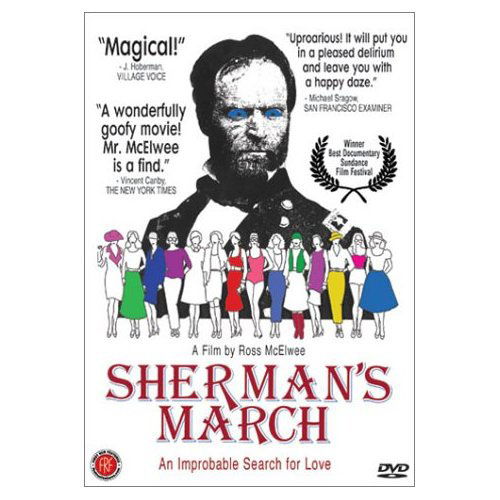
Sherman's March (1986), a documentary film by Ross McElwee, chronicles the filmmaker's search for love in the modern South while loosely retracing Sherman's 1864 march to the sea. Portions of the film take place on Stone Mountain, near Atlanta, and on the Georgia coast, near Savannah.

The New Georgia Encyclopedia does not hold the copyright for this media resource and can neither grant nor deny permission to republish or reproduce the image online or in print. All requests for permission to publish or reproduce the resource must be submitted to the rights holder.

Ross McElwee

Ross McElwee

  • Info Details
  • Citation Terms of Use

Filmmaker and professor Ross McElwee is pictured during the filming of Bright Leaves. In 1986 McElwee's documentary Sherman's March, much of which was filmed in Georgia, was released to critical acclaim.

Image from AdrianMcElwee

The New Georgia Encyclopedia does not hold the copyright for this media resource and can neither grant nor deny permission to republish or reproduce the image online or in print. All requests for permission to publish or reproduce the resource must be submitted to the rights holder.

Andersonville

Andersonville

  • Info Details
  • Citation Terms of Use

The television film Andersonville (1996), directed by John Frankenheimer, portrays the experiences of Union soldiers held at Andersonville Prison, the notorious Civil War prison located in Sumter County. The miniseries, starring Carmen Argenziano, Jarrod Emick, Frederic Forrest, and Ted Marcoux, was filmed partially in Coweta County.

The New Georgia Encyclopedia does not hold the copyright for this media resource and can neither grant nor deny permission to republish or reproduce the image online or in print. All requests for permission to publish or reproduce the resource must be submitted to the rights holder.

  • Info Details
  • Citation Terms of Use

The New Georgia Encyclopedia does not hold the copyright for this media resource and can neither grant nor deny permission to republish or reproduce the image online or in print. All requests for permission to publish or reproduce the resource must be submitted to the rights holder.

Andersonville Prison

Andersonville Prison

  • Info Details
  • Citation Terms of Use

A sketch of the Andersonville prison, by John B. Walker (1864). The set of Andersonville, a 1996 television film directed by John Frankenheimer, was modeled on the buildings of the original prison.

Courtesy of Georgia Historical Society, Georgia Historical Society Collection of Photographs, 1870-1960, #GHS 1361PH-21-13-4296.

View on partner site

The New Georgia Encyclopedia does not hold the copyright for this media resource and can neither grant nor deny permission to republish or reproduce the image online or in print. All requests for permission to publish or reproduce the resource must be submitted to Georgia Historical Society.

Warm Springs

Warm Springs

  • Info Details
  • Citation Terms of Use

Warm Springs (2005), a film produced by Home Box Office, chronicles the experiences of Franklin D. Roosevelt at his home in Warm Springs during the 1920s. The film, which stars Kenneth Branagh as Roosevelt and Cynthia Nixon as Roosevelt's wife, Eleanor, was filmed on location at Warm Springs, in Meriwether County.

The New Georgia Encyclopedia does not hold the copyright for this media resource and can neither grant nor deny permission to republish or reproduce the image online or in print. All requests for permission to publish or reproduce the resource must be submitted to the rights holder.

Little White House

Little White House

  • Info Details
  • Citation Terms of Use

Franklin D. Roosevelt first visited Warm Springs in 1924, after contracting polio, and soon thereafter bought a home in the area. The house later became known as the "Little White House," after Roosevelt's election as U.S. president in 1932.

Courtesy of Explore Georgia, Photograph by Ralph Daniel.
The New Georgia Encyclopedia does not hold the copyright for this media resource and can neither grant nor deny permission to republish or reproduce the image online or in print. Requests for permission to publish or reproduce the resource may need to be submitted to Explore Georgia.

The Three Faces of Eve

The Three Faces of Eve

  • Info Details
  • Citation Terms of Use

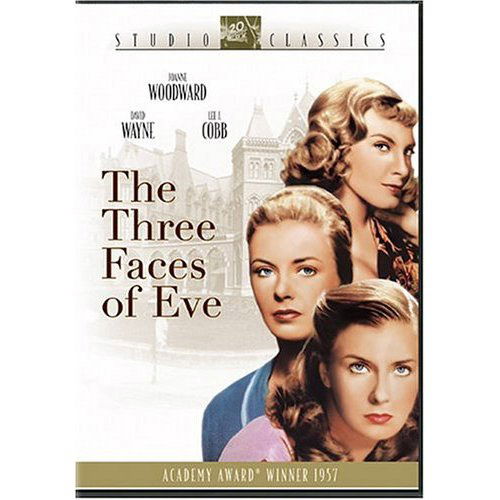
The Three Faces of Eve (1957), a film starring Georgia native Joanne Woodward, is an adaptation of a book by the same name, written by doctors Corbett H. Thigpen and Hervey M. Cleckley. The narrative chronicles the experiences of a young housewife with multiple personalities, who was initially diagnosed and treated at the Medical College of Georgia (later Georgia Health Sciences University) in Augusta. The film was produced and directed by Nunnally Johnson, another Georgia native.
The New Georgia Encyclopedia does not hold the copyright for this media resource and can neither grant nor deny permission to republish or reproduce the image online or in print. All requests for permission to publish or reproduce the resource must be submitted to the rights holder.

  • Info Details
  • Citation Terms of Use

The New Georgia Encyclopedia does not hold the copyright for this media resource and can neither grant nor deny permission to republish or reproduce the image online or in print. All requests for permission to publish or reproduce the resource must be submitted to the rights holder.

Tandy and Freeman in Driving Miss Daisy

Tandy and Freeman in Driving Miss Daisy

  • Info Details
  • Citation Terms of Use

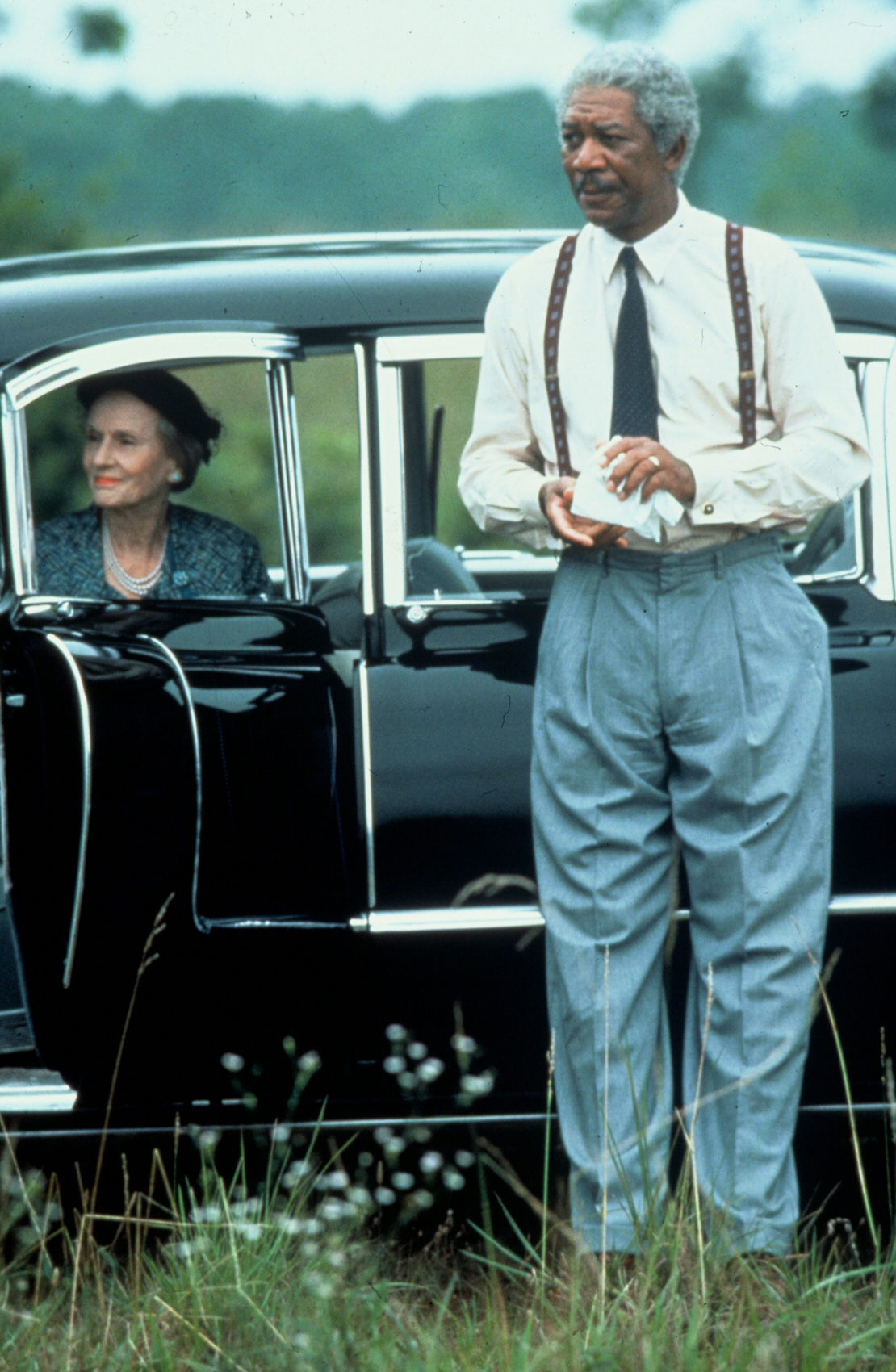
Jessica Tandy (as Daisy Werthan) and Morgan Freeman (as Hoke Colburn) on location in Georgia while filming Driving Miss Daisy (1989).

Courtesy of Georgia Department of Economic Development.

The New Georgia Encyclopedia does not hold the copyright for this media resource and can neither grant nor deny permission to republish or reproduce the image online or in print. Requests for permission to publish or reproduce the resource may need to be submitted to the Georgia Department of Economic Development.

  • Info Details
  • Citation Terms of Use

The New Georgia Encyclopedia does not hold the copyright for this media resource and can neither grant nor deny permission to republish or reproduce the image online or in print. All requests for permission to publish or reproduce the resource must be submitted to the rights holder.

  • Info Details
  • Citation Terms of Use

The New Georgia Encyclopedia does not hold the copyright for this media resource and can neither grant nor deny permission to republish or reproduce the image online or in print. All requests for permission to publish or reproduce the resource must be submitted to the rights holder.

  • Info Details
  • Citation Terms of Use

The New Georgia Encyclopedia does not hold the copyright for this media resource and can neither grant nor deny permission to republish or reproduce the image online or in print. All requests for permission to publish or reproduce the resource must be submitted to the rights holder.

  • Info Details
  • Citation Terms of Use

The New Georgia Encyclopedia does not hold the copyright for this media resource and can neither grant nor deny permission to republish or reproduce the image online or in print. All requests for permission to publish or reproduce the resource must be submitted to the rights holder.

I’d Climb the Highest Mountain

I’d Climb the Highest Mountain

  • Info Details
  • Citation Terms of Use

I'd Climb the Highest Mountain, a film based on the novel A Circuit Rider's Wife (1910) by Georgia writer Corra Harris, was released in 1951. The film, which features William Lundigan and Susan Hayward, was produced by another Georgia native, Lamar Trotti, who also wrote the screenplay.

Courtesy of Twentieth Century Fox Film Corporation

The New Georgia Encyclopedia does not hold the copyright for this media resource and can neither grant nor deny permission to republish or reproduce the image online or in print. All requests for permission to publish or reproduce the resource must be submitted to the rights holder.

Lundigan and Hayward

Lundigan and Hayward

  • Info Details
  • Citation Terms of Use

William Lundigan and Susan Hayward played the newly married couple William and Mary Thompson in the 1951 film I'd Climb the Highest Mountain, which was filmed in north Georgia around Cleveland and Helen. Hayward was honored by the state senate as an "adopted daughter of Georgia" during the film's Atlanta premiere.

Courtesy of Twentieth Century Fox Film Corporation

The New Georgia Encyclopedia does not hold the copyright for this media resource and can neither grant nor deny permission to republish or reproduce the image online or in print. All requests for permission to publish or reproduce the resource must be submitted to the rights holder.

  • Info Details
  • Citation Terms of Use

The New Georgia Encyclopedia does not hold the copyright for this media resource and can neither grant nor deny permission to republish or reproduce the image online or in print. All requests for permission to publish or reproduce the resource must be submitted to the rights holder.

  • Info Details
  • Citation Terms of Use

The New Georgia Encyclopedia does not hold the copyright for this media resource and can neither grant nor deny permission to republish or reproduce the image online or in print. All requests for permission to publish or reproduce the resource must be submitted to the rights holder.

Alice Walker

Alice Walker

  • Info Details
  • Citation Terms of Use

Eatonton native Alice Walker's award-winning novel The Color Purple (1982) chronicles the self-empowerment and growth of the character Celie, a poor Black woman living in rural Georgia.

Courtesy of Atlanta Journal-Constitution.

The New Georgia Encyclopedia does not hold the copyright for this media resource and can neither grant nor deny permission to republish or reproduce the image online or in print. All requests for permission to publish or reproduce the resource must be submitted to the Atlanta Journal-Constitution.

Stage Adaptation of The Color Purple

Stage Adaptation of The Color Purple

  • Info Details
  • Citation Terms of Use

On August 27, 2004, the crew prepares the set for the musical stage adaption of Alice Walker's The Color Purple. The production opened in September 2004 at the Alliance Theatre in Atlanta.

Courtesy of Atlanta Journal-Constitution.
The New Georgia Encyclopedia does not hold the copyright for this media resource and can neither grant nor deny permission to republish or reproduce the image online or in print. All requests for permission to publish or reproduce the resource must be submitted to the Atlanta Journal-Constitution.

Gone With the Wind Premiere

Gone With the Wind Premiere

  • Info Details
  • Citation Terms of Use

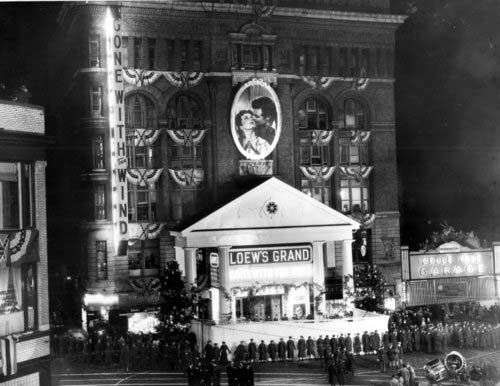
The film premiere of Gone With the Wind took place at the Loew's Grand Theater in Atlanta on December 15, 1939. Mayor William B. Hartsfield declared a citywide holiday, and a crowd of 18,000 gathered outside the theater to catch a glimpse of the film's stars. In attendance were lead actors Vivien Leigh and Clark Gable, a portrait of whom is visible above the theater's entrance.

Courtesy of Atlanta Journal-Constitution.

The New Georgia Encyclopedia does not hold the copyright for this media resource and can neither grant nor deny permission to republish or reproduce the image online or in print. All requests for permission to publish or reproduce the resource must be submitted to the Atlanta Journal-Constitution.

Gone With the Wind Commemorative Stamp

Gone with the Wind

  • Info Details
  • Citation Terms of Use

This commemorative stamp was issued March 23, 1990, in Hollywood, California, as part of a set of four stamps recognizing classic films released in 1939 and winners or nominees of Academy Awards in 1940. Gone With the Wind won eight Academy Awards that year.

Smithsonian National Postal Museum

The New Georgia Encyclopedia does not hold the copyright for this media resource and can neither grant nor deny permission to republish or reproduce the image online or in print. All requests for permission to publish or reproduce the resource must be submitted to the rights holder.

Margaret Mitchell and Clark Gable

Margaret Mitchell and Clark Gable

  • Info Details
  • Citation Terms of Use

Margaret Mitchell, the author of Gone With the Wind, meets star Clark Gable at the 1939 Atlanta premiere of the movie. Gable portrays Rhett Butler in the film.

Courtesy of Atlanta Journal-Constitution.

The New Georgia Encyclopedia does not hold the copyright for this media resource and can neither grant nor deny permission to republish or reproduce the image online or in print. All requests for permission to publish or reproduce the resource must be submitted to the Atlanta Journal-Constitution.

Gone With the Wind Premiere

Gone With the Wind Premiere

  • Info Details
  • Citation Terms of Use

Gone With the Wind star Clark Gable meets with fans at the 1939 Atlanta premiere of the movie.

Courtesy of Atlanta Journal-Constitution.
The New Georgia Encyclopedia does not hold the copyright for this media resource and can neither grant nor deny permission to republish or reproduce the image online or in print. All requests for permission to publish or reproduce the resource must be submitted to the Atlanta Journal-Constitution.

Song of the South Storyboards

Song of the South Storyboards

  • Info Details
  • Citation Terms of Use

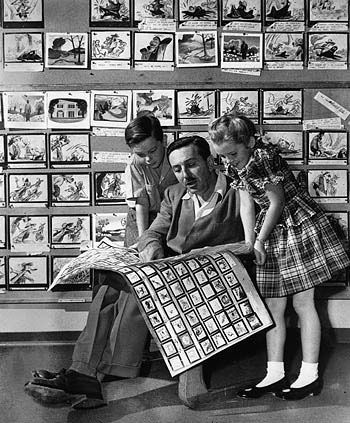
In this publicity photograph for Song of the South, Walt Disney (center) reviews the film's storyboards with actors Bobby Driscoll (left) and Luana Patten (right). Although the film was not well received by critics, it won an Academy Award in 1948 for Best Song, "Zip-A-Dee-Doo-Dah."

Courtesy of Song of the South.net
The New Georgia Encyclopedia does not hold the copyright for this media resource and can neither grant nor deny permission to republish or reproduce the image online or in print. All requests for permission to publish or reproduce the resource must be submitted to the rights holder.

  • Info Details
  • Citation Terms of Use

The New Georgia Encyclopedia does not hold the copyright for this media resource and can neither grant nor deny permission to republish or reproduce the image online or in print. All requests for permission to publish or reproduce the resource must be submitted to the rights holder.

Brer Rabbit and the Tar Baby

Brer Rabbit and the Tar Baby

  • Info Details
  • Citation Terms of Use

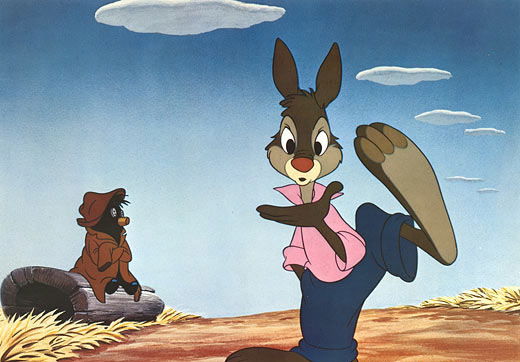
Critics praised the animated sequences in Song of the South but were unimpressed with the live-action scenes. In this movie still, Brer Rabbit is confused by the silence of the Tar Baby.

Courtesy of Song of the South.net. Copyright 1946 Walt Disney Productions

The New Georgia Encyclopedia does not hold the copyright for this media resource and can neither grant nor deny permission to republish or reproduce the image online or in print. All requests for permission to publish or reproduce the resource must be submitted to the rights holder.

  • Info Details
  • Citation Terms of Use

The New Georgia Encyclopedia does not hold the copyright for this media resource and can neither grant nor deny permission to republish or reproduce the image online or in print. All requests for permission to publish or reproduce the resource must be submitted to the rights holder.

  • Info Details
  • Citation Terms of Use

The New Georgia Encyclopedia does not hold the copyright for this media resource and can neither grant nor deny permission to republish or reproduce the image online or in print. All requests for permission to publish or reproduce the resource must be submitted to the rights holder.

Dickey in Deliverance

Dickey in Deliverance

  • Info Details
  • Citation Terms of Use

James Dickey played the role of a sheriff in the 1972 movie version of his novel Deliverance (1970), which starred Burt Reynolds and Jon Voight.

Courtesy of Stuart A. Rose Manuscript, Archives, and Rare Book Library, Emory University, James Dickey Papers.
The New Georgia Encyclopedia does not hold the copyright for this media resource and can neither grant nor deny permission to republish or reproduce the image online or in print. For more information about this resource, contact the Stuart A. Rose Manuscript, Archives, and Rare Book Library at Emory University.

Deliverance

Deliverance

  • Info Details
  • Citation Terms of Use

Burt Reynolds and Ned Beatty starred in the 1972 John Boorman film adaptation of James Dickey's Deliverance.

Photograph by Walt Jabsco
View on source site

The New Georgia Encyclopedia does not hold the copyright for this media resource and can neither grant nor deny permission to republish or reproduce the image online or in print. All requests for permission to publish or reproduce the resource must be submitted to the rights holder.

Convict Labor

Convict Labor

  • Info Details
  • Citation Terms of Use

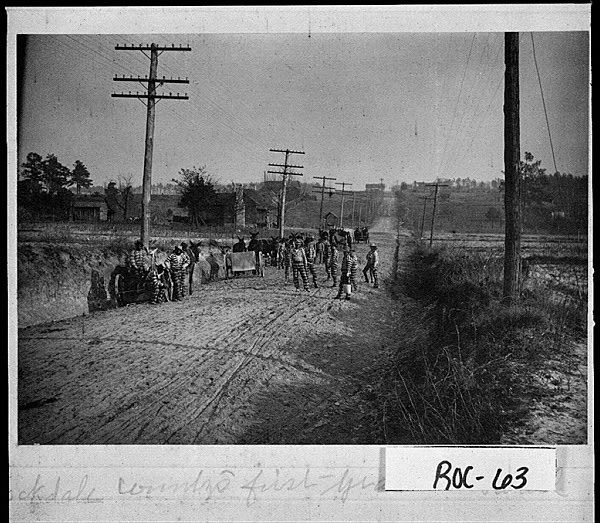
Convicts are shown circa 1909 working on one of the first graded roads in Rockdale County. The convict lease system was abolished in 1908, as one of many reforms enacted during the Progressive era, but soon chain gangs took the place of convict leasing.

Courtesy of Georgia Archives, Vanishing Georgia, #
roc063.

View on partner site

The New Georgia Encyclopedia does not hold the copyright for this media resource and can neither grant nor deny permission to republish or reproduce the image online or in print. Requests for permission to publish or reproduce the resource should be submitted to the Georgia Archives.

  • Info Details
  • Citation Terms of Use

The New Georgia Encyclopedia does not hold the copyright for this media resource and can neither grant nor deny permission to republish or reproduce the image online or in print. All requests for permission to publish or reproduce the resource must be submitted to the rights holder.

Erskine Caldwell

Erskine Caldwell

  • Info Details
  • Citation Terms of Use

Erskine Caldwell settled outside of Georgia shortly before he was twenty-five, paying extended visits to his parents in Wrens for as long as they lived there. Though he lived much of his life outside the South, the region stayed on his mind and figured prominently in most of his writing.

Courtesy of Hargrett Rare Book and Manuscript Library, University of Georgia Libraries.

The New Georgia Encyclopedia does not hold the copyright for this media resource and can neither grant nor deny permission to republish or reproduce the image online or in print. Requests for permission to publish or reproduce the resource should be submitted to the Hargrett Manuscript and Rare Book Library at the University of Georgia.

John Berendt

John Berendt

  • Info Details
  • Citation Terms of Use

New York native Berendt lived off and on in Savannah for eight years, interviewing locals and gathering material for Midnight in the Garden of Good and Evil.

Photograph by Marion Ettlinger

The New Georgia Encyclopedia does not hold the copyright for this media resource and can neither grant nor deny permission to republish or reproduce the image online or in print. All requests for permission to publish or reproduce the resource must be submitted to the rights holder.

The Lady Chablis

The Lady Chablis

  • Info Details
  • Citation Terms of Use

Critics generally were unimpressed with the film adaptation of John Berendt's book or with The Lady Chablis, who played herself in the movie.

Courtesy of The Lady Chablis

The New Georgia Encyclopedia does not hold the copyright for this media resource and can neither grant nor deny permission to republish or reproduce the image online or in print. All requests for permission to publish or reproduce the resource must be submitted to the rights holder.

Midnight in the Garden of Good and Evil

Midnight in the Garden of Good and Evil

  • Info Details
  • Citation Terms of Use

Published by Random House in January 1994, Midnight in the Garden of Good and Evil quickly became known in Savannah as simply "The Book." Since that time the nonfiction narrative has sold more than three million copies in 101 printings, has been translated into twenty-three languages and appeared in twenty-four foreign editions, and has brought hundreds of thousands of tourists to Savannah.

The New Georgia Encyclopedia does not hold the copyright for this media resource and can neither grant nor deny permission to republish or reproduce the image online or in print. All requests for permission to publish or reproduce the resource must be submitted to the rights holder.

Flannery O’Connor

Flannery O’Connor

  • Info Details
  • Citation Terms of Use

At the age of thirty-nine, Flannery O'Connor died on August 3, 1964, of lupus, the disease that had also afflicted her father. She is buried in Memory Hill Cemetery in Milledgeville. The posthumous collection The Complete Stories received the National Book Award in 1972.

Courtesy of Ina Dillard Russell Library, Georgia College and State University
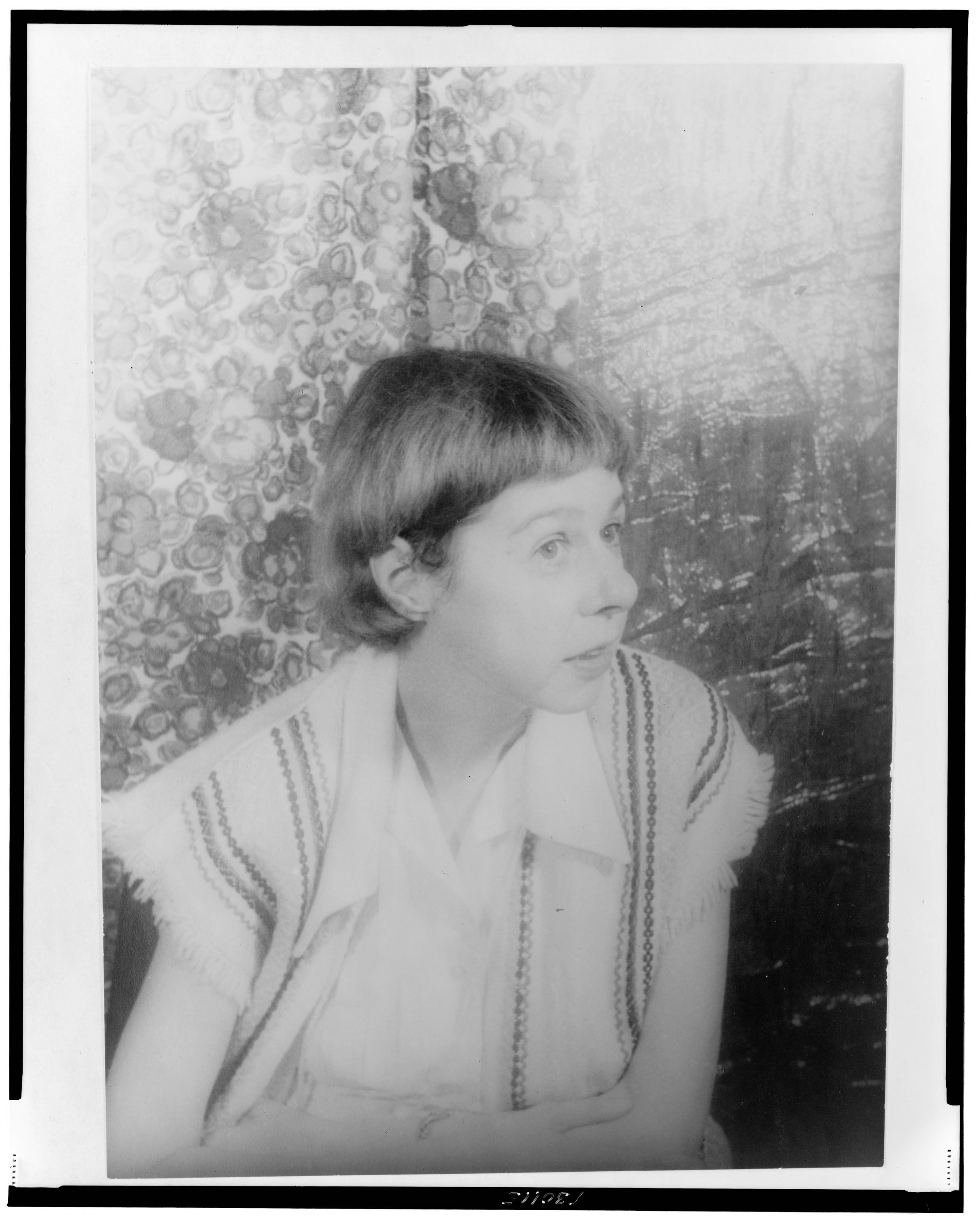
The New Georgia Encyclopedia does not hold the copyright for this media resource and can neither grant nor deny permission to republish or reproduce the image online or in print. All requests for permission to publish or reproduce the resource must be submitted to the rights holder.

  • Info Details
  • Citation Terms of Use

The New Georgia Encyclopedia does not hold the copyright for this media resource and can neither grant nor deny permission to republish or reproduce the image online or in print. All requests for permission to publish or reproduce the resource must be submitted to the rights holder.

  • Info Details
  • Citation Terms of Use

The New Georgia Encyclopedia does not hold the copyright for this media resource and can neither grant nor deny permission to republish or reproduce the image online or in print. All requests for permission to publish or reproduce the resource must be submitted to the rights holder.

Carson McCullers

Carson McCullers

  • Info Details
  • Citation Terms of Use

Carson McCullers, considered one of the most significant American writers of the twentieth century, is best known for her novels The Heart Is a Lonely Hunter, The Ballad of the Sad Cafe, Reflections in a Golden Eye, and The Member of the Wedding.

Courtesy of Library of Congress, Prints and Photographs Division, Photograph by Carl Van Vechten.

The New Georgia Encyclopedia does not hold the copyright for this media resource and can neither grant nor deny permission to republish or reproduce the image online or in print. All requests for permission to publish or reproduce the resource must be submitted to the rights holder.

Vereen Bell

Vereen Bell

  • Info Details
  • Citation Terms of Use

Vereen Bell wrote fiction and magazine articles set in the southern outdoors, and he achieved popular success with Swamp Water (1940).

Courtesy of Hargrett Rare Book and Manuscript Library, University of Georgia Libraries, Frank Daniel Papers.

The New Georgia Encyclopedia does not hold the copyright for this media resource and can neither grant nor deny permission to republish or reproduce the image online or in print. Requests for permission to publish or reproduce the resource should be submitted to the Hargrett Manuscript and Rare Book Library at the University of Georgia.

The Great Locomotive Chase The General Sherman’s March Ross McElwee Andersonville
Andersonville Prison Warm Springs Little White House The Three Faces of Eve
Tandy and Freeman in Driving Miss Daisy
I’d Climb the Highest Mountain Lundigan and Hayward
Alice Walker Stage Adaptation of The Color Purple Gone With the Wind Premiere Gone With the Wind Commemorative Stamp Margaret Mitchell and Clark Gable Gone With the Wind Premiere Song of the South Storyboards
Brer Rabbit and the Tar Baby
Dickey in Deliverance Deliverance Convict Labor
Erskine Caldwell John Berendt The Lady Chablis Midnight in the Garden of Good and Evil Flannery O’Connor
Carson McCullers Vereen Bell