Skip to content
New Georgia Encyclopedia
  • Home
  • Articles & Media
  • Browse by Topic
  • Browse Collections
  • Browse Georgia Standards
  • A-Z Index
  • Exhibitions
  • Educators
  • Browse    Chevron down
  • Exhibitions
  • Educators
By Topic Content Collections Georgia Standards A-Z Index Arrow right
  • Arts & Culture

    Arts & Culture

  • Business & Economy

    Business & Economy

  • Counties, Cities & Neighborhoods

    Counties, Cities & Neighborhoods

  • Education

    Education

  • Geography & Environment

    Geography & Environment

  • Government & Politics

    Government & Politics

  • History & Archaeology

    History & Archaeology

  • People

    People

  • Science & Medicine

    Science & Medicine

  • Sports & Outdoor Recreation

    Sports & Outdoor Recreation

Stamp Collection
Featured

Stamp Collection

Stamps honoring the political figures, artists, and culture of Georgia.

Frankie Welch’s Americana
Featured

Frankie Welch’s Americana

Fashion and politics from Georgia-born designer Frankie Welch

Recently Added
View All Arrow right
City Page: Atlanta

City Page: Atlanta

Stamp Collection

Stamp Collection

Frankie Welch’s Americana

Frankie Welch’s Americana

  • Georgia Studies

    Georgia Studies

    Eighth Grade
  • Georgia, My State

    Georgia, My State

    Second Grade
All Topics Arrow right Geography & Environment Arrow right

Geographic Sites & Features

Amicalola Falls

Amicalola Falls

Caves

Caves

Estuaries

Estuaries

Granite Outcrops

Granite Outcrops

Natural History of the Okefenokee Swamp

Natural History of the Okefenokee Swamp

Providence Canyon

Providence Canyon

Radium Springs

Radium Springs

Sandhills

Sandhills

Stone Mountain

Stone Mountain

Tallulah Falls and Gorge

Tallulah Falls and Gorge

Tidal Marshes

Tidal Marshes

Wiregrass Georgia

Wiregrass Georgia

Loading
Star

Featured Content

Civil Rights Movement

Civil Rights Movement

Mid- to Late 20th Century Topics
Harriet Powers

Harriet Powers

People
Trending

Trending

Ted Turner

Ted Turner

People
Georgia Guidestones

Georgia Guidestones

Sites & Museums
CNN

CNN

Television
James D. Bulloch

James D. Bulloch

People
Clock

Updated Recently

Burke County

Burke County

18 hours ago
Ted Turner

Ted Turner

5 days ago
Ku Klux Klan in the Reconstruction Era

Ku Klux Klan in the Reconstruction Era

1 week ago
Valdosta State University

Valdosta State University

1 week ago

A More Perfect Union

The New Georgia Encyclopedia is supported by funding from A More Perfect Union, a special initiative of the National Endowment for the Humanities.

Learn More
New Georgia Encyclopedia
ISSN 2765-8732
Project Partners
logo-press UGA Press logo-galileo GALILEO logo-humanities Georgia Humanities logo-seal Office of the Governor logo-libraries UGA Libraries
Articles & Media
  • Browse by Topic
  • Content Collections
  • Georgia Standards
Special Content
  • Quizzes
  • Exhibitions
  • Spotify Playlists
  • Georgia Exhibits
  • Educator Resources
About
  • The Project
  • The People
  • Sponsors & Partners
Editorial
  • Our Process
  • Contributor Info
  • Permissions & Use
Stay in Touch
Facebook Instagram Twitter Contact Us
Donate to the NGE

Your support helps us commission new entries and update existing content.

Donate

© 2004–2026 Georgia Humanities, University of Georgia Press

  • Terms of Use
  • Privacy Policy

Media gallery

Amicalola Falls

Amicalola Falls

  • Info Details
  • Citation Terms of Use

Located in Dawson County, Amicalola Falls derives its name from a Native American word meaning "tumbling waters." Amicalola Falls is the highest waterfall in Georgia and among the highest in the southeast.

Photograph by Ryan McKee
The New Georgia Encyclopedia does not hold the copyright for this media resource and can neither grant nor deny permission to republish or reproduce the image online or in print. All requests for permission to publish or reproduce the resource must be submitted to the rights holder.

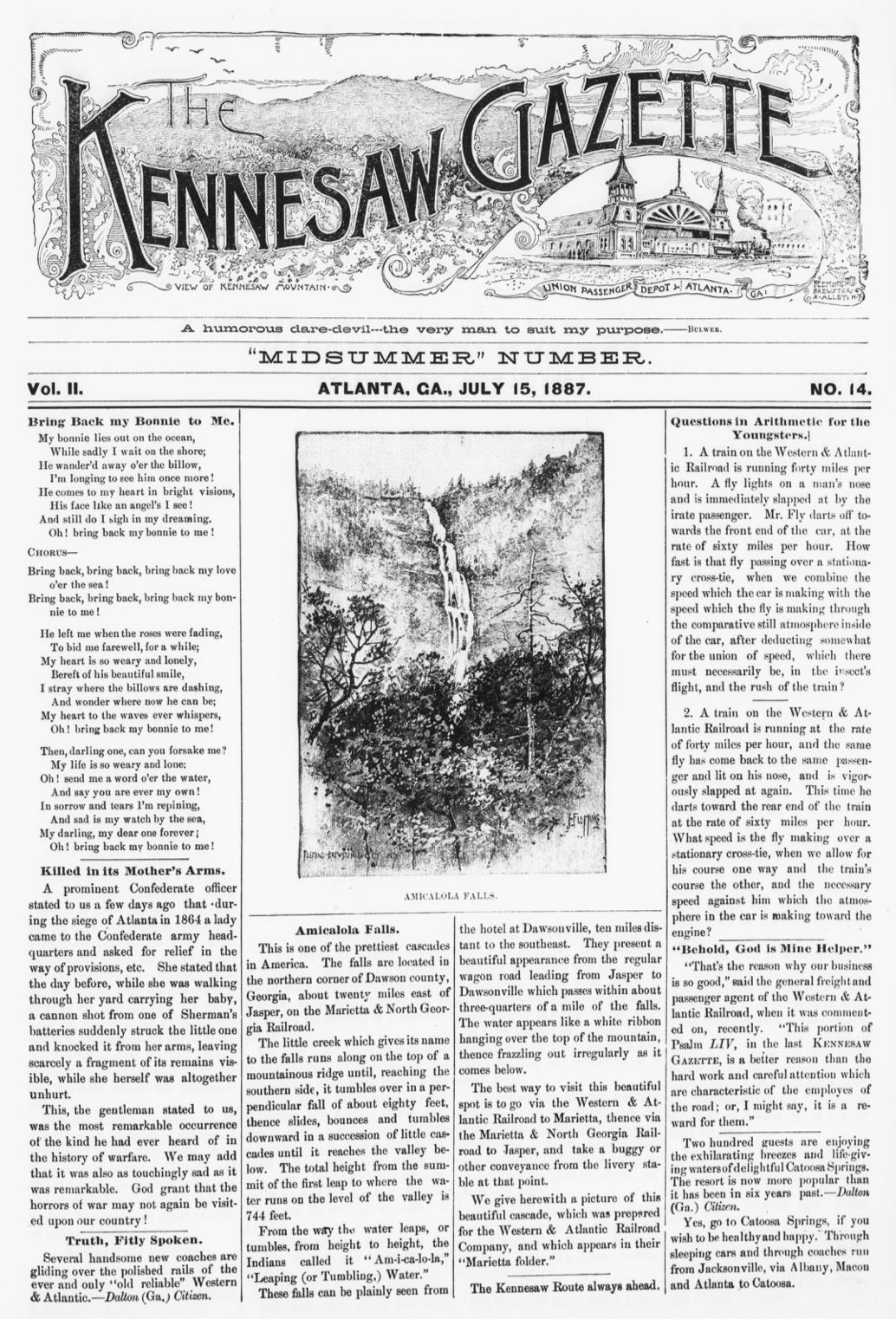
Cover page of the July 15, 1887 edition of the Kennesaw Gazette featuring a story on Amicalola Falls

Kennesaw Gazette

  • Info Details
  • Citation Terms of Use

By the early 1880s Amicalola Falls had become a tourist destination as interest in natural public recreation areas surged following the founding of Yellowstone National Park in 1872. The Kennesaw Gazette, which described the falls as "one of the prettiest cascades in America," was one of many publications to tout the recreational opportunities at Amicalola Falls.

Courtesy of Digital Library of Georgia, Georgia Historic Newspapers.
The New Georgia Encyclopedia does not hold the copyright for this media resource and can neither grant nor deny permission to republish or reproduce the image online or in print. Requests for permission to publish or reproduce the resource may need to be submitted to the Digital Library of Georgia.

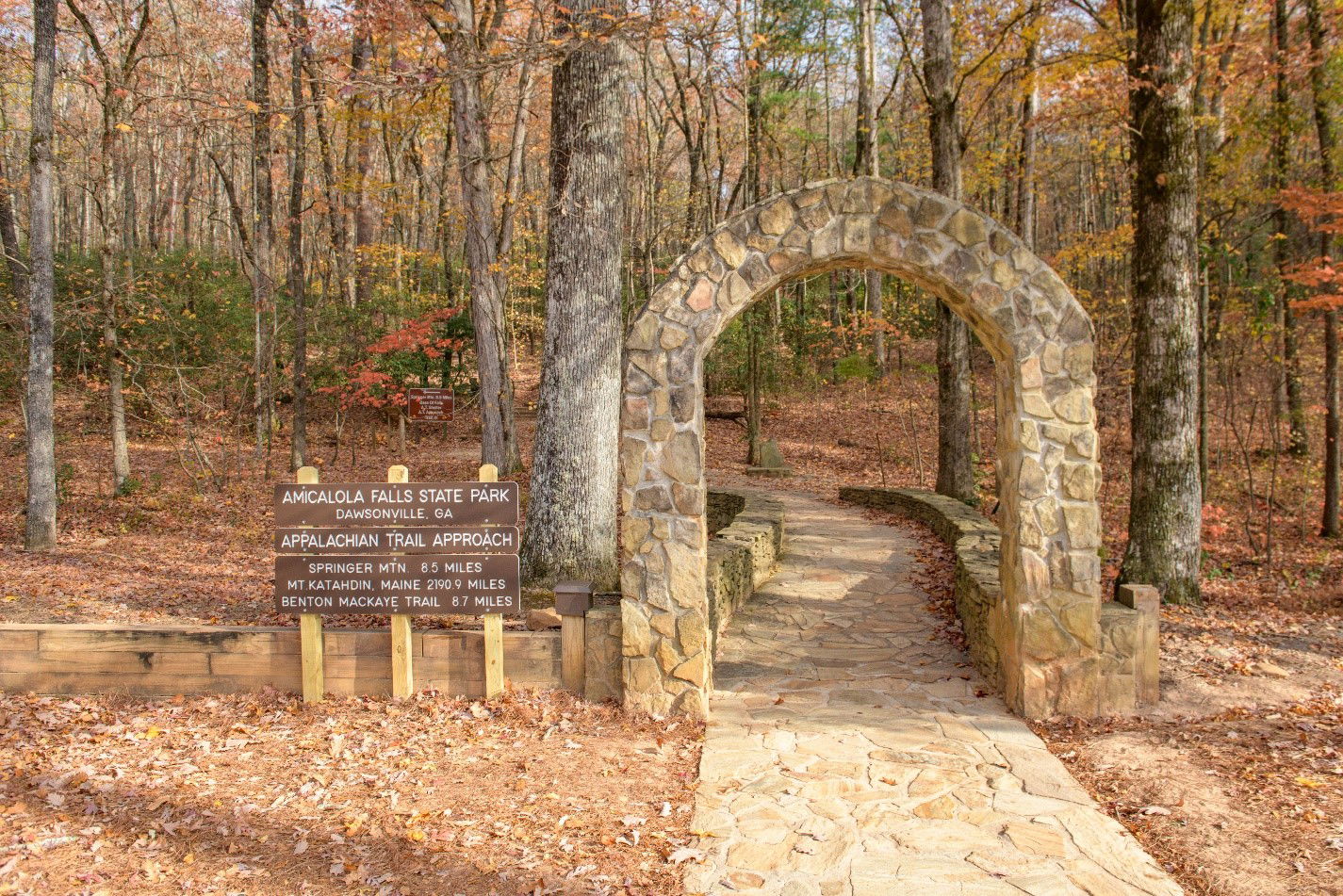
Entrance to the Appalachian Approach Trail at Amicalola Falls State Park

Amicalola Falls State Park

  • Info Details
  • Citation Terms of Use

Springer Mountain, the southern terminus of the Appalachian Trail, is accessible via an eight-mile trail that begins at Amicalola Falls State Park.

From Amicalola Falls State Park
The New Georgia Encyclopedia does not hold the copyright for this media resource and can neither grant nor deny permission to republish or reproduce the image online or in print. All requests for permission to publish or reproduce the resource must be submitted to the rights holder.

Radium Springs

Radium Springs

  • Info Details
  • Citation Terms of Use

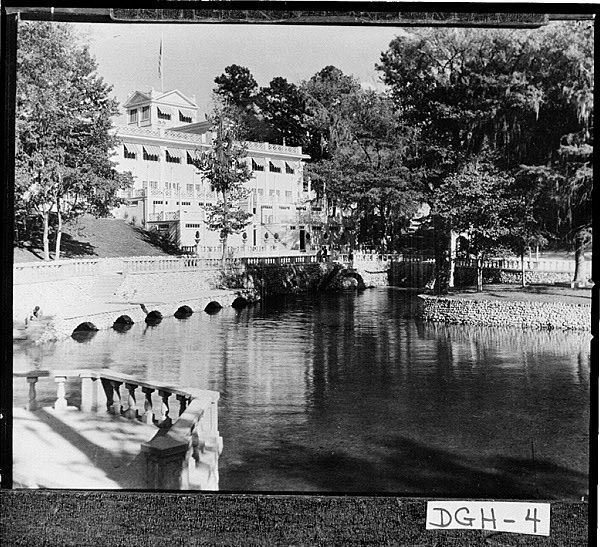
Radium Springs, one of Georgia's Seven Natural Wonders, was the site of a casino that had its heyday during the 1920s. The casino was demolished in 2003.

Courtesy of Georgia Archives, Vanishing Georgia, #
dgh004.

View on partner site

The New Georgia Encyclopedia does not hold the copyright for this media resource and can neither grant nor deny permission to republish or reproduce the image online or in print. Requests for permission to publish or reproduce the resource should be submitted to the Georgia Archives.

Radium Springs, one of Georgia's Seven Natural Wonders, is depicted, showcasing its crystal clear water and surrounding pathways walkways.

Radium Springs

  • Info Details
  • Citation Terms of Use

Radium Springs is a natural cold-water spring located in the eponymously named community of Radium Springs in Dougherty County. It is one of Georgia’s largest natural springs, pumping up to 70,000 gallons of water a minute in ideal conditions. Its waters stay at an average temperature of sixty-eight degrees Fahrenheit year-round and contain naturally occurring trace amounts of radium

From U.S. Geological Survey
View on source site

The New Georgia Encyclopedia does not hold the copyright for this media resource and can neither grant nor deny permission to republish or reproduce the image online or in print. All requests for permission to publish or reproduce the resource must be submitted to the rights holder.

Longleaf Pine and Wiregrass

Longleaf Pine and Wiregrass

  • Info Details
  • Citation Terms of Use

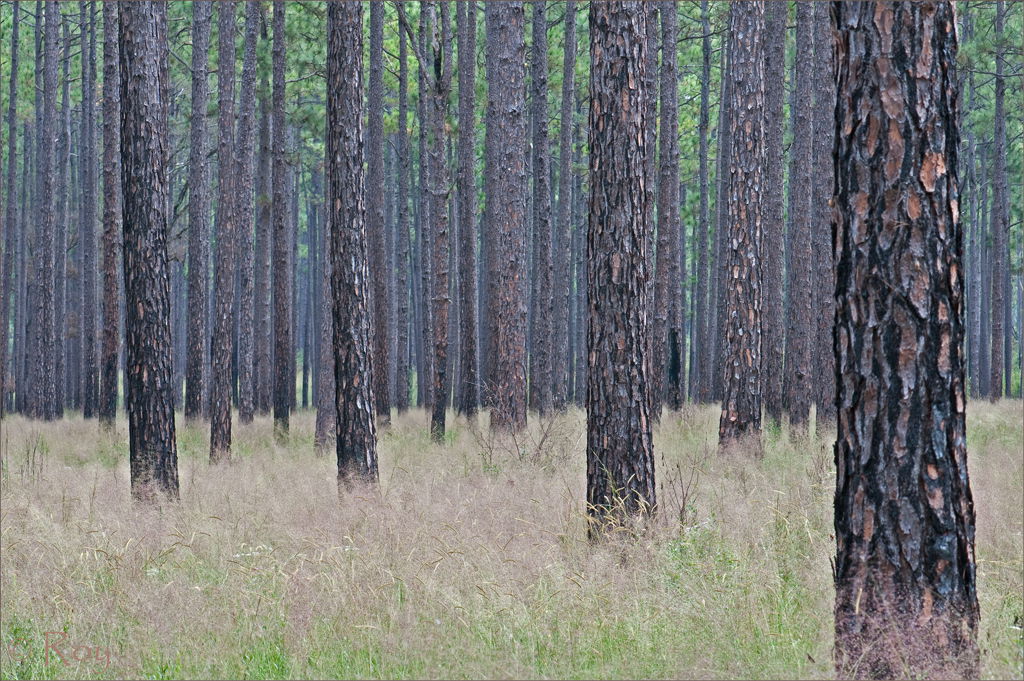
Longleaf pines and wiregrass dominate the landscape of southeast Georgia. Pines can grow quickly on clear-cut land, without competition for resources from other trees, especially hardwoods.

Photograph by Roy Cohutta
The New Georgia Encyclopedia does not hold the copyright for this media resource and can neither grant nor deny permission to republish or reproduce the image online or in print. All requests for permission to publish or reproduce the resource must be submitted to the rights holder.

  • Info Details
  • Citation Terms of Use

The New Georgia Encyclopedia does not hold the copyright for this media resource and can neither grant nor deny permission to republish or reproduce the image online or in print. All requests for permission to publish or reproduce the resource must be submitted to the rights holder.

Okefenokee Swamp

Okefenokee Swamp

  • Info Details
  • Citation Terms of Use

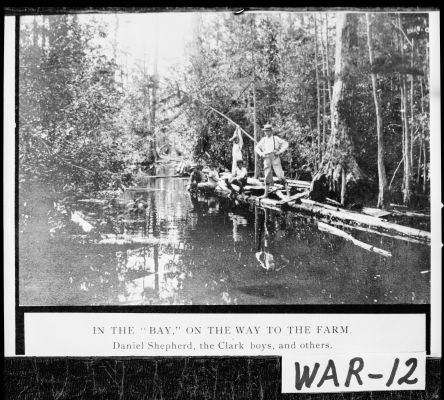
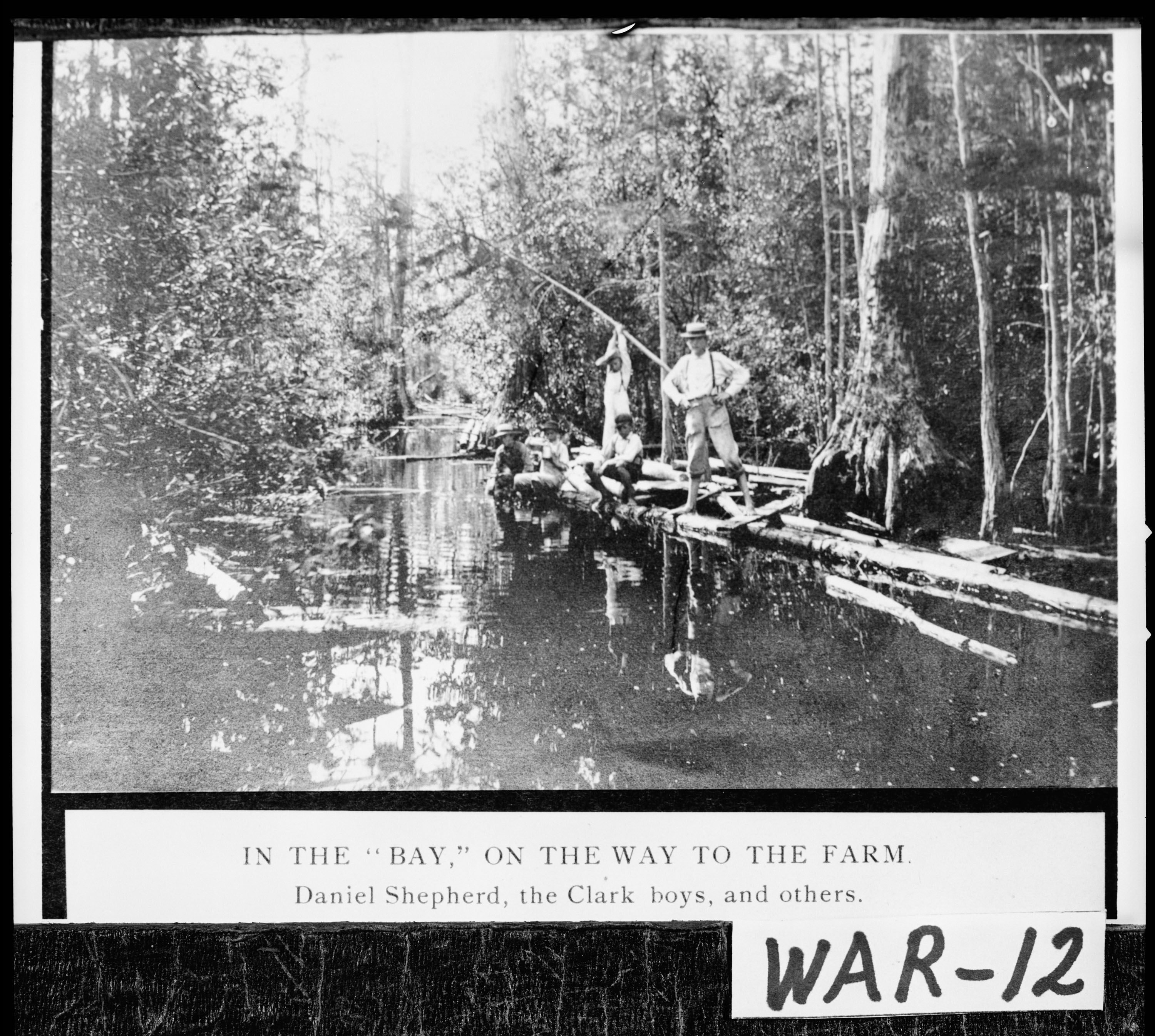
Several local farmers travel through the Okefenokee Swamp in Ware County, circa 1900. At more than 700 square miles, the Okefenokee is the largest swamp in North America.

Courtesy of Georgia Archives, Vanishing Georgia, #
war012.

View on partner site

The New Georgia Encyclopedia does not hold the copyright for this media resource and can neither grant nor deny permission to republish or reproduce the image online or in print. Requests for permission to publish or reproduce the resource should be submitted to the Georgia Archives.

Franklin Tree

Franklin Tree

  • Info Details
  • Citation Terms of Use

The Franklinia is a deciduous small tree or large shrub growing fifteen to twenty feet high and ten to fifteen feet wide, with elongated, dark green leaves (which turn red, orange, or pink in the fall) and showy two- to three-inch snow-white flowers, with clusters of golden yellow stamens in the centers.

Image from John Donges
View on source site

The New Georgia Encyclopedia does not hold the copyright for this media resource and can neither grant nor deny permission to republish or reproduce the image online or in print. All requests for permission to publish or reproduce the resource must be submitted to the rights holder.

Longleaf Pines

Longleaf Pines

  • Info Details
  • Citation Terms of Use

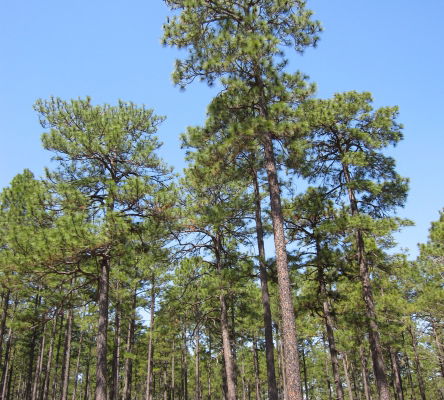
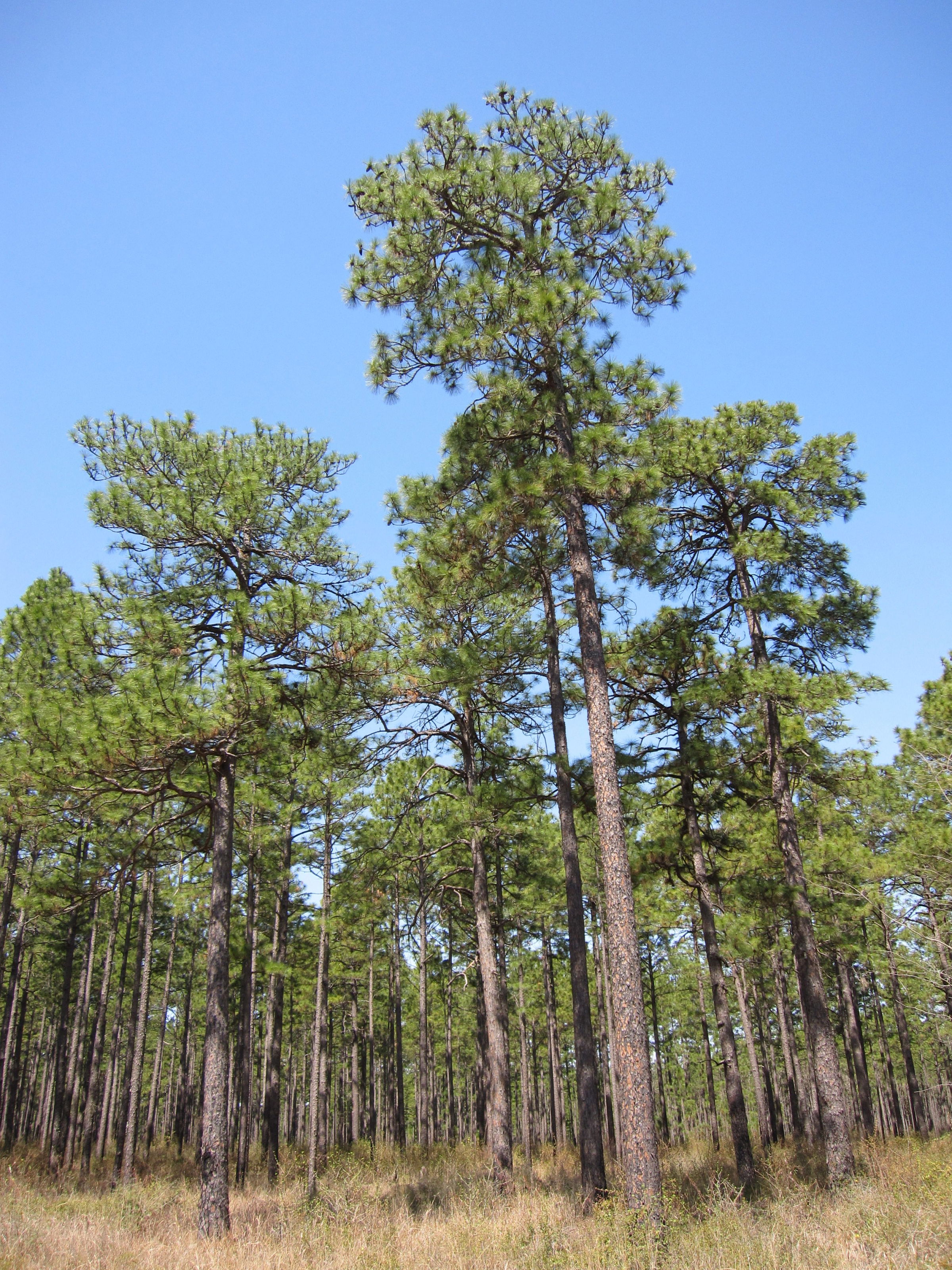
Longleaf pine trees and wiregrass form a distinctive ecosystem in south Georgia. The region's pine forest is divided into three areas: pine and palmetto flats in the east, pine barrens in the interior, and a lime-sink section in the west. Lowland areas of the forest support a variety of other trees as well, including oak, hickory, and cypress.

Photograph by Chris M. Morris

The New Georgia Encyclopedia does not hold the copyright for this media resource and can neither grant nor deny permission to republish or reproduce the image online or in print. All requests for permission to publish or reproduce the resource must be submitted to the rights holder.

Clinch County Sawmill

Clinch County Sawmill

  • Info Details
  • Citation Terms of Use

An engine stops at a sawmill in Clinch County, at a now-defunct town called Humphries between Dupont and Stockton, in 1893. The mill was located in the wiregrass region of the state, which was heavily logged in the late nineteenth and early twentieth centuries.

Courtesy of Georgia Archives, Vanishing Georgia, #cln002.
View on partner site

The New Georgia Encyclopedia does not hold the copyright for this media resource and can neither grant nor deny permission to republish or reproduce the image online or in print. Requests for permission to publish or reproduce the resource should be submitted to the Georgia Archives.

Turpentine Still

Turpentine Still

  • Info Details
  • Citation Terms of Use

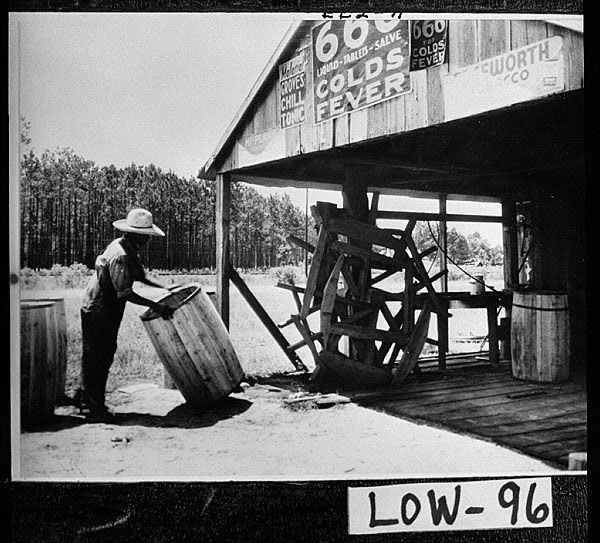
Anthony Head, a worker in a Lowndes County turpentine still, makes barrels for holding rosin, circa 1900. The naval stores industry formed an important part of the economy in wiregrass Georgia, of which Lowndes County is a part, in the early twentieth century.

Courtesy of Georgia Archives, Vanishing Georgia, #
low096.
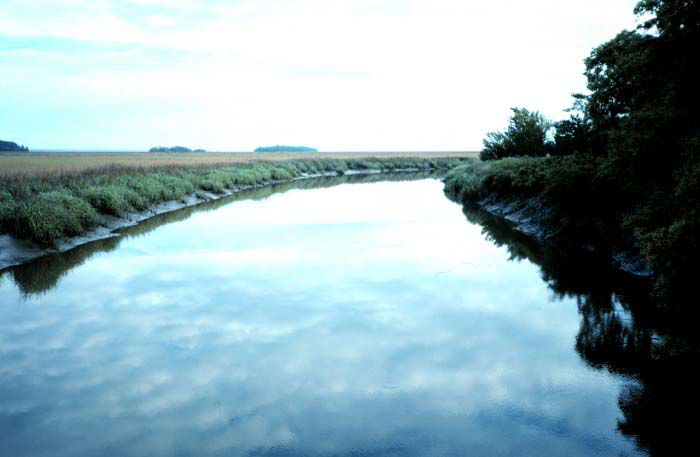
View on partner site

The New Georgia Encyclopedia does not hold the copyright for this media resource and can neither grant nor deny permission to republish or reproduce the image online or in print. Requests for permission to publish or reproduce the resource should be submitted to the Georgia Archives.

  • Info Details
  • Citation Terms of Use

The New Georgia Encyclopedia does not hold the copyright for this media resource and can neither grant nor deny permission to republish or reproduce the image online or in print. All requests for permission to publish or reproduce the resource must be submitted to the rights holder.

Sapelo Island National Estuarine Research Reserve

Sapelo Island National Estuarine Research Reserve

  • Info Details
  • Citation Terms of Use

The Sapelo Island National Estuarine Research Reserve is committed to research, education, and the sound management of coastal resources in Georgia. It lies in an estuary where the currents of Doboy Sound meet the Duplin River.

Courtesy of National Oceanic and Atmospheric Administration, National Estuarine Research Reserve Collection.

The New Georgia Encyclopedia does not hold the copyright for this media resource and can neither grant nor deny permission to republish or reproduce the image online or in print. All requests for permission to publish or reproduce the resource must be submitted to the rights holder.

Doboy Sound

Doboy Sound

  • Info Details
  • Citation Terms of Use

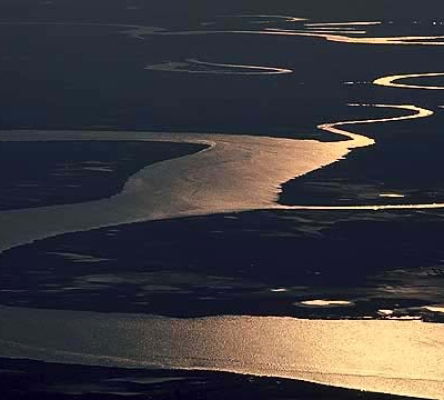
This aerial photograph shows the south end of Sapelo Island and Doboy Sound. Freshwater from the Altamaha River is transported into upper Doboy Sound through the connecting Atlantic Intracoastal Waterway and marsh channels.

Courtesy of Sapelo Island National Estuarine Research Reserve and National Oceanic and Atmospheric Administration/Department of Commerce

The New Georgia Encyclopedia does not hold the copyright for this media resource and can neither grant nor deny permission to republish or reproduce the image online or in print. All requests for permission to publish or reproduce the resource must be submitted to the rights holder.

Estuaries

Estuaries

  • Info Details
  • Citation Terms of Use

The National Estuarine Research Reserve, Sapelo Island.

Courtesy of National Oceanic and Atmospheric Administration, National Estuarine Research Reserve Collection.

The New Georgia Encyclopedia does not hold the copyright for this media resource and can neither grant nor deny permission to republish or reproduce the image online or in print. All requests for permission to publish or reproduce the resource must be submitted to the rights holder.

Eastern Oyster

Eastern Oyster

  • Info Details
  • Citation Terms of Use

Because they tolerate only low-salinity water, Eastern oysters (Crassostrea virginica) are found in sounds, estuaries, salt marshes, and tidal creeks. In the early 1900s Georgia produced more oysters commercially than any other state. Today, Georgia's oyster industry is only worth about $100,000.

Courtesy of National Oceanic and Atmospheric Administration, National Estuarine Research Reserve Collection.

The New Georgia Encyclopedia does not hold the copyright for this media resource and can neither grant nor deny permission to republish or reproduce the image online or in print. All requests for permission to publish or reproduce the resource must be submitted to the rights holder.

White Shrimp

White Shrimp

  • Info Details
  • Citation Terms of Use

Edible shrimps, like this white shrimp (Penaeus setiferus), depend on healthy estuaries for their survival. After spawning in the Atlantic Ocean from late March to September, the larval shrimp enter estuaries, where they feed on bottom algae, small animals, and debris. Within a few months they return to ocean waters as adults.

Courtesy of National Oceanic and Atmospheric Administration, National Estuarine Research Reserve Collection.
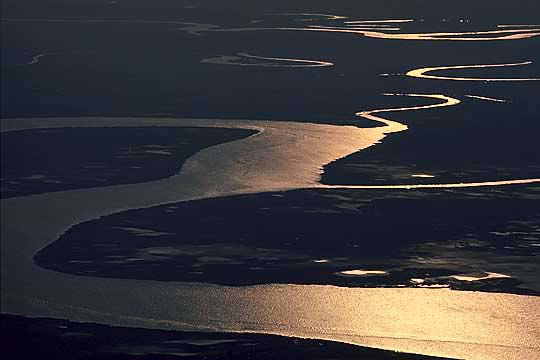
The New Georgia Encyclopedia does not hold the copyright for this media resource and can neither grant nor deny permission to republish or reproduce the image online or in print. All requests for permission to publish or reproduce the resource must be submitted to the rights holder.

Tidal Creek, Sapelo Island

Tidal Creek, Sapelo Island

  • Info Details
  • Citation Terms of Use

Coastal tides bring nutrients from estuaries connected by tidal creeks to the marshes. Outgoing tides carry nutritious marsh products back into the estuaries. There, the products help to sustain large numbers of other marine organisms. The outgoing tides also remove wastes from the marsh.

Courtesy of Georgia Department of Economic Development.

The New Georgia Encyclopedia does not hold the copyright for this media resource and can neither grant nor deny permission to republish or reproduce the image online or in print. Requests for permission to publish or reproduce the resource may need to be submitted to the Georgia Department of Economic Development.

Red Drum

Red Drum

  • Info Details
  • Citation Terms of Use

Red drum (Scaenops occelatus), also known as "spottail bass," live the first four years of life in estuaries, where they feed primarily on shrimp and crabs.

Courtesy of National Oceanic and Atmospheric Administration, National Estuarine Research Reserve Collection.

The New Georgia Encyclopedia does not hold the copyright for this media resource and can neither grant nor deny permission to republish or reproduce the image online or in print. All requests for permission to publish or reproduce the resource must be submitted to the rights holder.

Glynn County Marsh

Glynn County Marsh

  • Info Details
  • Citation Terms of Use

A marsh in Glynn County is pictured from Jekyll Island in 2004. Poet Sidney Lanier was inspired to write "The Marshes of Glynn" (1879) after a visit to Brunswick. The poem's narrator begins with a rhythmic description of the thick marsh before his vision expands seaward, culminating in an epiphany that the vast marshes and sea are filled with power and mystery.

Photograph by Moultrie Creek
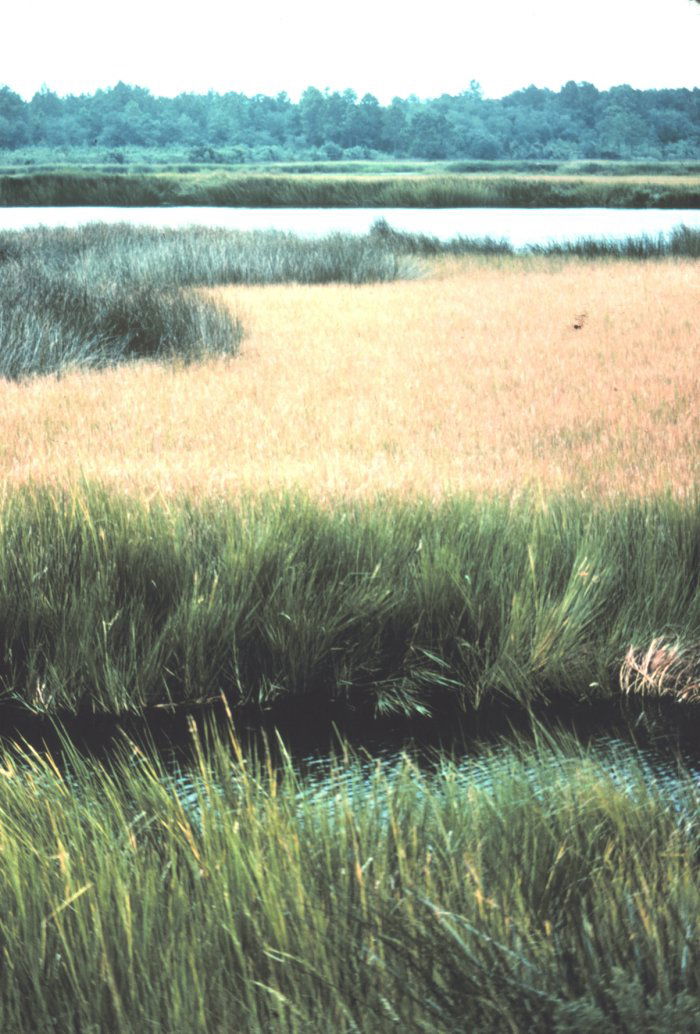
The New Georgia Encyclopedia does not hold the copyright for this media resource and can neither grant nor deny permission to republish or reproduce the image online or in print. All requests for permission to publish or reproduce the resource must be submitted to the rights holder.

Cordgrass and Needlerush

Cordgrass and Needlerush

  • Info Details
  • Citation Terms of Use

The salt marsh on Sapelo Island is composed primarily of smooth cordgrass (Spartina alterniflora), as are the salt marshes all along the Georgia coast. Other salt-tolerant plants, including needlerush (Juncus roemerianus), compete with Spartina in higher marsh areas, which receive a greater influx of freshwater from the mainland.

Courtesy of Sapelo Island National Estuarine Research Reserve and National Oceanic and Atmospheric Administration/Department of Commerce
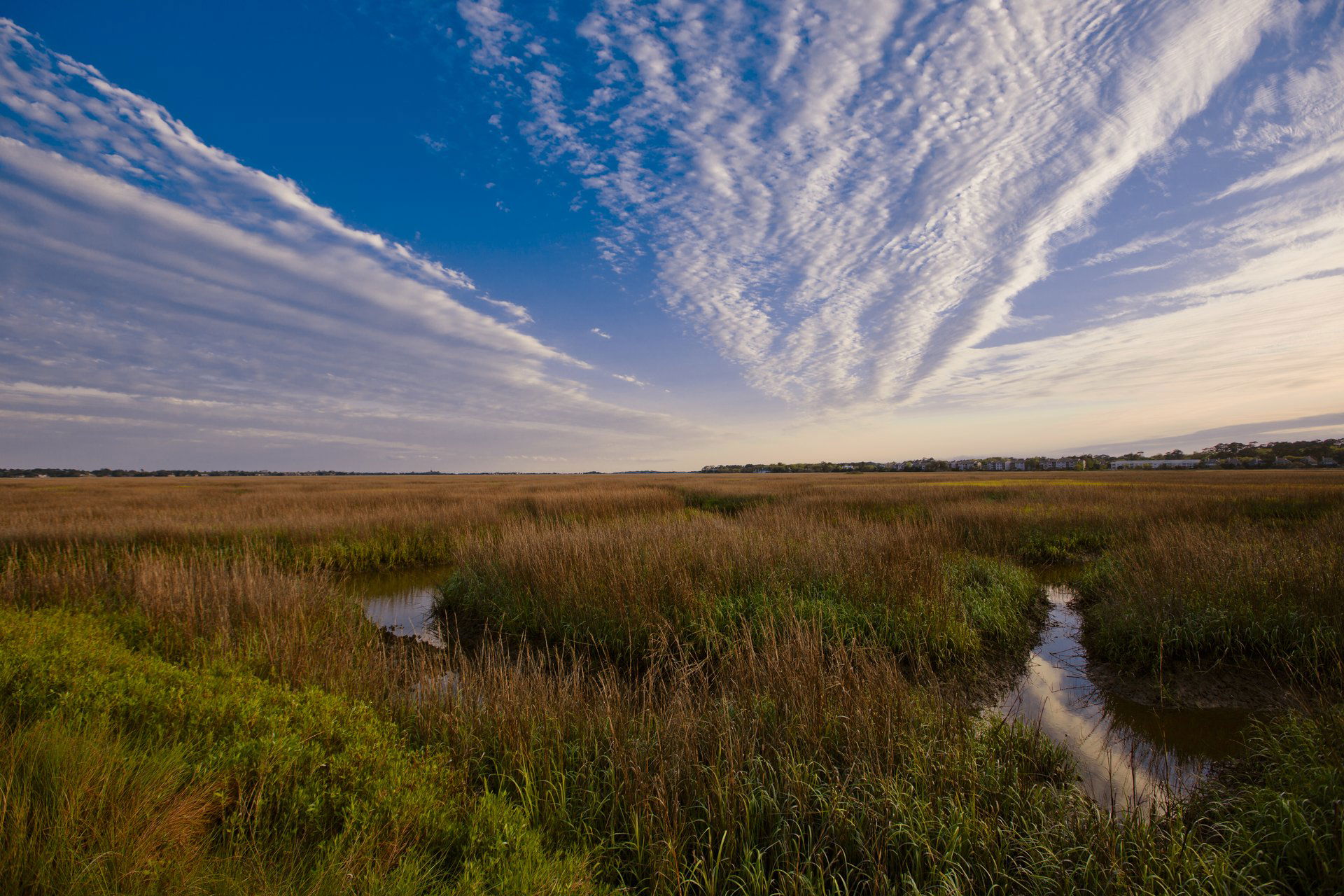
The New Georgia Encyclopedia does not hold the copyright for this media resource and can neither grant nor deny permission to republish or reproduce the image online or in print. All requests for permission to publish or reproduce the resource must be submitted to the rights holder.

Tidal Marsh

Tidal Marsh

  • Info Details
  • Citation Terms of Use

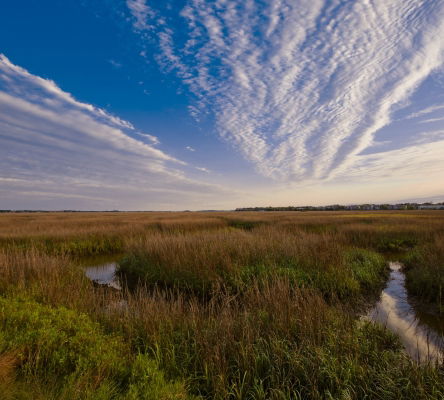
Tidal marshes originated around 18,000 years ago, when water from melting glaciers created lagoons behind barrier islands. Clay and sand deposits eventually accumulated in the lagoons and began to support populations of the dominant marsh plant that provides both food and protection to a variety of fauna. The marshes are especially important as nursery grounds for several species of marine life.

Courtesy of Explore Georgia, Photograph by Ralph Daniel.
The New Georgia Encyclopedia does not hold the copyright for this media resource and can neither grant nor deny permission to republish or reproduce the image online or in print. Requests for permission to publish or reproduce the resource may need to be submitted to Explore Georgia.

Marsh Detritus

Marsh Detritus

  • Info Details
  • Citation Terms of Use

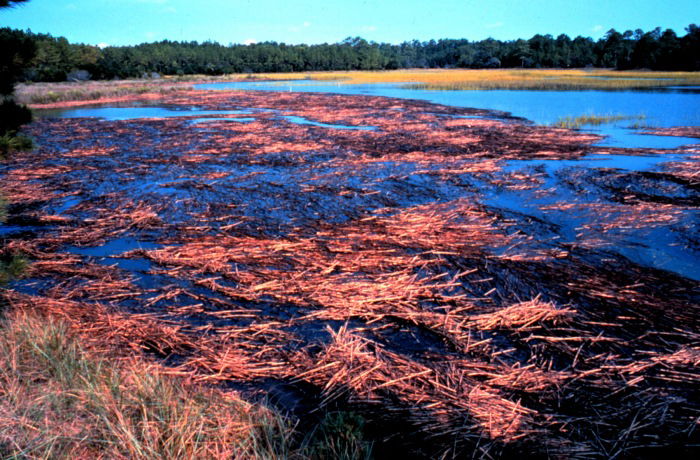
Smooth cordgrass (Spartina alterniflora), the dominant plant species in Georgia's tidal marshes, forms the basis of the salt-marsh food chain. When the plants die, they are broken down by bacteria and fungi into minute particles called detritus, which washes into estuaries and tidal creeks and is consumed by small marine organisms.

Courtesy of National Oceanic and Atmospheric Administration, National Estuarine Research Reserve Collection.
The New Georgia Encyclopedia does not hold the copyright for this media resource and can neither grant nor deny permission to republish or reproduce the image online or in print. All requests for permission to publish or reproduce the resource must be submitted to the rights holder.

Diamondback Terrapin

Diamondback Terrapin

  • Info Details
  • Citation Terms of Use

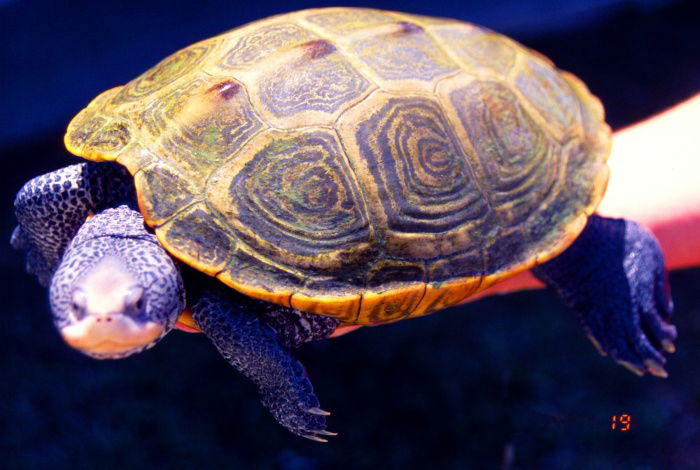
While alligators often feed in Georgia's salt marshes, the only reptile inhabitants of the marshes are diamondback terrapins (Malachlenys terrapin; adult female pictured). Other animals residing in the marshes include several bird species, as well as raccoons, marsh rabbits, and rice rats.

Photograph by Mary Hollinger, NODC biologist. Courtesy of National Oceanic and Atmospheric Administration/Department of Commerce
The New Georgia Encyclopedia does not hold the copyright for this media resource and can neither grant nor deny permission to republish or reproduce the image online or in print. All requests for permission to publish or reproduce the resource must be submitted to the rights holder.

  • Info Details
  • Citation Terms of Use

The New Georgia Encyclopedia does not hold the copyright for this media resource and can neither grant nor deny permission to republish or reproduce the image online or in print. All requests for permission to publish or reproduce the resource must be submitted to the rights holder.

  • Info Details
  • Citation Terms of Use

The New Georgia Encyclopedia does not hold the copyright for this media resource and can neither grant nor deny permission to republish or reproduce the image online or in print. All requests for permission to publish or reproduce the resource must be submitted to the rights holder.

Sapelo Island Marsh

Sapelo Island Marsh

  • Info Details
  • Citation Terms of Use

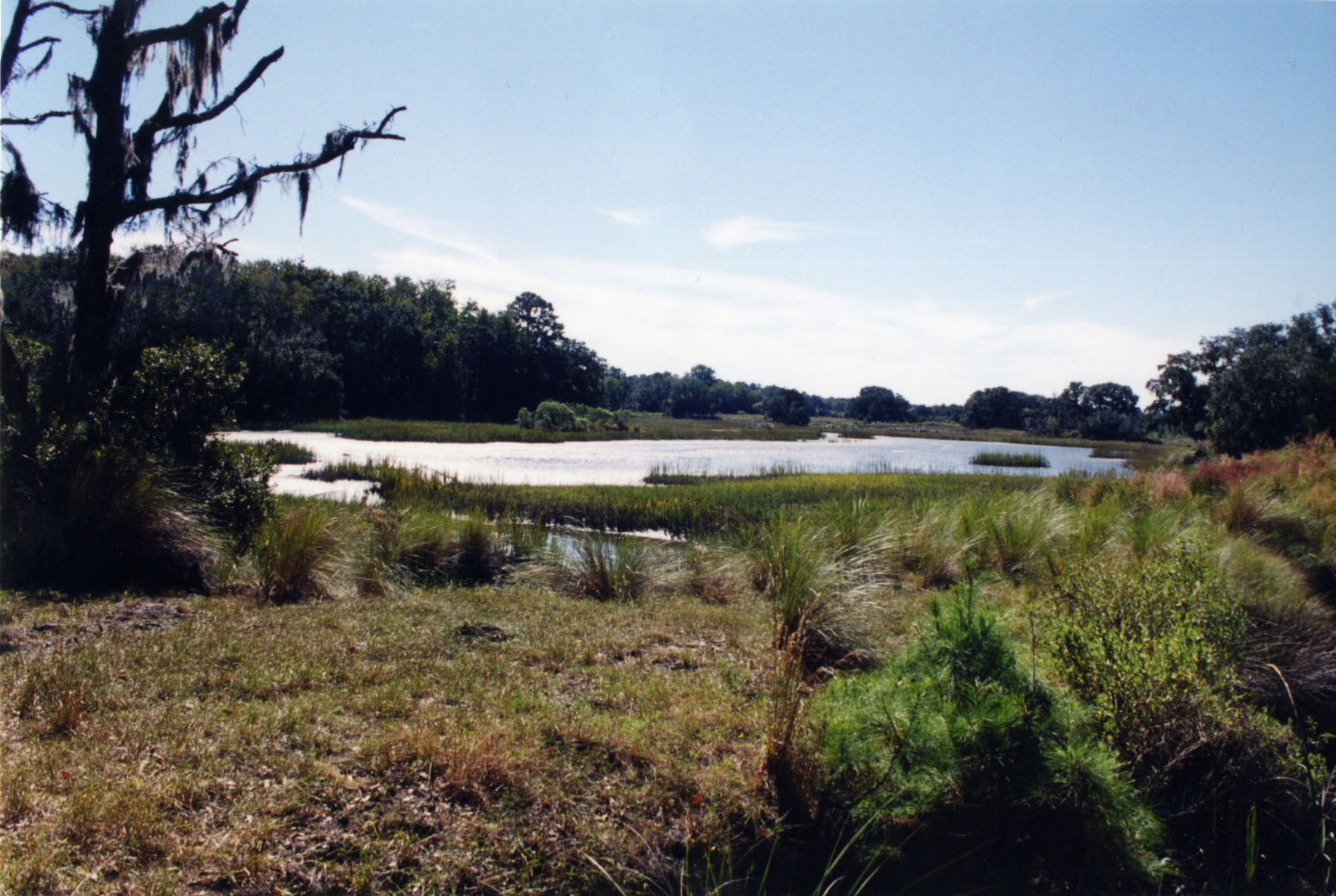
A salt marsh extends between the mainland and Sapelo Island, one of the barrier islands lining the Georgia coast. According to estimates by the Georgia Department of Natural Resources, salt marshes cover more than 378,000 acres in the state.

Photograph by Darby Carl Sanders
The New Georgia Encyclopedia does not hold the copyright for this media resource and can neither grant nor deny permission to republish or reproduce the image online or in print. All requests for permission to publish or reproduce the resource must be submitted to the rights holder.

Blair’s Saltpeter Corridor

Blair’s Saltpeter Corridor

  • Info Details
  • Citation Terms of Use

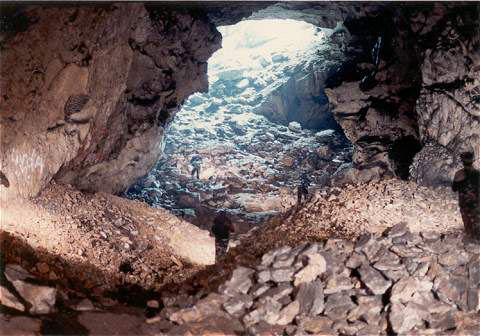
Blair's Saltpeter Corridor leads into Kingston Saltpeter Cave in Bartow County. The Georgia Speleological Society has documented the existence of at least 513 caves in the state.

Photograph by Joel M. Sneed

The New Georgia Encyclopedia does not hold the copyright for this media resource and can neither grant nor deny permission to republish or reproduce the image online or in print. All requests for permission to publish or reproduce the resource must be submitted to the rights holder.

Gray Bat

Gray Bat

  • Info Details
  • Citation Terms of Use

Sixteen species of bats, including gray bats (Myotis grisescens), use Georgia's caves as crucual hibernation or migration habitats. As many as 15,000 gray bats, an endangered species, live in Frick's Cave in Walker County.

Courtesy of Georgia Wildlife Federation

The New Georgia Encyclopedia does not hold the copyright for this media resource and can neither grant nor deny permission to republish or reproduce the image online or in print. All requests for permission to publish or reproduce the resource must be submitted to the rights holder.

The Fantastic

The Fantastic

  • Info Details
  • Citation Terms of Use

A caver descends the Fantastic in Ellison's Cave (in Walker County), one of the largest caves in the country. The Fantastic, at 586 feet, is the deepest straight cave drop in the continental United States.

Photograph by Willie Hunt
The New Georgia Encyclopedia does not hold the copyright for this media resource and can neither grant nor deny permission to republish or reproduce the image online or in print. All requests for permission to publish or reproduce the resource must be submitted to the rights holder.

Vandalism in Kingston Saltpeter Cave

Vandalism in Kingston Saltpeter Cave

  • Info Details
  • Citation Terms of Use

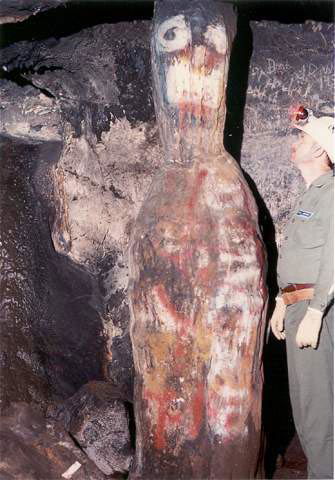
Caver Larry Blair examines vandalism of the "Jug Formation" in Kingston Saltpeter Cave, the only cave in Georgia to be managed as a preserve by the National Speleological Society. Because most caves in Georgia are located on private land, the preservation of caves, including the protection of wildlife within them, often falls to the landowners.

Photograph by Joel M. Sneed
The New Georgia Encyclopedia does not hold the copyright for this media resource and can neither grant nor deny permission to republish or reproduce the image online or in print. All requests for permission to publish or reproduce the resource must be submitted to the rights holder.

  • Info Details
  • Citation Terms of Use

The New Georgia Encyclopedia does not hold the copyright for this media resource and can neither grant nor deny permission to republish or reproduce the image online or in print. All requests for permission to publish or reproduce the resource must be submitted to the rights holder.

Granite Outcrop at Panola Mountain

Granite Outcrop at Panola Mountain

  • Info Details
  • Citation Terms of Use

This granite outcrop is located at Panola Mountain State Conservation Park in Rockdale County. Most of the granite outcrops in the Piedmont are approximately 300-350 million years old.

Photograph by Melinda Smith Mullikin, New Georgia Encyclopedia

The New Georgia Encyclopedia does not hold the copyright for this media resource and can neither grant nor deny permission to republish or reproduce the image online or in print. All requests for permission to publish or reproduce the resource must be submitted to the rights holder.

Stone Mountain

Stone Mountain

  • Info Details
  • Citation Terms of Use

Stone Mountain Park encompasses 3,200 acres just sixteen miles east of downtown Atlanta. Formed around 300 million years ago during the Paleozoic Era, the mountain itself is the world's largest mass of exposed granite.

Image from Darryl Pierce

The New Georgia Encyclopedia does not hold the copyright for this media resource and can neither grant nor deny permission to republish or reproduce the image online or in print. All requests for permission to publish or reproduce the resource must be submitted to the rights holder.

Panola Granite

Panola Granite

  • Info Details
  • Citation Terms of Use

This Panola granite, found at Panola Mountain State Conservation Park in Rockdale County, differs in mineral composition and texture from the granite outcrops at nearby Stone Mountain and Arabia Mountain.

Photograph by Chad A. S. Mullikin

The New Georgia Encyclopedia does not hold the copyright for this media resource and can neither grant nor deny permission to republish or reproduce the image online or in print. All requests for permission to publish or reproduce the resource must be submitted to the rights holder.

Sandhills

Sandhills

  • Info Details
  • Citation Terms of Use

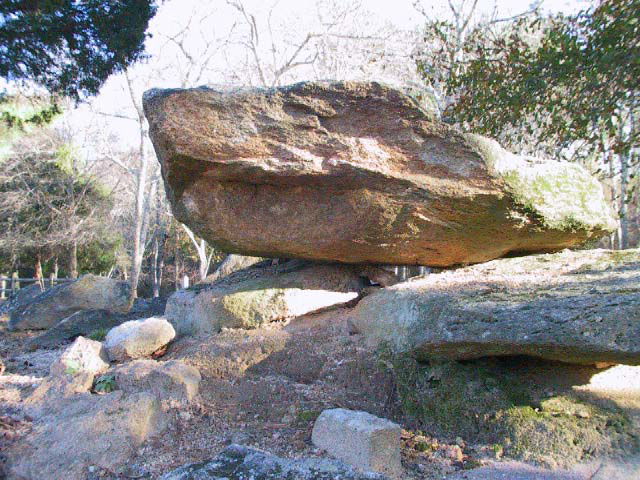
Visually, sandhills are often striking as islands of exposed sand and sparse vegetation in the midst of denser forest. Sandhills are characterized by thick sandy deposits one to twenty-five meters deep.
The New Georgia Encyclopedia does not hold the copyright for this media resource and can neither grant nor deny permission to republish or reproduce the image online or in print. All requests for permission to publish or reproduce the resource must be submitted to the rights holder.

Gopher Tortoise

Gopher Tortoise

  • Info Details
  • Citation Terms of Use

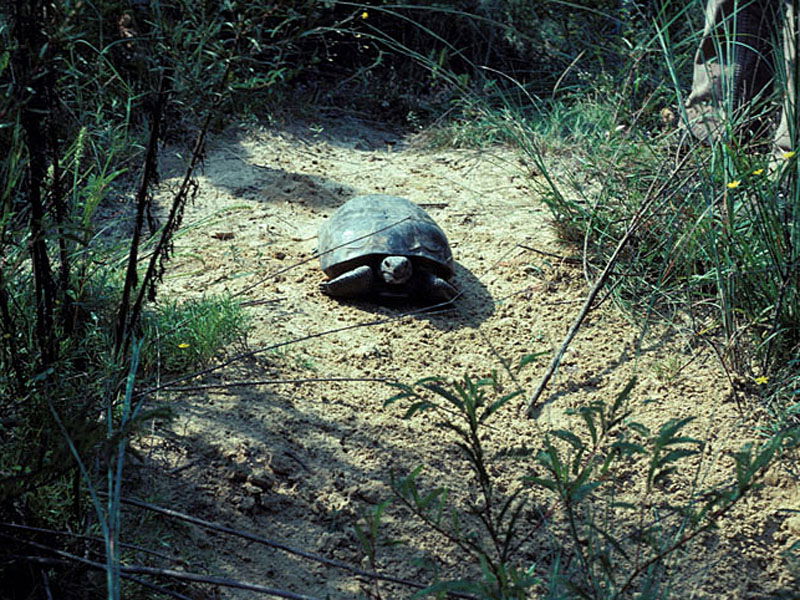
Sandhills form the prime habitat of Georgia's state reptile, the gopher tortoise (Gopherus polyphemus).

Courtesy of James H. Miller, USDA Forest Service, www.forestryimages.org

The New Georgia Encyclopedia does not hold the copyright for this media resource and can neither grant nor deny permission to republish or reproduce the image online or in print. All requests for permission to publish or reproduce the resource must be submitted to the rights holder.

Stone Mountain

Stone Mountain

  • Info Details
  • Citation Terms of Use

Stone Mountain is the largest exposed mass of granite in the world. It was once used by Native Americans as a ceremonial place. Today, Stone Mountain Park is owned by the state of Georgia.

Image from G. DAWSON

View on source site

The New Georgia Encyclopedia does not hold the copyright for this media resource and can neither grant nor deny permission to republish or reproduce the image online or in print. All requests for permission to publish or reproduce the resource must be submitted to the rights holder.

Downtown Stone Mountain

Downtown Stone Mountain

  • Info Details
  • Citation Terms of Use

The town at the base of Stone Mountain was founded in 1847. The expansion of Georgia's railways connected Stone Mountain to residents in Atlanta and as far away as Augusta.

Photograph by Daniel Meyer, Wikimedia

The New Georgia Encyclopedia does not hold the copyright for this media resource and can neither grant nor deny permission to republish or reproduce the image online or in print. All requests for permission to publish or reproduce the resource must be submitted to the rights holder.

Memorial Lawn at Stone Mountain

Memorial Lawn at Stone Mountain

  • Info Details
  • Citation Terms of Use

The Memorial Lawn at Stone Mountain is used as a viewing area for the park's summer laser show. During the winter the park provides snow tubing for visitors on the lawn.

Photograph by Chris Yunker, Wikimedia
The New Georgia Encyclopedia does not hold the copyright for this media resource and can neither grant nor deny permission to republish or reproduce the image online or in print. All requests for permission to publish or reproduce the resource must be submitted to the rights holder.

Stone Mountain, 1929

Stone Mountain, 1929

  • Info Details
  • Citation Terms of Use

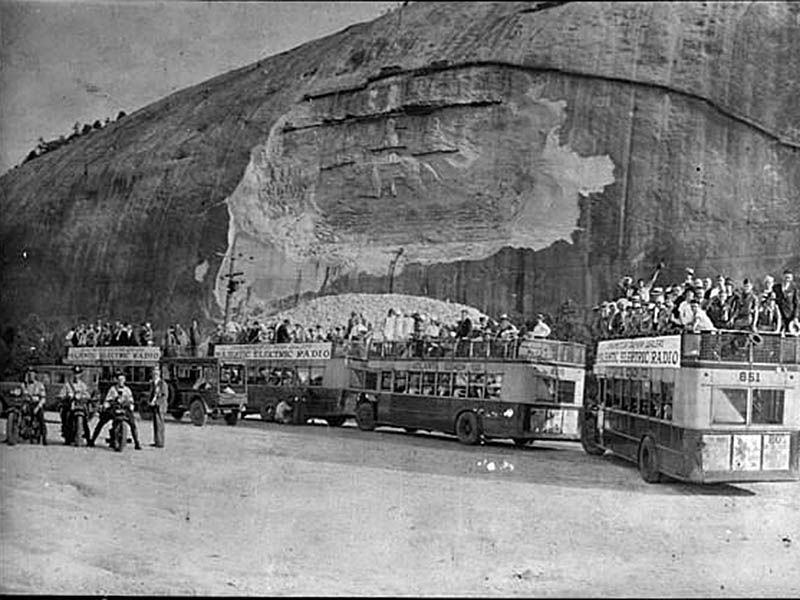
An unknown group on a bus trip tours the site of Stone Mountain in June 1929. Work on a Confederate memorial had begun on the side of the granite mountain, but the carving would not be completed until the 1950s.

Courtesy of Georgia Archives, Vanishing Georgia, #cob162b.
View on partner site

The New Georgia Encyclopedia does not hold the copyright for this media resource and can neither grant nor deny permission to republish or reproduce the image online or in print. Requests for permission to publish or reproduce the resource should be submitted to the Georgia Archives.

Stone Mountain Carving

Stone Mountain Carving

  • Info Details
  • Citation Terms of Use

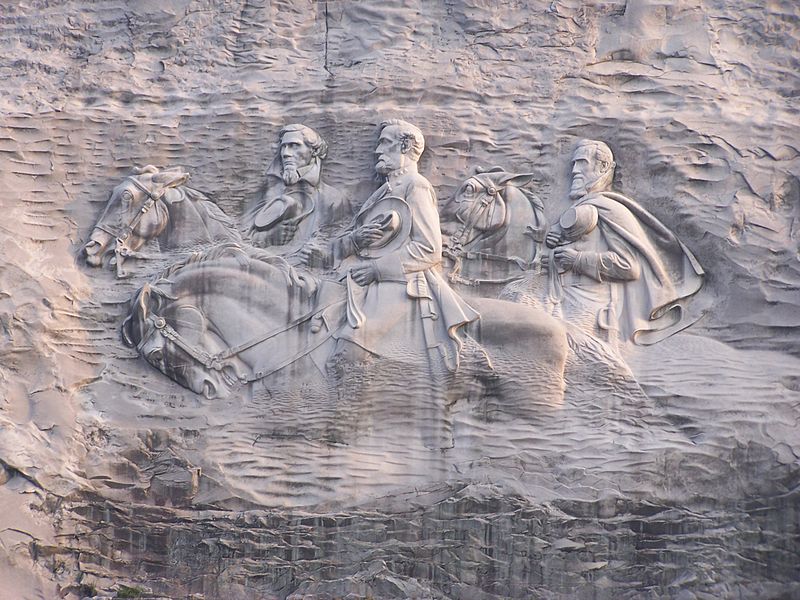
The carving on Stone Mountain depicts the Confederate icons Robert E. Lee, Thomas "Stonewall" Jackson, and Jefferson Davis. Commissioned by the president of the United Daughters of the Confederacy, the sculptor Gutzon Borglum began work on the relief in 1915. He was fired in 1925, and Augustus Lukeman completed the carving.

Photograph by Mark Griffin, Wikimedia
The New Georgia Encyclopedia does not hold the copyright for this media resource and can neither grant nor deny permission to republish or reproduce the image online or in print. All requests for permission to publish or reproduce the resource must be submitted to the rights holder.

Stone Mountain Yellow Daisies

Stone Mountain Yellow Daisies

  • Info Details
  • Citation Terms of Use

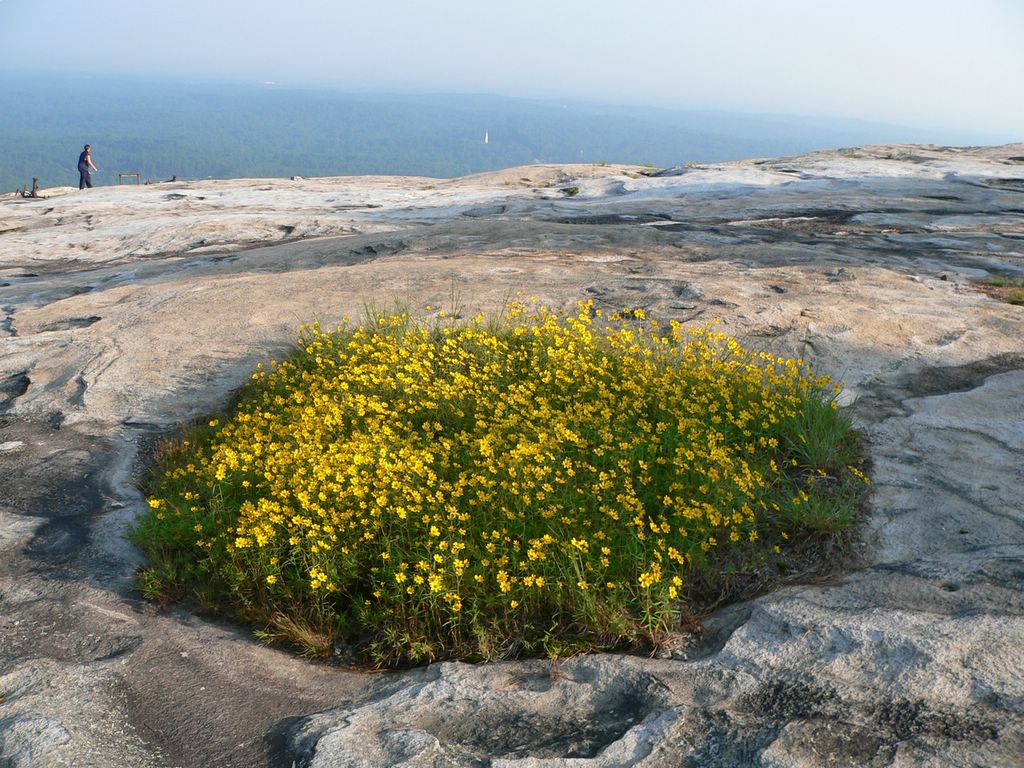
The "Confederate Daisy," or "Stone Mountain Yellow Daisy," grows in the shallow soil on the granite outcrops of Stone Mountain. The flower is so named because it is found only within a sixty-mile radius of the mountain. The species was discovered in 1846.

Photograph by Lee Coursey

The New Georgia Encyclopedia does not hold the copyright for this media resource and can neither grant nor deny permission to republish or reproduce the image online or in print. All requests for permission to publish or reproduce the resource must be submitted to the rights holder.

Providence Canyon

Providence Canyon

  • Info Details
  • Citation Terms of Use

The unconsolidated sandstone bluffs of Providence Canyon in Stewart County were formed during the Cretaceous Period and are among the oldest exposed Coastal Plains rock formations in the state.

Courtesy of Matthew M. Moye
The New Georgia Encyclopedia does not hold the copyright for this media resource and can neither grant nor deny permission to republish or reproduce the image online or in print. All requests for permission to publish or reproduce the resource must be submitted to the rights holder.

Providence Canyon

Providence Canyon

  • Info Details
  • Citation Terms of Use

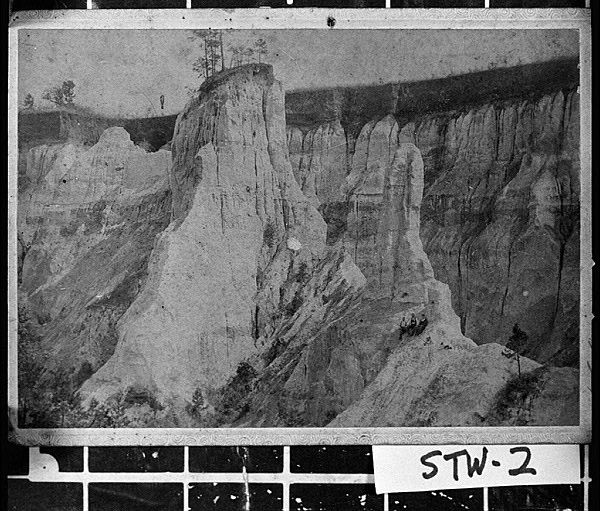
Providence Canyon, pictured in 1893, is a network of gorges created by soil erosion in Stewart County. Historical accounts indicate that the canyon began to form in the early 1800s as a result of poor farming practices.

Courtesy of Georgia Archives, Vanishing Georgia, #
stw002.

View on partner site

The New Georgia Encyclopedia does not hold the copyright for this media resource and can neither grant nor deny permission to republish or reproduce the image online or in print. Requests for permission to publish or reproduce the resource should be submitted to the Georgia Archives.

Providence Canyon

Providence Canyon

  • Info Details
  • Citation Terms of Use

Identified by the Georgia Department of Natural Resources as one of the state's "Seven Wonders," the site is protected by Providence Canyon State Park, located approximately 150 miles southwest of Atlanta, in Stewart County.

Courtesy of Georgia Department of Natural Resources.

The New Georgia Encyclopedia does not hold the copyright for this media resource and can neither grant nor deny permission to republish or reproduce the image online or in print. Requests for permission to publish or reproduce the resource may need to be submitted to the Georgia Department of Natural Resources.

Tallulah Gorge

Tallulah Gorge

  • Info Details
  • Citation Terms of Use

Once a leading destination for tourists in the Southeast, Tallulah Gorge still attracts numerous visitors, particularly in the fall when the mountainsides are ablaze with color.

Photograph by Jeno

The New Georgia Encyclopedia does not hold the copyright for this media resource and can neither grant nor deny permission to republish or reproduce the image online or in print. All requests for permission to publish or reproduce the resource must be submitted to the rights holder.

Tallulah Falls

Tallulah Falls

  • Info Details
  • Citation Terms of Use

In 1992 the state, in partnership with Georgia Power, created Tallulah Gorge State Park, one of the most popular in Georgia's park system. Controlled releases from the dam allow visitors to hear the roar of the falls on selected weekends in the spring and autumn.

Photograph by Jeno

The New Georgia Encyclopedia does not hold the copyright for this media resource and can neither grant nor deny permission to republish or reproduce the image online or in print. All requests for permission to publish or reproduce the resource must be submitted to the rights holder.

Tempesta Falls

Tempesta Falls

  • Info Details
  • Citation Terms of Use

Tempesta Falls is located in northeast Georgia's Tallulah Gorge State Park, near the Rabun and Habersham county line. Tempesta, one of a series of four main cataracts that make up Tallulah, today only roars to life on selected weekends in the spring and autumn.

Photograph by Mark Morrison

The New Georgia Encyclopedia does not hold the copyright for this media resource and can neither grant nor deny permission to republish or reproduce the image online or in print. All requests for permission to publish or reproduce the resource must be submitted to the rights holder.

Tallulah Falls

Tallulah Falls

  • Info Details
  • Citation Terms of Use

George Cooke's Tallulah Falls (1841) features elements typical of the Hudson River School of landscape painting, particularly in its depiction of the picturesque and sublime. Tallulah Falls, located in the northeast Georgia mountains, comprises four waterfalls, three of which Cooke captures in his painting. Oil on canvas (35 3/4" x 28 3/4").

Courtesy of Georgia Museum of Art, University of Georgia; gift of Mrs. William Lorenzo Moss. GMOA 1959.646
The New Georgia Encyclopedia does not hold the copyright for this media resource and can neither grant nor deny permission to republish or reproduce the image online or in print. All requests for permission to publish or reproduce the resource must be submitted to the rights holder.

Tallulah Falls Railway

Tallulah Falls Railway

  • Info Details
  • Citation Terms of Use

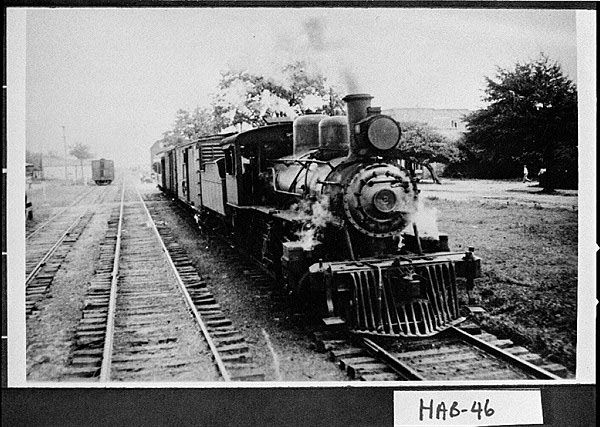
A train on the Tallulah Falls Railway travels through Cornelia, in Habersham County, in the 1930s. Completed in 1907, the railroad ran from Cornelia to Franklin, North Carolina, stopping at Tallulah Falls along the way.

Courtesy of Georgia Archives, Vanishing Georgia, #
hab046.

View on partner site

The New Georgia Encyclopedia does not hold the copyright for this media resource and can neither grant nor deny permission to republish or reproduce the image online or in print. Requests for permission to publish or reproduce the resource should be submitted to the Georgia Archives.

Helen Dortch Longstreet

Helen Dortch Longstreet

  • Info Details
  • Citation Terms of Use

Helen Dortch Longstreet, the second wife of General James Longstreet, is remembered for her unflagging work as a Confederate memorialist, progressive reformer, and a librarian and postmistress. She is also known for her unsuccessful efforts to prevent the damming of Tallulah Falls in northeast Georgia.

The New Georgia Encyclopedia does not hold the copyright for this media resource and can neither grant nor deny permission to republish or reproduce the image online or in print. All requests for permission to publish or reproduce the resource must be submitted to the rights holder.

Rufus L. Moss Sr.

Rufus L. Moss Sr.

  • Info Details
  • Citation Terms of Use

Rufus L. Moss Sr., pictured in 1853, was a prominent Athens businessman who played a vital role in the development around Tallullah Falls and Gorge. In addition to founding the first hotel in the area, the Cliff House, in 1882, Moss cofounded the town of Tallulah Falls and worked to bring the Northeastern Railroad into the region. In 1909 he sold his significant land holdings to the Georgia Power Company, paving the way for the electrification of Georgia.

Courtesy of Mary Bondurant Warren
The New Georgia Encyclopedia does not hold the copyright for this media resource and can neither grant nor deny permission to republish or reproduce the image online or in print. All requests for permission to publish or reproduce the resource must be submitted to the rights holder.

Cliff House Hotel

Cliff House Hotel

  • Info Details
  • Citation Terms of Use

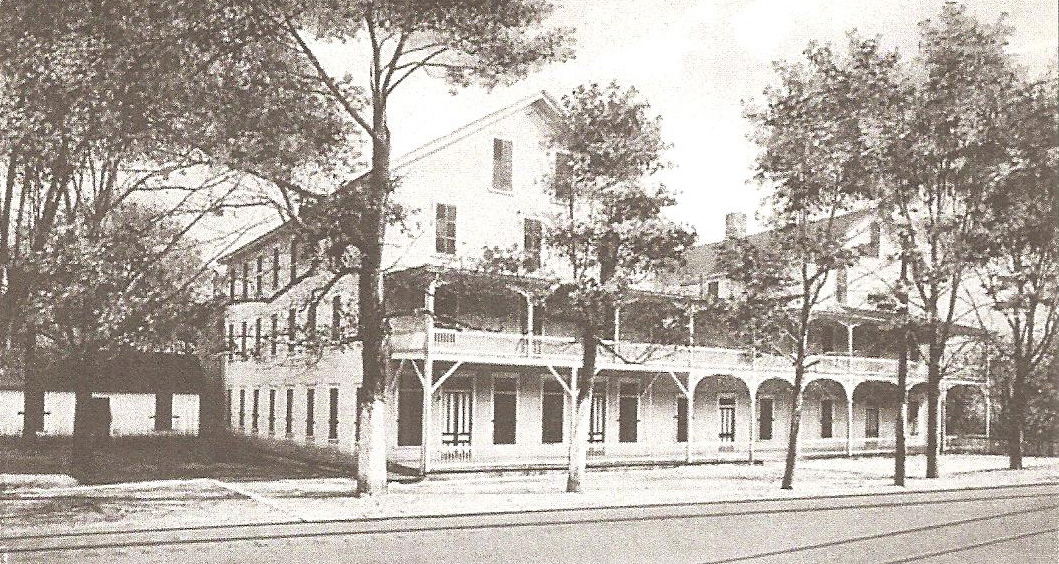
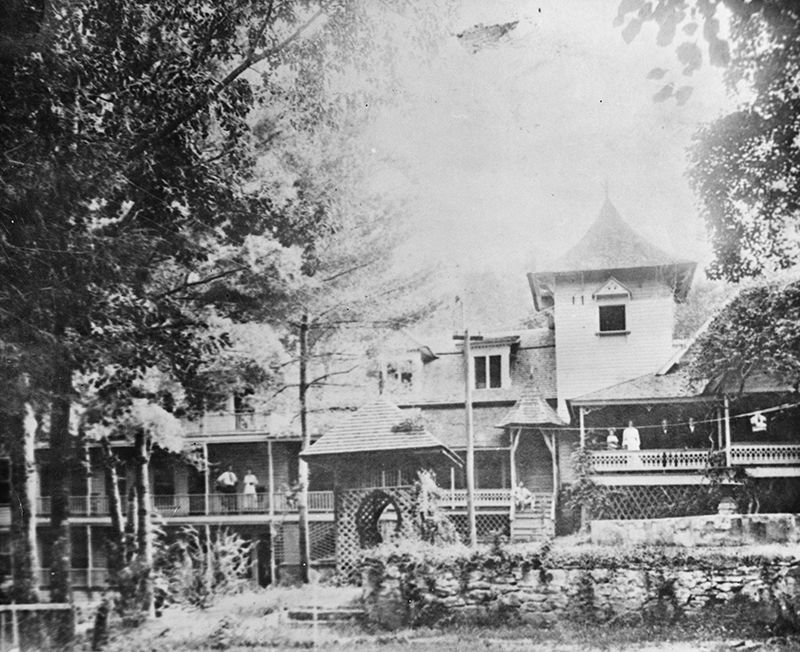
The Cliff House Hotel, built in 1882 by Rufus L. Moss Sr., was the first lodging establishment in Tallulah Falls. The hotel served the thriving tourist industry until 1937, when it burned in a kitchen fire.

Courtesy of Rabun County Historical Society
The New Georgia Encyclopedia does not hold the copyright for this media resource and can neither grant nor deny permission to republish or reproduce the image online or in print. All requests for permission to publish or reproduce the resource must be submitted to the rights holder.

Old Hotel, Tallulah Falls

Old Hotel, Tallulah Falls

  • Info Details
  • Citation Terms of Use

The "Old Hotel," as Tallulah Falls locals called it, pictured in the 1930s. Many people came from all over Georgia (and beyond), some via the Tallulah Falls Railroad, to bathe in and enjoy the springs in the surrounding area. The resort was built in the 1800s.

Courtesy of Georgia Archives, Vanishing Georgia, # rab033.

View on partner site

The New Georgia Encyclopedia does not hold the copyright for this media resource and can neither grant nor deny permission to republish or reproduce the image online or in print. Requests for permission to publish or reproduce the resource should be submitted to the Georgia Archives.

Tallulah Gorge

Tallulah Gorge

  • Info Details
  • Citation Terms of Use

Once a leading destination for tourists in the Southeast, Tallulah Gorge still attracts numerous visitors, particularly in the fall when the mountainsides are ablaze with color.

Photograph by Martin Bravenboer
The New Georgia Encyclopedia does not hold the copyright for this media resource and can neither grant nor deny permission to republish or reproduce the image online or in print. All requests for permission to publish or reproduce the resource must be submitted to the rights holder.

Great Egret

Great Egret

  • Info Details
  • Citation Terms of Use

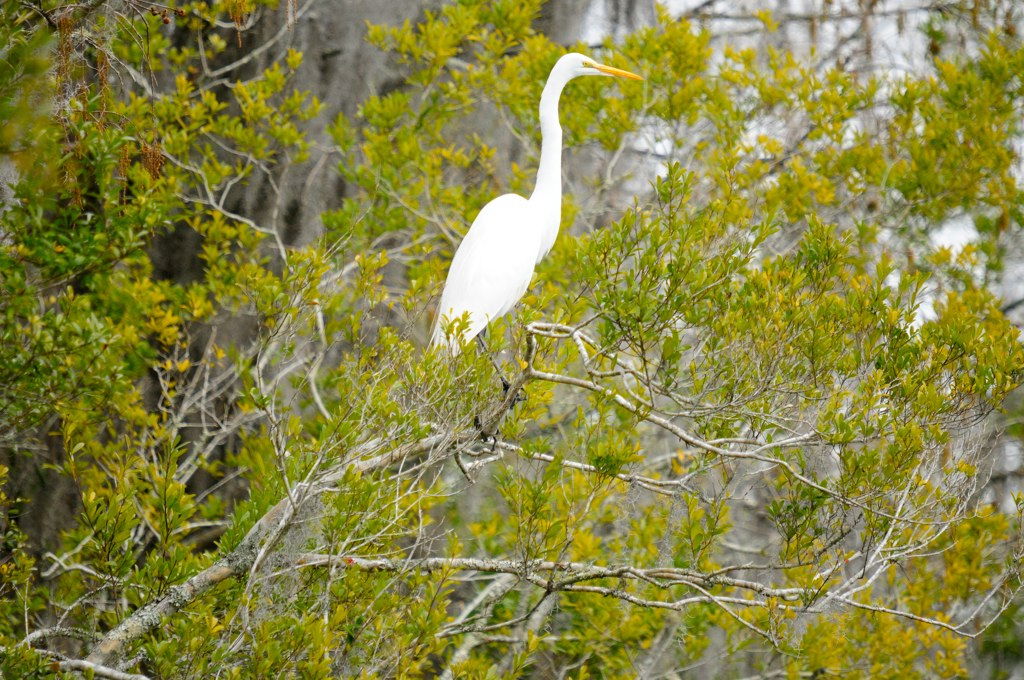
A great egret perches on a branch in the Okefenokee Swamp.

Photograph by Siddharth Sharma
The New Georgia Encyclopedia does not hold the copyright for this media resource and can neither grant nor deny permission to republish or reproduce the image online or in print. All requests for permission to publish or reproduce the resource must be submitted to the rights holder.

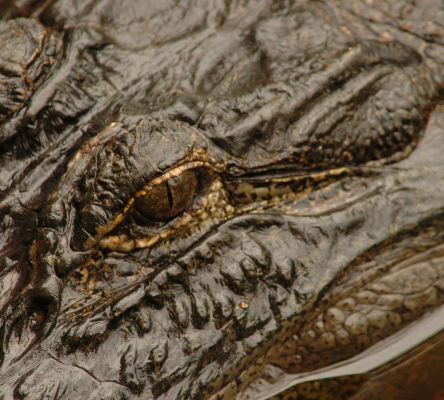
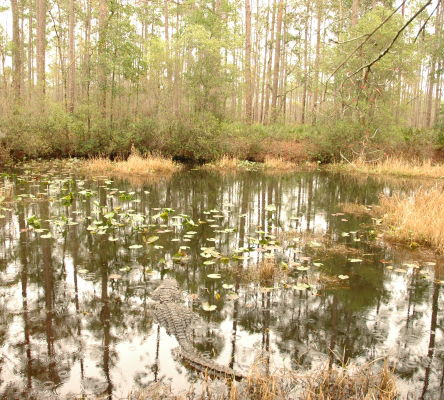
Okefenokee Swamp Alligator

Okefenokee Swamp Alligator

  • Info Details
  • Citation Terms of Use

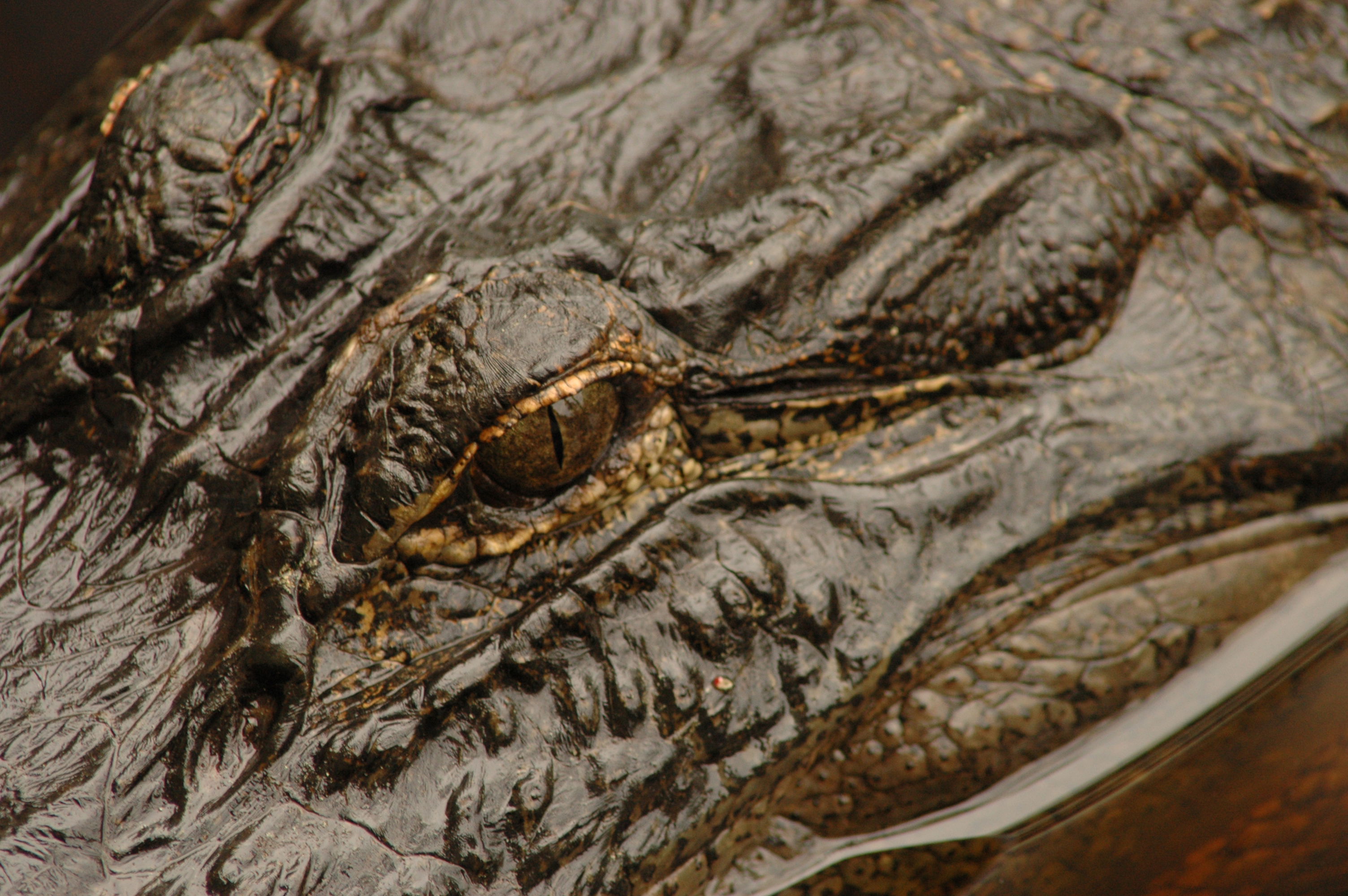
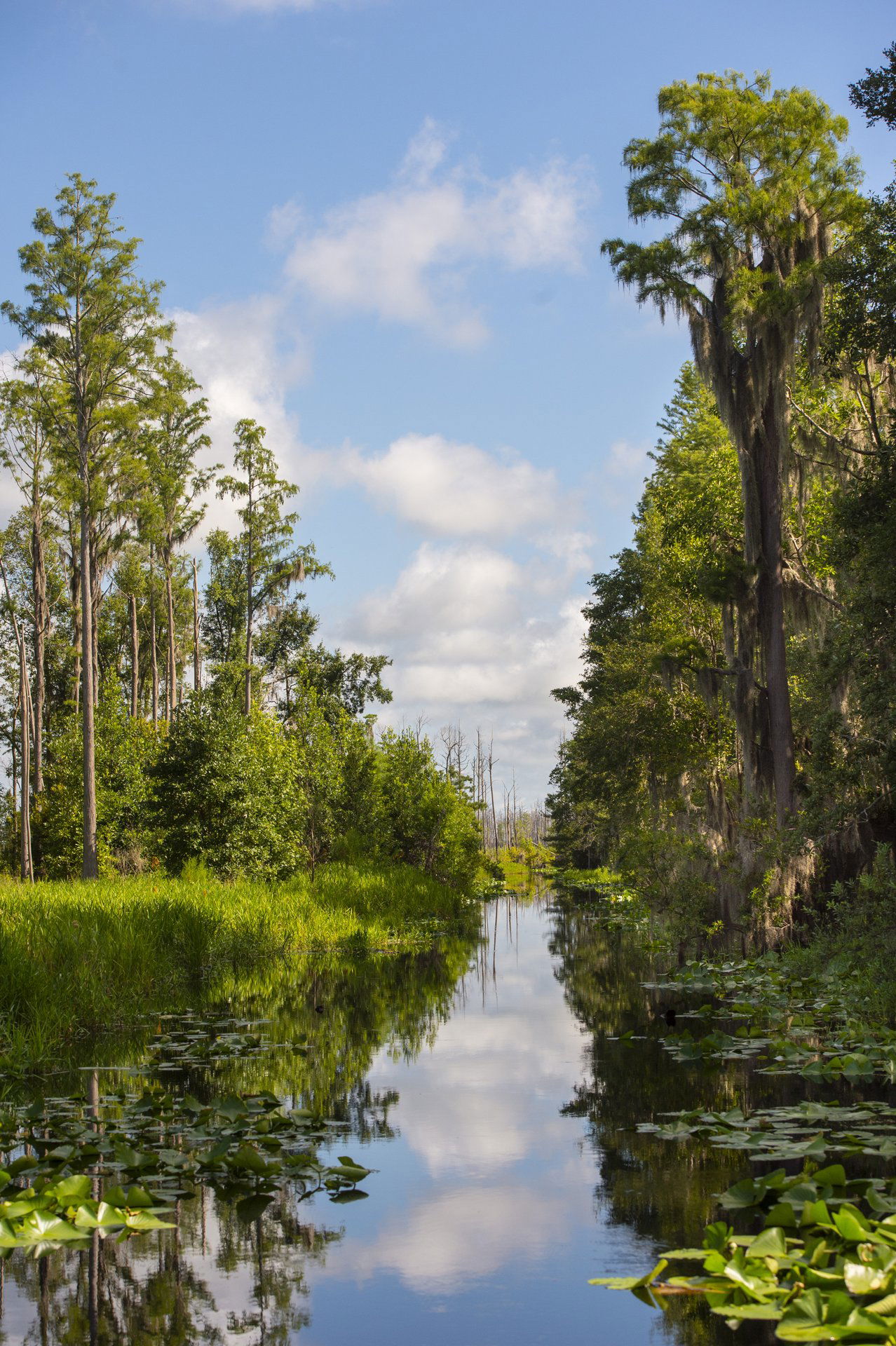
The American alligator (Alligator mississippiensis) is one of the most ecologically dominant species in the Okefenokee Swamp.

Courtesy of Georgia Department of Economic Development.
The New Georgia Encyclopedia does not hold the copyright for this media resource and can neither grant nor deny permission to republish or reproduce the image online or in print. Requests for permission to publish or reproduce the resource may need to be submitted to the Georgia Department of Economic Development.

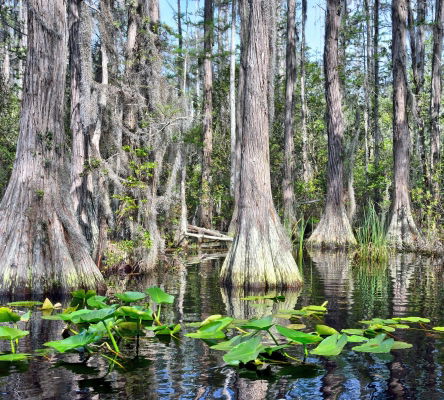
Okefenokee Swamp

Okefenokee Swamp

  • Info Details
  • Citation Terms of Use

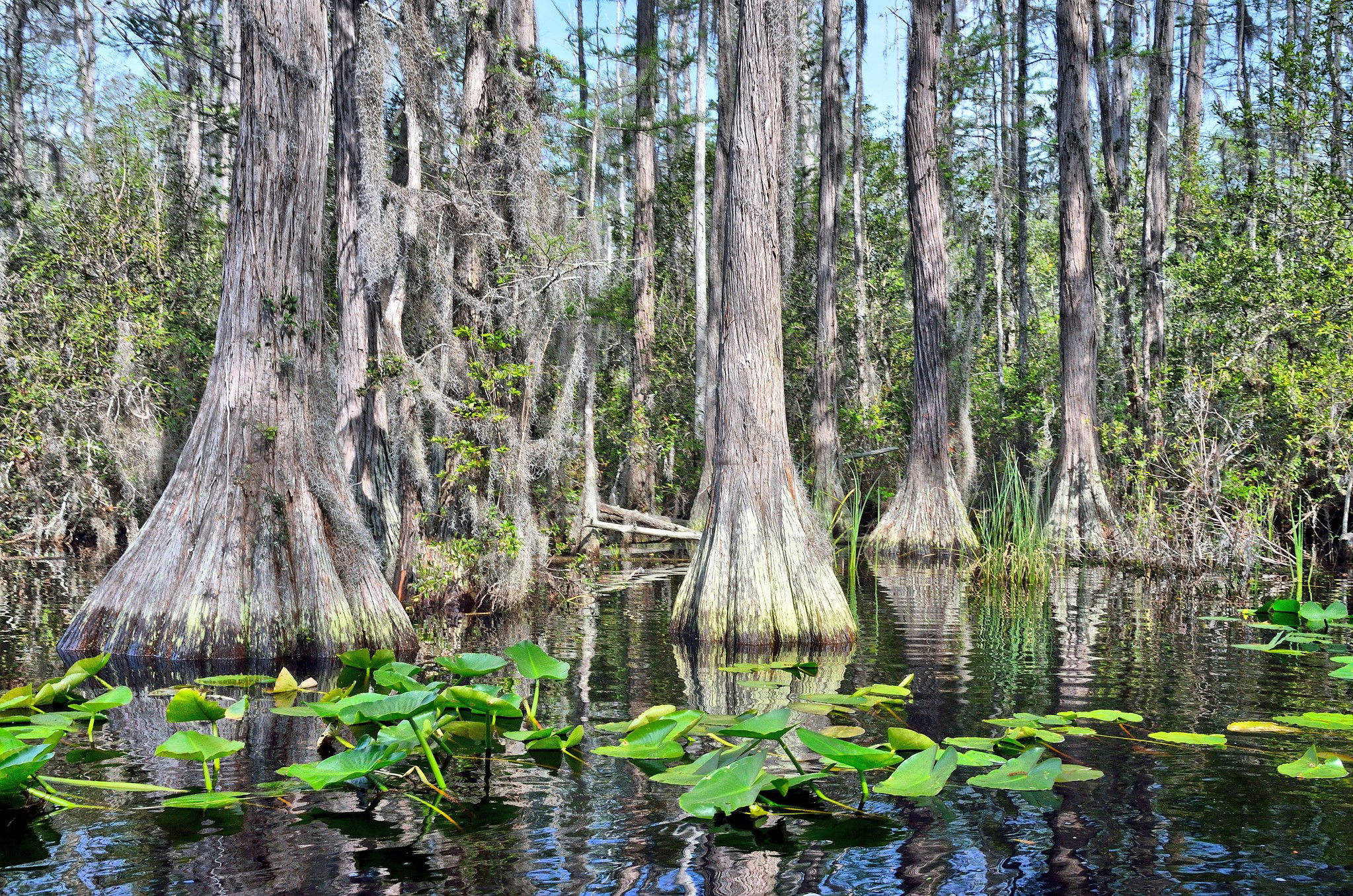
Cypress swamps, winding waterways, and floating peat mats are a major part of the Okefenokee's habitat mosaic.

Image from Timothy J
View on source site

The New Georgia Encyclopedia does not hold the copyright for this media resource and can neither grant nor deny permission to republish or reproduce the image online or in print. All requests for permission to publish or reproduce the resource must be submitted to the rights holder.

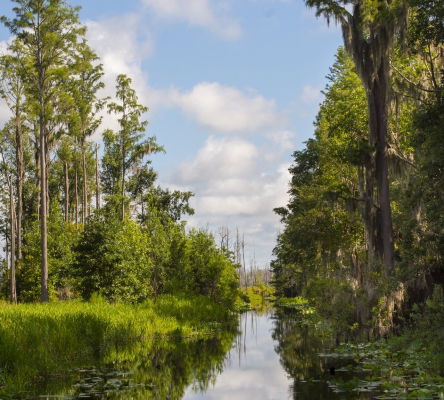
Okefenokee Swamp

Okefenokee Swamp

  • Info Details
  • Citation Terms of Use

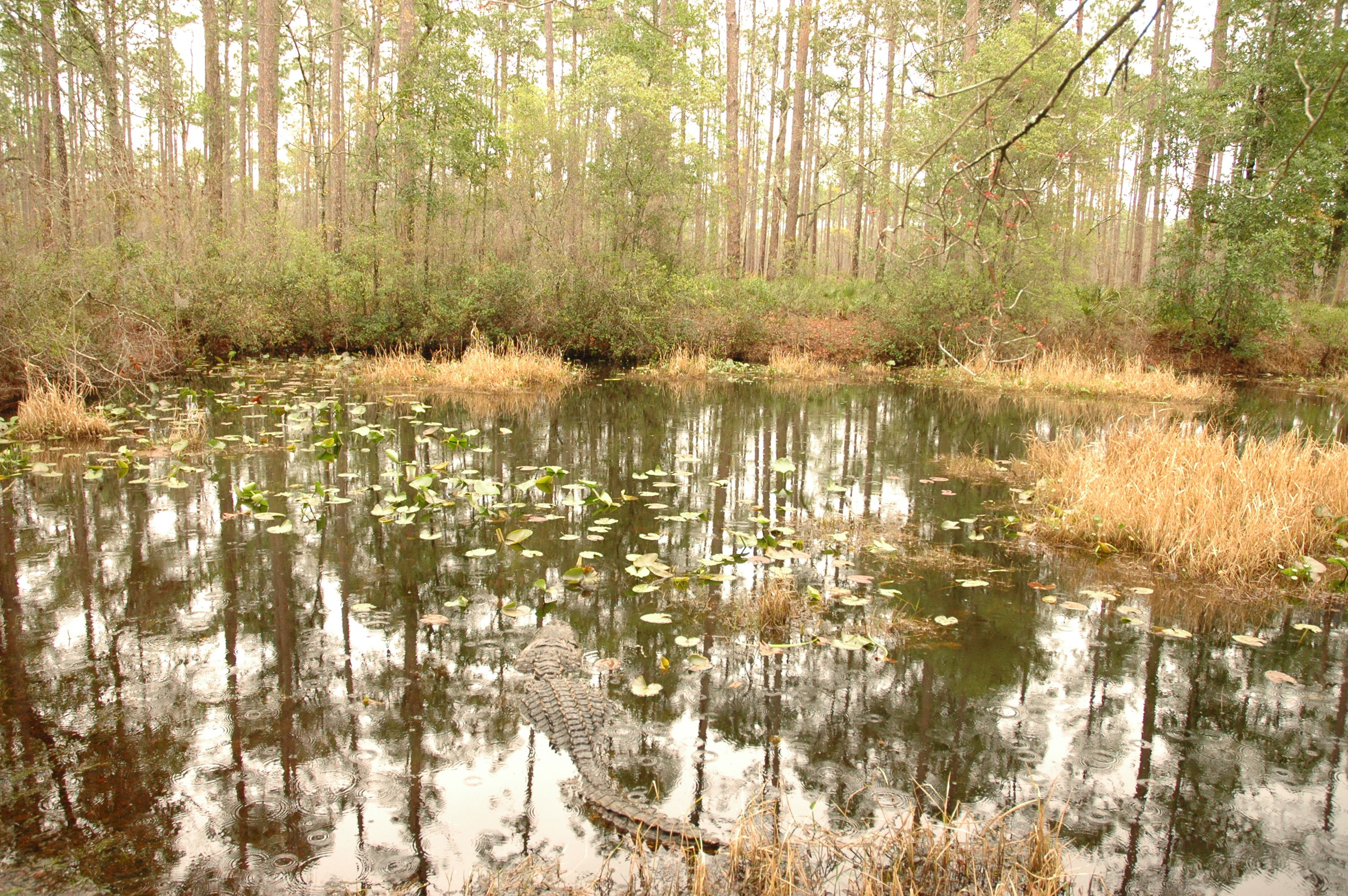
The Okefenokee Swamp's ecosystem is home to a diverse assemblage of animals and plants, none of which are unique to the swamp, but which together create an unusual biodiversity found in few places in the United States.

Courtesy of Explore Georgia, Photograph by Geoff L. Johnson.

The New Georgia Encyclopedia does not hold the copyright for this media resource and can neither grant nor deny permission to republish or reproduce the image online or in print. Requests for permission to publish or reproduce the resource may need to be submitted to Explore Georgia.

Great Egret

Great Egret

  • Info Details
  • Citation Terms of Use

Virtually all species of wading birds and waterfowl native to the Southeast can be found in the Okefenokee in some season. Sightings of great egrets, wood storks, blue herons, and white ibises are common.

Image from U.S. Fish and Wildlife Service Southeast Region

View on source site

The New Georgia Encyclopedia does not hold the copyright for this media resource and can neither grant nor deny permission to republish or reproduce the image online or in print. All requests for permission to publish or reproduce the resource must be submitted to the rights holder.

  • Info Details
  • Citation Terms of Use

The New Georgia Encyclopedia does not hold the copyright for this media resource and can neither grant nor deny permission to republish or reproduce the image online or in print. All requests for permission to publish or reproduce the resource must be submitted to the rights holder.

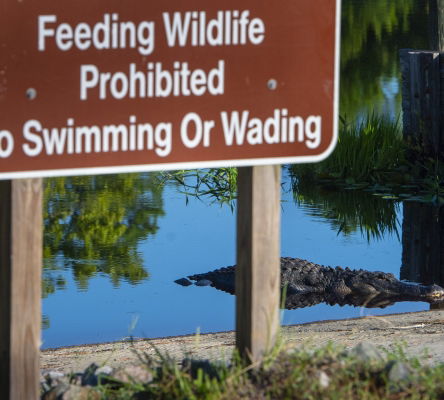
Alligator

Alligator

  • Info Details
  • Citation Terms of Use

Alligators are among the hundreds of animal species to make their home in the Okefenokee Swamp.

Courtesy of Explore Georgia, Photograph by Geoff L. Johnson.

The New Georgia Encyclopedia does not hold the copyright for this media resource and can neither grant nor deny permission to republish or reproduce the image online or in print. Requests for permission to publish or reproduce the resource may need to be submitted to Explore Georgia.

Green Tree Frog

Green Tree Frog

  • Info Details
  • Citation Terms of Use

The green tree frog can be found in wetlands of Georgia, including the Okefenokee Swamp. The chorus of these frogs during the spring and summer months can be almost deafening.

Image from Vicki DeLoach
View on source site

The New Georgia Encyclopedia does not hold the copyright for this media resource and can neither grant nor deny permission to republish or reproduce the image online or in print. All requests for permission to publish or reproduce the resource must be submitted to the rights holder.

Okefenokee Swamp

Okefenokee Swamp

  • Info Details
  • Citation Terms of Use

Alligators, which are native to Georgia, are among the hundreds of animal species to make their home in the Okefenokee Swamp.

Courtesy of Georgia Department of Economic Development.

The New Georgia Encyclopedia does not hold the copyright for this media resource and can neither grant nor deny permission to republish or reproduce the image online or in print. Requests for permission to publish or reproduce the resource may need to be submitted to the Georgia Department of Economic Development.

Amicalola Falls Cover page of the July 15, 1887 edition of the Kennesaw Gazette featuring a story on Amicalola Falls Entrance to the Appalachian Approach Trail at Amicalola Falls State Park Radium Springs Radium Springs, one of Georgia's Seven Natural Wonders, is depicted, showcasing its crystal clear water and surrounding pathways walkways. Longleaf Pine and Wiregrass
Okefenokee Swamp Franklin Tree Longleaf Pines Clinch County Sawmill Turpentine Still
Sapelo Island National Estuarine Research Reserve Doboy Sound Estuaries Eastern Oyster White Shrimp Tidal Creek, Sapelo Island Red Drum Glynn County Marsh Cordgrass and Needlerush Tidal Marsh Marsh Detritus Diamondback Terrapin
Sapelo Island Marsh Blair’s Saltpeter Corridor Gray Bat The Fantastic Vandalism in Kingston Saltpeter Cave
Granite Outcrop at Panola Mountain Stone Mountain Panola Granite Sandhills Gopher Tortoise Stone Mountain Downtown Stone Mountain Memorial Lawn at Stone Mountain Stone Mountain, 1929 Stone Mountain Carving Stone Mountain Yellow Daisies Providence Canyon Providence Canyon Providence Canyon Tallulah Gorge Tallulah Falls Tempesta Falls Tallulah Falls Tallulah Falls Railway Helen Dortch Longstreet Rufus L. Moss Sr. Cliff House Hotel Old Hotel, Tallulah Falls Tallulah Gorge Great Egret Okefenokee Swamp Alligator Okefenokee Swamp Okefenokee Swamp Great Egret
Alligator Green Tree Frog Okefenokee Swamp