
Georgia Southern University, a member institution of the University System of Georgia, is a public research university based in Statesboro, with additional campuses and instructional locations in Savannah, Hinesville, Swainsboro, and other communities. The university’s roots run deep in southeast Georgia, a region that has long sustained and shaped its development.
Junior College
The newspaper in Statesboro learned early in 1906 of the state’s plan to open a new industrial and agricultural school in the First Congressional District. Immediately the editor summarized local opinion: “We want that college.” Although several communities in southeastern Georgia submitted bids on December 1, 1906, the Statesboro–Bulloch County delegation made certain that its bid —the equivalent of $125,500—was the highest.
When the school opened in 1908, it was officially named the First District Agricultural and Mechanical School, but students called it the “Culture,” a shortened form of agriculture. The nickname took on a larger meaning for local citizens, who viewed the A&M School as a symbol of their own aspirations. Supporters organized fundraisers, provided scholarships, and strongly identified with the “Culture.”
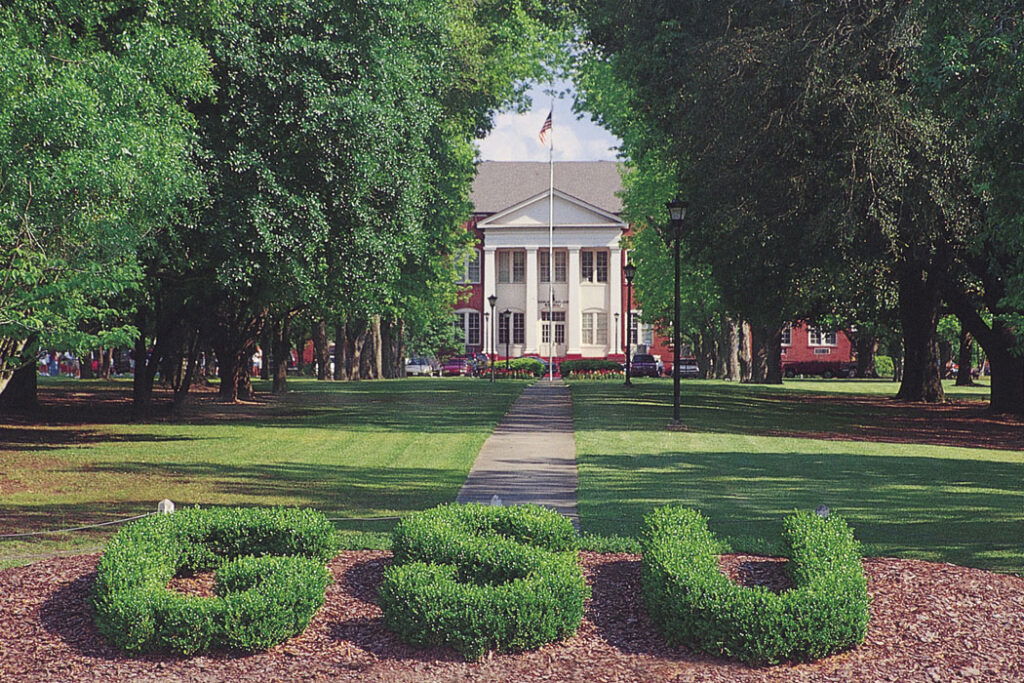
Over the years the community continued to value the school, located among towering longleaf pines on the hill south of Statesboro. Civic leaders and public officials lobbied for much of the twentieth century to advance the school’s academic service and institutional recognition. In 1924 the A&M School was renamed Georgia Normal School when it added a teacher-training program and achieved accreditation by the American Association of Teachers Colleges; still, it remained a junior college.
Four-Year College
The legislature recognized the academic transformation of the Normal School in 1929, renaming it South Georgia Teachers College, a four-year college. In 1939 a new name, Georgia Teachers College, marked President Marvin Pittman’s successful effort to transform the college into a statewide center for teacher education. Pittman emphasized academic excellence and often invited outstanding scholars and speakers from a variety of backgrounds to campus.
Pittman’s progressive outlook put him at odds with Georgia governor Eugene Talmadge. In 1941 the governor “purged” the university system. Two notable casualties were Pittman and a dean at the University of Georgia, Walter Cocking. The controversy became known as the “Cocking affair.” The consequences extended beyond Pittman and Cocking, as national academic agencies disaccredited the entire university system. Most faculty and local citizens firmly supported President Pittman and their college. Governor Ellis Arnall, elected in 1942, restored integrity to a new and independent Board of Regents, which quickly reappointed Pittman.
When Pittman retired in 1947, the college was in the early stages of a period of growth, fueled largely by returning veterans from World War II (1941-45). Enrollment increased in the 1950s, and in 1959 a new name, Georgia Southern College, reflected the importance of an expanded liberal arts curriculum.
Throughout the 1960s the faculty and administration proposed new degree programs, but major institutional change did not come until 1968, when the college received the authority to reorganize into separate schools of arts and science, education, and business. A new graduate school offered advanced degrees both on campus and in a number of locations in southeastern Georgia. In 1971 nearly 6,000 students were enrolled.
Georgia Southern University
Over the next two decades the student body doubled in size as the college expanded its curriculum and gained visibility through a highly successful intercollegiate football program. Momentum shifted in favor of another name change for Statesboro’s old “Culture,” and in 1990 Georgia Southern University became the first regional university in the University System of Georgia.
Since then, Georgia Southern has continued to expand in the twenty-first century through institutional consolidation. In 2018 Armstrong State University consolidated with Georgia Southern, adding the Armstrong Campus in Savannah and the Liberty Campus in Hinesville to Georgia Southern. In 2026 East Georgia State College consolidated with Georgia Southern, adding the East Georgia Campus.
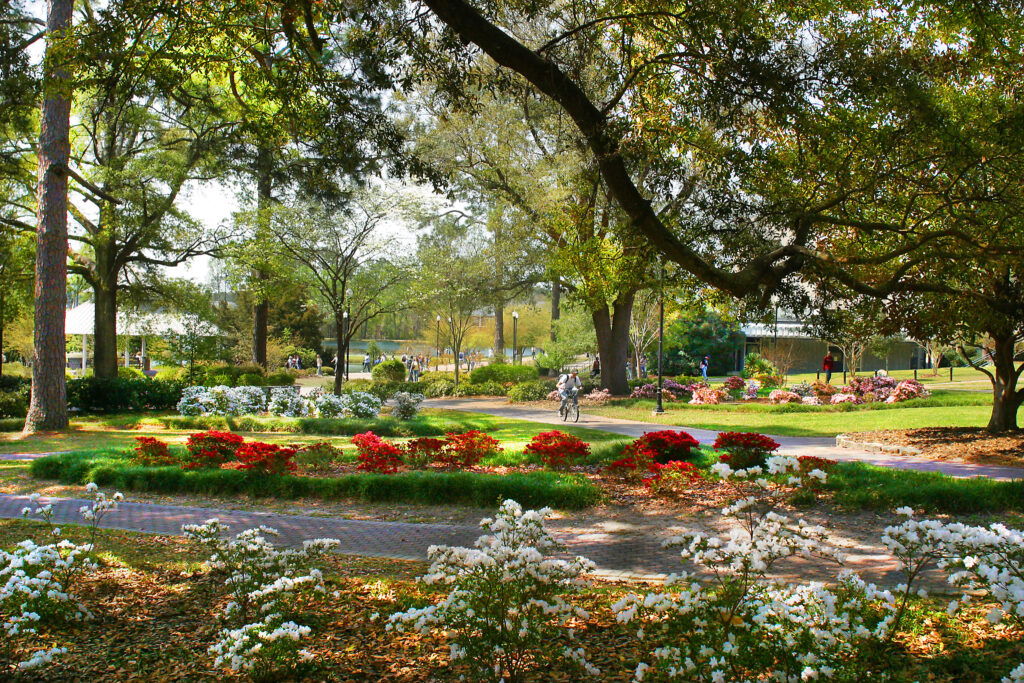
Georgia Southern’s Statesboro Campus remains central to the university’s history and identity. The campus includes landscaped grounds, pine forests, lakes, walkways, residence halls, dining facilities, student services, and recreational spaces. Across all its campuses, the university supports research, cultural programming, and public engagement through a range of educational and cultural resources.
By Fall 2025 Georgia Southern enrolled 29,633 students, the highest enrollment in the university’s history. The university continues to serve as a destination for students from across Georgia, while also enrolling students from other states and countries through its campuses and online programs. Student life includes a wide range of academic, service, social, cultural, and recreational opportunities, including student organizations, fraternities and sororities, and campus activities.
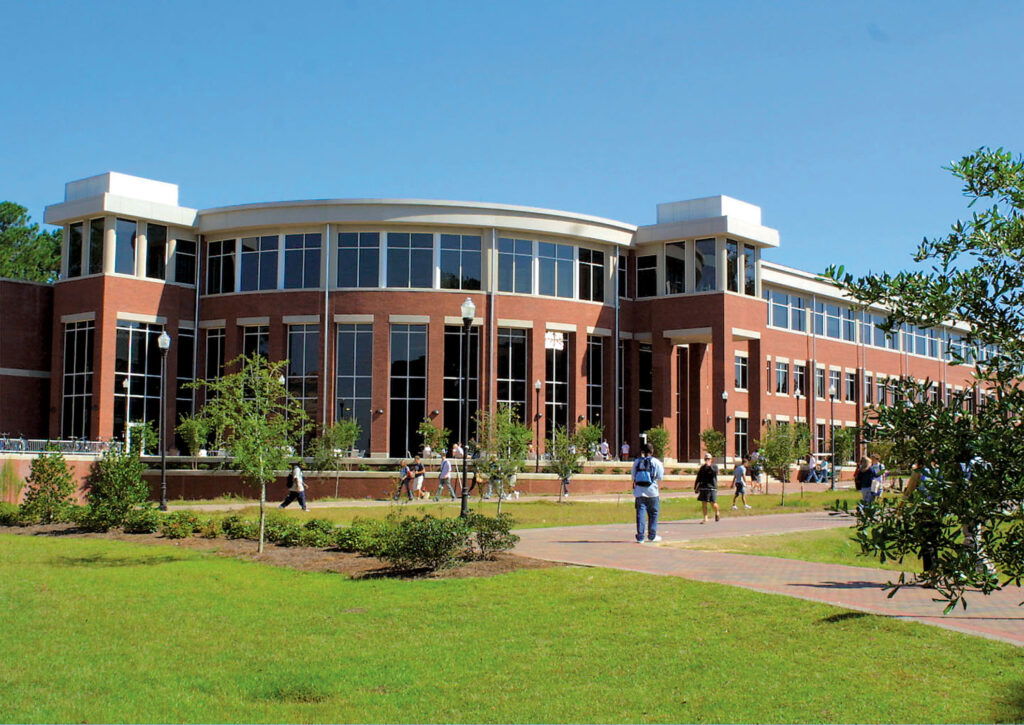
As Georgia Southern expanded, its academic organization grew beyond the seven-college structure that once defined the university. Its current academic programs are housed across colleges and schools that include arts and humanities, business, education, engineering and computing, graduate studies, health professions, public health, science and mathematics, and behavioral and social sciences. The university offers bachelor’s, master’s, specialist, doctoral, and professional programs across its campuses and online, and many programs hold specialized accreditation from national and professional agencies.
Intercollegiate athletics have remained an important part of Georgia Southern’s public identity. The Georgia Southern Eagles’ football tradition includes six NCAA Division I-AA/FCS national championships, won in 1985, 1986, 1989, 1990, 1999, and 2000. Georgia Southern sponsors seventeen NCAA Division I varsity athletic programs, most of which compete in the Sun Belt Conference. Athletics continue to shape campus life and school spirit, while the university also emphasizes academic achievement among its student-athletes.
Statesboro’s old “Culture” on the hill has evolved into a public research university with a broad regional and statewide presence, far surpassing dreams of early visionaries who struggled to obtain and sustain the First District A&M School. Georgia Southern University continues to benefit enormously from a loyal and supportive constituency of alumni, donors, local residents, and university supporters. That tradition of support has helped sustain scholarships, academic programs, athletics, cultural programs, and other university initiatives, carrying forward the spirit of community investment and engagement that shaped the institution that can be traced to its beginnings.
Georgia Southern University’s mission emphasizes a transformative learner-centered culture that prepares and empowers students, faculty, staff, and alumni to lead, serve, and engage. Through educational excellence, impactful research, cultural enrichment, and meaningful contributions to communities locally and globally, the university seeks to enhance quality of life. Georgia Southern continues the work begun by those who brought the First District A&M School into being in 1906.


