Skip to content
New Georgia Encyclopedia
  • Home
  • Articles & Media
  • Browse by Topic
  • Browse Collections
  • Browse Georgia Standards
  • A-Z Index
  • Exhibitions
  • Educators
  • Browse    Chevron down
  • Exhibitions
  • Educators
By Topic Content Collections Georgia Standards A-Z Index Arrow right
  • Arts & Culture

    Arts & Culture

  • Business & Economy

    Business & Economy

  • Counties, Cities & Neighborhoods

    Counties, Cities & Neighborhoods

  • Education

    Education

  • Geography & Environment

    Geography & Environment

  • Government & Politics

    Government & Politics

  • History & Archaeology

    History & Archaeology

  • People

    People

  • Science & Medicine

    Science & Medicine

  • Sports & Outdoor Recreation

    Sports & Outdoor Recreation

Stamp Collection
Featured

Stamp Collection

Stamps honoring the political figures, artists, and culture of Georgia.

Frankie Welch’s Americana
Featured

Frankie Welch’s Americana

Fashion and politics from Georgia-born designer Frankie Welch

Recently Added
View All Arrow right
City Page: Atlanta

City Page: Atlanta

Stamp Collection

Stamp Collection

Frankie Welch’s Americana

Frankie Welch’s Americana

  • Georgia Studies

    Georgia Studies

    Eighth Grade
  • Georgia, My State

    Georgia, My State

    Second Grade
All Topics Arrow right History & Archaeology Arrow right Archaeology & Early History Arrow right

Archaeological Periods

Sub-Topics
  • Paleoindian Period
  • Archaic Period
  • Woodland Period
  • Mississippian Period
Archaic Period

Archaic Period

Overview
Cane Island Site

Cane Island Site

Coastal Shell Rings

Coastal Shell Rings

Etowah Mounds

Etowah Mounds

Indian Pottery

Indian Pottery

Irene Mounds

Irene Mounds

King Site

King Site

Kolomoki Mounds

Kolomoki Mounds

Lamar Period

Lamar Period

Mississippian Period

Mississippian Period

Overview
Nacoochee Mound

Nacoochee Mound

Ocmulgee Mounds

Ocmulgee Mounds

Paleoindian Period

Paleoindian Period

Overview
Rock Mounds and Structures

Rock Mounds and Structures

Singer-Moye Mounds

Singer-Moye Mounds

Stallings Island Site

Stallings Island Site

Swift Creek Culture

Swift Creek Culture

Weeden Island Culture

Weeden Island Culture

Woodland Period

Woodland Period

Overview
Loading
Star

Featured Content

Harriet Powers

Harriet Powers

People
Civil Rights Movement

Civil Rights Movement

Mid- to Late 20th Century Topics
Trending

Trending

Georgia Guidestones

Georgia Guidestones

Sites & Museums
CNN

CNN

Television
James D. Bulloch

James D. Bulloch

People
Bobby Cox

Bobby Cox

People
Clock

Updated Recently

Morris Brown College

Morris Brown College

4 days ago
Burke County

Burke County

4 days ago
CNN

CNN

4 days ago
Ted Turner

Ted Turner

1 week ago

A More Perfect Union

The New Georgia Encyclopedia is supported by funding from A More Perfect Union, a special initiative of the National Endowment for the Humanities.

Learn More
New Georgia Encyclopedia
ISSN 2765-8732
Project Partners
logo-press UGA Press logo-galileo GALILEO logo-humanities Georgia Humanities logo-seal Office of the Governor logo-libraries UGA Libraries
Articles & Media
  • Browse by Topic
  • Content Collections
  • Georgia Standards
Special Content
  • Quizzes
  • Exhibitions
  • Spotify Playlists
  • Georgia Exhibits
  • Educator Resources
About
  • The Project
  • The People
  • Sponsors & Partners
Editorial
  • Our Process
  • Contributor Info
  • Permissions & Use
Stay in Touch
Facebook Instagram Twitter Contact Us
Donate to the NGE

Your support helps us commission new entries and update existing content.

Donate

© 2004–2026 Georgia Humanities, University of Georgia Press

  • Terms of Use
  • Privacy Policy

Media gallery

Singer-Moye Mounds

Singer-Moye Mounds

  • Info Details
  • Citation Terms of Use

The excavation of the Singer-Moye Mounds in Stewart County has revealed the buried foundations of Indian buildings that were destroyed and abandoned more than 600 years ago. Thousands of ceramics fragments and animal bones have also been recovered.

Photograph by Elisabeth Hughes, New Georgia Encyclopedia

The New Georgia Encyclopedia does not hold the copyright for this media resource and can neither grant nor deny permission to republish or reproduce the image online or in print. All requests for permission to publish or reproduce the resource must be submitted to the rights holder.

Lamar Period Pottery

Lamar Period Pottery

  • Info Details
  • Citation Terms of Use

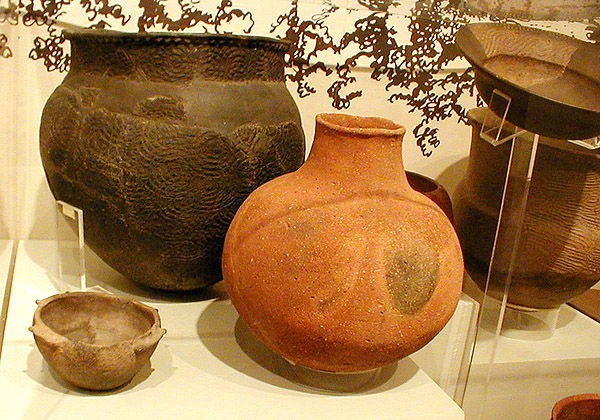
An example of Mississippian Lamar pottery, on display at the Ocmulgee Mounds Visitor Center in Macon.

Courtesy of Robert Foxworth
The New Georgia Encyclopedia does not hold the copyright for this media resource and can neither grant nor deny permission to republish or reproduce the image online or in print. All requests for permission to publish or reproduce the resource must be submitted to the rights holder.

Ocmulgee National Historical Park

Ocmulgee National Historical Park

  • Info Details
  • Citation Terms of Use

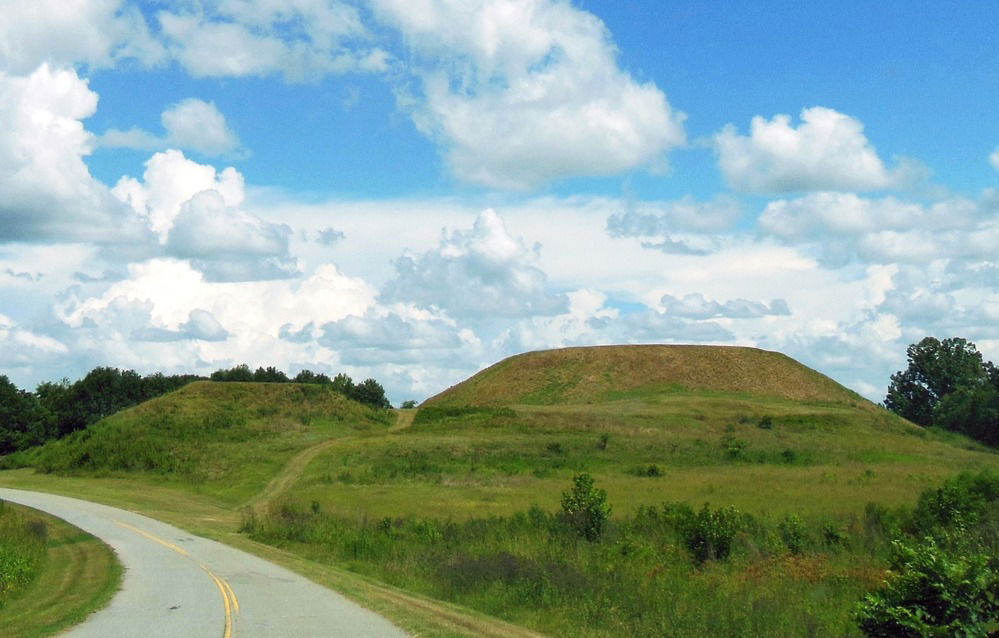
The earthen mounds at the Ocmulgee National Historical Park in Macon are the remains of a native culture that lived at the site between A.D. 800 and 1100, during the Early Mississippian period.

Photograph from National Park Service
The New Georgia Encyclopedia does not hold the copyright for this media resource and can neither grant nor deny permission to republish or reproduce the image online or in print. All requests for permission to publish or reproduce the resource must be submitted to the rights holder.

Irene Mounds

Irene Mounds

  • Info Details
  • Citation Terms of Use

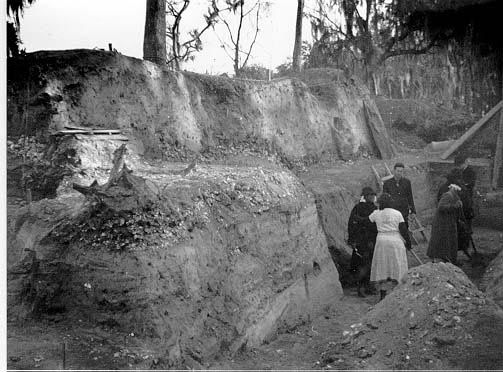
Excavation of the Irene mounds site, near Savannah, was led by several important archaeologists, especially Joseph R. Caldwell, who is pictured with an excavation team. Three different shell layers are visible in the earth behind the researchers.

Reprinted by permission of the Coastal Georgia Archaeological Society
The New Georgia Encyclopedia does not hold the copyright for this media resource and can neither grant nor deny permission to republish or reproduce the image online or in print. All requests for permission to publish or reproduce the resource must be submitted to the rights holder.

Irene Mounds

Irene Mounds

  • Info Details
  • Citation Terms of Use

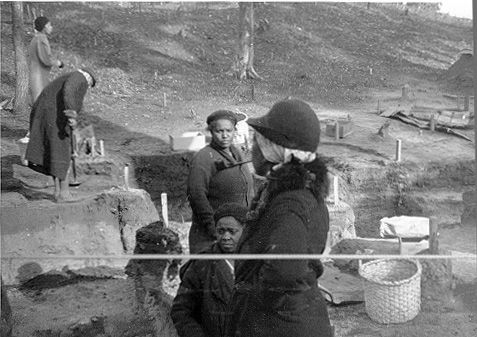
A group of African American women (pictured in December 1937) helped to excavate the Irene mounds site. The split oak basket, on the right, was made in Savannah especially for this project. The woman in the foreground is smoking a pipe.

Reprinted by permission of the Coastal Georgia Archaeological Society

The New Georgia Encyclopedia does not hold the copyright for this media resource and can neither grant nor deny permission to republish or reproduce the image online or in print. All requests for permission to publish or reproduce the resource must be submitted to the rights holder.

Sapelo Shell Ring

Sapelo Shell Ring

  • Info Details
  • Citation Terms of Use

A portion of the largest shell ring on Sapelo Island was excavated in 1950. The trench, cut into the ring by archaeologists, reveals white flecks of shell left behind by the hunter-gatherers who lived on the island during the Late Archaic Period, 5,000 to 3,000 years ago.

Courtesy of Victor D. Thompson

The New Georgia Encyclopedia does not hold the copyright for this media resource and can neither grant nor deny permission to republish or reproduce the image online or in print. All requests for permission to publish or reproduce the resource must be submitted to the rights holder.

  • Info Details
  • Citation Terms of Use

The New Georgia Encyclopedia does not hold the copyright for this media resource and can neither grant nor deny permission to republish or reproduce the image online or in print. All requests for permission to publish or reproduce the resource must be submitted to the rights holder.

Sapelo Shell Ring

Sapelo Shell Ring

  • Info Details
  • Citation Terms of Use

An archaeologist stands beside Shell Ring No. 1 on Sapelo Island. The shell rings, circular or semicircular in shape, are too large to be shown in their entirety by a single photograph.

Courtesy of Victor D. Thompson

The New Georgia Encyclopedia does not hold the copyright for this media resource and can neither grant nor deny permission to republish or reproduce the image online or in print. All requests for permission to publish or reproduce the resource must be submitted to the rights holder.

Rock Eagle

Rock Eagle

  • Info Details
  • Citation Terms of Use

Located north of Eatonton in Putnam County, Rock Eagle is an Indian-made rock structure dating back to the Middle Woodland period (300 B.C. to A.D. 600).

Photograph by Brian McInturff

The New Georgia Encyclopedia does not hold the copyright for this media resource and can neither grant nor deny permission to republish or reproduce the image online or in print. All requests for permission to publish or reproduce the resource must be submitted to the rights holder.

Ocmulgee Mounds National Historical Park

Ocmulgee Mounds National Historical Park

  • Info Details
  • Citation Terms of Use

The chiefdom of Ichisi was located between modern Macon and Perry on the Ocmulgee River. The capital town was probably located at the present-day Lamar archaeological site, a part of Ocmulgee Mounds National Historical Park.

Courtesy of Georgia Department of Economic Development.

The New Georgia Encyclopedia does not hold the copyright for this media resource and can neither grant nor deny permission to republish or reproduce the image online or in print. Requests for permission to publish or reproduce the resource may need to be submitted to the Georgia Department of Economic Development.

Riverside Etowah Indian Mound

Riverside Etowah Indian Mound

  • Info Details
  • Citation Terms of Use

The Etowah mounds were built during the Lamar Period. Modern-day steps allow tourists to climb to the summit of the Etowah mounds.

Photograph by Muora

The New Georgia Encyclopedia does not hold the copyright for this media resource and can neither grant nor deny permission to republish or reproduce the image online or in print. All requests for permission to publish or reproduce the resource must be submitted to the rights holder.

Nacoochee Mound

Nacoochee Mound

  • Info Details
  • Citation Terms of Use

Although the original Late Prehistoric earthen platform mound has been completely excavated, a reconstruction of the Nacoochee Mound can be seen today on private property in the Nacoochee Valley.

Photograph by Martin LaBar
The New Georgia Encyclopedia does not hold the copyright for this media resource and can neither grant nor deny permission to republish or reproduce the image online or in print. All requests for permission to publish or reproduce the resource must be submitted to the rights holder.

Lamar Period Pottery

Lamar Period Pottery

  • Info Details
  • Citation Terms of Use

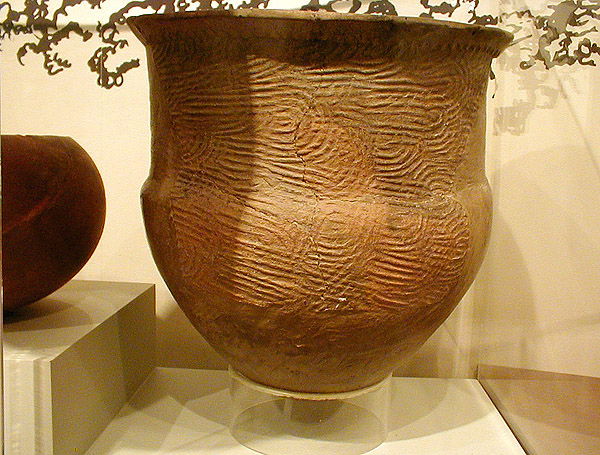
Mississippian Lamar pottery is distinctive because of its unique stamping and shape.

Courtesy of Robert Foxworth
The New Georgia Encyclopedia does not hold the copyright for this media resource and can neither grant nor deny permission to republish or reproduce the image online or in print. All requests for permission to publish or reproduce the resource must be submitted to the rights holder.

Lamar Period Pottery

Lamar Period Pottery

  • Info Details
  • Citation Terms of Use

An example of Mississippian Lamar pottery. Lamar pottery was made throughout Georgia and well into the adjacent states.

Courtesy of Robert Foxworth

The New Georgia Encyclopedia does not hold the copyright for this media resource and can neither grant nor deny permission to republish or reproduce the image online or in print. All requests for permission to publish or reproduce the resource must be submitted to the rights holder.

Weeden Island Period Pottery

Weeden Island Period Pottery

  • Info Details
  • Citation Terms of Use

Drawings depict derived effigies with zoned incising found at the Davis Point excavation site at the Kolomoki Mounds. Weeden Island burial mounds are well known for the inclusion of elaborate animal effigy pots in large deposits.

From Excavations at Kolomoki, by W. H. Sears

The New Georgia Encyclopedia does not hold the copyright for this media resource and can neither grant nor deny permission to republish or reproduce the image online or in print. All requests for permission to publish or reproduce the resource must be submitted to the rights holder.

  • Info Details
  • Citation Terms of Use

The New Georgia Encyclopedia does not hold the copyright for this media resource and can neither grant nor deny permission to republish or reproduce the image online or in print. All requests for permission to publish or reproduce the resource must be submitted to the rights holder.

Kolomoki Mounds

Kolomoki Mounds

  • Info Details
  • Citation Terms of Use

The Kolomoki Mounds site in Early County is one of the largest prehistoric mound complexes in Georgia and includes at least eight mounds.

Courtesy of Kolomoki Mounds State Historic Park

The New Georgia Encyclopedia does not hold the copyright for this media resource and can neither grant nor deny permission to republish or reproduce the image online or in print. All requests for permission to publish or reproduce the resource must be submitted to the rights holder.

  • Info Details
  • Citation Terms of Use

The New Georgia Encyclopedia does not hold the copyright for this media resource and can neither grant nor deny permission to republish or reproduce the image online or in print. All requests for permission to publish or reproduce the resource must be submitted to the rights holder.

  • Info Details
  • Citation Terms of Use

The New Georgia Encyclopedia does not hold the copyright for this media resource and can neither grant nor deny permission to republish or reproduce the image online or in print. All requests for permission to publish or reproduce the resource must be submitted to the rights holder.

Suwannee Points

Suwannee Points

  • Info Details
  • Citation Terms of Use

The Middle Paleoindian subperiod features smaller unfluted lanceolate projectile points such as the Suwannee types, among others.

Courtesy of the University of Georgia Laboratory of Archaeology

The New Georgia Encyclopedia does not hold the copyright for this media resource and can neither grant nor deny permission to republish or reproduce the image online or in print. All requests for permission to publish or reproduce the resource must be submitted to the rights holder.

Fluted Cumberland Point

Fluted Cumberland Point

  • Info Details
  • Citation Terms of Use

The Middle Paleoindian subperiod features fluted or unfluted points with broad blades and constricted handle elements, which may include the Cumberland type. Fluted points (pictured) have a channel or flute running from the base of the point.

Courtesy of the University of Georgia Laboratory of Archaeology

The New Georgia Encyclopedia does not hold the copyright for this media resource and can neither grant nor deny permission to republish or reproduce the image online or in print. All requests for permission to publish or reproduce the resource must be submitted to the rights holder.

Fluted Dalton Points

Fluted Dalton Points

  • Info Details
  • Citation Terms of Use

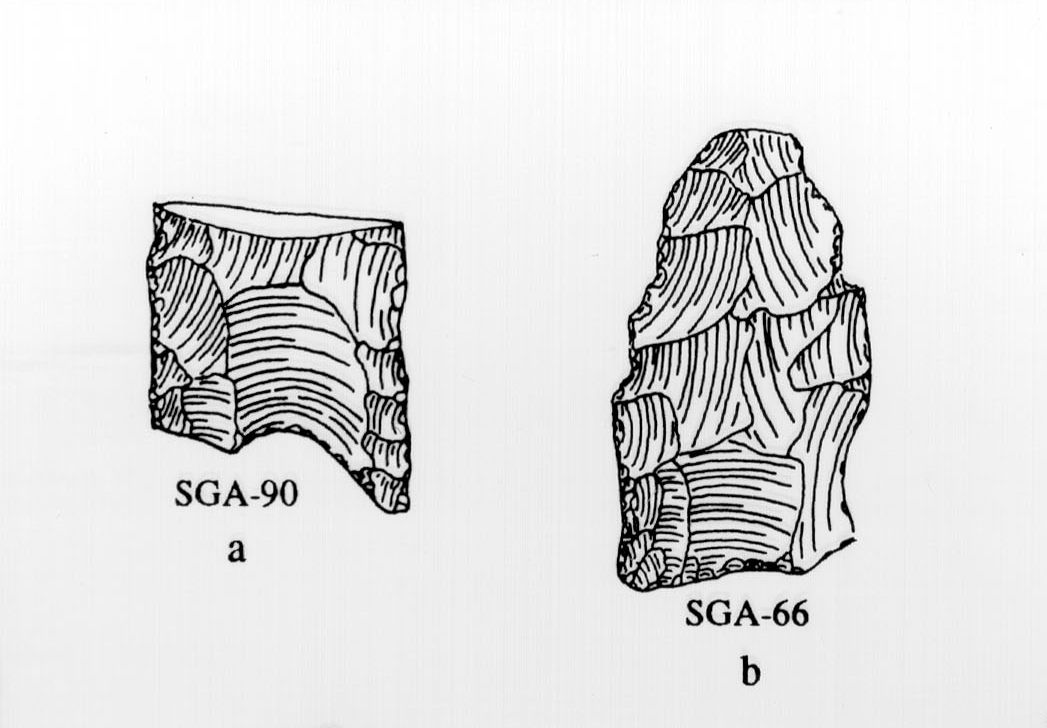
From the Late Paleoindian subperiod come Dalton and related point types, which are characterized by a lanceolate (lance-shaped) blade outline and a concave base ground on the lateral and basal margins, occasionally well thinned. Blade edges are frequently serrated and beveled.

Courtesy of the University of Georgia Laboratory of Archaeology
The New Georgia Encyclopedia does not hold the copyright for this media resource and can neither grant nor deny permission to republish or reproduce the image online or in print. All requests for permission to publish or reproduce the resource must be submitted to the rights holder.

Clovis Points

Clovis Points

  • Info Details
  • Citation Terms of Use

The Early Paleoindian subperiod is characterized by Clovis and related projectile point forms, relatively large lanceolate (lance-shaped) points with nearly parallel sides, slightly concave bases, and single or multiple basal flutes (channels) that rarely extend more than a third of the way up the body.

Courtesy of the University of Georgia Laboratory of Archaeology

The New Georgia Encyclopedia does not hold the copyright for this media resource and can neither grant nor deny permission to republish or reproduce the image online or in print. All requests for permission to publish or reproduce the resource must be submitted to the rights holder.

Macon Plateau Fluted Point

Macon Plateau Fluted Point

  • Info Details
  • Citation Terms of Use

Only one fluted point was found at Macon Plateau, in spite of a massive excavation effort. The fluted point, missing the forward one-third of its length, was of the Clovis type of these artifacts.

Courtesy of the University of Georgia Laboratory of Archaeology
The New Georgia Encyclopedia does not hold the copyright for this media resource and can neither grant nor deny permission to republish or reproduce the image online or in print. All requests for permission to publish or reproduce the resource must be submitted to the rights holder.

Etowah Complicated Stamped Pottery

Etowah Complicated Stamped Pottery

  • Info Details
  • Citation Terms of Use

This type of pottery originated in northwestern Georgia and is found in small quantities throughout the state. It is from the Middle Mississippian subperiod.

Courtesy of Mark Williams

The New Georgia Encyclopedia does not hold the copyright for this media resource and can neither grant nor deny permission to republish or reproduce the image online or in print. All requests for permission to publish or reproduce the resource must be submitted to the rights holder.

Stallings Island Site Pottery

Stallings Island Site Pottery

  • Info Details
  • Citation Terms of Use

Stallings Island, located in the Savannah River eight miles upstream from Augusta, is best known for its very early pottery, a technological development that predated the advent of farming in Georgia by several millennia. Pictured are sherds of the punctated fiber-tempered pottery, ca. 3,800-3,500 years ago. The sherd on top is actually 11 centimeters wide.

Courtesy of Kenneth E. Sassaman

The New Georgia Encyclopedia does not hold the copyright for this media resource and can neither grant nor deny permission to republish or reproduce the image online or in print. All requests for permission to publish or reproduce the resource must be submitted to the rights holder.

  • Info Details
  • Citation Terms of Use

The New Georgia Encyclopedia does not hold the copyright for this media resource and can neither grant nor deny permission to republish or reproduce the image online or in print. All requests for permission to publish or reproduce the resource must be submitted to the rights holder.

  • Info Details
  • Citation Terms of Use

The New Georgia Encyclopedia does not hold the copyright for this media resource and can neither grant nor deny permission to republish or reproduce the image online or in print. All requests for permission to publish or reproduce the resource must be submitted to the rights holder.

King Site Map

King Site Map

  • Info Details
  • Citation Terms of Use

The King site in Floyd County covers a little more than five acres and is bounded by a defensive ditch and palisade. It was first occupied at some time during the first half of the sixteenth century.

Courtesy of David Hally

The New Georgia Encyclopedia does not hold the copyright for this media resource and can neither grant nor deny permission to republish or reproduce the image online or in print. All requests for permission to publish or reproduce the resource must be submitted to the rights holder.

Mississippian Earthlodge

Mississippian Earthlodge

  • Info Details
  • Citation Terms of Use

Photograph of ceremonial earthlodge which has been reconstructed and is today part of the Ocmulgee National Monument in Macon, Georgia.

Image from Ken Lund
View on source site

The New Georgia Encyclopedia does not hold the copyright for this media resource and can neither grant nor deny permission to republish or reproduce the image online or in print. All requests for permission to publish or reproduce the resource must be submitted to the rights holder.

Etowah Indian Figures

Etowah Indian Figures

  • Info Details
  • Citation Terms of Use

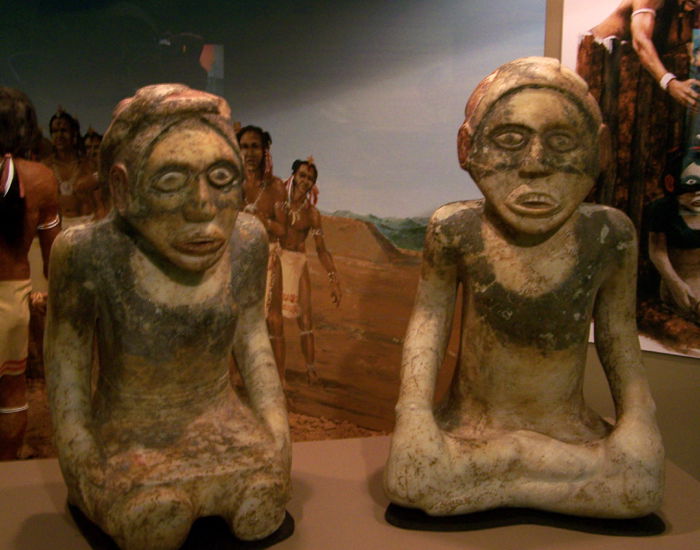
Archaeological excavation, carried out intermittently at the Etowah mound site for more than 100 years, has unearthed artifacts such as these figures, which have provided much information about life in the Mississippian Period.

Photograph from Wikimedia

The New Georgia Encyclopedia does not hold the copyright for this media resource and can neither grant nor deny permission to republish or reproduce the image online or in print. All requests for permission to publish or reproduce the resource must be submitted to the rights holder.

Hernando de Soto

Hernando de Soto

  • Info Details
  • Citation Terms of Use

Hernando de Soto was a Spanish-born explorer and conqueror who landed in present-day Tampa Bay, Florida, in 1539 and came to the Georgia area in 1540. Chroniclers of the expedition described the Coosa River valley in glowing terms.

Courtesy of Georgia Info, Digital Library of Georgia.

The New Georgia Encyclopedia does not hold the copyright for this media resource and can neither grant nor deny permission to republish or reproduce the image online or in print. Requests for permission to publish or reproduce the resource may need to be submitted to the Digital Library of Georgia.

Swift Creek Culture

Swift Creek Culture

  • Info Details
  • Citation Terms of Use

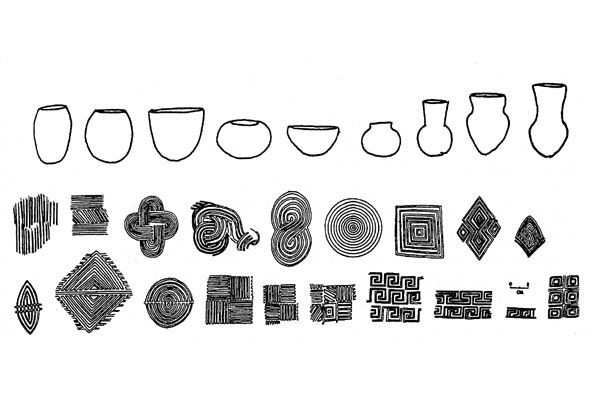
Swift Creek pottery is noted for its distinctive decoration. Complex curvilinear patterns were first carved into a wooden paddle, which was used to stamp the design into the soft clay walls of the pottery before it was fired.

Courtesy of Kennesaw State University

The New Georgia Encyclopedia does not hold the copyright for this media resource and can neither grant nor deny permission to republish or reproduce the image online or in print. All requests for permission to publish or reproduce the resource must be submitted to the rights holder.

  • Info Details
  • Citation Terms of Use

The New Georgia Encyclopedia does not hold the copyright for this media resource and can neither grant nor deny permission to republish or reproduce the image online or in print. All requests for permission to publish or reproduce the resource must be submitted to the rights holder.

Cane Island Site

Cane Island Site

  • Info Details
  • Citation Terms of Use

In 1978 and 1979 the University of Georgia's Department of Anthropology excavated portions of the Cane Island archaeological site before it was flooded. It now lies beneath Lake Oconee in Greene County, Georgia.

Courtesy of W. Dean Wood

The New Georgia Encyclopedia does not hold the copyright for this media resource and can neither grant nor deny permission to republish or reproduce the image online or in print. All requests for permission to publish or reproduce the resource must be submitted to the rights holder.

Oconee River

Oconee River

  • Info Details
  • Citation Terms of Use

Cane Island, the site of one of the earliest Native American farming villages in Georgia, was located in present-day Greene County along a shallow portion of the Oconee River known as Long Shoals. Wild plants and animals around the river likely supplied most of the food for the Cane Island residents.

Courtesy of W. Dean Wood

The New Georgia Encyclopedia does not hold the copyright for this media resource and can neither grant nor deny permission to republish or reproduce the image online or in print. All requests for permission to publish or reproduce the resource must be submitted to the rights holder.

Sara’s Ridge

Sara’s Ridge

  • Info Details
  • Citation Terms of Use

An illustration of what Sara's Ridge probably looked like during the Middle Archaic Period. The woman in the foreground is cooking with soapstone slabs, while hunters carry a deer toward racks where fish are hung over a fire.

From Beneath These Waters, by S. Kane and R. Keeton

The New Georgia Encyclopedia does not hold the copyright for this media resource and can neither grant nor deny permission to republish or reproduce the image online or in print. All requests for permission to publish or reproduce the resource must be submitted to the rights holder.

Upper Savannah River

Upper Savannah River

  • Info Details
  • Citation Terms of Use

Archaeologists excavated a prehistoric Indian village in Rucker's Bottom near the Savannah River about 500 years after the civilization's height.

Courtesy of Hargrett Rare Book and Manuscript Library, University of Georgia Libraries.

The New Georgia Encyclopedia does not hold the copyright for this media resource and can neither grant nor deny permission to republish or reproduce the image online or in print. Requests for permission to publish or reproduce the resource should be submitted to the Hargrett Manuscript and Rare Book Library at the University of Georgia.

Etowah Indian Mounds

Etowah Indian Mounds

  • Info Details
  • Citation Terms of Use

A path leading to two of the mounds at the Etowah Indian Mounds Historic Site. Located in Bartow County, the site is home to the second-largest Indian mound in North America, rises to a height of slightly more than 60 feet.

Photograph from Sharon Meier

The New Georgia Encyclopedia does not hold the copyright for this media resource and can neither grant nor deny permission to republish or reproduce the image online or in print. All requests for permission to publish or reproduce the resource must be submitted to the rights holder.

Etowah Indian Figures

Etowah Indian Figures

  • Info Details
  • Citation Terms of Use

Archaeological excavation, carried out intermittently at the site for more than a hundred years, has unearthed artifacts such as these stone figures, which have provided much information life in the Mississippian Period.

Courtesy of Georgia Department of Economic Development.

The New Georgia Encyclopedia does not hold the copyright for this media resource and can neither grant nor deny permission to republish or reproduce the image online or in print. Requests for permission to publish or reproduce the resource may need to be submitted to the Georgia Department of Economic Development.

Etowah River

Etowah River

  • Info Details
  • Citation Terms of Use

The Etowah River, with headwaters near Dahlonega, flows west-southwest for 140 miles to Rome, where it forms the Coosa River when it joins the Oostanaula River.

Image from Kevin Trotman

View on source site

The New Georgia Encyclopedia does not hold the copyright for this media resource and can neither grant nor deny permission to republish or reproduce the image online or in print. All requests for permission to publish or reproduce the resource must be submitted to the rights holder.

Etowah Indian Mounds

Etowah Indian Mounds

  • Info Details
  • Citation Terms of Use

Modern-day steps lead to the summit of one of the Indian mounds at the Etowah site.

Courtesy of Georgia Department of Natural Resources, Georgia State Parks.

The New Georgia Encyclopedia does not hold the copyright for this media resource and can neither grant nor deny permission to republish or reproduce the image online or in print. Requests for permission to publish or reproduce the resource may need to be submitted to the Georgia Department of Natural Resources.

Kolomoki Mounds

Kolomoki Mounds

  • Info Details
  • Citation Terms of Use

Archaeologists now recognize that the main occupation of the Kolomoki Mounds site dates to the Woodland Period (1000 B.C.-A.D. 900).
Courtesy of Historic Preservation Division, Georgia Department of Community Affairs.

The New Georgia Encyclopedia does not hold the copyright for this media resource and can neither grant nor deny permission to republish or reproduce the image online or in print. Requests for permission to publish or reproduce the resource may need to be submitted to the Georgia Department of Community Affairs, Historic Preservation Division.

Kolomoki Mounds Artifact

Kolomoki Mounds Artifact

  • Info Details
  • Citation Terms of Use

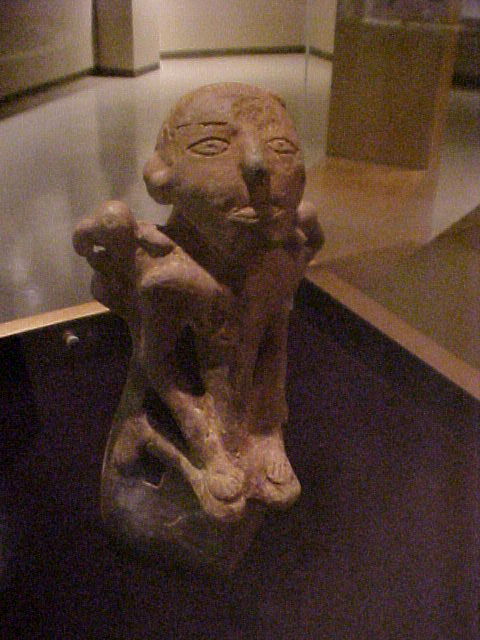
Ceramic artifacts were found during excavations of the Kolomoki Mounds in Early County.

Photograph by Bubba73, Wikimedia Commons

The New Georgia Encyclopedia does not hold the copyright for this media resource and can neither grant nor deny permission to republish or reproduce the image online or in print. All requests for permission to publish or reproduce the resource must be submitted to the rights holder.

Singer-Moye Mounds Lamar Period Pottery Ocmulgee National Historical Park Irene Mounds Irene Mounds Sapelo Shell Ring
Sapelo Shell Ring Rock Eagle Ocmulgee Mounds National Historical Park Riverside Etowah Indian Mound Nacoochee Mound Lamar Period Pottery Lamar Period Pottery Weeden Island Period Pottery
Kolomoki Mounds
Suwannee Points Fluted Cumberland Point Fluted Dalton Points Clovis Points Macon Plateau Fluted Point Etowah Complicated Stamped Pottery Stallings Island Site Pottery
King Site Map Mississippian Earthlodge Etowah Indian Figures Hernando de Soto Swift Creek Culture
Cane Island Site Oconee River Sara’s Ridge Upper Savannah River Etowah Indian Mounds Etowah Indian Figures Etowah River Etowah Indian Mounds Kolomoki Mounds Kolomoki Mounds Artifact