Skip to content
New Georgia Encyclopedia
  • Home
  • Articles & Media
  • Browse by Topic
  • Browse Collections
  • Browse Georgia Standards
  • A-Z Index
  • Exhibitions
  • Educators
  • Browse    Chevron down
  • Exhibitions
  • Educators
By Topic Content Collections Georgia Standards A-Z Index Arrow right
  • Arts & Culture

    Arts & Culture

  • Business & Economy

    Business & Economy

  • Counties, Cities & Neighborhoods

    Counties, Cities & Neighborhoods

  • Education

    Education

  • Geography & Environment

    Geography & Environment

  • Government & Politics

    Government & Politics

  • History & Archaeology

    History & Archaeology

  • People

    People

  • Science & Medicine

    Science & Medicine

  • Sports & Outdoor Recreation

    Sports & Outdoor Recreation

Frankie Welch’s Americana
Featured

Frankie Welch’s Americana

Fashion and politics from Georgia-born designer Frankie Welch

Stamp Collection
Featured

Stamp Collection

Stamps honoring the political figures, artists, and culture of Georgia.

Recently Added
View All Arrow right
City Page: Atlanta

City Page: Atlanta

Stamp Collection

Stamp Collection

Frankie Welch’s Americana

Frankie Welch’s Americana

  • Georgia Studies

    Georgia Studies

    Eighth Grade
  • Georgia, My State

    Georgia, My State

    Second Grade
All Topics Arrow right History & Archaeology Arrow right Late Nineteenth Century, 1877-1900 Arrow right

Late 19th-Century Topics

African American Archaeology

African American Archaeology

Atlanta Compromise Speech

Atlanta Compromise Speech

Bibb Manufacturing Company

Bibb Manufacturing Company

Chattahoochee Brick Company

Chattahoochee Brick Company

Lynching

Lynching

Naval Stores Industry

Naval Stores Industry

Prohibition in Georgia

Prohibition in Georgia

Temperance Movement

Temperance Movement

Woolfolk Murder Case

Woolfolk Murder Case

Loading
Star

Featured Content

James Oglethorpe

James Oglethorpe

Colonial Figures
Harriet Powers

Harriet Powers

People
Trending

Trending

Georgia Guidestones

Georgia Guidestones

Sites & Museums
Lynching

Lynching

Late 19th-Century Topics
Slavery in Colonial Georgia

Slavery in Colonial Georgia

Colonial Topics
Redemption

Redemption

Civil War & Reconstruction Topics
Clock

Updated Recently

Morris Brown College

Morris Brown College

1 week ago
Burke County

Burke County

1 week ago
CNN

CNN

1 week ago
Ted Turner

Ted Turner

2 weeks ago

A More Perfect Union

The New Georgia Encyclopedia is supported by funding from A More Perfect Union, a special initiative of the National Endowment for the Humanities.

Learn More
New Georgia Encyclopedia
ISSN 2765-8732
Project Partners
logo-press UGA Press logo-galileo GALILEO logo-humanities Georgia Humanities logo-seal Office of the Governor logo-libraries UGA Libraries
Articles & Media
  • Browse by Topic
  • Content Collections
  • Georgia Standards
Special Content
  • Quizzes
  • Exhibitions
  • Spotify Playlists
  • Georgia Exhibits
  • Educator Resources
About
  • The Project
  • The People
  • Sponsors & Partners
Editorial
  • Our Process
  • Contributor Info
  • Permissions & Use
Stay in Touch
Facebook Instagram Twitter Contact Us
Donate to the NGE

Your support helps us commission new entries and update existing content.

Donate

© 2004–2026 Georgia Humanities, University of Georgia Press

  • Terms of Use
  • Privacy Policy

Media gallery

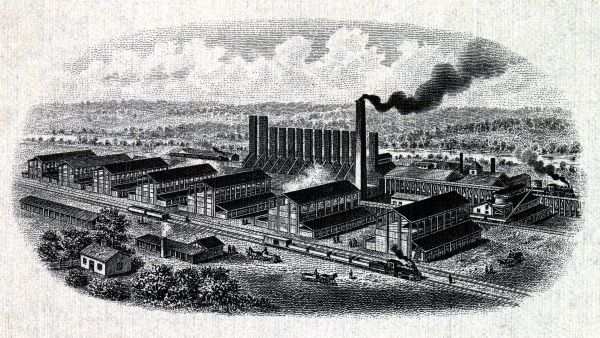
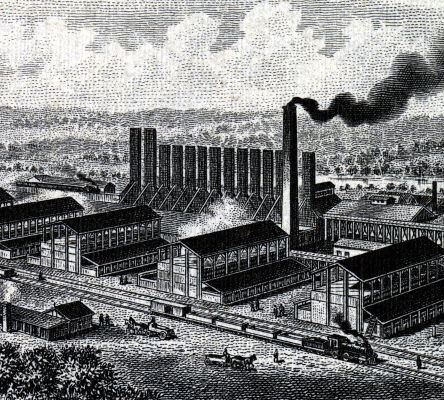
A black and white drawing of the Chattahoochee Brick Company site, with a caption reading, "Works at Chattahoochee Brick Company on Southern Railway. Capacity 200,000 per day."

Chattahoochee Brick Company

  • Info Details
  • Citation Terms of Use

The Chattahoochee Brick Company was among the largest and most notorious employers of convict labor in Georgia. Under the terms of the convict lease system, Chattahoochee Brick forced thousands of Black Georgians to labor under conditions that have been described as industrial slavery.

Courtesy of Atlanta History Center.

The New Georgia Encyclopedia does not hold the copyright for this media resource and can neither grant nor deny permission to republish or reproduce the image online or in print. Requests for permission to publish or reproduce the resource should be submitted to the Atlanta History Center.

Thomas Ruger

Thomas Ruger

  • Info Details
  • Citation Terms of Use

Thomas Ruger, a Union officer, was appointed military provisional governor of Georgia in 1868, during Reconstruction. During his six-month tenure, Ruger instituted the state's convict lease system.

Courtesy of Georgia Capitol Museum, University of Georgia Libraries
The New Georgia Encyclopedia does not hold the copyright for this media resource and can neither grant nor deny permission to republish or reproduce the image online or in print. All requests for permission to publish or reproduce the resource must be submitted to the rights holder.

Chattahoochee Brick Company Broadside

Chattahoochee Brick Company Broadside

  • Info Details
  • Citation Terms of Use

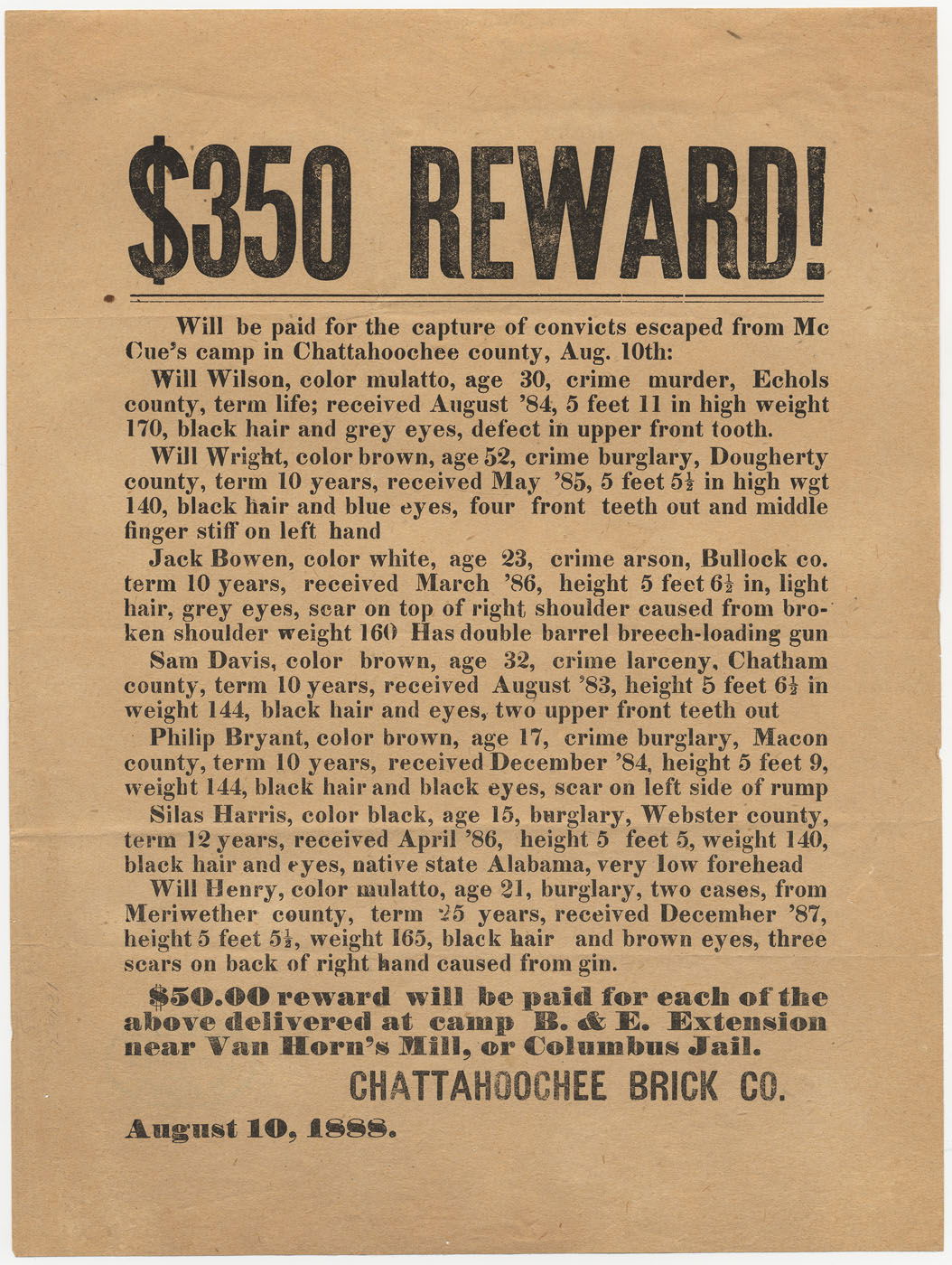
A $350 reward was issued for escaped convict laborers from the Chattahoochee Brick Company.

Courtesy of Hargrett Rare Book and Manuscript Library, University of Georgia Libraries, Historical Broadsides Collection.
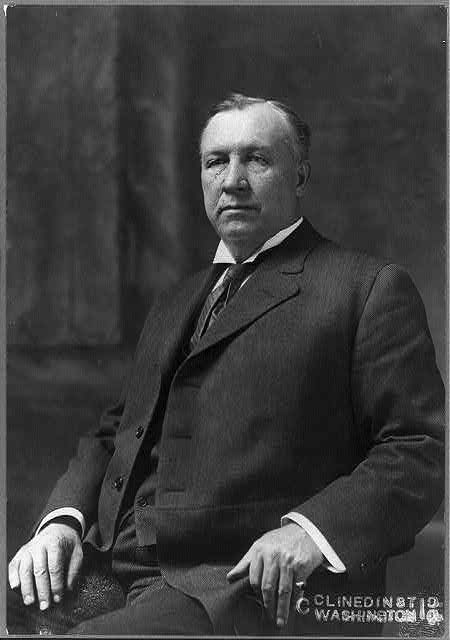
The New Georgia Encyclopedia does not hold the copyright for this media resource and can neither grant nor deny permission to republish or reproduce the image online or in print. Requests for permission to publish or reproduce the resource should be submitted to the Hargrett Manuscript and Rare Book Library at the University of Georgia.

Hoke Smith

Hoke Smith

  • Info Details
  • Citation Terms of Use

Hoke Smith poses for a portrait in 1912, the year after his second term as Georgia's governor had ended. Smith served as governor first from 1907 to 1909 and then again in 1911, until he was selected to fill the empty U.S. Senate seat of Joseph M. Terrell. He remained in this seat until 1921.

Courtesy of Library of Congress, Prints and Photographs Division

The New Georgia Encyclopedia does not hold the copyright for this media resource and can neither grant nor deny permission to republish or reproduce the image online or in print. All requests for permission to publish or reproduce the resource must be submitted to the rights holder.

First National Bank Building

First National Bank Building

  • Info Details
  • Citation Terms of Use

Formed as the result of several mergers, First National Bank of Atlanta (or First Atlanta) was the largest U.S. bank south of Philadelphia in 1929. The First National Bank Building served as First Atlanta's headquarters.

Courtesy of Wachovia Corporation
The New Georgia Encyclopedia does not hold the copyright for this media resource and can neither grant nor deny permission to republish or reproduce the image online or in print. All requests for permission to publish or reproduce the resource must be submitted to the rights holder.

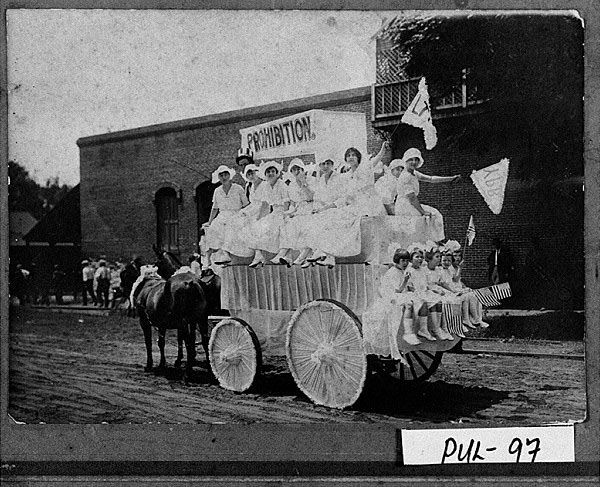
Prohibition Parade Float

Prohibition Parade Float

  • Info Details
  • Citation Terms of Use

Young women and children ride on a parade float promoting prohibition in Hawkinsville (Pulaski County), circa 1919.

Courtesy of Georgia Archives, Vanishing Georgia, #
pul097a.
View on partner site

The New Georgia Encyclopedia does not hold the copyright for this media resource and can neither grant nor deny permission to republish or reproduce the image online or in print. Requests for permission to publish or reproduce the resource should be submitted to the Georgia Archives.

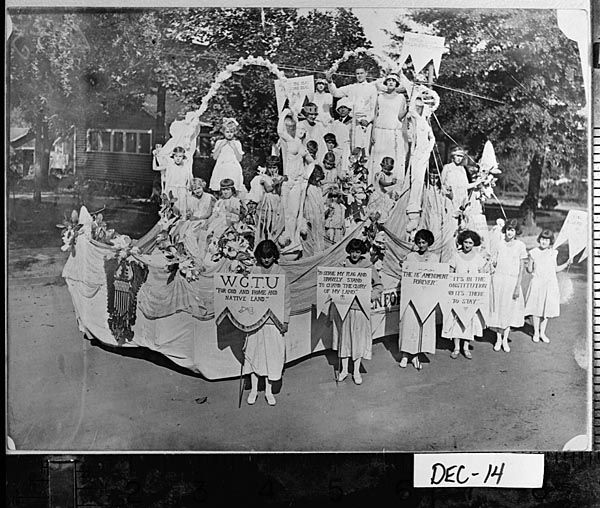
Black and white photograph of WTCU parade float in Bainbridge, Georgia

Woman’s Christian Temperance Union

  • Info Details
  • Citation Terms of Use

Women's Christian Temperance Movement (WTCU) members participate in the Decatur County centennial parade in Bainbridge, 1923. The WCTU formed its first Georgia chapter in 1880. Largely due to their efforts, Georgia passed a local option law in 1885.

Courtesy of Georgia Archives, Vanishing Georgia, #
dec014.
View on partner site

The New Georgia Encyclopedia does not hold the copyright for this media resource and can neither grant nor deny permission to republish or reproduce the image online or in print. Requests for permission to publish or reproduce the resource should be submitted to the Georgia Archives.

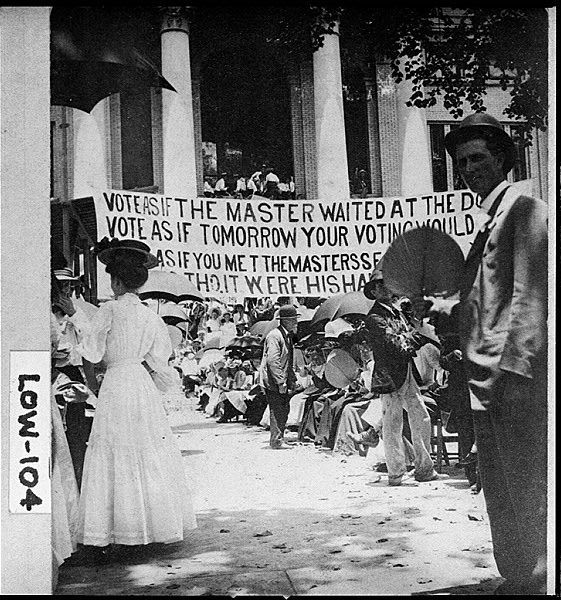
Black and white photograph of crowd gathered in Valdosta for 1907 prohibition vote

Prohibition Vote

  • Info Details
  • Citation Terms of Use

A crowd gathered in front of the Lowndes County courthouse in Valdosta for a prohibition vote in 1907. That year, Georgia became the first state in the South to pass a statewide ban on the production, transportation, and sale of alcohol.

Courtesy of Georgia Archives, Vanishing Georgia, #
low104.

View on partner site

The New Georgia Encyclopedia does not hold the copyright for this media resource and can neither grant nor deny permission to republish or reproduce the image online or in print. Requests for permission to publish or reproduce the resource should be submitted to the Georgia Archives.

Black and white photograph of crowd celebrating the end of prohibition in Marietta, Georgia, 1935

End of Prohibition

  • Info Details
  • Citation Terms of Use

A crowd in Marietta celebrates the end of prohibition. In 1935 the Georgia legislature approved the Alcoholic Beverage Control Act, which called for a statewide referendum on the issue of repeal and tasked the State Revenue Commission with drafting new regulations to govern the sale and distribution of alcohol.

Courtesy of Special Collections & Archives, Georgia State University Library, Atlanta Journal-Constitution Photographic Archive.

The New Georgia Encyclopedia does not hold the copyright for this media resource and can neither grant nor deny permission to republish or reproduce the image online or in print. Requests for permission to publish or reproduce the resource should be submitted to Special Collections and Archives at Georgia State University.

Thomas G. Woolfolk

Thomas G. Woolfolk

  • Info Details
  • Citation Terms of Use

Thomas G. Woolfolk was convicted and hanged for murdering nine members of his family in their Bibb County home on August 6, 1887. This drawing, adapted from a photograph taken of Woolfolk in the jail at Macon, appeared in the Oglethorpe Echo newspaper on November 7, 1890, about a week after his execution.

Drawing from Oglethorpe Echo

The New Georgia Encyclopedia does not hold the copyright for this media resource and can neither grant nor deny permission to republish or reproduce the image online or in print. All requests for permission to publish or reproduce the resource must be submitted to the rights holder.

Woolfolk Family Marker

Woolfolk Family Marker

  • Info Details
  • Citation Terms of Use

Nine members of the Woolfolk family were murdered in their Bibb County home on August 6, 1887, by relative Thomas G. Woolfolk. The victims are buried together at Rose Hill Cemetery in Macon.

Photograph by amanderson2

View on source site

The New Georgia Encyclopedia does not hold the copyright for this media resource and can neither grant nor deny permission to republish or reproduce the image online or in print. All requests for permission to publish or reproduce the resource must be submitted to the rights holder.

  • Info Details
  • Citation Terms of Use

The New Georgia Encyclopedia does not hold the copyright for this media resource and can neither grant nor deny permission to republish or reproduce the image online or in print. All requests for permission to publish or reproduce the resource must be submitted to the rights holder.

Shotgun Houses

Shotgun Houses

  • Info Details
  • Citation Terms of Use

Unrestored shotgun houses line a street in Macon. The shotgun, a rectangular house type that is one room wide and two to four rooms deep, may have developed from a West African architectural tradition.

Courtesy of Elizabeth Lyon
The New Georgia Encyclopedia does not hold the copyright for this media resource and can neither grant nor deny permission to republish or reproduce the image online or in print. All requests for permission to publish or reproduce the resource must be submitted to the rights holder.

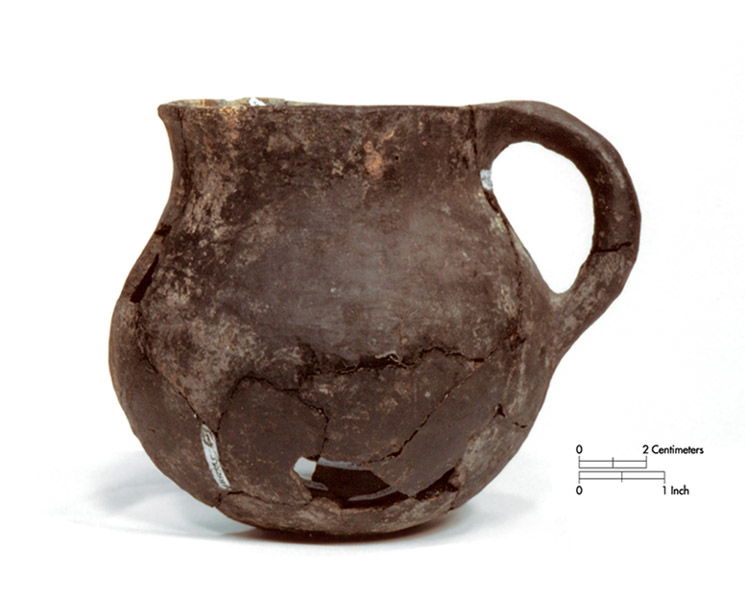
Colonoware Pitcher

Colonoware Pitcher

  • Info Details
  • Citation Terms of Use

Colonoware, a form of earthenware pottery, was made by African Americans on plantations in Georgia, North Carolina, and South Carolina. Produced circa 1740, this pitcher was found during an exacavation in Charleston, South Carolina, during the late 1990s.

Courtesy of New South Associates

The New Georgia Encyclopedia does not hold the copyright for this media resource and can neither grant nor deny permission to republish or reproduce the image online or in print. All requests for permission to publish or reproduce the resource must be submitted to the rights holder.

Savannah-Ogeechee Canal

Savannah-Ogeechee Canal

  • Info Details
  • Citation Terms of Use

The Savannah-Ogeechee Canal, pictured circa 1888, was completed by enslaved laborers in 1829.

Courtesy of Georgia Historical Society, James S. Silva family papers, #GHS 2126-VM01-04 pg072.
View on partner site

The New Georgia Encyclopedia does not hold the copyright for this media resource and can neither grant nor deny permission to republish or reproduce the image online or in print. All requests for permission to publish or reproduce the resource must be submitted to Georgia Historical Society.

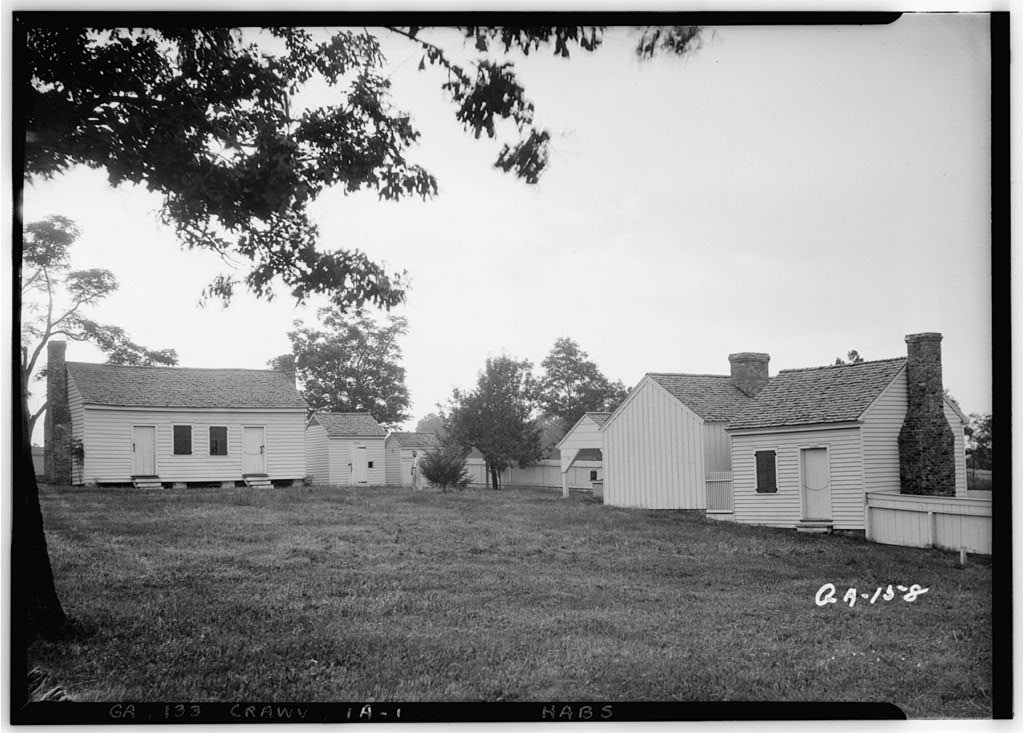
Slave Quarters

Slave Quarters

  • Info Details
  • Citation Terms of Use

Slave quarters, pictured in 1936, stand at Liberty Hall in Taliaferro County, the homeplace of Georgia governor Alexander Stephens. African American structures on Georgia plantations were generally rectangular in shape, as opposed to the square forms preferred by Europeans.

Courtesy of Library of Congress, Prints and Photographs Division, Historic American Buildings Survey.
The New Georgia Encyclopedia does not hold the copyright for this media resource and can neither grant nor deny permission to republish or reproduce the image online or in print. All requests for permission to publish or reproduce the resource must be submitted to the rights holder.

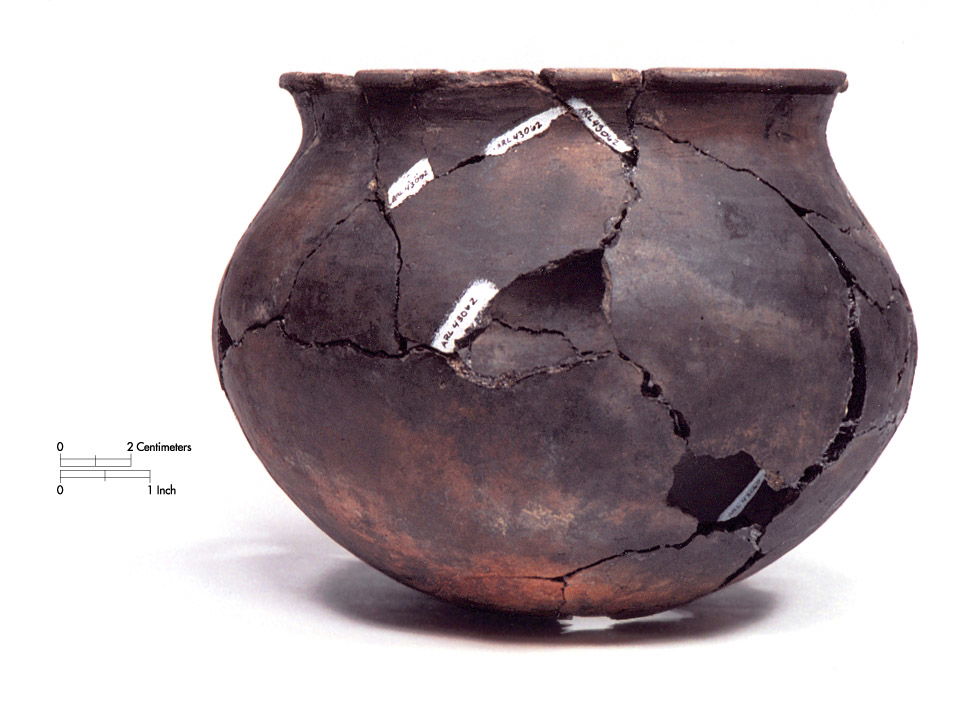
Colonoware Jar

Colonoware Jar

  • Info Details
  • Citation Terms of Use

This colonoware jar, uncovered in South Carolina in the 1990s, dates to the mid-eighteenth century. Colonoware was made by African Americans on coastal plantations and has been found on several Georgia sites.

Courtesy of New South Associates
The New Georgia Encyclopedia does not hold the copyright for this media resource and can neither grant nor deny permission to republish or reproduce the image online or in print. All requests for permission to publish or reproduce the resource must be submitted to the rights holder.

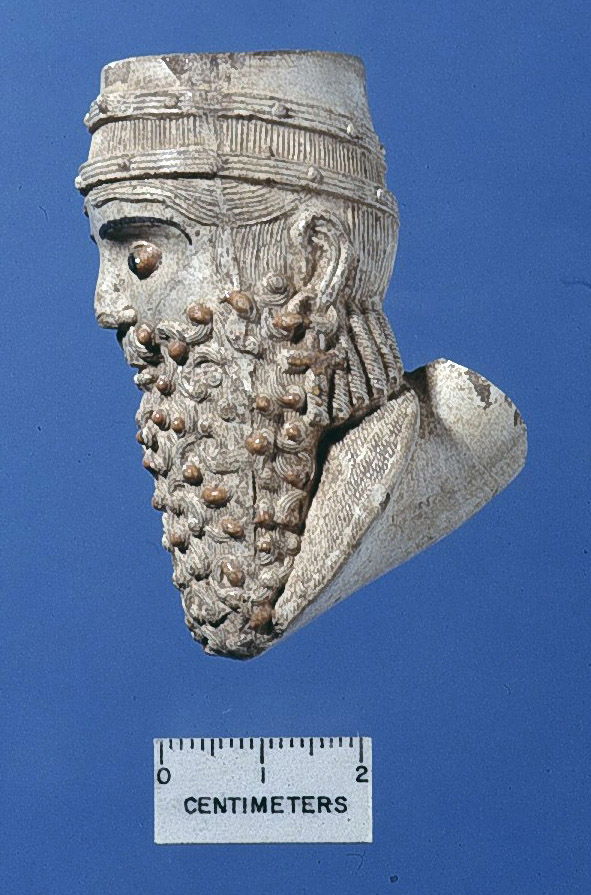
Ninevian Pipe

Ninevian Pipe

  • Info Details
  • Citation Terms of Use

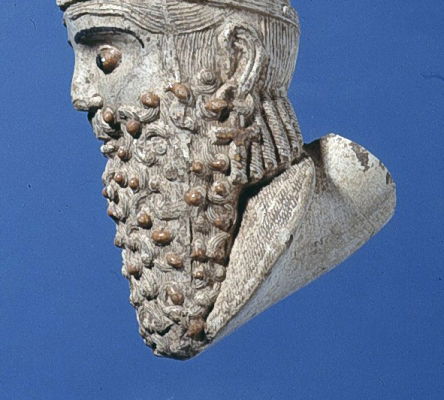
Dating to the 1850s, this Ninevian pipe was uncovered during an archaeological excavation conducted between 1989 and 1991 at the Springfield site near Augusta. The Springfield village was populated by free Blacks before the end of slavery in 1865.

Courtesy of New South Associates

The New Georgia Encyclopedia does not hold the copyright for this media resource and can neither grant nor deny permission to republish or reproduce the image online or in print. All requests for permission to publish or reproduce the resource must be submitted to the rights holder.

Wall Trench

Wall Trench

  • Info Details
  • Citation Terms of Use

The outline of a wall trench was uncovered by archaeologists in 2000 at the Silk Hope Plantation, an eighteenth-century rice plantation in Bryan County. The markings in black show the locations of a wall trench and post features that form a slave dwelling, and the red outline shows the presence of pit features that were used for storage and other functions.

Courtesy of Brockington and Associates

The New Georgia Encyclopedia does not hold the copyright for this media resource and can neither grant nor deny permission to republish or reproduce the image online or in print. All requests for permission to publish or reproduce the resource must be submitted to the rights holder.

Moore’s Ford Marker

Moore’s Ford Marker

  • Info Details
  • Citation Terms of Use

A historical marker, erected by the Georgia Historical Society, stands on the site of a mass lynching, which took place in 1946 on the border of Walton and Oconee counties. The crime generated national attention and led to U.S. president Harry Truman's creation of the President's Committee on Civil Rights.

Courtesy of Georgia Info, Digital Library of Georgia.

The New Georgia Encyclopedia does not hold the copyright for this media resource and can neither grant nor deny permission to republish or reproduce the image online or in print. Requests for permission to publish or reproduce the resource may need to be submitted to the Digital Library of Georgia.

Leo Frank Marker

Leo Frank Marker

  • Info Details
  • Citation Terms of Use

A historical marker stands near the site of Leo Frank's lynching in Cobb County. Dedicated in March 2008, the marker was erected by the Georgia Historical Society, the Jewish American Society for Historic Preservation, and Temple Kol Emeth.

Courtesy of Georgia Historical Society, Historical Marker Program.

View on partner site

The New Georgia Encyclopedia does not hold the copyright for this media resource and can neither grant nor deny permission to republish or reproduce the image online or in print. All requests for permission to publish or reproduce the resource must be submitted to Georgia Historical Society.

Porterdale Mill

Porterdale Mill

  • Info Details
  • Citation Terms of Use

In 1916 Bibb Manufacturing Company opened the Osprey Mill in Porterdale. Bibb was an important part of Georgia's cotton and textile industry for more than a century and became one of the state's largest employers by the mid-1950s.

Courtesy of Historic Preservation Division, Georgia Department of Community Affairs.

The New Georgia Encyclopedia does not hold the copyright for this media resource and can neither grant nor deny permission to republish or reproduce the image online or in print. Requests for permission to publish or reproduce the resource may need to be submitted to the Georgia Department of Community Affairs, Historic Preservation Division.

Columbus Mill

Columbus Mill

  • Info Details
  • Citation Terms of Use

The Columbus Mill was built by the Bibb Manufacturing Company in 1900 on the banks of the Chattahoochee River. Eventually the cotton mill grew to be the largest in the country, supporting a mill town known as "Bibb City."

Courtesy of Library of Congress, Prints and Photographs Division, Historic American Engineering Record, #HAER GA,108-COLM,27-10.
The New Georgia Encyclopedia does not hold the copyright for this media resource and can neither grant nor deny permission to republish or reproduce the image online or in print. All requests for permission to publish or reproduce the resource must be submitted to the rights holder.

Free Kindergarten

Free Kindergarten

  • Info Details
  • Citation Terms of Use

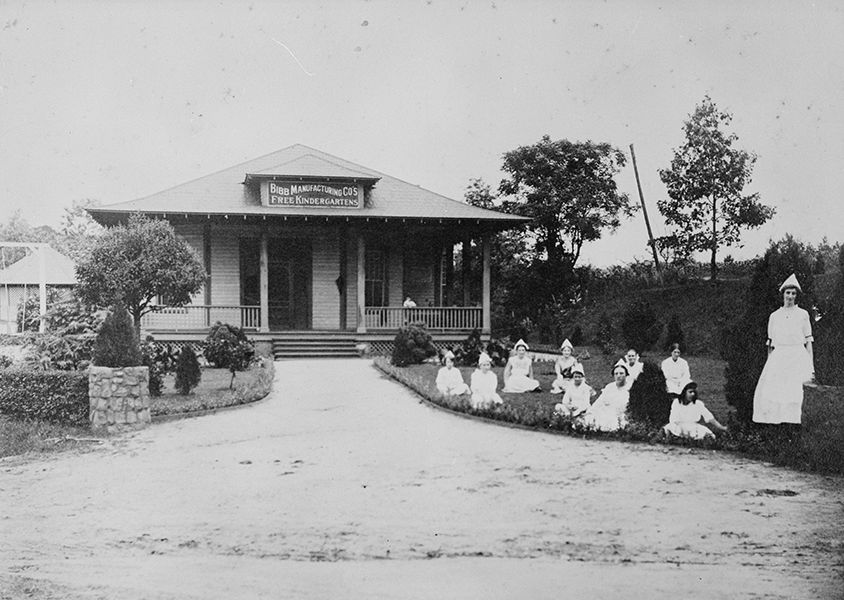
The Bibb Manufacturing Company, founded in Macon in 1876, opened mills in a number of Georgia communities by the end of the nineteenth century. In 1905 the company opened a free kindergarten in Covington, believed to be the first such program in Newton County.

Courtesy of Georgia Archives, Vanishing Georgia, #new142-83.
View on partner site

The New Georgia Encyclopedia does not hold the copyright for this media resource and can neither grant nor deny permission to republish or reproduce the image online or in print. Requests for permission to publish or reproduce the resource should be submitted to the Georgia Archives.

Forsyth Mill

Forsyth Mill

  • Info Details
  • Citation Terms of Use

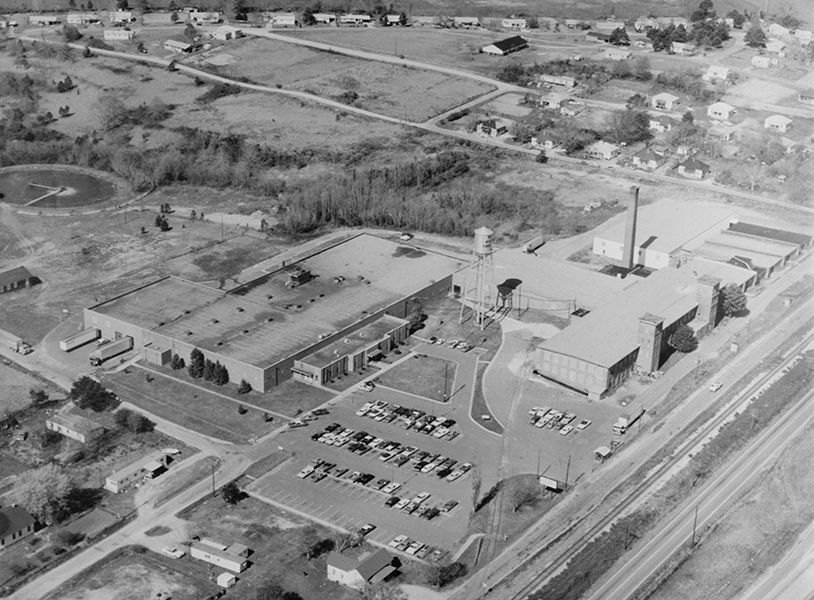
After World War II, the Bibb Manufacturing Company opened several new mills in Georgia, including its Forsyth Mill, pictured in the 1970s. During the 1950s, Bibb became one of the largest employers in the state, and by 1966 the company operated fourteen mills in Georgia.

Courtesy of Georgia Archives, Vanishing Georgia, # mnr184.
View on partner site

The New Georgia Encyclopedia does not hold the copyright for this media resource and can neither grant nor deny permission to republish or reproduce the image online or in print. Requests for permission to publish or reproduce the resource should be submitted to the Georgia Archives.

Turpentine Still

Turpentine Still

  • Info Details
  • Citation Terms of Use

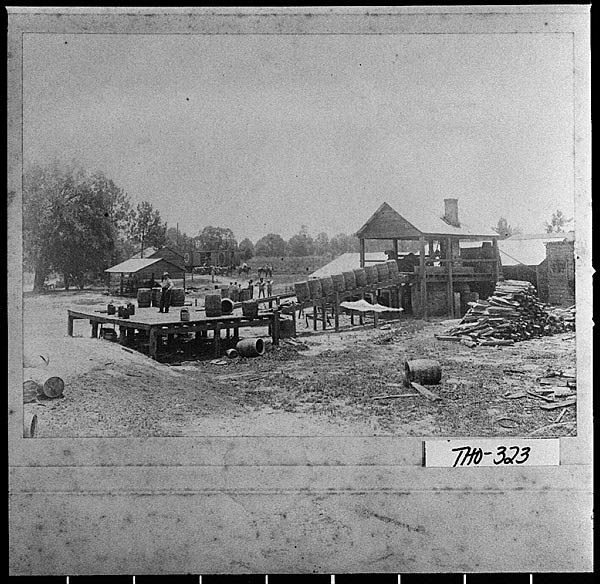
A Thomas County turpentine still produces rosin and turpentine in the early 1900s. Along with other naval stores products, rosin and turpentine were used in the construction and repair of sea vessels.

Courtesy of Georgia Archives, Vanishing Georgia, #
tho323.
View on partner site

The New Georgia Encyclopedia does not hold the copyright for this media resource and can neither grant nor deny permission to republish or reproduce the image online or in print. Requests for permission to publish or reproduce the resource should be submitted to the Georgia Archives.

Turpentine Still

Turpentine Still

  • Info Details
  • Citation Terms of Use

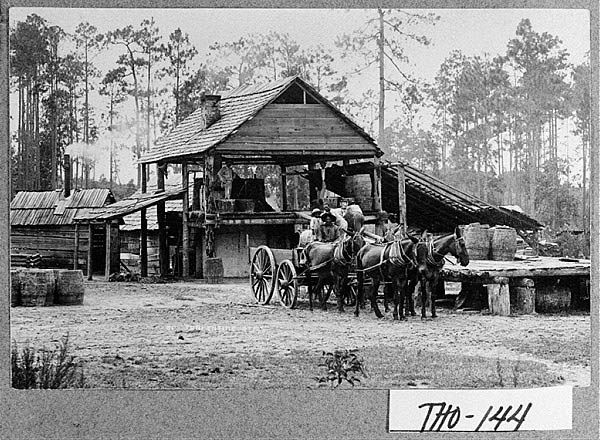
A turpentine still in Thomas County, pictured circa 1895, distills turpentine and rosin from the crude gum harvested from pine trees. The highest grade of turpentine was distilled from longleaf yellow and slash pine varieties.

Courtesy of Georgia Archives, Vanishing Georgia, #
tho144a.
View on partner site

The New Georgia Encyclopedia does not hold the copyright for this media resource and can neither grant nor deny permission to republish or reproduce the image online or in print. Requests for permission to publish or reproduce the resource should be submitted to the Georgia Archives.

Pine Tree Festival

Pine Tree Festival

  • Info Details
  • Citation Terms of Use

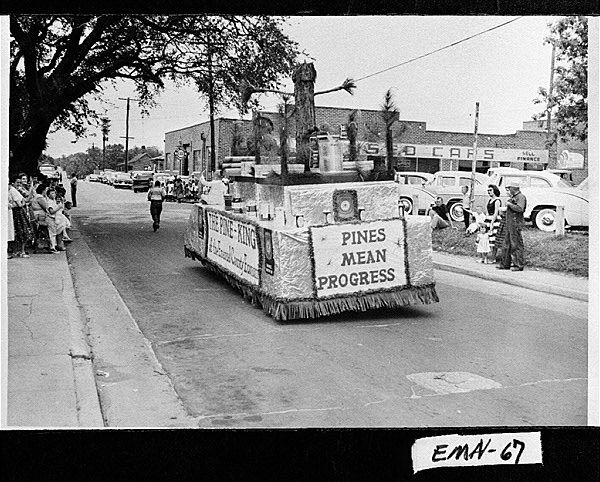
A parade float, pictured in the late 1950s, progresses through Swainsboro, the seat of Emanuel County, during the Pine Tree Festival. Forest-related industry was an economic mainstay for the county from the 1870s through the 1960s.

Courtesy of Georgia Archives, Vanishing Georgia, #
emn067.
View on partner site

The New Georgia Encyclopedia does not hold the copyright for this media resource and can neither grant nor deny permission to republish or reproduce the image online or in print. Requests for permission to publish or reproduce the resource should be submitted to the Georgia Archives.

Naval Stores

Naval Stores

  • Info Details
  • Citation Terms of Use

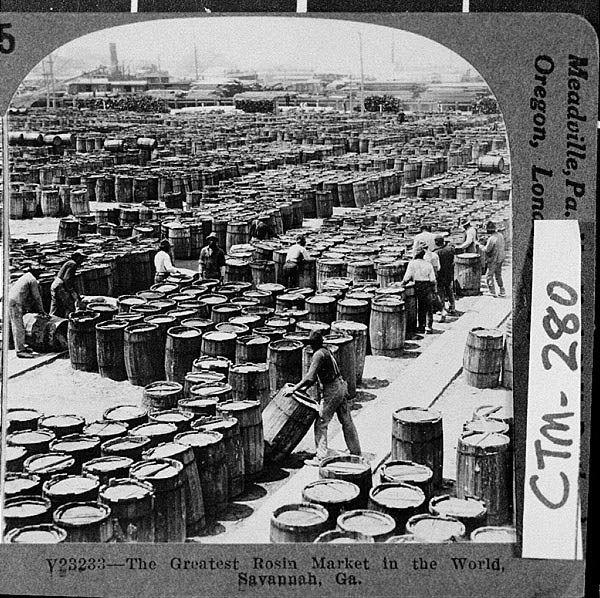
Laborers on a Savannah dock prepare barrels of rosin for shipment, circa 1895. From the 1890s until 1945, the ports at Savannah and Brunswick shipped out most of the world's supply of naval stores.

Courtesy of Georgia Archives, Vanishing Georgia, #
ctm280.
View on partner site

The New Georgia Encyclopedia does not hold the copyright for this media resource and can neither grant nor deny permission to republish or reproduce the image online or in print. Requests for permission to publish or reproduce the resource should be submitted to the Georgia Archives.

African Americans at 1895 Cotton States Exposition

African Americans at 1895 Cotton States Exposition

  • Info Details
  • Citation Terms of Use

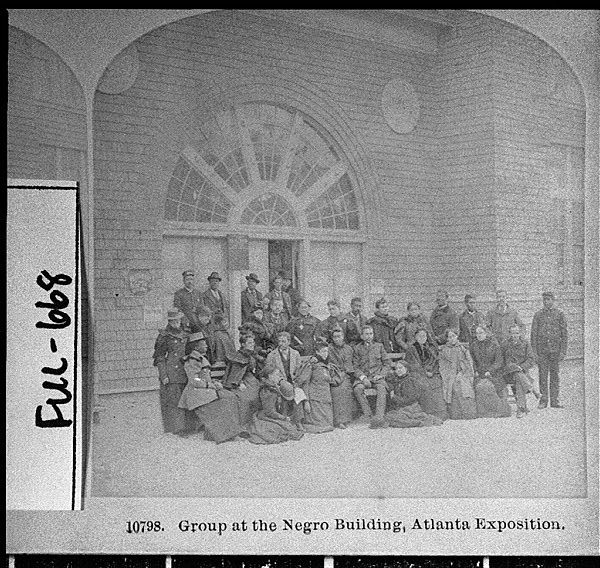
African American attendees of the 1895 Cotton States and International Exposition, held in Atlanta's Piedmont Park, are gathered in front of the Negro Building, where Booker T. Washington delivered his "Atlanta Compromise" speech on September 18. The speech detailed Washington's accommodationist strategy of achieving racial equality, primarily through vocational training for African Americans.

Courtesy of Georgia Archives, Vanishing Georgia, #
ful0668.

View on partner site

The New Georgia Encyclopedia does not hold the copyright for this media resource and can neither grant nor deny permission to republish or reproduce the image online or in print. Requests for permission to publish or reproduce the resource should be submitted to the Georgia Archives.

Booker T. Washington

Booker T. Washington

  • Info Details
  • Citation Terms of Use

African American educator and leader Booker T. Washington delivered what is widely regarded as one of the most significant speeches in American history, the "Atlanta Compromise" speech, in 1895.

Courtesy of Library of Congress, Prints and Photographs Division, Harris & Ewing Collection.

View on source site

The New Georgia Encyclopedia does not hold the copyright for this media resource and can neither grant nor deny permission to republish or reproduce the image online or in print. All requests for permission to publish or reproduce the resource must be submitted to the rights holder.

Booker T. Washington

Booker T. Washington

  • Info Details
  • Citation Terms of Use

Booker T. Washington in his office at the Tuskegee Normal and Industrial Institute in Alabama.

From 'The Succesful Training of the Negro' (1903), by B. T. Washington.

The New Georgia Encyclopedia does not hold the copyright for this media resource and can neither grant nor deny permission to republish or reproduce the image online or in print. All requests for permission to publish or reproduce the resource must be submitted to the rights holder.

Washington and Roosevelt

Washington and Roosevelt

  • Info Details
  • Citation Terms of Use

Booker T. Washington is depicted at a White House dinner with U.S. president Theodore Roosevelt on October 17, 1901.

Courtesy of Hargrett Rare Book and Manuscript Library, University of Georgia Libraries.

The New Georgia Encyclopedia does not hold the copyright for this media resource and can neither grant nor deny permission to republish or reproduce the image online or in print. Requests for permission to publish or reproduce the resource should be submitted to the Hargrett Manuscript and Rare Book Library at the University of Georgia.

Rebecca Latimer Felton

Rebecca Latimer Felton

  • Info Details
  • Citation Terms of Use

Rebecca Latimer Felton, the nation's first female senator, wrote My Memoirs of Georgia Politics after her seventy-fifth birthday. Through speeches and her writings, she helped to effect statewide prohibition and to bring an end to the convict lease system in Georgia.

From History of the Georgia Woman's Christian Temperance Movement, by Mrs. J. J. Ansley

The New Georgia Encyclopedia does not hold the copyright for this media resource and can neither grant nor deny permission to republish or reproduce the image online or in print. All requests for permission to publish or reproduce the resource must be submitted to the rights holder.

  • Info Details
  • Citation Terms of Use

The New Georgia Encyclopedia does not hold the copyright for this media resource and can neither grant nor deny permission to republish or reproduce the image online or in print. All requests for permission to publish or reproduce the resource must be submitted to the rights holder.

  • Info Details
  • Citation Terms of Use

The New Georgia Encyclopedia does not hold the copyright for this media resource and can neither grant nor deny permission to republish or reproduce the image online or in print. All requests for permission to publish or reproduce the resource must be submitted to the rights holder.

A black and white drawing of the Chattahoochee Brick Company site, with a caption reading, "Works at Chattahoochee Brick Company on Southern Railway. Capacity 200,000 per day." Thomas Ruger Chattahoochee Brick Company Broadside Hoke Smith First National Bank Building Prohibition Parade Float Black and white photograph of WTCU parade float in Bainbridge, Georgia Black and white photograph of crowd gathered in Valdosta for 1907 prohibition vote Black and white photograph of crowd celebrating the end of prohibition in Marietta, Georgia, 1935 Thomas G. Woolfolk Woolfolk Family Marker
Shotgun Houses Colonoware Pitcher Savannah-Ogeechee Canal Slave Quarters Colonoware Jar Ninevian Pipe Wall Trench Moore’s Ford Marker Leo Frank Marker Porterdale Mill Columbus Mill Free Kindergarten Forsyth Mill Turpentine Still Turpentine Still Pine Tree Festival Naval Stores African Americans at 1895 Cotton States Exposition Booker T. Washington Booker T. Washington Washington and Roosevelt Rebecca Latimer Felton