Creative Communities: LGBTQ+ Art and Expression in Twentieth-Century Georgia
LGBTQ+ artists have long been a part of Georgia's performance, visual art, and literary scenes. Even when marginalized—or criminalized—artists in the twentieth century formed creative networks that persist in Georgia's arts communities today.
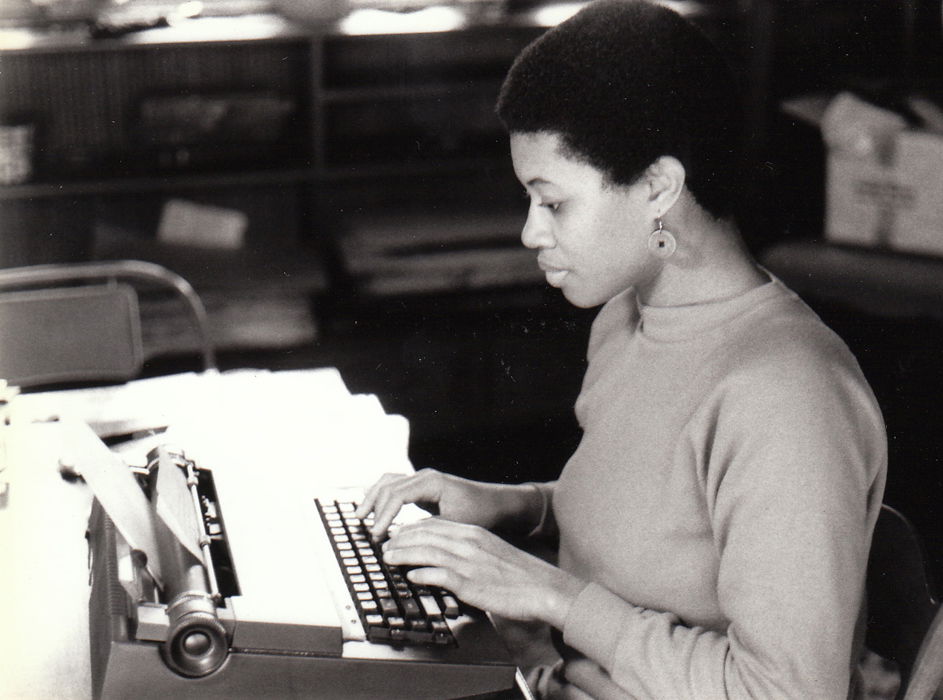
Courtesy of Shay Youngblood
Introduction
Georgia’s art community has always been intertwined with the visions and labor of queer creators. But their contributions across various art forms have not always been visible, especially during the early twentieth century when homosexuality was socially stigmatized and broadly outlawed in the United States, as it was in Georgia until 1998. Yet even during this period, LGBTQ+ artists created spaces and contexts for expression, whether in bars and clubs, homes, or social networks where queer creators could share their visions and establish a sense of community.
As the gay liberation movement arose in Georgia, LGBTQ+ art became more open and political: performers and writers fought for their rights to self-expression, designers created visual messaging against homophobic censorship, and queer artists reflected on their own silencing. Archival materials from the 1960s and 1970s onward document major events in LGBTQ+ art and space-making, like early Gay Pride celebrations, the opening of a Metropolitan Community Church location, and the tragic bombing of Otherside Lounge. These were in addition to quieter moments of lived experience and community creation, like the opening of bookstores and theaters, establishment of poetic networks, and sharing poignant, provocative, and powerful art.
Theater and Embodying Queerness on Stage
A major turning point in Georgia’s battle for LGBTQ+ rights coalesced around a performance. In 1969 a screening of Andy Warhol’s Lonesome Cowboys during a film forum at the Ansley Mall Mini Cinema in Atlanta was raided by police. They confiscated the film, photographed audience members, and arrested the theater owner and projectionist. The event brought increased attention both to the targeting of queer people by law enforcement and to the power (and perceived threat) of performance media focused on LGBTQ+ stories. In response, the 1970s saw the growth of activist initiatives like the Georgia Gay Liberation Front alongside new efforts in theater to support queer playwrights, actors, and productions.
The emergence of queer theater in Georgia was not without controversy. When the famed play The Boys in the Band was staged in the Black Box Theater at the Atlanta Memorial Arts Center in March 1970, the Fulton County Commission threatened to cut public funding from the Atlanta Arts Alliance due to the play’s “filthy” content. Nevertheless, the play continued its two-week run and would be staged again at Buckhead’s Academy Theatre in 1976.
While the commercial theater industry in Georgia negotiated the allowance of queer content, LGBTQ+ productions were simultaneously being staged outside of public theaters. Actor and director Howard Brunner staged plays with queer themes in gay bars like Sweet Gum Head and Magic Garden. When 7 Stages Theatre opened in 1979, director Del Hamilton announced the theater’s aim to produce work by Atlanta writers that commercial theater companies might overlook, and 7 Stages has since been a ready home for major queer productions. Topher Payne, the playwright behind 2013’s Angry Fags, said that “7 Stages is the sort of theater that is unafraid to put Angry Fags on a marquee” and “start a tough conversation in an unexpected way.”
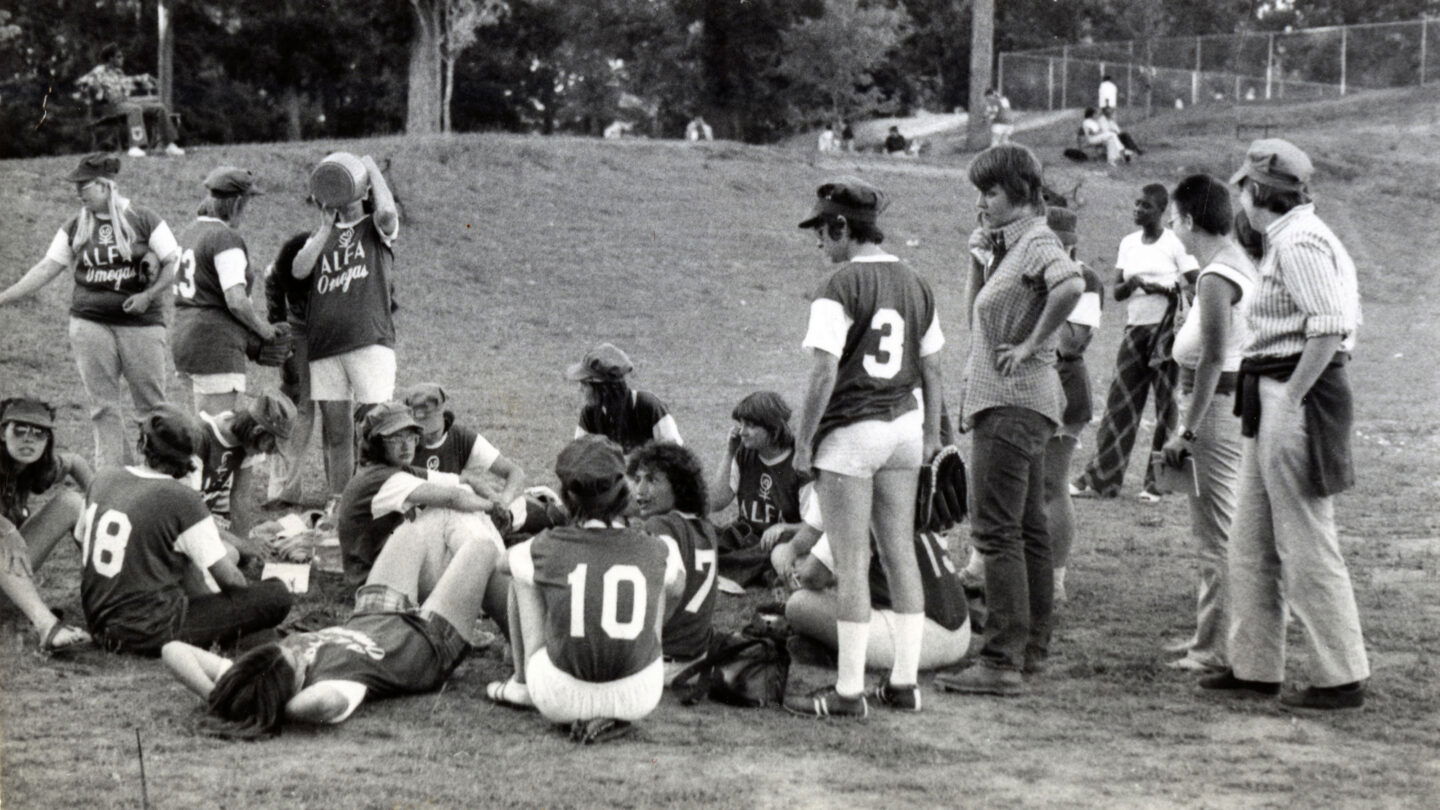
LGBTQ+ Georgians have created their own theatrical communities, spaces, and narratives throughout the twentieth century. In 1971 the feminist performance troupe WomanSong Theatre provided a creative messaging space for members of the Atlanta Lesbian Feminist Alliance, and they performed at the University of Georgia’s student union. Other LGBTQ+ troupes and production companies would follow in Atlanta, among them Red Dyke Theatre, the Southeastern Arts, Media & Education Project’s OutProud Theatre, EstroFest Productions, the LGBT Theatre Project/Theatre OUTlanta, and, most recently, Out Front Theatre Company, established in 2016.
Among the most famous queer playwrights of the century was Rebecca Ranson, whose 1984 play Warren was among the first major works to respond to the AIDS crisis. Inspired by the illness and death of Ranson’s friend Warren Johnston, the play allowed audiences to identify with a range of emotional responses as its characters wrestled with Warren’s AIDS diagnosis and ultimately formed a support system for him and for each other. Ranson would return to the subject in 1988 when she wrote Higher Ground: Voices of AIDS, a series of monologues drawn from interviews with over forty individuals. Of the twenty-eight interviewees who acted in the play, twenty-three were living with AIDS, and many narrated their own stories.
Directors and theater managers have also played a key role in bringing LGBTQ+ issues to public view. Palmer Wells and his partner Michael Horne founded Marietta’s Theatre in the Square in 1982 and later weathered local conflict after Cobb County’s residents took exception to a 1993 performance of Terrence McNally’s Lips Together, Teeth Apart. Criticism of the performance anticipated the Cobb County Commission’s condemnation of the “gay lifestyle” the following year, but the young theater proved resilient, surviving and producing many LGBTQ+ dramas before its closure in 2012.
the performance art world was shaken by the decision of John Frohnmayer, chair of the National Endowment for the Arts, to veto grant funding for four artists: Karen Finley, John Fleck, Holly Hughes, and Tim Miller. The decision was based on a new congressional “decency clause” that allowed funding denials based on subject matter, and queer subject matter was targeted. Frohnmayer himself noted, before the passage of the decency clause, that “Holly Hughes is a lesbian, and her work is very heavily of that genre. It is very tough stuff”. The four artists filed a suit challenging the constitutionality of the decency clause, initiating a judicial case that would last eight years and a national conversation about censorship. Both Holly Hughes and Tim Miller performed in Atlanta. Miller, in particular, frequented 7 Stages before and after the NEA controversy, bringing to the city his performances Some Golden States (1988), Shirts and Skin (1998), Glory Box (2000), US (2003), and Lay of the Land (2012)—shows that wrestle with issues like marriage equality, immigration rights for same-sex couples, and, of course, censorship.
For LGBTQ+ artists in Georgia, performance art has facilitated complex and diverse explorations of queer identity and belonging. The spoken word performance art group ADODI Muse—formed by activists Duncan Teague, Tony Daniels, and Malik M.L. Williams in 1995—shared stories of Black gay history, resilience, and pride through pieces woven out of poetry and personal narrative in a historically segregated LGBTQ+ Atlantan community. Personal narrative has continued to be a powerful source of material in performance art. Transmasculine artist Scott Turner Schofield’s 2008 Becoming a Man in 127 Easy Steps, is comprised of 127 short stories tracing Schofield’s childhood, relationships, transition, and more. The live version of the show has audience members call out numbers between 1 and 127 to determine which stories are told and in what order.
On the street, performers like the Sisters of Perpetual Indulgence, whose Atlanta Order was established in 2009, make community engagement a part of the performance: male members dressed in nuns’ habits hold charity fundraisers for local organizations, advocate for LGBTQ+ rights, and champion free expression at events like Pride. For over fifty years, Georgia artists and performance groups have continued to challenge gender expectations, staged vibrant queer love stories, and confronted homophobia and transphobia within the theater and outside of it.
Queer Entertainment Culture
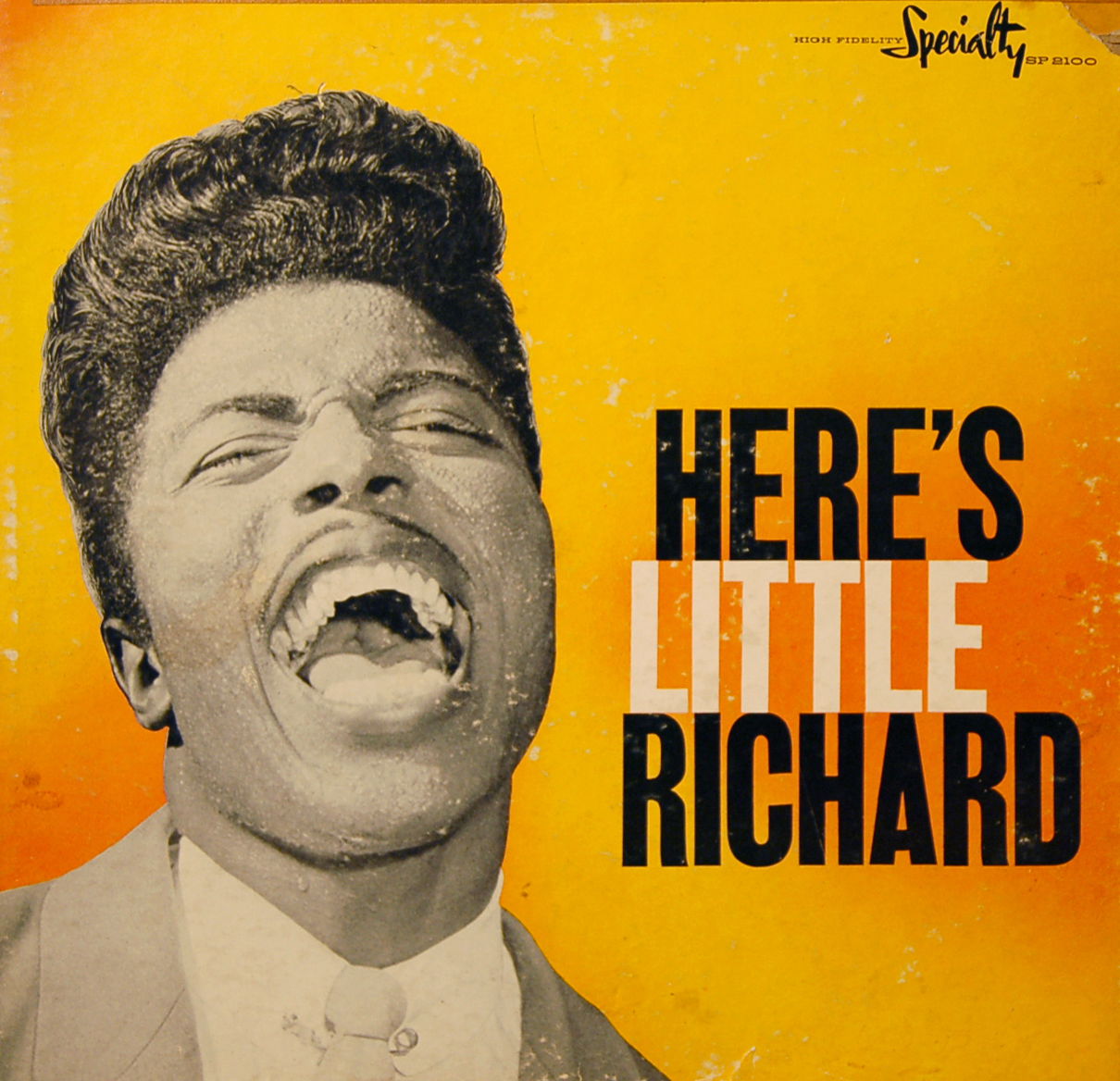
While professional theater in Georgia developed an LGBTQ+-focused repertoire, queer artistry also took other stages. Nightlife spaces provided an opportunity to create and foster entertainment culture by queer artists for queer audiences. Bars and clubs hosted drag shows on a regular basis; Sweet Gum Head, the same bar where Howard Brunner staged theater productions, was also among the earliest Atlanta bars known to have featured drag performances and competitions. In 1977 Lucina’s Music production company began bringing lesbian musical performances to Atlanta. Some local queer musicians who initially rose through Georgia club circuits would go on to reach mainstream success: Macon-born Little Richard began his career performing in drag as “Princess Lavonne” in vaudeville shows touring through Black queer clubs.
In the 1970s and 1980s, performing in drag could be risky business. Macon’s Tangerine Summers, who describes herself as the city’s “oldest living female impersonator,” recalls the threat of arrest for being spotted in drag outside of clubs. Both drag queens and transgender people were arrested in Macon due to an ordinance prohibiting citizens from “masking their identity in public.” The 1980s and 1990s, however, saw the rise of local legends in drag. The Lady Chablis, a transgender performer featured in John Berendt’s novel Midnight in the Garden of Evil (1994) and its film adaptation (1997), performed on the night that Savannah’s Club One opened in 1988 and continued to perform there until her death in 2016. She was a sharp comedienne whose charismatic voice was captured in her 1996 autobiography Hiding My Candy. Atlanta’s drag scene has also been home to legendary performers: Diamond Lil, Charlie Brown, Lily White, and Lena Lust in the 1970s; and Lady Bunny in the 1980s, Ashley Kruiz in the 1990s, and many more. In Athens, the annual drag event the Boybutante Ball has, since 1989, raised over one million dollars for agencies like Live Forward that support HIV/AIDS research and services. Drag has been a critical form of artistic expression, social commentary, financial support, and community creation for LGBTQ+ Georgians, and Georgia cities continue to foster innovation in the art form.
The ability of LGBTQ+ live entertainment to thrive depended on the venues that hosted shows and their audiences. When cross-dressing and homosexuality were criminalized, urban gay bars provided a safe haven and access to queer performing arts. Some bars became home bases for regular shows: the drag show Charlie Brown’s Cabaret was hosted at Backstreet in Atlanta for twenty-four years before the club’s closure in 2004, and the drag dining restaurant and “show palace” Lips opened a location in Atlanta in 2013. But LGBTQ+ bars and clubs have also been targets of police raids like those documented at Mrs. P’s Atlanta in 1980 and even as recently as 2009 at the Atlanta Eagle, and of homophobic and transphobic terrorism. In 1997 the Atlanta nightclub Otherside Lounge was bombed with a nail-filled explosive in an anti-gay attack by Eric Rudolph. Five people were injured, and several cars in the parking lot were destroyed. The damage didn’t end there: Memrie Wells-Creswell, the most seriously injured victim of the bombing, was publicly outed by Mayor Bill Campbell when he named her as a victim, and as a result, she was fired from her job. The club owners, partners Beverly McMahon and Dana Ford, were remarkably resilient, reopening the next week and sustaining the business for roughly two more years. Even long after its closure, they received letters from former patrons for whom the bar had been a safe and fun place.
As progress in LGBTQ+ rights pressed forward, queer entertainment was no longer strictly confined to nightlife, and queer artists formed singing groups and dance teams that have performed in parades, concerts, festivals, and civic events. However, nightlife and underground events remain critical spaces for performing; the underground vogue ballroom scene, which fostered camaraderie and competition for queer youth of color, arrived in Atlanta in the 1980s when four friends from Morehouse College founded Atlanta’s House of Escada. In 2018 Black and Queer Trans People of Color (QTPOC) organizations MORPH and Southern Fried Queer Pride (SFQP) collaborated with Red Bull Music to present the “ATL is Burning” vogue ball, one of the biggest events of its kind in Atlanta’s history.
Queer Musicians and Dance Groups
Queer artists have often powered Georgia’s innovations in music. “Mother of the Blues” Gertrude “Ma” Rainey was one of the first recorded blues singers and became a bisexual icon thanks to her song “Prove It On Me Blues,” which flaunts encounters with women. The advertisement for the song depicts a woman resembling Rainey in a man’s suit, hat, and tie, chatting up women on a street corner. The song was rumored to be inspired by Rainey’s arrest in 1925 for hosting an “all-female party-turned-orgy.”
Athens’s own B-52s has created a legacy in the LGBTQ+ community for a variety of reasons. Four out of the group’s five founding members have come out as gay or bisexual during their careers, and singer Kate Pierson has attributed part of the band’s appeal to its inclusivity and “gay sensibility and sense of humor.” Several popular queer artists began their careers during or shortly after their time in Georgia colleges: the B-52s’ Fred Schneider and Ricky Wilson were University of Georgia (UGA) alums, and UGA was also the meeting place for R.E.M., whose lead singer Michael Stipe publicly identified himself as a “queer artist” in 2001. The Indigo Girls first met in elementary school and eventually reunited at Emory University before they began playing at Atlanta clubs. That same year Janelle Monáe, who had been attending Georgia Perimeter College (later Perimeter College at Georgia State University), debuted her self-financed demo album The Audition. Lil Nas X, a recent powerhouse of queer representation in music, was born in Lithia Springs and spent 2017-18 at the University of West Georgia before recording the country-rap hit “Old Town Road” at CinCoYo Studio Atlanta.
Ensemble musical and dance performing groups have allowed LGBTQ+ Georgians to share their talents with diverse audiences for the past thirty years. The Atlanta Gay Men’s Chorus was the first choral group of its kind to be established in the South in 1981 and joined the Gay and Lesbian Association of Choruses in 1982. They undertook their first five-city Georgia tour in 2010, visiting Macon, Savannah, Augusta, and Athens before returning to Atlanta. The Atlanta Feminist Women’s Chorus, a lesbian singing group, was also established in 1981. Although an economic downturn caused the group to disband in 2009, their assets were used to found the Atlanta Women’s Chorus in 2013, becoming the sister company to the Atlanta Gay Men’s Chorus within the umbrella organization Voices of Note. Atlanta also became home to a mixed LGBTQ+ chorus in 2003 with the creation of OurSong. The three choral groups are now members of a broader collaborative, the Atlanta Queer Arts Alliance, which also includes the Atlanta Philharmonic Orchestra and the Atlanta Freedom Bands, the latter of which debuted in 1994 after founder Buzz Car realized that the Atlanta Pride Parade had no marching band.
Dance groups for LGBTQ+ Georgians have formed as well: the gay men’s clogging group Buffalo Chips, country-line and square-dancing groups like Hotlanta Squares, Southern Line Atlanta, and the gender-neutral contra group Quicksilver Country Dancers. In recent years, bucking or J-setting, inspired by female HBCU dancelines, has become part of Atlanta’s Black gay culture. Trailblazer Tony Davis began organizing bucking dance teams in the 1990s, a history traced in the recent documentary When the Beat Drops (2018).
Visual Art and Design
In the early twentieth century, the visual arts offered ways to express queer identity with some degree of safety, guarded by symbolism and the flexibility of interpretation. Artists like Jasper Johns, born in Augusta, and his sometime partner and fellow artist Robert Rauschenberg would encode references to their relationship in their paintings, even as Johns would insist in 1988 that “I don’t want my work to be an exposure of my feelings.” Renowned Georgia artist Freddie Styles, who held residencies at Clark Atlanta University and Spelman College, painted non-figurative works that often reflected on the Madison and Atlanta environments where he grew up and at times on the navigation of queer life within them. His center triptych panel “Red Door” displayed at the High Museum of Art in 1980, for example, depicts an enticing, partially open door that Styles said represents “the entrance to the legendary gay club known as the ‘Marquette,’” founded in the 1960s and “one of the oldest Black gay clubs in the South.”
The visual arts also fostered important communal work. In the late 1980s, a group of queer and alternative artists founded the collective TABOO to create space in Atlanta for explicit and challenging work deemed controversial in the mainstream art scene. From 1988 to 1999, the group’s four core members, Larry Jens Anderson, Michael Venezia, King Thackston, and David Fraley curated their own shows and sold self-designed t-shirts to fund their projects. The LGBTQ+ arts scene in Atlanta has only grown over time and made room for more diverse voices to assert their place through projects like Ni Aquí Ni Allá (“neither here nor there”), a collective of Latino artists and creators of a 2018 installation project that explores and re-imagines the intersections of queer, feminist, Hispanic and Latin American identities.
The lives and queer identities of Georgian artists have, at times, required recovery. Mary E. Hutchinson, an Atlanta-born painter and portraitist, did not maintain a highly visible public profile during her career, but correspondence in the Mary E. Hutchinson and Dorothy King papers housed at Emory University reveal intimate partnerships with women, several of whom were her preferred subjects for sensual portraiture. Although Eddie Owens Martin, who exhibited under the name “St. EOM,” became increasingly secluded within his psychedelic compound Pasaquan near Buena Vista during his later years, he was well-known locally as an eccentric, spiritual artist, a male prostitute in his youth, as well as a painter and fortune-teller in the last forty years of his life. Becki Jayne Harrelson has engaged with spirituality in her art as well, combining orthodox Christian imagery and queer theology; her provocative painting “The Crucifixion of Christ” stages Jesus beneath a note reading an anti-gay slur to point to religious justifications for violence and hatred. LGBTQ+ artists in Georgia have gained recognition across other mediums as well, including sculpture (W. Chester Old), comic illustration (Joe Phillips), photography and mixed media (Alli Royce Soble); Anthony Goicolea; and more.
In the twenty-first century, exhibits have been shaped around a variety of queer experiences and expressions. In 2010 Hammonds House Museum’s “Incendiary Exposure: The Works of Daryl Harris & Michael Morgan” showcased work addressing social taboo and homophobia in the Black community. In 2013 “Legendary Children” at Gallery 1526 featured photographs of local drag stars and the “changing face” of the Atlanta drag scene. The 2014 show “Deconstructing Binaries” at Poem 88 dealt with bathroom signage and conversations around gender policing. And Barry Lee’s 2017 solo exhibit “How Nice” at Murmur explored experiences with bisexuality, bi-erasure and ableism. In recent years, artist Cameron Lee and his husband Rigel Gemini have curated and supported multiple queer arts showcases like “SPECTRA” in 2018 and “FABNORMAL” in 2019; and WUSSY Mag has sponsored events like “High Visibility,” a virtual exhibit featuring over 15 LGBTQ+ photographers during the COVID-19 pandemic in 2020.
The AIDS Crisis and Visual Arts
In the latter decades of the twentieth century and onward, exhibition spaces have allowed artists and organizers to curate visions of LGBTQ+ identity in public view. The AIDS crisis provided a major impetus for organizing exhibits in the 1980s and 1990s for both education and fundraising. In 1989 the group ArtCare, co-founded by Michael Venezia and James Randall Chumbley, began hosting annual art auctions to raise money for AIDS support organizations in the Atlanta area. The next year the Southeastern Arts, Media & Education Project produced an exhibition at the Atlanta College of Art featuring multi-media work by Georgia artists collaborating with people living with AIDS as well as the exhibit “Against the Tide: The Homoerotic Image in the Age of Censorship and AIDS” at the Nexus Contemporary Art Center. The ACT UP (or, AIDS Coalition To Unleash Power) Atlanta chapter sponsored “The AIDS Cure Project Art Show” at the King Plow Arts Center in 1994 featuring photography and paintings by Georgia artists including Carlos Gutierrez-Solana, Harriet Leibowitz, Stephan Hillerbrand, Ed Fraga, and E.K. Huckaby.
Part of the visual response to the AIDS crisis and homophobia in the 1980s and 1990s was the designing of posters and t-shirts to distribute messaging. ACT UP/Atlanta, established in 1988 after the organization’s founding in New York, began its first months of targeted activism with banners on overpasses and railroad bridges calling attention to Circle K’s discriminatory health insurance policy, which denied employee insurance claims for illnesses like AIDS that the company deemed the result of “personal lifestyle decisions.” The group also staged events like die-ins in front of the State Capitol and the Centers for Disease Control. The Silence=Death Project’s iconic poster design—featuring the pink triangle associated with Nazi Germany’s persecution of gay men—was integrated into ACT UP after the poster’s six designers joined the group. The pictographic icon was chosen as an inclusionary symbol with multiple “open-ended” codes, “signifying lesbian and gay identity to some audience members, maleness to others, and referencing the historical meanings of genocide.”
The NAMES Project’s AIDS Memorial Quilt, born in San Francisco in 1985 and residing in Atlanta from 2001 to 2020 likewise became iconic as a form of mass public mourning and remembrance. The quilt now contains more than 48,000 panels dedicated to more than 100,000 individuals lost to AIDS. Recognizing the importance of graphic design to political expression and public attention throughout the AIDS crisis, the Museum of Design Atlanta hosted the exhibit “Graphic Intervention: 25 Years of International AIDS Awareness Posters” in 2011.
Early LGBTQ+ News Coverage
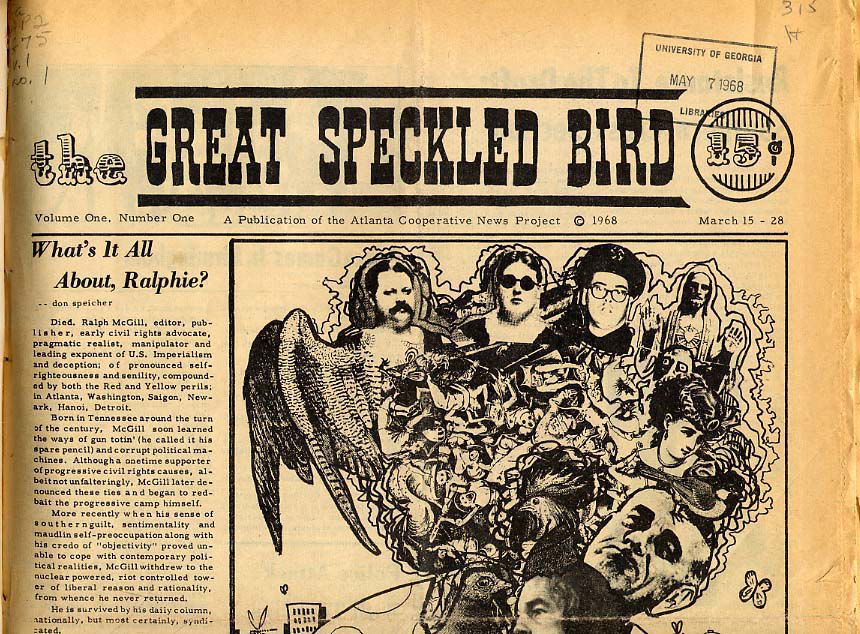
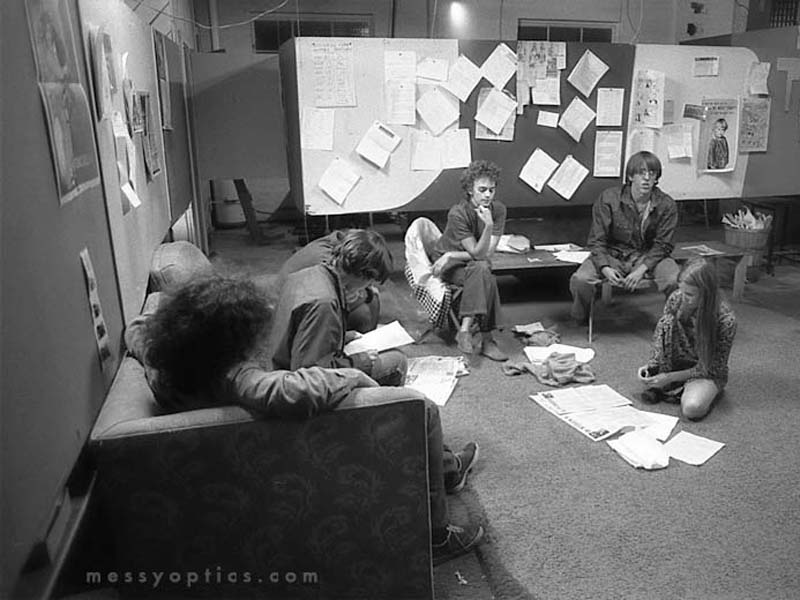
Before many large cities had their own LGBTQ+-focused news publications, issues of gay liberation found expression in New Left counterculture newspapers that tackled social politics with a directness and action-oriented approach missing from mainstream newspapers. The Great Speckled Bird (1968-76) relied in its early years on support from outside Atlanta’s print and news networks: suggestions for names for the newspaper were taken at local head shops, and staff drove to a press in Montgomery, Alabama, to print the paper each week when no Georgia printers would produce it. The American Civil Liberties Union (ACLU) of Georgia stepped in on occasion to help the paper fight harassment and discriminatory treatment, like the arrests of hippies selling the Speckled Bird and the post office’s refusal to deliver the paper after it ran an advertisement for an abortion clinic. Among subjects like the Vietnam War draft, the civil rights movement, local action of the Black Panthers, and workers’ rights, the Speckled Bird published articles on sensuality as an alternative to heteronormative sexual expectations, anti-gay sentiments within leftist groups, and the Atlanta Journal Constitution’s refusal to print notices about Atlanta Lesbian Feminist Alliance meetings.
To the south, Savannah’s counterculture paper Albion’s Voice was established in 1970 by a group of students at Armstrong State University. After producing their first issue, college administrators required that the paper be removed from campus, and production moved to English professor Jim Jones’s basement. Despite having an abbreviated career—funding only enabled the publication of six issues—Albion’s Voice shared the Speckled Bird’s willingness to point out corruption across institutions and cultural norms, commenting on environmental damage and the culture of “plantation society” that perpetuated racism in the city. In their fifth issue, as part of a call to fight for sexual freedom, the paper highlighted break-ins and bomb threats targeting the gay bar the Basement and attacks on patrons in the surrounding Madison Square as symptoms of a “cancer of hate and destruction spreading against Gay Life.” When the final issue was printed, looking hopefully towards more change in Savannah, whether the paper existed or not, Albion’s Voice reminded readers via a small hand-drawn advertisement for the Gay Liberation Front to “unite to fight oppression.”
Some smaller local news publications in Georgia, like college campus newspapers, county newspapers, and newsletters circulated within specific organizational circles, openly addressed LGBTQ+ topics as early as the 1950s. The Forsyth County News, for example, briefly reported in 1953 on the sudden dismissal of large numbers of state and federal government employees under the Eisenhower administration for committing acts “contrary to the best interest of national security,” a category that included homosexuals alongside suspected Communists.
While much early coverage on homosexuality in these papers was relegated to opinion editorials concerning obscenity in media and trends in pornography, the burgeoning Gay Liberation movement in the 1970s demanded different conversations about LGBTQ+ topics. In 1971 the University of Georgia’s Red & Black student newspaper printed a letter to the editor charging the paper with having ignored or actively excluded content about homosexual prejudice, contributing to it through a policy of publishing only “straight” dating service ads. Within a few years, the Red & Black began printing pieces on Gay Pride Week, the Committee on Gay Education, and “Blue Jean Day” on campus, a celebratory day established at Rutgers University that invited queer students and straight allies to show community solidarity by wearing blue jeans.
Newsletters created community solidarity as well, not only within activist circles, but within larger organizations like churches. Dignity Atlanta, a chapter of the Catholic LGBTQ+ ministry group DignityUSA, began publishing a local chapter newsletter in 1977. And the Unitarian Universalist Congregation of Atlanta created a Lesbian and Gay Community group with an active newsletter in the early 1980s, which would facilitate important community conversations about HIV prevention and anti-gay stigma within western religious bodies. Social and professional LGBTQ+ groups have stayed connected and informed through newsletters as well: the Atlanta chapter of Prime Timers, a brotherhood of older gay and bisexual men, issues a monthly newsletter called APTitudes, and the OUT Georgia Business Alliance, established in 1994, links LGBTQ+ business owners with updates through the email newsletter IN VIEW.
Telling LGBTQ+ Stories in Media
Before the 1970s, LGBTQ+ issues were rarely represented in mainstream Georgia newspapers, a fact that was made clear when the Atlanta Journal Constitution fired openly gay copy worker Charlie St. John in 1973 for placing Gay Pride fliers in employee mailboxes. The Georgia Gay Liberation Front had been irregularly publishing its own newsletter since 1971 (as the Good Gay Times or the Gay Times), and in 1974 Ray Green founded The Atlanta Barb, the first LGBTQ+ newspaper in the state, acquired the following year by GGLF activist Bill Smith. The Barb would run until 1977 and published on issues like police harassment, Pride, and the work of the Metropolitan Community Church.
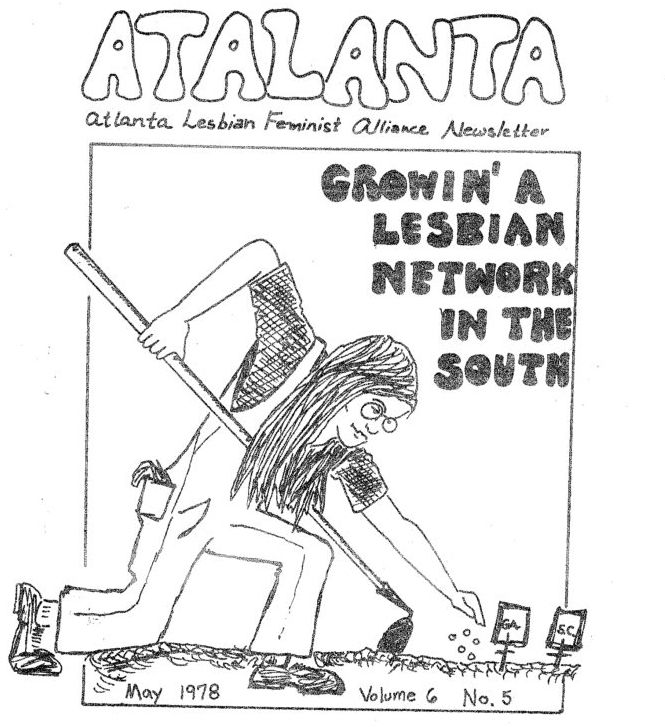
As advocacy groups began to develop within and outside of larger institutions, they printed their own newsletters: Atlanta’s First Tuesday Democratic Association, led by Gil Robison, published The Healthy Closet between 1978 and 1981 with the tagline “the only healthy closet is the voting booth.” The Atlanta Gay Center, which Robison founded in 1976, later published its own bi-weekly newsletter, The Atlanta Gay Center News (also known as Atlanta Gay Central or The News) in the mid-1980s, as did other political and advocacy organizations like AID Atlanta (AID Atlanta Newsletter, 1983-85; The Journal of AID Atlanta, 1985-86) and the Atlanta Lesbian Feminist Alliance (ALFA Newsletter, 1973-76; Atalanta, 1977-94).
Magazines covering Atlanta’s gay entertainment highlights also proliferated. The southern gay travel magazine Cruise was founded in 1976, followed by subsidiary publications Cruise Weekly covering gay entertainment events in Atlanta, the short-lived newspaper Cruise News, and Score, a pornographic magazine aimed at gay men. The latter publication drew the attention of the Fulton County solicitor, who issued arrest warrants for owners and employees of Score in 1979 for “distributing obscene materials.” Cruise, however, remained in print until 1984, and other publications invested in local LGBTQ+ nightlife, politics, and news followed in the 1980s: Gaybriel (1979-80); The Gayzette (1980), later called The Gazette (1981) or Metropolitan Gazette (1982); Sunset People (1980-83); and Pulse Magazine (1984). As these LGBTQ+ travel guides, bar magazines, and newspapers of the 1970s and 1980s announced, Atlanta was a “gay mecca,” full of stories to tell. LGBTQ+ journalists remained at the forefront of the push for queer news coverage, and Georgian journalists have achieved critical “firsts” in the field. Sometime before 1980, James R. Moody became the first openly gay columnist for a mainstream Atlanta newspaper, and nearly forty years later Augusta native Raquel Willis became the first transgender woman to serve as executive editor of the most widely circulated LGBTQ+ monthly publication in the United States, Out magazine.
Several LGBTQ+ papers established during the 1980s publication rush became long-lived and widely distributed news sources for queer communities in the southeast. Etcetera, or ETC, was founded by Pat Coleman, Jaye Evans, and Jim Heverly in 1985 and became a weekly mainstay for the almost seventeen years it was printed. ETC’s largest competitor was Southern Voice, one of the few LGBTQ+ media publications run by women, founded by Chris Cash and Leigh VanderEls in 1988 after the Second National March on Washington for Lesbian and Gay Rights. Like ETC, Southern Voice aimed to be more than a “bar rag,” covering news at the regional and national level and reporting on politics with a more mainstream perspective than the editorial content in ETC. Southern Voice was sold to Window Media in 1997 and unexpectedly shut down in 2009, but several former Southern Voice editors and executives launched Georgia Voice the following year as a successor to SoVo’s legacy.
The magazine David Atlanta, the “go-to guide” for gay entertainment and nightlife in Atlanta, underwent a similar series of changes. Launched in 1998 with Window Media, David Atlanta was closed alongside Southern Voice when the holding company folded in 2009. David was purchased and continued printing from 2010 to 2017 before shuttering entirely, but like Southern Voice, former employees of David picked up its pieces and translated them into a new publication, PeachATL.
In the twenty-first century, online-only publications have also forged their own identities. Amidst the late 2000s struggles of Southern Voice and David, publisher Matt Hennie launched Project Q Atlanta to deliver news in a blog-style web format. And in 2014 a group of LGBTQ+ writers and photographers created WUSSY Mag to document queer art and culture in the South. In 2017 both publications began issuing print editions, Q Magazine (now Q ATLus) and WUSSY Mag. The continuing births and rebirths of LGBTQ+ publications underline both the varied interests, events, politics, and perspectives of queer Georgians as well as the labor required to keep queer voices in mainstream circulation.
After decades of television programs addressing homosexuality as a criminal offense or a problem to be solved, the made-for-TV documentary The Rejected (1961) on San Francisco’s KQED station became one of the earliest American television programs to feature gay men talking about their own lives. Twenty years later, in Georgia, The American Music Show (1981-05) combined sketch comedy and variety performance with reporting on local events. While not explicitly focused on queer life, the show turned its lens often upon the bars, performers, and shows that were at the center of Atlanta’s queer arts community.
It was not until 1992 that audiences watched the first LGBTQ+-focused, nationally televised series, the news-magazine program In the Life, which during its twenty-year run on PBS covered major national news stories, profiled LGBTQ+ professionals across industries and organizations, and addressed socio-political inequities. Following in its footsteps with a lens narrowed on urban Georgia was OutTV Atlanta, a weekly half-hour public access news show that aired in Atlanta and Savannah between 1999 and 2001. The show’s producer, Mike Maloney, aimed to provide LGBTQ+ news content that went beyond nightlife coverage to document the lives and work of LGBTQ+ Georgians. Correspondents interviewed directors and program coordinators of Atlanta Pride, GLAAD, the Feminist Women’s Health Center, Georgia ACLU, Creating Change, AIDS Walk Atlanta, Youth Pride, the Atlanta Lesbian Cancer Initiative, and more. Footage also captured events and establishments that might have otherwise lived only in memory: fundraising benefits, art festivals, cabaret shows, community cookouts, puppet shows, gay rodeo events, bookstore readings, and stand-up comedy. LGBTQ+ people were shown with a depth not always present in southern television media: as professionals—artists, athletes, business owners, filmmakers, organizers, mechanics—and as people who went to church, gardened, participated in running groups, went to clubs, and lived rich lives as individuals and as communities.
Queer Narratives in Poetry and Prose
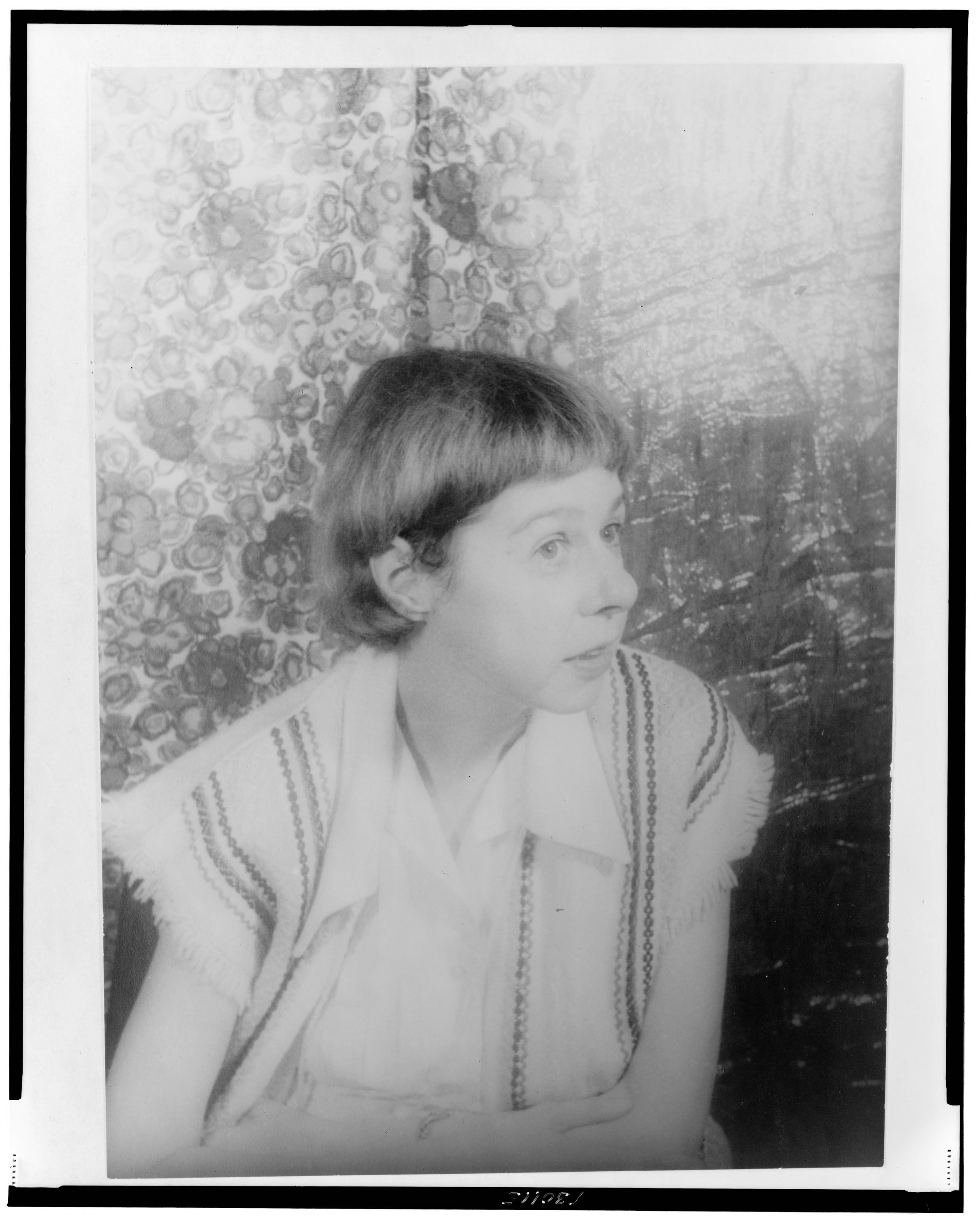
LGBTQ+ Georgians have written out their stories and selves, as well as those of other queer selves real and imagined, in every literary form and genre, from novels and nonfiction essays to lyric poetry and science fiction short stories. In the early twentieth century, Columbus’s Carson McCullers wrote Southern Gothics focused on characters who are outcast, disillusioned, and often beyond the fringes of heteronormativity. McCullers herself, twice married to fellow writer Reeves McCullers, is among those artists whose expressions of intense love for other women, like lesbian writer Annemarie Clarac-Schwarzenbach, have left shadows of an undefinable queerness in her archived papers.
Atlanta-born Donald Windham and his then-partner writer and photographer Fred Melton migrated to the literary scene of New York City in 1939, but Windham’s first novel The Dog Star (1950) and his memoir Emblems of Conduct (1964) look back to a post-Depression Atlanta as seen through the eyes of adolescent boys. Authorial routes from Atlanta to other “gay meccas” like New York City and San Francisco were common throughout the twentieth century. Poet Alfred Corn, born in Bainbridge, attended Emory University and then conducted his graduate study at Columbia University in New York City, where his first book of poems, All Roads at Once, would be published in 1976. Savannah’s Perry Brass hitchhiked to San Francisco at age seventeen and later made his way to New York, where his work was included in one of the first anthologies of gay male poetry, The Male Muse.
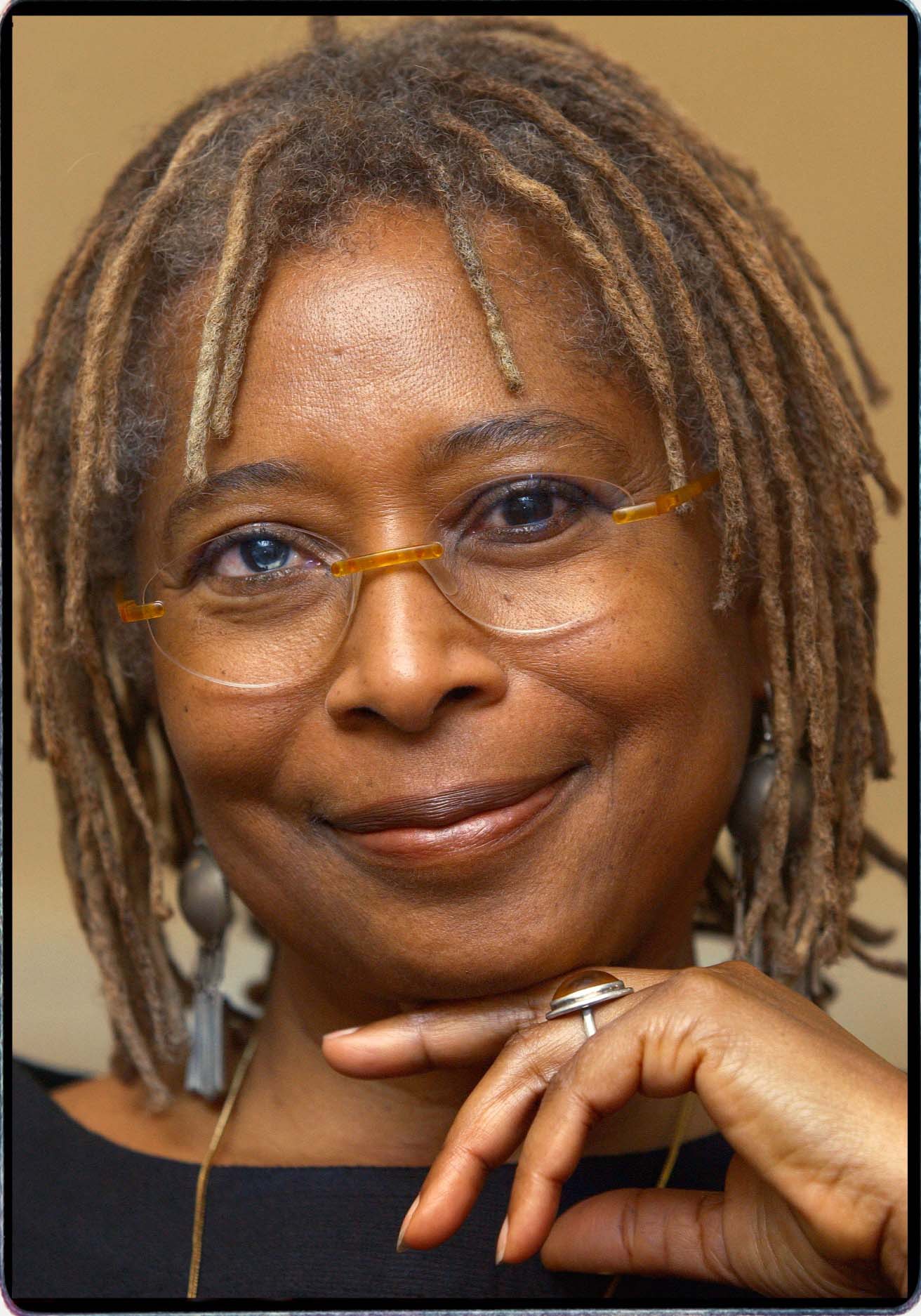
E. Lynn Harris was living in Atlanta when he produced his first novel, Invisible Life, selling it himself out of his car trunk and city barbershops. When the book became a hit, it was heralded as one of the first mainstream representations of Black gay sexuality and bisexuality. Douglas A. Martin was born in Warner Robins and received his B.A. from the University of Georgia, a time that inspired his partially autobiographical Athens-based novel Outline of My Lover, which tells a love story between a lonely student and a local rock musician generally understood to be Michael Stipe. Among the most influential queer writers to emerge from Georgia is Alice Walker, born to sharecroppers in Eatonton, whose portrayal of Black trauma and healing bisexual love in The Color Purple told a story of rural Georgia life not often heard. Walker acknowledged the silence of queerness during her own upbringing in her 1987 essay “All the Bearded Irises of Life: Confessions of a Homospiritual,” while exploring the way her awareness of queer life changed as an adult woman and fearing the loss or suppression of queer communities. Writing those communities down, for Walker and other queer Georgia writers, is one way to see and retain them.
In the late 1970s, gay activists Harry Hay and Donald Kilhefner reflected on a decade’s worth of gay liberation work and found a missing dimension: policy-oriented activism was pushing for assimilation rather than a more radical freedom, one rooted in creative explorations of gay consciousness and spirituality. The result was the first “Spiritual Conference for Radical Faeries,” a gathering of around 200 men in a southwestern desert to engage in “Faerie circles” where participants could discuss facets of gay identity and perform spontaneous celebratory rituals as inspiration struck. Around the same time, the Southeastern Conference of Lesbians and Gay Men hosted in Atlanta brought together back-to-the-land gay liberationists who, in the wake of tensions between gay and lesbian activists at the conference, decided to hold Radical Faerie summer solstice gatherings exclusively for gay men at the remote Running Water Farm in North Carolina. Here, attendees established collective responsibility for the farm itself and for the Radical Faerie movement’s de facto cultural serial RFD: A Country Journal for Gay Men Everywhere.
The Running Water collective maintained ties with Atlanta, a city-country thread sustained in part by Atlanta poets Franklin Abbott and Raven Wolfdancer, who would be involved in founding Running Water’s successor gathering, Gay Spirit Visions (GSV), along with fellow Atlantans spiritual writer John R. Stowe and librarian Cal Gough. Abbott, a prominent figure in Atlanta’s queer literary scene, has published two collections of poems and stories, Mortal Love: Selected Poems, 1971-1998 and Pink Zinnia: Poems and Stories (2009), most recently recording an album setting his poems to music, Don’t Go Back to Sleep (2017). Wolfdancer was both a poet and visual artist who shared his work in ink with friends and fellow GSV creatives. His art reciprocally inspired spiritual writer Andrew Ramer’s unpublished collection of stories about “the sacred role of gay men in the world,” Some Stories of Our People: For Men Who Love Men, in 1979. Wolfdancer also illustrated programs for Abbott’s poetic readings at 7 Stages in 1980 and at the First Existentialist Congregation in 1982. Wolfdancer was murdered outside his home in 1993, a crime that has never been solved. In his honor, Gay Spirit Visions established the Raven Wolfdancer Financial Assistance Fund to support registration and travel costs for gay, bisexual, and transgender men who might, as Raven did, “benefit from experiencing the collaborative energy and outpouring of GSV brothers.”
LGBTQ+ Literary Spaces
During the early years of gay liberation, queer literary voices required both publishers willing to produce them and booksellers willing to distribute them. Linda Bryant and Barbara Borgman stepped into the latter role in 1974 upon opening Charis Books and More, a feminist bookstore closely affiliated with the Atlanta Lesbian Feminist Alliance and dedicated to stocking politically conscious, woman-authored, and LGBTQ+ books. Charis was also the workplace and first public reading location for lesbian playwright and author Shay Youngblood when she was only nineteen years old, roughly ten years before she published her first book, The Big Mama Stories. Over time Charis became a kind of community center, especially after creating the nonprofit Charis Circle in 1996 to arrange justice-oriented feminist and queer-friendly programming.
A quite different kind of bookstore, adult gay bookstores also operated as places of sexual expression and exploration, showing adult films in movie galleries and housing “game rooms” for patron encounters, a purpose that drew the ire of local authorities and eventually violence. In 1980 the bookstores After Dark and Down Under were destroyed by arson and an explosion, respectively. The same year, Gene Loring opened Christopher’s Kind in Midtown Atlanta , becoming the “only [store] in the metro area with reading material aimed entirely at homosexuals.” Loring, too, struggled with harassment from authorities, who singled out booksellers at the store for selling adult magazines. In 1985 Loring sued Bellsouth Advertising & Publishing when they suddenly refused to continue listing the store in the Yellow Pages due to the inclusion of the words “gay” and “lesbian” in the ad copy; a DeKalb County judge ruled in favor of Bellsouth, and shortly thereafter Christopher’s Kind went out of business.
Outwrite Bookstore & Coffeehouse was opened by Philip Rafshoon in 1993, and like Charis and Christopher’s Kind, it operated as a community space as well as a store, hosting readings, book signings, and meetings where LGBTQ+ Atlantans could connect with each other, with politicians running for office, and with community organizations engaged in justice work. The closure of Outwrite in 2012 marked the end of the last explicitly LGBTQ+-focused bookstore in Georgia, at a time when few remain in the country. But like many now-defunct LGBTQ+ businesses in the state, its presence made a lasting mark on the community for which it was built.
Thanks to platforms offered by LGBTQ+-focused and LGBTQ+-friendly literary spaces in Georgia, authors from within the state and without have had the opportunity to share their community’s stories with audiences across the state. A print home for queer narrative and poetry was created by the Southeastern Arts, Media & Education Project’s Amethyst: A Journal for Lesbians and Gay Men (1987-96), helmed by Rebecca Ranson. Marietta native and Emory graduate Jameson Currier later established Chelsea Station Editions as a press devoted to publishing queer literature, and in 2011 Currier launched a new LGBTQ+ literary journal, Chelsea Station. Communal gatherings for queer Georgia writers date back to 1979, when WomonWrites, the Southeast Lesbian Writers Conference, was established as an annual gathering for lesbian authors, often in the woods of central Georgia or Alabama, where participants would stay in cabins and hold creative workshops. Though not explicitly LGBTQ+-focused, the anti-patriarchal Conference on Men & Masculinity, first held at the University of Tennessee in 1975, came to Oglethorpe University in 1990 and featured readings by openly gay poets Essex Hemphill and James Broughton as part of explorations of positive male identity and sexuality.
The Atlanta Queer Literary Festival, organized by Franklin Abbott, held its first annual meeting in 2008, at which time it was “one of only two queer-specific literary festivals in the nation.” The conference has featured plenary performances with nationally renowned queer artists like gender non-conforming author and performance artist Kate Bornstein; transgender activist, writer, and professor Jennifer Finney Boylan; and lesbian poet Staceyann Chin; as well as Georgian LGBTQ+ writers like World Poetry Slam champion Theresa Davis; poet and novelist Collin Kelley; Atlanta-born memoirist Alysia Abbott; and many more.