“Thy Neighbor as Thyself:” The Women Who Shaped Georgia’s Civic Landscape
From woman suffrage to child welfare, Georgia women undertook a variety of social crusades during the Progressive Era. Discover how the state's "municipal housekeepers," suffragists, and reformers remade public life at the turn of the twentieth century.
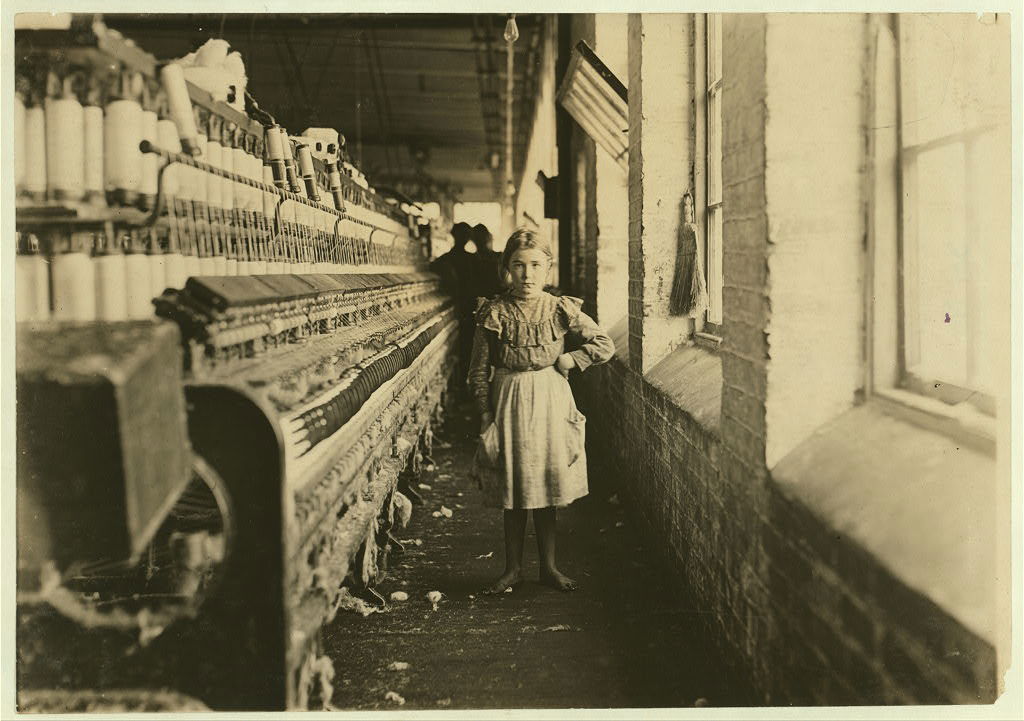
Courtesy of Library of Congress, Prints and Photographs Division
Introduction
The late nineteenth and early twentieth centuries saw shifting understandings of women’s roles in and outside of the home. This exhibit explores the leaders and organizations of the women’s rights movement in Georgia, as well as the issue environments that came in their wake, including political, welfare, racial, and educational reforms.
Political Reform
When Mary Latimer McLendon returned to Atlanta with her family in 1868, women were expected to remain firmly outside of politics. In nineteenth-century Georgia, southern ladies were considered morally superior to men and obligated to use their moralizing influence on domestic pursuits, maintaining a Christian home and raising children. But as McLendon and other Georgian women saw the state move away from its agrarian roots to an increasingly urban and industrial future, they began fighting to expand women’s roles to include political activism.
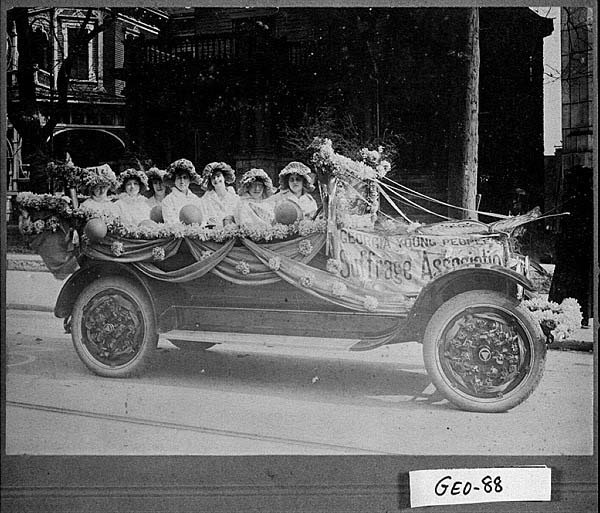
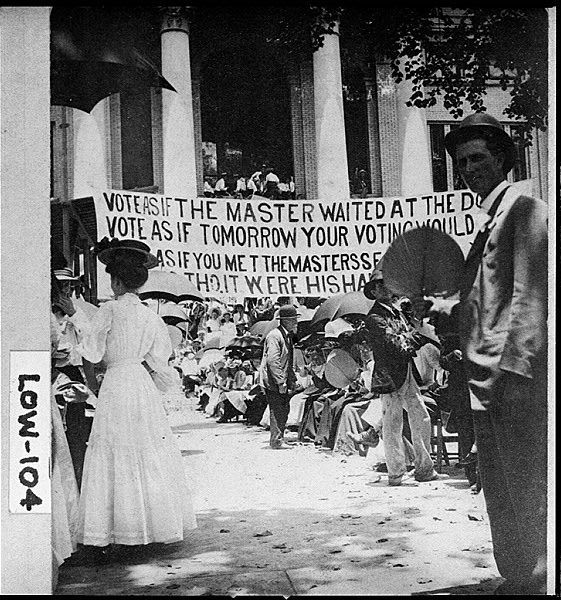
In 1892 McLendon joined the newly formed Georgia Woman Suffrage Association (GWSA), an organization dedicated to gaining voting rights for white women in the state. Elected president of GWSA in 1896, she delivered speeches promoting suffrage for white women on the basis that it would allow them to fulfill their domestic duties by protecting the sanctity of their homes and communities from the damaging effects of urbanization and industrialization. As factories dotted the landscape and cities grew, support for woman suffrage gained momentum in Georgia during the 1910s.
Not all women supported the cause of women’s suffrage, however. As principal of the Lucy Cobb Institute, a prestigious school for Georgian girls, Mildred Lewis Rutherford encouraged her students to emulate the behavior of an antebellum southern belle, embracing modesty, piety, and domesticity. Rutherford’s idealization of the Old South and advocacy for women’s traditional domestic roles led her to become an anti-suffrage activist. By publishing essays and delivering speeches insisting that the nefarious, unsavory realm of politics “unsexed” women and eroded their natural moral superiority, Rutherford ironically became a prominent political figure who blurred the very gender conventions she so staunchly supported.
Rutherford joined the Georgia Association Opposed to Woman Suffrage (GAOWS), an organization dedicated to blocking voting rights for women. Rutherford and other anti-suffragists believed that female voters would destroy the South’s social order, unraveling the precarious balance of patriarchy, white supremacy, and states’ rights that ostensibly allowed Georgia to remain a civilized society. GAOWS members invoked the disarray of Reconstruction to stoke fears of social mayhem and political unrest should suffrage be granted to women. Anti-suffragists warned that enfranchisement would alter relationships between men and women, Black and white. Concerns about race pervaded virtually every battle over political enfranchisement for Georgian women. Many white suffragists believed that a federal suffrage amendment would threaten the state’s system of Black disenfranchisement. Despite these obstacles, Black women persisted in the fight for voting rights and formed their own suffrage organizations.
Confronted with the double burden of racism and sexism, in the South were excluded from political campaigns and suffrage organizations formed by white women. While Black women’s organizations worked diligently for voting rights outside the region, Black suffragists in the South were faced with a different reality. The woman suffrage movement coincided with an era of Black disenfranchisement where the threat of lynching and extrajudicial violence diminished the scope of Black political activity. While Black suffragists in the North could form organizations and advocate for voting rights, the hostile racial climate of the South and fear of violent retaliation from southern whites kept many Black women from making public demands for suffrage. Despite the looming threat of assault, some Black women did publicly advocate for suffrage and examples of Black suffrage organizations have been recovered in Tuskegee, Alabama, Charleston, South Carolina, and Memphis, Tennessee.
Many male voters remained ambivalent about women’s suffrage, and when a federal amendment that would give women the right to vote was proposed in the Georgia state legislature in 1919, white male politicians promptly rejected it. Despite Georgia’s rejection of the measure, it would become the Nineteenth Amendment when added to the U.S. Constitution in 1920, giving women in all states the right to vote (though in practice, this amendment only protected white women’s right to vote).
Child Welfare Reform
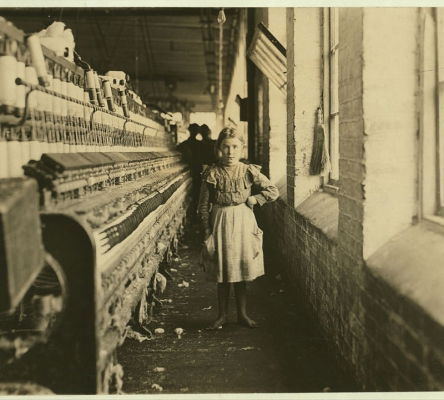
In the New South era, danger lurked in industrializing cities and towns that were rapidly altering the state’s pastoral landscape. Female reformers were particularly concerned about the threat these dangers posed for children who were often vulnerable to modern changes: child laborers were injured and maimed in textile factories; students were crammed into overcrowded, poorly ventilated classrooms; and neighborhood children played in unsupervised city streets littered with trash.
Through grassroots crusades, mutual aid and civic organizations, and local campaigns, southern women refashioned their traditional gender roles and invoked their maternal roles to justify their influence over a wide range of political issues related to the health and welfare of children. Calling themselves “municipal housekeepers,” reformers lobbied for legislation that expanded public education, prohibited child labor, enforced sanitation standards in schools and neighborhoods, developed playgrounds and recreational facilities, and created juvenile justice systems and orphanages. The reform efforts of Georgian women in the Progressive Era culminated in countless public services and laws that laid the groundwork for a state child welfare system that still exists today.
In nineteenth-century Atlanta, private charities represented the only economic safety net for those struggling to navigate the rapidly changing terrain of the New South. During the Progressive Era, these charities lacked the resources to provide relief for waves of new urban migrants and many focused exclusively on the needs of the white community. The exclusion of African Americans from the few social service programs that existed prompted Black women to develop their own agencies committed to addressing community welfare in Black neighborhoods. One such woman was Carrie Steele (later Carrie Steele Logan), who established the state’s first Black orphanage in 1888. Steele witnessed growing numbers of homeless Black children living in downtown Atlanta as she worked as a maid at Union Station for the Central of Georgia Railway. Steele initially housed abandoned children in her cottage on Wheat Street and later fundraised for the construction of what would become the Carrie Steele Orphan Home by publishing a biographical book and selling her own cottage. The orphanage not only served as a shelter for abandoned children but also provided children with an education that would later allow them to gain employment in the city. Steele occupied the role of director at the orphanage without compensation until her death in 1900, and the Carrie Steele Orphan Home would ultimately care for over 20,000 children.
At the turn of the twentieth century, Georgia was eager to foster economic prosperity by attracting industrial opportunities to the state, arguing that “the factories need the children and the children need the factories.” By 1900, most of the 4,479 child laborers working in Georgia’s textile mills had begun their jobs under the age of twelve, toiling for long hours in dangerous factory conditions for ten to fifty cents a day. Georgian women launched an active campaign for child labor reform, often linking child labor issues with the need for improvements in education. In 1914 Helen Pendleton and the Associated Charities of Savannah played a significant role in passing the Sheppard Bill, a critical piece of child labor legislation that enforced standards in age and education. Speaking to the Georgia state legislature, Pendleton effectively countered the defenses offered by mill owners, who argued that restrictive laws would leave families destitute. Using research conducted by the Associated Charities of Savannah, Pendleton demonstrated that child labor contributed to a lack of schooling that kept children in poverty when they became undereducated, often illiterate adults who would never make more than five dollars a week. Ultimately, the battle waged against adolescent workers in Georgia would prove long and difficult, but child labor laws coupled with improvements in education would help bring about better standards of living for children in the twentieth century.
When a young Black woman in the community of West Fair became sick and passed away without anyone knowing, Lugenia Burns Hope believed it was due to the absence of neighborly sentiment. This incident led Hope to build a network of Black female reformers who would form the Neighborhood Union in 1908, an organization committed to providing social services to Black communities in Atlanta. Adopting the motto “thy neighbor as thyself,” the Union established branches throughout the city and offered a vast array of programs designed to promote personal enrichment and modern skills, from financial planning to basket weaving. While the Union provided countless services, the organization’s central purpose was to provide for the welfare of children. Union branches operated as community centers and provided space for kindergartens and nurseries, club activities, educational programs, adolescent health clinics, and recreational sports at a time when children in Black neighborhoods were largely excluded from the public resources granted to children in white neighborhoods. The Union also confronted racism that disadvantaged Black girls and boys by challenging the discriminatory policies of the city council and the board of education, campaigning for better conditions in schools, the ability to use public playgrounds, and the construction of Atlanta’s first Black public high school in 1924.
Moral Uplift and Health Reform
In the Progressive Era, female reformers were disturbed by the inequity they witnessed in Georgia’s distribution of public resources. Female reformers were also concerned by the changes they witnessed in living and working conditions of the New South, perceiving urban, industrial environments as threatening to the moral fabric of wholesome, healthy families and safe communities. Southern women responded to these social welfare concerns by creating a dizzying array of programs and services to improve the health and welfare of the community members, sanitize and beautify neighborhoods, and eradicate vice. In the minds of many southern women, ameliorating the physical environment could also eliminate social problems, ensuring a stable and orderly society with healthy, morally upright citizens.
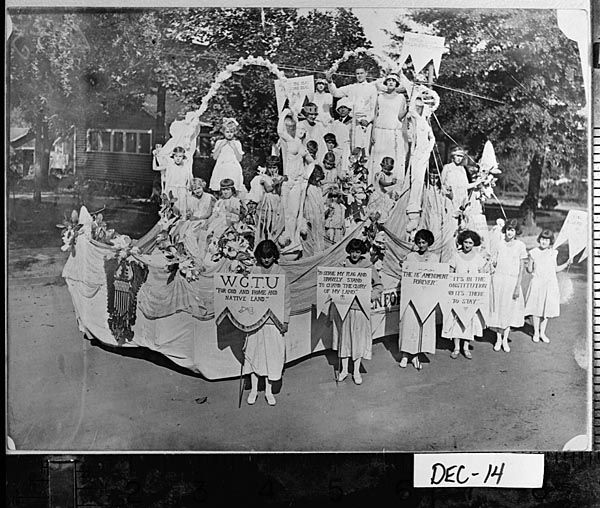
The temperance movement represented women’s initial foray into public reform. Southern women who became temperance advocates believed alcohol was the root of immorality and fostered an environment of crime and poverty where male breadwinners neglected their wives and children in favor of evenings spent wasting their wages at the saloon. Georgia’s first Woman’s Christian Temperance Union (WCTU) was formed in Atlanta in April of 1880 and other unions were quickly established throughout the state. Speaking in public for the first time, women of the WCTU warned of the evils of alcohol and campaigned for laws to restrict and abolish the sale of alcoholic beverages. While the WCTU had a brief victory in 1885 when Fulton County, the most populous county in Georgia, voted to go “dry” and forbid the sale of alcoholic beverages, female reformers struggled to convince state and local governments to enact lasting temperance measures. Lack of political support for temperance crusades prompted the National WCTU to endorse woman suffrage as a means to achieve prohibition, but unions in Georgia continued to oppose women’s voting rights in order to maintain their political ties with male civic and religious leaders, who generally held traditional notions of women’s social roles. While women of the WCTU won a major concession in 1907 with statewide prohibition in Georgia, the legacy of the WCTU was that it empowered women to engage in public battles and served as a springboard for female involvement in political issues throughout the Progressive Era and beyond.
After providing medical aid to soldiers on battlefields during the American Civil War, Clara Barton brought the concept of the Red Cross from Europe to the United States in 1881. The first chapters of the Georgia Red Cross were established in 1914 and many female nurses joined their ranks. They played a significant roles treating World War I (1917-18) soldiers convalescing at Fort McPherson, a military base in Georgia, and they became critical in preventing the spread of the 1918 Spanish Influenza Pandemic, a deadly disease that caused communities to halt public services, abandon gathering spaces, and quarantine inside their homes. From September 1918 through March 1919, Red Cross nurses in Savannah worked tirelessly from dawn until dusk attending to hundreds of patients as they made their way through the city, taking those too ill to remain at home to various hospitals by the wagonload.
While white women were able to harness municipal resources and local politics to meet their goals, Black women were often denied access to political spaces and consequently rooted their activism in Black neighborhoods, developing private institutions as a substitute for public services denied to Black communities by the white political establishment. Despite political disenfranchisement, Black female reformers navigated white supremacy in the Jim Crow South and created spheres in which they successfully claimed political power both as civic leaders and as mediators between the white power structure and the Black community.
Tuberculosis was a significant public health concern for city dwellers at the turn of the twentieth century. In Atlanta, fear of contracting tuberculosis blended with prevailing racist attitudes, and Black southerners were vilified as disease-ridden carriers who threatened to infect white communities. Believing Black Atlantans posed a health risk to the city, the Anti-Tuberculosis Association (ATA), composed entirely of white members, invited Black female reformers to develop a Black branch of the organization and the Negro Anti-Tuberculosis Association was formed. Women of the Negro ATA were able to take advantage of white anxieties concerning tuberculosis and challenge the neglect of Black citizens within the city’s public health agenda. Black women carved out a space as mediators between Black communities and white City Hall, where they confronted white supremacy by reallocating public resources to form a system of healthcare for Black Atlantans. This healthcare system was accomplished by spearheading countless reform campaigns, including establishing a network of free mobile medical clinics, organizing neighborhood cleanup campaigns, petitioning the city to take some responsibility for sanitary conditions in Black schools and neighborhoods, and forming public programs to spread educational information about tuberculosis. Black women who participated in Atlanta’s anti-tuberculosis movement were civic leaders who established a system of community-based programs that protected the health and welfare of Atlanta’s Black communities.
Eugenics gained a foothold in Georgia in the 1910s when women’s organizations and medical associations began campaigning for the segregation and sterilization of those deemed mentally “unfit.” One such women’s organization was the Junior League of Augusta, who would become strong proponents of eugenics through their work, organizing health clinics and milk drives for children living in poverty. Believing that poor women were burdened with unwanted children who exacerbated their financial struggles, the League opened Augusta’s first birth-control clinic under the direction of Nora Nixon. Nixon would become a leading advocate of the eugenics movement while attending lectures on the subject at the University of Georgia and while volunteering at the Georgia Training School for Mental Defectives at Gracewood. After encountering “feeble-minded persons living in appalling conditions” at Gracewood and hearing that “feeble-mindedness” was an inherited trait at university lectures, Nixon became committed to legalizing mandatory eugenic sterilization. Nixon and her fellow League members traveled throughout Georgia petitioning politicians and organizing lectures for civic groups in order to gain support for laws that would eliminate reproductive potential among people considered mentally “defective.” Believing cognitive disabilities to be genetic indicators of social inferiority and an economic burden on public resources, the League actively promoted laws enforcing compulsory sexual sterilization and Georgia became the last state in the nation to legalize eugenic sterilization in 1937.
Race Reform
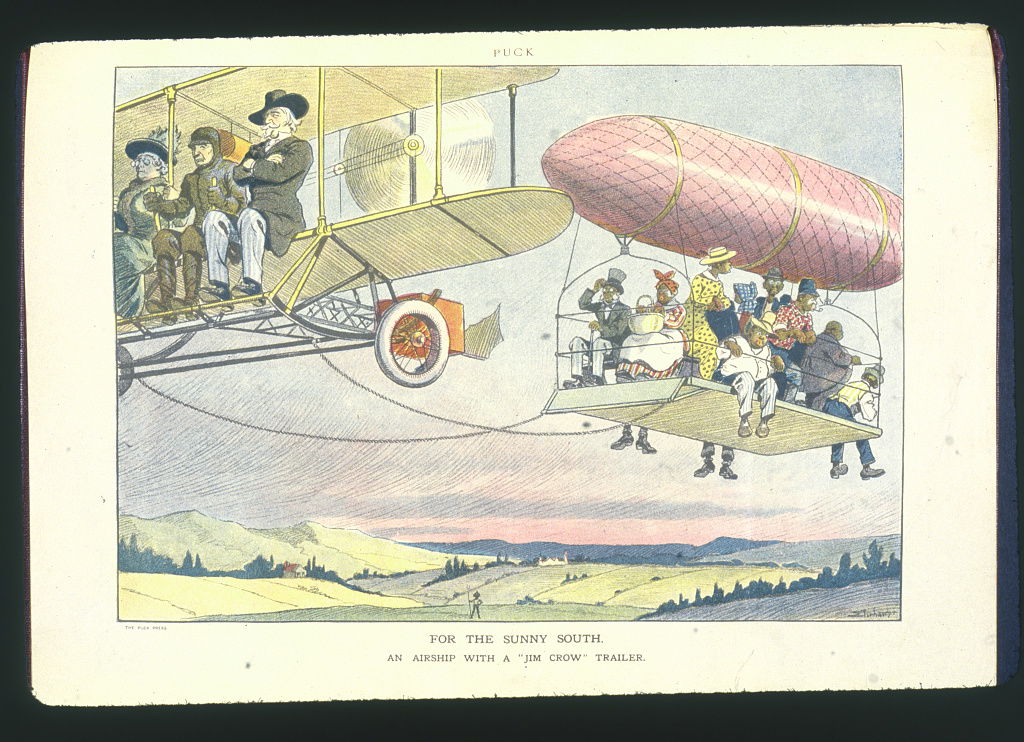
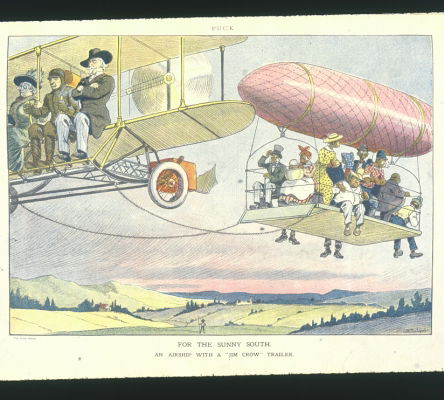
Reform measures in Georgia during the Progressive Era often restricted Black rights. Beginning in the 1890s, Georgia instituted Jim Crow laws that separated the city into Black and white areas. Georgia’s Black neighborhoods were neglected when it came to city services, such as paved streets and regular garbage collection, and public accommodations, such as parks, schools, and libraries. In an environment where white female reformers viewed racial segregation and Black disenfranchisement as reform measures that brought about racial harmony, the main response to Black concerns came from the Black community. Black female reformers were not only guided by goals of civic improvement but also demands for social justice. They challenged white supremacy through mutual aid associations, social welfare organizations, and private institutions that connected and supported Black communities across Georgia. Black women engaged in interracial cooperation with white women to marshal public resources and address race-based concerns such as lynching, police brutality, and the neglect of Black communities by local governments. When white women participated in campaigns that benefited Black neighborhoods, they often did so with a paternalistic approach that viewed Black Americans as inferior and thus requiring white assistance. Despite the shortcomings in collaborative efforts between white and Black women, they laid the groundwork for later cooperative movements, taking tentative but significant steps toward solidarity at a time when shaking hands or sharing a meal challenged the status quo.
The most common justification for lynchings and other forms of extralegal violence in the South was the protection of white women from perceived sexual transgressions allegedly committed by Black men. These dubious allegations were used by white mobs to terrorize and control southern Blacks. In order to challenge public perception and expose white mobs as murderers and criminals, Jessie Daniel Ames organized a meeting in Atlanta to find ways white women could help eliminate the crime of lynching in the South. As a result of this meeting, the Association of Southern Women for the Prevention of Lynching (ASWPL) was formed in 1930. The ASWPL operated as a regionwide women’s crusade, establishing associations in each state, including the Georgia Association for the Prevention of Lynching. Georgian members of the ASWPL conducted investigations into lynchings and mobilized an educational campaign based on their own research. Ames and other women of the ASWPL also worked to prevent lynching by condemning politicians and law enforcement officials who turned a blind eye when Black prisoners were turned over to white mobs. Through political pressure, rigorous research, and public campaigns, women of the ASWPL effectively challenged pervasive white perceptions of lynching and helped bring an end to lynch law in the South.
The Commission on Interracial Cooperation (CIC) was founded in 1919 in Atlanta, Georgia and operated as a regional organization intended to promote racial harmony and prevent race-based civil unrest throughout the South. While women were initially not allowed to participate in the CIC, director Will Alexander consented to women’s committees after receiving considerable pressure from civic female leaders in Atlanta. In 1921 the Georgia CIC formed the Women’s Committee, composed of Black and white women active in church, education, and social welfare work. Despite hostility toward interracial cooperation in Georgia, the CIC encouraged its Black and white members to work together. While the meetings of the Women’s Committee were racially segregated, Black and white members met jointly to discuss organizational plans and collaborate on community projects. Women of the CIC sought to improve conditions in Black homes and schools throughout Atlanta and conducted extensive surveys that later informed the group’s legislative and fundraising initiatives. In addition to civic improvement projects, women of the CIC sought to improve the attitudes of white Georgians and organized a variety of community programs intended to educate white audiences on Black achievements and publicize racial issues. While the women of the CIC failed to alter systems that maintained Black disenfranchisement, they helped build a foundation for later changes in Atlanta’s racial attitudes and contributed to the city’s eventual acceptance of civil rights.
Education Reform
Women would dramatically reshape Georgia’s public education system in the Progressive Era. Black women stressed education as the primary avenue to racial equality and took a lead role in establishing programs that expanded Black educational opportunities. In the Black community, educational institutions operated as avenues for reform with Black schools and universities serving as hubs for community outreach. Women who attended Black southern colleges were encouraged to use their education to respond to local problems, aided in part by emerging fields for Black women in nursing, teaching, and social work. Education reform for white women both encompassed and transcended their desire for independence. Denied admission to many colleges in Georgia and barred from participating in politics, white women identified with other white groups who were neglected by public institutions. White women linked inadequate schooling in poor, white communities in rural areas with their own desire to gain independence through educational opportunities. While campaigning for admission to universities in Georgia and employment for female teachers, they also fought for the expansion and improvement of rural school systems, established industrial schools to teach modern skills, and created public kindergartens.
Historically Black colleges and universities (HBCUs) provided a safe space for activists and scholars alike to engage in education reform and discuss social change without fear of white retaliation. Black postsecondary institutions designed social service education to respond to local problems in southern Black communities. In 1920 the Atlanta School of Social Work (now part of Clark Atlanta University) became the first independent institution in Georgia to offer professional social service training, and its volunteer apprentice model would significantly shape social work pedagogy and practice. Through community partnerships with programs like the Red Cross, the Neighborhood Union, and the Anti-Tuberculosis Association, the curriculum for the Atlanta School of Social Work required students to enroll in coursework while participating in field placements with local social welfare agencies. Social service education at HBCUs stressed empirical research in the development of welfare programs and instilled a sense of responsibility among its students, many of whom were women, to use their professional skills to improve conditions for Black Americans. As institutions like the Atlanta School of Social Work trained a burgeoning cohort of social service professionals, they became hubs for civic outreach and were instrumental in advancing economic, political, and educational opportunities in the Black community.
For African Americans navigating the terrain of the New South, education became an expression of freedom and a pathway to racial equality. Yet white schools within Atlanta’s public education system received the lion’s share of funding, forcing underpaid educators in overcrowded Black schools to teach double sessions where two groups of students each attended class half-time. When Selena Sloan Butler first experienced these deficits as she struggled to find a kindergarten that would admit her son, she dedicated her life to closing the education gap for Black children beginning with establishing the nation’s first Black parent-teacher association in 1911 at Yonge Street School in Atlanta. Butler helped neighboring schools organize their own parent-teacher associations and coordinated grassroots efforts to fight for more equitable funding in education and adequate school facilities. Butler became so successful in leading Atlanta school improvement initiatives that she founded the Georgia Colored Parent-Teacher Association in 1919, a statewide organization intended to coordinate local efforts. She would establish and become the founding president of the National Congress of Colored Parents and Teachers (NCCPT) in 1926. A pioneer in Black education, Butler created a nationwide network for Black educational institutions and contributed to closing the racial divide in Georgia’s school system.
White female reformers like Martha Berry and Julia Flisch often linked their own desire for independence with the dissemination of educational opportunities to poor, white children in rural areas. Recognizing that public resources were often reserved for males and wealthier white communities, both Berry and Flisch advocated for a democratic distribution of state services with fairer systems of education that extended to females and white, working-class communities. From 1902 to 1926, Martha Berry deeded her own land and secured wealthy patrons to build a school system for the children of poor landowners and tenant farmers in the vicinity of Rome; these efforts resulted in the creation of a Boys’ Industrial School, the Martha Berry School for Girls, and the Berry Junior College (now Berry College). As a journalist for the Augusta Chronicle, Julia Flisch used her public platform to critique Georgia’s educational system and advocate for white women’s pursuit of vocational and educational opportunities. Flisch became a driving force behind the state’s first female industrial college, the Georgia Normal and Industrial College (now Georgia College and State University), which opened in Milledgeville in 1891. Berry Schools and the Georgia Normal and Industrial College endeavored to prepare women and rural children for the demands of a new industrial age, training a modern workforce that would provide the foundation for Georgia’s future economic prosperity.