Skip to content
New Georgia Encyclopedia
  • Home
  • Articles & Media
  • Browse by Topic
  • Browse Collections
  • Browse Georgia Standards
  • A-Z Index
  • Exhibitions
  • Educators
  • Browse    Chevron down
  • Exhibitions
  • Educators
By Topic Content Collections Georgia Standards A-Z Index Arrow right
  • Arts & Culture

    Arts & Culture

  • Business & Economy

    Business & Economy

  • Counties, Cities & Neighborhoods

    Counties, Cities & Neighborhoods

  • Education

    Education

  • Geography & Environment

    Geography & Environment

  • Government & Politics

    Government & Politics

  • History & Archaeology

    History & Archaeology

  • People

    People

  • Science & Medicine

    Science & Medicine

  • Sports & Outdoor Recreation

    Sports & Outdoor Recreation

Frankie Welch’s Americana
Featured

Frankie Welch’s Americana

Fashion and politics from Georgia-born designer Frankie Welch

Stamp Collection
Featured

Stamp Collection

Stamps honoring the political figures, artists, and culture of Georgia.

Recently Added
View All Arrow right
City Page: Atlanta

City Page: Atlanta

Stamp Collection

Stamp Collection

Frankie Welch’s Americana

Frankie Welch’s Americana

  • Georgia Studies

    Georgia Studies

    Eighth Grade
  • Georgia, My State

    Georgia, My State

    Second Grade
All Topics Arrow right History & Archaeology Arrow right Antebellum Era, 1800-1860 Arrow right

Antebellum Figures

Garnett Andrews

Garnett Andrews

1798-1873
Francis S. Bartow

Francis S. Bartow

1816-1861
John Macpherson Berrien

John Macpherson Berrien

1781-1856
Harrison Berry

Harrison Berry

1816-ca. 1882
Elias Boudinot

Elias Boudinot

ca. 1804-1839
John Brown

John Brown

ca. 1810-1876
Howell Cobb

Howell Cobb

1815-1868
Thomas R. R. Cobb

Thomas R. R. Cobb

1823-1862
Mark Anthony Cooper

Mark Anthony Cooper

1800-1885
John Ruggles Cotting

John Ruggles Cotting

1784-1867
William and Ellen Craft

William and Ellen Craft

1824-1900; 1826-1891
George W. Crawford

George W. Crawford

1798-1872
William Harris Crawford

William Harris Crawford

1772-1834
Henry Cumming

Henry Cumming

1799-1866
De Renne Family

De Renne Family

DuBignon Family

DuBignon Family

Charles Rinaldo Floyd

Charles Rinaldo Floyd

1797-1845
William Washington Gordon

William Washington Gordon

1796-1842
John D. Gray

John D. Gray

1808-1878
William Grimes

William Grimes

1784-1865
Benjamin Hill

Benjamin Hill

1823-1882
William Brown Hodgson

William Brown Hodgson

1801-1871
Hopkins Holsey

Hopkins Holsey

ca. 1799-1859
Herschel Johnson

Herschel Johnson

1812-1880
Charles C. Jones Jr.

Charles C. Jones Jr.

1831-1893
Fanny Kemble

Fanny Kemble

1809-1893
Roswell King

Roswell King

1765-1844
Thomas Butler King

Thomas Butler King

1800-1864
Marquis de Lafayette in Georgia

Marquis de Lafayette in Georgia

Mirabeau B. Lamar

Mirabeau B. Lamar

1798-1859
LeConte Family

LeConte Family

Joseph Henry Lumpkin

Joseph Henry Lumpkin

1799-1867
Wilson Lumpkin

Wilson Lumpkin

1783-1870
Eugenius A. Nisbet

Eugenius A. Nisbet

1803-1871
Oliver H. Prince

Oliver H. Prince

1782-1837
Elizabeth Church Robb

Elizabeth Church Robb

1823-1868
John Ross

John Ross

1790-1866
Sequoyah

Sequoyah

ca. 1770-ca. 1840
Thomas Spalding

Thomas Spalding

1774-1851
Alexander Stephens

Alexander Stephens

1812-1883
Josiah Tattnall

Josiah Tattnall

1795-1871
Telfair Family

Telfair Family

Mary Telfair

Mary Telfair

1791-1875
Ella Gertrude Clanton Thomas

Ella Gertrude Clanton Thomas

1834-1907
Nelson Tift

Nelson Tift

1810-1891
Robert Toombs

Robert Toombs

1810-1885
Joseph Vann

Joseph Vann

1798-1844
Augustin Verot

Augustin Verot

1804-1876
Loading
Star

Featured Content

Harriet Powers

Harriet Powers

People
James Oglethorpe

James Oglethorpe

Colonial Figures
Trending

Trending

Ebos Landing

Ebos Landing

Antebellum Places
Quakers

Quakers

Faiths & Denominations
Georgia Guidestones

Georgia Guidestones

Sites & Museums
Daniel Marshall

Daniel Marshall

Religious Figures
Clock

Updated Recently

Dougherty County

Dougherty County

1 day ago
Mary Frances Early

Mary Frances Early

1 day ago
Georgia Southwestern State University

Georgia Southwestern State University

5 days ago
LaGrange College

LaGrange College

1 week ago

A More Perfect Union

The New Georgia Encyclopedia is supported by funding from A More Perfect Union, a special initiative of the National Endowment for the Humanities.

Learn More
New Georgia Encyclopedia
ISSN 2765-8732
Project Partners
logo-press UGA Press logo-galileo GALILEO logo-humanities Georgia Humanities logo-seal Office of the Governor logo-libraries UGA Libraries
Articles & Media
  • Browse by Topic
  • Content Collections
  • Georgia Standards
Special Content
  • Quizzes
  • Exhibitions
  • Spotify Playlists
  • Georgia Exhibits
  • Educator Resources
About
  • The Project
  • The People
  • Sponsors & Partners
Editorial
  • Our Process
  • Contributor Info
  • Permissions & Use
Stay in Touch
Facebook Instagram Twitter Contact Us
Donate to the NGE

Your support helps us commission new entries and update existing content.

Donate

© 2004–2026 Georgia Humanities, University of Georgia Press

  • Terms of Use
  • Privacy Policy

Media gallery

Elizabeth Church Robb, letter to James Robb, dated June 24, 1859

Elizabeth Church Robb Letter

  • Info Details
  • Citation Terms of Use

This letter, dated June 24, 1859, shows a correspondence between Elizabeth Craig and her soon-to-be husband, James Robb. The couple married in 1860 and relocated to Chicago before the outbreak of the Civil War.

The Historic New Orleans Collection (Williams Research Center), James Robb Collection , #MSS 265.

The New Georgia Encyclopedia does not hold the copyright for this media resource and can neither grant nor deny permission to republish or reproduce the image online or in print. All requests for permission to publish or reproduce the resource must be submitted to the rights holder.

Camp Douglas POW Camp in Chicago, Illinois

Camp Douglas POW Camp

  • Info Details
  • Citation Terms of Use

Camp Douglas, depicted in this etching from Harper's Weekly, served as a prisoner of war camp during the Civil War. Elizabeth Church Robb frequently visited the camp to assist Confederate prisoners—a fact that was later used to sensationalize her legacy as a Lost Cause heroine.

From Harper's Weekly, Wikimedia Commons
View on source site

The New Georgia Encyclopedia does not hold the copyright for this media resource and can neither grant nor deny permission to republish or reproduce the image online or in print. All requests for permission to publish or reproduce the resource must be submitted to the rights holder.

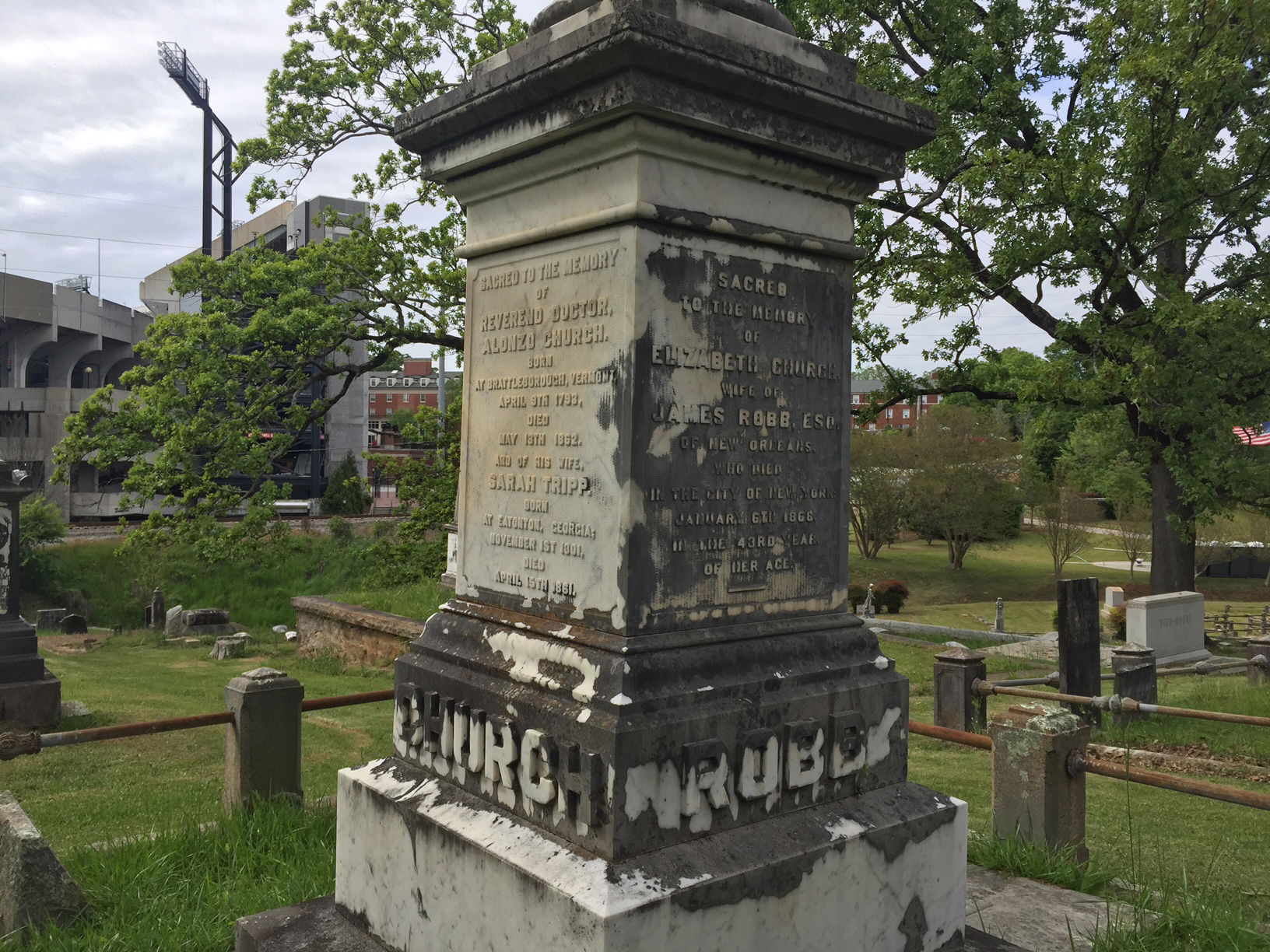
Elizabeth Church Robb's headstone at Oconee Hill Cemetery in Athens, Georgia.

Elizabeth Church Robb’s Headstone

  • Info Details
  • Citation Terms of Use

Elizabeth Church Robb died in 1868 and was buried in a family plot at the Oconee Hill Cemetery in Athens. Though Robb died from ovarian cancer, her obituary was embellished and reprinted to bolster Lost Cause mythology.

From the Willson Center Digital Humanities Lab, Death and Human History in Athens.
View on source site

The New Georgia Encyclopedia does not hold the copyright for this media resource and can neither grant nor deny permission to republish or reproduce the image online or in print. All requests for permission to publish or reproduce the resource must be submitted to the rights holder.

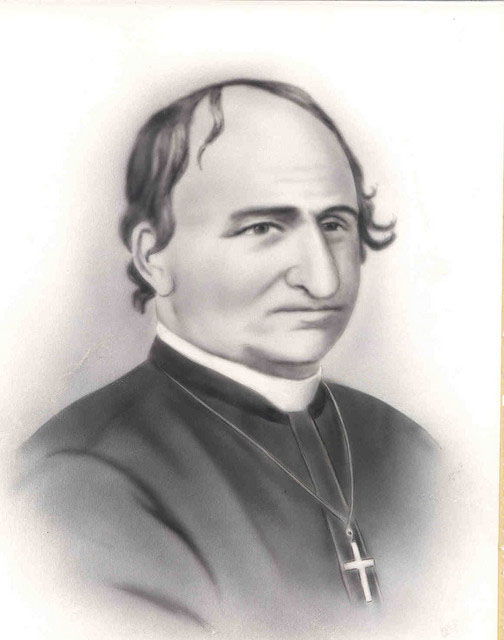
Augustin Verot

Augustin Verot

  • Info Details
  • Citation Terms of Use

Augustin Verot, known as the "Rebel Bishop" for his support of the Confederacy during the Civil War, became bishop of the Diocese of Savannah in 1861 and led the Catholic community through the turbulent years of war and Reconstruction.

Courtesy of Catholic Diocese of Savannah Archives

The New Georgia Encyclopedia does not hold the copyright for this media resource and can neither grant nor deny permission to republish or reproduce the image online or in print. All requests for permission to publish or reproduce the resource must be submitted to the rights holder.

Slavery & Abolitionism

Slavery & Abolitionism

  • Info Details
  • Citation Terms of Use

On January 4, 1861 Augustin Verot delivered a sermon defending the practice of slavery and condemning abolitionism. It was later reprinted as a Confederate tract and circulated throughout the region, earning Verot wide acclaim in southern states.   
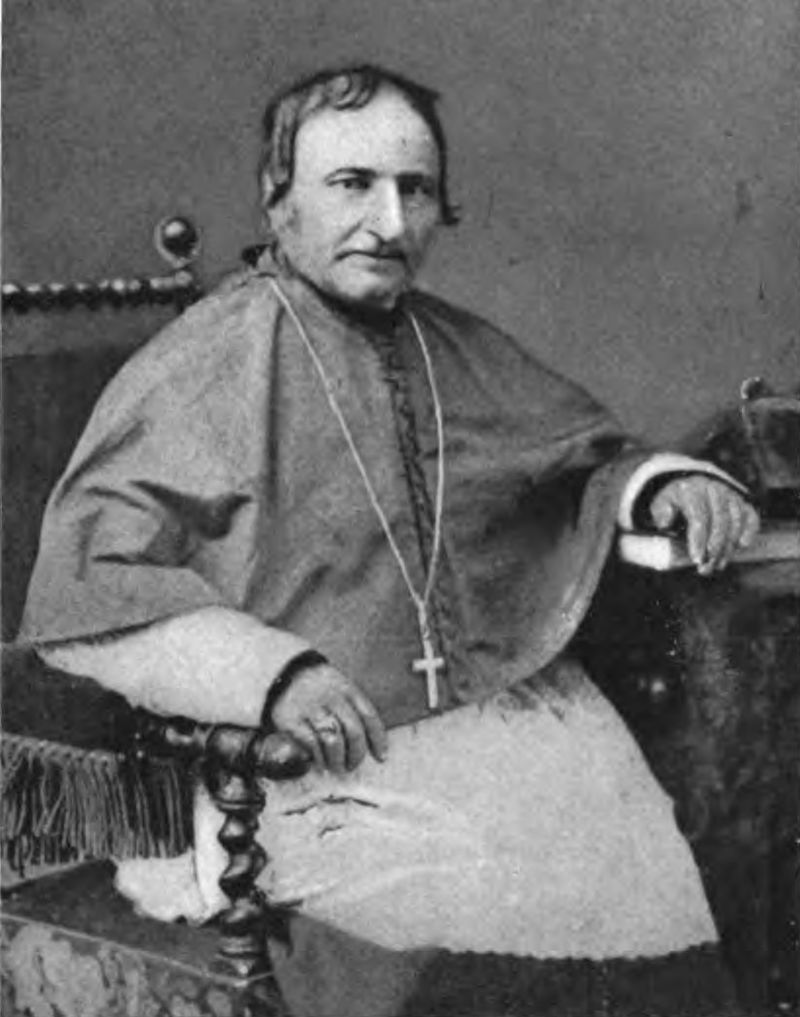
The New Georgia Encyclopedia does not hold the copyright for this media resource and can neither grant nor deny permission to republish or reproduce the image online or in print. All requests for permission to publish or reproduce the resource must be submitted to the rights holder.

Augustin Verot

Augustin Verot

  • Info Details
  • Citation Terms of Use

In the aftermath of the Civil War, Augustin Verot called for Catholic bishops to support the construction of schools and churches for freedmen. 

The New Georgia Encyclopedia does not hold the copyright for this media resource and can neither grant nor deny permission to republish or reproduce the image online or in print. All requests for permission to publish or reproduce the resource must be submitted to the rights holder.

William Grimes

William Grimes

  • Info Details
  • Citation Terms of Use

William Grimes wrote Life of William Grimes, the Runaway Slave. The first slave narrative printed in the U.S., it was published in New York City in 1825.

Photograph from Dwight C. Kilbourne, The Bench and Bar of Litchfield County, Connecticut, 1709-1909

The New Georgia Encyclopedia does not hold the copyright for this media resource and can neither grant nor deny permission to republish or reproduce the image online or in print. All requests for permission to publish or reproduce the resource must be submitted to the rights holder.

Savannah Rice Plantations, 1825

Savannah Rice Plantations, 1825

  • Info Details
  • Citation Terms of Use

This map of Savannah River-area rice plantations was created in 1825, the same year William Grimes first published his narrative in New York City. Grimes served six enslavers in Savannah between 1811 and 1815 before escaping to freedom in New England.

Chatham County Map Portfolio, compiled by workers of the Writers program of the Works Projects Administration in the State of Georgia. Sponsored by the Georgia Society of the Colonial Dames of America.

The New Georgia Encyclopedia does not hold the copyright for this media resource and can neither grant nor deny permission to republish or reproduce the image online or in print. All requests for permission to publish or reproduce the resource must be submitted to the rights holder.

Map of Georgia, 1851

Map of Georgia, 1851

  • Info Details
  • Citation Terms of Use

William G. Bonner's Pocket Map of the State of Georgia was published in Milledgeville in 1851. Bonner was a civil engineer who published a series of pocket maps in the mid-nineteenth century.

Courtesy of Hargrett Rare Book and Manuscript Library, University of Georgia Libraries.

The New Georgia Encyclopedia does not hold the copyright for this media resource and can neither grant nor deny permission to republish or reproduce the image online or in print. Requests for permission to publish or reproduce the resource should be submitted to the Hargrett Manuscript and Rare Book Library at the University of Georgia.

W. T. Wofford

W. T. Wofford

  • Info Details
  • Citation Terms of Use

W. T. Wofford, pictured on a postcard distributed in 1881 during the International Cotton Exposition in Atlanta, was a military leader and state legislator. A native of Habersham County, Wofford served in both the Mexican War and Civil War.

Courtesy of Hargrett Rare Book and Manuscript Library, University of Georgia Libraries.

The New Georgia Encyclopedia does not hold the copyright for this media resource and can neither grant nor deny permission to republish or reproduce the image online or in print. Requests for permission to publish or reproduce the resource should be submitted to the Hargrett Manuscript and Rare Book Library at the University of Georgia.

Ella Gertrude Clanton Thomas

Ella Gertrude Clanton Thomas

  • Info Details
  • Citation Terms of Use

Ella Gertrude Clanton Thomas kept an extensive journal chronicling her life as the daughter and wife of Augusta planters from 1848 to 1889. An edited version of the journal was published in 1990 under the title The Secret Eye.

Courtesy of Georgia Info, Digital Library of Georgia.
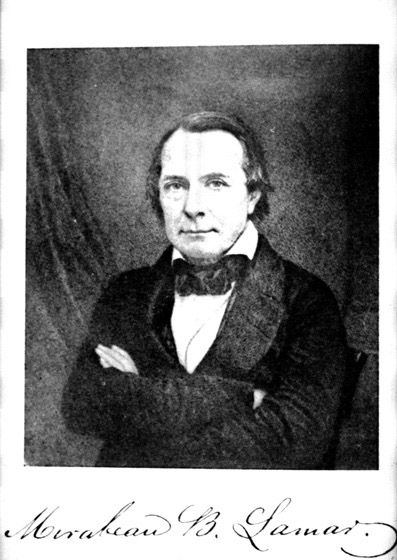
The New Georgia Encyclopedia does not hold the copyright for this media resource and can neither grant nor deny permission to republish or reproduce the image online or in print. Requests for permission to publish or reproduce the resource may need to be submitted to the Digital Library of Georgia.

Mirabeau Lamar

Mirabeau Lamar

  • Info Details
  • Citation Terms of Use

During the 1820s Mirabeau Lamar, a Georgia native, established the Columbus Enquirer newspaper and served in the state senate. In 1835 he left Georgia for Texas, where he became president of the republic in 1838.

Reprinted by permission of Institute of Texan Cultures, # 068-0069, source unknown

The New Georgia Encyclopedia does not hold the copyright for this media resource and can neither grant nor deny permission to republish or reproduce the image online or in print. All requests for permission to publish or reproduce the resource must be submitted to the rights holder.

Oliver H. Prince

Oliver H. Prince

  • Info Details
  • Citation Terms of Use

Oliver H. Prince, a native of Connecticut, had a varied career in Georgia, which included stints as a lawyer, state and U.S. senator, journalist, and humorist. He was also instrumental in the founding of Macon and in bringing railroads to the state.
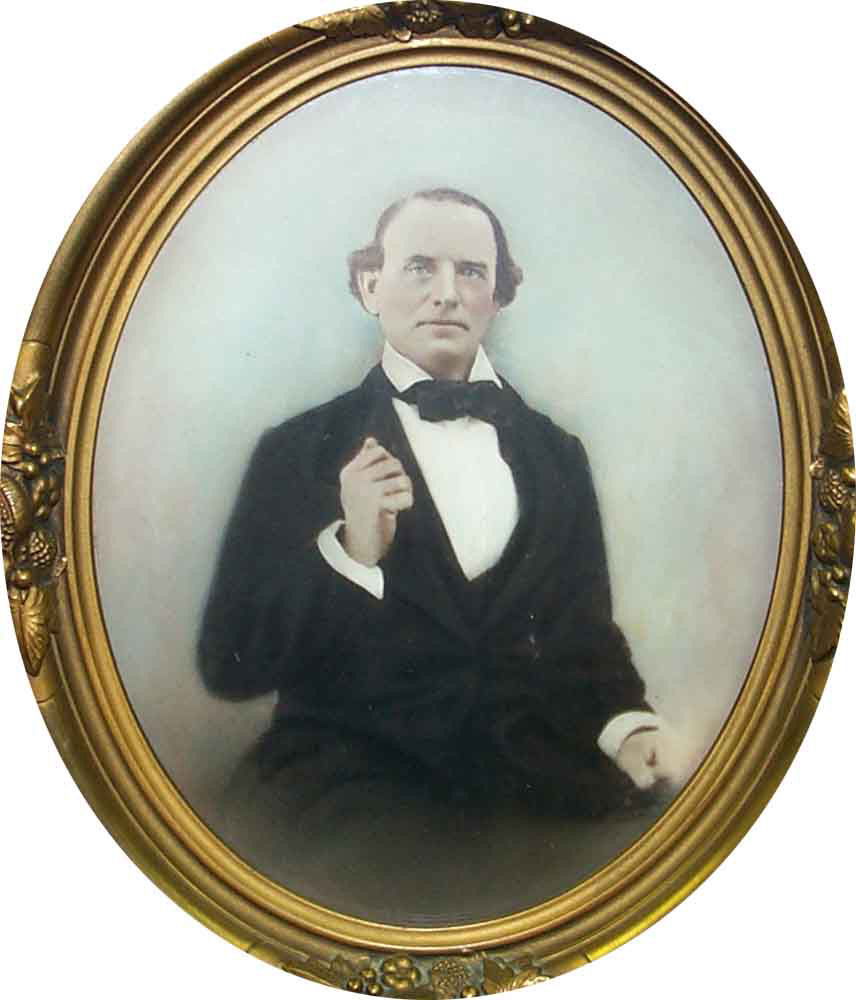
Courtesy of Hargrett Rare Book and Manuscript Library, University of Georgia Libraries.

The New Georgia Encyclopedia does not hold the copyright for this media resource and can neither grant nor deny permission to republish or reproduce the image online or in print. Requests for permission to publish or reproduce the resource should be submitted to the Hargrett Manuscript and Rare Book Library at the University of Georgia.

John D. Gray

John D. Gray

  • Info Details
  • Citation Terms of Use

John D. Gray was the first major railroad contractor in the South and served as president of the Monroe Railroad in Georgia. During the Civil War he manufactured weaponry for the Confederacy.

Courtesy of Nancy Eubanks

The New Georgia Encyclopedia does not hold the copyright for this media resource and can neither grant nor deny permission to republish or reproduce the image online or in print. All requests for permission to publish or reproduce the resource must be submitted to the rights holder.

Francis S. Bartow

Francis S. Bartow

  • Info Details
  • Citation Terms of Use

Colonel Francis S. Bartow was killed in July 1861 during a Civil War battle at Manassas, Virginia. He was the first high-ranking Georgia military officer to die in the war. Before his death, Bartow advocated for secession and became one of the leaders of the new Confederate government. His portrait was painted by Willis Pepoon.

Courtesy of Georgia Historical Society, Georgia Historical Society collection of portraits, #GHS 1361-320.

View on partner site

The New Georgia Encyclopedia does not hold the copyright for this media resource and can neither grant nor deny permission to republish or reproduce the image online or in print. All requests for permission to publish or reproduce the resource must be submitted to Georgia Historical Society.

Garnett Andrews

Garnett Andrews

  • Info Details
  • Citation Terms of Use

Garnett Andrews was appointed judge of the Northern Circuit of the Superior Court of Georgia in 1834. He later served in the state House of Representatives and, on the eve of the Civil War, was a vocal opponent of secession. The portrait was painted in the early 1830s.

Courtesy of Rosalie Andrews McConnell

The New Georgia Encyclopedia does not hold the copyright for this media resource and can neither grant nor deny permission to republish or reproduce the image online or in print. All requests for permission to publish or reproduce the resource must be submitted to the rights holder.

  • Info Details
  • Citation Terms of Use

The New Georgia Encyclopedia does not hold the copyright for this media resource and can neither grant nor deny permission to republish or reproduce the image online or in print. All requests for permission to publish or reproduce the resource must be submitted to the rights holder.

Josiah Tattnall

Josiah Tattnall

  • Info Details
  • Citation Terms of Use

As a U.S. naval officer, Josiah Tattnall traveled around the world during the 1840s and 1850s. After the Civil War began, he was commissioned as a captain in the Confederate navy, with command of the Georgia and South Carolina coasts.

Image from U.S. Naval Historical Center Photograph

The New Georgia Encyclopedia does not hold the copyright for this media resource and can neither grant nor deny permission to republish or reproduce the image online or in print. All requests for permission to publish or reproduce the resource must be submitted to the rights holder.

William Harris Crawford

William Harris Crawford

  • Info Details
  • Citation Terms of Use

William Harris Crawford, a longtime resident of Oglethorpe County, became the first Georgian to run for the U.S. presidency when he stood for election in both 1816 and 1824. Although never elected president, Crawford served in a variety of other capacities during his political career, including service as a state representative, U.S. senator, minister to France, and cabinet member for U.S. president James Madison.

Courtesy of Department of the Treasury

The New Georgia Encyclopedia does not hold the copyright for this media resource and can neither grant nor deny permission to republish or reproduce the image online or in print. All requests for permission to publish or reproduce the resource must be submitted to the rights holder.

John Macpherson Berrien

John Macpherson Berrien

  • Info Details
  • Citation Terms of Use

As a U.S. senator, John Macpherson Berrien distinguished himself as an eloquent debater. The U.S. Supreme Court chief justice John Marshall dubbed him "the honey-tongued Georgia youth." Engraving is by J. C. Buttre from a daguerreotype.

Courtesy of Hargrett Rare Book and Manuscript Library, University of Georgia Libraries, Georgia Photo File.

The New Georgia Encyclopedia does not hold the copyright for this media resource and can neither grant nor deny permission to republish or reproduce the image online or in print. Requests for permission to publish or reproduce the resource should be submitted to the Hargrett Manuscript and Rare Book Library at the University of Georgia.

John Macpherson Berrien

John Macpherson Berrien

  • Info Details
  • Citation Terms of Use

John Macpherson Berrien, pictured circa 1830, served as a state senator, a U.S. senator, and the attorney general of the United States under President Andrew Jackson. A native of New Jersey, Berrien spent much of his life in Savannah.

Courtesy of Hargrett Rare Book and Manuscript Library, University of Georgia Libraries, Georgia Photo File.

The New Georgia Encyclopedia does not hold the copyright for this media resource and can neither grant nor deny permission to republish or reproduce the image online or in print. Requests for permission to publish or reproduce the resource should be submitted to the Hargrett Manuscript and Rare Book Library at the University of Georgia.

Mary Telfair

Mary Telfair

  • Info Details
  • Citation Terms of Use

Mary Telfair, the daughter of Georgia governor Edward Telfair, bequeathed the family home in Savannah to found Telfair Museums, today the oldest public art museum in the South. Portrait by Enrichetta Narducci (1842), gouache on ivory, 3 1/8" x 2 3/4".

Courtesy of Telfair Museums.
The New Georgia Encyclopedia does not hold the copyright for this media resource and can neither grant nor deny permission to republish or reproduce the image online or in print. All requests for permission to publish or reproduce the resource must be submitted to Telfair Museums.

Telfair Academy of Arts and Sciences

Telfair Academy of Arts and Sciences

  • Info Details
  • Citation Terms of Use

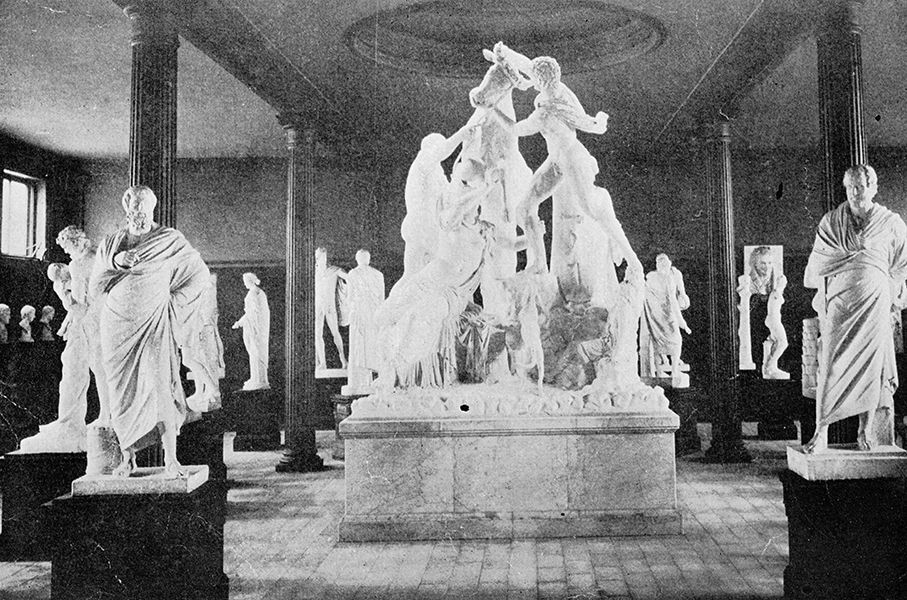
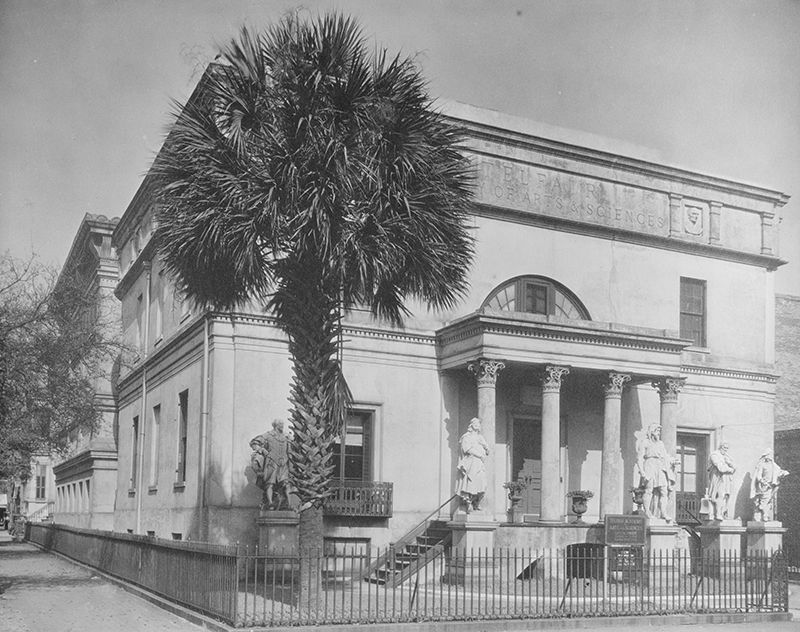
Sculptures donated by Mary Telfair grace the interior of the Telfair Academy of Arts and Sciences (later Telfair Museums) in Savannah, circa 1900. Telfair bequeathed the family home, designed by William Jay, for the establishment of the museum upon her death in 1875.

Courtesy of Georgia Archives, Vanishing Georgia, # ctm189.

View on partner site

The New Georgia Encyclopedia does not hold the copyright for this media resource and can neither grant nor deny permission to republish or reproduce the image online or in print. Requests for permission to publish or reproduce the resource should be submitted to the Georgia Archives.

Telfair Hospital for Females

Telfair Hospital for Females

  • Info Details
  • Citation Terms of Use

The Telfair Hospital for Females, in Savannah, was built in 1884 in the Italianate style by the architectural firm of Fay and Eichberg. Funding for the hospital was provided for in Mary Telfair's will, and by 1960, when it merged with Candler General Hospital, the facility had become the longest-operating women's hospital in the country.

Courtesy of Library of Congress, Prints and Photographs Division, Historic American Buildings Survey, Photograph by Walter Smalling Jr..
View on source site

The New Georgia Encyclopedia does not hold the copyright for this media resource and can neither grant nor deny permission to republish or reproduce the image online or in print. All requests for permission to publish or reproduce the resource must be submitted to the rights holder.

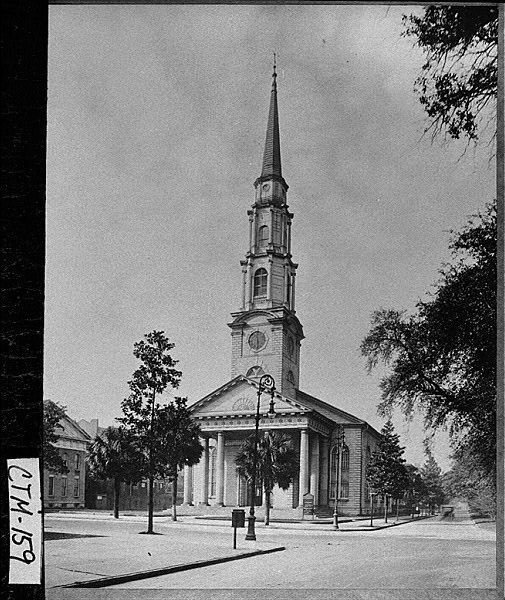
Independent Presbyterian Church

Independent Presbyterian Church

  • Info Details
  • Citation Terms of Use

Independent Presbyterian Church in Savannah, pictured circa 1930, counted Mary Telfair, the benefactor of Telfair Museums, as a member in the nineteenth century. U.S. first lady Ellen Axson Wilson, whose paternal grandfather began serving as pastor in 1857, was born in the manse of the church in 1860 and married there in 1885.

Courtesy of Georgia Archives, Vanishing Georgia, #
ctm159.

View on partner site

The New Georgia Encyclopedia does not hold the copyright for this media resource and can neither grant nor deny permission to republish or reproduce the image online or in print. Requests for permission to publish or reproduce the resource should be submitted to the Georgia Archives.

William Brown Hodgson

William Brown Hodgson

  • Info Details
  • Citation Terms of Use

William Brown Hodgson married into the prominent Telfair family of Savannah in 1842 and, in addition to managing the family plantations, became an important figure in the city's intellectual life. Watercolor-on-ivory miniature portrait (1842) by Ernest J. A. Girard.

Courtesy of Telfair Museums.

The New Georgia Encyclopedia does not hold the copyright for this media resource and can neither grant nor deny permission to republish or reproduce the image online or in print. All requests for permission to publish or reproduce the resource must be submitted to Telfair Museums.

William Brown Hodgson

William Brown Hodgson

  • Info Details
  • Citation Terms of Use

This portrait of William Brown Hodgson, by artist Carl Brandt, was unveiled at the 1876 dedication ceremony for Hodsgon Hall in Savannah. The hall was built in Hodgson's memory by his wife, Margaret Telfair Hodgson, to house the Georgia Historical Society.

Courtesy of Georgia Historical Society, Georgia Historical Society collection of portraits, #GHS 1361-084.

View on partner site

The New Georgia Encyclopedia does not hold the copyright for this media resource and can neither grant nor deny permission to republish or reproduce the image online or in print. All requests for permission to publish or reproduce the resource must be submitted to Georgia Historical Society.

  • Info Details
  • Citation Terms of Use

The New Georgia Encyclopedia does not hold the copyright for this media resource and can neither grant nor deny permission to republish or reproduce the image online or in print. All requests for permission to publish or reproduce the resource must be submitted to the rights holder.

Hodgson Hall

Hodgson Hall

  • Info Details
  • Citation Terms of Use

Hodgson Hall, completed in 1875, stands at the northwest corner of Forsyth Park in Savannah and houses the Georgia Historical Society. The building was erected by Margaret Telfair Hodgson in honor of her husband, William Brown Hodgson, an active member and curator in the society.

Courtesy of Georgia Historical Society.
The New Georgia Encyclopedia does not hold the copyright for this media resource and can neither grant nor deny permission to republish or reproduce the image online or in print. All requests for permission to publish or reproduce the resource must be submitted to Georgia Historical Society.

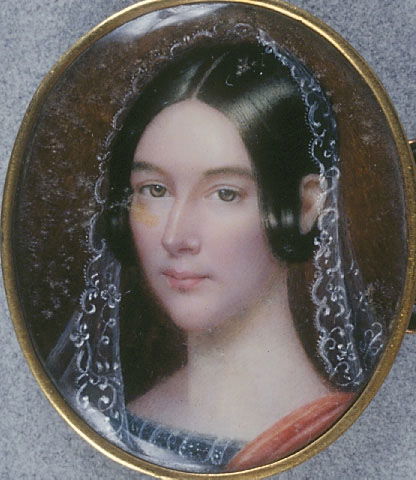
Margaret Telfair Hodgson

Margaret Telfair Hodgson

  • Info Details
  • Citation Terms of Use

Margaret Telfair was born into the prominent Telfair family of Savannah in 1797, and in 1842 she married William Hodgson in London, England. The couple lived in the Telfair mansion on St. James Square in Savannah until their deaths in the 1870s. Portrait attributed to Richard West Habersham, watercolor on ivory (1 7/8" x 1 1/2 "), ca. 1834-35.

Courtesy of Telfair Museums.

The New Georgia Encyclopedia does not hold the copyright for this media resource and can neither grant nor deny permission to republish or reproduce the image online or in print. All requests for permission to publish or reproduce the resource must be submitted to Telfair Museums.

Joseph Vann

Joseph Vann

  • Info Details
  • Citation Terms of Use

Joseph Vann, the son of Cherokee chief James Vann, inherited his father's Spring Place Plantation in Murray County. Before being dispossessed of the plantation in 1834, Vann was a successful businessman and member of the Cherokee legislature.

Courtesy of Chief Vann House Historic Site
The New Georgia Encyclopedia does not hold the copyright for this media resource and can neither grant nor deny permission to republish or reproduce the image online or in print. All requests for permission to publish or reproduce the resource must be submitted to the rights holder.

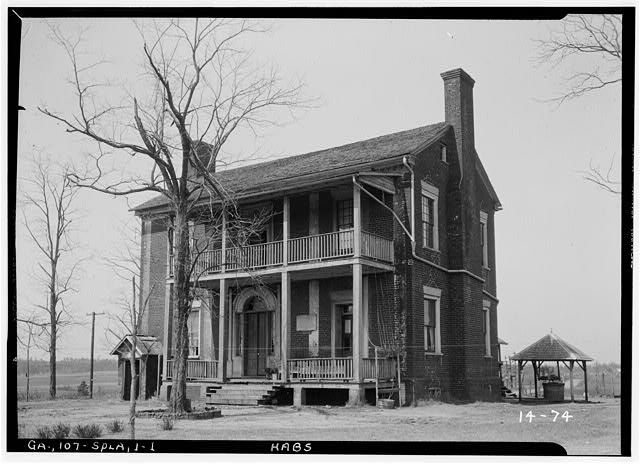
Chief Vann House, 1934

Chief Vann House, 1934

  • Info Details
  • Citation Terms of Use

In 1834 Cherokee chief James Vann's son Joseph lost the family home to the state. The home was subsequently owned by seventeen people and had fallen into a state of disrepair before its 1952 purchase and restoration by the Georgia Historical Commission.

Courtesy of Library of Congress, Prints and Photographs Division

The New Georgia Encyclopedia does not hold the copyright for this media resource and can neither grant nor deny permission to republish or reproduce the image online or in print. All requests for permission to publish or reproduce the resource must be submitted to the rights holder.

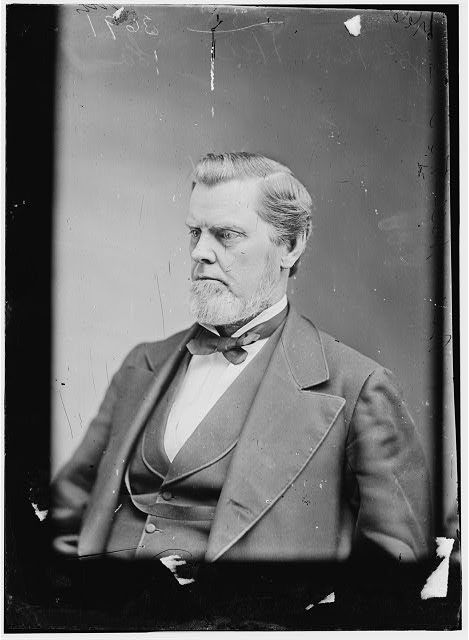
Eugenius Nisbet

Eugenius Nisbet

  • Info Details
  • Citation Terms of Use

Eugenius Nisbet was one of the first three justices, along with Joseph Henry Lumpkin and Hiram Warner, to serve on the Supreme Court of Georgia upon its inception in 1845. Previously Nisbet had served as both a state representative and a U.S. congressman.

From Georgia Government and History, by A. B. Saye
The New Georgia Encyclopedia does not hold the copyright for this media resource and can neither grant nor deny permission to republish or reproduce the image online or in print. All requests for permission to publish or reproduce the resource must be submitted to the rights holder.

Benjamin Hill

Benjamin Hill

  • Info Details
  • Citation Terms of Use

Benjamin Hill, a native of Japer County, served as a Georgia statesman for more than three decades. Hill began his political career in 1851 as a state representative, served as a Confederate senator during the Civil War, and won a seat in the U.S. Congress in 1875.

Courtesy of Library of Congress, Prints and Photographs Division
The New Georgia Encyclopedia does not hold the copyright for this media resource and can neither grant nor deny permission to republish or reproduce the image online or in print. All requests for permission to publish or reproduce the resource must be submitted to the rights holder.

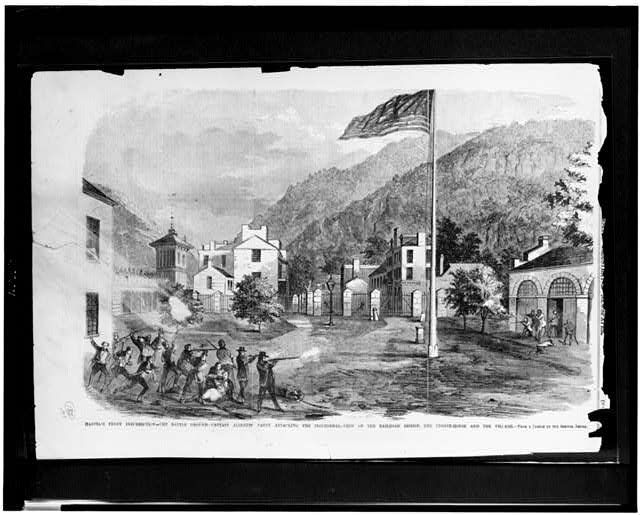
Raid on Harpers Ferry

Raid on Harpers Ferry

  • Info Details
  • Citation Terms of Use

This 1859 sketch of the abolitionist John Brown's raid on Harpers Ferry, Virginia, appeared in Frank Leslie's Illustrated Newspaper and depicts an attack on the raiders at the railroad bridge. News of the raid intensified the call for secession by many southern slaveowners.

Courtesy of Library of Congress, Prints and Photographs Division
The New Georgia Encyclopedia does not hold the copyright for this media resource and can neither grant nor deny permission to republish or reproduce the image online or in print. All requests for permission to publish or reproduce the resource must be submitted to the rights holder.

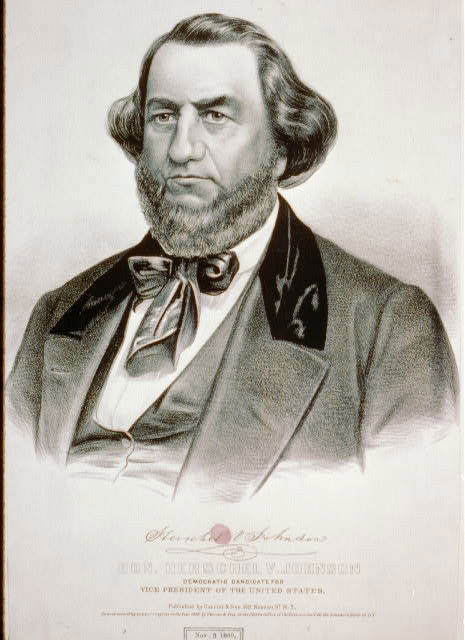
Herschel Johnson

Herschel Johnson

  • Info Details
  • Citation Terms of Use

Herschel Johnson, a nineteenth-century Georgia politician, is pictured in an 1860 Currier and Ives portrait. That same year, Johnson was the vice-presidential running mate for Democratic candidate Stephen Douglas, who lost the election to Abraham Lincoln.

Courtesy of Library of Congress, Prints and Photographs Division
The New Georgia Encyclopedia does not hold the copyright for this media resource and can neither grant nor deny permission to republish or reproduce the image online or in print. All requests for permission to publish or reproduce the resource must be submitted to the rights holder.

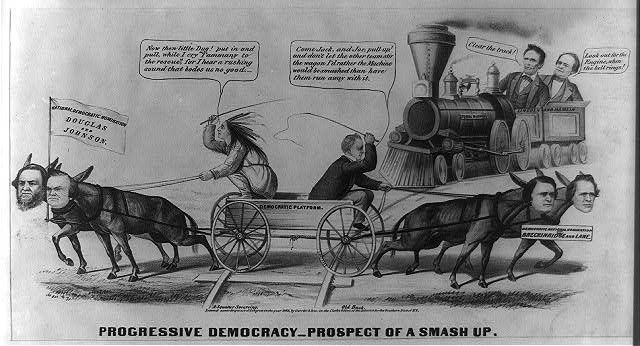
1860 Presidential Election

1860 Presidential Election

  • Info Details
  • Citation Terms of Use

Republican candidate Abraham Lincoln, with running mate Hannibal Hamlin, steams toward a wagon named "Democratic Platform" that is trapped on the tracks between two teams of candidates. Stephen Douglas and Hershel Johnson pull toward the left, while John Breckinridge and Joseph Lane pull toward the right.

Courtesy of Library of Congress, Prints and Photographs Division

The New Georgia Encyclopedia does not hold the copyright for this media resource and can neither grant nor deny permission to republish or reproduce the image online or in print. All requests for permission to publish or reproduce the resource must be submitted to the rights holder.

William Washington Gordon

William Washington Gordon

  • Info Details
  • Citation Terms of Use

William Washington Gordon served the state in a variety of ways during the nineteenth century, including terms as both representative and senator in the Georgia legislature. Gordon also made significant contributions as the president of Central Railroad and Banking Company, which constructed the first rail line between Savannah and the state's interior.

Courtesy of Hargrett Rare Book and Manuscript Library, University of Georgia Libraries, Georgia Photo File.

The New Georgia Encyclopedia does not hold the copyright for this media resource and can neither grant nor deny permission to republish or reproduce the image online or in print. Requests for permission to publish or reproduce the resource should be submitted to the Hargrett Manuscript and Rare Book Library at the University of Georgia.

William Washington Gordon Monument

William Washington Gordon Monument

  • Info Details
  • Citation Terms of Use

The monument to William Washington Gordon, builder of the state's first railroad, is situated on Wright Square in Savannah. Erected in 1883, the monument was designed by Henry Van Brunt and Frank M. Howe.

Image from Ken Lund

View on source site

The New Georgia Encyclopedia does not hold the copyright for this media resource and can neither grant nor deny permission to republish or reproduce the image online or in print. All requests for permission to publish or reproduce the resource must be submitted to the rights holder.

Henry Cumming

Henry Cumming

  • Info Details
  • Citation Terms of Use

Henry Cumming, a native of Augusta, is best remembered for his pioneering vision of and support for the Augusta Canal, which was completed in 1846. In 1822 Cumming opened a law practice in Augusta with George Crawford, who would become governor of the state in 1843.

Courtesy of David Connolly
The New Georgia Encyclopedia does not hold the copyright for this media resource and can neither grant nor deny permission to republish or reproduce the image online or in print. All requests for permission to publish or reproduce the resource must be submitted to the rights holder.

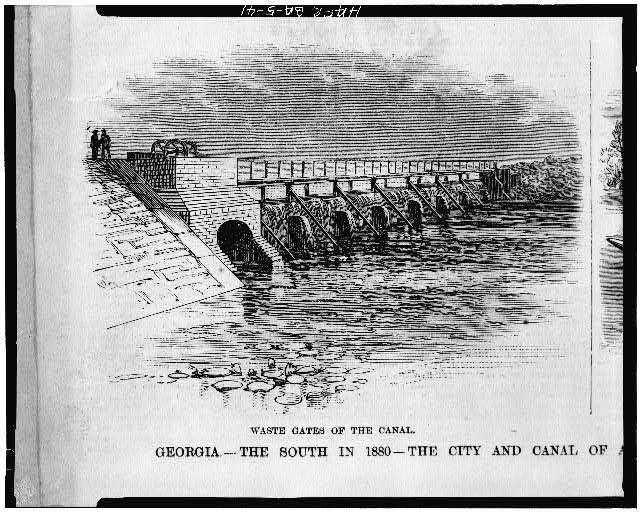
Augusta Canal, 1880

Augusta Canal, 1880

  • Info Details
  • Citation Terms of Use

This sketch of the Augusta Canal, a project championed and partially funded by Augusta attorney Henry Cumming, was made in 1880.

Courtesy of Library of Congress, Prints and Photographs Division

The New Georgia Encyclopedia does not hold the copyright for this media resource and can neither grant nor deny permission to republish or reproduce the image online or in print. All requests for permission to publish or reproduce the resource must be submitted to the rights holder.

George W. Crawford

George W. Crawford

  • Info Details
  • Citation Terms of Use

George W. Crawford was the first and only Whig to be elected governor of Georgia. He served two terms, from 1843 to 1847. A native of Columbia County, Crawford also served as a state representative and as Georgia's attorney general.

From The History of the State of Georgia, by I. W. Avery
The New Georgia Encyclopedia does not hold the copyright for this media resource and can neither grant nor deny permission to republish or reproduce the image online or in print. All requests for permission to publish or reproduce the resource must be submitted to the rights holder.

Zachary Taylor’s Cabinet

Zachary Taylor’s Cabinet

  • Info Details
  • Citation Terms of Use

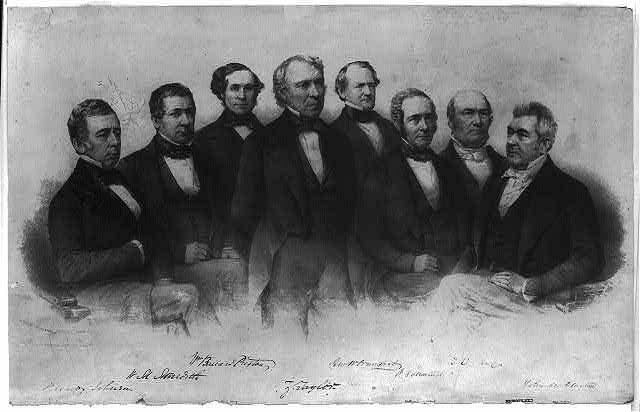
In 1849 George W. Crawford, a former governor of Georgia, joined U.S. president Zachary Taylor's cabinet as secretary of war. From left, Reverdy Johnson, William M. Meredith, William B. Preston, Zachary Taylor, Crawford, Jacob Collamer, Thomas Ewing, and John M. Clayton.

Courtesy of Library of Congress, Prints and Photographs Division

The New Georgia Encyclopedia does not hold the copyright for this media resource and can neither grant nor deny permission to republish or reproduce the image online or in print. All requests for permission to publish or reproduce the resource must be submitted to the rights holder.

Alexander Telfair

Alexander Telfair

  • Info Details
  • Citation Terms of Use

This oil portrait of Alexander Telfair (30 1/8" x 64 1/4") was made around 1830. Telfair assumed control of his family's considerable plantation and business operations around 1818, following the deaths of his brothers, Josiah and Thomas Telfair.

Courtesy of Telfair Museums.
The New Georgia Encyclopedia does not hold the copyright for this media resource and can neither grant nor deny permission to republish or reproduce the image online or in print. All requests for permission to publish or reproduce the resource must be submitted to Telfair Museums.

Telfair Mansion

Telfair Mansion

  • Info Details
  • Citation Terms of Use

The Telfair mansion, commissioned by Alexander Telfair and designed by renowned architect William Jay, was completed in 1819. Telfair's sister Mary Telfair left the home to the Georgia Historical Society upon her death in 1875, and today the mansion houses the Telfair Academy of the Telfair Museums in Savannah.

Courtesy of Georgia Archives, Vanishing Georgia, # ctm156.
View on partner site

The New Georgia Encyclopedia does not hold the copyright for this media resource and can neither grant nor deny permission to republish or reproduce the image online or in print. Requests for permission to publish or reproduce the resource should be submitted to the Georgia Archives.

Sarah Gibbons Telfair

Sarah Gibbons Telfair

  • Info Details
  • Citation Terms of Use

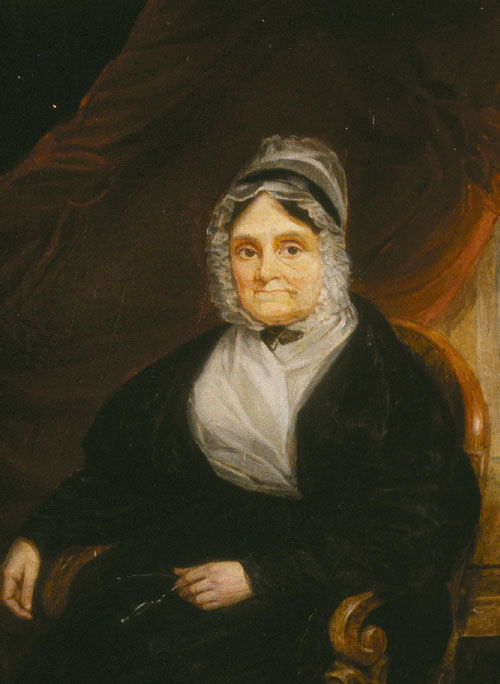
Sarah Gibbons was born into one of the wealthiest families in the Georgia colony. In 1774 she married Edward Telfair, a prominent planter and merchant in Savannah, and the couple had seven children who survived infancy. Portrait by unknown artist, oil on board (8 1/4" x 7"), date unknown.

Courtesy of Telfair Museums.

The New Georgia Encyclopedia does not hold the copyright for this media resource and can neither grant nor deny permission to republish or reproduce the image online or in print. All requests for permission to publish or reproduce the resource must be submitted to Telfair Museums.

Hiram Warner

Hiram Warner

  • Info Details
  • Citation Terms of Use

Hiram Warner, a native of Massachusetts, moved to Georgia in 1822 at the age of twenty to teach in Hancock County. He subsequently practiced law and won election to both the state legislature and the U.S. Congress during his long political career. In 1867 Warner was appointed the second chief justice of the Supreme Court of Georgia.

From The History of the State of Georgia, by I. W. Avery
The New Georgia Encyclopedia does not hold the copyright for this media resource and can neither grant nor deny permission to republish or reproduce the image online or in print. All requests for permission to publish or reproduce the resource must be submitted to the rights holder.

Hiram Warner

Hiram Warner

  • Info Details
  • Citation Terms of Use

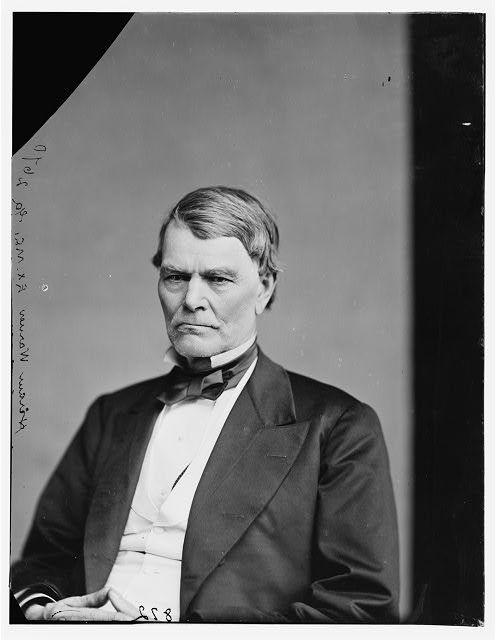
Hiram Warner, pictured here between 1870 and 1880, was appointed the second chief justice of the Supreme Court of Georgia in 1867 and served for one year. In 1872 Warner returned for another term as chief justice, serving until 1880. Of his 2,000 written opinions, many continue to influence the interpretation of Georgia law today.

Courtesy of Library of Congress, Prints and Photographs Division

The New Georgia Encyclopedia does not hold the copyright for this media resource and can neither grant nor deny permission to republish or reproduce the image online or in print. All requests for permission to publish or reproduce the resource must be submitted to the rights holder.

Hopkins Holsey

Hopkins Holsey

  • Info Details
  • Citation Terms of Use

Hopkins Holsey was appointed to finish James C. Terrell's term in the U.S. Congress in 1835 and served as a representative from Georgia until 1838. In 1838 he moved to Athens, where in 1846 he bought the Southern Banner, a local newspaper.

Photograph by Mathew B. Brady. Courtesy of National Archives and Records Administration

The New Georgia Encyclopedia does not hold the copyright for this media resource and can neither grant nor deny permission to republish or reproduce the image online or in print. All requests for permission to publish or reproduce the resource must be submitted to the rights holder.

Thomas R. R. Cobb

Thomas R. R. Cobb

  • Info Details
  • Citation Terms of Use

After graduation from the University of Georgia, Thomas R. R. Cobb practiced law and wrote several significant legal works, including a defense of slavery called An Inquiry into the Law of Negro Slavery in the United States of America (1858). Cobb and his brother Howell campaigned around Georgia for secession following the election of Abraham Lincoln in 1860.

Courtesy of Hargrett Rare Book and Manuscript Library, University of Georgia Libraries, Georgia Photo File.
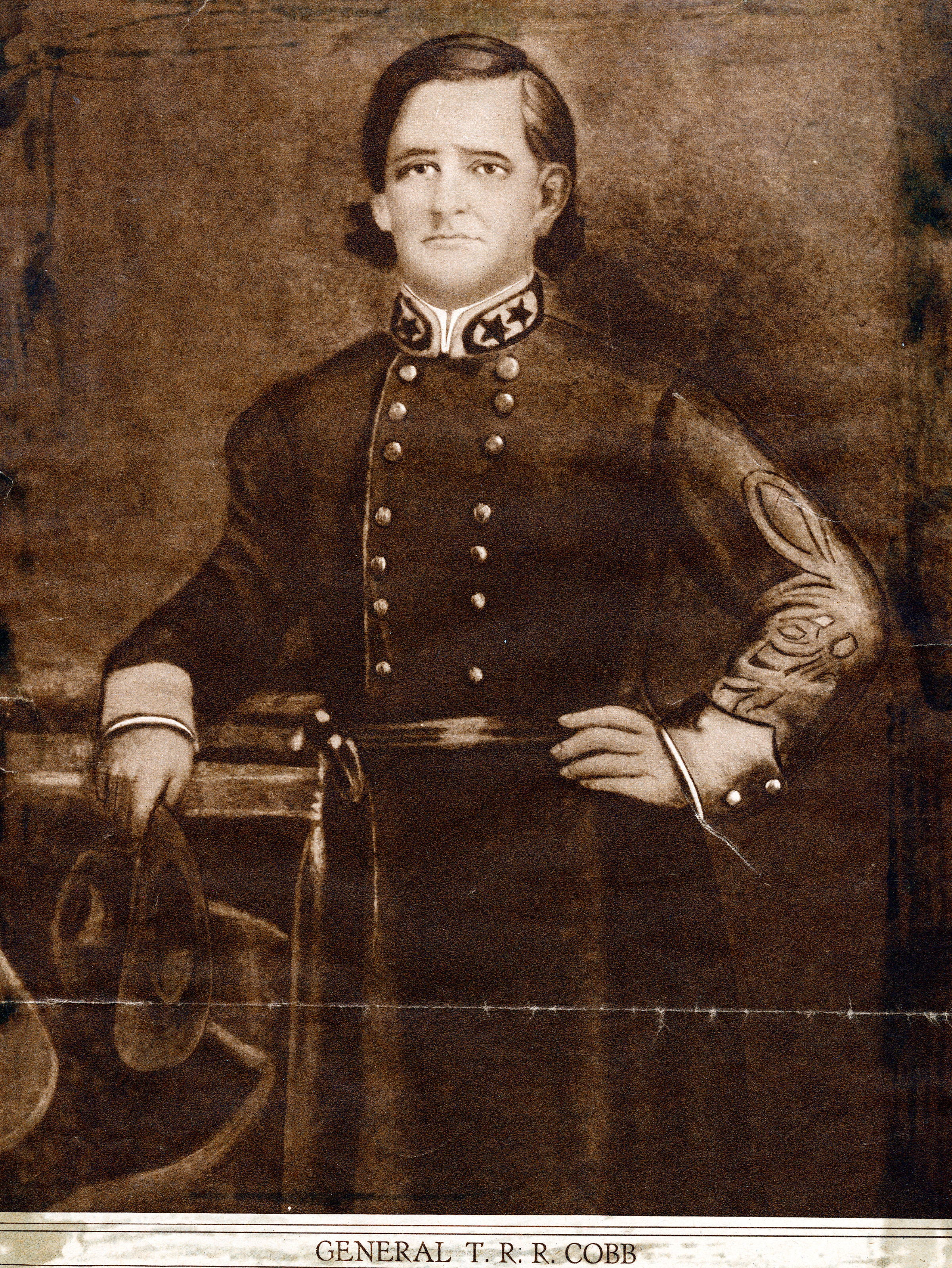
The New Georgia Encyclopedia does not hold the copyright for this media resource and can neither grant nor deny permission to republish or reproduce the image online or in print. Requests for permission to publish or reproduce the resource should be submitted to the Hargrett Manuscript and Rare Book Library at the University of Georgia.

Thomas R. R. Cobb

Thomas R. R. Cobb

  • Info Details
  • Citation Terms of Use

Thomas R. R. Cobb, an antebellum legal authority and Confederate general, was born in Jefferson County but spent most of his life in Athens. He graduated at the top of his class from the University of Georgia and in 1844 married Marion Lumpkin, the daughter of prominent judge Joseph Henry Lumpkin.

Courtesy of Hargrett Rare Book and Manuscript Library, University of Georgia Libraries, Georgia Photo File.

The New Georgia Encyclopedia does not hold the copyright for this media resource and can neither grant nor deny permission to republish or reproduce the image online or in print. Requests for permission to publish or reproduce the resource should be submitted to the Hargrett Manuscript and Rare Book Library at the University of Georgia.

Howell Cobb

Howell Cobb

  • Info Details
  • Citation Terms of Use

Following Georgia's secession from the Union in 1861, Howell Cobb served as president of the Confederate Provisional Congress (1861-62) and a major general of the Confederate army.

Courtesy of Hargrett Rare Book and Manuscript Library, University of Georgia Libraries, Georgia Photo File.
The New Georgia Encyclopedia does not hold the copyright for this media resource and can neither grant nor deny permission to republish or reproduce the image online or in print. Requests for permission to publish or reproduce the resource should be submitted to the Hargrett Manuscript and Rare Book Library at the University of Georgia.

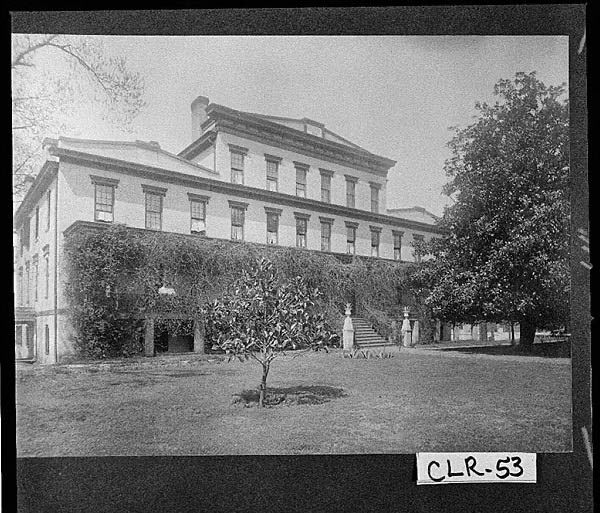
Lucy Cobb Institute

Lucy Cobb Institute

  • Info Details
  • Citation Terms of Use

The Lucy Cobb Institute, a secondary school for young women in Athens, was founded in 1859 by Thomas R. R. Cobb, a prominent lawyer and proslavery writer.

Courtesy of Georgia Archives, Vanishing Georgia, # clr053.

View on partner site

The New Georgia Encyclopedia does not hold the copyright for this media resource and can neither grant nor deny permission to republish or reproduce the image online or in print. Requests for permission to publish or reproduce the resource should be submitted to the Georgia Archives.

T. R. R. Cobb House

T. R. R. Cobb House

  • Info Details
  • Citation Terms of Use

The historic T. R. R. Cobb house, built in Athens in 1839, was moved to Stone Mountain in 1985. The home was returned in 2004 to Athens and situated two blocks from its original location. Restored by the Watson-Brown Foundation, the home opened in 2007 as a house museum and conference site.

Photograph by Sarah E. McKee, New Georgia Encyclopedia
The New Georgia Encyclopedia does not hold the copyright for this media resource and can neither grant nor deny permission to republish or reproduce the image online or in print. All requests for permission to publish or reproduce the resource must be submitted to the rights holder.

John Ross

John Ross

  • Info Details
  • Citation Terms of Use

This portrait by Charles Bird King shows John Ross at his prime. A well-educated and successful businessman, John Ross helped to establish the Cherokee Nation's first government and became principal chief in 1827.

Print by Charles Bird King. From History of the Indian Tribes of North America, by T. McKenney and J. Hall

The New Georgia Encyclopedia does not hold the copyright for this media resource and can neither grant nor deny permission to republish or reproduce the image online or in print. All requests for permission to publish or reproduce the resource must be submitted to the rights holder.

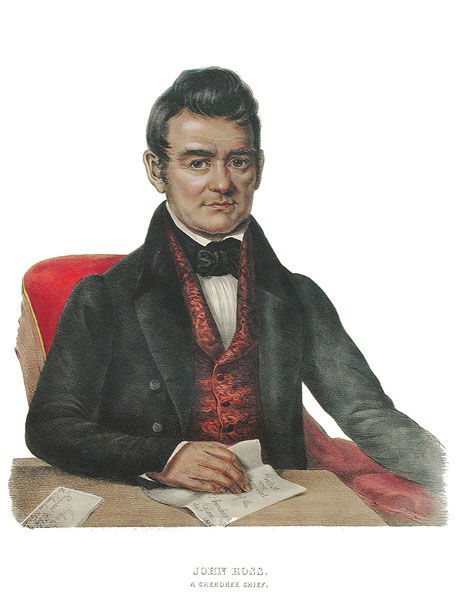
John Ross

John Ross

  • Info Details
  • Citation Terms of Use

As principal chief of the Cherokee Nation, John Ross struggled until 1838 against the removal of the Cherokees from the Southeast. Beginning in 1838, however, he was forced to lead the Cherokees through the tragic removal period, which culminated in the Trail of Tears. He remained principal chief until his death in 1866.
Courtesy of Hargrett Rare Book and Manuscript Library, University of Georgia Libraries.

The New Georgia Encyclopedia does not hold the copyright for this media resource and can neither grant nor deny permission to republish or reproduce the image online or in print. Requests for permission to publish or reproduce the resource should be submitted to the Hargrett Manuscript and Rare Book Library at the University of Georgia.

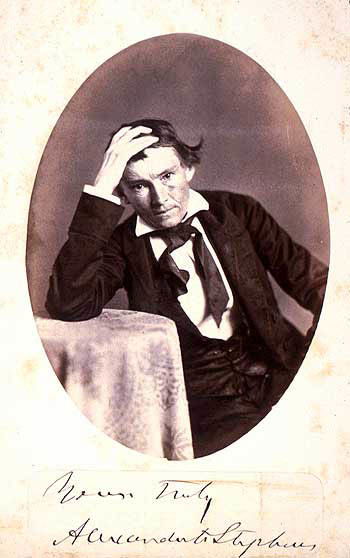
Alexander Stephens

Alexander Stephens

  • Info Details
  • Citation Terms of Use

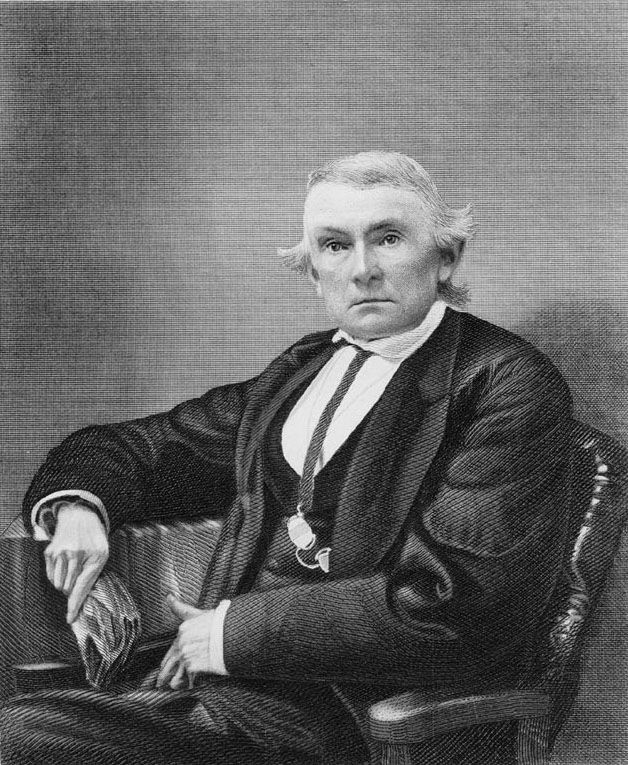
A lifelong politician, Alexander Stephens is perhaps best remembered as the vice president of the Confederacy during the Civil War.

Courtesy of National Portrait Gallery, Smithsonian Institute
The New Georgia Encyclopedia does not hold the copyright for this media resource and can neither grant nor deny permission to republish or reproduce the image online or in print. All requests for permission to publish or reproduce the resource must be submitted to the rights holder.

Alexander Stephens

Alexander Stephens

  • Info Details
  • Citation Terms of Use

Alexander Stephens was selected in 1866 by the Georgia legislature to represent the state, along with Herschel Johnson, in the U.S. Senate. Because he had served as vice president of the Confederacy, however, the Senate did not allow Stephens to take his seat.

The New Georgia Encyclopedia does not hold the copyright for this media resource and can neither grant nor deny permission to republish or reproduce the image online or in print. All requests for permission to publish or reproduce the resource must be submitted to the rights holder.

Alexander Stephens

Alexander Stephens

  • Info Details
  • Citation Terms of Use

Alexander Stephens, a native of Taliaferro County, was a prominent member of the Whig Party during the sectional crisis that arose in the wake of the Mexican War (1846-48). He later joined the ranks of the Democratic party and served as vice president of the Confederacy during the Civil War (1861-65).

The New Georgia Encyclopedia does not hold the copyright for this media resource and can neither grant nor deny permission to republish or reproduce the image online or in print. All requests for permission to publish or reproduce the resource must be submitted to the rights holder.

Alexander Stephens

Alexander Stephens

  • Info Details
  • Citation Terms of Use

Alexander Stephens, the Confederate vice president and a Georgia native, was a master at managing relations with journalists, and he used his stable of press supporters, including the Augusta Chronicle and Sentinel and the Southern Confederacy of Atlanta, to spread his peace doctrine.

Courtesy of Hargrett Rare Book and Manuscript Library, University of Georgia Libraries, Georgia Photo File.

The New Georgia Encyclopedia does not hold the copyright for this media resource and can neither grant nor deny permission to republish or reproduce the image online or in print. Requests for permission to publish or reproduce the resource should be submitted to the Hargrett Manuscript and Rare Book Library at the University of Georgia.

Alexander Stephens

Alexander Stephens

  • Info Details
  • Citation Terms of Use

Alexander Stephens. After the Civil War Stephens was elected to the U.S. Senate, but that body refused to seat the former vice president of the Confederacy. He then was elected to the Georgia House of Representatives and finally as governor, an office he held for only a few months before he died.

Image from Clement Anselm Evans

The New Georgia Encyclopedia does not hold the copyright for this media resource and can neither grant nor deny permission to republish or reproduce the image online or in print. All requests for permission to publish or reproduce the resource must be submitted to the rights holder.

Liberty Hall

Liberty Hall

  • Info Details
  • Citation Terms of Use

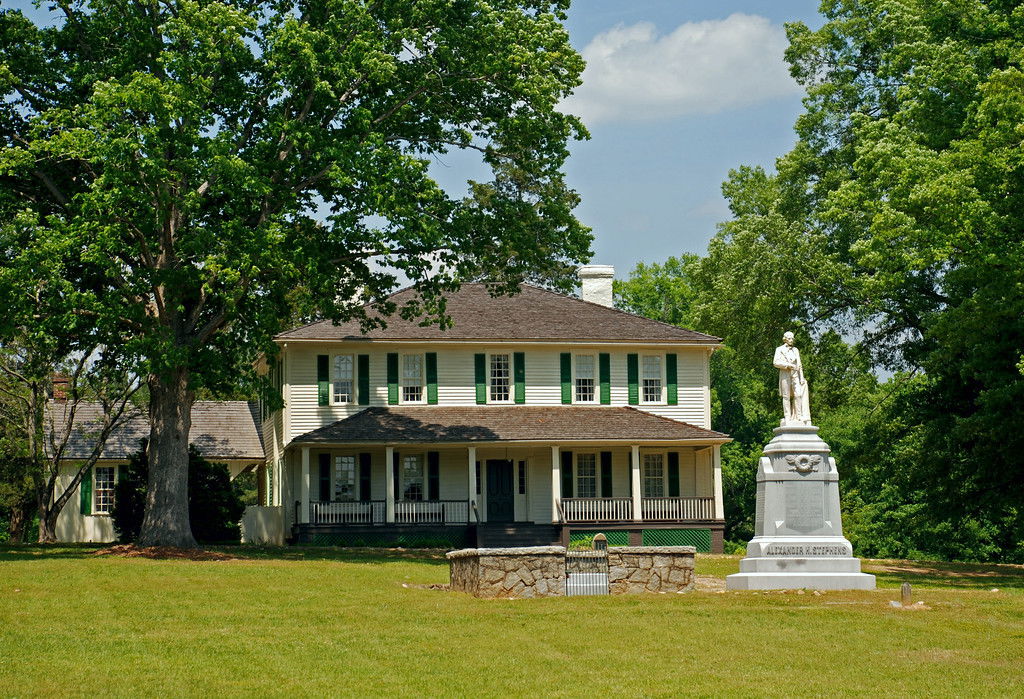
Liberty Hall in Taliaferro County, home of Alexander H. Stephens, is pictured in 1936.

Courtesy of Library of Congress, Prints and Photographs Division, Historic American Buildings Survey, #HABS GA,133-CRAWV,1--2.
View on source site

The New Georgia Encyclopedia does not hold the copyright for this media resource and can neither grant nor deny permission to republish or reproduce the image online or in print. All requests for permission to publish or reproduce the resource must be submitted to the rights holder.

The Hercules of 1861

The Hercules of 1861

  • Info Details
  • Citation Terms of Use

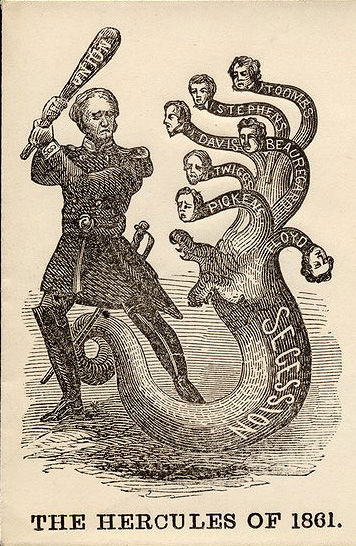
In this political cartoon, a Union officer (unidentified) swings a club labeled "Union" in defense against a many-headed serpent labeled "Secession." The serpent's heads are: Floyd, Pickens, Beauregard, Twiggs, Davis, Stephens, and Toombs, all leaders of the Southern secession movement and the resulting Confederacy.

Courtesy of Civil War Treasures, New York Historical Society
The New Georgia Encyclopedia does not hold the copyright for this media resource and can neither grant nor deny permission to republish or reproduce the image online or in print. All requests for permission to publish or reproduce the resource must be submitted to the rights holder.

A. H. Stephens Historic Park

A. H. Stephens Historic Park

  • Info Details
  • Citation Terms of Use

The A. H. Stephens Historic Park, in Crawfordville, is part of the Georgia state park system. The park includes Alexander Stephens's restored home, Liberty Hall, as well a museum containing Civil War artifacts.

Courtesy of Georgia Department of Natural Resources, Photograph from Georgia State Parks.

The New Georgia Encyclopedia does not hold the copyright for this media resource and can neither grant nor deny permission to republish or reproduce the image online or in print. Requests for permission to publish or reproduce the resource may need to be submitted to the Georgia Department of Natural Resources.

Wilson Lumpkin

Wilson Lumpkin

  • Info Details
  • Citation Terms of Use

Wilson Lumpkin served as governor of Georgia from 1831 to 1835. During his long political career, Lumpkin was also elected to office in the U.S. House and Senate and held the position of U.S. commissioner to the Cherokee Indians. Painting by J. T. Moore.

Courtesy of Georgia Capitol Tours

The New Georgia Encyclopedia does not hold the copyright for this media resource and can neither grant nor deny permission to republish or reproduce the image online or in print. All requests for permission to publish or reproduce the resource must be submitted to the rights holder.

Wilson Lumpkin

Wilson Lumpkin

  • Info Details
  • Citation Terms of Use

Before embarking on his political career, Wilson Lumpkin also worked as a farmer and as a teacher. Upon his death in 1870, Lumpkin's daughter deeded his farm in Athens to the University of Georgia.

From The Removal of the Cherokee Indians from Georgia, by Wilson Lumpkin

The New Georgia Encyclopedia does not hold the copyright for this media resource and can neither grant nor deny permission to republish or reproduce the image online or in print. All requests for permission to publish or reproduce the resource must be submitted to the rights holder.

Charles Rinaldo Floyd

Charles Rinaldo Floyd

  • Info Details
  • Citation Terms of Use

The Okefenokee incursion of 1838-39, led by Charles Rinaldo Floyd, ultimately was deemed a success, not because of the defeat of the Seminoles within its borders but because, by virtue of entering the swamp, Floyd claimed its expanse for the state of Georgia.

Courtesy of Hargrett Rare Book and Manuscript Library, University of Georgia Libraries, Georgia Photo File.

The New Georgia Encyclopedia does not hold the copyright for this media resource and can neither grant nor deny permission to republish or reproduce the image online or in print. Requests for permission to publish or reproduce the resource should be submitted to the Hargrett Manuscript and Rare Book Library at the University of Georgia.

  • Info Details
  • Citation Terms of Use

The New Georgia Encyclopedia does not hold the copyright for this media resource and can neither grant nor deny permission to republish or reproduce the image online or in print. All requests for permission to publish or reproduce the resource must be submitted to the rights holder.

Isabella Maria Hazzard

Isabella Maria Hazzard

  • Info Details
  • Citation Terms of Use

Isabella Maria Hazzard was the mother of Charles Rinaldo Floyd, a militia leader during the Okefenokee Campaign of 1838-39.

Courtesy of Georgia Archives, Vanishing Georgia, # cam212.

View on partner site

The New Georgia Encyclopedia does not hold the copyright for this media resource and can neither grant nor deny permission to republish or reproduce the image online or in print. Requests for permission to publish or reproduce the resource should be submitted to the Georgia Archives.

Thomas Spalding

Thomas Spalding

  • Info Details
  • Citation Terms of Use

Thomas Spalding, a prominent planter and slaveholder, was an agricultural innovator, amateur architect, and businessman in McIntosh County. Spalding relied on enslaved labor to clear and develop Sapelo Island, which he owned.

Courtesy of Hargrett Rare Book and Manuscript Library, University of Georgia Libraries.

The New Georgia Encyclopedia does not hold the copyright for this media resource and can neither grant nor deny permission to republish or reproduce the image online or in print. Requests for permission to publish or reproduce the resource should be submitted to the Hargrett Manuscript and Rare Book Library at the University of Georgia.

Roswell King

Roswell King

  • Info Details
  • Citation Terms of Use

Industrialist and businessman Roswell King was in his seventies when he founded his namesake town, Roswell. He established the Roswell textile mills in the late 1830s and enticed wealthy coastal families to join his enterprise, thus changing the economy and the population mix of northern Fulton County.

Courtesy of Roswell Presbyterian Church

The New Georgia Encyclopedia does not hold the copyright for this media resource and can neither grant nor deny permission to republish or reproduce the image online or in print. All requests for permission to publish or reproduce the resource must be submitted to the rights holder.

  • Info Details
  • Citation Terms of Use

The New Georgia Encyclopedia does not hold the copyright for this media resource and can neither grant nor deny permission to republish or reproduce the image online or in print. All requests for permission to publish or reproduce the resource must be submitted to the rights holder.

Barrington King

Barrington King

  • Info Details
  • Citation Terms of Use

Barrington King (1798-1866), the son of Roswell King, was a major force in establishing the town of Roswell and its textile mills. He served as president of the Roswell Manufacturing Company for twenty-seven years, from its incorporation in 1839 until his death in 1866.

Courtesy of Roswell Historical Society

The New Georgia Encyclopedia does not hold the copyright for this media resource and can neither grant nor deny permission to republish or reproduce the image online or in print. All requests for permission to publish or reproduce the resource must be submitted to the rights holder.

Robert Toombs

Robert Toombs

  • Info Details
  • Citation Terms of Use

Robert Toombs helped to lead Georgia out of the Union on the eve of the Civil War, though his support for the Georgia Platform in 1850 had demonstrated his commitment to preserving the Union.

Courtesy of Hargrett Rare Book and Manuscript Library, University of Georgia Libraries.

The New Georgia Encyclopedia does not hold the copyright for this media resource and can neither grant nor deny permission to republish or reproduce the image online or in print. Requests for permission to publish or reproduce the resource should be submitted to the Hargrett Manuscript and Rare Book Library at the University of Georgia.

Robert Toombs

Robert Toombs

  • Info Details
  • Citation Terms of Use

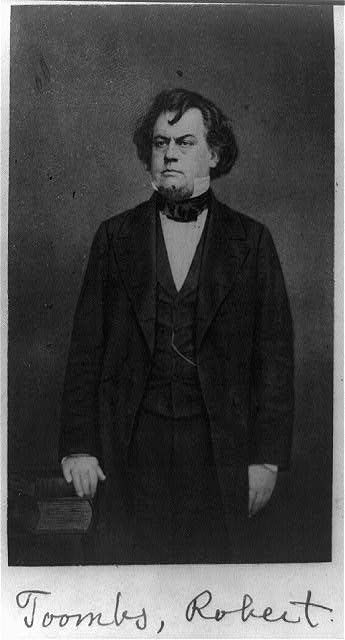
Robert Toombs returned to America in 1867 after escaping Union troops and fleeing to Cuba and Paris, but because he refused to request a pardon from Congress, he never regained his American citizenship. Toombs died in Georgia in 1885.

From Famous Georgians, by K. Coleman
The New Georgia Encyclopedia does not hold the copyright for this media resource and can neither grant nor deny permission to republish or reproduce the image online or in print. All requests for permission to publish or reproduce the resource must be submitted to the rights holder.

Robert Toombs

Robert Toombs

  • Info Details
  • Citation Terms of Use

Wilkes County native Robert Toombs, pictured circa 1865, served briefly as the Confederate government's secretary of state and as a brigadier general during the Civil War.

Courtesy of Library of Congress, Prints and Photographs Division

The New Georgia Encyclopedia does not hold the copyright for this media resource and can neither grant nor deny permission to republish or reproduce the image online or in print. All requests for permission to publish or reproduce the resource must be submitted to the rights holder.

Robert Toombs Historic Site

Robert Toombs Historic Site

  • Info Details
  • Citation Terms of Use

The home of Robert Toombs, a Confederate general and U.S. senator, was built in 1797. Located in Washington, the seat of Wilkes County, the home is open to the public as a state historic site.

Courtesy of Explore Georgia, Photograph by Ralph Daniel.

The New Georgia Encyclopedia does not hold the copyright for this media resource and can neither grant nor deny permission to republish or reproduce the image online or in print. Requests for permission to publish or reproduce the resource may need to be submitted to Explore Georgia.

Slavery and Abolitionism Pamphlet

Slavery and Abolitionism Pamphlet

  • Info Details
  • Citation Terms of Use

Harrison Berry's principal antebellum publication was a forty-six-page pamphlet entitled Slavery and Abolitionism as Viewed by a Georgia Slave, published in Atlanta in 1861.

From Slavery and Abolitionism as Viewed by a Georgia Slave, by H. Berry

The New Georgia Encyclopedia does not hold the copyright for this media resource and can neither grant nor deny permission to republish or reproduce the image online or in print. All requests for permission to publish or reproduce the resource must be submitted to the rights holder.

Charles DuBignon

Charles DuBignon

  • Info Details
  • Citation Terms of Use

Although Charles DuBignon received nearly one-third of Jekyll Island from his father Colonel Henry DuBignon in 1863, he relocated permanently to Milledgeville after his marriage.

Courtesy of Hargrett Rare Book and Manuscript Library, University of Georgia Libraries.

The New Georgia Encyclopedia does not hold the copyright for this media resource and can neither grant nor deny permission to republish or reproduce the image online or in print. Requests for permission to publish or reproduce the resource should be submitted to the Hargrett Manuscript and Rare Book Library at the University of Georgia.

Horton-DuBignon House

Horton-DuBignon House

  • Info Details
  • Citation Terms of Use

The Horton-DuBignon House on Jekyll Island (circa 1738) is one of the oldest intact tabby structures in Georgia. DuBignon family members occupied the "mansion house" from 1794 into the 1850s.

Photograph by Martha L. Keber

The New Georgia Encyclopedia does not hold the copyright for this media resource and can neither grant nor deny permission to republish or reproduce the image online or in print. All requests for permission to publish or reproduce the resource must be submitted to the rights holder.

John Eugene DuBignon

John Eugene DuBignon

  • Info Details
  • Citation Terms of Use

John Eugene DuBignon, the fourth generation DuBignon owner of Jekyll Island, sold the island to the Jekyll Island Club for $125,000 in 1886.

Courtesy of Hargrett Rare Book and Manuscript Library, University of Georgia Libraries.

The New Georgia Encyclopedia does not hold the copyright for this media resource and can neither grant nor deny permission to republish or reproduce the image online or in print. Requests for permission to publish or reproduce the resource should be submitted to the Hargrett Manuscript and Rare Book Library at the University of Georgia.

Fanny Kemble

Fanny Kemble

  • Info Details
  • Citation Terms of Use

British actress Fanny Kemble's infamous entanglement with Georgia was immortalized in her book, Journal of a Residence on a Georgian Plantation in 1838-1839 (1863).

Courtesy of Georgia Historical Society.

The New Georgia Encyclopedia does not hold the copyright for this media resource and can neither grant nor deny permission to republish or reproduce the image online or in print. All requests for permission to publish or reproduce the resource must be submitted to Georgia Historical Society.

Pierce Mease Butler

Pierce Mease Butler

  • Info Details
  • Citation Terms of Use

Grandson and namesake of Pierce Butler, Pierce Mease Butler inherited part of his grandfather's massive fortune and holdings on the Georgia Sea Islands.

Courtesy of Hargrett Rare Book and Manuscript Library, University of Georgia Libraries.

The New Georgia Encyclopedia does not hold the copyright for this media resource and can neither grant nor deny permission to republish or reproduce the image online or in print. Requests for permission to publish or reproduce the resource should be submitted to the Hargrett Manuscript and Rare Book Library at the University of Georgia.

John Eatton LeConte

John Eatton LeConte

  • Info Details
  • Citation Terms of Use

This portrait of John Eatton LeConte (1784-1860) was made around the year of his death. A noted naturalist, LeConte often visited Woodmanston Plantation in Liberty County and made important contributions to the study of Georgia fauna.

Courtesy of Hargrett Rare Book and Manuscript Library, University of Georgia Libraries, LeConte/Furman/Carter Family Papers.

The New Georgia Encyclopedia does not hold the copyright for this media resource and can neither grant nor deny permission to republish or reproduce the image online or in print. Requests for permission to publish or reproduce the resource should be submitted to the Hargrett Manuscript and Rare Book Library at the University of Georgia.

  • Info Details
  • Citation Terms of Use

The New Georgia Encyclopedia does not hold the copyright for this media resource and can neither grant nor deny permission to republish or reproduce the image online or in print. All requests for permission to publish or reproduce the resource must be submitted to the rights holder.

Joseph LeConte

Joseph LeConte

  • Info Details
  • Citation Terms of Use

Joseph LeConte (1823-1901) joined the faculty of the University of California at Berkely, departing for the West Coast in 1869. Although he often expressed a desire to return to the South, he readily adapted to his new state, where he gained fame for his success as a professor of geology and physiology.

Courtesy of Hargrett Rare Book and Manuscript Library, University of Georgia Libraries, Georgia Photo File.

The New Georgia Encyclopedia does not hold the copyright for this media resource and can neither grant nor deny permission to republish or reproduce the image online or in print. Requests for permission to publish or reproduce the resource should be submitted to the Hargrett Manuscript and Rare Book Library at the University of Georgia.

John LeConte

John LeConte

  • Info Details
  • Citation Terms of Use

Over the course of his career in education, John LeConte was a professor at the University of Georgia, South Carolina College (later the University of South Carolina), and the University of California at Berkeley, where he also served as president from 1876 to 1881. LeConte was elected to membership in the National Academy of Sciences in 1878. He is pictured circa 1860.

Courtesy of Hargrett Rare Book and Manuscript Library, University of Georgia Libraries.

The New Georgia Encyclopedia does not hold the copyright for this media resource and can neither grant nor deny permission to republish or reproduce the image online or in print. Requests for permission to publish or reproduce the resource should be submitted to the Hargrett Manuscript and Rare Book Library at the University of Georgia.

Joseph LeConte

Joseph LeConte

  • Info Details
  • Citation Terms of Use

Geology professor and member of a prominent Georgia family, Joseph LeConte was a well-known proponent of evolution, and his book Evolution and Its Relation to Religious Thought (1888) became one of the most popular works on the subject.

Courtesy of Hargrett Rare Book and Manuscript Library, University of Georgia Libraries, Georgia Photo File.

The New Georgia Encyclopedia does not hold the copyright for this media resource and can neither grant nor deny permission to republish or reproduce the image online or in print. Requests for permission to publish or reproduce the resource should be submitted to the Hargrett Manuscript and Rare Book Library at the University of Georgia.

Charles C. Jones Jr.

Charles C. Jones Jr.

  • Info Details
  • Citation Terms of Use

Charles C. Jones Jr. was the foremost Georgia historian of the nineteenth century. Beginning after the Civil War and continuing into the 1880s, Jones collected Confederate service records and reminiscences of former soliders.

Courtesy of Hargrett Rare Book and Manuscript Library, University of Georgia Libraries.

The New Georgia Encyclopedia does not hold the copyright for this media resource and can neither grant nor deny permission to republish or reproduce the image online or in print. Requests for permission to publish or reproduce the resource should be submitted to the Hargrett Manuscript and Rare Book Library at the University of Georgia.

Lafayette in Georgia

Lafayette in Georgia

  • Info Details
  • Citation Terms of Use

In this painting, Lafayette is portrayed reviewing the Georgia Hussars, the Chatham Artillery, and the Savannah Volunteer Guards from the balcony of the Owens-Thomas House in Savannah during his 1825 visit to the state.

Courtesy of Preston Russell

The New Georgia Encyclopedia does not hold the copyright for this media resource and can neither grant nor deny permission to republish or reproduce the image online or in print. All requests for permission to publish or reproduce the resource must be submitted to the rights holder.

  • Info Details
  • Citation Terms of Use

The New Georgia Encyclopedia does not hold the copyright for this media resource and can neither grant nor deny permission to republish or reproduce the image online or in print. All requests for permission to publish or reproduce the resource must be submitted to the rights holder.

Joseph Henry Lumpkin

Joseph Henry Lumpkin

  • Info Details
  • Citation Terms of Use

Joseph Henry Lumpkin served on the Supreme Court of Georgia from 1846 until his death in 1867. An active supporter of education, he cofounded the University of Georgia law school, which now bears his name.

Courtesy of Hargrett Rare Book and Manuscript Library, University of Georgia Libraries, Georgia Photo File.

The New Georgia Encyclopedia does not hold the copyright for this media resource and can neither grant nor deny permission to republish or reproduce the image online or in print. Requests for permission to publish or reproduce the resource should be submitted to the Hargrett Manuscript and Rare Book Library at the University of Georgia.

John Brown

John Brown

  • Info Details
  • Citation Terms of Use

A fugitive from slavery in Georgia, John Brown provided one of the few book-length testimonials of what it was like to be enslaved in the Deep South, Slave Life in Georgia: A Narrative of the Life, Sufferings, and Escape of John Brown, A Fugitive Slave, Now in England (1855).

Courtesy of Hargrett Rare Book and Manuscript Library, University of Georgia Libraries.

The New Georgia Encyclopedia does not hold the copyright for this media resource and can neither grant nor deny permission to republish or reproduce the image online or in print. Requests for permission to publish or reproduce the resource should be submitted to the Hargrett Manuscript and Rare Book Library at the University of Georgia.

Elias Boudinot

Elias Boudinot

  • Info Details
  • Citation Terms of Use

A formally educated Cherokee who became the editor of the first Native American newspaper in the United States, Elias Boudinot ultimately signed the New Echota Treaty (1835), which required the Cherokees to relinquish all remaining land east of the Mississippi River.

Image from Oklahoma Historical Society, Muriel Wright Collection.

The New Georgia Encyclopedia does not hold the copyright for this media resource and can neither grant nor deny permission to republish or reproduce the image online or in print. All requests for permission to publish or reproduce the resource must be submitted to the rights holder.

Cherokee Phoenix

Cherokee Phoenix

  • Info Details
  • Citation Terms of Use

The Cherokee Phoenix, the first Native American newspaper in the United States, was first printed in 1828 in New Echota, Georgia, the capital of the Cherokee Nation. The paper was published weekly until May 1834, when the Cherokee annuity was not paid and the presses came to a stop. This issue is dated January 28, 1829.
Courtesy of Hargrett Rare Book and Manuscript Library, University of Georgia Libraries.

The New Georgia Encyclopedia does not hold the copyright for this media resource and can neither grant nor deny permission to republish or reproduce the image online or in print. Requests for permission to publish or reproduce the resource should be submitted to the Hargrett Manuscript and Rare Book Library at the University of Georgia.

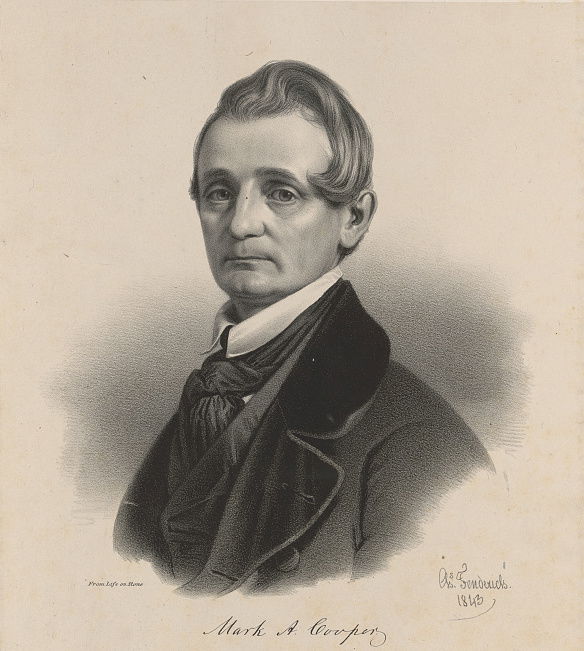
Mark Anthony Cooper

Mark Anthony Cooper

  • Info Details
  • Citation Terms of Use

A soldier, lawyer, politician, farmer, and entrepreneur, Cooper is best remembered as an industrialist and founder of the town of Etowah in Bartow County, Georgia.

Courtesy of Library of Congress, Prints and Photographs Division

View on source site

The New Georgia Encyclopedia does not hold the copyright for this media resource and can neither grant nor deny permission to republish or reproduce the image online or in print. All requests for permission to publish or reproduce the resource must be submitted to the rights holder.

Thomas Butler King

Thomas Butler King

  • Info Details
  • Citation Terms of Use

Thomas Butler King is remembered primarily as a planter/politician from coastal Georgia who labored to improve the nation's nascent transportation and communication networks.

Courtesy of Georgia Historical Society, Cordray-Foltz Photography Studio photographs, #GHS 1360-25-11-10.

View on partner site

The New Georgia Encyclopedia does not hold the copyright for this media resource and can neither grant nor deny permission to republish or reproduce the image online or in print. All requests for permission to publish or reproduce the resource must be submitted to Georgia Historical Society.

Thomas Butler King

Thomas Butler King

  • Info Details
  • Citation Terms of Use

Elected to the Georgia legislature in 1832 as a senator from Glynn County, King served almost continuously until his election to the U.S. House of Representatives in 1838.

Courtesy of Georgia Historical Society.

The New Georgia Encyclopedia does not hold the copyright for this media resource and can neither grant nor deny permission to republish or reproduce the image online or in print. All requests for permission to publish or reproduce the resource must be submitted to Georgia Historical Society.

Ellen Craft in Disguise

Ellen Craft in Disguise

  • Info Details
  • Citation Terms of Use

To escape slavery, light-skinned Ellen Craft disguised herself as a male enslaver. Her husband, William, who was darker skinned, posed as her valet. They successfully traveled to the North, and eventually to England, where they published a narrative recounting their lives in slavery and their daring escape.

The New Georgia Encyclopedia does not hold the copyright for this media resource and can neither grant nor deny permission to republish or reproduce the image online or in print. All requests for permission to publish or reproduce the resource must be submitted to the rights holder.

William Craft

William Craft

  • Info Details
  • Citation Terms of Use

After escaping slavery in 1848, William Craft and his wife Ellen lived in Boston and England before returning to Georgia in 1870.

Courtesy of The New York Public Library Digital Collections, Image from The Underground Rail Road, by W. Still..

The New Georgia Encyclopedia does not hold the copyright for this media resource and can neither grant nor deny permission to republish or reproduce the image online or in print. All requests for permission to publish or reproduce the resource must be submitted to the rights holder.

Ellen Craft

Ellen Craft

  • Info Details
  • Citation Terms of Use

The daughter of an African American woman and her white enslaver, Ellen looked white and was able to escape slavery by disguising herself as a southern slaveholder.

From The Underground Rail Road, by W. Still
The New Georgia Encyclopedia does not hold the copyright for this media resource and can neither grant nor deny permission to republish or reproduce the image online or in print. All requests for permission to publish or reproduce the resource must be submitted to the rights holder.

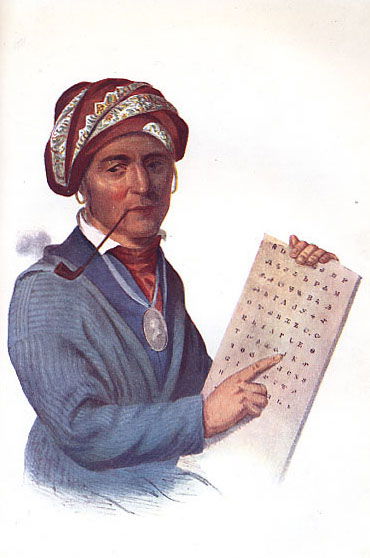
Sequoyah

Sequoyah

  • Info Details
  • Citation Terms of Use

This hand-colored lithograph of Sequoyah (also called George Gist or George Guess), the legendary creator of the Cherokee syllabary, was made in 1833 after an oil portrait by Charles Bird King as part of a series depicting Native American leaders.

From The Indian Tribes of North America, by T. L. McKenney and J. Hall

The New Georgia Encyclopedia does not hold the copyright for this media resource and can neither grant nor deny permission to republish or reproduce the image online or in print. All requests for permission to publish or reproduce the resource must be submitted to the rights holder.

Cherokee Syllabary

Cherokee Syllabary

  • Info Details
  • Citation Terms of Use

Sequoyah invented a system of eighty-four to eighty-six characters that represented syllables in spoken Cherokee. Completed in 1821, the syllabary was rapidly adopted by a large number of Cherokees.
Courtesy of Hargrett Rare Book and Manuscript Library, University of Georgia Libraries.

The New Georgia Encyclopedia does not hold the copyright for this media resource and can neither grant nor deny permission to republish or reproduce the image online or in print. Requests for permission to publish or reproduce the resource should be submitted to the Hargrett Manuscript and Rare Book Library at the University of Georgia.

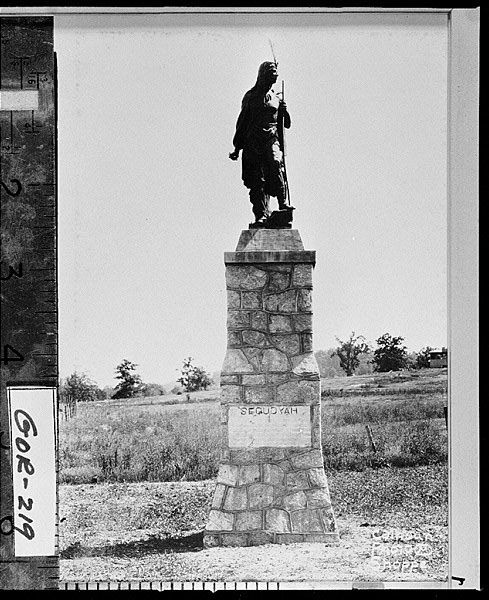
Sequoyah Statue

Sequoyah Statue

  • Info Details
  • Citation Terms of Use

This statue of Sequoyah, pictured in 1930, is located in a small park at the intersection of U.S. Highway 41 and Georgia Highway 225, north of Calhoun. The Calhoun Woman's Club erected the statue in the 1920s.

Courtesy of Georgia Archives, Vanishing Georgia, #
gor219.

View on partner site

The New Georgia Encyclopedia does not hold the copyright for this media resource and can neither grant nor deny permission to republish or reproduce the image online or in print. Requests for permission to publish or reproduce the resource should be submitted to the Georgia Archives.

Print Shop, New Echota Historic Site

Print Shop, New Echota Historic Site

  • Info Details
  • Citation Terms of Use

The Cherokee Phoenix, a dual-language newspaper, was produced in a print shop similar to this reconstruction at the New Echota Historic Site.

Image from George Puvvada

The New Georgia Encyclopedia does not hold the copyright for this media resource and can neither grant nor deny permission to republish or reproduce the image online or in print. All requests for permission to publish or reproduce the resource must be submitted to the rights holder.

Sequoyah Postage Stamp

Sequoyah

  • Info Details
  • Citation Terms of Use

This 1980 Great Americans Series postage stamp honors Sequoyah, the only member of a nonliterate group in human history to have single-handedly devised a successful system of writing.

Courtesy of Smithsonian National Postal Museum

The New Georgia Encyclopedia does not hold the copyright for this media resource and can neither grant nor deny permission to republish or reproduce the image online or in print. All requests for permission to publish or reproduce the resource must be submitted to the rights holder.

Howell Cobb

Howell Cobb

  • Info Details
  • Citation Terms of Use

Georgia native Howell Cobb served as congressman (1843-51; 1855-57), Speaker of the U.S. House of Representatives (1849-51), governor of Georgia (1851-53), and secretary of the treasury (1857-60).

Courtesy of Hargrett Rare Book and Manuscript Library, University of Georgia Libraries, Georgia Photo File.

The New Georgia Encyclopedia does not hold the copyright for this media resource and can neither grant nor deny permission to republish or reproduce the image online or in print. Requests for permission to publish or reproduce the resource should be submitted to the Hargrett Manuscript and Rare Book Library at the University of Georgia.

Mary Nuttall De Renne

Mary Nuttall De Renne

  • Info Details
  • Citation Terms of Use

During the last decade of her life, Mary De Renne collected a notable array of Civil War relics, as well as an immense collection of Confederate books and pamphlets, which are now housed in the Hargrett Rare Book and Manuscript Library at the University of Georgia.

Courtesy of Eudora De Renne Roebling

The New Georgia Encyclopedia does not hold the copyright for this media resource and can neither grant nor deny permission to republish or reproduce the image online or in print. All requests for permission to publish or reproduce the resource must be submitted to the rights holder.

George Wymberley Jones De Renne

George Wymberley Jones De Renne

  • Info Details
  • Citation Terms of Use

Historical works made up the majority of the books privately printed by George Wymberley Jones De Renne. He called four of his publications the "Wormsloe Quartos" in honor of his family's ancestral estate.

Courtesy of Eudora De Renne Roebling

The New Georgia Encyclopedia does not hold the copyright for this media resource and can neither grant nor deny permission to republish or reproduce the image online or in print. All requests for permission to publish or reproduce the resource must be submitted to the rights holder.

Mary Nuttall De Renne

Mary Nuttall De Renne

  • Info Details
  • Citation Terms of Use

When George Wymberly Jones De Renne died in 1880, his wife, Mary, determined to bring to print a work that had absorbed him for several years, a compendium of Georgia's unpublished colonial laws. The volume appeared in 1881 as the fifth of the Wormsloe Quartos.

Courtesy of Eudora De Renne Roebling

The New Georgia Encyclopedia does not hold the copyright for this media resource and can neither grant nor deny permission to republish or reproduce the image online or in print. All requests for permission to publish or reproduce the resource must be submitted to the rights holder.

Wymberley Jones De Renne

Wymberley Jones De Renne

  • Info Details
  • Citation Terms of Use

The eldest son of Mary Nuttall and George Wymberly Jones De Renne, Wymberley Jones De Renne became a more noted collector than either of his parents were. His library comprised mainly historical works, supplemented by a large collection of Georgia governmental and institutional publications, legal codes, digests, session laws, maps, pamphlets, and newspapers.

Courtesy of Georgia Historical Society.

The New Georgia Encyclopedia does not hold the copyright for this media resource and can neither grant nor deny permission to republish or reproduce the image online or in print. All requests for permission to publish or reproduce the resource must be submitted to Georgia Historical Society.

Wymberley Jones De Renne

Wymberley Jones De Renne

  • Info Details
  • Citation Terms of Use

Wymberley Jones De Renne is pictured in a portrait by Gari Melchers (ca. 1915).

Courtesy of the Wormsloe Foundation

The New Georgia Encyclopedia does not hold the copyright for this media resource and can neither grant nor deny permission to republish or reproduce the image online or in print. All requests for permission to publish or reproduce the resource must be submitted to the rights holder.

Wymberley Wormsloe De Renne

Wymberley Wormsloe De Renne

  • Info Details
  • Citation Terms of Use

Wymberley Wormsloe De Renne worked off and on most of his life to complete the library his father had begun. The Catalogue of the Wymberley Jones De Renne Georgia Library became the basis of the sale of the De Renne Georgia Library in 1938 to the Board of Regents of the University System of Georgia, for placement in the University of Georgia Libraries.

Courtesy of Eudora De Renne Roebling

The New Georgia Encyclopedia does not hold the copyright for this media resource and can neither grant nor deny permission to republish or reproduce the image online or in print. All requests for permission to publish or reproduce the resource must be submitted to the rights holder.

Elfrida De Renne Barrow

Elfrida De Renne Barrow

  • Info Details
  • Citation Terms of Use

In 1953 Barrow incorporated the Wormsloe Foundation, one of whose activities was the publication of historical works. Barrow is pictured here in a portrait by Edward August Bell (ca. 1905).

Courtesy of Elfrida Barrow Moore

The New Georgia Encyclopedia does not hold the copyright for this media resource and can neither grant nor deny permission to republish or reproduce the image online or in print. All requests for permission to publish or reproduce the resource must be submitted to the rights holder.

Nelson Tift

Nelson Tift

  • Info Details
  • Citation Terms of Use

In 1836 northern merchant and entrepreneur Nelson Tift founded Albany, Georgia, a place later referred to as the heart of the state's Cotton Kingdom.

Courtesy of Hargrett Rare Book and Manuscript Library, University of Georgia Libraries.

The New Georgia Encyclopedia does not hold the copyright for this media resource and can neither grant nor deny permission to republish or reproduce the image online or in print. Requests for permission to publish or reproduce the resource should be submitted to the Hargrett Manuscript and Rare Book Library at the University of Georgia.

Elizabeth Church Robb, letter to James Robb, dated June 24, 1859 Camp Douglas POW Camp in Chicago, Illinois Elizabeth Church Robb's headstone at Oconee Hill Cemetery in Athens, Georgia. Augustin Verot Slavery & Abolitionism Augustin Verot William Grimes Savannah Rice Plantations, 1825 Map of Georgia, 1851 W. T. Wofford Ella Gertrude Clanton Thomas Mirabeau Lamar Oliver H. Prince John D. Gray Francis S. Bartow Garnett Andrews
Josiah Tattnall William Harris Crawford John Macpherson Berrien John Macpherson Berrien Mary Telfair Telfair Academy of Arts and Sciences Telfair Hospital for Females Independent Presbyterian Church William Brown Hodgson William Brown Hodgson
Hodgson Hall Margaret Telfair Hodgson Joseph Vann Chief Vann House, 1934 Eugenius Nisbet Benjamin Hill Raid on Harpers Ferry Herschel Johnson 1860 Presidential Election William Washington Gordon William Washington Gordon Monument Henry Cumming Augusta Canal, 1880 George W. Crawford Zachary Taylor’s Cabinet Alexander Telfair Telfair Mansion Sarah Gibbons Telfair Hiram Warner Hiram Warner Hopkins Holsey Thomas R. R. Cobb Thomas R. R. Cobb Howell Cobb Lucy Cobb Institute T. R. R. Cobb House John Ross John Ross Alexander Stephens Alexander Stephens Alexander Stephens Alexander Stephens Alexander Stephens Liberty Hall The Hercules of 1861 A. H. Stephens Historic Park Wilson Lumpkin Wilson Lumpkin Charles Rinaldo Floyd
Isabella Maria Hazzard Thomas Spalding Roswell King
Barrington King Robert Toombs Robert Toombs Robert Toombs Robert Toombs Historic Site Slavery and Abolitionism Pamphlet Charles DuBignon Horton-DuBignon House John Eugene DuBignon Fanny Kemble Pierce Mease Butler John Eatton LeConte
Joseph LeConte John LeConte Joseph LeConte Charles C. Jones Jr. Lafayette in Georgia
Joseph Henry Lumpkin John Brown Elias Boudinot Cherokee Phoenix Mark Anthony Cooper Thomas Butler King Thomas Butler King Ellen Craft in Disguise William Craft Ellen Craft Sequoyah Cherokee Syllabary Sequoyah Statue Print Shop, New Echota Historic Site Sequoyah Postage Stamp Howell Cobb Mary Nuttall De Renne George Wymberley Jones De Renne Mary Nuttall De Renne Wymberley Jones De Renne Wymberley Jones De Renne Wymberley Wormsloe De Renne Elfrida De Renne Barrow Nelson Tift