Skip to content
New Georgia Encyclopedia
  • Home
  • Articles & Media
  • Browse by Topic
  • Browse Collections
  • Browse Georgia Standards
  • A-Z Index
  • Exhibitions
  • Educators
  • Browse    Chevron down
  • Exhibitions
  • Educators
By Topic Content Collections Georgia Standards A-Z Index Arrow right
  • Arts & Culture

    Arts & Culture

  • Business & Economy

    Business & Economy

  • Counties, Cities & Neighborhoods

    Counties, Cities & Neighborhoods

  • Education

    Education

  • Geography & Environment

    Geography & Environment

  • Government & Politics

    Government & Politics

  • History & Archaeology

    History & Archaeology

  • People

    People

  • Science & Medicine

    Science & Medicine

  • Sports & Outdoor Recreation

    Sports & Outdoor Recreation

Stamp Collection
Featured

Stamp Collection

Stamps honoring the political figures, artists, and culture of Georgia.

Frankie Welch’s Americana
Featured

Frankie Welch’s Americana

Fashion and politics from Georgia-born designer Frankie Welch

Recently Added
View All Arrow right
City Page: Atlanta

City Page: Atlanta

Stamp Collection

Stamp Collection

Frankie Welch’s Americana

Frankie Welch’s Americana

  • Georgia Studies

    Georgia Studies

    Eighth Grade
  • Georgia, My State

    Georgia, My State

    Second Grade
All Topics Arrow right Government & Politics Arrow right Governors of Georgia Arrow right Statehood Arrow right

Twentieth Century

Ellis Arnall

Ellis Arnall

1907-1992
Roy Barnes

Roy Barnes

b. 1948
Joseph M. Brown

Joseph M. Brown

1851-1932
George Busbee

George Busbee

1927-2004
Jimmy Carter

Jimmy Carter

1924 - 2024
Hugh M. Dorsey

Hugh M. Dorsey

1871-1948
Marvin Griffin

Marvin Griffin

1907-1982
Lamartine Hardman

Lamartine Hardman

1856-1937
Thomas Hardwick

Thomas Hardwick

1872-1944
Joe Frank Harris

Joe Frank Harris

b. 1936
Nathaniel E. Harris

Nathaniel E. Harris

1846-1929
Lester Maddox

Lester Maddox

1915-2003
Zell Miller

Zell Miller

1932-2018
E. D. Rivers

E. D. Rivers

1895-1967
Richard B. Russell Jr.

Richard B. Russell Jr.

1897-1971
Carl Sanders

Carl Sanders

1925-2014
John M. Slaton

John M. Slaton

1866-1955
Hoke Smith

Hoke Smith

1855-1931
Eugene Talmadge

Eugene Talmadge

1884-1946
Herman Talmadge

Herman Talmadge

1913-2002
Joseph M. Terrell

Joseph M. Terrell

1861-1912
Melvin E. Thompson

Melvin E. Thompson

1903-1980
Ernest Vandiver Jr.

Ernest Vandiver Jr.

1918-2005
Clifford Walker

Clifford Walker

1877-1954
Loading
Star

Featured Content

James Oglethorpe

James Oglethorpe

Colonial Figures
Civil Rights Movement

Civil Rights Movement

Mid- to Late 20th Century Topics
Trending

Trending

Georgia Guidestones

Georgia Guidestones

Sites & Museums
James D. Bulloch

James D. Bulloch

People
Bobby Cox

Bobby Cox

People
Dixiecrats

Dixiecrats

Political Parties, Interest Groups & Movements
Clock

Updated Recently

Morris Brown College

Morris Brown College

5 days ago
Burke County

Burke County

5 days ago
CNN

CNN

5 days ago
Ted Turner

Ted Turner

1 week ago

A More Perfect Union

The New Georgia Encyclopedia is supported by funding from A More Perfect Union, a special initiative of the National Endowment for the Humanities.

Learn More
New Georgia Encyclopedia
ISSN 2765-8732
Project Partners
logo-press UGA Press logo-galileo GALILEO logo-humanities Georgia Humanities logo-seal Office of the Governor logo-libraries UGA Libraries
Articles & Media
  • Browse by Topic
  • Content Collections
  • Georgia Standards
Special Content
  • Quizzes
  • Exhibitions
  • Spotify Playlists
  • Georgia Exhibits
  • Educator Resources
About
  • The Project
  • The People
  • Sponsors & Partners
Editorial
  • Our Process
  • Contributor Info
  • Permissions & Use
Stay in Touch
Facebook Instagram Twitter Contact Us
Donate to the NGE

Your support helps us commission new entries and update existing content.

Donate

© 2004–2026 Georgia Humanities, University of Georgia Press

  • Terms of Use
  • Privacy Policy

Media gallery

E. D. Rivers

E. D. Rivers

  • Info Details
  • Citation Terms of Use

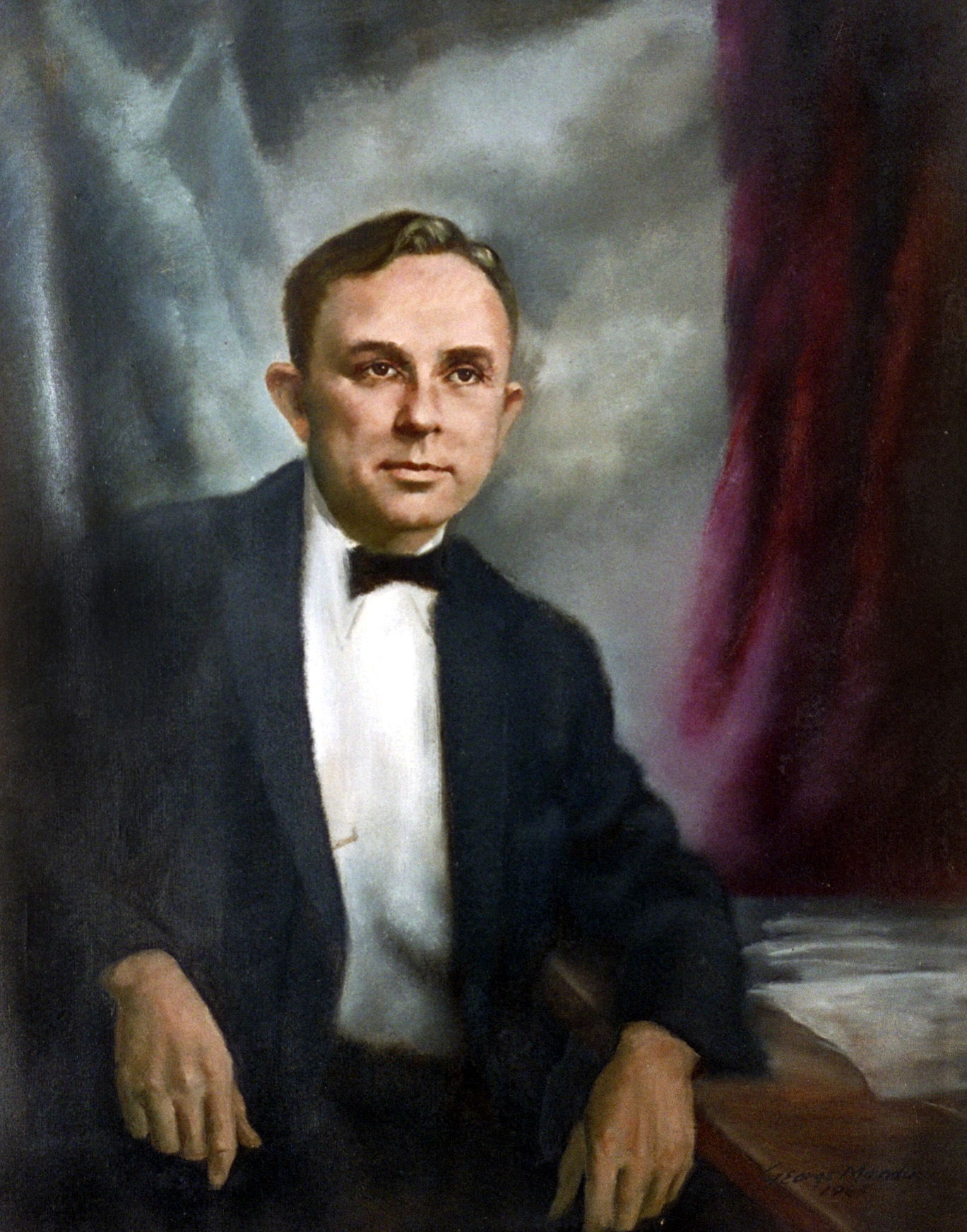
E. D. Rivers, credited with bringing a "Little New Deal" to the state, served two terms as Georgia's governor, from 1937 until 1941. During his first term, Rivers instituted numerous reforms in education, the penal system, and public health. His second term was plagued by accusations of corruption and an inability to finance the measures enacted during his first term.

Courtesy of Georgia Capitol Museum, University of Georgia Libraries
The New Georgia Encyclopedia does not hold the copyright for this media resource and can neither grant nor deny permission to republish or reproduce the image online or in print. All requests for permission to publish or reproduce the resource must be submitted to the rights holder.

E. D. Rivers

E. D. Rivers

  • Info Details
  • Citation Terms of Use

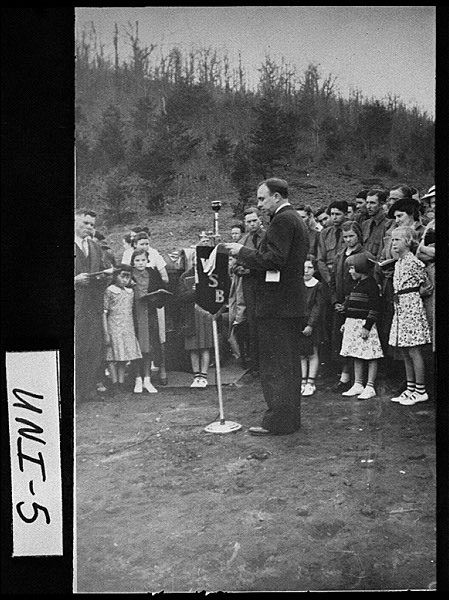
E. D. Rivers speaks in 1939, during his second gubernatorial term, at a gathering in Union County, located in the north Georgia mountains. During his first term, Rivers secured federal funding to support public housing and rural electrification in the state.

Courtesy of Georgia Archives, Vanishing Georgia, #uni005.

View on partner site

The New Georgia Encyclopedia does not hold the copyright for this media resource and can neither grant nor deny permission to republish or reproduce the image online or in print. Requests for permission to publish or reproduce the resource should be submitted to the Georgia Archives.

E. D. Rivers Promotion Front Side

E. D. Rivers Promotion Front Side

  • Info Details
  • Citation Terms of Use

The front side of a promotional card outlining E. D. Rivers's 1938 gubernatorial platform. Rivers was reelected in 1938, but by the end of his second term, his administration was awash in charges of corruption.

Courtesy of Richard B. Russell Library for Political Research and Studies, University of Georgia Libraries, Georgia Ephemera Collection.

The New Georgia Encyclopedia does not hold the copyright for this media resource and can neither grant nor deny permission to republish or reproduce the image online or in print. Requests for permission to publish or reproduce the resource may need to be submitted to the Richard B. Russell Library for Political Research and Studies at the University of Georgia.

E. D. Rivers Promotion Back Side

E. D. Rivers Promotion Back Side

  • Info Details
  • Citation Terms of Use

The back side of a promotional card outlining E. D. Rivers's 1938 gubernatorial platform.

Courtesy of Richard B. Russell Library for Political Research and Studies, University of Georgia Libraries, Georgia Ephemera Collection.
The New Georgia Encyclopedia does not hold the copyright for this media resource and can neither grant nor deny permission to republish or reproduce the image online or in print. Requests for permission to publish or reproduce the resource may need to be submitted to the Richard B. Russell Library for Political Research and Studies at the University of Georgia.

Thomas Hardwick

Thomas Hardwick

  • Info Details
  • Citation Terms of Use

Thomas Hardwick, pictured circa 1912, became governor of Georgia in 1921. A native of Thomasville, Hardwick also served in the state legislature and in both houses of the U.S. Congress during his political career.

Courtesy of Library of Congress, Prints and Photographs Division

The New Georgia Encyclopedia does not hold the copyright for this media resource and can neither grant nor deny permission to republish or reproduce the image online or in print. All requests for permission to publish or reproduce the resource must be submitted to the rights holder.

  • Info Details
  • Citation Terms of Use

The New Georgia Encyclopedia does not hold the copyright for this media resource and can neither grant nor deny permission to republish or reproduce the image online or in print. All requests for permission to publish or reproduce the resource must be submitted to the rights holder.

Clifford Walker

Clifford Walker

  • Info Details
  • Citation Terms of Use

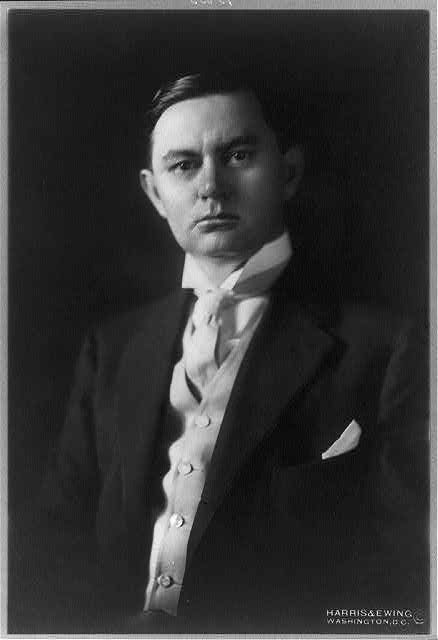
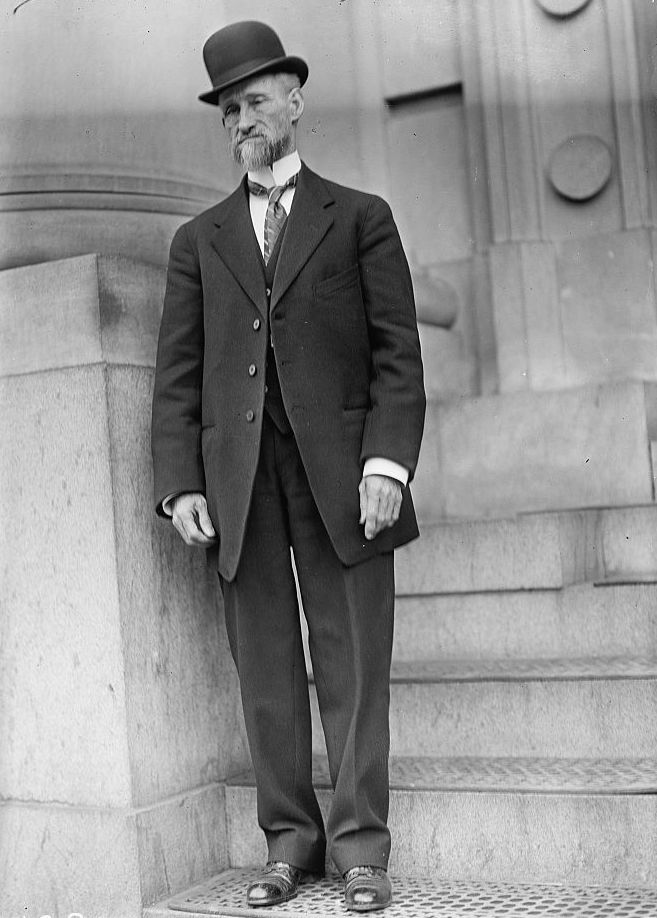
Clifford Walker, a native of Monroe, was elected as the state's sixty-first governor in 1923. He served two consecutive terms, during which time his ties to the Ku Klux Klan were uncovered by journalist Julian Harris, son of writer Joel Chandler Harris.

Courtesy of Library of Congress, Prints and Photographs Division, Harris & Ewing Collection.
The New Georgia Encyclopedia does not hold the copyright for this media resource and can neither grant nor deny permission to republish or reproduce the image online or in print. All requests for permission to publish or reproduce the resource must be submitted to the rights holder.

Walker Home

Walker Home

  • Info Details
  • Citation Terms of Use

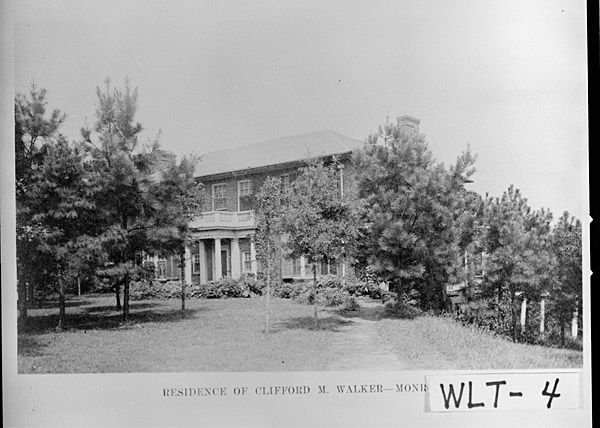
Clifford Walker, the governor of Georgia from 1923 to 1927, was born in Monroe and lived there for much of his life. Walker also began his political career in Monroe, where he was elected mayor in 1902.

Courtesy of Georgia Archives, Vanishing Georgia, #
wlt004.

View on partner site

The New Georgia Encyclopedia does not hold the copyright for this media resource and can neither grant nor deny permission to republish or reproduce the image online or in print. Requests for permission to publish or reproduce the resource should be submitted to the Georgia Archives.

Clifford Walker

Clifford Walker

  • Info Details
  • Citation Terms of Use

Clifford Walker, the sixty-first governor of Georgia, achieved little legislatively during his tenure and is best remembered for his ties to the Ku Klux Klan.

Courtesy of Georgia Capitol Museum, University of Georgia Libraries, Capitol Art Collection (Capitol Museum Collection), #1992.23.0058.
View on source site

The New Georgia Encyclopedia does not hold the copyright for this media resource and can neither grant nor deny permission to republish or reproduce the image online or in print. All requests for permission to publish or reproduce the resource must be submitted to the rights holder.

Joseph M. Terrell

Joseph M. Terrell

  • Info Details
  • Citation Terms of Use

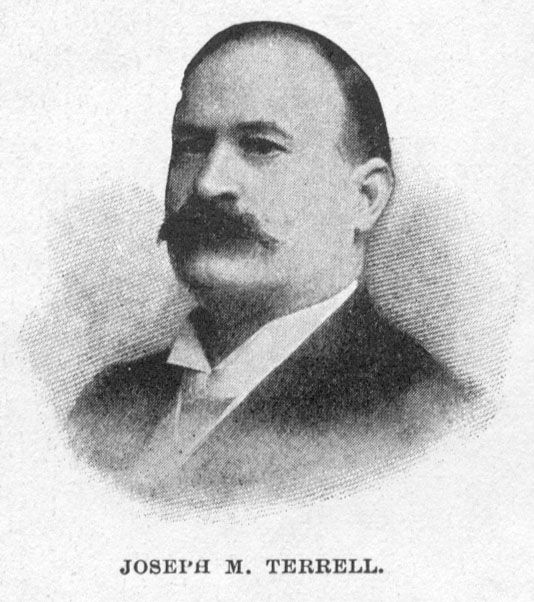
Joseph M. Terrell, a native of Meriwether County, was known as Georgia's "education governor." He served two consecutive terms, from 1902 to 1907, during which time he passed legislation creating eleven district agricultural and mechanical schools. Terrell also served as the state attorney general and as a U.S. senator during his political career.

The New Georgia Encyclopedia does not hold the copyright for this media resource and can neither grant nor deny permission to republish or reproduce the image online or in print. All requests for permission to publish or reproduce the resource must be submitted to the rights holder.

Nathaniel E. Harris

Nathaniel E. Harris

  • Info Details
  • Citation Terms of Use

Nathaniel E. Harris served as the governor of Georgia from 1915 to 1917. His primary focus was on the improvement of public services and social welfare. A strong advocate for public education, Harris also instituted compulsory education and reformed teacher pay during his tenure.

Courtesy of Georgia Captiol Museum, Office of Secretary of State
The New Georgia Encyclopedia does not hold the copyright for this media resource and can neither grant nor deny permission to republish or reproduce the image online or in print. All requests for permission to publish or reproduce the resource must be submitted to the rights holder.

Joseph M. Brown

Joseph M. Brown

  • Info Details
  • Citation Terms of Use

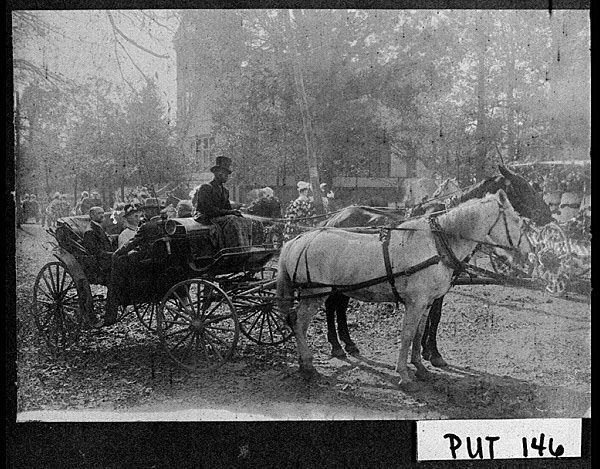
Joseph M. Brown (hatless man in back of carriage) and others return to Atlanta from a racetrack in Eatonton, circa 1907. Brown served on the Georgia State Railroad Commission from 1904 until 1907 and was elected to his first term as governor in 1909.

Courtesy of Georgia Archives, Vanishing Georgia, #
put146.
View on partner site

The New Georgia Encyclopedia does not hold the copyright for this media resource and can neither grant nor deny permission to republish or reproduce the image online or in print. Requests for permission to publish or reproduce the resource should be submitted to the Georgia Archives.

Joseph M. Brown

Joseph M. Brown

  • Info Details
  • Citation Terms of Use

Railroad commissioner and author Joseph M. Brown served two terms as governor, in 1909-11 and in 1912-13. He was the son of Georgia's Civil War governor, Joseph E. Brown.

Courtesy of Library of Congress, Prints and Photographs Division

View on source site

The New Georgia Encyclopedia does not hold the copyright for this media resource and can neither grant nor deny permission to republish or reproduce the image online or in print. All requests for permission to publish or reproduce the resource must be submitted to the rights holder.

Astyanax (1907)

Astyanax (1907)

  • Info Details
  • Citation Terms of Use

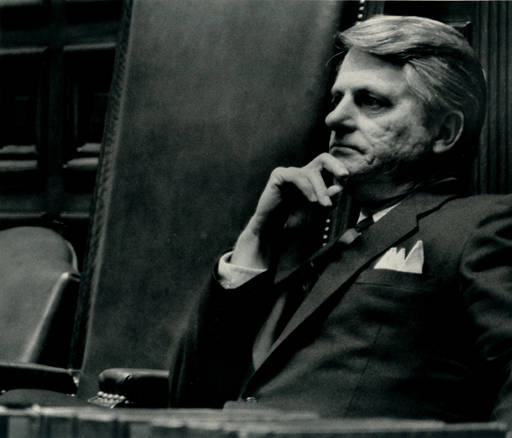
The frontispiece to Joseph M. Brown's Astyanax (1907), illustrated by William Lincoln Hudson, depicts the novel's warrior hero, Astyanax, telling a little girl that "sunbeams are hard to catch." Brown, a governor of Georgia, also wrote The Mountain Campaigns in Georgia (1886), a Civil War military history.

From Astyanax, by J. M. Brown
The New Georgia Encyclopedia does not hold the copyright for this media resource and can neither grant nor deny permission to republish or reproduce the image online or in print. All requests for permission to publish or reproduce the resource must be submitted to the rights holder.

Zell Miller

Zell Miller

  • Info Details
  • Citation Terms of Use

During his sixteen years as lieutenant governor, Zell Miller sparred regularly with Tom Murphy, the longitime Speaker of the state house. 

Courtesy of Atlanta History Center.

The New Georgia Encyclopedia does not hold the copyright for this media resource and can neither grant nor deny permission to republish or reproduce the image online or in print. Requests for permission to publish or reproduce the resource should be submitted to the Atlanta History Center.

  • Info Details
  • Citation Terms of Use

The New Georgia Encyclopedia does not hold the copyright for this media resource and can neither grant nor deny permission to republish or reproduce the image online or in print. All requests for permission to publish or reproduce the resource must be submitted to the rights holder.

Zell Miller

Zell Miller

  • Info Details
  • Citation Terms of Use

Zell Miller is officially sworn in as Georgia's eighth Lieutenant Governor in 1975. He served for four consecutive four-year terms.

Courtesy of Special Collections & Archives, Georgia State University Library.

The New Georgia Encyclopedia does not hold the copyright for this media resource and can neither grant nor deny permission to republish or reproduce the image online or in print. Requests for permission to publish or reproduce the resource should be submitted to Special Collections and Archives at Georgia State University.

Zell Miller

Zell Miller

  • Info Details
  • Citation Terms of Use

Zell Miller, pictured here during his tenure as lieutentant governor, was elected to that office in 1975 and held it for sixteen years. Miller began his political career in 1959, when he became mayor of Young Harris, his hometown. By the 1970s, Miller had served as a state senator for two terms and as the executive secretary to Governor Lester Maddox.

Image from Georgia Secretary of State

The New Georgia Encyclopedia does not hold the copyright for this media resource and can neither grant nor deny permission to republish or reproduce the image online or in print. All requests for permission to publish or reproduce the resource must be submitted to the rights holder.

  • Info Details
  • Citation Terms of Use

The New Georgia Encyclopedia does not hold the copyright for this media resource and can neither grant nor deny permission to republish or reproduce the image online or in print. All requests for permission to publish or reproduce the resource must be submitted to the rights holder.

Hoke Smith

Hoke Smith

  • Info Details
  • Citation Terms of Use

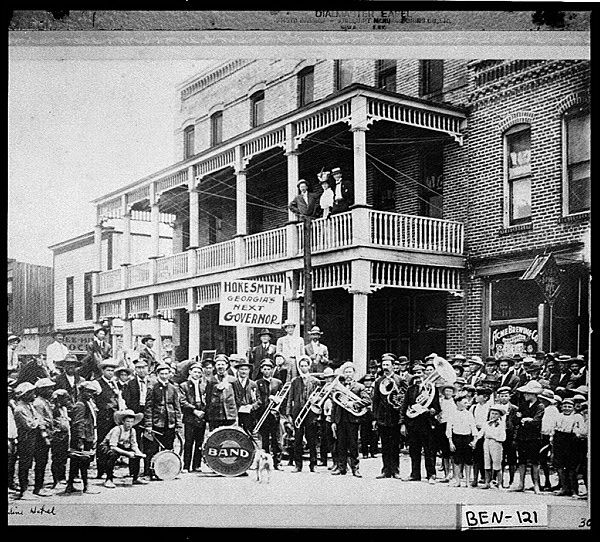
Governor Hoke Smith is perhaps the figure most associated with Progressive era reform in the state. During his governorship reforms were seen in education and railroad regulation; the convict lease system was abolished; and a major public health project, a state sanatorium for tuberculosis patients, was undertaken.
Courtesy of Hargrett Rare Book and Manuscript Library, University of Georgia Libraries.

The New Georgia Encyclopedia does not hold the copyright for this media resource and can neither grant nor deny permission to republish or reproduce the image online or in print. Requests for permission to publish or reproduce the resource should be submitted to the Hargrett Manuscript and Rare Book Library at the University of Georgia.

1906 Gubernatorial Campaign

1906 Gubernatorial Campaign

  • Info Details
  • Citation Terms of Use

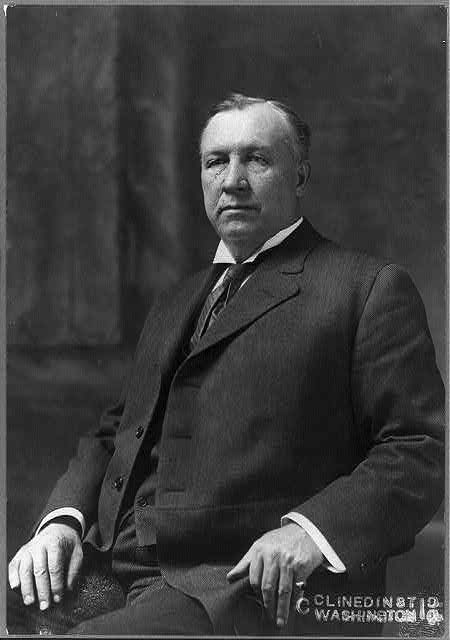
Residents of Fitzgerald in Ben Hill County gather for a political rally for Hoke Smith, owner of the Atlanta Journal, during the gubernatorial race of 1906. Smith, the Democratic candidate, won the election over Clark Howell, his rival publisher at the Atlanta Constitution.

Courtesy of Georgia Archives, Vanishing Georgia, #
ben121.
View on partner site

The New Georgia Encyclopedia does not hold the copyright for this media resource and can neither grant nor deny permission to republish or reproduce the image online or in print. Requests for permission to publish or reproduce the resource should be submitted to the Georgia Archives.

Hoke Smith

Hoke Smith

  • Info Details
  • Citation Terms of Use

Hoke Smith poses for a portrait in 1912, the year after his second term as Georgia's governor had ended. Smith served as governor first from 1907 to 1909 and then again in 1911, until he was selected to fill the empty U.S. Senate seat of Joseph M. Terrell. He remained in this seat until 1921.

Courtesy of Library of Congress, Prints and Photographs Division

The New Georgia Encyclopedia does not hold the copyright for this media resource and can neither grant nor deny permission to republish or reproduce the image online or in print. All requests for permission to publish or reproduce the resource must be submitted to the rights holder.

Richard B. Russell Jr.

Richard B. Russell Jr.

  • Info Details
  • Citation Terms of Use

A U.S. senator from Georgia for thirty-eight years, Richard B. Russell Jr. became one of the most influential senators of his time. From 1935 until the passage of the Civil Rights Act in 1964, Russell used his clout as leader of the Southern Bloc in the Senate to prevent the passage of national civil rights legislation.

Courtesy of Richard B. Russell Library for Political Research and Studies, University of Georgia Libraries, Richard B. Russell Jr. Collection.

The New Georgia Encyclopedia does not hold the copyright for this media resource and can neither grant nor deny permission to republish or reproduce the image online or in print. Requests for permission to publish or reproduce the resource may need to be submitted to the Richard B. Russell Library for Political Research and Studies at the University of Georgia.

Richard B. Russell Jr.

Richard B. Russell Jr.

  • Info Details
  • Citation Terms of Use

Richard B. Russell Jr. became one of the youngest members of the Georgia House of Representatives upon his election in 1920. By the time of this 1928 photograph, he was serving as Speaker of the House. Russell would later take office in 1931 as Georgia's youngest governor, and he entered national politics as a U.S. senator in 1933.

Courtesy of Richard B. Russell Library for Political Research and Studies, University of Georgia Libraries, Richard B. Russell Jr. Collection.

The New Georgia Encyclopedia does not hold the copyright for this media resource and can neither grant nor deny permission to republish or reproduce the image online or in print. Requests for permission to publish or reproduce the resource may need to be submitted to the Richard B. Russell Library for Political Research and Studies at the University of Georgia.

Richard B. Russell Jr.

Richard B. Russell Jr.

  • Info Details
  • Citation Terms of Use

In 1918, following his graduation from the University of Georgia law school, Richard B. Russell Jr. enlisted in the U.S. Naval Reserve Forces. Russell began practicing law the following year, and in 1920 began his political career as a state representative.

Courtesy of Richard B. Russell Library for Political Research and Studies, University of Georgia Libraries, Richard B. Russell Jr. Collection.

The New Georgia Encyclopedia does not hold the copyright for this media resource and can neither grant nor deny permission to republish or reproduce the image online or in print. Requests for permission to publish or reproduce the resource may need to be submitted to the Richard B. Russell Library for Political Research and Studies at the University of Georgia.

Campaign Literature

Campaign Literature

  • Info Details
  • Citation Terms of Use

Richard B. Russell Jr. announced his candidacy for governor in April 1930 and took the oath of office in June 1931. Russell ran a strong grassroots campaign to win the election over several more experienced candidates.

Courtesy of Richard B. Russell Library for Political Research and Studies, University of Georgia Libraries, Richard B. Russell Jr. Collection.

The New Georgia Encyclopedia does not hold the copyright for this media resource and can neither grant nor deny permission to republish or reproduce the image online or in print. Requests for permission to publish or reproduce the resource may need to be submitted to the Richard B. Russell Library for Political Research and Studies at the University of Georgia.

Russell Takes Oath

Russell Takes Oath

  • Info Details
  • Citation Terms of Use

Richard B. Russell Jr. was sworn in as the youngest governor of Georgia by his father, Richard B. Russell Sr., in June 1931. During his eighteen-month tenure, Russell reduced the size of state government, balanced the state budget, and organized the University System of Georgia.

Courtesy of Richard B. Russell Library for Political Research and Studies, University of Georgia Libraries, Richard B. Russell Jr. Collection.

The New Georgia Encyclopedia does not hold the copyright for this media resource and can neither grant nor deny permission to republish or reproduce the image online or in print. Requests for permission to publish or reproduce the resource may need to be submitted to the Richard B. Russell Library for Political Research and Studies at the University of Georgia.

Campaign Wagon

Campaign Wagon

  • Info Details
  • Citation Terms of Use

Volunteers gather beside a campaign wagon used during Richard B. Russell Jr.'s 1936 campaign against Georgia governor Eugene Talmadge for a seat in the U.S. Senate. This campaign was one of only two contested elections for Russell during his tenure as a U.S. senator, from 1933 until his death in 1971.

Courtesy of Richard B. Russell Library for Political Research and Studies, University of Georgia Libraries, Richard B. Russell Jr. Collection.

The New Georgia Encyclopedia does not hold the copyright for this media resource and can neither grant nor deny permission to republish or reproduce the image online or in print. Requests for permission to publish or reproduce the resource may need to be submitted to the Richard B. Russell Library for Political Research and Studies at the University of Georgia.

Franklin D. Roosevelt and Richard B. Russell Jr.

Franklin D. Roosevelt and Richard B. Russell Jr.

  • Info Details
  • Citation Terms of Use

Richard B. Russell Jr. (right) campaigns in Warm Springs for U.S. presidential candidate Franklin D. Roosevelt in 1932. Russell, upon his election to the U.S. Senate in 1933, helped to ensure passage of Roosevelt's New Deal programs throughout the 1930s.

Courtesy of Richard B. Russell Library for Political Research and Studies, University of Georgia Libraries.

The New Georgia Encyclopedia does not hold the copyright for this media resource and can neither grant nor deny permission to republish or reproduce the image online or in print. Requests for permission to publish or reproduce the resource may need to be submitted to the Richard B. Russell Library for Political Research and Studies at the University of Georgia.

Richard B. Russell Jr. at Festival

Richard B. Russell Jr. at Festival

  • Info Details
  • Citation Terms of Use

Richard B. Russell Jr. participates in a 1933 festival with his mother (left) and sister (right). During this year Russell was elected to the U.S. Senate and appointed to the Naval Affairs Committee, the first of many powerful committee appointments during his long tenure as senator.

Courtesy of Richard B. Russell Library for Political Research and Studies, University of Georgia Libraries.

The New Georgia Encyclopedia does not hold the copyright for this media resource and can neither grant nor deny permission to republish or reproduce the image online or in print. Requests for permission to publish or reproduce the resource may need to be submitted to the Richard B. Russell Library for Political Research and Studies at the University of Georgia.

Russell, Hayden, and Wiley

Russell, Hayden, and Wiley

  • Info Details
  • Citation Terms of Use

Richard B. Russell Jr. (left), who served from 1933 to 1971 as a U.S. senator from Georgia, stands with fellow senators Carl Hayden of Arizona (center) and Alexander Wiley of Wisconsin (right) in 1955.

Photograph by Abbie Rowe, National Park Service. Courtesy of Dwight D. Eisenhower Presidential Library, National Archives and Records Administration

The New Georgia Encyclopedia does not hold the copyright for this media resource and can neither grant nor deny permission to republish or reproduce the image online or in print. All requests for permission to publish or reproduce the resource must be submitted to the rights holder.

Russell and Johnson

Russell and Johnson

  • Info Details
  • Citation Terms of Use

U.S. senator Richard B. Russell Jr. (left) converses with U.S. president Lyndon B. Johnson in 1968. Russell, an early supporter of and mentor to Johnson, criticized the Johnson administration's escalation of the war in Vietnam during the 1960s.

Courtesy of Richard B. Russell Library for Political Research and Studies, University of Georgia Libraries, Richard B. Russell Jr. Collection.

The New Georgia Encyclopedia does not hold the copyright for this media resource and can neither grant nor deny permission to republish or reproduce the image online or in print. Requests for permission to publish or reproduce the resource may need to be submitted to the Richard B. Russell Library for Political Research and Studies at the University of Georgia.

Democratic National Convention

Democratic National Convention

  • Info Details
  • Citation Terms of Use

Supporters campaign at the 1952 Democratic National Convention for the presidential nomination of Richard B. Russell Jr., a U.S. senator from Georgia. Russell won the Florida primary after announcing his candidacy but lost the party's nomination to Adlai Stevenson during the convention.

Courtesy of Richard B. Russell Library for Political Research and Studies, University of Georgia Libraries, Richard B. Russell Jr. Collection.

The New Georgia Encyclopedia does not hold the copyright for this media resource and can neither grant nor deny permission to republish or reproduce the image online or in print. Requests for permission to publish or reproduce the resource may need to be submitted to the Richard B. Russell Library for Political Research and Studies at the University of Georgia.

Richard B. Russell Jr.

Richard B. Russell Jr.

  • Info Details
  • Citation Terms of Use

A graduate of the law school at the University of Georgia, U.S. senator Richard B. Russell Jr. visits the school's football team at Sanford Stadium in 1969.

Courtesy of Richard B. Russell Library for Political Research and Studies, University of Georgia Libraries, Richard B. Russell Jr. Collection.

The New Georgia Encyclopedia does not hold the copyright for this media resource and can neither grant nor deny permission to republish or reproduce the image online or in print. Requests for permission to publish or reproduce the resource may need to be submitted to the Richard B. Russell Library for Political Research and Studies at the University of Georgia.

Richard Brevard Russell Senate Office Building

Richard Brevard Russell Senate Office Building

  • Info Details
  • Citation Terms of Use

Richard B. Russell Jr. of Georgia, for whom this building was renamed in 1972, became a prominent and respected senator during his thirty-eight-year tenure in the U.S. Senate. Completed in 1908, this oldest of the Senate office buildings is designed in the Beaux-Arts style and is constructed with marble, limestone, and granite.

Photograph by Larry Lamsa 

The New Georgia Encyclopedia does not hold the copyright for this media resource and can neither grant nor deny permission to republish or reproduce the image online or in print. All requests for permission to publish or reproduce the resource must be submitted to the rights holder.

Richard B. Russell Jr. at Crackers Game

Richard B. Russell Jr. at Crackers Game

  • Info Details
  • Citation Terms of Use

Richard B. Russell Jr. throws the first pitch at an Atlanta Crackers game in 1931, the same year in which he took the oath of office as Georgia's youngest governor.

Courtesy of Richard B. Russell Library for Political Research and Studies, University of Georgia Libraries, Richard B. Russell Jr. Collection.

The New Georgia Encyclopedia does not hold the copyright for this media resource and can neither grant nor deny permission to republish or reproduce the image online or in print. Requests for permission to publish or reproduce the resource may need to be submitted to the Richard B. Russell Library for Political Research and Studies at the University of Georgia.

Richard B. Russell Jr. and Richard Nixon

Richard B. Russell Jr. and Richard Nixon

  • Info Details
  • Citation Terms of Use

Richard B. Russell Jr., a U.S. senator from Georgia, greets U.S. president Richard Nixon.

Courtesy of Richard B. Russell Library for Political Research and Studies, University of Georgia Libraries, Richard B. Russell Jr. Collection.

The New Georgia Encyclopedia does not hold the copyright for this media resource and can neither grant nor deny permission to republish or reproduce the image online or in print. Requests for permission to publish or reproduce the resource may need to be submitted to the Richard B. Russell Library for Political Research and Studies at the University of Georgia.

https://www.georgiaencyclopedia.org/wp-content/uploads/2021/04/school-that-learned-to-eat_001.mp4

The School That Learned to Eat

  • Info Details
  • Citation Terms of Use

Produced by the University of Georgia College of Education and General Mills, The School That Learned to Eat (1948) is a short film chronicling a community's efforts to improve the school lunch program at East Griffin Elementary School in Spalding County. 

Courtesy of Richard B. Russell Library for Political Research and Studies, University of Georgia Libraries.

The New Georgia Encyclopedia does not hold the copyright for this media resource and can neither grant nor deny permission to republish or reproduce the image online or in print. Requests for permission to publish or reproduce the resource may need to be submitted to the Richard B. Russell Library for Political Research and Studies at the University of Georgia.

Richard B. Russell Postage Stamp

Richard B. Russell Jr.

  • Info Details
  • Citation Terms of Use

Issued in 1984, this 10 cent postage stamp honors Richard B. Russell Jr., the youngest governor in Georgia's history. 

Courtesy of Smithsonian National Postal Museum

The New Georgia Encyclopedia does not hold the copyright for this media resource and can neither grant nor deny permission to republish or reproduce the image online or in print. All requests for permission to publish or reproduce the resource must be submitted to the rights holder.

Lamartine Hardman

Lamartine Hardman

  • Info Details
  • Citation Terms of Use

Georgia Governor from 1927 to 1931, Lamertine Hardman pictured on a horse holding a rifle. Hardman was one of the wealthiest men in Georgia at the turn of the twentieth century and strove to make governmental processes more efficient 

Courtesy of Richard B. Russell Library for Political Research and Studies, University of Georgia Libraries.

The New Georgia Encyclopedia does not hold the copyright for this media resource and can neither grant nor deny permission to republish or reproduce the image online or in print. Requests for permission to publish or reproduce the resource may need to be submitted to the Richard B. Russell Library for Political Research and Studies at the University of Georgia.

Hardman Family

Hardman Family

  • Info Details
  • Citation Terms of Use

Emma Wiley Griffin, a Valdosta native, married Georgia state representative and future governor Lamartine Hardman in 1907. The couple had four children, three daughters and one son, who are pictured here with their mother in this undated photograph.

Courtesy of Richard B. Russell Library for Political Research and Studies, University of Georgia Libraries, Lamartine G. Hardman Collection.

The New Georgia Encyclopedia does not hold the copyright for this media resource and can neither grant nor deny permission to republish or reproduce the image online or in print. Requests for permission to publish or reproduce the resource may need to be submitted to the Richard B. Russell Library for Political Research and Studies at the University of Georgia.

Ivan Allen Sr.

Ivan Allen Sr.

  • Info Details
  • Citation Terms of Use

Atlanta businessman and booster Ivan Allen Sr. cofounded the office supply firm later known as the Ivan Allen Company. He also served a brief stint in 1917 as president of the Atlanta Chamber of Commerce and headed a commission on goverment efficiency for Governor Lamartine Hardman during the early 1930s.

The New Georgia Encyclopedia does not hold the copyright for this media resource and can neither grant nor deny permission to republish or reproduce the image online or in print. All requests for permission to publish or reproduce the resource must be submitted to the rights holder.

Lamartine Hardman

Lamartine Hardman

  • Info Details
  • Citation Terms of Use

Georgia Govenor Lamartine Hardman with President Calvin Coolidge.

Courtesy of Richard B. Russell Library for Political Research and Studies, University of Georgia Libraries.

The New Georgia Encyclopedia does not hold the copyright for this media resource and can neither grant nor deny permission to republish or reproduce the image online or in print. Requests for permission to publish or reproduce the resource may need to be submitted to the Richard B. Russell Library for Political Research and Studies at the University of Georgia.

Lamartine Hardman

Lamartine Hardman

  • Info Details
  • Citation Terms of Use

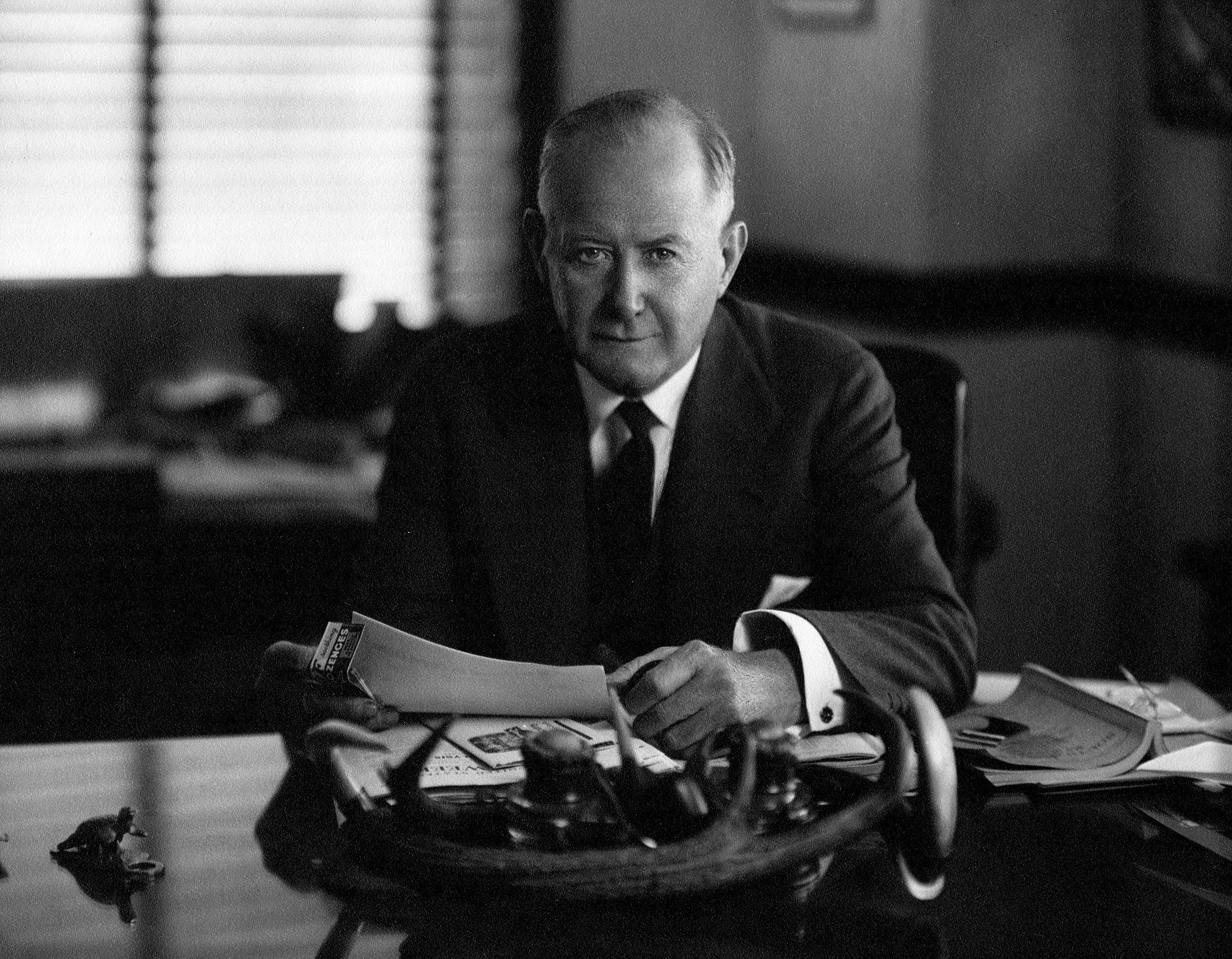
Larmartine Hardman (second from right) pictured with the daughter of Crawford Long (to the left of the stone marker) at a tribute to Long in 1922. Long was a Georgian physician who is credited with the discovery of anethesia in 1879.
Courtesy of Richard B. Russell Library for Political Research and Studies, University of Georgia Libraries.

The New Georgia Encyclopedia does not hold the copyright for this media resource and can neither grant nor deny permission to republish or reproduce the image online or in print. Requests for permission to publish or reproduce the resource may need to be submitted to the Richard B. Russell Library for Political Research and Studies at the University of Georgia.

John M. Slaton

John M. Slaton

  • Info Details
  • Citation Terms of Use

John Slaton served two terms as governor of Georgia. He is perhaps best known today for his decision to commute the death sentence of Leo Frank in 1915.

Courtesy of Hargrett Rare Book and Manuscript Library, University of Georgia Libraries.

The New Georgia Encyclopedia does not hold the copyright for this media resource and can neither grant nor deny permission to republish or reproduce the image online or in print. Requests for permission to publish or reproduce the resource should be submitted to the Hargrett Manuscript and Rare Book Library at the University of Georgia.

Eugene Talmadge

Eugene Talmadge

  • Info Details
  • Citation Terms of Use

In Governor Eugene Talmadge, Franklin D. Roosevelt's New Deal found one of its most vigorous opponents. In Talmadge's first two terms as governor (1933-37), Georgia state government subverted many of the early New Deal programs.

Courtesy of Atlanta History Center.

The New Georgia Encyclopedia does not hold the copyright for this media resource and can neither grant nor deny permission to republish or reproduce the image online or in print. Requests for permission to publish or reproduce the resource should be submitted to the Atlanta History Center.

Eugene Talmadge

Eugene Talmadge

  • Info Details
  • Citation Terms of Use

Eugene Talmadge served as governor of Georgia from 1933 to 1937 and again from 1941 to 1943. His personality and actions polarized voters into Talmadge and anti-Talmadge factions in the state's one-party politics of that era. His death in 1946 touched off the unprecedented "three governors controversy."

Courtesy of Hargrett Rare Book and Manuscript Library, University of Georgia Libraries, Georgia Photo File.

The New Georgia Encyclopedia does not hold the copyright for this media resource and can neither grant nor deny permission to republish or reproduce the image online or in print. Requests for permission to publish or reproduce the resource should be submitted to the Hargrett Manuscript and Rare Book Library at the University of Georgia.

Eugene Talmadge

Eugene Talmadge

  • Info Details
  • Citation Terms of Use

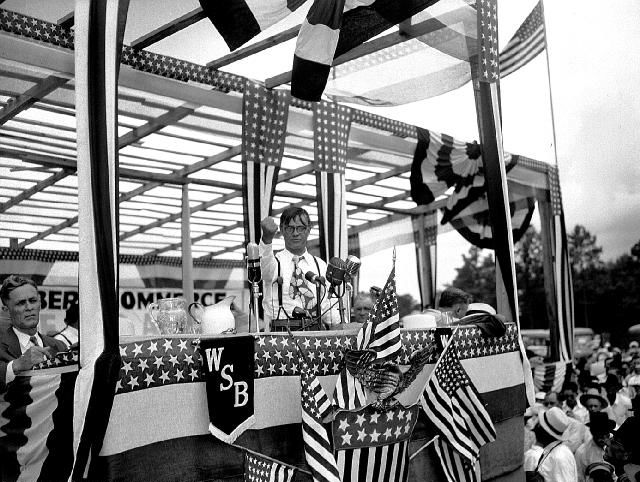
Talmadge's impassioned rhetoric and animated delivery on the campaign trail endeared him to rural and small-town Georgia voters and accounted for much of his political success.

Courtesy of Hargrett Rare Book and Manuscript Library, University of Georgia Libraries, Telamon Cuyler Collection.
The New Georgia Encyclopedia does not hold the copyright for this media resource and can neither grant nor deny permission to republish or reproduce the image online or in print. Requests for permission to publish or reproduce the resource should be submitted to the Hargrett Manuscript and Rare Book Library at the University of Georgia.

Eugene Talmadge

Eugene Talmadge

  • Info Details
  • Citation Terms of Use

Talmadge ran for governor for a fourth term in 1946, promising to restore the white primary and to keep Blacks in their place in Jim Crow Georgia. Talmadge, who had very strong support in rural areas, won the gubernatorial nomination by obtaining a majority of the county unit votes.

Courtesy of Special Collections & Archives, Georgia State University Library.

The New Georgia Encyclopedia does not hold the copyright for this media resource and can neither grant nor deny permission to republish or reproduce the image online or in print. Requests for permission to publish or reproduce the resource should be submitted to Special Collections and Archives at Georgia State University.

  • Info Details
  • Citation Terms of Use

The New Georgia Encyclopedia does not hold the copyright for this media resource and can neither grant nor deny permission to republish or reproduce the image online or in print. All requests for permission to publish or reproduce the resource must be submitted to the rights holder.

Roy Barnes, 1982

Roy Barnes, 1982

  • Info Details
  • Citation Terms of Use

Roy Barnes served eight terms as a Georgia state senator (1974-1990). After his second term he was named chair of the Senate Judiciary Committee and also served as floor leader for Governor Joe Frank Harris.

Courtesy of Special Collections & Archives, Georgia State University Library, Atlanta Journal-Constitution Photographic Archive.
The New Georgia Encyclopedia does not hold the copyright for this media resource and can neither grant nor deny permission to republish or reproduce the image online or in print. Requests for permission to publish or reproduce the resource should be submitted to Special Collections and Archives at Georgia State University.

  • Info Details
  • Citation Terms of Use

The New Georgia Encyclopedia does not hold the copyright for this media resource and can neither grant nor deny permission to republish or reproduce the image online or in print. All requests for permission to publish or reproduce the resource must be submitted to the rights holder.

  • Info Details
  • Citation Terms of Use

The New Georgia Encyclopedia does not hold the copyright for this media resource and can neither grant nor deny permission to republish or reproduce the image online or in print. All requests for permission to publish or reproduce the resource must be submitted to the rights holder.

Lester Maddox

Lester Maddox

  • Info Details
  • Citation Terms of Use

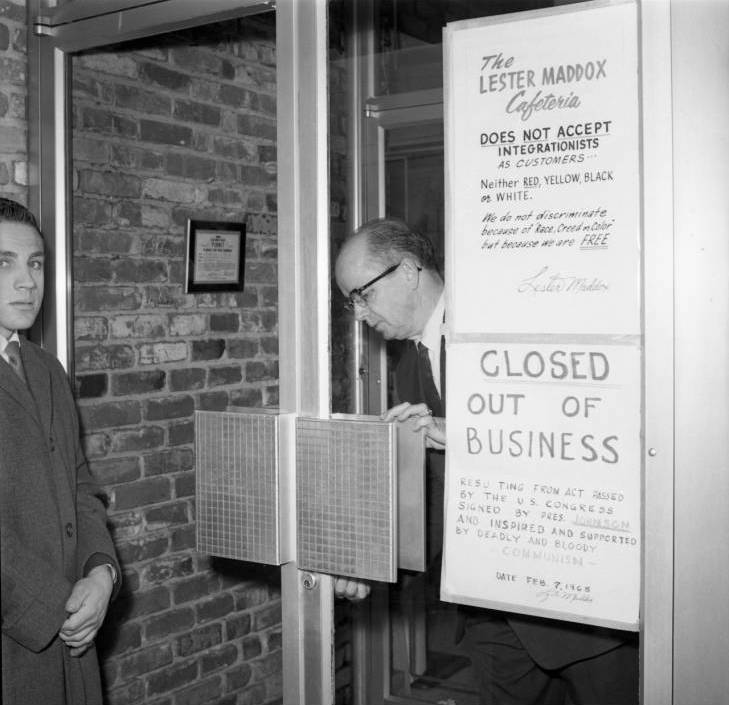
Lestor Maddox locks the doors to the Pickrick restaurant rather than integrating it in 1965. Toward the end of his life, Governor Lester Maddox expressed few regrets and made no apologies for his segregationist beliefs or any of the other political stances he had taken over his career.

Courtesy of Special Collections & Archives, Georgia State University Library, Atlanta Journal-Constitution Photographic Archive.

The New Georgia Encyclopedia does not hold the copyright for this media resource and can neither grant nor deny permission to republish or reproduce the image online or in print. Requests for permission to publish or reproduce the resource should be submitted to Special Collections and Archives at Georgia State University.

Lester Maddox Riding Bicycle

Lester Maddox Riding Bicycle

  • Info Details
  • Citation Terms of Use

Governor Lester Maddox performs his signature trick: riding a bicycle backward.

Courtesy of Atlanta Journal-Constitution.

The New Georgia Encyclopedia does not hold the copyright for this media resource and can neither grant nor deny permission to republish or reproduce the image online or in print. All requests for permission to publish or reproduce the resource must be submitted to the Atlanta Journal-Constitution.

Lester Maddox’s Souvenir Store

Lester Maddox’s Souvenir Store

  • Info Details
  • Citation Terms of Use

Lester Maddox is photographed shaking hands inside his souvenir store in Underground Atlanta.

Courtesy of Atlanta Journal-Constitution.

The New Georgia Encyclopedia does not hold the copyright for this media resource and can neither grant nor deny permission to republish or reproduce the image online or in print. All requests for permission to publish or reproduce the resource must be submitted to the Atlanta Journal-Constitution.

Lester and Virginia Maddox

Lester and Virginia Maddox

  • Info Details
  • Citation Terms of Use

Lester Maddox and his wife, Virginia Cox, were married in 1936. Their union lasted sixty-one years, until Virginia's death. The picture is autographed by Maddox.

Courtesy of Hargrett Rare Book and Manuscript Library, University of Georgia Libraries, Georgia Photo File.

The New Georgia Encyclopedia does not hold the copyright for this media resource and can neither grant nor deny permission to republish or reproduce the image online or in print. Requests for permission to publish or reproduce the resource should be submitted to the Hargrett Manuscript and Rare Book Library at the University of Georgia.

Joe Frank Harris

Joe Frank Harris

  • Info Details
  • Citation Terms of Use

Since retiring as governor of Georgia in 1991, Harris has published a book and served as vice chair and chair of the University System of Georgia Board of Regents, which oversees the state's public colleges and universities.

Courtesy of Atlanta Journal-Constitution.

The New Georgia Encyclopedia does not hold the copyright for this media resource and can neither grant nor deny permission to republish or reproduce the image online or in print. All requests for permission to publish or reproduce the resource must be submitted to the Atlanta Journal-Constitution.

Joe Frank Harris

Joe Frank Harris

  • Info Details
  • Citation Terms of Use

Joe Frank Harris, Democrat, served as governor of Georgia from 1983 to 1991. By the end of his term Harris had helped secure education reform, the Georgia Dome, the 1996 Olympics, and a more diversified state economy.

Courtesy of Hargrett Rare Book and Manuscript Library, University of Georgia Libraries.

The New Georgia Encyclopedia does not hold the copyright for this media resource and can neither grant nor deny permission to republish or reproduce the image online or in print. Requests for permission to publish or reproduce the resource should be submitted to the Hargrett Manuscript and Rare Book Library at the University of Georgia.

Joe Frank Harris

Joe Frank Harris

  • Info Details
  • Citation Terms of Use

Governor Joe Frank Harris addressing the Georgia senate in 1985. Harris served as governor of Georgia from 1983 to 1991.

Courtesy of Special Collections & Archives, Georgia State University Library, Atlanta Journal-Constitution Photographic Archive.

The New Georgia Encyclopedia does not hold the copyright for this media resource and can neither grant nor deny permission to republish or reproduce the image online or in print. Requests for permission to publish or reproduce the resource should be submitted to Special Collections and Archives at Georgia State University.

Joe Frank Harris

Joe Frank Harris

  • Info Details
  • Citation Terms of Use

Harris's most visible achievement as governor was a sweeping reform of public education. The program, known as Quality Basic Education, sought to improve funding for Georgia public schools by expanding student testing, introducing new programs for students with disabilities, and increasing teacher salaries.

Courtesy of Hargrett Rare Book and Manuscript Library, University of Georgia Libraries.

The New Georgia Encyclopedia does not hold the copyright for this media resource and can neither grant nor deny permission to republish or reproduce the image online or in print. Requests for permission to publish or reproduce the resource should be submitted to the Hargrett Manuscript and Rare Book Library at the University of Georgia.

Marvin Griffin

Marvin Griffin

  • Info Details
  • Citation Terms of Use

Marvin Griffin, governor of Georgia from 1955 to 1959, ran for office on a staunch segregationist platform. Before being elected governor Griffin served as the state's first lieutenant governor.

Courtesy of Hargrett Rare Book and Manuscript Library, University of Georgia Libraries, Georgia Photo File.

The New Georgia Encyclopedia does not hold the copyright for this media resource and can neither grant nor deny permission to republish or reproduce the image online or in print. Requests for permission to publish or reproduce the resource should be submitted to the Hargrett Manuscript and Rare Book Library at the University of Georgia.

Marvin Griffin

Marvin Griffin

  • Info Details
  • Citation Terms of Use

Georgia governor Marvin Griffin is pictured speaking at his inauguration in 1954. The Griffin administration accomplished a great deal for Georgia, paving nearly 12,000 miles of rural roads, increasing appropriations for education, and raising teacher salaries.

Courtesy of Special Collections & Archives, Georgia State University Library, Atlanta Journal-Constitution Photographic Archive.

The New Georgia Encyclopedia does not hold the copyright for this media resource and can neither grant nor deny permission to republish or reproduce the image online or in print. Requests for permission to publish or reproduce the resource should be submitted to Special Collections and Archives at Georgia State University.

  • Info Details
  • Citation Terms of Use

The New Georgia Encyclopedia does not hold the copyright for this media resource and can neither grant nor deny permission to republish or reproduce the image online or in print. All requests for permission to publish or reproduce the resource must be submitted to the rights holder.

Hugh M. Dorsey

Hugh M. Dorsey

  • Info Details
  • Citation Terms of Use

Georgia governor Hugh M. Dorsey brought both youth and progressive ideas to the office in 1917. He is best known, however, as the prosecutor in the notorious Leo Frank case.

Courtesy of Hargrett Rare Book and Manuscript Library, University of Georgia Libraries.

The New Georgia Encyclopedia does not hold the copyright for this media resource and can neither grant nor deny permission to republish or reproduce the image online or in print. Requests for permission to publish or reproduce the resource should be submitted to the Hargrett Manuscript and Rare Book Library at the University of Georgia.

Melvin E. Thompson

Melvin E. Thompson

  • Info Details
  • Citation Terms of Use

Melvin E. Thompson claimed a few triumphs during his brief tenure as governor: he increased state spending without new taxes, raised teachers' salaries, increased spending for education, expanded the roads and bridges building program, improved the state's park system, and purchased Jekyll Island.

Courtesy of Richard B. Russell Library for Political Research and Studies, University of Georgia Libraries, Ed Friend Visual Materials.
The New Georgia Encyclopedia does not hold the copyright for this media resource and can neither grant nor deny permission to republish or reproduce the image online or in print. Requests for permission to publish or reproduce the resource may need to be submitted to the Richard B. Russell Library for Political Research and Studies at the University of Georgia.

  • Info Details
  • Citation Terms of Use

The New Georgia Encyclopedia does not hold the copyright for this media resource and can neither grant nor deny permission to republish or reproduce the image online or in print. All requests for permission to publish or reproduce the resource must be submitted to the rights holder.

Jimmy and Rosalynn Carter

Jimmy and Rosalynn Carter

  • Info Details
  • Citation Terms of Use

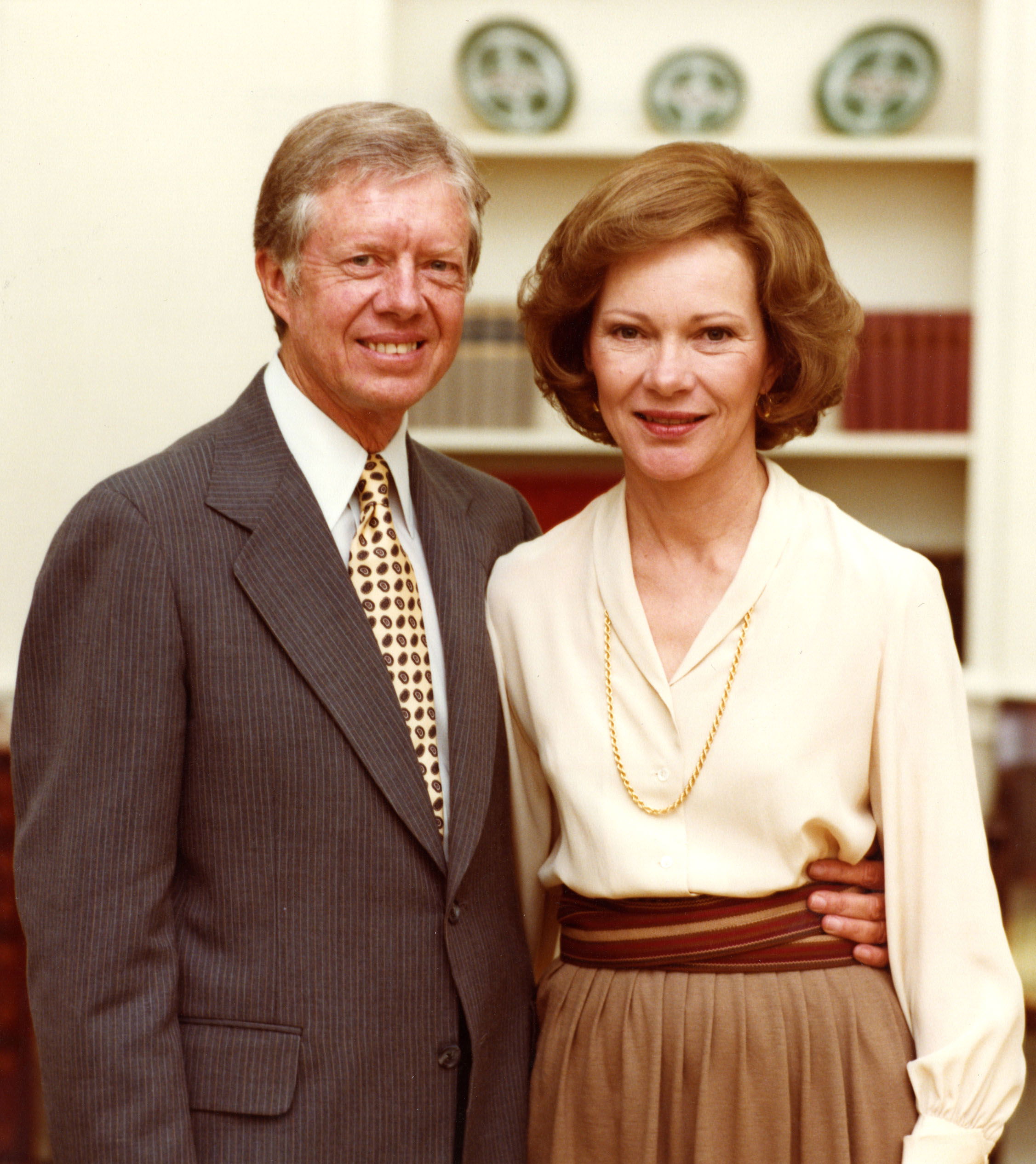
Jimmy and Rosalynn Carter, both from Plains, discuss their experiences working together with Habitat for Humanity and the Carter Center in a book they coauthored in 1987, Everything to Gain: Making the Most of the Rest of Your Life.

Courtesy of the Carter Center
The New Georgia Encyclopedia does not hold the copyright for this media resource and can neither grant nor deny permission to republish or reproduce the image online or in print. All requests for permission to publish or reproduce the resource must be submitted to the rights holder.

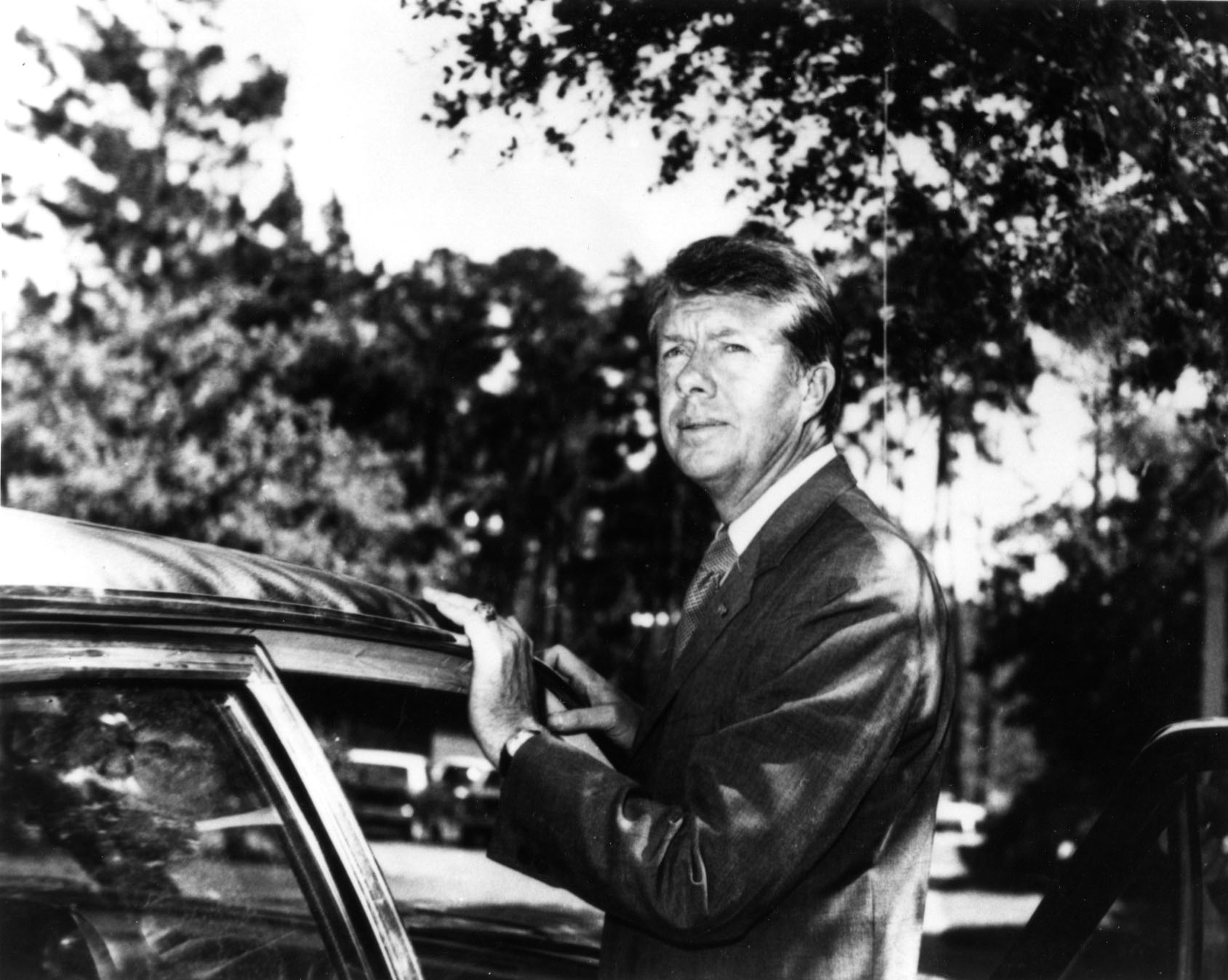
Jimmy Carter

Jimmy Carter

  • Info Details
  • Citation Terms of Use

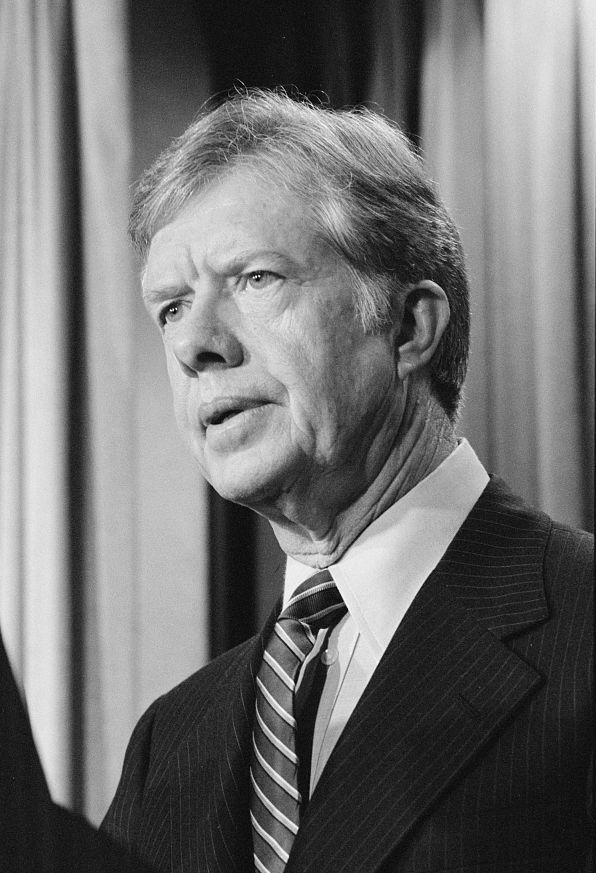
Jimmy Carter, the only Georgian ever elected president of the United States, held the office for one term, from 1977 to 1981. 

Courtesy of Library of Congress, Prints and Photographs Division
The New Georgia Encyclopedia does not hold the copyright for this media resource and can neither grant nor deny permission to republish or reproduce the image online or in print. All requests for permission to publish or reproduce the resource must be submitted to the rights holder.

  • Info Details
  • Citation Terms of Use

The New Georgia Encyclopedia does not hold the copyright for this media resource and can neither grant nor deny permission to republish or reproduce the image online or in print. All requests for permission to publish or reproduce the resource must be submitted to the rights holder.

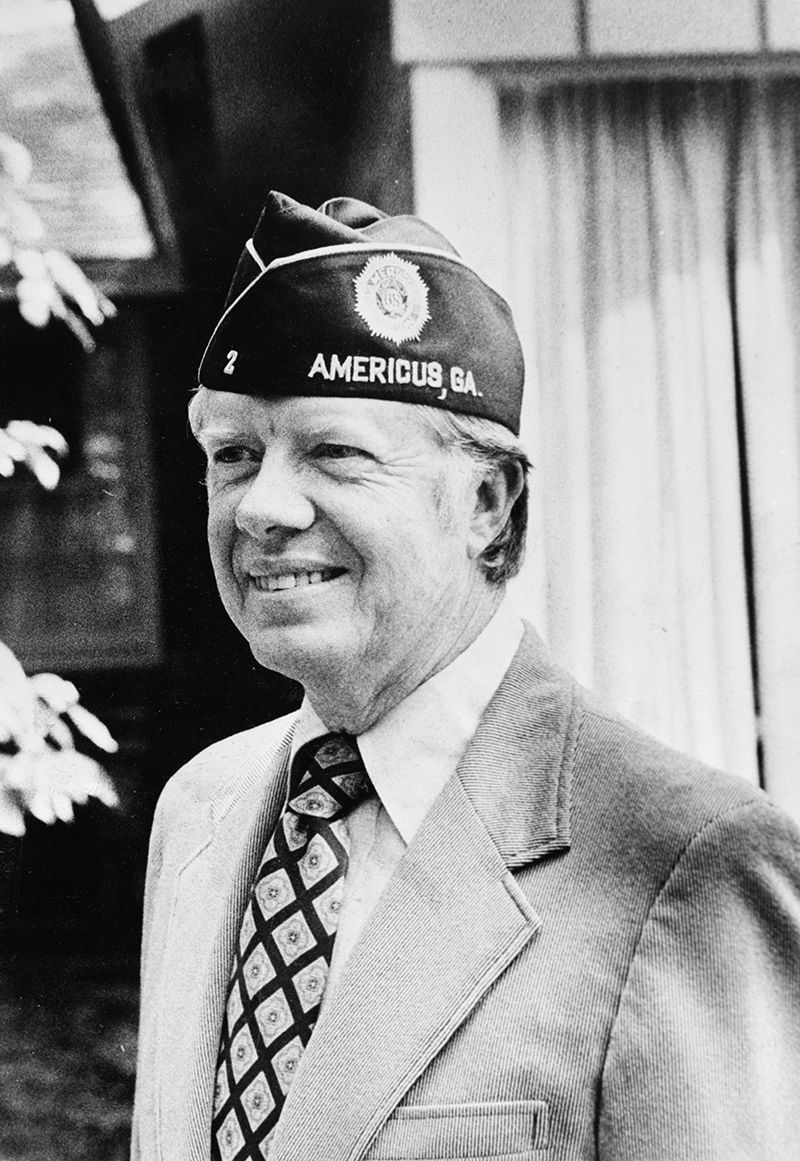
Jimmy Carter

Jimmy Carter

  • Info Details
  • Citation Terms of Use

As governor of Georgia from 1971 to 1975, Carter sought to reorganize state government, upgrade the state's weak educational system, reform the criminal justice system, initiate significant new mental health programs, and promote civil rights and equal opportunity for women and minorities. In 1976 he was elected president of the United States and served for one term.
Courtesy of Richard B. Russell Library for Political Research and Studies, University of Georgia Libraries.

The New Georgia Encyclopedia does not hold the copyright for this media resource and can neither grant nor deny permission to republish or reproduce the image online or in print. Requests for permission to publish or reproduce the resource may need to be submitted to the Richard B. Russell Library for Political Research and Studies at the University of Georgia.

  • Info Details
  • Citation Terms of Use

The New Georgia Encyclopedia does not hold the copyright for this media resource and can neither grant nor deny permission to republish or reproduce the image online or in print. All requests for permission to publish or reproduce the resource must be submitted to the rights holder.

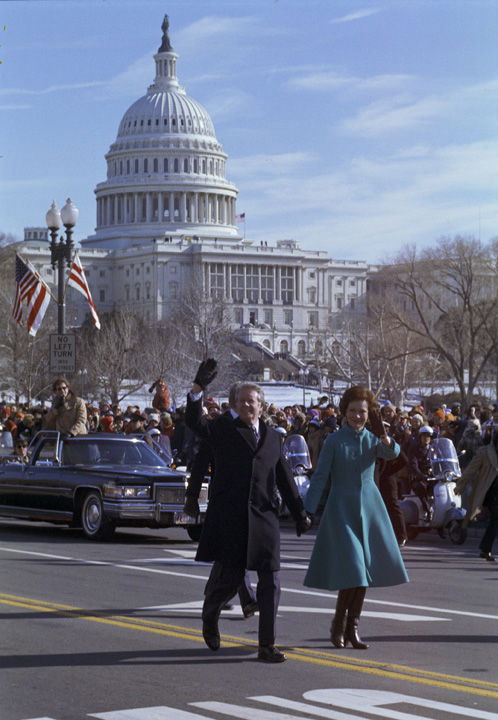
Jimmy Carter in Legion Cap

Jimmy Carter in Legion Cap

  • Info Details
  • Citation Terms of Use

U.S. president Jimmy Carter wears an American Legion cap in Plains, in 1977. Carter is a member of the American Legion, a mutual-aid veterans organization formed in 1919.

Courtesy of Georgia Archives, Vanishing Georgia, #sum047.
View on partner site

The New Georgia Encyclopedia does not hold the copyright for this media resource and can neither grant nor deny permission to republish or reproduce the image online or in print. Requests for permission to publish or reproduce the resource should be submitted to the Georgia Archives.

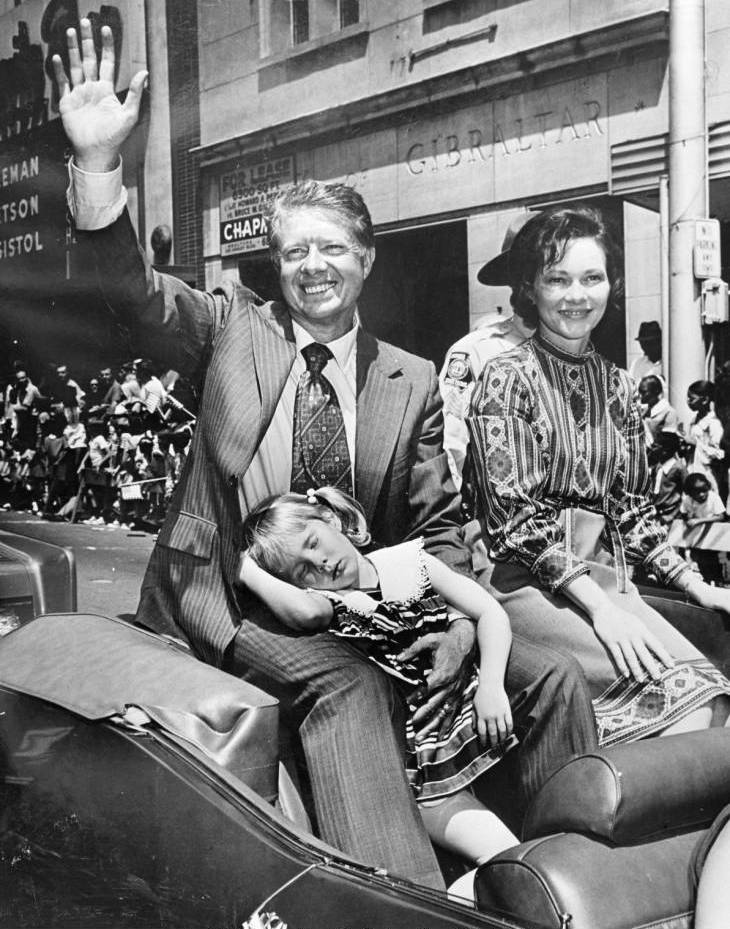
The Carters, Inauguration Day

The Carters, Inauguration Day

  • Info Details
  • Citation Terms of Use

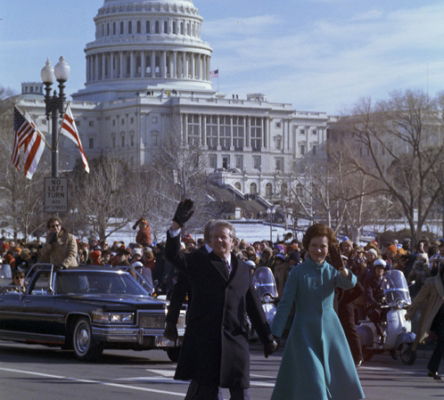
The new president and first lady, Jimmy and Rosalynn Carter, make the walk from the Capitol Building to the White House on Inauguration Day in January 1977.

Courtesy of Jimmy Carter Presidential Library and Museum.

The New Georgia Encyclopedia does not hold the copyright for this media resource and can neither grant nor deny permission to republish or reproduce the image online or in print. Requests for permission to publish or reproduce the resource may need to be submitted to the Jimmy Carter Presidential Library and Museum.

Jimmy Carter

Jimmy Carter

  • Info Details
  • Citation Terms of Use

Jimmy Carter, the only Georgian ever elected president of the United States, held the office for one term, from 1977 to 1981.

Courtesy of the Carter Center
The New Georgia Encyclopedia does not hold the copyright for this media resource and can neither grant nor deny permission to republish or reproduce the image online or in print. All requests for permission to publish or reproduce the resource must be submitted to the rights holder.

Carter Family

Carter Family

  • Info Details
  • Citation Terms of Use

Governor Jimmy, Rosalynn, and Amy Carter during a celebratory parade in 1971.

Courtesy of Special Collections & Archives, Georgia State University Library, Atlanta Journal-Constitution Photographic Archive.

The New Georgia Encyclopedia does not hold the copyright for this media resource and can neither grant nor deny permission to republish or reproduce the image online or in print. Requests for permission to publish or reproduce the resource should be submitted to Special Collections and Archives at Georgia State University.

Carter Boyhood Home

Carter Boyhood Home

  • Info Details
  • Citation Terms of Use

Former U.S. president Jimmy Carter's boyhood home in Plains has been designated a national historic site.

Photograph by OZinOH 

The New Georgia Encyclopedia does not hold the copyright for this media resource and can neither grant nor deny permission to republish or reproduce the image online or in print. All requests for permission to publish or reproduce the resource must be submitted to the rights holder.

Jimmy and Rosalynn Carter

Jimmy and Rosalynn Carter

  • Info Details
  • Citation Terms of Use

Jimmy and Rosalynn Carter are pictured in Washington, D.C., on January 20, 1977, the day of his inauguration as U.S. president.

Courtesy of Library of Congress, Prints and Photographs Division

The New Georgia Encyclopedia does not hold the copyright for this media resource and can neither grant nor deny permission to republish or reproduce the image online or in print. All requests for permission to publish or reproduce the resource must be submitted to the rights holder.

Jimmy Carter and Millard Fuller

Jimmy Carter and Millard Fuller

  • Info Details
  • Citation Terms of Use

U.S. president Jimmy Carter, a prominent volunteer for Habitiat for Humanity, speaks with Habitat founder Millard Fuller in 1985 at Ellijay, in Gilmer County.

Courtesy of Hargrett Rare Book and Manuscript Library, University of Georgia Libraries.

The New Georgia Encyclopedia does not hold the copyright for this media resource and can neither grant nor deny permission to republish or reproduce the image online or in print. Requests for permission to publish or reproduce the resource should be submitted to the Hargrett Manuscript and Rare Book Library at the University of Georgia.

Carl Sanders

Carl Sanders

  • Info Details
  • Citation Terms of Use

Carl Sanders is best remembered as Georgia's first New South governor, a Democrat who provided progressive leadership for the state from 1963 to 1967.

Courtesy of Hargrett Rare Book and Manuscript Library, University of Georgia Libraries, Georgia Photo File.

The New Georgia Encyclopedia does not hold the copyright for this media resource and can neither grant nor deny permission to republish or reproduce the image online or in print. Requests for permission to publish or reproduce the resource should be submitted to the Hargrett Manuscript and Rare Book Library at the University of Georgia.

  • Info Details
  • Citation Terms of Use

The New Georgia Encyclopedia does not hold the copyright for this media resource and can neither grant nor deny permission to republish or reproduce the image online or in print. All requests for permission to publish or reproduce the resource must be submitted to the rights holder.

Carl Sanders

Carl Sanders

  • Info Details
  • Citation Terms of Use

As governor, Sanders was committed to education and governmental reform, and he created a more moderate racial climate in Georgia during the turbulent later years of the civil rights movement.

Courtesy of Richard B. Russell Library for Political Research and Studies, University of Georgia Libraries, Ed Friend Visual Materials.

The New Georgia Encyclopedia does not hold the copyright for this media resource and can neither grant nor deny permission to republish or reproduce the image online or in print. Requests for permission to publish or reproduce the resource may need to be submitted to the Richard B. Russell Library for Political Research and Studies at the University of Georgia.

  • Info Details
  • Citation Terms of Use

The New Georgia Encyclopedia does not hold the copyright for this media resource and can neither grant nor deny permission to republish or reproduce the image online or in print. All requests for permission to publish or reproduce the resource must be submitted to the rights holder.

Ernest Vandiver

Ernest Vandiver

  • Info Details
  • Citation Terms of Use

Under Ernest Vandiver's governorship, from 1959 to 1963, the legislature implemented sweeping changes in the segregation policies of Georgia's public schools. The county unit system for nominating officeholders was also revised during his tenure.
Courtesy of Hargrett Rare Book and Manuscript Library, University of Georgia Libraries.

The New Georgia Encyclopedia does not hold the copyright for this media resource and can neither grant nor deny permission to republish or reproduce the image online or in print. Requests for permission to publish or reproduce the resource should be submitted to the Hargrett Manuscript and Rare Book Library at the University of Georgia.

  • Info Details
  • Citation Terms of Use

The New Georgia Encyclopedia does not hold the copyright for this media resource and can neither grant nor deny permission to republish or reproduce the image online or in print. All requests for permission to publish or reproduce the resource must be submitted to the rights holder.

Ernest Vandiver

Ernest Vandiver

  • Info Details
  • Citation Terms of Use

Ernest Vandiver ran for governor in 1958 by promising to restore the state's image, which had been tarnished by scandals associated with the administration of Marvin Griffin.

Courtesy of Special Collections & Archives, Georgia State University Library, Atlanta Journal-Constitution Photographic Archive.

The New Georgia Encyclopedia does not hold the copyright for this media resource and can neither grant nor deny permission to republish or reproduce the image online or in print. Requests for permission to publish or reproduce the resource should be submitted to Special Collections and Archives at Georgia State University.

  • Info Details
  • Citation Terms of Use

The New Georgia Encyclopedia does not hold the copyright for this media resource and can neither grant nor deny permission to republish or reproduce the image online or in print. All requests for permission to publish or reproduce the resource must be submitted to the rights holder.

Herman Talmadge and Ellis Arnall

Herman Talmadge and Ellis Arnall

  • Info Details
  • Citation Terms of Use

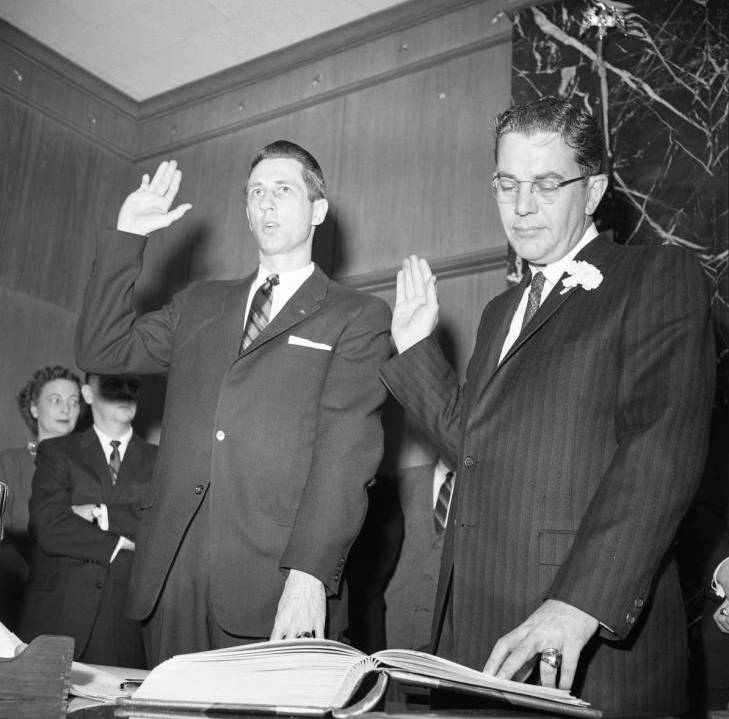
Ellis Arnall, far left, shakes hands with Herman Talmadge, who is obscured, on January 7, 1947. Running for office on the heels of the Cocking affair, the thirty-five-year-old Arnall defeated Eugene Talmadge to become the youngest governor in the nation.

Courtesy of Richard B. Russell Library for Political Research and Studies, University of Georgia Libraries, Herman E. Talmadge Collection.
The New Georgia Encyclopedia does not hold the copyright for this media resource and can neither grant nor deny permission to republish or reproduce the image online or in print. Requests for permission to publish or reproduce the resource may need to be submitted to the Richard B. Russell Library for Political Research and Studies at the University of Georgia.

  • Info Details
  • Citation Terms of Use

The New Georgia Encyclopedia does not hold the copyright for this media resource and can neither grant nor deny permission to republish or reproduce the image online or in print. All requests for permission to publish or reproduce the resource must be submitted to the rights holder.

Ellis Arnall

Ellis Arnall

  • Info Details
  • Citation Terms of Use

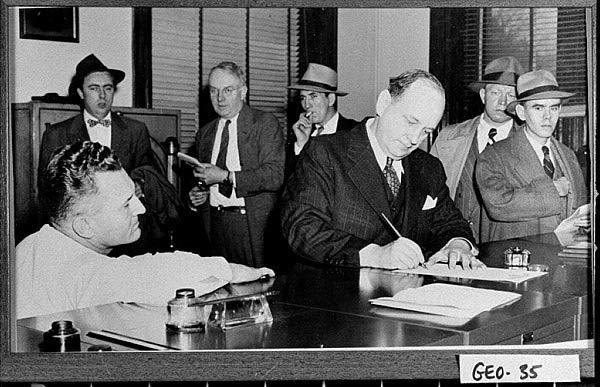
Ellis Arnall signs a statement in Atlanta in 1947 as Georgia secretary of state Ben W. Fortson and others look on. At the far right is Albert Riley, a reporter for the Atlanta Constitution.

Courtesy of Georgia Archives, Vanishing Georgia, #
geo035.

View on partner site

The New Georgia Encyclopedia does not hold the copyright for this media resource and can neither grant nor deny permission to republish or reproduce the image online or in print. Requests for permission to publish or reproduce the resource should be submitted to the Georgia Archives.

  • Info Details
  • Citation Terms of Use

The New Georgia Encyclopedia does not hold the copyright for this media resource and can neither grant nor deny permission to republish or reproduce the image online or in print. All requests for permission to publish or reproduce the resource must be submitted to the rights holder.

  • Info Details
  • Citation Terms of Use

The New Georgia Encyclopedia does not hold the copyright for this media resource and can neither grant nor deny permission to republish or reproduce the image online or in print. All requests for permission to publish or reproduce the resource must be submitted to the rights holder.

George Busbee

George Busbee

  • Info Details
  • Citation Terms of Use

George Busbee was the first Georgia governor to serve two consecutive four-year terms (1975-83). He gave the state eight years of effective, low-key leadership and ranks among the most popular and least controversial of modern Georgia governors. The portrait, which hangs in the state capitol in Atlanta, was painted by Everette Raymond Kinstler.

Courtesy of Georgia Capitol Museum, University of Georgia Libraries

The New Georgia Encyclopedia does not hold the copyright for this media resource and can neither grant nor deny permission to republish or reproduce the image online or in print. All requests for permission to publish or reproduce the resource must be submitted to the rights holder.

George Busbee

George Busbee

  • Info Details
  • Citation Terms of Use

George Busbee began his political career in 1956 by winning a seat in the Georgia legislature. Intending to serve only two years, he wound up serving eighteen years in the Georgia House of Representatives and eight years as governor before retiring from politics in 1983.

Courtesy of Atlanta History Center.

The New Georgia Encyclopedia does not hold the copyright for this media resource and can neither grant nor deny permission to republish or reproduce the image online or in print. Requests for permission to publish or reproduce the resource should be submitted to the Atlanta History Center.

George Busbee

George Busbee

  • Info Details
  • Citation Terms of Use

As governor, Busbee provided solid leadership to a state experiencing rapid population, economic, and urban growth. His popularity with legislators and voters led to a constitutional amendment allowing the governor of Georgia to serve two successive terms, a change Busbee benefited from when he was again elected governor in 1978.

Image from Georgia Official and Statistical Register 1975-1976

The New Georgia Encyclopedia does not hold the copyright for this media resource and can neither grant nor deny permission to republish or reproduce the image online or in print. All requests for permission to publish or reproduce the resource must be submitted to the rights holder.

Herman Talmadge

Herman Talmadge

  • Info Details
  • Citation Terms of Use

After his inauguration in 1948, Talmadge enacted Georgia's first sales tax, which helped fund a vast improvement in the state's public education system. Talmadge also helped attract new industry to the state and was an early advocate for the burgeoning timber industry.

Courtesy of Richard B. Russell Library for Political Research and Studies, University of Georgia Libraries.

The New Georgia Encyclopedia does not hold the copyright for this media resource and can neither grant nor deny permission to republish or reproduce the image online or in print. Requests for permission to publish or reproduce the resource may need to be submitted to the Richard B. Russell Library for Political Research and Studies at the University of Georgia.

Herman Talmadge

Herman Talmadge

  • Info Details
  • Citation Terms of Use

After practicing law for several years, Talmadge joined the navy, where he saw extensive combat duty in the South Pacific during World War II and eventually rose to the rank of lieutenant commander.

Courtesy of Richard B. Russell Library for Political Research and Studies, University of Georgia Libraries.

The New Georgia Encyclopedia does not hold the copyright for this media resource and can neither grant nor deny permission to republish or reproduce the image online or in print. Requests for permission to publish or reproduce the resource may need to be submitted to the Richard B. Russell Library for Political Research and Studies at the University of Georgia.

Herman Talmadge

Herman Talmadge

  • Info Details
  • Citation Terms of Use

Herman Talmadge, son of Georgia governor Eugene Talmadge, took the governor's office briefly in 1947, and again after a special election in 1948.

Courtesy of Hargrett Rare Book and Manuscript Library, University of Georgia Libraries, Georgia Photo File.

The New Georgia Encyclopedia does not hold the copyright for this media resource and can neither grant nor deny permission to republish or reproduce the image online or in print. Requests for permission to publish or reproduce the resource should be submitted to the Hargrett Manuscript and Rare Book Library at the University of Georgia.

Herman Talmadge

Herman Talmadge

  • Info Details
  • Citation Terms of Use

Talmadge received national attention during his service on the Ervin Committee (officially, the Select Committee on Presidential Campaign Activities), which investigated Richard Nixon and the Watergate scandal in 1973 and 1974.

Courtesy of Richard B. Russell Library for Political Research and Studies, University of Georgia Libraries.

The New Georgia Encyclopedia does not hold the copyright for this media resource and can neither grant nor deny permission to republish or reproduce the image online or in print. Requests for permission to publish or reproduce the resource may need to be submitted to the Richard B. Russell Library for Political Research and Studies at the University of Georgia.

Herman Talmadge

Herman Talmadge

  • Info Details
  • Citation Terms of Use

Herman Talmadge served as governor of Georgia from 1948 to 1954. In 1956 Talmadge was elected to the U.S. Senate, where he served until his defeat in 1980.

Courtesy of Richard B. Russell Library for Political Research and Studies, University of Georgia Libraries, Ed Friend Visual Materials.

The New Georgia Encyclopedia does not hold the copyright for this media resource and can neither grant nor deny permission to republish or reproduce the image online or in print. Requests for permission to publish or reproduce the resource may need to be submitted to the Richard B. Russell Library for Political Research and Studies at the University of Georgia.

Herman Talmadge

Herman Talmadge

  • Info Details
  • Citation Terms of Use

A lifelong Democrat, Talmadge helped effect a great deal of progressive change in Georgia government and public education, and he was a key national figure in the formation of legislation aimed at aiding rural America.

Courtesy of Richard B. Russell Library for Political Research and Studies, University of Georgia Libraries.

The New Georgia Encyclopedia does not hold the copyright for this media resource and can neither grant nor deny permission to republish or reproduce the image online or in print. Requests for permission to publish or reproduce the resource may need to be submitted to the Richard B. Russell Library for Political Research and Studies at the University of Georgia.

https://www.georgiaencyclopedia.org/wp-content/uploads/2021/04/talmadge-on-brown-v-boe_001.m4v

Herman Talmadge: Reaction to Brown v. Board of Education Decision

  • Info Details
  • Citation Terms of Use

Talmadge recalls where he was and how he reacted to news of the Supreme Court's landmark decision to end segregation in public schools, handed down on May 17, 1954.

Courtesy of Georgia Political Heritage Program, Irvine Sullivan Ingram Library Special Collections, University of West Georgia.

The New Georgia Encyclopedia does not hold the copyright for this media resource and can neither grant nor deny permission to republish or reproduce the image online or in print. Requests for permission to publish or reproduce the resource should be submitted to Irvine Sullivan Ingram Library Special Collections at the University of West Georgia.

E. D. Rivers E. D. Rivers E. D. Rivers Promotion Front Side E. D. Rivers Promotion Back Side Thomas Hardwick
Clifford Walker Walker Home Clifford Walker Joseph M. Terrell Nathaniel E. Harris Joseph M. Brown Joseph M. Brown Astyanax (1907) Zell Miller
Zell Miller Zell Miller
Hoke Smith 1906 Gubernatorial Campaign Hoke Smith Richard B. Russell Jr. Richard B. Russell Jr. Richard B. Russell Jr. Campaign Literature Russell Takes Oath Campaign Wagon Franklin D. Roosevelt and Richard B. Russell Jr. Richard B. Russell Jr. at Festival Russell, Hayden, and Wiley Russell and Johnson Democratic National Convention Richard B. Russell Jr. Richard Brevard Russell Senate Office Building Richard B. Russell Jr. at Crackers Game Richard B. Russell Jr. and Richard Nixon
Richard B. Russell Postage Stamp Lamartine Hardman Hardman Family Ivan Allen Sr. Lamartine Hardman Lamartine Hardman John M. Slaton Eugene Talmadge Eugene Talmadge Eugene Talmadge Eugene Talmadge
Roy Barnes, 1982
Lester Maddox Lester Maddox Riding Bicycle Lester Maddox’s Souvenir Store Lester and Virginia Maddox Joe Frank Harris Joe Frank Harris Joe Frank Harris Joe Frank Harris Marvin Griffin Marvin Griffin
Hugh M. Dorsey Melvin E. Thompson
Jimmy and Rosalynn Carter Jimmy Carter
Jimmy Carter
Jimmy Carter in Legion Cap The Carters, Inauguration Day Jimmy Carter Carter Family Carter Boyhood Home Jimmy and Rosalynn Carter Jimmy Carter and Millard Fuller Carl Sanders
Carl Sanders
Ernest Vandiver
Ernest Vandiver
Herman Talmadge and Ellis Arnall
Ellis Arnall
George Busbee George Busbee George Busbee Herman Talmadge Herman Talmadge Herman Talmadge Herman Talmadge Herman Talmadge Herman Talmadge