
A self-taught geologist, mineralogist, and mining engineer as well as a self-styled ethnologist, Matthew Fleming Stephenson received recognition for his knowledge of mining and for promoting the notion that north Georgia contained vast deposits of minerals and ores of great economic value. He was also known for developing a white supremacist view based on the pre-Adamite theory, which posited the idea that God made several inferior species of humans prior to the creation of the biblical Adam.
From Virginia to Georgia and Gold Mining
Born around 1801 or 1802 in Parkersburg, Virginia (later part of West Virginia), Stephenson attended a classical secondary school, where he demonstrated keen intelligence and skill in writing. It appears that he did not attend college but likely earned a Doctor of Medicine degree around 1819. Although no official record of his graduation from a medical school has been found, he referred to himself as “Dr.” Others also addressed him by that title, and a sketch of Stephenson by his granddaughter states that he earned a medical degree, practiced medicine briefly in Parkersburg, and published a work on human anatomy.

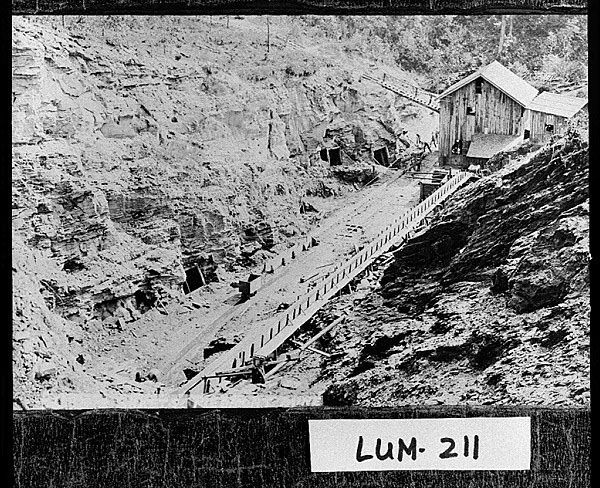
Around 1820 young Stephenson left Parkersburg and during the next five years resided in various towns along the Ohio, Mississippi, and Arkansas rivers. His residence during the next four years is unknown. He may have practiced medicine during the 1820s, but his only known occupation during the period was a three-year stint as an academy instructor. By 1829 he was operating a gold mine in Lumpkin County, and five years later he was in Habersham County, where he married Sarah Elizabeth Sumter Lyon in 1836. During the 1840s and at least part of 1850, Stephenson lived in Cherokee County. By then he had earned a reputation as an authority on mining, and in 1850 he accepted the position of assayer for the Branch Mint at Dahlonega, a position he held until 1854.
A steadfast proponent of the idea that Dahlonega was an ideal area for mining gold, he gained special notice in 1849 for his public effort to dissuade local miners from joining the California gold rush, urging them to stay and mine gold in the mountains visible from the town’s courthouse square. Pointing toward nearby Crown Mountain, he said it contained deposits of gold worth “millions.” His appeal fell on deaf ears for the most part, but his declaration about the abundance of gold was eventually corrupted into a popular phrase about the promise available to eager seekers of wealth: “There’s gold in them thar hills.”
Advocating a Pre-Adamite Theory of Racial Origins and Traits
Following his tenure as mint assayer, Stephenson returned full time to the mining of gold. He retired from mining in the late 1860s, and around 1869 moved to Gainesville. Meanwhile, he had begun to voice opposition to granting equal rights to Black Americans, and he soon developed a theory of pre-Adamite humans, indicating his belief in the inferiority of races that were not what he defined as “Caucasian” or “Adamic.” In his writings, Stephenson never referred to the theory of pre-Adamites formed in the seventeenth century or to modifications of it later on. As one who accepted the idea that the earth was ancient and that fossil remains were embedded in its strata, however, he concluded there could be no doubt that human races existed before Adam.
Stephenson firmly believed he could prove that human races populated the earth prior to Adam, and he laid out his theory in two pamphlets: The Adamic Race, published under the initials M. S. in 1868, and Negro Equality, issued in 1870. He also included comments related to the theory in two books: Geology and Mineralogy of Georgia, with a Particular Description of Her Rich Diamond District, published in 1871, and The Soul and Origin of Life, released in 1876. Although Stephenson’s version followed the general theme espoused by earlier advocates of the pre-Adamite theory, it differed in its pronounced emphasis on the gradation of physical and mental traits among seven pre-Adamite races or species. His version also differed by stressing that all species belonged to a common genus. Thus, as with Caucasian or Adamite species, pre-Adamite races possessed a soul, since they were humans, even if inferior.
In Stephenson’s scheme, the pre-Adamite races ranged from lowest to highest according to the traits with which the Creator endowed them. The Negro race, as he called it, was at the bottom of the hierarchy. It was followed in order of perfection by the Ethiopian, the Eskimo, the American Indian, the Malay, the Mound Builders of Georgia, and the Mongol, or, interchangeably to him, the Chinese. Despite his claim of using science to justify his classifications, Stephenson relied on his own perceptions to characterize the groups. In effect, he embraced the pre-Civil War polygenist view that each human race is a species, even though that notion had been scientifically countered in 1850 by the Charleston, South Carolina, naturalist John Bachman. He shunned Bachman’s persuasive argument altogether, however, insisting that he alone had employed scientific methods in conducting his research. In addition, because he acquired some knowledge of Hebrew and considered himself an authority on the biblical book of Genesis in particular, he declared that he was better qualified than most theologians to understand the scriptural account of races.
During his later years, Stephenson continued to offer advice on mining operations, engaged in civic affairs, and presented many lectures, often to large audiences. Upon his death on May 24, 1881, three newspapers eulogized him as a beloved citizen of north Georgia and a prominent geologist, mineralogist, and mining engineer, but none referred to his pre-Adamite theory, though one mentioned that he was author of Negro Equality. Even though Stephenson’s version of the theory eventually faded, it played a role in sustaining the life of the pre-Adamite view. Thus, Matthew Fleming Stephens bequeathed a mixed legacy to the history of Georgia: on one hand, he made notable contributions to the state’s gold mining industry, while on the other, he championed a white supremacist theory that degraded large swaths of the global population.


