
Operation Dixie was a mass effort by the Congress of Industrial Organizations to unionize southern workers in the years after World War II. Despite generous financing, the campaign collapsed, and the American South remains largely nonunionized.
The CIO
American workers benefited from regular work and high pay during World War II (1941-1945). But after the war ended, wages stagnated, returning soldiers created a surplus of labor, and American society—especially business and industry—took a conservative turn. Unions found that their membership rolls were dwindling, and the Taft-Hartley Act, passed in 1947 by a reactionary Congress after a series of nationwide strikes, severely limited the powers and protections enjoyed by organized labor.
The Congress of Industrial Organizations (CIO), a union federation, wanted to prevent the postwar flight of businesses, such as textile factories, from the relatively organized North to the largely unorganized South, where management paid non-union workers far less. Southern states had experienced a net increase of more than 800,000 manufacturing jobs during the war, but few workers enjoyed the protections offered by a union contract. To organize the stubbornly open shop South, the CIO launched Operation Dixie, sending some 250 CIO members to locales throughout the region to organize the South’s overwhelmingly poor, “unskilled” textile, lumber, auto, and steel workers into a robust national labor movement.
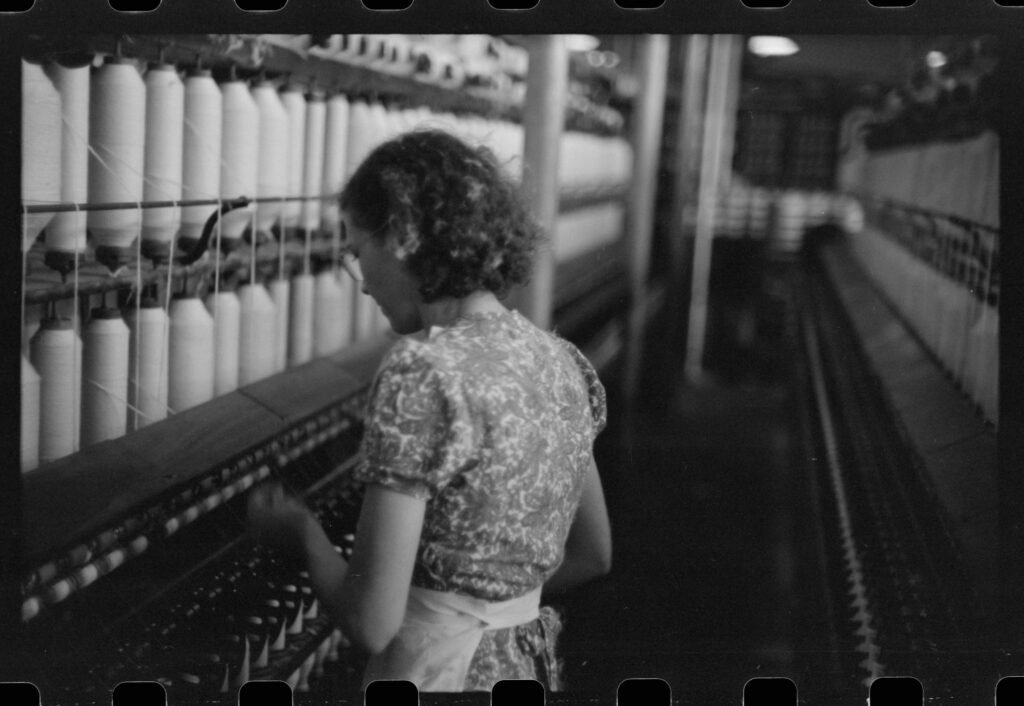
Over the summer of 1946 the CIO sent teams of organizers—made up of experienced union organizers and young college graduates, labor advocates, and socialists—to twelve southern states and expected that, with their success, not only would economically vulnerable factory workers reap the benefits of unionization, but the labor movement across America would reclaim its prewar power and influence. Composed of progressive unions that broke from the more conservative American Federation of Labor (AFL), the CIO envisioned “one big union” where all workers—skilled and unskilled, Black and white—found common cause and pursued shared goals. As the CIO saw it, Operation Dixie was a strategic push into a region that desperately needed the advocacy and security of unions. If successful, the campaign might even set off a series of progressive policies in the politically conservative Solid South.
Instead, the drive was a failure almost from the start. Almost no step of the standard campaign process worked, due in no small part to the insurmountable combination of worker intimidation, the economic extortion of mill owners, and anti-union political narratives.
Challenges
It’s not that southern workers were entirely unorganized after the war. Pockets of union activity could be found in the shipbuilding industry along the Gulf Coast, in Birmingham’s steelworks, and elsewhere. But in the postwar period, northern rates of union participation continued to outpace southern rates by a wide margin. If they were to bring southern workers into the American mainstream, the CIO’s organizers would have to first overcome a number of challenges that had stymied the region’s earlier organizing efforts. Unfortunately, those challenges persisted throughout Operation Dixie.
First, organizers attempted to establish a base of operations in small mill towns. But once word spread about their intentions, local police followed them as they visited homes and businesses, and company-backed agents harassed them on the street or at their hotels. Organizers therefore could not establish the initial lines of trust and communication with individual workers—crucial relationships the organizers would need to get their message inside the workplace. Workers who did listen were intimidated soon after, despite the illegality of employer coercion.
Segregation also complicated efforts to organize. Finding public spaces for racially integrated meetings could be difficult, and CIO organizers were hesitant to campaign against segregation—the third rail of southern life in the Jim Crow era. White management frequently dismissed organizing drives as northern interference, and many Black families worried that they, not their white coworkers, would suffer the town’s resentment. Other Black workers felt the CIO did not support them enough, and that union organizers were too compliant with segregation and other racist policies in the workplace.
Unable to establish a core of supportive members, CIO organizers were often left to go door-to-door while the police monitored their activity, or to distribute flyers that workers refused to take. After months of expensive campaigning, the CIO found it could no longer justify the operation’s huge expense—it cost almost $200,000 a month—especially when already-established unions in the North and the West were footing the bill. On paper, the mass campaign continued until 1953, but by the end of its first summer, Operation Dixie was effectively shut down.
Operation Dixie in Georgia
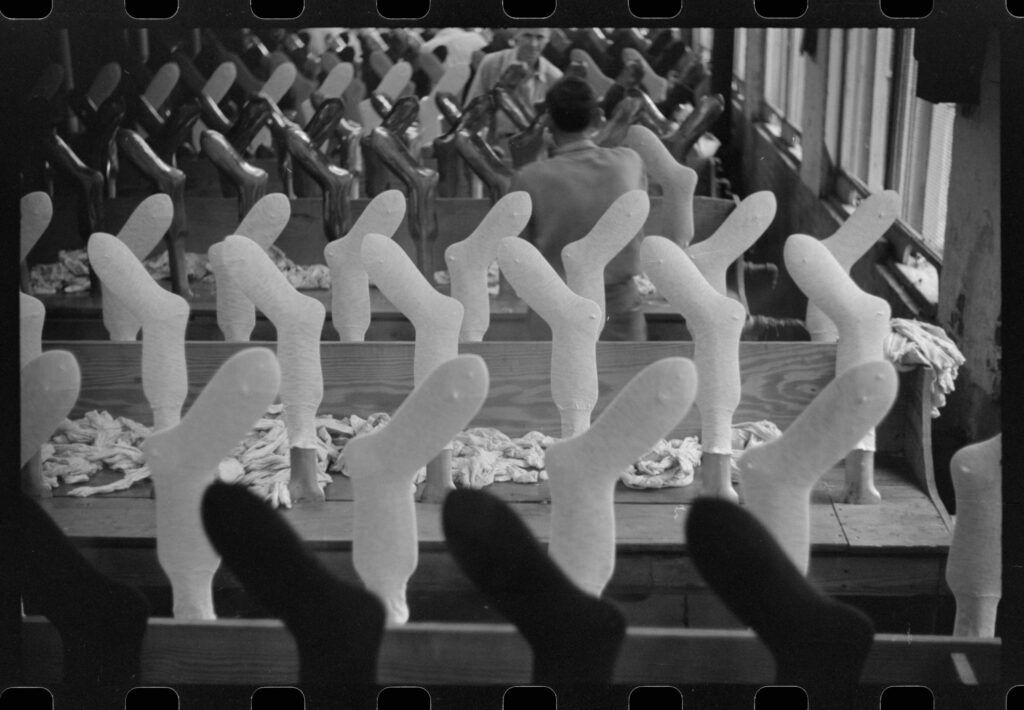
A massive unionizing success in Georgia was especially attractive to the CIO because of the state’s national reputation as a hub of textile factories that supplied the country with nylon, wool, and cotton. Organizing Georgia would be an indisputable sign of the CIO’s postwar strength, and its success there would strengthen its campaigns throughout the region. During the war, working towns like Rome saw an increase in union membership, and the CIO was hopeful the rest of the state’s workforce would be receptive to the empowering political message of unionization. As they soon learned, this would not always be the case, particularly in smaller towns.
Many of the factors that doomed Operation Dixie at large could be found in rural Tallapoosa, where the American Thread Company employed roughly 500 workers—fully one-fifth of the town’s entire population. American Thread was a relative newcomer to Tallapoosa—they only opened shop in 1944—when the Textile Workers Union of America (TWUA) first arrived in 1947 to encourage unionization. What’s more, the company had established operations in Tallapoosa only after shuttering unionized mills in New England, a fact that was well understood locally.

As historian Michelle Brattain has documented, TWUA campaigners had some early interest from American Thread workers, many of whom were familiar with the organized mill in nearby Dalton. But soon, any workers who had been seen speaking to the organizers or handling a flyer were brought into questioning sessions by their shift bosses and pointedly asked how happy they were with their jobs. Additionally, because Tallapoosa was such a tight-knit community, it was not uncommon for managers and millhands to be personally close, or for managers to express favoritism to certain employees. These employees were known to actively antagonize campaigners, sympathetic employees, and those employees’ families. The harassment escalated, with multiple incidents of organizers being threatened with violence. At one point, as Brattain describes from court testimony, a female campaigner was taken from her hotel room at night, tied up, driven to the edge of town, and told she would be shot if she returned.
But even as American Thread seemed to demonstrate understanding of its workers’ wants and needs on pay, shelter, and segregation—even raising wages—the town’s biggest fear was that the company would close its factory, plunging Tallapoosa into financial ruin. The town had struggled economically since the Great Depression, and American Thread offered a financial lifeline to hard-pressed locals. As one TWUA campaigner admitted, “It wasn’t so much a difference in hourly rates…as it was that…jobs existed” at all. A theoretical union, unorganized as of yet, offered little protection to workers vulnerable to harassment, termination, or worse.
TWUA filed charges against American Thread’s often illegal union-busting tactics, but to no avail. The Taft-Hartley Act had so weakened the National Labor Relations Board (NLRB) that American Thread and other companies were content to risk—or deliberately incur—such charges and potential judgements from federal authorities. It could take the NLRB years to decide a case, and even if it ruled in favor of workers, the damage was already done: the most pro-union workers were gone, and remaining workers were effectively cowed into submission.
By 1950 the violence in Tallapoosa had become so egregious—with one woman being knocked unconscious outside of the factory—that the TWUA felt pro-union sentiment might be in their favor. American Thread was confident this was not the case and requested that the NLRB supervise a union election. The vote failed to pass, with 165 votes in favor of unionizing and 381 votes against. Ultimately, the outcome at Tallapoosa reflected the broader challenges Operation Dixie faced in many small towns. It was not so much that workers felt that unions had no upside, or that they were satisfied with hazardous, low-paying jobs. Rather, the hurdles imposed by employers and their political allies—surveillance, intimidation, propaganda, racism, physical attacks, and economic dependence—created a welter of obstacles too great to overcome. Overall, the TWUA added only about 10,800 new southern members during the 1946 drive, and the CIO remained effectively at 400,000 southern members—the same as before the operation started.
After the failure of Operation Dixie, and in the face of Cold War hysteria, the CIO gradually shifted to the political right. Responding to charges of communist infiltration, the organization purged many of its outspoken leftist members—often the most experienced and passionate. Those remaining voted to merge with the AFL in 1955.


