Skip to content
New Georgia Encyclopedia
  • Home
  • Articles & Media
  • Browse by Topic
  • Browse Collections
  • Browse Georgia Standards
  • A-Z Index
  • Exhibitions
  • Educators
  • Browse    Chevron down
  • Exhibitions
  • Educators
By Topic Content Collections Georgia Standards A-Z Index Arrow right
  • Arts & Culture

    Arts & Culture

  • Business & Economy

    Business & Economy

  • Counties, Cities & Neighborhoods

    Counties, Cities & Neighborhoods

  • Education

    Education

  • Geography & Environment

    Geography & Environment

  • Government & Politics

    Government & Politics

  • History & Archaeology

    History & Archaeology

  • People

    People

  • Science & Medicine

    Science & Medicine

  • Sports & Outdoor Recreation

    Sports & Outdoor Recreation

Frankie Welch’s Americana
Featured

Frankie Welch’s Americana

Fashion and politics from Georgia-born designer Frankie Welch

Stamp Collection
Featured

Stamp Collection

Stamps honoring the political figures, artists, and culture of Georgia.

Recently Added
View All Arrow right
City Page: Atlanta

City Page: Atlanta

Stamp Collection

Stamp Collection

Frankie Welch’s Americana

Frankie Welch’s Americana

  • Georgia Studies

    Georgia Studies

    Eighth Grade
  • Georgia, My State

    Georgia, My State

    Second Grade
All Exhibitions Arrow right

Seeing Georgia: Changing Visions of Tourism in the Modern South

How the state transformed itself from a way station along the route to Florida into a popular tourist destination.

Black-and-white photo of a man in a suit standing between multiple road signs.
Authored by Jan Hebbard, University of Georgia Libraries Kaylynn Washnock, University of Georgia

Introduction

Since the 1800s travelers have come to Georgia to enjoy natural landscapes, recreation, and historic sites. For nearly as long, competing interests have fought for the right to preserve, alter, or exploit these sites. Debates over race, class, and accessibility have also shaped the development of tourism in the state.

Seeing Georgia: Changing Visions of Tourism in the Modern South investigates how the state transformed itself during the twentieth century from a way station along the route to Florida into a popular tourist destination. It highlights six popular destinations in Georgia and considers questions of access, preservation, and economics. The exhibition also explores the professionalization of the tourism industry and the roles that state and local governments have played in promoting Georgia to travelers. And finally, it examines the modern amenities that shape the experience of the modern tourist, from the improvement of roadways to the development of roadside culture and accommodations.

This exhibition was developed in 2015 by the Richard B. Russell Library for Political Research and Studies at the University of Georgia in Athens.

Woman with Historical Marker
Road Signs
Georgia Tourists’ Home Movies
1

Hitting the Road

The Good Roads Movement (1880s-1920s) spurred unprecedented social and political changes in the South. In 1904 only 4 percent of public roadways—macadamized or graded gravel roads—were classified as improved. Dirt roads had long plagued farmers in their attempts to move crops from rural farms to markets. By 1908, when small numbers of northern motorists began to trickle to the South, a movement for better roads evolved into a campaign to create interstate tourist highways. New South boosters like Atlanta mayor Robert F. Maddox and Atlanta Constitution editor Clark Howell expected improved roads to further unite the North and South and boost the South’s economic vitality through increased tourism and business.

Construction of the National and Capital highways connected Georgia with major northeastern cities, while the Dixie Highway connected Georgia to the Midwest. In 1956 U.S. president Dwight D. Eisenhower signed the National Interstate and Defense Highways Act, authorizing the construction of 41,000 miles of roadways. Largely funded with federal fuel taxes, interstates were built with consistent standards, wide lanes, and paved shoulders, and they consisted of at least four lanes to accommodate vehicle speeds of up to seventy miles per hour. The new system quickly became the primary route for tourist traffic.

Dixie Highway Map, 1919
Chain Gang Labor
2

Roadside Culture

Tourism by automobile took hold in the United States during the early 1900s. After a long day of traveling, most autocampers created their own accommodations for the night by stopping alongside the road and attaching a canvas tent to the side of the vehicle. As the travel industry boomed, travelers faced ever-growing options for roadside lodging. Soon towable tent and pop-up trailers were mass produced, and no-frills campsites sprang up along major tourist routes like the Dixie Highway. In 1925 approximately 500,000 automobiles from outside the region traveled through the Southeast, carrying an estimated 1.9 million visitors.

As long-distance road vacations became more common, the need for inexpensive, easily accessible overnight accommodations grew. In the era after World War II (1941-45), motels built near main routes lured tourists with the promise of swimming pools, color televisions, and air-conditioned rooms. By the late 1960s many independently owned motels were overcome by the introduction of chains like Holiday Inn and Howard Johnson, which offered more standardized accommodations.

Entrepreneurs in towns along the route also developed offerings to capture tourist dollars. Some took in boarders, while others opened roadside stands selling produce. In 1937 Williamson S. Stuckey Sr. opened the first Stuckey’s roadside convenience store along Georgia Route 23 in Eastman, offering cold drinks, snacks, souvenirs, and pecan candy. By the 1960s more than 350 Stuckey’s locations were in operation across the Southeast.

Until the passage of the Civil Rights Act in 1964, which guaranteed all Americans access to public accommodations, many motels, campgrounds, and other establishments were segregated, restricted to “whites only.” As a result, African American travelers had very few choices for overnight accommodations in southern states. Published annually from 1936 until 1967, The Negro Travelers’ Green Book served as a guide to assist African Americans on the road. Created by Victor H. Green, a civic leader in Harlem, New York, the book provided lists of gas stations, restaurants, motels, and other businesses in each state that offered services to Black travelers. Eventually published with the aid of the U.S. Travel Bureau, more than 15,000 copies were sold annually.

Air Conditioner Advertisement
Howard Johnson’s Advertisement
Ludowici Billboard
3

Stay and See Georgia

In the early twentieth century, Georgia had no state-run division of tourism and no annual allocation for marketing local attractions. Beginning in the 1940s, state officials set their sights on turning Georgia into a “stop over” destination in hopes of capturing some of the tourist dollars headed further south.

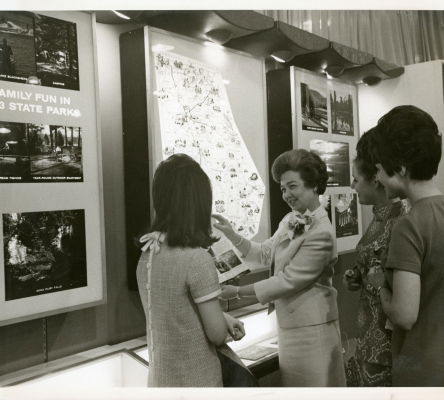
The administration of Georgia governor Ernest Vandiver Jr. saw tourism as integral to the state’s growing economy, and in 1959 Bill Hardman was named director of Georgia’s newly created Tourist Division, part of the Department of Commerce. Hardman, along with Abit Massey, director of the Department of Commerce, was instrumental in the development of the Tourist Division and in the creation of welcome centers across the state, as well as clever advertising campaigns that convinced people to “Stay and See Georgia.”

By 1970 Georgia had transformed from a state with no budget for tourism into a state with one of the largest promotional budgets for tourism in the nation. This investment reverberated through later decades, notably when the state’s reputation for southern hospitality played a role in Atlanta’s selection as the host city for the Centennial Summer Olympic Games, enticing more than 2 million tourists to Georgia in 1996. By 2015 the Tourism Division—part of the Georgia Department of Economic Development—brought in more than $57.1 billion dollars annually.

Know Georgia Better Booklet
See Georgia First Campaign
Bill Hardman
Welcome Center Dedication
Abit Massey Interview on Tourism
Bill Hardman Interview on Tourism
Welcome Center Hostess
New Yorker Cover
4

Sites of Wellness, Wilderness, and Reinvention

The diversity of Georgia’s tourist sites has long appealed to a wide range of travelers. During the late nineteenth century, many wealthy northern elites looked to the South for an escape from the winter cold, and their preoccupation with health, largely inspired by the rise of scientific rationalism, led to the creation of southern health resorts.

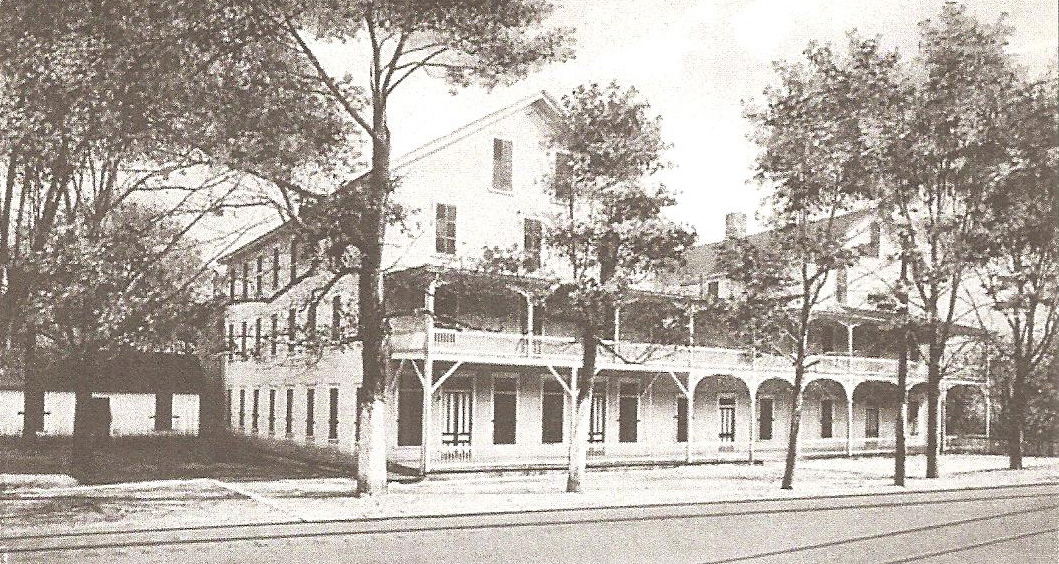
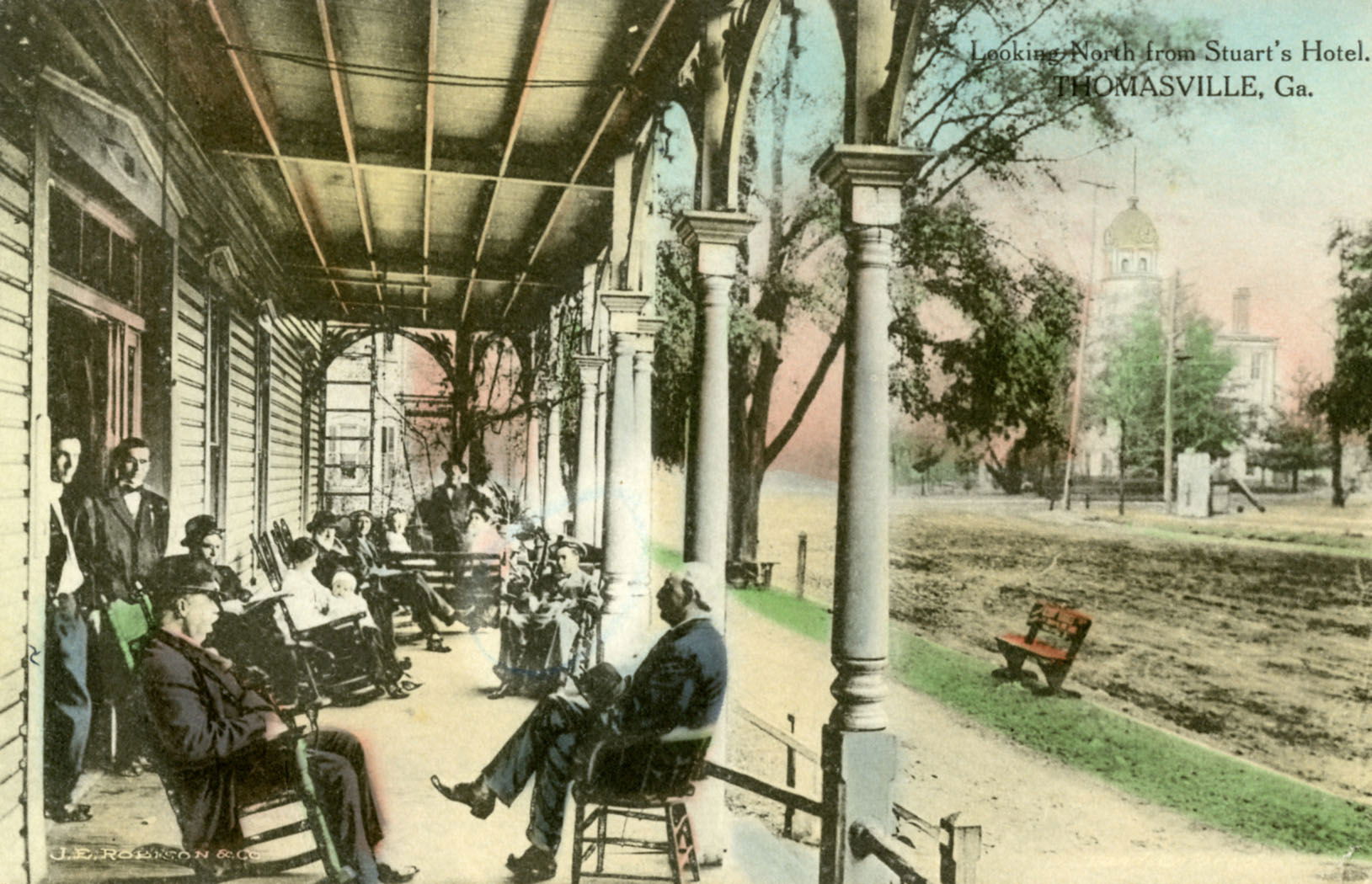
In 1874 physician Thomas Spalding Hopkins touted the benefits of south Georgia’s dry climate for improving respiratory ailments, and Thomasville soon became known as the “Winter Resort of the South.” Similarly, Indian Springs became a bustling resort town with its promise of healing mineral water, while Warm Springs offered a natural hot spring believed to cure ailments. Tourists seeking a healthful respite and scenic views also flocked to Tallulah Falls in the north Georgia mountains.

Meanwhile sites offering natural beauty captivated early auto tourists. In response to this rising trend, Georgia established a state park system in 1931 with the creation of Indian Springs State Park and Vogel State Park. The New Deal’s Civilian Conservation Corps was integral to the construction of facilities at both sites. During the 1930s and 1940s Georgia’s park system increased from 500 to 30,000 acres, and in 1972 the legislature established the Georgia Department of Natural Resources to operate sixty-three state parks and historic sites. By 2006 nearly 15 million people visited the parks annually. Jekyll Island State Park and the Okefenokee National Wildlife Refuge are among the most popular destinations in the state.

Since the mid-twentieth century some sites in Georgia, including Helen and Stone Mountain, have struggled to balance historic truth and commercial appeal. While tourism in Georgia once consisted mainly of solemn visits to war memorials, many destinations today openly embrace commercial amusement to create a marketable identity that appeals to a culturally diverse audience.

Stone Mountain Carving
Jekyll Island
Okefenokee Swamp Flora
5

Tallulah Falls: Resort or Resource?

Remarkable vistas, ample opportunities for recreation, and access to healthful, cool air and water made Tallulah Falls irresistible to tourists in the nineteenth century. The completion of the nearby railroad’s expansion in 1882 and construction of several hotels during the 1890s had newspapers foretelling that Tallulah Falls was “destined to be the resort of the South.”

In 1909 the Georgia Power Company, recognizing the potential for generating electric energy by damming the Tallulah River, began acquiring land tracts around Tallulah. Soon the Tallulah Falls Conservation Association (TFCA), led by Helen Dortch Longstreet, organized to stop the construction of a dam, and to lobby state officials to create a public park instead. Despite their efforts, the dam was completed in 1913 and was the South’s largest hydroelectric development at the time. The dam’s construction, along with with a fire that destroyed Tallulah in 1921, impeded tourism, but a new type of attraction soon emerged.

Second homes and campgrounds replaced the once booming hotels and boarding houses, and tourists enjoyed fishing, boating, and swimming in the lake. On October 27, 1992, Georgia governor Zell Miller announced the creation of Tallulah Gorge State Park, including the dam, lake, gorge, and 2,710 acres of surrounding wilderness, as a joint venture between the Georgia Department of Natural Resources and Georgia Power Company.

Tallulah Falls Train
Cliff House Hotel
Tallulah Falls Hiking Party
6

The Red Hills: From Cotton to Quail

With its convenient railway access, pleasant surroundings, and a dry climate believed to be healthful, the Red Hills region in southwest Georgia drew northerners during the winters of the late nineteenth century. These tourists more than doubled the local population. Depressed cotton prices in the post-Reconstruction era dropped property values, and soon visitors began buying up defunct cotton plantations and converting them into private hunting resorts.

By the 1930s south Georgia faced a great quail drought, owing to the loss of natural habitats and overhunting. Landowners turned to ecological experts like Herbert L. Stoddard and Eugene Odum to investigate this problem and suggest means for restoring the population. By the 1950s the two scientists had formed a relationship with Robert W. Woodruff, who implemented Stoddard’s guidelines for maintaining the quail population on his Baker County plantation, Ichauway. Today Ichauway serves as the outdoor research lab for the Joseph W. Jones Ecological Research Center.

These research efforts and the transfer of once private hunting property to nonprofit foundations and government entities made the Red Hills more accessible to the general public, and sport hunting expanded among the middle class in the years that followed. In 2012 Red Hills hunting plantations generated $147.1 million per year and employed more than 1,400 locals full time. In that same year Georgia ranked number one in the nation for attracting out-of-state hunters.

Stuart’s Hotel
Quail Hunting
The Bobwhite Quail
7

Jekyll Island: From Millionaires to the Masses

Once called the richest, most exclusive club in the world, Jekyll Island was a playground for northern capitalists during America’s Gilded Age. From its beginning in 1888 the Jekyll Island Club was host to such prominent industrialists as the Rockefellers and Vanderbilts, who were among the original fifty-three members of the club. The Great Depression of the 1930s and onset of World War II (1941-45) caused memberships to dwindle, and 1942 marked the club’s final season. Georgia governor Ellis Arnall soon thereafter appointed a commission to investigate the purchase of Georgia’s coastal islands for use as state parks.

Georgians, eager to enjoy an accessible in-state beach within reach of the average vacationer, largely supported the state’s proposal to purchase Jekyll Island. Though some politicians opposed the purchase, questioning whether the state belonged in the beach resort business, others hoped to capture tourist traffic headed further south. The state purchased the island for $675,000 and on October 7, 1947, renamed the property Jekyll Island State Park. Initially segregated, the island’s beaches were later integrated in 1964.

In 1950 the state legislature established the Jekyll Island Authority (JIA) to administer and promote tourism on the island, with the stipulation that no more than one-third of the property could be developed. (In 1953 the percentage of protected land increased to one-half, and in 1971 it dropped back to 35 percent.) Today, the JIA continues to maintain the delicate balance of supporting free enterprise and preserving the natural environment.

Jekyll Island Ferry
Melvin E. Thompson
Segregation at Jekyll Island
8

Okefenokee Swamp: A Defiant Wilderness

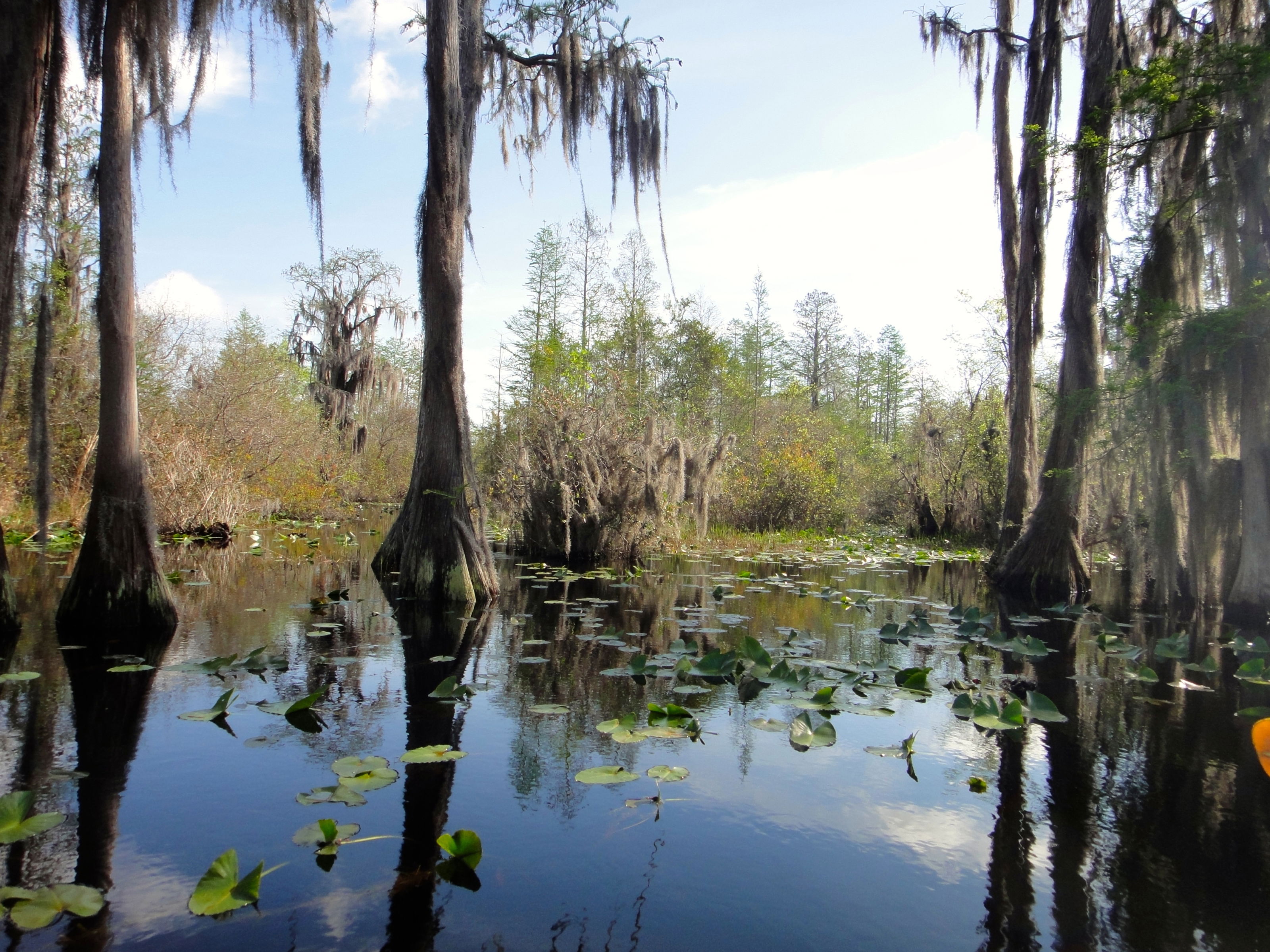
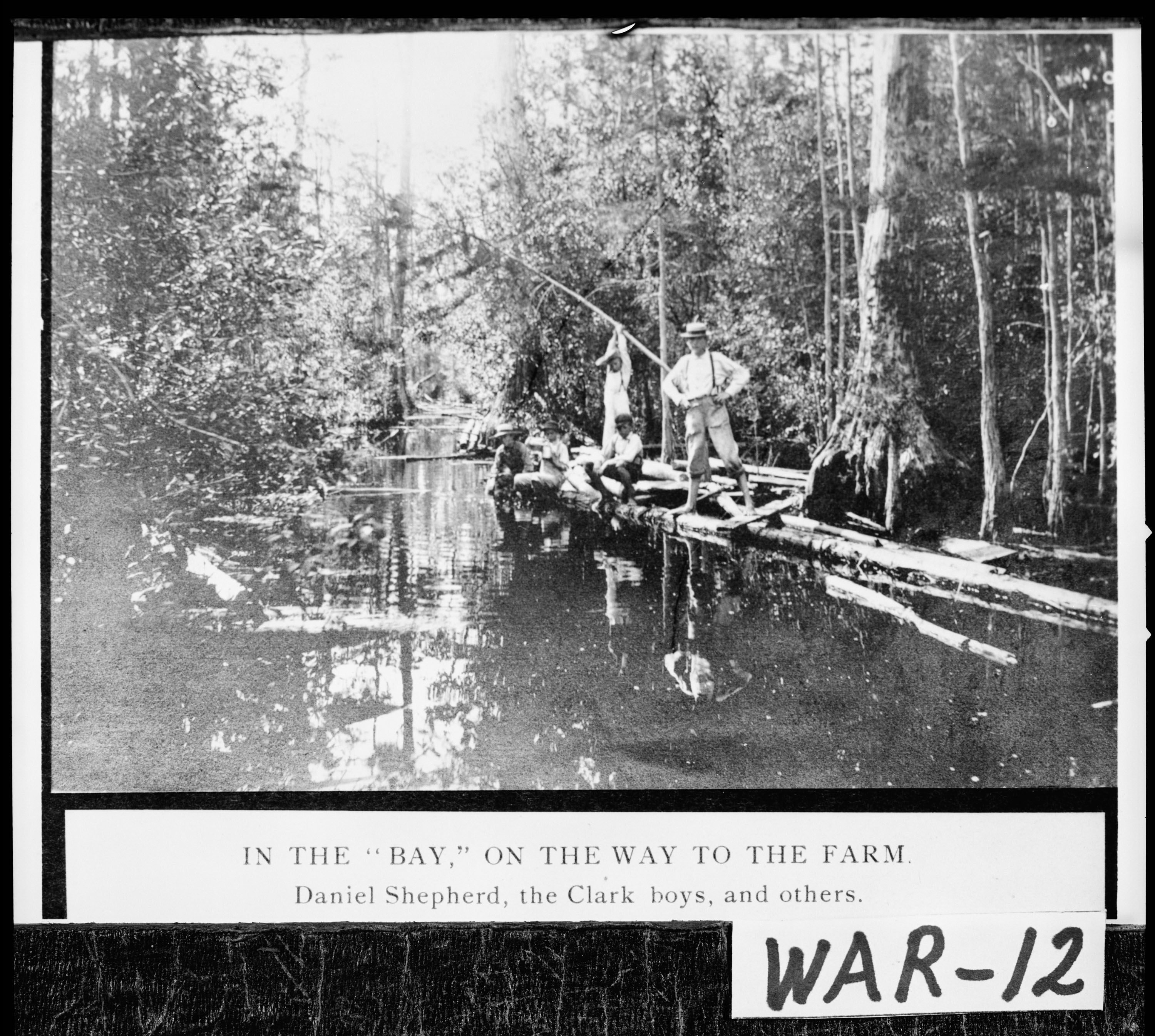
Called the “land of trembling earth” by early Native Americans, the Okefenokee Swamp is perhaps most famous for successfully resisting all attempts to subdue and exploit it. Occupying 700 square miles in southeastern Georgia, it was drained by timber companies and dredged for canal construction, and its wildlife was hunted to near extinction. Yet this primitive swamp remains intact, translating a reputation for danger and mystery into a popular attraction.

In the 1920s conservation groups like the Okefenokee Society and the Georgia Society of Naturalists began advocating for the protection of the swamp and its wildlife. Feature articles about the area published in National Geographic and Natural History in the 1930s drew national attention and appreciation for its rugged beauty. When plans emerged in the 1920s and 1930s for the construction of canals and roadways that would have destroyed the swamp, public outcry forced government intervention. In 1937 U.S. president Franklin D. Roosevelt established the Okefenokee National Wildlife Refuge on land purchased from the Hebard Cypress Company.

Although prominent in adventure novels and essays as early as the 1870s, the swamp did not develop as a tourist destination until the 1940s. With the approval of Georgia governor Ellis Arnall and the U.S. Department of Agriculture, the Okefenokee Association leased 1,200 acres to create the Okefenokee Swamp Park, which opened in 1946. Since the 1950s, local sightseeing companies have capitalized on the allure of the swamp by leading tours into the untamed interior filled with alligators and bears. Today, the area has three public access entrances that enable visitors to fish, kayak, observe wildlife, and learn about the local environment. The continued appeal of this “grand old man of swamps” remains undeniable.

Hebard Cypress Mills
Okefenokee Swamp
Swamp Water
9

Helen: An Alpine Invention

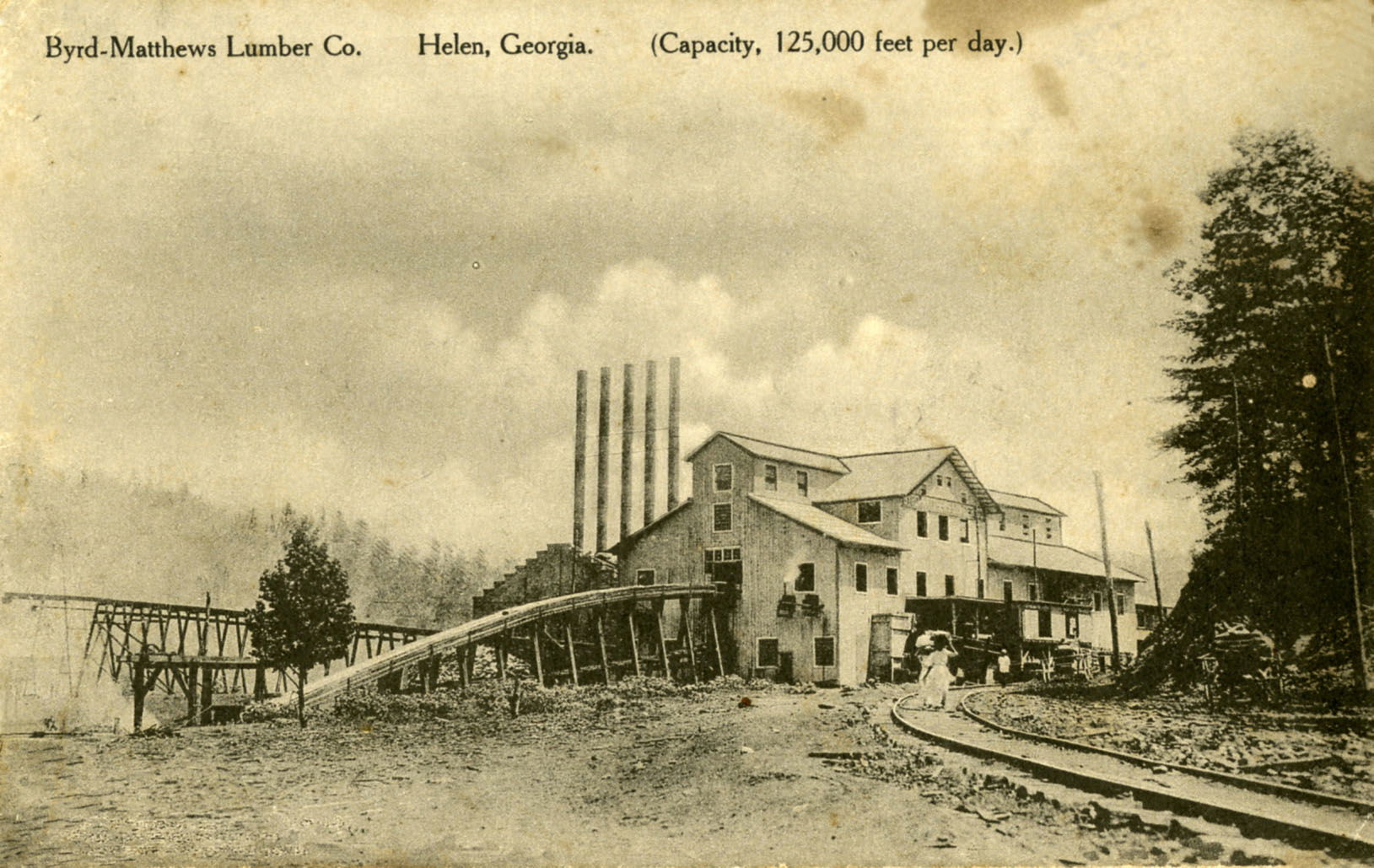
Helen once thrived as a logging and mining town, but by the late 1920s the lumber industry had decimated local resources and moved on. Without logging traffic, the 1.5-mile rail line into Helen shut down in 1928. In the decades that followed locals looked for new ways to attract visitors to the area, with limited success. In 1968, after years of dwindling population numbers and economic prospects, local businessmen Bob Fowler, Pete Hodkinson, and Jim Wilkins met to discuss ways to revitalize the business district. They approached local artist John Kollock, who suggested that the town capitalize on the beauty of the surrounding mountains by transforming itself into a Bavarian-themed village. Business owners agreed, and soon thereafter the idea was approved by the mayor and city council.

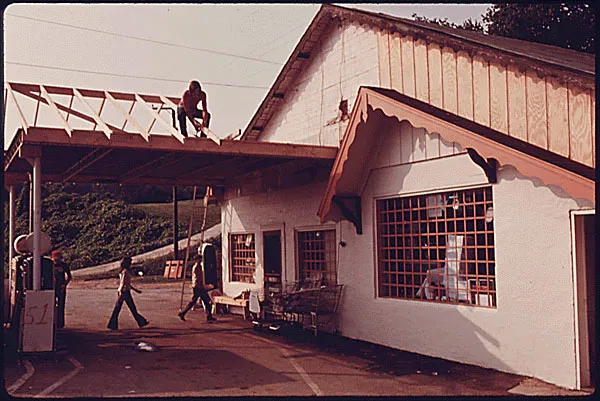
Helen was reborn in April 1969 with a new charter that granted the city control over the exterior appearance of buildings downtown. By the early 1970s, the European ambiance was taking shape, and visitors inundated the town, celebrating Oktoberfest and enjoying festivals in a newly quaint “German” village. Despite the popularity of Helen’s new façade, many critics bemoaned the town’s campy commercialization and divorce from the region’s Appalachian history. Nevertheless, Helen’s transformation highlights a successful alliance between local businessmen and civic leaders to revive a sleepy Georgia village. In 2003 Helen was the third most popular tourist destination in Georgia, behind Atlanta and Savannah.

Byrd-Matthews Lumber Company
Helen Gas Station
Helen Brochure
10

Stone Mountain: A Complex Attraction

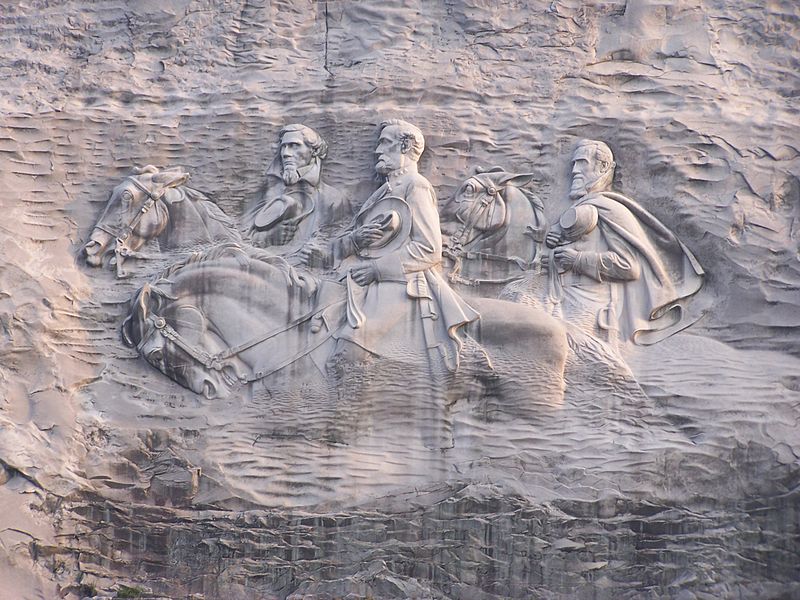
Since the 1850s, people have come to marvel at the world’s largest mass of exposed granite at Stone Mountain. In 1914, at the height of Civil War (1861-65) memorial construction in the South, the United Daughters of the Confederacy proposed a monument for the site. The Stone Mountain Confederate Monumental Association hired renowned sculptor Gutzon Borglum, creator of Mount Rushmore in South Dakota, to construct a carving of revered Confederate figures Jefferson Davis, Robert E. Lee, and Thomas J. “Stonewall” Jackson. Following ongoing disagreements, Borglum left the project in the 1920s, with the carving incomplete.

The civil rights movement revived attention in the unfinished monument among pro-segregationists. In 1958 Georgia governor Marvin Griffin led efforts to establish the Stone Mountain Memorial Association (SMMA), which purchased the property and oversaw the development of Stone Mountain Memorial Park. The completed carving was dedicated in 1970.

Since the 1970s Stone Mountain has attempted to move beyond promoting a romanticized and largely conflict-free vision of the Old South. Although the Confederate carving remains prominent, and an interpreted antebellum plantation is among the featured attractions at the site, developers have focused on appealing to a culturally diverse audience. In 1998 Herschend Family Entertainment began operating Stone Mountain as a joint venture with the state. This public-private partnership today administers a family-friendly theme park, attracting 4 million visitors annually and offering a host of attractions, including a laser light show, sky lift, and scenic railroad, in addition to hiking trails, a golf course, and fishing and picnicking areas. Though not without controversy, today’s modern site offers tourists experiences beyond just Confederate memory.
Stone Mountain Carving
Ernest and Betty Vandiver
Stone Mountain Brochure

Cite this Article

Hebbard, Jan and Kaylynn Washnock. "Seeing Georgia: Changing Visions of Tourism in the Modern South." New Georgia Encyclopedia, last modified August 19, 2021. https://www.georgiaencyclopedia.org/exhibition/seeing-georgia-changing-visions-of-tourism-in-the-modern-south/

Hebbard, J. & Washnock, K. (2018). Seeing Georgia: Changing Visions of Tourism in the Modern South. In New Georgia Encyclopedia. Retrieved August 19, 2021, from https://www.georgiaencyclopedia.org/exhibition/seeing-georgia-changing-visions-of-tourism-in-the-modern-south/

Hebbard, Jan and Washnock, Kaylynn. "Seeing Georgia: Changing Visions of Tourism in the Modern South." New Georgia Encyclopedia, 14 November 2018, https://www.georgiaencyclopedia.org/exhibition/seeing-georgia-changing-visions-of-tourism-in-the-modern-south/.

Star

Featured Content

Civil Rights Movement

Civil Rights Movement

Mid- to Late 20th Century Topics
Harriet Powers

Harriet Powers

People
Trending

Trending

Georgia Guidestones

Georgia Guidestones

Sites & Museums
Bobby Cox

Bobby Cox

People
CNN

CNN

Television
Dixiecrats

Dixiecrats

Political Parties, Interest Groups & Movements
Clock

Updated Recently

Morris Brown College

Morris Brown College

1 week ago
Burke County

Burke County

1 week ago
CNN

CNN

1 week ago
Ted Turner

Ted Turner

1 week ago

A More Perfect Union

The New Georgia Encyclopedia is supported by funding from A More Perfect Union, a special initiative of the National Endowment for the Humanities.

Learn More
New Georgia Encyclopedia
ISSN 2765-8732
Project Partners
logo-press UGA Press logo-galileo GALILEO logo-humanities Georgia Humanities logo-seal Office of the Governor logo-libraries UGA Libraries
Articles & Media
  • Browse by Topic
  • Content Collections
  • Georgia Standards
Special Content
  • Quizzes
  • Exhibitions
  • Spotify Playlists
  • Georgia Exhibits
  • Educator Resources
About
  • The Project
  • The People
  • Sponsors & Partners
Editorial
  • Our Process
  • Contributor Info
  • Permissions & Use
Stay in Touch
Facebook Instagram Twitter Contact Us
Donate to the NGE

Your support helps us commission new entries and update existing content.

Donate

© 2004–2026 Georgia Humanities, University of Georgia Press

  • Terms of Use
  • Privacy Policy
Loading
Image

Media gallery

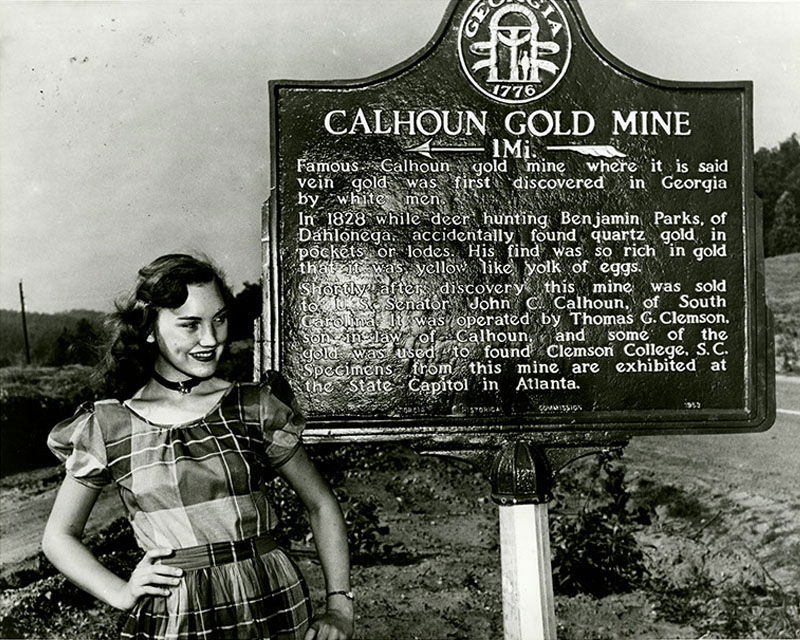
A woman poses in front of the Calhoun Gold Mine historical marker

Woman with Historical Marker

  • Info Details
  • Citation Terms of Use

A woman poses for a picture in front of the Calhoun Gold Mine historical marker in Dahlonega.

Courtesy of Digital Library of Georgia, Chestatee Regional Library System Collection.

The New Georgia Encyclopedia does not hold the copyright for this media resource and can neither grant nor deny permission to republish or reproduce the image online or in print. Requests for permission to publish or reproduce the resource may need to be submitted to the Digital Library of Georgia.

Road Signs

Road Signs

  • Info Details
  • Citation Terms of Use

A hitchhiker stands between road signs on U.S. highways 41 and 411, circa 1945.

Courtesy of Edwin L. Jackson

The New Georgia Encyclopedia does not hold the copyright for this media resource and can neither grant nor deny permission to republish or reproduce the image online or in print. All requests for permission to publish or reproduce the resource must be submitted to the rights holder.

https://www.georgiaencyclopedia.org/wp-content/uploads/2021/04/seeing-georgia-intro_001.mp4

Georgia Tourists’ Home Movies

  • Info Details
  • Citation Terms of Use

This compilation of home movie footage from the 1940s and 1950s shows families vacationing at various tourist destinations in Georgia.Booth Williams Home Movie Collection (ca. 1949) and Geneva Grant Home Movie Collection (ca. 1957)

Courtesy of Walter J. Brown Media Archives and Peabody Awards Collection, University of Georgia Libraries.

The New Georgia Encyclopedia does not hold the copyright for this media resource and can neither grant nor deny permission to republish or reproduce the image online or in print. All requests for permission to publish or reproduce the resource must be submitted to the Walter J. Brown Media Archives and Peabody Awards Collection.

Dixie Highway Map, 1919

Dixie Highway Map, 1919

  • Info Details
  • Citation Terms of Use

The Dixie Highway stretched from Sault Ste. Marie, Michigan, south to Miami, Florida.See full-size map.

Courtesy of Edwin L. Jackson

The New Georgia Encyclopedia does not hold the copyright for this media resource and can neither grant nor deny permission to republish or reproduce the image online or in print. All requests for permission to publish or reproduce the resource must be submitted to the rights holder.

Chain Gang Labor

Chain Gang Labor

  • Info Details
  • Citation Terms of Use

Chain gangs performed the majority of work on southern roads between 1900 and 1930. Between 1910 and 1915 a force of convict laborers on road crews doubled Georgia's improved road mileage.

Courtesy of Edwin L. Jackson

The New Georgia Encyclopedia does not hold the copyright for this media resource and can neither grant nor deny permission to republish or reproduce the image online or in print. All requests for permission to publish or reproduce the resource must be submitted to the rights holder.

Air Conditioner Advertisement

Air Conditioner Advertisement

  • Info Details
  • Citation Terms of Use

Called the unsung hero of the modern South, air conditioning tamed the hot, humid climate and revolutionized the tourism industry. By the 1950s small window units were perfected and spread through motels and hotels across the Sunbelt states. 

Courtesy of Edwin L. Jackson

The New Georgia Encyclopedia does not hold the copyright for this media resource and can neither grant nor deny permission to republish or reproduce the image online or in print. All requests for permission to publish or reproduce the resource must be submitted to the rights holder.

Howard Johnson’s Advertisement

Howard Johnson’s Advertisement

  • Info Details
  • Citation Terms of Use

Howard Johnson's began in 1929 as a restaurant in Quincy, Massachusetts. Throughout the 1930s and 1940s, the franchise restaurants spread along the East Coast, and in 1954 owner Howard Johnson opened his first motor lodge near Savannah.

Courtesy of Edwin L. Jackson

The New Georgia Encyclopedia does not hold the copyright for this media resource and can neither grant nor deny permission to republish or reproduce the image online or in print. All requests for permission to publish or reproduce the resource must be submitted to the rights holder.

Ludowici Billboard

Ludowici Billboard

  • Info Details
  • Citation Terms of Use

C. W. Herndon, a Georgia Bureau of Investigation agent, stands before a billboard, erected at his suggestion, in 1970. During the mid-twentieth century, the town of Ludowici in east Georgia acquired the reputation of being a speed trap, in which tourists traveling to and from Florida were often stopped.

Courtesy of Georgia Archives, Vanishing Georgia, #
lon001.

View on partner site

The New Georgia Encyclopedia does not hold the copyright for this media resource and can neither grant nor deny permission to republish or reproduce the image online or in print. Requests for permission to publish or reproduce the resource should be submitted to the Georgia Archives.

Know Georgia Better Booklet

Know Georgia Better Booklet

  • Info Details
  • Citation Terms of Use

In 1946 Georgia launched the "Know Georgia Better" campaign to encourage residents to visit and become more familiar with sites across the state. The main objective of the initiative was to ready the state for advertising its attractions nationally. 

Courtesy of Hargrett Rare Book and Manuscript Library, University of Georgia Libraries.

The New Georgia Encyclopedia does not hold the copyright for this media resource and can neither grant nor deny permission to republish or reproduce the image online or in print. Requests for permission to publish or reproduce the resource should be submitted to the Hargrett Manuscript and Rare Book Library at the University of Georgia.

See Georgia First Campaign

See Georgia First Campaign

  • Info Details
  • Citation Terms of Use

Bill Burson delivers a speech promoting the "See Georgia First" tourism campaign, circa 1965.From Carl E. Sanders's Papers.

Courtesy of Richard B. Russell Library for Political Research and Studies, University of Georgia Libraries.

The New Georgia Encyclopedia does not hold the copyright for this media resource and can neither grant nor deny permission to republish or reproduce the image online or in print. Requests for permission to publish or reproduce the resource may need to be submitted to the Richard B. Russell Library for Political Research and Studies at the University of Georgia.

Bill Hardman

Bill Hardman

  • Info Details
  • Citation Terms of Use

While serving as Georgia's tourism director from 1959 to 1970, Bill Hardman revolutionized the state's image among vacationers. He was the driving force behind the creation of the state's welcome centers and of clever campaigns like "See Georgia First" and "Stay and See Georgia." Through his efforts, the state shed its reputation for speed traps, clip joints, and poor roads.

Courtesy of Richard B. Russell Library for Political Research and Studies, University of Georgia Libraries, William Hardman Sr.'s Papers.

The New Georgia Encyclopedia does not hold the copyright for this media resource and can neither grant nor deny permission to republish or reproduce the image online or in print. Requests for permission to publish or reproduce the resource may need to be submitted to the Richard B. Russell Library for Political Research and Studies at the University of Georgia.

https://www.georgiaencyclopedia.org/wp-content/uploads/2021/03/carl-sanders-welcome-center_001.mp4

Welcome Center Dedication

  • Info Details
  • Citation Terms of Use

Governor Carl Sanders dedicates a new welcome center in Valdosta in 1964.

Courtesy of Richard B. Russell Library for Political Research and Studies, University of Georgia Libraries, Carl E. Sanders Papers.

The New Georgia Encyclopedia does not hold the copyright for this media resource and can neither grant nor deny permission to republish or reproduce the image online or in print. Requests for permission to publish or reproduce the resource may need to be submitted to the Richard B. Russell Library for Political Research and Studies at the University of Georgia.

https://www.georgiaencyclopedia.org/wp-content/uploads/2021/04/abit-massey-on-tourism_001.m4v

Abit Massey Interview on Tourism

  • Info Details
  • Citation Terms of Use

Abit Massey discusses his experiences as director of the Georgia Department of Commerce in an interview conducted on September 19, 2011. Massey held this position under Governor Ernest Vandiver from 1959 to 1963, and he was instrumental in the construction of Georgia's welcome centers and the development of the state’s Tourist Division.

Courtesy of Richard B. Russell Library for Political Research and Studies, University of Georgia Libraries, Reflections on Georgia Politics Oral History Collection, #ROGP 131.

The New Georgia Encyclopedia does not hold the copyright for this media resource and can neither grant nor deny permission to republish or reproduce the image online or in print. Requests for permission to publish or reproduce the resource may need to be submitted to the Richard B. Russell Library for Political Research and Studies at the University of Georgia.

https://www.georgiaencyclopedia.org/wp-content/uploads/2021/04/bill-hardman-interview-tourism_002.m4v

Bill Hardman Interview on Tourism

  • Info Details
  • Citation Terms of Use

As director of tourism from 1959 to 1970, Bill Hardman was instrumental in establishing Georgia as a tourist destination. In this interview recorded on February 4, 2013, he discusses the opening of welcome centers and the state's marketing efforts to persuade travelers en route to Florida to "see Georgia first." 

Courtesy of Richard B. Russell Library for Political Research and Studies, University of Georgia Libraries, Reflections on Georgia Politics Oral History Collection, #ROGP 146.

The New Georgia Encyclopedia does not hold the copyright for this media resource and can neither grant nor deny permission to republish or reproduce the image online or in print. Requests for permission to publish or reproduce the resource may need to be submitted to the Richard B. Russell Library for Political Research and Studies at the University of Georgia.

Welcome Center Hostess

Welcome Center Hostess

  • Info Details
  • Citation Terms of Use

In 1962 Georgia opened its first welcome center along Highway 301 in Sylvania, near the South Carolina border. While travelers picked up maps, brochures, and souvenirs, hostesses armed with southern hospitality and donated Coca-Cola, peanuts, and Royal Crown cola would persuade them to stay and see Georgia's many attractions. Soon thereafter, welcome centers were built at Savannah, Lavonia, Ringgold, Columbus, and Valdosta.

Courtesy of Richard B. Russell Library for Political Research and Studies, University of Georgia Libraries, William Hardman Sr. Papers.

The New Georgia Encyclopedia does not hold the copyright for this media resource and can neither grant nor deny permission to republish or reproduce the image online or in print. Requests for permission to publish or reproduce the resource may need to be submitted to the Richard B. Russell Library for Political Research and Studies at the University of Georgia.

New Yorker Cover

New Yorker Cover

  • Info Details
  • Citation Terms of Use

The cover of the New Yorker for July 22, 1996, depicts a Georgia pig farmer holding an Olympic torch. In the summer of 1996 more than 2 million tourists flocked to Atlanta to attend the Centennial Olympic Games. For decades the city, known as both the capital of a romanticized Old South and an emblem of the business-savvy New South, had struggled with a conflicted identity. Olympic promoters selectively adopted elements of southern identity for the event, fully aware that the Games offered a prime opportunity to sell Georgia to a worldwide audience.

Courtesy of Richard B. Russell Library for Political Research and Studies, University of Georgia Libraries.

The New Georgia Encyclopedia does not hold the copyright for this media resource and can neither grant nor deny permission to republish or reproduce the image online or in print. Requests for permission to publish or reproduce the resource may need to be submitted to the Richard B. Russell Library for Political Research and Studies at the University of Georgia.

Stone Mountain Carving

Stone Mountain Carving

  • Info Details
  • Citation Terms of Use

The carving on Stone Mountain depicts the Confederate icons Robert E. Lee, Thomas "Stonewall" Jackson, and Jefferson Davis. Commissioned by the president of the United Daughters of the Confederacy, the sculptor Gutzon Borglum began work on the relief in 1915. He was fired in 1925, and Augustus Lukeman completed the carving.

Photograph by Mark Griffin, Wikimedia

The New Georgia Encyclopedia does not hold the copyright for this media resource and can neither grant nor deny permission to republish or reproduce the image online or in print. All requests for permission to publish or reproduce the resource must be submitted to the rights holder.

Jekyll Island

Jekyll Island

  • Info Details
  • Citation Terms of Use

The western side of Jekyll Island is fronted by Jekyll Creek and salt marsh, and the eastern edge of the island is defined by its beach and the Atlantic Ocean.

Courtesy of Jekyll Island Museum

The New Georgia Encyclopedia does not hold the copyright for this media resource and can neither grant nor deny permission to republish or reproduce the image online or in print. All requests for permission to publish or reproduce the resource must be submitted to the rights holder.

Okefenokee Swamp Flora

Okefenokee Swamp Flora

  • Info Details
  • Citation Terms of Use

The Okefenokee Swamp, located in the Lower Coastal Plain geographic province, supports a variety of plant and animal life. The swamp is the largest in North America, covering approximately 700 square miles.

Photograph from John Whitehill

The New Georgia Encyclopedia does not hold the copyright for this media resource and can neither grant nor deny permission to republish or reproduce the image online or in print. All requests for permission to publish or reproduce the resource must be submitted to the rights holder.

Tallulah Falls Train

Tallulah Falls Train

  • Info Details
  • Citation Terms of Use

In the wake of the Civil War, transcontinental railroads began to advertise pleasure trips outside the Northeast. In the 1870s and 1880s, passenger fare for a round-trip transcontinental ticket cost at least $300, worth approximately $7,250 today. By the early twentieth century, the rising popularity and affordability of the automobile democratized travel and undercut travel by rail.

Courtesy of Gary Doster

The New Georgia Encyclopedia does not hold the copyright for this media resource and can neither grant nor deny permission to republish or reproduce the image online or in print. All requests for permission to publish or reproduce the resource must be submitted to the rights holder.

Cliff House Hotel

Cliff House Hotel

  • Info Details
  • Citation Terms of Use

The Cliff House Hotel, built in 1882 by Rufus L. Moss Sr., was the first lodging establishment in Tallulah Falls. The hotel served the thriving tourist industry until 1937, when it burned in a kitchen fire.

Courtesy of Rabun County Historical Society

The New Georgia Encyclopedia does not hold the copyright for this media resource and can neither grant nor deny permission to republish or reproduce the image online or in print. All requests for permission to publish or reproduce the resource must be submitted to the rights holder.

Tallulah Falls Hiking Party

Tallulah Falls Hiking Party

  • Info Details
  • Citation Terms of Use

Tallulah touted attractions that vacationers seeking a place for healthful respite desired—clean, cool air and water, a plethora of outdoor activities, and remarkable vistas. Tourists not only hiked to the falls, but swam in the river, lounged on rocks, and enjoyed horseback riding.

Courtesy of Richard B. Russell Library for Political Research and Studies, University of Georgia Libraries, Dudley Mays Hughs Collection.

The New Georgia Encyclopedia does not hold the copyright for this media resource and can neither grant nor deny permission to republish or reproduce the image online or in print. Requests for permission to publish or reproduce the resource may need to be submitted to the Richard B. Russell Library for Political Research and Studies at the University of Georgia.

Stuart’s Hotel

Stuart’s Hotel

  • Info Details
  • Citation Terms of Use

A postcard pictures guests of Stuart's Hotel in Thomasville, circa 1900, in the heart of Georgia's wiregrass region.

Courtesy of Gary Doster

The New Georgia Encyclopedia does not hold the copyright for this media resource and can neither grant nor deny permission to republish or reproduce the image online or in print. All requests for permission to publish or reproduce the resource must be submitted to the rights holder.

Quail Hunting

Quail Hunting

  • Info Details
  • Citation Terms of Use

By the 1920s approximately 300,000 acres of farmland in the Red Hills had been converted to private shooting plantations for hunting bobwhite quail. In March 1970 the Georgia General Assembly passed House Resolution No. 694-1436 naming the bobwhite quail the state's official game bird.

Courtesy of Richard B. Russell Library for Political Research and Studies, University of Georgia Libraries, Ed Friend Visual Materials.

The New Georgia Encyclopedia does not hold the copyright for this media resource and can neither grant nor deny permission to republish or reproduce the image online or in print. Requests for permission to publish or reproduce the resource may need to be submitted to the Richard B. Russell Library for Political Research and Studies at the University of Georgia.

The Bobwhite Quail

The Bobwhite Quail

  • Info Details
  • Citation Terms of Use

Herbert L. Stoddard, an ecologist specializing in the management of longleaf pine–wiregrass forests, published The Bobwhite Quail: Its Propogation, Preservation, and Increase on Georgia Farms in 1937.

Courtesy of Hargrett Rare Book and Manuscript Library, University of Georgia Libraries.

The New Georgia Encyclopedia does not hold the copyright for this media resource and can neither grant nor deny permission to republish or reproduce the image online or in print. Requests for permission to publish or reproduce the resource should be submitted to the Hargrett Manuscript and Rare Book Library at the University of Georgia.

Jekyll Island Ferry

Jekyll Island Ferry

  • Info Details
  • Citation Terms of Use

The Jekyll Island Club operated from January to April and maintained an extensive staff. Seasonal employees filled positions on the waitstaff as dish and pot washers, chambermaids, and porters. The most important and highest paid employee was the chef, who earned up to $150 per month. Local African Americans served as bellboys, stable hands, caddies, washerwomen, housecleaners, and day laborers on construction sites. These workers earned between $1.00 and $1.50 per day and were provided with housing in segregated dormitories and cottages.

Courtesy of Jekyll Island Museum

The New Georgia Encyclopedia does not hold the copyright for this media resource and can neither grant nor deny permission to republish or reproduce the image online or in print. All requests for permission to publish or reproduce the resource must be submitted to the rights holder.

Melvin E. Thompson

Melvin E. Thompson

  • Info Details
  • Citation Terms of Use

As state revenue commissioner, Melvin E. Thompson recommended the purchase of Jekyll Island, and as governor he moved forward with the state's acquisition of the island in 1947. Although taunted by his political foe Herman Talmadge, who dubbed the project "Thompson’s Folly," Thompson refused to give up on the creation of a state beach park for the "plain people of Georgia." In recognition of his work on the project, the Jekyll Island Bridge was named in his honor in 1989.

Courtesy of Richard B. Russell Library for Political Research and Studies, University of Georgia Libraries, M.E. Thompson Papers.

The New Georgia Encyclopedia does not hold the copyright for this media resource and can neither grant nor deny permission to republish or reproduce the image online or in print. Requests for permission to publish or reproduce the resource may need to be submitted to the Richard B. Russell Library for Political Research and Studies at the University of Georgia.

https://www.georgiaencyclopedia.org/wp-content/uploads/2021/04/wsb-segregrated-jekyll_001.m4v

Segregation at Jekyll Island

  • Info Details
  • Citation Terms of Use

The Jekyll Island Authority opened a segregated section of beach, named the St. Andrews Subdivision, in 1955 at the southern end of the island. Although the facilities were not equal to those enjoyed by white visitors, Jekyll Island provided the only public beach available to African Americans in Georgia through the 1950s. In 1964 the district court decision in Law v. Jekyll Island State Park Authority mandated the desegregation of all state-operated facilities, and the island integrated peacefully.

Courtesy of Walter J. Brown Media Archives and Peabody Awards Collection, University of Georgia Libraries, WSB Television Newsfilm Collection.

The New Georgia Encyclopedia does not hold the copyright for this media resource and can neither grant nor deny permission to republish or reproduce the image online or in print. All requests for permission to publish or reproduce the resource must be submitted to the Walter J. Brown Media Archives and Peabody Awards Collection.

Hebard Cypress Mills

Hebard Cypress Mills

  • Info Details
  • Citation Terms of Use

During the Second Seminole War (1835-42), the federal government forcibly removed Native Americans from the swamp in order to make way for white settlers. In 1891 the Suwanee Canal Company purchased 238,120 acres of the Okefenokee Swamp with the intentions of draining to land to establish cotton, sugar, and rice plantations. After that company’s failure, timber companies attempted to construct railroads, canals, and even drained portions of the swamp in order to ease the removal of precious cypress logs.

Courtesy of Gary Doster

The New Georgia Encyclopedia does not hold the copyright for this media resource and can neither grant nor deny permission to republish or reproduce the image online or in print. All requests for permission to publish or reproduce the resource must be submitted to the rights holder.

Okefenokee Swamp

Okefenokee Swamp

  • Info Details
  • Citation Terms of Use

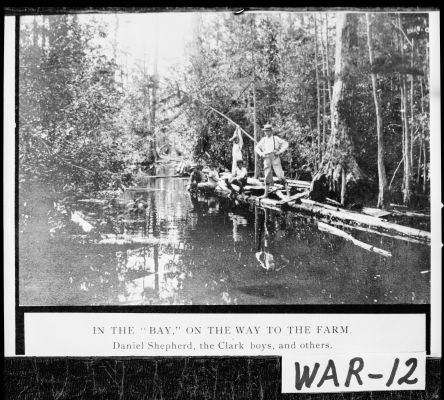
Several local farmers travel through the Okefenokee Swamp in Ware County, circa 1900. At more than 700 square miles, the Okefenokee is the largest swamp in North America.

Courtesy of Georgia Archives, Vanishing Georgia, #
war012.

View on partner site

The New Georgia Encyclopedia does not hold the copyright for this media resource and can neither grant nor deny permission to republish or reproduce the image online or in print. Requests for permission to publish or reproduce the resource should be submitted to the Georgia Archives.

Swamp Water

Swamp Water

  • Info Details
  • Citation Terms of Use

The film Swamp Water (1941), directed by Jean Renoir, premiered in Waycross on October 23, 1941, which was declared "Swamp Water Day" by Georgia governor Eugene Talmadge.

Courtesy of Hargrett Rare Book and Manuscript Library, University of Georgia Libraries.

The New Georgia Encyclopedia does not hold the copyright for this media resource and can neither grant nor deny permission to republish or reproduce the image online or in print. Requests for permission to publish or reproduce the resource should be submitted to the Hargrett Manuscript and Rare Book Library at the University of Georgia.

Byrd-Matthews Lumber Company

Byrd-Matthews Lumber Company

  • Info Details
  • Citation Terms of Use

In 1910 the Byrd-Matthews Corporation built a major sawmill in Helen to accommodate the booming timber industry.

Courtesy of Gary Doster

The New Georgia Encyclopedia does not hold the copyright for this media resource and can neither grant nor deny permission to republish or reproduce the image online or in print. All requests for permission to publish or reproduce the resource must be submitted to the rights holder.

Helen Gas Station

Helen Gas Station

  • Info Details
  • Citation Terms of Use

Although some critics bemoaned the campy commercialization of Helen, town officials have regulated the Bavarian alpine facade for all downtown businesses since 1969. One service station owner borrowed $15,000 to add a store-top to his shop in order to conform to the alpine motif.

Courtesy of National Archives and Records Administration

The New Georgia Encyclopedia does not hold the copyright for this media resource and can neither grant nor deny permission to republish or reproduce the image online or in print. All requests for permission to publish or reproduce the resource must be submitted to the rights holder.

Helen Brochure

Helen Brochure

  • Info Details
  • Citation Terms of Use

A brochure, produced circa 1975, promotes Helen as a tourist destination. Pete Hodkinson remained at the forefront of Helen’s Bavarian tourism industry until his death in 1976. Not only did he host the first Oktoberfest in 1970, but he also organized and participated in the now-famous Helen-to-the-Atlantic hot air balloon race, which debuted in May 1974.

Courtesy of Hargrett Rare Book and Manuscript Library, University of Georgia Libraries.

The New Georgia Encyclopedia does not hold the copyright for this media resource and can neither grant nor deny permission to republish or reproduce the image online or in print. Requests for permission to publish or reproduce the resource should be submitted to the Hargrett Manuscript and Rare Book Library at the University of Georgia.

Stone Mountain Carving

Stone Mountain Carving

  • Info Details
  • Citation Terms of Use

The carving of Confederate general Robert E. Lee's head is unveiled at Stone Mountain on January 19, 1924. Some of Georgia's earliest tourist attractions were Civil War battle sites and memorials. Most sites dedicated to the conflict favored narratives of battlefield glory and commemoration of fallen soldiers, and downplayed the history of slavery and emancipation.

Courtesy of Gary Doster

The New Georgia Encyclopedia does not hold the copyright for this media resource and can neither grant nor deny permission to republish or reproduce the image online or in print. All requests for permission to publish or reproduce the resource must be submitted to the rights holder.

Ernest and Betty Vandiver

Ernest and Betty Vandiver

  • Info Details
  • Citation Terms of Use

Georgia governor Ernest Vandiver (front right) and his wife, Betty, helped dedicate the Stone Mountain Scenic Railroad in 1962. The state purchased Stone Mountain in 1958 and created the Stone Mountain Memorial Association (SMMA) to administer the site.

Courtesy of Richard B. Russell Library for Political Research and Studies, University of Georgia Libraries, S. Ernest Vandiver Jr. Papers..

The New Georgia Encyclopedia does not hold the copyright for this media resource and can neither grant nor deny permission to republish or reproduce the image online or in print. Requests for permission to publish or reproduce the resource may need to be submitted to the Richard B. Russell Library for Political Research and Studies at the University of Georgia.

Stone Mountain Brochure

Stone Mountain Brochure

  • Info Details
  • Citation Terms of Use

In 1964 the Georgia Chamber of Commerce deemed Stone Mountain Park a critical asset. A statewide campaign promoting the site included twenty-six billboards installed along Interstates 75 and 20. The advertisements tempted visitors to stop by "the South’s newest, most exiting vacationland," which promised fun and entertainment for visitors. By the 1970s promotional campaigns focused largely on the recreational features of Stone Mountain.

Courtesy of Edwin L. Jackson

The New Georgia Encyclopedia does not hold the copyright for this media resource and can neither grant nor deny permission to republish or reproduce the image online or in print. All requests for permission to publish or reproduce the resource must be submitted to the rights holder.

A woman poses in front of the Calhoun Gold Mine historical marker Road Signs
Dixie Highway Map, 1919 Chain Gang Labor Air Conditioner Advertisement Howard Johnson’s Advertisement Ludowici Billboard Know Georgia Better Booklet See Georgia First Campaign Bill Hardman
Welcome Center Hostess New Yorker Cover Stone Mountain Carving Jekyll Island Okefenokee Swamp Flora Tallulah Falls Train Cliff House Hotel Tallulah Falls Hiking Party Stuart’s Hotel Quail Hunting The Bobwhite Quail Jekyll Island Ferry Melvin E. Thompson
Hebard Cypress Mills Okefenokee Swamp Swamp Water Byrd-Matthews Lumber Company Helen Gas Station Helen Brochure Stone Mountain Carving Ernest and Betty Vandiver Stone Mountain Brochure