Skip to content
New Georgia Encyclopedia
  • Home
  • Articles & Media
  • Browse by Topic
  • Browse Collections
  • Browse Georgia Standards
  • A-Z Index
  • Exhibitions
  • Educators
  • Browse    Chevron down
  • Exhibitions
  • Educators
By Topic Content Collections Georgia Standards A-Z Index Arrow right
  • Arts & Culture

    Arts & Culture

  • Business & Economy

    Business & Economy

  • Counties, Cities & Neighborhoods

    Counties, Cities & Neighborhoods

  • Education

    Education

  • Geography & Environment

    Geography & Environment

  • Government & Politics

    Government & Politics

  • History & Archaeology

    History & Archaeology

  • People

    People

  • Science & Medicine

    Science & Medicine

  • Sports & Outdoor Recreation

    Sports & Outdoor Recreation

Frankie Welch’s Americana
Featured

Frankie Welch’s Americana

Fashion and politics from Georgia-born designer Frankie Welch

Stamp Collection
Featured

Stamp Collection

Stamps honoring the political figures, artists, and culture of Georgia.

Recently Added
View All Arrow right
City Page: Atlanta

City Page: Atlanta

Stamp Collection

Stamp Collection

Frankie Welch’s Americana

Frankie Welch’s Americana

  • Georgia Studies

    Georgia Studies

    Eighth Grade
  • Georgia, My State

    Georgia, My State

    Second Grade
All Topics Arrow right History & Archaeology Arrow right

Revolution & Early Republic, 1775-1800

Sub-Topics
  • Revolution & Early Republic Events
  • Revolution & Early Republic Groups & Organizations
  • Revolution & Early Republic Figures
  • Revolution & Early Republic Places
  • Revolution & Early Republic Topics
Anglican Church

Anglican Church

Abraham Baldwin

Abraham Baldwin

1754-1807
Battle of Kettle Creek

Battle of Kettle Creek

Boundaries of Georgia

Boundaries of Georgia

Thomas Brown

Thomas Brown

1750-1825
Nathan Brownson

Nathan Brownson

1742-1796
David Bushnell

David Bushnell

1740-1826
Archibald Campbell

Archibald Campbell

1739-1791
John Clark

John Clark

1766-1832
Constitutional Conventions

Constitutional Conventions

Muscogee (Creek) Indian Leaders

Muscogee (Creek) Indian Leaders

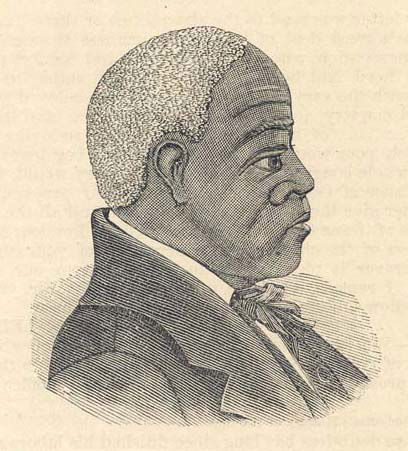
Austin Dabney

Austin Dabney

ca. 1765-1830
Dueling in Georgia

Dueling in Georgia

David Emanuel

David Emanuel

ca. 1744-1808
Enslaved Women

Enslaved Women

William Ewen

William Ewen

ca. 1720-1776/1777
William Few Jr.

William Few Jr.

1748-1828
Georgia History

Georgia History

Overview
Goose Pond

Goose Pond

Catharine Greene

Catharine Greene

1755-1814
Nathanael Greene

Nathanael Greene

1742-1786
Lyman Hall

Lyman Hall

1724-1790
Nancy Hart

Nancy Hart

ca. 1735-1830
Stephen Heard

Stephen Heard

1740-1815
John Houstoun

John Houstoun

ca. 1747-1796
James Jackson

James Jackson

1757-1806
Noble W. Jones

Noble W. Jones

ca. 1723-1805
John Martin

John Martin

ca. 1730-1786
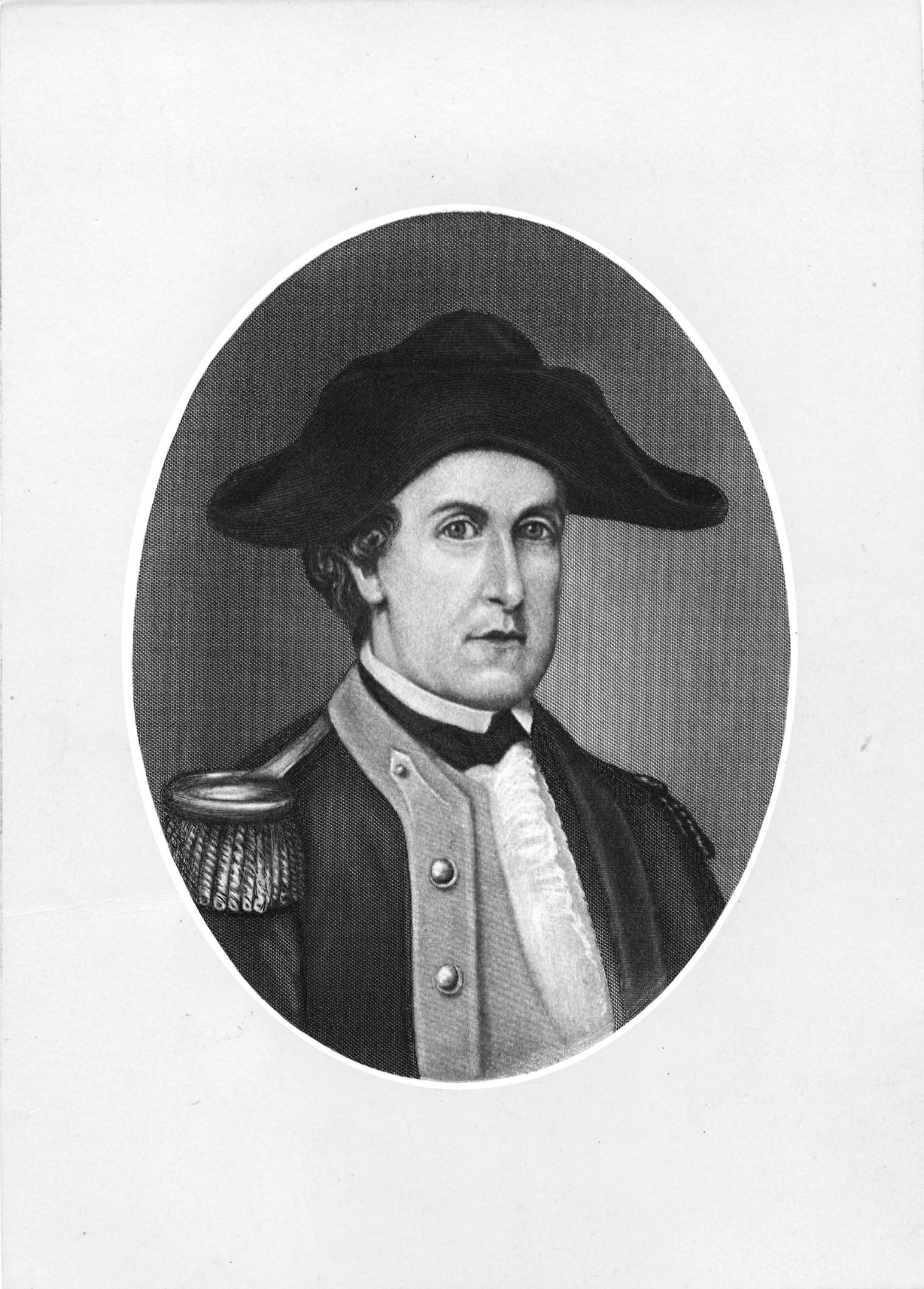
George Mathews

George Mathews

1739-1812
John Milledge

John Milledge

1757-1818
Petersburg

Petersburg

William Pierce

William Pierce

1753-1789
Casimir Pulaski in Georgia

Casimir Pulaski in Georgia

Revolutionary War in Georgia

Revolutionary War in Georgia

Major Ridge

Major Ridge

ca. 1771-1839
Siege of Savannah

Siege of Savannah

Slavery in Revolutionary Georgia

Slavery in Revolutionary Georgia

Benjamin Taliaferro

Benjamin Taliaferro

1750-1821
Edward Telfair

Edward Telfair

1735-1807
Trans-Oconee Republic

Trans-Oconee Republic

John Adam Treutlen

John Adam Treutlen

1733-1782
John Twiggs

John Twiggs

1750-1816
USS Savannah

USS Savannah

George Walton

George Walton

ca. 1749-1804
John Wereat

John Wereat

ca. 1733-1799
Eli Whitney in Georgia

Eli Whitney in Georgia

Yazoo Land Fraud

Yazoo Land Fraud

Loading
Star

Featured Content

James Oglethorpe

James Oglethorpe

Colonial Figures
Civil Rights Movement

Civil Rights Movement

Mid- to Late 20th Century Topics
Trending

Trending

Georgia Guidestones

Georgia Guidestones

Sites & Museums
Bobby Cox

Bobby Cox

People
James D. Bulloch

James D. Bulloch

People
Augusta Riot

Augusta Riot

Mid- to Late 20th Century Events
Clock

Updated Recently

Morris Brown College

Morris Brown College

5 days ago
Burke County

Burke County

5 days ago
CNN

CNN

5 days ago
Ted Turner

Ted Turner

1 week ago

A More Perfect Union

The New Georgia Encyclopedia is supported by funding from A More Perfect Union, a special initiative of the National Endowment for the Humanities.

Learn More
New Georgia Encyclopedia
ISSN 2765-8732
Project Partners
logo-press UGA Press logo-galileo GALILEO logo-humanities Georgia Humanities logo-seal Office of the Governor logo-libraries UGA Libraries
Articles & Media
  • Browse by Topic
  • Content Collections
  • Georgia Standards
Special Content
  • Quizzes
  • Exhibitions
  • Spotify Playlists
  • Georgia Exhibits
  • Educator Resources
About
  • The Project
  • The People
  • Sponsors & Partners
Editorial
  • Our Process
  • Contributor Info
  • Permissions & Use
Stay in Touch
Facebook Instagram Twitter Contact Us
Donate to the NGE

Your support helps us commission new entries and update existing content.

Donate

© 2004–2026 Georgia Humanities, University of Georgia Press

  • Terms of Use
  • Privacy Policy

Media gallery

Black and white photo of USS Savannah

USS Savannah (CL-42)

  • Info Details
  • Citation Terms of Use

The fourth USS Savannah (CL-42) engaged in Atlantic and Meditteranean operations during World War II (1941-45), most notably Operation Torch, the allied invasion of North Africa.

Photograph by Naval History and Heritage Command

The New Georgia Encyclopedia does not hold the copyright for this media resource and can neither grant nor deny permission to republish or reproduce the image online or in print. All requests for permission to publish or reproduce the resource must be submitted to the rights holder.

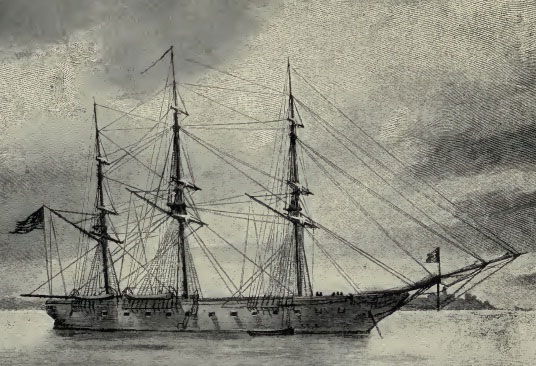
Black and white drawing of the USS Savannah

USS Savannah

  • Info Details
  • Citation Terms of Use

The second USS Savannah completed naval operations in the Mexican and Civil Wars.  

From Old Naval Days: Sketches From the Life of Rear Admiral William Radford, U. S. N. by Sophie Radford De Meissner, Wikimedia
The New Georgia Encyclopedia does not hold the copyright for this media resource and can neither grant nor deny permission to republish or reproduce the image online or in print. All requests for permission to publish or reproduce the resource must be submitted to the rights holder.

Black and white photo of USS Savannah (AS-8)

USS Savannah (AS-8)

  • Info Details
  • Citation Terms of Use

The third USS Savannah (AS-8) served as a submarine tender during World War I (1917-18).

Photograph by Naval History and Heritage Command

The New Georgia Encyclopedia does not hold the copyright for this media resource and can neither grant nor deny permission to republish or reproduce the image online or in print. All requests for permission to publish or reproduce the resource must be submitted to the rights holder.

The duel in which Button Gwinnett was killed by Lachlan McIntosh

Gwinnett McIntosh Duel

  • Info Details
  • Citation Terms of Use

This 1777 engraving depicts the fatal duel between Button Gwinnett and Lachlan McIntosh. 

Courtesy of New York Public Library, Manuscripts and Archives Division
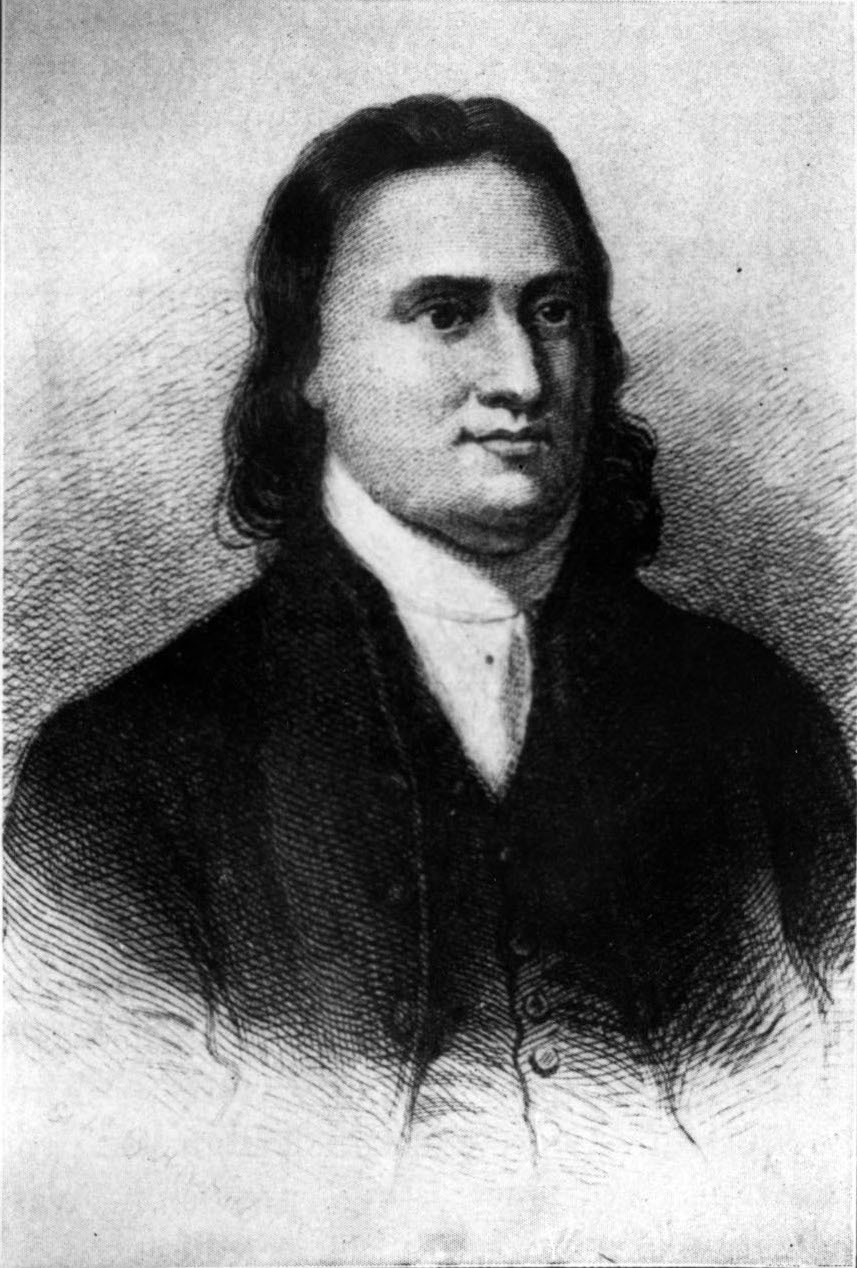
The New Georgia Encyclopedia does not hold the copyright for this media resource and can neither grant nor deny permission to republish or reproduce the image online or in print. All requests for permission to publish or reproduce the resource must be submitted to the rights holder.

Button Gwinnett

Button Gwinnett

  • Info Details
  • Citation Terms of Use

Button Gwinnett served in Georgia's colonial legislature, in the Second Continental Congress, and as president of Georgia's Revolutionary Council of Safety. He was one of three Georgia signers of the Declaration of Independence.

Courtesy of Hargrett Rare Book and Manuscript Library, University of Georgia Libraries.

The New Georgia Encyclopedia does not hold the copyright for this media resource and can neither grant nor deny permission to republish or reproduce the image online or in print. Requests for permission to publish or reproduce the resource should be submitted to the Hargrett Manuscript and Rare Book Library at the University of Georgia.

Lachlan McIntosh

Lachlan McIntosh

  • Info Details
  • Citation Terms of Use

Lachlan McIntosh distinguished himself in a career that evolved over three critical eras in the state's early history, from the colonial period to the Revolutionary War to statehood.

The New Georgia Encyclopedia does not hold the copyright for this media resource and can neither grant nor deny permission to republish or reproduce the image online or in print. All requests for permission to publish or reproduce the resource must be submitted to the rights holder.

Trustees’ Charter Boundaries, 1732

Trustees’ Charter Boundaries, 1732

  • Info Details
  • Citation Terms of Use

King George II granted James Oglethorpe and the Trustees a charter in 1732 to establish the colony of Georgia. This charter provided, among other things, that the new colony would consist of all the land between the headwaters of the Savannah and the Altamaha rivers, with its eastern boundary formed by the Atlantic Ocean and its western boundary by the "south seas," a reference to the Pacific Ocean.

Map by John Nelson. Reprinted by permission of William J. Morton

The New Georgia Encyclopedia does not hold the copyright for this media resource and can neither grant nor deny permission to republish or reproduce the image online or in print. All requests for permission to publish or reproduce the resource must be submitted to the rights holder.

Colony of East Florida, 1763

Colony of East Florida, 1763

  • Info Details
  • Citation Terms of Use

In 1763 the British divided what had been Spanish Florida into the two new colonies of West Florida and East Florida, with the Apalachicola River serving as the dividing line between them. East Florida was all the land east of the Apalachicola River, with St. Augustine as its capital.

Map by John Nelson. Reprinted by permission of William J. Morton

The New Georgia Encyclopedia does not hold the copyright for this media resource and can neither grant nor deny permission to republish or reproduce the image online or in print. All requests for permission to publish or reproduce the resource must be submitted to the rights holder.

Colony of West Florida, 1763

Colony of West Florida, 1763

  • Info Details
  • Citation Terms of Use

In 1763 the British divided what had been Spanish Florida into the two new colonies of West Florida and East Florida, with the Apalachicola River serving as the dividing line between them. West Florida, with Pensacola as its capital, extended west to the Mississippi River.

Map by John Nelson. Reprinted by permission of William J. Morton

The New Georgia Encyclopedia does not hold the copyright for this media resource and can neither grant nor deny permission to republish or reproduce the image online or in print. All requests for permission to publish or reproduce the resource must be submitted to the rights holder.

Georgia Colony Boundaries, 1764

Georgia Colony Boundaries, 1764

  • Info Details
  • Citation Terms of Use

The appointment of James Wright in 1760 as governor of Georgia coincided with a period of expansion. By 1764 the boundaries of the colony had expanded to include those territories between the Mississippi and Chattahoochee rivers that had not been granted to the Florida colonies.

Map by John Nelson. Reprinted by permission of William J. Morton

The New Georgia Encyclopedia does not hold the copyright for this media resource and can neither grant nor deny permission to republish or reproduce the image online or in print. All requests for permission to publish or reproduce the resource must be submitted to the rights holder.

Georgia Colony Boundaries, 1767

Georgia Colony Boundaries, 1767

  • Info Details
  • Citation Terms of Use

In 1767 the governor of West Florida received permission from the king of England to advance the colony's northern border along the Mississippi and Chattahoochee rivers, where royal trading posts were located. Georgia's land holdings significantly decreased as a result.

Map by John Nelson. Reprinted by permission of William J. Morton

The New Georgia Encyclopedia does not hold the copyright for this media resource and can neither grant nor deny permission to republish or reproduce the image online or in print. All requests for permission to publish or reproduce the resource must be submitted to the rights holder.

Georgia State Boundaries, 1783

Georgia State Boundaries, 1783

  • Info Details
  • Citation Terms of Use

The 1783 Treaty of Paris, which ended the Revolutionary War (1775-83), fixed the 31st latitude north as the southern boundary of the new United States. The line extended from the Mississippi River eastward to the Chattahoochee River, moved down that river to its junction with the Flint River, and then followed a direct line east to the headwaters of the St. Marys River. 

Map by John Nelson. Reprinted by permission of William J. Morton

The New Georgia Encyclopedia does not hold the copyright for this media resource and can neither grant nor deny permission to republish or reproduce the image online or in print. All requests for permission to publish or reproduce the resource must be submitted to the rights holder.

Orr-Whitner Line, 1861

Orr-Whitner Line, 1861

  • Info Details
  • Citation Terms of Use

The Orr-Whitner line was accepted by Florida in 1861 and Georgia in 1866 as their official boundary, although the outbreak of the Civil War (1861-65) delayed the line's approval by the U.S. Congress until 1872.

Map by John Nelson. Reprinted by permission of William J. Morton

The New Georgia Encyclopedia does not hold the copyright for this media resource and can neither grant nor deny permission to republish or reproduce the image online or in print. All requests for permission to publish or reproduce the resource must be submitted to the rights holder.

Placement of Ellicott’s Rock, 1811

Placement of Ellicott’s Rock, 1811

  • Info Details
  • Citation Terms of Use

In 1811 Georgia hired Andrew Ellicott to survey and mark the location of the 35th latitude north, which formed the boundary between Georgia and North Carolina. In an 1812 letter to North Carolina governor William Hawkins, Ellicott states: "In the parallel of 35 degree N. latitude, on the west side of the Chatoga river, a stone is set up marked on the South side (G. lat 35 N.) and on the north side, (N.C.) for North Carolina." This map locates what is currently and erroneously called Ellicott's Rock on the east side of the Chattooga River.

Map by John Nelson. Reprinted by permission of William J. Morton

The New Georgia Encyclopedia does not hold the copyright for this media resource and can neither grant nor deny permission to republish or reproduce the image online or in print. All requests for permission to publish or reproduce the resource must be submitted to the rights holder.

Georgia’s Northern and Western Boundaries, 1826

Georgia’s Northern and Western Boundaries, 1826

  • Info Details
  • Citation Terms of Use

This map shows the surveyed line as marked by James Camak, which set Georgia's northern boundary line south of the 35th latitude north, including the offset known as Montgomery's Corner.

Map by John Nelson. Reprinted by permission of William J. Morton

The New Georgia Encyclopedia does not hold the copyright for this media resource and can neither grant nor deny permission to republish or reproduce the image online or in print. All requests for permission to publish or reproduce the resource must be submitted to the rights holder.

Georgia’s Northern and Western Boundaries, 1802

Georgia’s Northern and Western Boundaries, 1802

  • Info Details
  • Citation Terms of Use

Following the 1802 Article of Agreement and Cession, Georgia's new western boundary began with the juncture of the Chattahoochee and Flint rivers in southwest Georgia and proceeded north to the great bend of the river (at present-day West Point, Georgia). From there it stretched for 160 miles to the Indian village of Nickajack on the Tennessee River and continued from there up to the 35th latitude north.

Map by John Nelson. Reprinted by permission of William J. Morton
The New Georgia Encyclopedia does not hold the copyright for this media resource and can neither grant nor deny permission to republish or reproduce the image online or in print. All requests for permission to publish or reproduce the resource must be submitted to the rights holder.

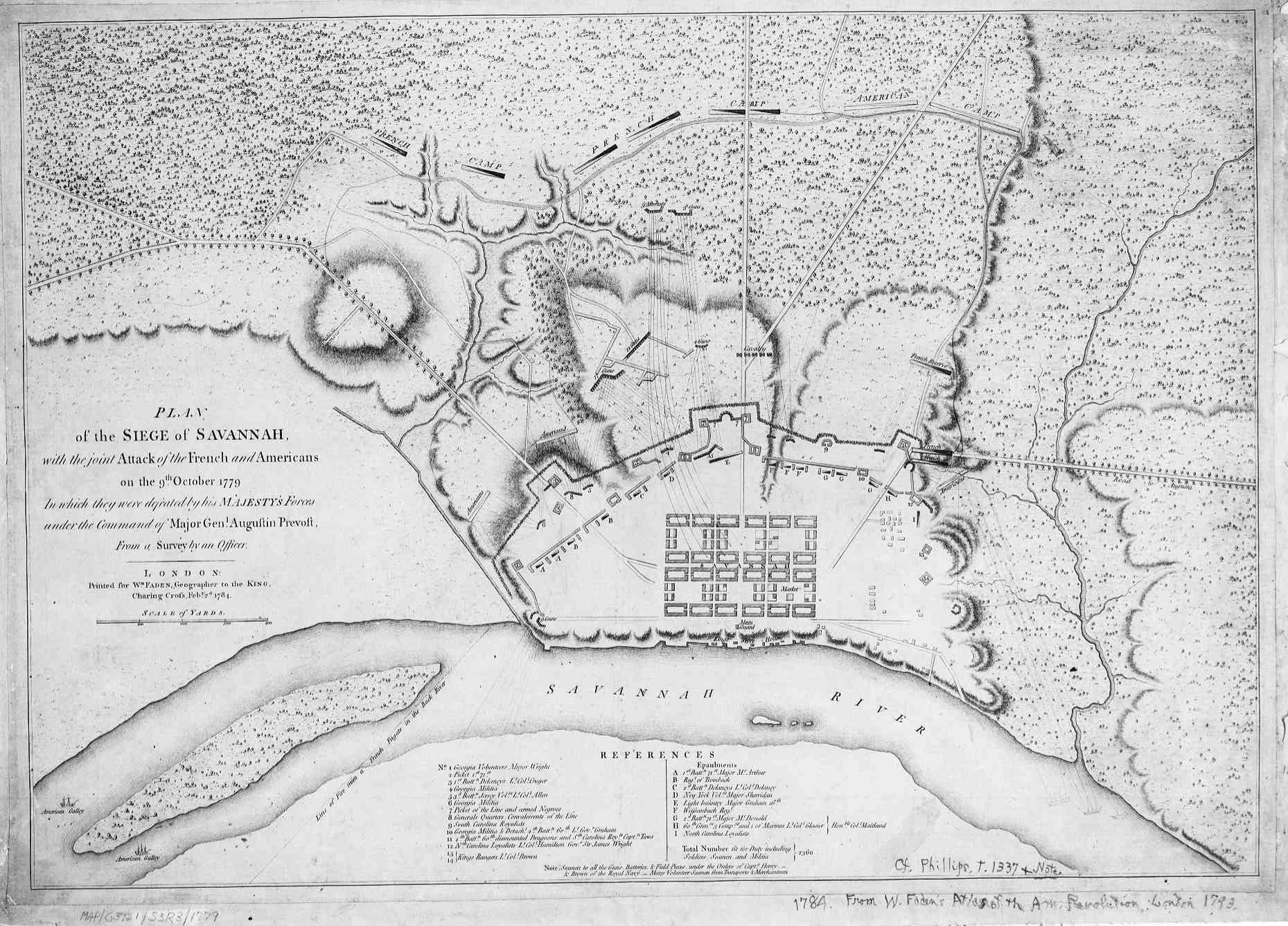
Siege of Savannah

Siege of Savannah

  • Info Details
  • Citation Terms of Use

This drawing by a British officer details the failed attempt by American and French forces to recapture Savannah from British troops on October 9, 1779.

Courtesy of Hargrett Rare Book and Manuscript Library, University of Georgia Libraries, Rare Maps Collection.

The New Georgia Encyclopedia does not hold the copyright for this media resource and can neither grant nor deny permission to republish or reproduce the image online or in print. Requests for permission to publish or reproduce the resource should be submitted to the Hargrett Manuscript and Rare Book Library at the University of Georgia.

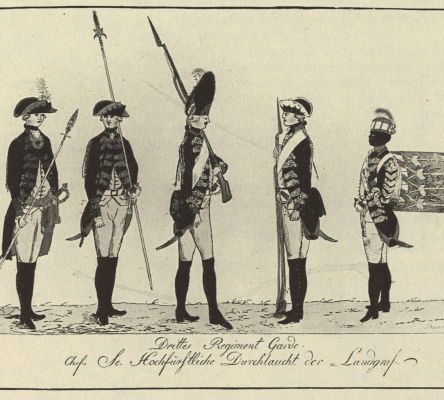
Hessian Third Guard Regiment

Hessian Third Guard Regiment

  • Info Details
  • Citation Terms of Use

This depiction of the Hessian Third Guard Regiment was engraved by J. C. Muller after a drawing by J. H. Carl, circa 1784. American soldiers during the Revolutionary War occasionally fought against Black Georgians, recruited by the British and their allies in exchange for freedom. The active participation of these Black residents contributed to the British success during the Siege of Savannah.

From The Black Presence in the Era of the American Revolution, by S. K. and E. N. Kaplan

The New Georgia Encyclopedia does not hold the copyright for this media resource and can neither grant nor deny permission to republish or reproduce the image online or in print. All requests for permission to publish or reproduce the resource must be submitted to the rights holder.

Henri Christophe

Henri Christophe

  • Info Details
  • Citation Terms of Use

Henri Christophe was a leader in the war for Haitian independence (1791-1804), and from 1807 to 1820 he served as the ruler of northern Haiti. Some historical sources credit him with serving in a French unit during the Siege of Savannah. Painting by Richard Evans, circa 1818.

From The Black Presence in the Era of the American Revolution, by S. Kaplan and E. N. Kaplan
The New Georgia Encyclopedia does not hold the copyright for this media resource and can neither grant nor deny permission to republish or reproduce the image online or in print. All requests for permission to publish or reproduce the resource must be submitted to the rights holder.

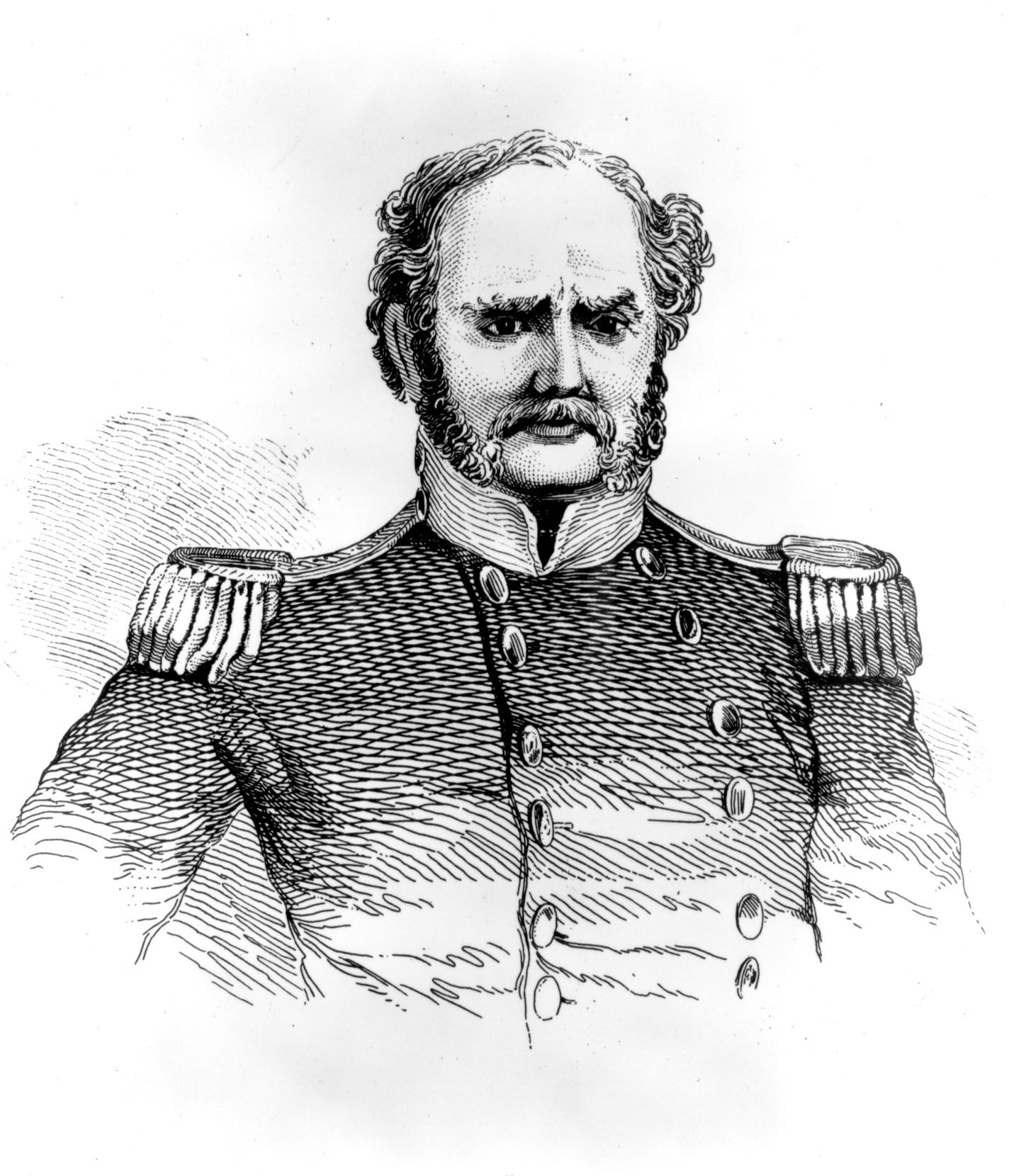
David Emanuel Twiggs

David Emanuel Twiggs

  • Info Details
  • Citation Terms of Use

David Emanuel Twiggs, a U.S. Army general, surrendered U.S. forces to Confederate authorities in Texas when that state seceded from the Union in 1861. He was the son of prominent Revolutionary War general John Twiggs and nephew of Georgia governor David Emanuel.

Courtesy of Hargrett Rare Book and Manuscript Library, University of Georgia Libraries.

The New Georgia Encyclopedia does not hold the copyright for this media resource and can neither grant nor deny permission to republish or reproduce the image online or in print. Requests for permission to publish or reproduce the resource should be submitted to the Hargrett Manuscript and Rare Book Library at the University of Georgia.

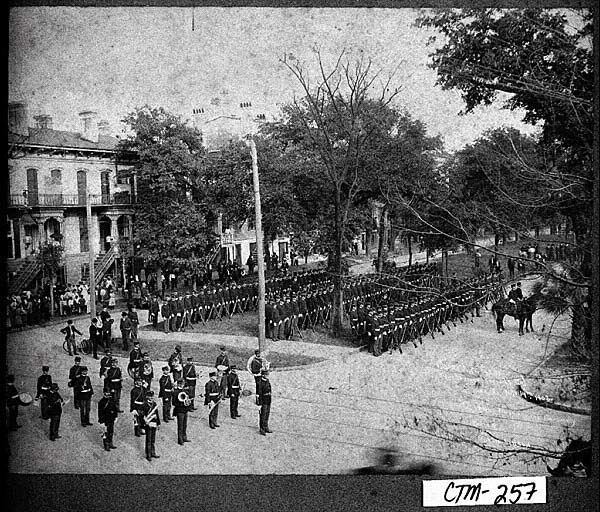
Sixtieth Regiment of Foot

Sixtieth Regiment of Foot

  • Info Details
  • Citation Terms of Use

Three companies of the British Sixtieth Regiment of Foot were sent to the Georgia colony in 1763 by King George III to strengthen the defense of colonial garrisons against attack by the French and Spanish.

Courtesy of The Company of Military Historians

The New Georgia Encyclopedia does not hold the copyright for this media resource and can neither grant nor deny permission to republish or reproduce the image online or in print. All requests for permission to publish or reproduce the resource must be submitted to the rights holder.

Etowah Mounds

Etowah Mounds

  • Info Details
  • Citation Terms of Use

The Etowah Mounds in Bartow County include one of the largest Indian mounds in North America. The mounds, constructed during the Mississippian Period, served as platforms for public buildings in a town that occupied the site from around 1100 until the 1600s.

Courtesy of Historic Preservation Division, Georgia Department of Community Affairs.

The New Georgia Encyclopedia does not hold the copyright for this media resource and can neither grant nor deny permission to republish or reproduce the image online or in print. Requests for permission to publish or reproduce the resource may need to be submitted to the Georgia Department of Community Affairs, Historic Preservation Division.

Rock Eagle

Rock Eagle

  • Info Details
  • Citation Terms of Use

Rock Eagle, a stone effigy built by Native Americans during the Woodland Period, circa A.D. 200, is located in Putnam County. The structure, made of quartz cobbles, measures 102 feet across the wings.

Courtesy of Explore Georgia, Photograph by Ralph Daniel.

The New Georgia Encyclopedia does not hold the copyright for this media resource and can neither grant nor deny permission to republish or reproduce the image online or in print. Requests for permission to publish or reproduce the resource may need to be submitted to Explore Georgia.

  • Info Details
  • Citation Terms of Use

The New Georgia Encyclopedia does not hold the copyright for this media resource and can neither grant nor deny permission to republish or reproduce the image online or in print. All requests for permission to publish or reproduce the resource must be submitted to the rights holder.

De Soto Crossing the Chattahoochee

De Soto Crossing the Chattahoochee

  • Info Details
  • Citation Terms of Use

A drawing from Lambert A. Wilmer's Life, Travels and Adventures of Ferdinand de Soto, Discoverer of the Mississippi (1859) depicts Hernando de Soto and his men crossing the Chattahoochee River. The accidental introduction of European diseases by explorers destroyed many of the civilizations along the river's banks.

Courtesy of Florida State Archives, Photographic Collection.
The New Georgia Encyclopedia does not hold the copyright for this media resource and can neither grant nor deny permission to republish or reproduce the image online or in print. All requests for permission to publish or reproduce the resource must be submitted to the rights holder.

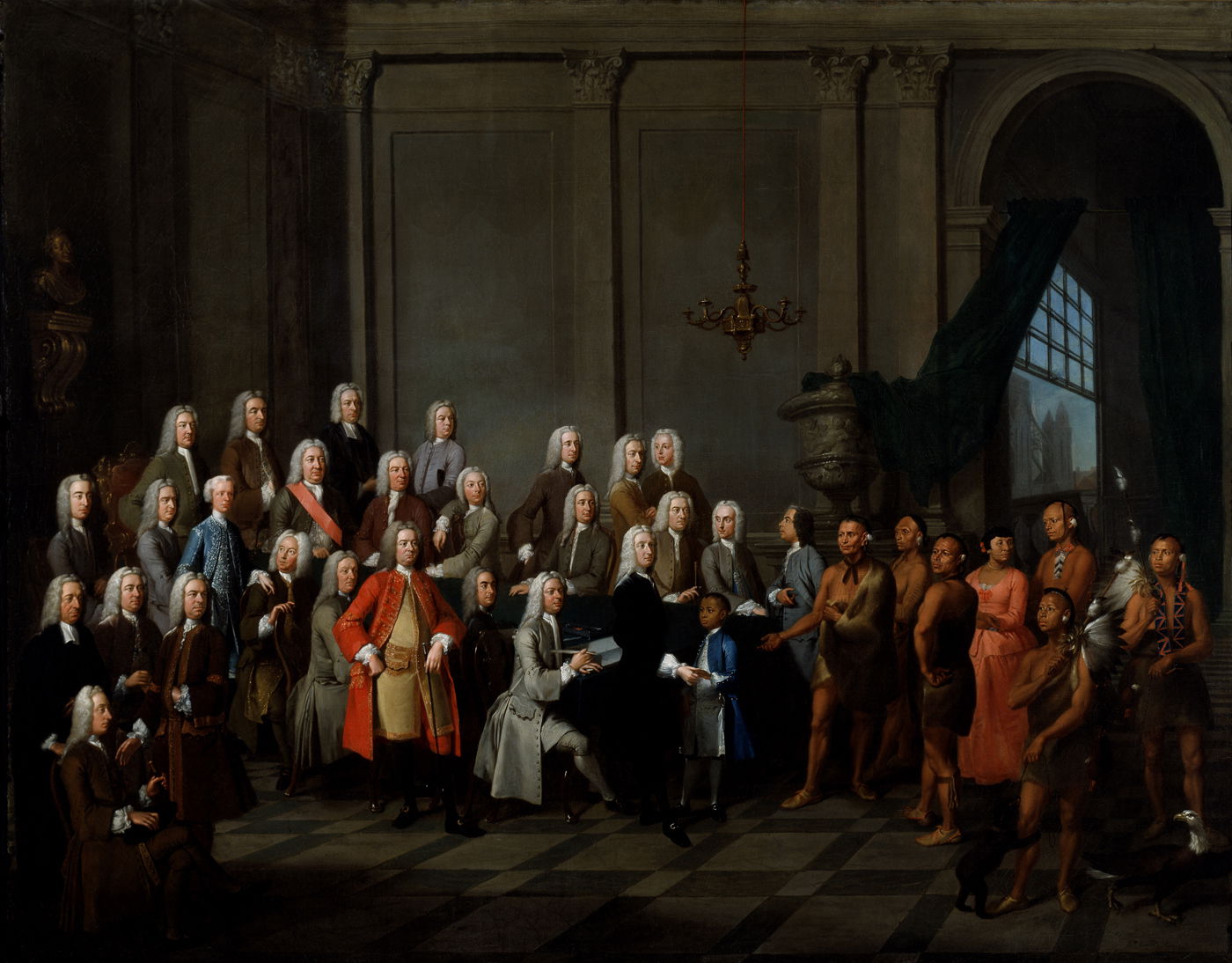
Georgia Trustees

Georgia Trustees

  • Info Details
  • Citation Terms of Use

This oil painting by William Verelst shows the founders of Georgia, the Georgia Trustees, and a delegation of Georgia Indians in July 1734. One year later the Trustees persuaded the British government to support a ban on slavery in Georgia.

Courtesy of Georgia Info, Digital Library of Georgia.

The New Georgia Encyclopedia does not hold the copyright for this media resource and can neither grant nor deny permission to republish or reproduce the image online or in print. Requests for permission to publish or reproduce the resource may need to be submitted to the Digital Library of Georgia.

  • Info Details
  • Citation Terms of Use

The New Georgia Encyclopedia does not hold the copyright for this media resource and can neither grant nor deny permission to republish or reproduce the image online or in print. All requests for permission to publish or reproduce the resource must be submitted to the rights holder.

Battle of Kettle Creek

Battle of Kettle Creek

  • Info Details
  • Citation Terms of Use

This sketch, likely a small portion of a larger work, depicts the Battle of Kettle Creek, which took place in Wilkes County on February 14, 1779, during the Revolutionary War. The original caption reads: "Engagement between the Whigs and Tories."

Courtesy of Kettle Creek Chapter of the National Society Daughters of the American Revolution

The New Georgia Encyclopedia does not hold the copyright for this media resource and can neither grant nor deny permission to republish or reproduce the image online or in print. All requests for permission to publish or reproduce the resource must be submitted to the rights holder.

Eli Whitney

Eli Whitney

  • Info Details
  • Citation Terms of Use

The inventor of the cotton gin, Eli Whitney lived in Georgia for just a year, on Catharine Greene's Mulberry Grove plantation near Savannah. After learning of the difficulty planters had with separating seeds from fibers in upland, or "short-staple," cotton, he set out to create a machine that could perform such a task more efficiently. His invention, the cotton gin, revolutionized the southern economy.

Courtesy of Library of Congress, Prints and Photographs Division

The New Georgia Encyclopedia does not hold the copyright for this media resource and can neither grant nor deny permission to republish or reproduce the image online or in print. All requests for permission to publish or reproduce the resource must be submitted to the rights holder.

  • Info Details
  • Citation Terms of Use

The New Georgia Encyclopedia does not hold the copyright for this media resource and can neither grant nor deny permission to republish or reproduce the image online or in print. All requests for permission to publish or reproduce the resource must be submitted to the rights holder.

Cherokee Trail of Tears

Cherokee Trail of Tears

  • Info Details
  • Citation Terms of Use

In his 1942 painting Cherokee Trail of Tears, Robert Lindneux depicts the forced journey of the Cherokees in 1838 to present-day Oklahoma.

Courtesy of Woolaroc Museum, Bartlesville, Oklahoma

The New Georgia Encyclopedia does not hold the copyright for this media resource and can neither grant nor deny permission to republish or reproduce the image online or in print. All requests for permission to publish or reproduce the resource must be submitted to the rights holder.

Secession Ordinance

Secession Ordinance

  • Info Details
  • Citation Terms of Use

On January 21, 1861, the ordinance of secession was publicly signed in a ceremony by Georgia politicians. Two days earlier, delegates to a convention in Milledgeville voted 208 to 89 for the state to secede from the Union.
Courtesy of Hargrett Rare Book and Manuscript Library, University of Georgia Libraries.

The New Georgia Encyclopedia does not hold the copyright for this media resource and can neither grant nor deny permission to republish or reproduce the image online or in print. Requests for permission to publish or reproduce the resource should be submitted to the Hargrett Manuscript and Rare Book Library at the University of Georgia.

Robert Toombs

Robert Toombs

  • Info Details
  • Citation Terms of Use

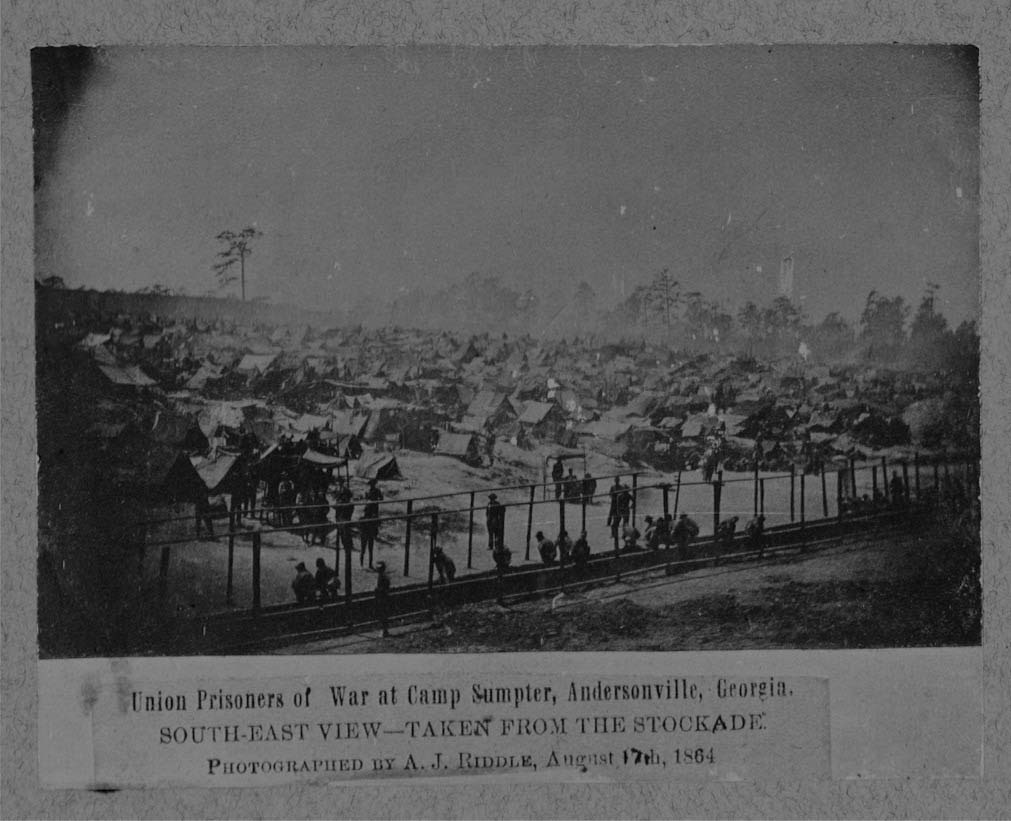
Wilkes County native Robert Toombs, pictured circa 1865, served briefly as the Confederate government's secretary of state and as a brigadier general during the Civil War.

Courtesy of Library of Congress, Prints and Photographs Division
The New Georgia Encyclopedia does not hold the copyright for this media resource and can neither grant nor deny permission to republish or reproduce the image online or in print. All requests for permission to publish or reproduce the resource must be submitted to the rights holder.

Andersonville Prison

Andersonville Prison

  • Info Details
  • Citation Terms of Use

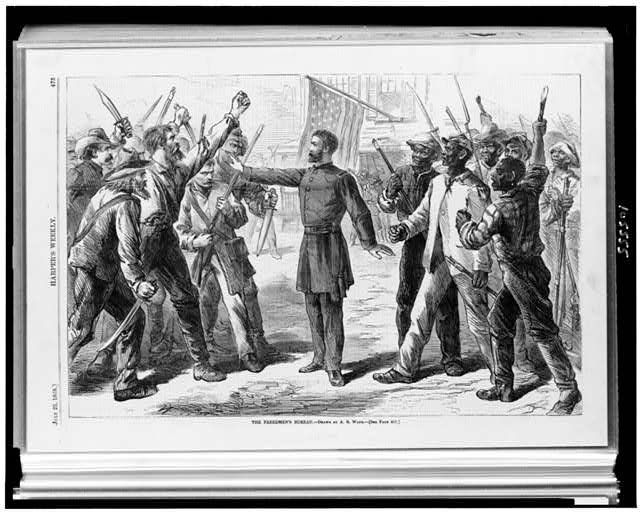
Union prisoners of war are pictured at the Andersonville Prison in Macon County on August 17, 1864. Malnutrition and poor sanitary conditions at the camp led to the deaths of nearly 13,000 of Andersonville's 45,000 prisoners, the highest mortality rate of any Civil War prison.

Courtesy of Civil War Treasures, New-York Historical Society
The New Georgia Encyclopedia does not hold the copyright for this media resource and can neither grant nor deny permission to republish or reproduce the image online or in print. All requests for permission to publish or reproduce the resource must be submitted to the rights holder.

Freedmen’s Bureau

Freedmen’s Bureau

  • Info Details
  • Citation Terms of Use

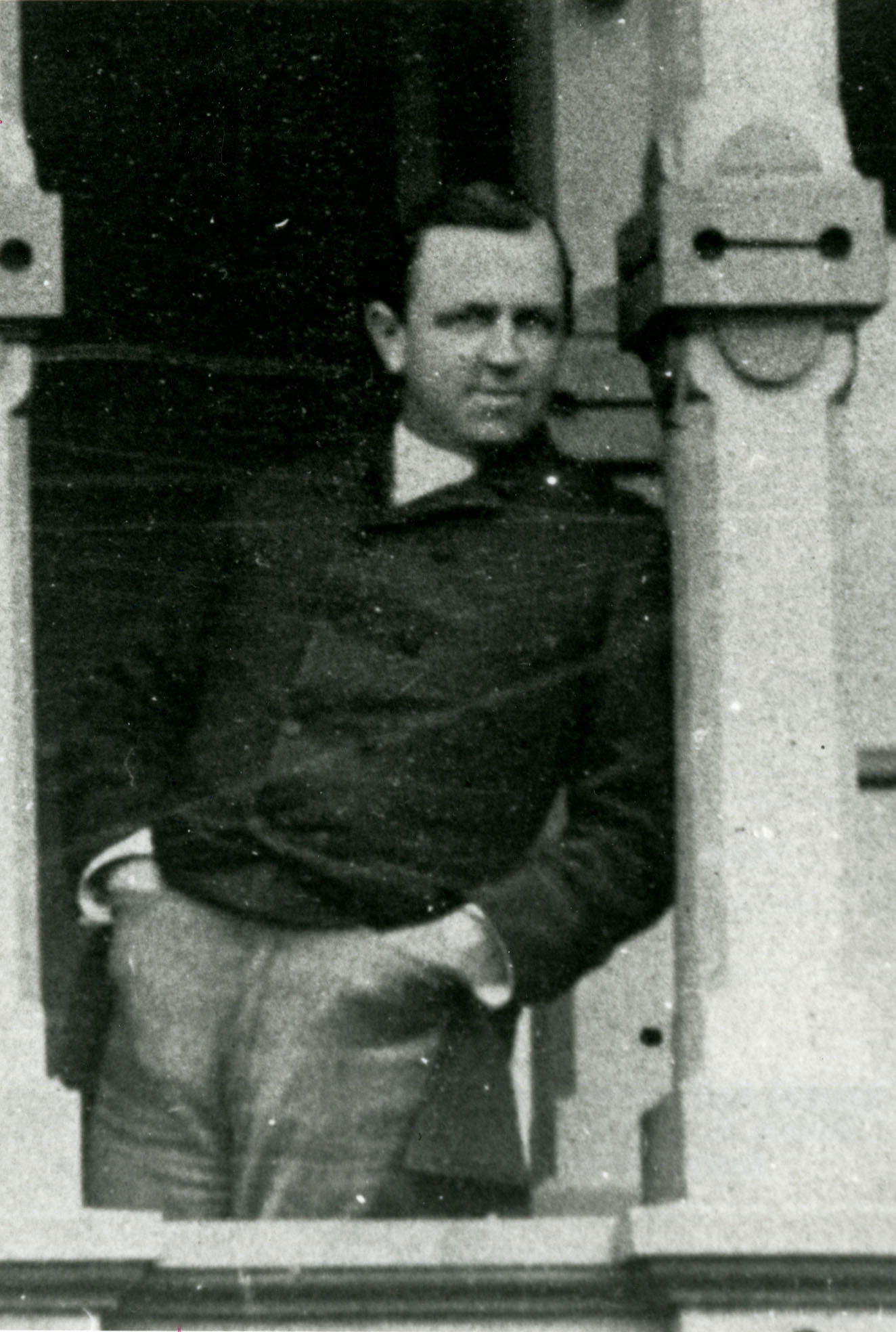
An 1868 sketch by A. R. Waud illustrates the difficulties faced by the Freedmen's Bureau, caught between white planters on one side (left) and formerly enslaved African Americans on the other (right). The bureau was established in 1865 after Union general William T. Sherman issued his Field Order No. 15, which called for the resettlement of freedpeople on confiscated lands.

Courtesy of Library of Congress, Prints and Photographs Division
The New Georgia Encyclopedia does not hold the copyright for this media resource and can neither grant nor deny permission to republish or reproduce the image online or in print. All requests for permission to publish or reproduce the resource must be submitted to the rights holder.

Henry W. Grady

Henry W. Grady

  • Info Details
  • Citation Terms of Use

With his New South platform, Henry W. Grady advocated unity and trust between the North and South and helped to spur northern investment in Atlanta industries.

Courtesy of Stuart A. Rose Manuscript, Archives, and Rare Book Library, Emory University, Henry Woodfin Grady Papers.
The New Georgia Encyclopedia does not hold the copyright for this media resource and can neither grant nor deny permission to republish or reproduce the image online or in print. For more information about this resource, contact the Stuart A. Rose Manuscript, Archives, and Rare Book Library at Emory University.

Sharecroppers

Sharecroppers

  • Info Details
  • Citation Terms of Use

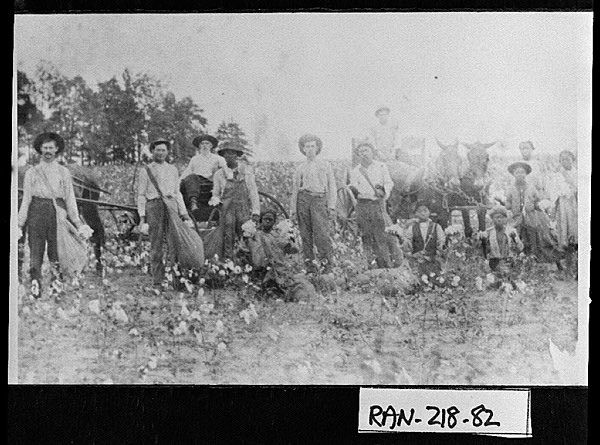
Sharecroppers, pictured in 1910, harvest cotton in Randolph County. Theoretically beneficial to both laborers and landowners, the sharecropping system typically left workers in deep debt to their landlords and creditors from one harvest season to the next.

Courtesy of Georgia Archives, Vanishing Georgia, #ran218-82.

View on partner site

The New Georgia Encyclopedia does not hold the copyright for this media resource and can neither grant nor deny permission to republish or reproduce the image online or in print. Requests for permission to publish or reproduce the resource should be submitted to the Georgia Archives.

Thomas E. Watson

Thomas E. Watson

  • Info Details
  • Citation Terms of Use

In 1892 Georgia politics was shaken by the arrival of the Populist Party. Led by Thomas E. Watson of McDuffie County, this new party mainly appealed to white farmers, many of whom had been impoverished by debt and low cotton prices in the 1880s and 1890s. The Populists also attempted to win the support of Black farmers away from the Republican Party.

Courtesy of Georgia Historical Society.

The New Georgia Encyclopedia does not hold the copyright for this media resource and can neither grant nor deny permission to republish or reproduce the image online or in print. All requests for permission to publish or reproduce the resource must be submitted to Georgia Historical Society.

  • Info Details
  • Citation Terms of Use

The New Georgia Encyclopedia does not hold the copyright for this media resource and can neither grant nor deny permission to republish or reproduce the image online or in print. All requests for permission to publish or reproduce the resource must be submitted to the rights holder.

  • Info Details
  • Citation Terms of Use

The New Georgia Encyclopedia does not hold the copyright for this media resource and can neither grant nor deny permission to republish or reproduce the image online or in print. All requests for permission to publish or reproduce the resource must be submitted to the rights holder.

Roosevelts in Atlanta

Roosevelts in Atlanta

  • Info Details
  • Citation Terms of Use

U.S. president Franklin D. Roosevelt and his wife, Eleanor Roosevelt, visit Atlanta in 1935, during the Great Depression. From left: Franklin D. and Eleanor Roosevelt, U.S. senator Walter F. George, and U.S. senator Richard B. Russell Jr.

Courtesy of Richard B. Russell Library for Political Research and Studies, University of Georgia Libraries.

The New Georgia Encyclopedia does not hold the copyright for this media resource and can neither grant nor deny permission to republish or reproduce the image online or in print. Requests for permission to publish or reproduce the resource may need to be submitted to the Richard B. Russell Library for Political Research and Studies at the University of Georgia.

Ben Epps

Ben Epps

  • Info Details
  • Citation Terms of Use

Georgia aviation pioneer Ben Epps is pictured with his first airplane outside his garage in Athens, 1907.

Courtesy of Georgia Archives, Vanishing Georgia, #
clr176-83.
View on partner site

The New Georgia Encyclopedia does not hold the copyright for this media resource and can neither grant nor deny permission to republish or reproduce the image online or in print. Requests for permission to publish or reproduce the resource should be submitted to the Georgia Archives.

Fort Benning

Fort Benning

  • Info Details
  • Citation Terms of Use

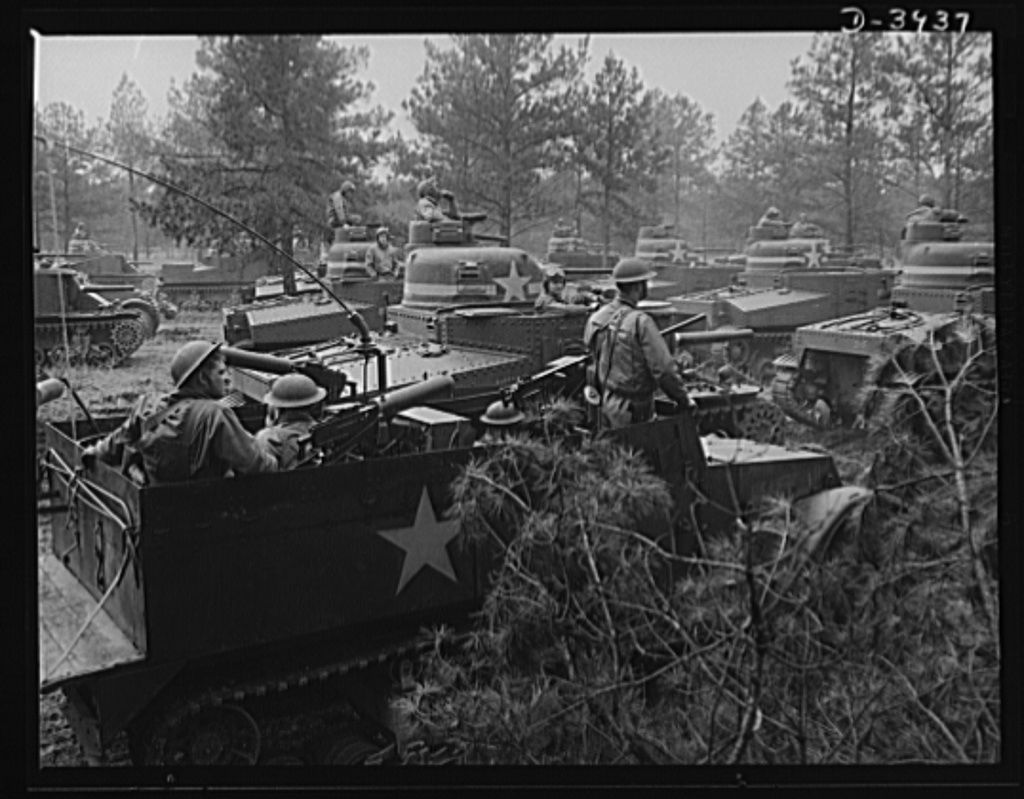
U.S. soldiers, pictured in the spring of 1942, undergo training at Fort Benning in Columbus. During World War II Fort Benning was the largest infantry training post in the world.

Courtesy of Library of Congress, Prints and Photographs Division

The New Georgia Encyclopedia does not hold the copyright for this media resource and can neither grant nor deny permission to republish or reproduce the image online or in print. All requests for permission to publish or reproduce the resource must be submitted to the rights holder.

Segregation Protest

Segregation Protest

  • Info Details
  • Citation Terms of Use

Students protest segregation at the state capitol building in Atlanta on February 1, 1962. The passage of the federal Civil Rights Act in 1964 and the Voting Rights Act in 1965 ended legal segregation across the nation.

Courtesy of Atlanta Journal-Constitution.

The New Georgia Encyclopedia does not hold the copyright for this media resource and can neither grant nor deny permission to republish or reproduce the image online or in print. All requests for permission to publish or reproduce the resource must be submitted to the Atlanta Journal-Constitution.

Integration of Atlanta Schools

Integration of Atlanta Schools

  • Info Details
  • Citation Terms of Use

Reporters gather at Atlanta's city hall on August 30, 1961, the day that the city's schools were officially integrated. The recommendations of the Sibley Commission to the state legislature in 1960 contributed to the desegregation of schools across Georgia.

Courtesy of Special Collections & Archives, Georgia State University Library, Lane Brothers Commercial Photographers Photographic Collection.

The New Georgia Encyclopedia does not hold the copyright for this media resource and can neither grant nor deny permission to republish or reproduce the image online or in print. Requests for permission to publish or reproduce the resource should be submitted to Special Collections and Archives at Georgia State University.

Hunter and Holmes, UGA

Hunter and Holmes, UGA

  • Info Details
  • Citation Terms of Use

Charlayne Hunter and Hamilton Holmes, the first Black students to enroll at the University of Georgia, are pictured here at the end of their first day on campus in January 1961.

Courtesy of Atlanta Journal-Constitution.
The New Georgia Encyclopedia does not hold the copyright for this media resource and can neither grant nor deny permission to republish or reproduce the image online or in print. All requests for permission to publish or reproduce the resource must be submitted to the Atlanta Journal-Constitution.

Albany Movement

Albany Movement

  • Info Details
  • Citation Terms of Use

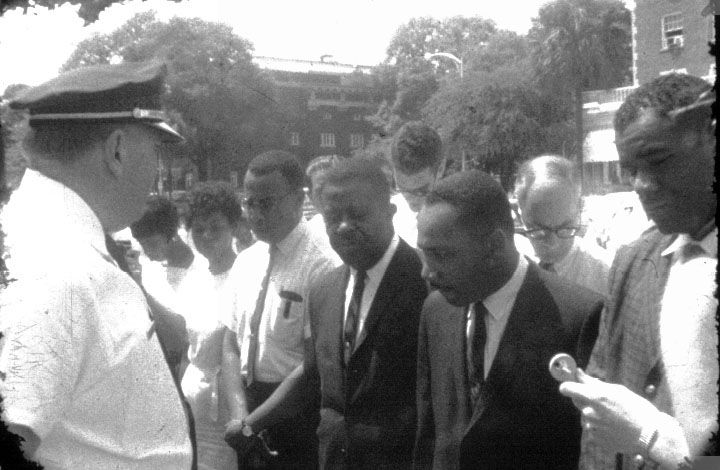
Martin Luther King Jr. (second from right) and Ralph David Abernathy (third from right) pray during their arrest in Albany on July 27, 1962. William G. Anderson, the president of the Albany Movement, asked King and Abernathy to help with efforts to desegregate the city.

Courtesy of Walter J. Brown Media Archives and Peabody Awards Collection, University of Georgia Libraries.

The New Georgia Encyclopedia does not hold the copyright for this media resource and can neither grant nor deny permission to republish or reproduce the image online or in print. All requests for permission to publish or reproduce the resource must be submitted to the Walter J. Brown Media Archives and Peabody Awards Collection.

Carl Sanders

Carl Sanders

  • Info Details
  • Citation Terms of Use

Augusta native Carl Sanders, elected governor of Georgia in 1962, brought the state into compliance with federal civil rights law during his single term in office.

Courtesy of Hargrett Rare Book and Manuscript Library, University of Georgia Libraries.

The New Georgia Encyclopedia does not hold the copyright for this media resource and can neither grant nor deny permission to republish or reproduce the image online or in print. Requests for permission to publish or reproduce the resource should be submitted to the Hargrett Manuscript and Rare Book Library at the University of Georgia.

Lester Maddox, 1964

Lester Maddox, 1964

  • Info Details
  • Citation Terms of Use

In 1966 Lester Maddox defeated former governor Ellis Arnall in the Democratic gubernatorial primary in a major political upset. Subsequently, as a result of a close race between Maddox and Republican Bo Callaway, the General Assembly chose Maddox as governor.

Courtesy of Richard B. Russell Library for Political Research and Studies, University of Georgia Libraries.

The New Georgia Encyclopedia does not hold the copyright for this media resource and can neither grant nor deny permission to republish or reproduce the image online or in print. Requests for permission to publish or reproduce the resource may need to be submitted to the Richard B. Russell Library for Political Research and Studies at the University of Georgia.

Hamilton Jordan and Jimmy Carter

Hamilton Jordan and Jimmy Carter

  • Info Details
  • Citation Terms of Use

U.S. president Jimmy Carter (right) meets with Hamilton Jordan in the Oval Office of the White House in 1977. Jordan served as Carter's chief of staff from 1977 to 1980.

Courtesy of Jimmy Carter Presidential Library and Museum.

The New Georgia Encyclopedia does not hold the copyright for this media resource and can neither grant nor deny permission to republish or reproduce the image online or in print. Requests for permission to publish or reproduce the resource may need to be submitted to the Jimmy Carter Presidential Library and Museum.

  • Info Details
  • Citation Terms of Use

The New Georgia Encyclopedia does not hold the copyright for this media resource and can neither grant nor deny permission to republish or reproduce the image online or in print. All requests for permission to publish or reproduce the resource must be submitted to the rights holder.

Peanut Farming

Peanut Farming

  • Info Details
  • Citation Terms of Use

Georgia farmers lead the United States in peanut production, raising approximately 45 percent of the nation's total harvest. Grown in most south Georgia counties, peanuts are the official state crop.

Courtesy of Explore Georgia, Photograph by Ralph Daniel.

The New Georgia Encyclopedia does not hold the copyright for this media resource and can neither grant nor deny permission to republish or reproduce the image online or in print. Requests for permission to publish or reproduce the resource may need to be submitted to Explore Georgia.

  • Info Details
  • Citation Terms of Use

The New Georgia Encyclopedia does not hold the copyright for this media resource and can neither grant nor deny permission to republish or reproduce the image online or in print. All requests for permission to publish or reproduce the resource must be submitted to the rights holder.

Latino Workers

Latino Workers

  • Info Details
  • Citation Terms of Use

Latino workers plant loblolly pine seedlings in 1999 near Bremen, in Haralson County. Latino immigrants came to Georgia in large numbers during the 1980s and 1990s to work in the agriculture, construction, carpet, and poultry processing industries.

Courtesy of Atlanta Journal-Constitution.

The New Georgia Encyclopedia does not hold the copyright for this media resource and can neither grant nor deny permission to republish or reproduce the image online or in print. All requests for permission to publish or reproduce the resource must be submitted to the Atlanta Journal-Constitution.

St. Simons Tourists

St. Simons Tourists

  • Info Details
  • Citation Terms of Use

Tourists on St. Simons Island gather outside one of the island's many shops. The island suffered an economic depression at the end of the cotton era in the 1830s, but its fortunes reversed with the arrival of the timber industry in the 1870s. Today St. Simons enjoys a strong tourist industry.

Courtesy of Explore Georgia.

The New Georgia Encyclopedia does not hold the copyright for this media resource and can neither grant nor deny permission to republish or reproduce the image online or in print. Requests for permission to publish or reproduce the resource may need to be submitted to Explore Georgia.

James Oglethorpe

James Oglethorpe

  • Info Details
  • Citation Terms of Use

James Oglethorpe, a leader in the British movement to found a new colony in America, set sail for the new world on November 17, 1732, accompanied by Georgia's first settlers.

Courtesy of Hargrett Rare Book and Manuscript Library, University of Georgia Libraries.

The New Georgia Encyclopedia does not hold the copyright for this media resource and can neither grant nor deny permission to republish or reproduce the image online or in print. Requests for permission to publish or reproduce the resource should be submitted to the Hargrett Manuscript and Rare Book Library at the University of Georgia.

Infantry: Continental Army, 1779-1783

Infantry: Continental Army, 1779-1783

  • Info Details
  • Citation Terms of Use

Henry Alexander's lithograph Infantry: Continental Army, 1779-1783 depicts the uniforms and weapons used by the Continental Army during the Revolutionary War.

Courtesy of Library of Congress, Prints and Photographs Division

The New Georgia Encyclopedia does not hold the copyright for this media resource and can neither grant nor deny permission to republish or reproduce the image online or in print. All requests for permission to publish or reproduce the resource must be submitted to the rights holder.

Nathanael Greene

Nathanael Greene

  • Info Details
  • Citation Terms of Use

Nathanael Greene was one of the most respected generals of the Revolutionary War and a talented military strategist. As commander of the Southern Department of the Continental army, his leadership was the catalyst that turned the tide toward American victory in Georgia.

Courtesy of Independence National Historical Park

The New Georgia Encyclopedia does not hold the copyright for this media resource and can neither grant nor deny permission to republish or reproduce the image online or in print. All requests for permission to publish or reproduce the resource must be submitted to the rights holder.

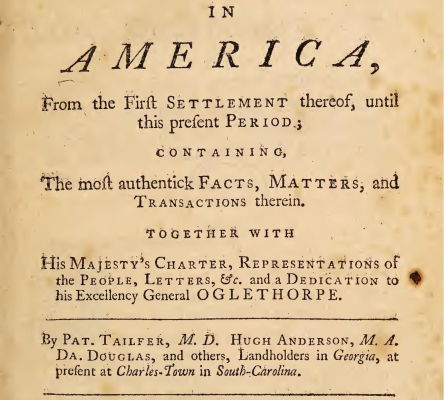
Tailfer’s Title Page

Tailfer’s Title Page

  • Info Details
  • Citation Terms of Use

During the 1730s, Scottish settler Patrick Tailfer led a group of colonists, knowns as the Malcontents, in protest of various laws and policies enforced by the Georgia Trustees. His 1740 tract, entitled A True and Historical Narrative of the Colony of Georgia, was read in influential circles but failed to make a substantial impact on the circumstances of the Malcontents.

From A True and Historical Narrative of the Colony of Georgia in America, by P. Tailfer
The New Georgia Encyclopedia does not hold the copyright for this media resource and can neither grant nor deny permission to republish or reproduce the image online or in print. All requests for permission to publish or reproduce the resource must be submitted to the rights holder.

Bushnell’s Submarine

Bushnell’s Submarine

  • Info Details
  • Citation Terms of Use

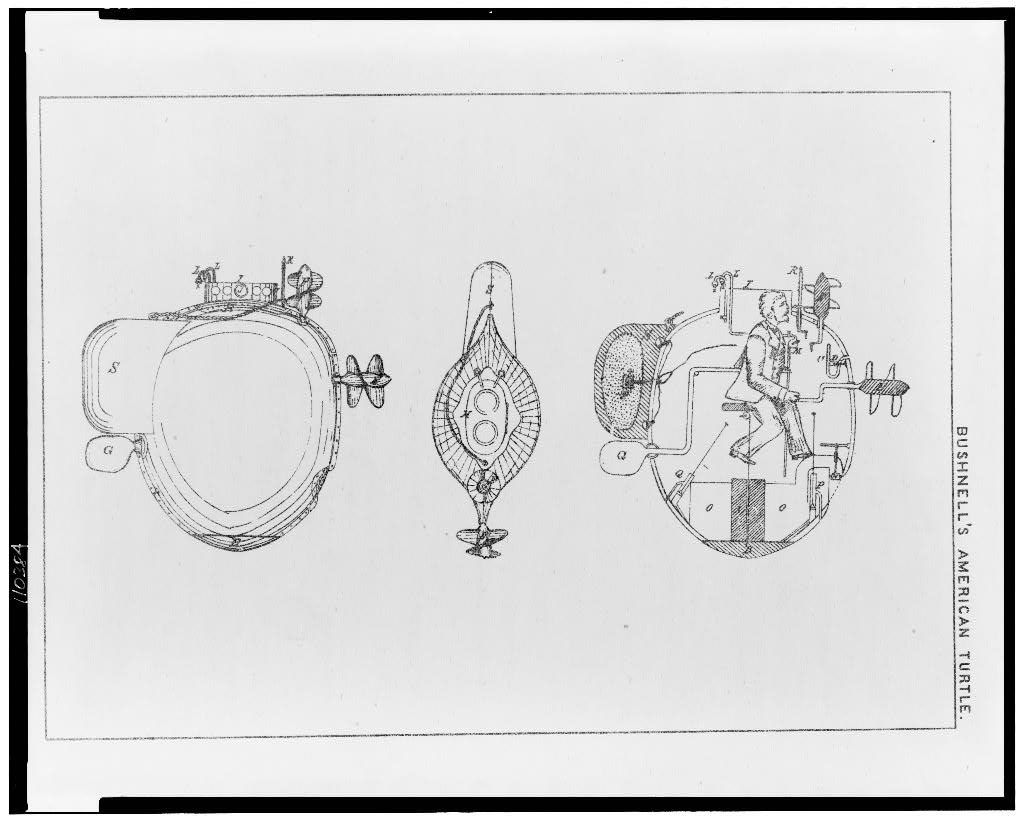
Connecticut native and, later, Georgia resident David Bushnell invented the submarine. He created the first prototype of a manned submarine, called the "Turtle," in the 1770s. His design was used in the Revolutionary War against the British.

Courtesy of Library of Congress, Prints and Photographs Division

The New Georgia Encyclopedia does not hold the copyright for this media resource and can neither grant nor deny permission to republish or reproduce the image online or in print. All requests for permission to publish or reproduce the resource must be submitted to the rights holder.

Cotton Gin

Cotton Gin

  • Info Details
  • Citation Terms of Use

An original model of an Eli Whitney cotton gin (circa 1800) is on display in Washington, D.C., at the National Museum of American History.

Image from National Museum of American History, Smithsonian Institution
View on source site

The New Georgia Encyclopedia does not hold the copyright for this media resource and can neither grant nor deny permission to republish or reproduce the image online or in print. All requests for permission to publish or reproduce the resource must be submitted to the rights holder.

Eli Whitney Stamp

Eli Whitney

  • Info Details
  • Citation Terms of Use

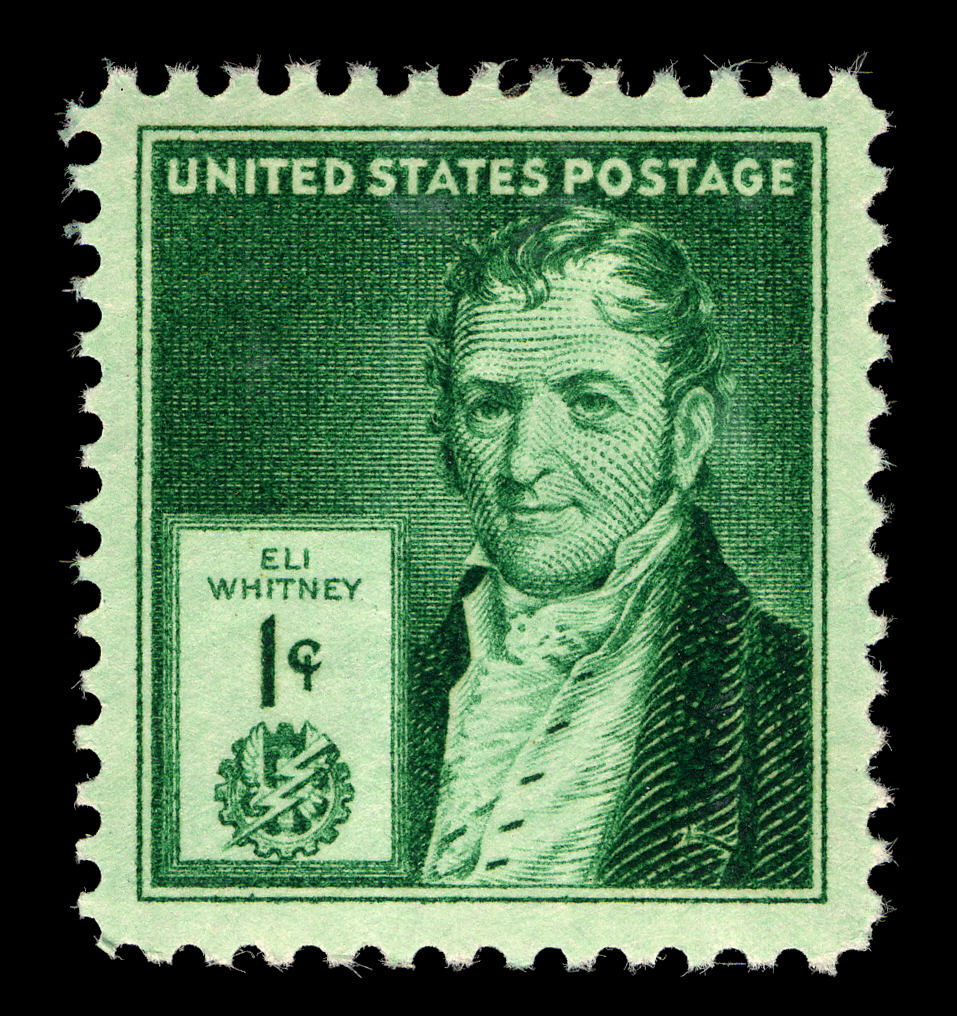
Eli Whitney's cotton gin revolutionized the southern economy. Within only a few years, cotton replaced indigo and tobacco as the region's major cash crop. This 1940 postage stamp commemorates Whitney and his invention.

Courtesy of the Smithsonian National Postal Museum

The New Georgia Encyclopedia does not hold the copyright for this media resource and can neither grant nor deny permission to republish or reproduce the image online or in print. All requests for permission to publish or reproduce the resource must be submitted to the rights holder.

Count Casimir Pulaski

Count Casimir Pulaski

  • Info Details
  • Citation Terms of Use

Count Casimir Pulaski was one of Georgia's most notable military heroes during the Revolutionary War. A Polish nobleman, Pulaski was killed while leading an unsuccessful charge against the British during the 1779 Siege of Savannah.

Courtesy of Georgia Historical Society, Foltz Photography Studio (Savannah, Ga.), photographs, 1899-1960, #GHS 1360-25-13-14.
View on partner site

The New Georgia Encyclopedia does not hold the copyright for this media resource and can neither grant nor deny permission to republish or reproduce the image online or in print. All requests for permission to publish or reproduce the resource must be submitted to Georgia Historical Society.

Fort Pulaski

Fort Pulaski

  • Info Details
  • Citation Terms of Use

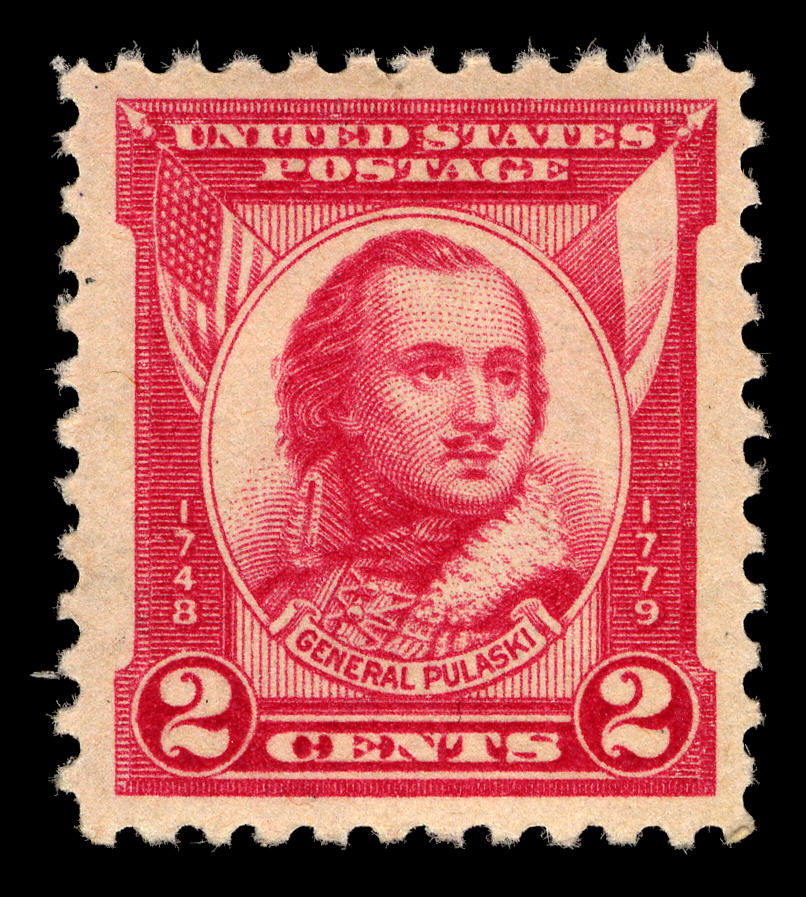
Fort Pulaski, situated on Cockspur Island at the mouth of the Savannah River, was built in the 1830s and 1840s to defend Savannah. During the Civil War, Union forces captured the fort on April 11, 1862, and controlled it for the remainder of the war.

Photograph by Brooke Novak
The New Georgia Encyclopedia does not hold the copyright for this media resource and can neither grant nor deny permission to republish or reproduce the image online or in print. All requests for permission to publish or reproduce the resource must be submitted to the rights holder.

Casimir Pulaski Stamp

Casimir Pulaski

  • Info Details
  • Citation Terms of Use

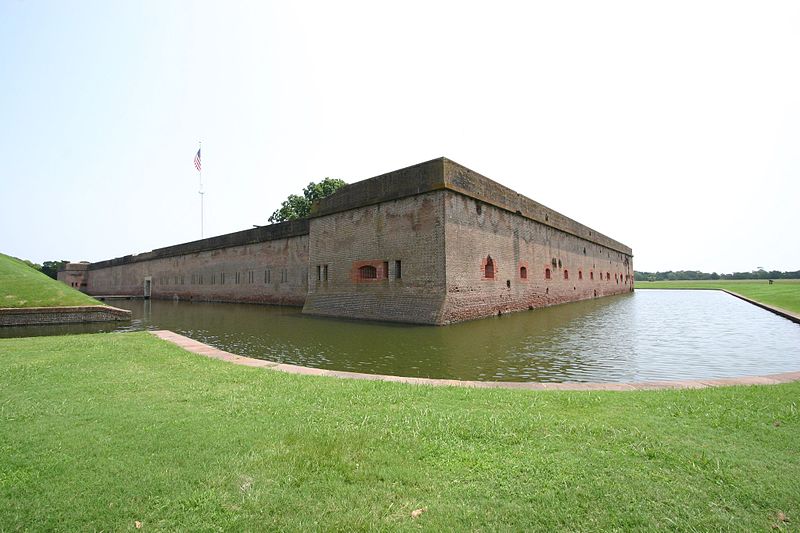
General Casimir Pulaski, featured on this 1931 U.S. postage stamp, joined American forces in the Revolutionary War. Fort Pulaski, near the mouth of the Savannah River, bears his name.

Courtesy of the Smithsonian National Postal Museum

The New Georgia Encyclopedia does not hold the copyright for this media resource and can neither grant nor deny permission to republish or reproduce the image online or in print. All requests for permission to publish or reproduce the resource must be submitted to the rights holder.

books

books

  • Info Details
  • Citation Terms of Use

The New Georgia Encyclopedia does not hold the copyright for this media resource and can neither grant nor deny permission to republish or reproduce the image online or in print. All requests for permission to publish or reproduce the resource must be submitted to the rights holder.

Land Grant to Austin Dabney

Land Grant to Austin Dabney

  • Info Details
  • Citation Terms of Use

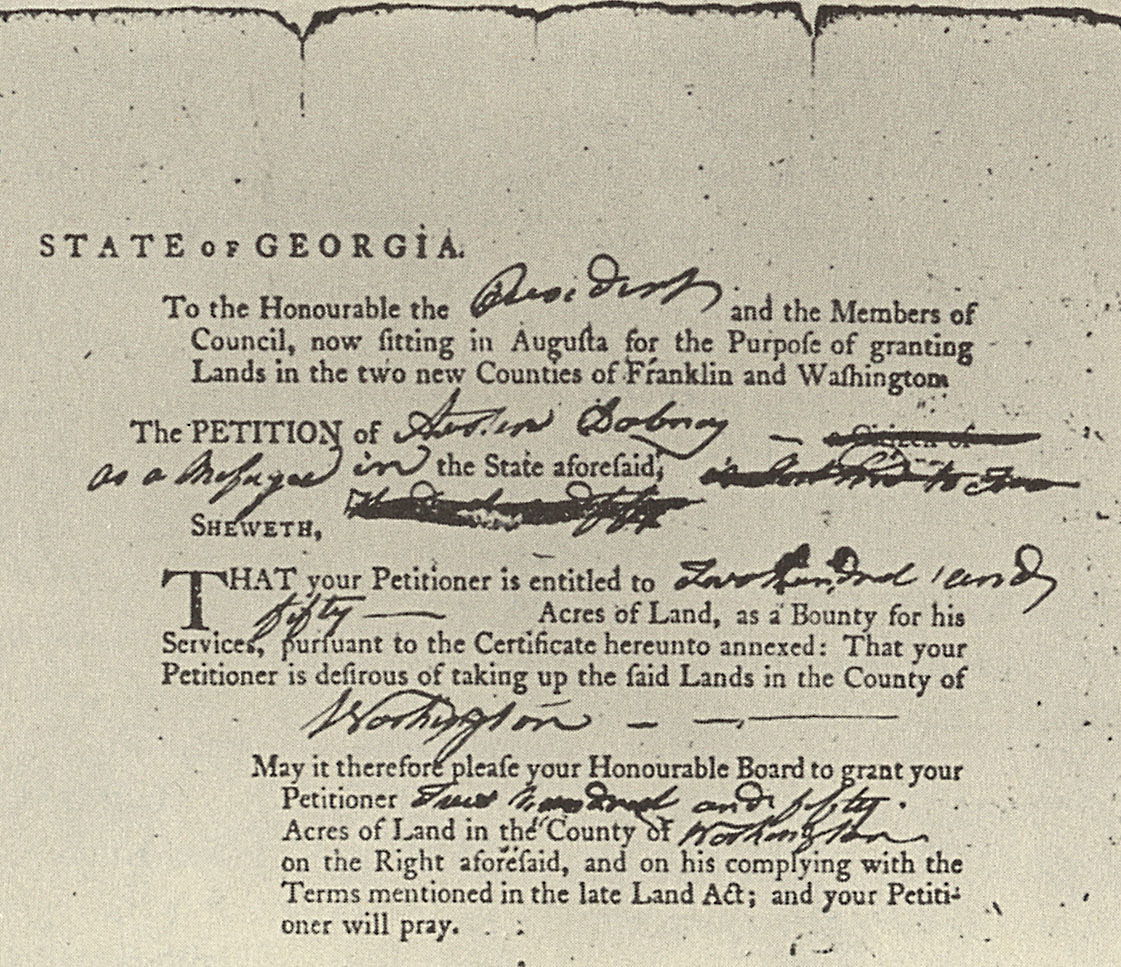
Austin Dabney, an enslaved Georgian, earned freedom in exchange for his service in the patriot army. Dabney was banned from participating in the land lottery open to Revolutionary War veterans in 1819, but the legislature granted him acreage in Washington County in 1821.

From The Black Presence in the Era of the American Revolution, by S. Kaplan and E. N. Kaplan

The New Georgia Encyclopedia does not hold the copyright for this media resource and can neither grant nor deny permission to republish or reproduce the image online or in print. All requests for permission to publish or reproduce the resource must be submitted to the rights holder.

John Milledge

John Milledge

  • Info Details
  • Citation Terms of Use

John Milledge, a veteran of the Revolutionary War, served as the state attorney general and in the state legislature before being elected governor of Georgia in 1802. Milledgeville, which served as the state capital for much of the nineteenth century, was named in his honor.

Courtesy of Georgia Capitol Museum, University of Georgia Libraries

The New Georgia Encyclopedia does not hold the copyright for this media resource and can neither grant nor deny permission to republish or reproduce the image online or in print. All requests for permission to publish or reproduce the resource must be submitted to the rights holder.

James Oglethorpe

James Oglethorpe

  • Info Details
  • Citation Terms of Use

James Oglethorpe, along with a twenty-one-member Board of Trustees, founded the colony of Georgia in 1733 and directed its development for nearly a decade. Although the board appointed Anglican clergy to the new colony, Oglethorpe welcomed settlers of a variety of religious persuasions.

Courtesy of Oglethorpe University

The New Georgia Encyclopedia does not hold the copyright for this media resource and can neither grant nor deny permission to republish or reproduce the image online or in print. All requests for permission to publish or reproduce the resource must be submitted to the rights holder.

Christ Church of Savannah

Christ Church of Savannah

  • Info Details
  • Citation Terms of Use

Christ Church of Savannah, the first Anglican church to be established in the Georgia colony, was founded by Henry Herbert in 1733. The current church building, the third to be constructed on the site since 1744, was completed in 1838.

Image from Roman Eugeniusz

The New Georgia Encyclopedia does not hold the copyright for this media resource and can neither grant nor deny permission to republish or reproduce the image online or in print. All requests for permission to publish or reproduce the resource must be submitted to the rights holder.

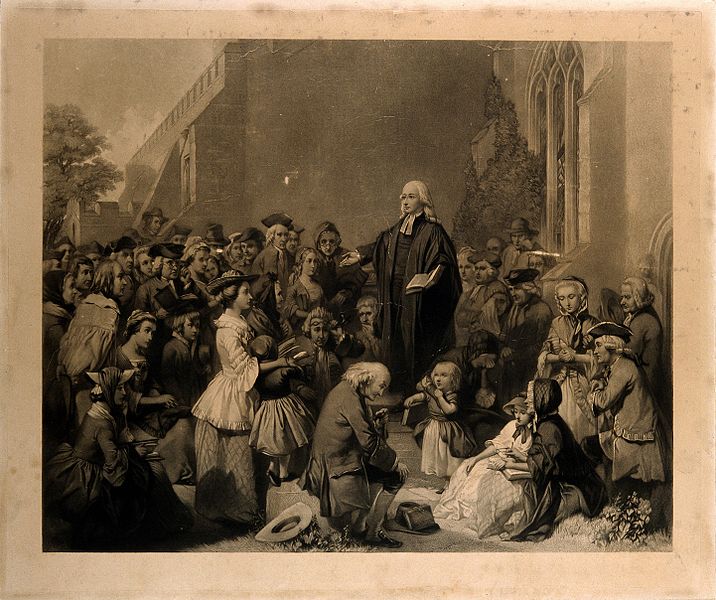
John Wesley Preaching

John Wesley Preaching

  • Info Details
  • Citation Terms of Use

John Wesley, appointed an Anglican rector for the Georgia colony in 1735, served at Christ Church in Savannah. Influenced by his interactions with Moravians during his time in Georgia, Wesley founded Methodism after his return to England in 1737.

Photograph from Wellcome Trust, Wikimedia

The New Georgia Encyclopedia does not hold the copyright for this media resource and can neither grant nor deny permission to republish or reproduce the image online or in print. All requests for permission to publish or reproduce the resource must be submitted to the rights holder.

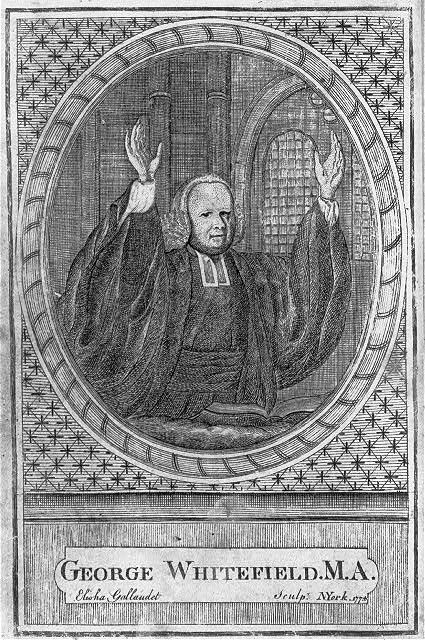
George Whitefield

George Whitefield

  • Info Details
  • Citation Terms of Use

An engraving of Anglican minister George Whitefield, created in 1774, depicts him preaching at a church in New York. A popular figure of the eighteenth-century Great Awakening in America, Whitefield founded the Bethesda orphanage near Savannah in 1740.

Courtesy of Library of Congress, Prints and Photographs Division

The New Georgia Encyclopedia does not hold the copyright for this media resource and can neither grant nor deny permission to republish or reproduce the image online or in print. All requests for permission to publish or reproduce the resource must be submitted to the rights holder.

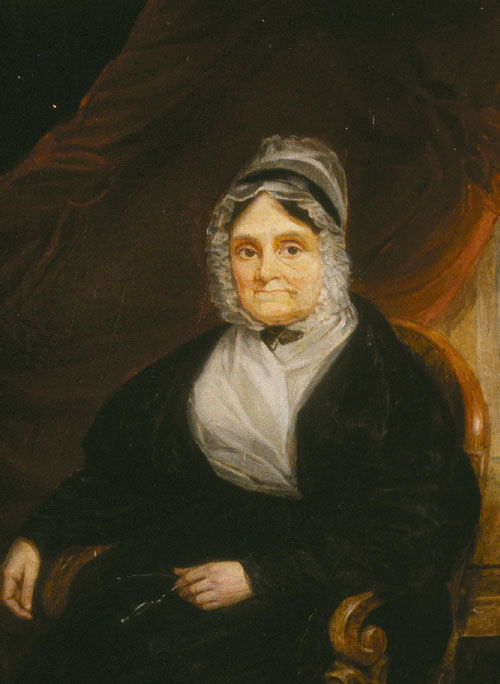
Sarah Gibbons Telfair

Sarah Gibbons Telfair

  • Info Details
  • Citation Terms of Use

Sarah Gibbons was born into one of the wealthiest families in the Georgia colony. In 1774 she married Edward Telfair, a prominent planter and merchant in Savannah, and the couple had seven children who survived infancy. Portrait by unknown artist, oil on board (8 1/4" x 7"), date unknown.

Courtesy of Telfair Museums.

The New Georgia Encyclopedia does not hold the copyright for this media resource and can neither grant nor deny permission to republish or reproduce the image online or in print. All requests for permission to publish or reproduce the resource must be submitted to Telfair Museums.

Plan of Petersburg

Plan of Petersburg

  • Info Details
  • Citation Terms of Use

This town of Petersburg, once the third largest in Georgia, stood in the forks of the Broad and Savannah rivers. Established in 1786, the town was submerged by the man-made Clarks Hill Lake in the early 1950s. This map, compiled by historian E. Merton Coulter from data in the Elbert County deed records, approximates the layout of the town during its heyday in the late eighteenth and early nineteenth centuries.

From Old Petersburg and the Broad River Valley of Georgia, by E. M. Coulter

The New Georgia Encyclopedia does not hold the copyright for this media resource and can neither grant nor deny permission to republish or reproduce the image online or in print. All requests for permission to publish or reproduce the resource must be submitted to the rights holder.

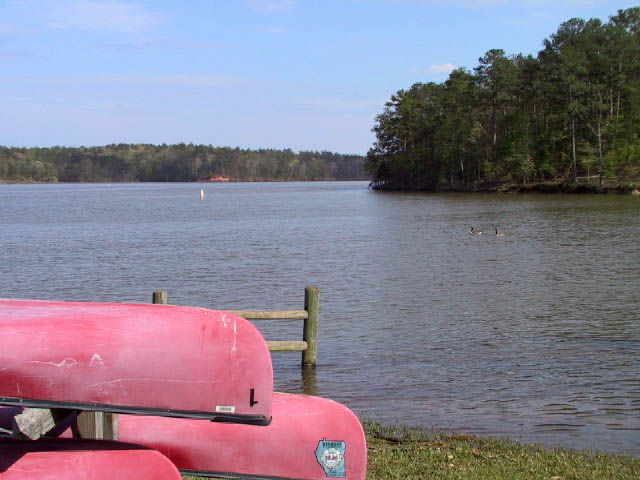
Bobby Brown State Park

Bobby Brown State Park

  • Info Details
  • Citation Terms of Use

One of two major recreational parks in Elbert County, Bobby Brown State Park marks the site of the old town of Petersburg, which is under the waters of Clarks Hill Lake.

Photograph by Darby Carl Sanders, New Georgia Encyclopedia

The New Georgia Encyclopedia does not hold the copyright for this media resource and can neither grant nor deny permission to republish or reproduce the image online or in print. All requests for permission to publish or reproduce the resource must be submitted to the rights holder.

John Clark

John Clark

  • Info Details
  • Citation Terms of Use

John Clark, a Revolutionary War veteran, was the governor of Georgia from 1819 to 1823. During the war, Clark served under the command of his father, Elijah Clarke, at the battles of Kettle Creek and Musgrove Mill.

Courtesy of Georgia Capitol Museum, University of Georgia Libraries

The New Georgia Encyclopedia does not hold the copyright for this media resource and can neither grant nor deny permission to republish or reproduce the image online or in print. All requests for permission to publish or reproduce the resource must be submitted to the rights holder.

  • Info Details
  • Citation Terms of Use

The New Georgia Encyclopedia does not hold the copyright for this media resource and can neither grant nor deny permission to republish or reproduce the image online or in print. All requests for permission to publish or reproduce the resource must be submitted to the rights holder.

Abraham Baldwin

Abraham Baldwin

  • Info Details
  • Citation Terms of Use

After writing the charter for the University of Georgia, Abraham Baldwin served as the college's first president from 1786 to 1801. In 1787 he was chosen as one of four Georgia delegates to the Constitutional Convention. During his long political career, Baldwin also served in the Georgia General Assembly, the U.S. House of Representatives, and the U.S. Senate.

Courtesy of University of Georgia Photographic Services

The New Georgia Encyclopedia does not hold the copyright for this media resource and can neither grant nor deny permission to republish or reproduce the image online or in print. All requests for permission to publish or reproduce the resource must be submitted to the rights holder.

University of Georgia

University of Georgia

  • Info Details
  • Citation Terms of Use

An early sketch, circa 1850, of the University of Georgia in Athens depicts the Franklin College quadrangle as seen from the southwest across Broad Street. The architecture of the campus was modeled after that of Yale University in Connecticut, the alma mater of Abraham Baldwin, UGA's first president.

Courtesy of Hargrett Rare Book and Manuscript Library, University of Georgia Libraries.

The New Georgia Encyclopedia does not hold the copyright for this media resource and can neither grant nor deny permission to republish or reproduce the image online or in print. Requests for permission to publish or reproduce the resource should be submitted to the Hargrett Manuscript and Rare Book Library at the University of Georgia.

Abraham Baldwin Stamp

Abraham Baldwin

  • Info Details
  • Citation Terms of Use

This 1985 U.S. postage stamp commemorates the life of former senator Abraham Baldwin, founder of the University of Georgia.

Courtesy of the Smithsonian National Postal Museum
The New Georgia Encyclopedia does not hold the copyright for this media resource and can neither grant nor deny permission to republish or reproduce the image online or in print. All requests for permission to publish or reproduce the resource must be submitted to the rights holder.

Stephen Heard

Stephen Heard

  • Info Details
  • Citation Terms of Use

This sketch of Stephen Heard, a Revolutionary War veteran and early state legislator, mounted on his horse, Silverheels, appears in the 1913 collection Grandmother Stories from the Land of Used-to-Be, by Howard Meriwether Lovett.

Courtesy of Hargrett Rare Book and Manuscript Library, University of Georgia Libraries.

The New Georgia Encyclopedia does not hold the copyright for this media resource and can neither grant nor deny permission to republish or reproduce the image online or in print. Requests for permission to publish or reproduce the resource should be submitted to the Hargrett Manuscript and Rare Book Library at the University of Georgia.

Elijah Clarke

Elijah Clarke

  • Info Details
  • Citation Terms of Use

In early 1794 Elijah Clarke, in an attempt to claim Muscogee (Creek) lands west of the Oconee River, established as many as six settlements in areas of present-day Greene, Morgan, Putnam, and Baldwin counties. The state militia intervened in September 1794, and the settlements, which came to be known as the Trans-Oconee Republic, were disbanded peacefully.

Courtesy of Hargrett Rare Book and Manuscript Library, University of Georgia Libraries.

The New Georgia Encyclopedia does not hold the copyright for this media resource and can neither grant nor deny permission to republish or reproduce the image online or in print. Requests for permission to publish or reproduce the resource should be submitted to the Hargrett Manuscript and Rare Book Library at the University of Georgia.

George Walton

George Walton

  • Info Details
  • Citation Terms of Use

In 1794 George Walton, one of the Georgia signers of the Declaration of Independence, denounced the actions of Elijah Clarke, who was attempting to illegally settle Muscogee (Creek) lands west of the Oconee River. Walton's intervention initiated a peaceful resolution between Clarke and the state.

Courtesy of Hargrett Rare Book and Manuscript Library, University of Georgia Libraries.

The New Georgia Encyclopedia does not hold the copyright for this media resource and can neither grant nor deny permission to republish or reproduce the image online or in print. Requests for permission to publish or reproduce the resource should be submitted to the Hargrett Manuscript and Rare Book Library at the University of Georgia.

Nancy Hart

Nancy Hart

  • Info Details
  • Citation Terms of Use

According to Revolutionary lore, Nancy Hart famously outwitted a group of Tories who had invaded her home. She served them wine and, once they were drunk, filched their weapons, which she used to shoot two of the men and hold the rest captive until help arrived. Painting by Louis S. Glanzman.

Courtesy of National Geographic

The New Georgia Encyclopedia does not hold the copyright for this media resource and can neither grant nor deny permission to republish or reproduce the image online or in print. All requests for permission to publish or reproduce the resource must be submitted to the rights holder.

Nancy Hart Cabin

Nancy Hart Cabin

  • Info Details
  • Citation Terms of Use

A replica of Revolutionary War patriot Nancy Hart's cabin stands near its original site in Elbert County. Hart is renowned for capturing and killing several Tories at her cabin during the war.

Courtesy of Elbert County Chamber of Commerce

The New Georgia Encyclopedia does not hold the copyright for this media resource and can neither grant nor deny permission to republish or reproduce the image online or in print. All requests for permission to publish or reproduce the resource must be submitted to the rights holder.

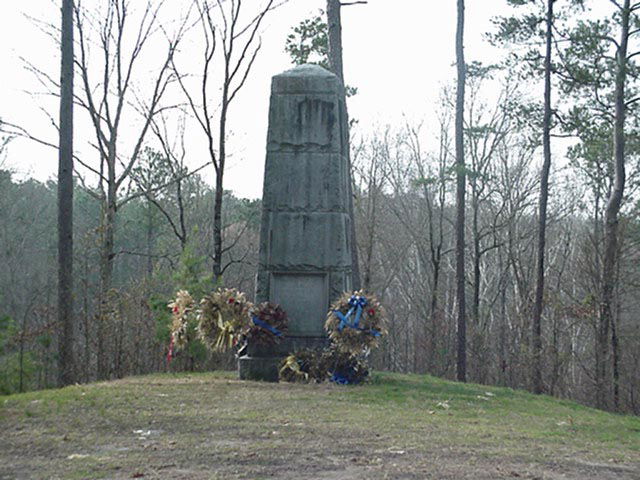
Monument at Kettle Creek

Monument at Kettle Creek

  • Info Details
  • Citation Terms of Use

The Kettle Creek Battlefield Historic Monument commemorates a Revolutionary War battle that took place on February 14, 1779. Famed patriot Nancy Hart was reportedly present during the conflict.

Courtesy of Thomas Hammack Jr.

The New Georgia Encyclopedia does not hold the copyright for this media resource and can neither grant nor deny permission to republish or reproduce the image online or in print. All requests for permission to publish or reproduce the resource must be submitted to the rights holder.

James Wright

James Wright

  • Info Details
  • Citation Terms of Use

James Wright replaced Henry Ellis as royal governor of Georgia in 1760 and proved to be an efficient and popular administrator. During his tenure in office (1760-76) Georgia enjoyed a period of remarkable growth.

Courtesy of Hargrett Rare Book and Manuscript Library, University of Georgia Libraries, Georgia Photo File.

The New Georgia Encyclopedia does not hold the copyright for this media resource and can neither grant nor deny permission to republish or reproduce the image online or in print. Requests for permission to publish or reproduce the resource should be submitted to the Hargrett Manuscript and Rare Book Library at the University of Georgia.

  • Info Details
  • Citation Terms of Use

The New Georgia Encyclopedia does not hold the copyright for this media resource and can neither grant nor deny permission to republish or reproduce the image online or in print. All requests for permission to publish or reproduce the resource must be submitted to the rights holder.

John Houstoun

John Houstoun

  • Info Details
  • Citation Terms of Use

John Houstoun served twice as the governor of Georgia, as well as the mayor of Savannah.

Courtesy of Hargrett Rare Book and Manuscript Library, University of Georgia Libraries.

The New Georgia Encyclopedia does not hold the copyright for this media resource and can neither grant nor deny permission to republish or reproduce the image online or in print. Requests for permission to publish or reproduce the resource should be submitted to the Hargrett Manuscript and Rare Book Library at the University of Georgia.

Archibald Campbell

Archibald Campbell

  • Info Details
  • Citation Terms of Use

Through his 1778 Georgia campaign, particularly his capture of Savannah and Augusta, Archibald Campbell achieved one of the few unqualified British successes in the American Revolution.

Image from Wikimedia

View on source site

The New Georgia Encyclopedia does not hold the copyright for this media resource and can neither grant nor deny permission to republish or reproduce the image online or in print. All requests for permission to publish or reproduce the resource must be submitted to the rights holder.

Andrew Pickens

Andrew Pickens

  • Info Details
  • Citation Terms of Use

Colonel Andrew Pickens led South Carolina and Georgia militiamen to victory at the Battle of Kettle Creek in 1779. 

Photograph by Wikimedia

The New Georgia Encyclopedia does not hold the copyright for this media resource and can neither grant nor deny permission to republish or reproduce the image online or in print. All requests for permission to publish or reproduce the resource must be submitted to the rights holder.

Count Charles Henri d’Estaing

Count Charles Henri d’Estaing

  • Info Details
  • Citation Terms of Use

Count Charles Henri d'Estaing, a French naval commander sympathetic to the American revolutionary cause, attempted to take Savannah from the British in 1779. His army was repulsed in one of the bloodiest battles of the Revolutionary War.

Image from Archives américaines, New-York

The New Georgia Encyclopedia does not hold the copyright for this media resource and can neither grant nor deny permission to republish or reproduce the image online or in print. All requests for permission to publish or reproduce the resource must be submitted to the rights holder.

Lyman Hall

Lyman Hall

  • Info Details
  • Citation Terms of Use

Lyman Hall was one of three Georgians to sign the Declaration of Independence. He served as a representative to the Continental Congress and as governor of Georgia from 1783 to 1784.

Courtesy of Hargrett Rare Book and Manuscript Library, University of Georgia Libraries.

The New Georgia Encyclopedia does not hold the copyright for this media resource and can neither grant nor deny permission to republish or reproduce the image online or in print. Requests for permission to publish or reproduce the resource should be submitted to the Hargrett Manuscript and Rare Book Library at the University of Georgia.

Plan of Savannah

Plan of Savannah

  • Info Details
  • Citation Terms of Use

In December 1778, British troops under Lieutenant Colonel Archibald Campbell captured Savannah as part of their campaign to restore the colony of Georgia to British rule. This drawing details the town of Savannah at the time of the British invasion.

Courtesy of Hargrett Rare Book and Manuscript Library, University of Georgia Libraries, Rare Maps Collection.

The New Georgia Encyclopedia does not hold the copyright for this media resource and can neither grant nor deny permission to republish or reproduce the image online or in print. Requests for permission to publish or reproduce the resource should be submitted to the Hargrett Manuscript and Rare Book Library at the University of Georgia.

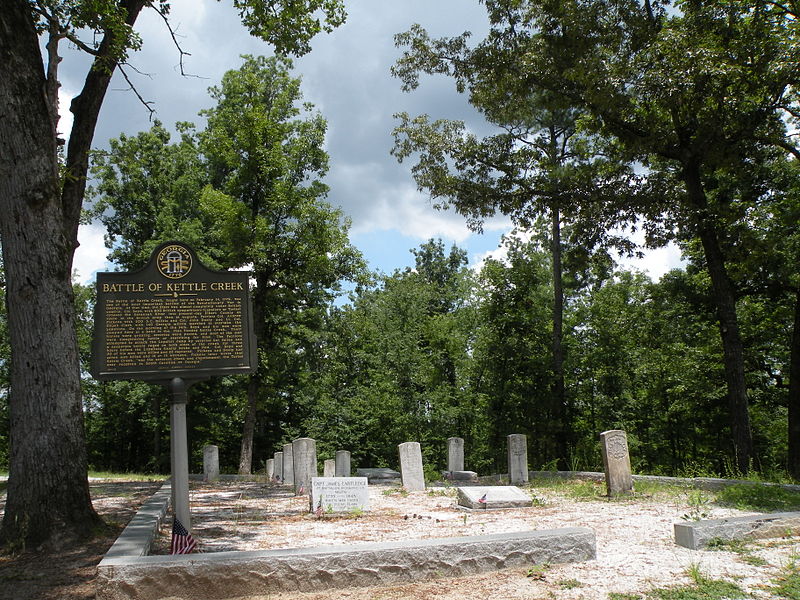
Battle of Kettle Creek Site

Battle of Kettle Creek Site

  • Info Details
  • Citation Terms of Use

Revolutionary War veterans are buried in the Kettle Creek cemetery, which is maintained today by a local chapter of the Daughters of the American Revolution. The Battle of Kettle Creek, fought on February 14, 1779, prevented the British from invading upper Georgia.

Photograph by Chris Crookston, Wikimedia

The New Georgia Encyclopedia does not hold the copyright for this media resource and can neither grant nor deny permission to republish or reproduce the image online or in print. All requests for permission to publish or reproduce the resource must be submitted to the rights holder.

John Wereat

John Wereat

  • Info Details
  • Citation Terms of Use

John Wereat served briefly as de facto governor of Georgia in 1779 and is best known for his attempt in 1795 to thwart the Yazoo land fraud, a corrupt deal between the state legislature and land speculators.

Courtesy of Georgia Historical Society, John Wereat letter to John Gibbons, #GHS 0854-AF-006.

View on partner site

The New Georgia Encyclopedia does not hold the copyright for this media resource and can neither grant nor deny permission to republish or reproduce the image online or in print. All requests for permission to publish or reproduce the resource must be submitted to Georgia Historical Society.

George Walton

George Walton

  • Info Details
  • Citation Terms of Use

George Walton, one of three Georgians to sign the Declaration of Independence, served as governor of the state for two months in 1779. Following the Revolutionary War, Walton held another term as governor from 1789 to 1790, and also served as a U.S. senator and chief justice of Georgia.

From History of Georgia, edited by K. Coleman

The New Georgia Encyclopedia does not hold the copyright for this media resource and can neither grant nor deny permission to republish or reproduce the image online or in print. All requests for permission to publish or reproduce the resource must be submitted to the rights holder.

Elijah Clarke

Elijah Clarke

  • Info Details
  • Citation Terms of Use

Elijah Clarke was among the few heroes of the Revolutionary War from Georgia. Even though he was wounded several times, Clarke led several successful frontier guerrilla campaigns against British soldiers and American Loyalists during the war. Clarke County is named for him.

Courtesy of Hargrett Rare Book and Manuscript Library, University of Georgia Libraries.

The New Georgia Encyclopedia does not hold the copyright for this media resource and can neither grant nor deny permission to republish or reproduce the image online or in print. Requests for permission to publish or reproduce the resource should be submitted to the Hargrett Manuscript and Rare Book Library at the University of Georgia.

John Martin

John Martin

  • Info Details
  • Citation Terms of Use

An honored Revolutionary War soldier turned politician, John Martin was governor of Georgia from 1782 to 1783. It was during his term of office that Georgia retook Savannah from the British and the Revolutionary War in Georgia came to an end.

Courtesy of Georgia Capitol Museum, University of Georgia Libraries

The New Georgia Encyclopedia does not hold the copyright for this media resource and can neither grant nor deny permission to republish or reproduce the image online or in print. All requests for permission to publish or reproduce the resource must be submitted to the rights holder.

Major Ridge

Major Ridge

  • Info Details
  • Citation Terms of Use

Hand-colored lithograph of Major Ridge, a Cherokee leader who helped establish the Cherokee system of government. The soldier, politician, and plantation owner is remembered for signing the Treaty of New Echota (1835), which ceded Cherokee lands to the U.S. government and authorized Cherokee removal.

From History of the Indian Tribes of North America, by T. McKenney and J. Hall

The New Georgia Encyclopedia does not hold the copyright for this media resource and can neither grant nor deny permission to republish or reproduce the image online or in print. All requests for permission to publish or reproduce the resource must be submitted to the rights holder.

Catharine Greene

Catharine Greene

  • Info Details
  • Citation Terms of Use

Catharine Greene was the noted wife of Revolutionary War general Nathanael Greene and later a supporter of Eli Whitney, the inventor of the cotton gin. This painting of Greene (oil on panel, 32 3/4" x 25 3/4"), dated circa 1809, is attributed to James Frothingham.

Courtesy of Telfair Museums.

The New Georgia Encyclopedia does not hold the copyright for this media resource and can neither grant nor deny permission to republish or reproduce the image online or in print. All requests for permission to publish or reproduce the resource must be submitted to Telfair Museums.

Goose Pond Community

Goose Pond Community

  • Info Details
  • Citation Terms of Use

Dilapidated houses from the Goose Pond community, which was founded in the late eighteenth century, still remained when this photo was taken circa 1964. Today the post office is the only extant building from the original community, located in present-day Oglethorpe County.

Courtesy of Hargrett Rare Book and Manuscript Library, University of Georgia Libraries, Andrew Horace Sparks Papers.

The New Georgia Encyclopedia does not hold the copyright for this media resource and can neither grant nor deny permission to republish or reproduce the image online or in print. Requests for permission to publish or reproduce the resource should be submitted to the Hargrett Manuscript and Rare Book Library at the University of Georgia.

McGeehee House, ca. 1967

McGeehee House, ca. 1967

  • Info Details
  • Citation Terms of Use

The McGeehee family was one of many who emigrated from Virginia to Goose Pond in northeast Georgia in the late eighteenth century.

Courtesy of Hargrett Rare Book and Manuscript Library, University of Georgia Libraries, Andrew Horace Sparks Papers.

The New Georgia Encyclopedia does not hold the copyright for this media resource and can neither grant nor deny permission to republish or reproduce the image online or in print. Requests for permission to publish or reproduce the resource should be submitted to the Hargrett Manuscript and Rare Book Library at the University of Georgia.

Goose Pond Community

Goose Pond Community

  • Info Details
  • Citation Terms of Use

The Goose Pond community of present-day Oglethorpe County was established in the late 1700s on land previously occupied by Muscogee (Creek) and Cherokee Indians. Two headstones appear in the foreground of the photograph, taken circa 1964.

Courtesy of Hargrett Rare Book and Manuscript Library, University of Georgia Libraries, Andrew Horace Sparks Papers.

The New Georgia Encyclopedia does not hold the copyright for this media resource and can neither grant nor deny permission to republish or reproduce the image online or in print. Requests for permission to publish or reproduce the resource should be submitted to the Hargrett Manuscript and Rare Book Library at the University of Georgia.

Gilmer Childhood Home

Gilmer Childhood Home

  • Info Details
  • Citation Terms of Use

Georgia governor George R. Gilmer's childhood home originally stood in the Goose Pond community of Oglethorpe County. The house is now located at the Calloway Plantation in Wilkes County.

Photograph by Carol Ebel

The New Georgia Encyclopedia does not hold the copyright for this media resource and can neither grant nor deny permission to republish or reproduce the image online or in print. All requests for permission to publish or reproduce the resource must be submitted to the rights holder.

  • Info Details
  • Citation Terms of Use

The New Georgia Encyclopedia does not hold the copyright for this media resource and can neither grant nor deny permission to republish or reproduce the image online or in print. All requests for permission to publish or reproduce the resource must be submitted to the rights holder.

Greene Monument

Greene Monument

  • Info Details
  • Citation Terms of Use

A monument to Revolutionary War general Nathanael Greene stands in Johnson Square, in Savannah.

Image from sfgamchick

View on source site

The New Georgia Encyclopedia does not hold the copyright for this media resource and can neither grant nor deny permission to republish or reproduce the image online or in print. All requests for permission to publish or reproduce the resource must be submitted to the rights holder.

Nathanael Greene Reinterment

Nathanael Greene Reinterment

  • Info Details
  • Citation Terms of Use

Soldiers from Fort Screven stand in formation during the 1902 reinterment of Revolutionary War general Nathanael Greene in Savannah's Johnson Square.

Courtesy of Georgia Archives, Vanishing Georgia, #
ctm257.

View on partner site

The New Georgia Encyclopedia does not hold the copyright for this media resource and can neither grant nor deny permission to republish or reproduce the image online or in print. Requests for permission to publish or reproduce the resource should be submitted to the Georgia Archives.

Nathan Brownson

Nathan Brownson

  • Info Details
  • Citation Terms of Use

Nathan Brownson served as Georgia's governor in 1781-82, toward the end of the American Revolution. He also was elected to the state legislature and was a member of the convention that ratified the U.S. constitution as well as the convention that rewrote Georgia's constitution in 1789. He was the first physician to serve as governor.

Courtesy of Georgia Capitol Museum, University of Georgia Libraries

The New Georgia Encyclopedia does not hold the copyright for this media resource and can neither grant nor deny permission to republish or reproduce the image online or in print. All requests for permission to publish or reproduce the resource must be submitted to the rights holder.

William McIntosh

William McIntosh

  • Info Details
  • Citation Terms of Use

Charles Bird King's portrait of William McIntosh (ca. 1825). In 1825 McIntosh negotiated and signed the Treaty of Indian Springs, signing away all Muscogee (Creek) lands in Georgia and thereby defying most of the reforms that he had encouraged and the laws that he had helped write.

Image from Archives and Rare Books Library, University of Cincinnati Libraries, McKenney and Hall: History of the Indian Tribes Collection.

The New Georgia Encyclopedia does not hold the copyright for this media resource and can neither grant nor deny permission to republish or reproduce the image online or in print. All requests for permission to publish or reproduce the resource must be submitted to the rights holder.

Tomochichi

Tomochichi

  • Info Details
  • Citation Terms of Use

As a principal mediator between the native Muscogee (Creek) and English settlers during the first years of Georgia's settlement, Tomochichi (left) contributed to the establishment of peaceful relations between the two groups. His nephew, Toonahowi, is seated on the right in this engraving, circa 1734-35, by John Faber Jr.

Courtesy of Hargrett Rare Book and Manuscript Library, University of Georgia Libraries.

The New Georgia Encyclopedia does not hold the copyright for this media resource and can neither grant nor deny permission to republish or reproduce the image online or in print. Requests for permission to publish or reproduce the resource should be submitted to the Hargrett Manuscript and Rare Book Library at the University of Georgia.

Lachlan McIntosh

Lachlan McIntosh

  • Info Details
  • Citation Terms of Use

Colonel Lachlan McIntosh, a Scottish immigrant, served as a military and political leader in revolutionary Georgia. He defended Savannah from the British during the Battle of the Rice Boats on March 2-3, 1776, and later served with General George Washington at Valley Forge, Pennsylvania, in 1778.

Image from the New York Public Library Digital Collections, The Miriam and Ira D. Wallach Division of Art, Prints and Photographs: Print Collection.

View on source site

The New Georgia Encyclopedia does not hold the copyright for this media resource and can neither grant nor deny permission to republish or reproduce the image online or in print. All requests for permission to publish or reproduce the resource must be submitted to the rights holder.

Andrew Bryan

Andrew Bryan

  • Info Details
  • Citation Terms of Use

Andrew Bryan, born enslaved in 1737, was a founder and leader of First African Baptist Church in Savannah along with his brother Sampson. The congregation grew and established two satellite churches after 1800, despite opposition and threats of violence from the white community. This sketch of Bryan appeared in Savannah's Morning News Print in 1888.

Reprinted by permission of the University Library, University of North Carolina

The New Georgia Encyclopedia does not hold the copyright for this media resource and can neither grant nor deny permission to republish or reproduce the image online or in print. All requests for permission to publish or reproduce the resource must be submitted to the rights holder.

Yazoo Act Burning

Yazoo Act Burning

  • Info Details
  • Citation Terms of Use

The burning of the Yazoo Act, which resulted in the Yazoo land fraud of 1795, took place on the grounds of the capitol building in Louisville. Louisville served as the state capital from 1796 until 1806, when the legislature moved to Milledgeville.

The New Georgia Encyclopedia does not hold the copyright for this media resource and can neither grant nor deny permission to republish or reproduce the image online or in print. All requests for permission to publish or reproduce the resource must be submitted to the rights holder.

William Few Jr.

William Few Jr.

  • Info Details
  • Citation Terms of Use

In 1787 William Few Jr. represented Georgia at the constitutional convention in Philadelphia, Pennsylvania. Subsequently, Few was a signer of the U.S. Constitution. Etching by Albert Rosenthal (1888) from family miniature.

Courtesy of Hargrett Rare Book and Manuscript Library, University of Georgia Libraries.

The New Georgia Encyclopedia does not hold the copyright for this media resource and can neither grant nor deny permission to republish or reproduce the image online or in print. Requests for permission to publish or reproduce the resource should be submitted to the Hargrett Manuscript and Rare Book Library at the University of Georgia.

Battle of Kettle Creek

Battle of Kettle Creek

  • Info Details
  • Citation Terms of Use

On February 14, 1779, during the Revolutionary War, the Battle of Kettle Creek was fought in Wilkes County. Around 340 militiamen led by Elijah Clarke and John Dooly of Georgia, and Andrew Pickens of South Carolina attacked 600 American supporters of the British cause, led by James Boyd. Boyd was killed, and his men were forced to retreat across the creek.

From Georgians in the Revolution: At Kettle Creek and Burke County, by R. S. Davis Jr.

The New Georgia Encyclopedia does not hold the copyright for this media resource and can neither grant nor deny permission to republish or reproduce the image online or in print. All requests for permission to publish or reproduce the resource must be submitted to the rights holder.

James Jackson

James Jackson

  • Info Details
  • Citation Terms of Use

The leading Jeffersonian Republican in post-Revolutionary Georgia, U.S. senator James Jackson resigned his seat and returned home to handle the Yazoo land fraud scandal in 1795. The following year he led a successful effort in the Georgia legislature to pass the Yazoo Rescinding Act, which nullified the corrupt land sales.

Courtesy of Hargrett Rare Book and Manuscript Library, University of Georgia Libraries.

The New Georgia Encyclopedia does not hold the copyright for this media resource and can neither grant nor deny permission to republish or reproduce the image online or in print. Requests for permission to publish or reproduce the resource should be submitted to the Hargrett Manuscript and Rare Book Library at the University of Georgia.

Daguerreotype of Enslaved Woman

Daguerreotype of Enslaved Woman

  • Info Details
  • Citation Terms of Use

Rare daguerreotype of an enslaved woman in Watkinsville, photographed in 1853. A placard with the date "1853," which reads correctly for the camera, is visible. The use of a book as a prop is unusual for an image of an enslaved person.

Courtesy of Georgia Archives, Vanishing Georgia, #
clr210-92.

View on partner site

The New Georgia Encyclopedia does not hold the copyright for this media resource and can neither grant nor deny permission to republish or reproduce the image online or in print. Requests for permission to publish or reproduce the resource should be submitted to the Georgia Archives.

Enslaved Woman

Enslaved Woman

  • Info Details
  • Citation Terms of Use

Enslaved women played an integral part in Georgia's colonial and antebellum history. Scholars are beginning to pay more attention to issues of gender in their study of slavery and are finding that enslaved women faced additional burdens and even more challenges than did some enslaved men.

Courtesy of Hargrett Rare Book and Manuscript Library, University of Georgia Libraries, Robert E. Williams Photographic Collection.

The New Georgia Encyclopedia does not hold the copyright for this media resource and can neither grant nor deny permission to republish or reproduce the image online or in print. Requests for permission to publish or reproduce the resource should be submitted to the Hargrett Manuscript and Rare Book Library at the University of Georgia.

Enslaved Woman

Enslaved Woman

  • Info Details
  • Citation Terms of Use

Antebellum planters kept meticulous records of the people they enslaved, identifying several traditionally female occupations, including washerwomen.

Courtesy of Hargrett Rare Book and Manuscript Library, University of Georgia Libraries, Robert E. Williams Photographic Collection.

The New Georgia Encyclopedia does not hold the copyright for this media resource and can neither grant nor deny permission to republish or reproduce the image online or in print. Requests for permission to publish or reproduce the resource should be submitted to the Hargrett Manuscript and Rare Book Library at the University of Georgia.

Enslaved Children

Enslaved Children

  • Info Details
  • Citation Terms of Use

Enslavers clothed both male and female enslaved children in smocks and assigned them such duties as carrying water to the fields. As the children neared the age of ten, slaveholders began making distinctions between the genders.

Courtesy of Hargrett Rare Book and Manuscript Library, University of Georgia Libraries, Robert E. Williams Photographic Collection.

The New Georgia Encyclopedia does not hold the copyright for this media resource and can neither grant nor deny permission to republish or reproduce the image online or in print. Requests for permission to publish or reproduce the resource should be submitted to the Hargrett Manuscript and Rare Book Library at the University of Georgia.

  • Info Details
  • Citation Terms of Use

The New Georgia Encyclopedia does not hold the copyright for this media resource and can neither grant nor deny permission to republish or reproduce the image online or in print. All requests for permission to publish or reproduce the resource must be submitted to the rights holder.

Ellen Craft

Ellen Craft

  • Info Details
  • Citation Terms of Use

The daughter of an African American woman and her white enslaver, Ellen looked white and was able to escape slavery by disguising herself as a southern slaveholder.

From The Underground Rail Road, by W. Still

The New Georgia Encyclopedia does not hold the copyright for this media resource and can neither grant nor deny permission to republish or reproduce the image online or in print. All requests for permission to publish or reproduce the resource must be submitted to the rights holder.

Fanny Kemble

Fanny Kemble

  • Info Details
  • Citation Terms of Use

An English actress, Kemble married Pierce Mease Butler and was upset to learn of the family's slave labor operations. She eventually published an account of her impressions of slavery, after divorcing Butler and losing custody of their two children.

Courtesy of Hargrett Rare Book and Manuscript Library, University of Georgia Libraries, Georgia Photo File.

The New Georgia Encyclopedia does not hold the copyright for this media resource and can neither grant nor deny permission to republish or reproduce the image online or in print. Requests for permission to publish or reproduce the resource should be submitted to the Hargrett Manuscript and Rare Book Library at the University of Georgia.

John Adam Treutlen

John Adam Treutlen

  • Info Details
  • Citation Terms of Use

In February 1777 Treutlen, Button Gwinnett, and George Wells were on the drafting committee of Georgia's first constitution.

Image from Dsdugan

View on source site

The New Georgia Encyclopedia does not hold the copyright for this media resource and can neither grant nor deny permission to republish or reproduce the image online or in print. All requests for permission to publish or reproduce the resource must be submitted to the rights holder.

John Adam Treutlen

John Adam Treutlen

  • Info Details
  • Citation Terms of Use

John Treutlen was a leader in Georgia during the American Revolution and helped to write Georgia's first constitution. In 1777 he became Georgia's first elected governor.

Image from Internet Archive Book Images

The New Georgia Encyclopedia does not hold the copyright for this media resource and can neither grant nor deny permission to republish or reproduce the image online or in print. All requests for permission to publish or reproduce the resource must be submitted to the rights holder.

John Houstoun

John Houstoun

  • Info Details
  • Citation Terms of Use

John Houstoun was twice governor of Georgia, the first mayor of the city of Savannah, and an early supporter of independence from Britain.

Courtesy of Hargrett Rare Book and Manuscript Library, University of Georgia Libraries, Georgia Photo File.

The New Georgia Encyclopedia does not hold the copyright for this media resource and can neither grant nor deny permission to republish or reproduce the image online or in print. Requests for permission to publish or reproduce the resource should be submitted to the Hargrett Manuscript and Rare Book Library at the University of Georgia.

Noble W. Jones

Noble W. Jones

  • Info Details
  • Citation Terms of Use

Noble W. Jones was prominent among Georgia's Whig leaders before and during the American Revolution, serving in both the provincial and state legislatures and in the Continental Congress. Portrait by Charles Willson Peale, circa 1781.

Courtesy of Telfair Museums, Courtesy of the Wormsloe Foundation.
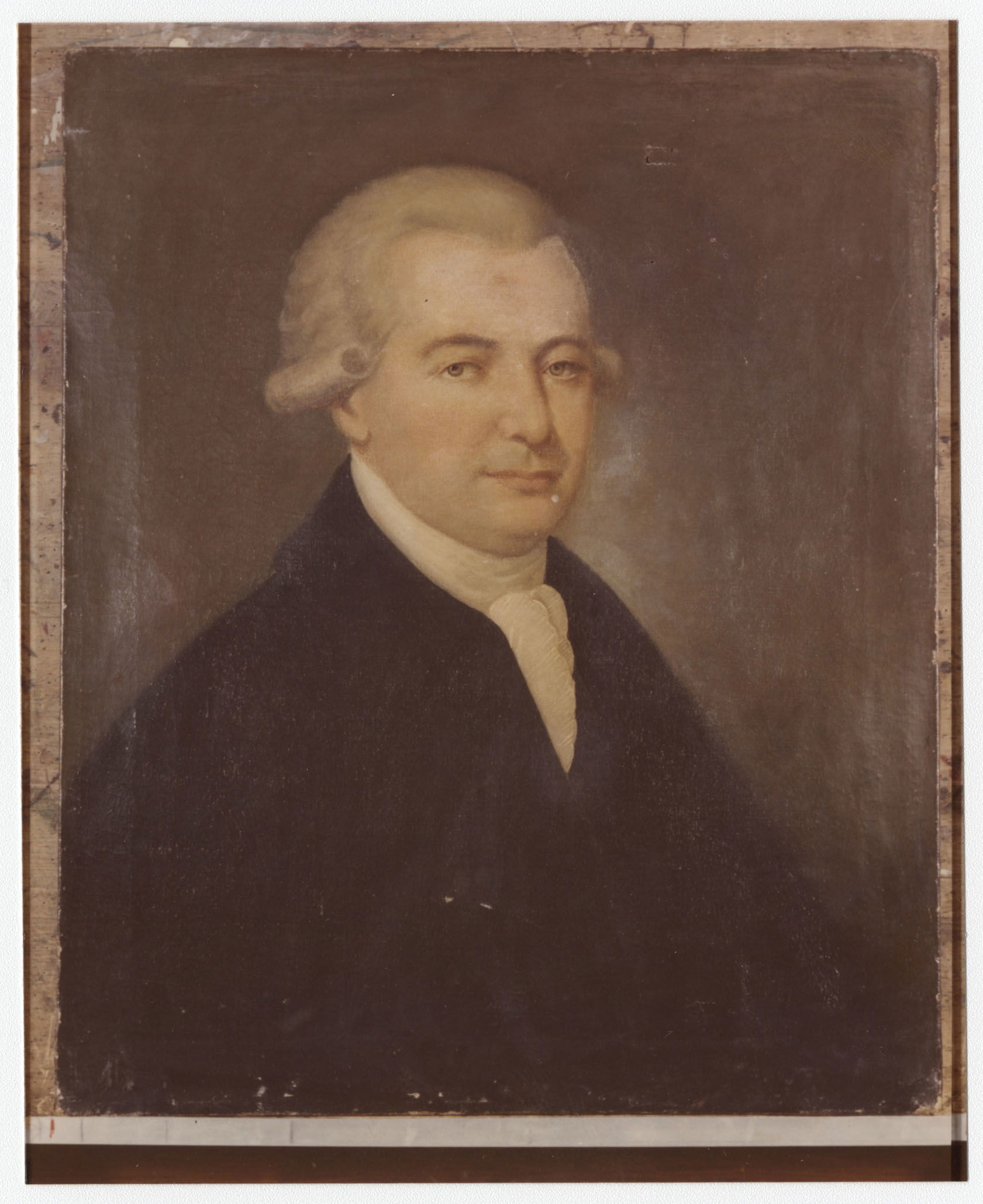
The New Georgia Encyclopedia does not hold the copyright for this media resource and can neither grant nor deny permission to republish or reproduce the image online or in print. All requests for permission to publish or reproduce the resource must be submitted to Telfair Museums.

George Walton

George Walton

  • Info Details
  • Citation Terms of Use

One of three Georgians to sign the Declaration of Independence, George Walton served in numerous capacities for the state of Georgia after the American Revolution, including governor of Georgia in 1779.

Courtesy of Hargrett Rare Book and Manuscript Library, University of Georgia Libraries.

The New Georgia Encyclopedia does not hold the copyright for this media resource and can neither grant nor deny permission to republish or reproduce the image online or in print. Requests for permission to publish or reproduce the resource should be submitted to the Hargrett Manuscript and Rare Book Library at the University of Georgia.

James Jackson and the Yazoo Land Fraud

James Jackson and the Yazoo Land Fraud

  • Info Details
  • Citation Terms of Use

James Jackson, a U.S. senator from Georgia, destroys records connected with the Yazoo land fraud in 1796, after the passage of the Yazoo Rescinding Act. Josiah Tattnall Sr., a state representative, helped Jackson secure the votes necessary in the legislature to pass the act.

From A History of Georgia for Use in Schools, by L. B. Evans
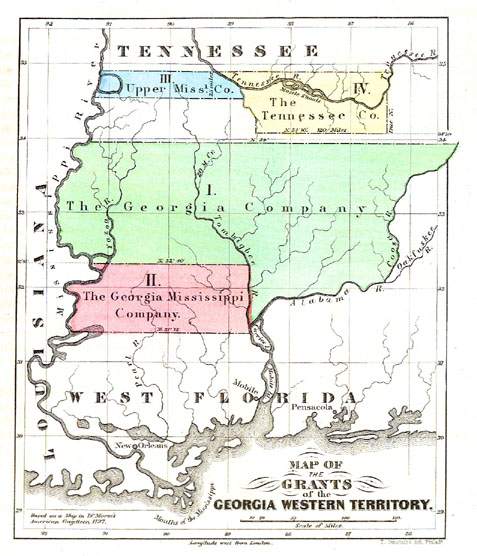
The New Georgia Encyclopedia does not hold the copyright for this media resource and can neither grant nor deny permission to republish or reproduce the image online or in print. All requests for permission to publish or reproduce the resource must be submitted to the rights holder.

Yazoo Land Grant Map

Yazoo Land Grant Map

  • Info Details
  • Citation Terms of Use

In 1795 Georgia governor Georgia Mathews signed the Yazoo Act, which transferred 35 million acres of the state's western territory to four separate companies for a sum of $500,000. This lithograph, originally published in The American Gazetter (1797), shows the land purchased by each company in what is known today as the Yazoo land fraud.

Courtesy of Georgia Info, Digital Library of Georgia.

The New Georgia Encyclopedia does not hold the copyright for this media resource and can neither grant nor deny permission to republish or reproduce the image online or in print. Requests for permission to publish or reproduce the resource may need to be submitted to the Digital Library of Georgia.

Black and white photo of USS Savannah Black and white drawing of the USS Savannah Black and white photo of USS Savannah (AS-8) The duel in which Button Gwinnett was killed by Lachlan McIntosh Button Gwinnett Lachlan McIntosh Trustees’ Charter Boundaries, 1732 Colony of East Florida, 1763 Colony of West Florida, 1763 Georgia Colony Boundaries, 1764 Georgia Colony Boundaries, 1767 Georgia State Boundaries, 1783 Orr-Whitner Line, 1861 Placement of Ellicott’s Rock, 1811 Georgia’s Northern and Western Boundaries, 1826 Georgia’s Northern and Western Boundaries, 1802 Siege of Savannah Hessian Third Guard Regiment Henri Christophe David Emanuel Twiggs Sixtieth Regiment of Foot Etowah Mounds Rock Eagle
De Soto Crossing the Chattahoochee Georgia Trustees
Battle of Kettle Creek Eli Whitney
Cherokee Trail of Tears Secession Ordinance Robert Toombs Andersonville Prison Freedmen’s Bureau Henry W. Grady Sharecroppers Thomas E. Watson
Roosevelts in Atlanta Ben Epps Fort Benning Segregation Protest Integration of Atlanta Schools Hunter and Holmes, UGA Albany Movement Carl Sanders Lester Maddox, 1964 Hamilton Jordan and Jimmy Carter
Peanut Farming
Latino Workers St. Simons Tourists James Oglethorpe Infantry: Continental Army, 1779-1783 Nathanael Greene Tailfer’s Title Page Bushnell’s Submarine Cotton Gin Eli Whitney Stamp Count Casimir Pulaski Fort Pulaski Casimir Pulaski Stamp books Land Grant to Austin Dabney John Milledge James Oglethorpe Christ Church of Savannah John Wesley Preaching George Whitefield Sarah Gibbons Telfair Plan of Petersburg Bobby Brown State Park John Clark
Abraham Baldwin University of Georgia Abraham Baldwin Stamp Stephen Heard Elijah Clarke George Walton Nancy Hart Nancy Hart Cabin Monument at Kettle Creek James Wright
John Houstoun Archibald Campbell Andrew Pickens Count Charles Henri d’Estaing Lyman Hall Plan of Savannah Battle of Kettle Creek Site John Wereat George Walton Elijah Clarke John Martin Major Ridge Catharine Greene Goose Pond Community McGeehee House, ca. 1967 Goose Pond Community Gilmer Childhood Home
Greene Monument Nathanael Greene Reinterment Nathan Brownson William McIntosh Tomochichi Lachlan McIntosh Andrew Bryan Yazoo Act Burning William Few Jr. Battle of Kettle Creek James Jackson Daguerreotype of Enslaved Woman Enslaved Woman Enslaved Woman Enslaved Children
Ellen Craft Fanny Kemble John Adam Treutlen John Adam Treutlen John Houstoun Noble W. Jones George Walton James Jackson and the Yazoo Land Fraud Yazoo Land Grant Map